
China Power Transformer Market Survey: Sourcing HV Capabilities and International OEM Solutions
Introduction
It can be hard to buy high-voltage transformers from China since there are so many factories, too many claims about what they can do, and not enough information. When a bad choice can put off the whole substation, purchasers need to know exactly who can install HV equipment and how to check their skills. This guide will help you understand.
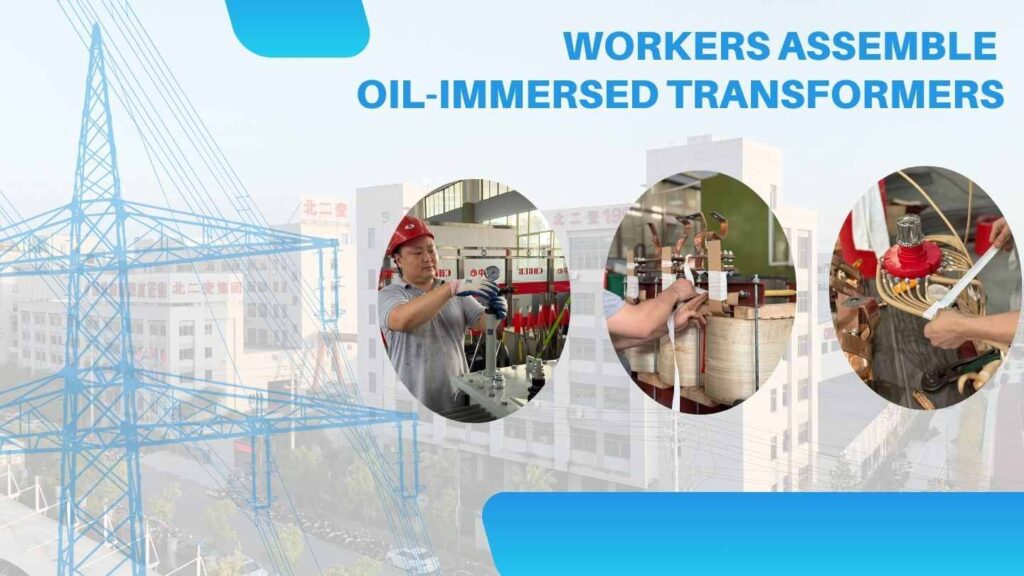
Capability Verification: Manufacturer Qualifications, Technical Barriers, and OEM Solutions
It’s not hard to find a factory that makes transformers. The tricky thing is finding one that can really make HV-grade (110–220 kV) equipment. A lot of suppliers say they can do HV on paper, but they really depend on outsourcing or third-party test labs. This part helps purchasers tell the difference between true capabilities and marketing noise.
Market Landscape: State-Owned Giants vs. Specialized Private Enterprises
There are two main groups that shape China’s HV transformer industry: state-owned enterprises (SOEs) and private HV producers that focus on exports. Their roles, capabilities, and ideal project types are all very different.
✅ Market Positioning Overview(表格对比)
| Category | State-Owned Giants (SOEs) | Specialized Private HV Manufacturers |
|---|---|---|
| Representative Companies | TBEA, XD Group, Baoding, Shenyang | Export-focused 35–220 kV factories |
| Voltage Capability | 220–1000 kV (UHV leader) | 35–220 kV (main export range) |
| Core Strengths | Full HV labs, impulse platforms, national EPC capability | Fast response, OEM/ODM customization, flexible standards |
| Project Type | National grid, UHV, mega energy projects | International utilities, industry substations, data centers |
| Lead Time | Longer (government cycle) | Faster (commercial cycle) |
| Customization | Limited | Strong (OEM/ODM friendly) |
| Pricing | High | Moderate / optimized |
| Ideal For Buyers | Ultra-high voltage projects, government EPC | Export projects needing flexibility, standards compliance, and OEM solutions |
✅ Summary
- SOEs are suitable for government EPC projects and ultra-high-voltage (330–1000 kV) projects.
- For international 35–220 kV, OEM/ODM, industrial substations, and fast-delivery needs, specialized private businesses are the best choice.
Private HV manufacturers offer the best mix of price, performance, and flexibility for 80% of buyers around the world.
Technical Depth: HV Manufacturing Barriers, Partial Discharge Control, and HV Test Labs
Making high-voltage transformers requires a lot more than just bigger tanks and thicker copper. To really have HV capacity, you need to get beyond four engineering problems:
✅ 1. High-precision insulation engineering – creepage distance, radial insulation, interlayer strength
✅ 2. Partial discharge control – PD < 5 pC at rated voltage
✅ 3. HV core and winding accuracy – step-lap steel, tension control, burr suppression
✅ 4. High-voltage test infrastructure – impulse tests, induced AC tests, temperature-rise platforms

A real HV factory MUST have:
- Lightning impulse test lab
- Induced overvoltage test capability
- PD test room ≤ 5 pC
- Full temperature-rise test platform
- Routine IEC/IEEE acceptance test capability
A major danger for purchasers from other countries is that a supplier may not be able to show original test records, HV lab photos, or videos of actual testing.
Collaboration & Procurement: Quality Compliance, Acceptance Protocols, and Supply Chain Management
Even when capability is established, controlling standards, testing, documentation, logistics, and production risk is still necessary for successful HV procurement.
International Standards: Ensuring compliance with IEEE, IEC, and target-grid rules
Most of the time, transformers are rejected for shipment not because of hardware issues, but because they don’t meet the required standards.
HV transformers must comply with the electrical code of the destination country, not the supplier’s default standards.
✅ Key Regional Standards Overview(表格对比)
| Region | Standard Framework | Special Requirements |
|---|---|---|
| Middle East | IEC 60076 + Utility Specs | High ambient, sand/dust, PD stability |
| North America | IEEE C57 Series | Cooling class, OLTC logic, NEMA enclosure |
| Africa | IEC + local addenda | Grounding, overload conditions |
| Southeast Asia | IEC + tropical version | Humidity control, corrosion resistance |
A true OEM supplier will adapt:
- Core steel grade
- HV insulation clearances
- OLTC/DETC options
- Cooling class (ONAN/ONAF/OFAF)
- Accessories required by grid code
Real compliance is proven through:
✅ Third-party witnessed FAT reports
✅ Previous export references
✅ Type-test certificates
Not through brochures or marketing statements.
Risk Control: FAT Acceptance, Lead Time Management, and Full Life-Cycle Support
There are many high-risk moments in the process of buying an HV transformer. Strong providers aid buyers through every step.
✅ 1. FAT (Factory Acceptance Test)
A complete FAT should include:
- Winding resistance, ratio, vector group
- No-load & load loss measurement
- PD test at rated voltage
- Applied voltage / induced voltage test
- OLTC mechanical & electrical inspection
- Temperature-rise test (where applicable)
FAT can be:
- Customer-witnessed onsite
- Third-party witnessed (SGS / BV / TÜV)
- Livestreamed with real-time measurement screens

✅ 2. Lead Time & Production Risk
Typical manufacturing cycles:
| Voltage Class | Average Lead Time |
|---|---|
| 110 kV | 90–120 days |
| 132–150 kV | 120–150 days |
| 220 kV | 150–210 days |
Key risk factors:
- Core steel procurement
- OLTC delivery schedule
- HV lab queue time
- Oversized packing preparation
Reliable suppliers issue weekly QC progress reports.

✅ 3. Life-Cycle Support
Long-term reliability after installation depends on more than just manufacture; it also depends on assistance.
Strong OEM suppliers provide:
- Oil testing frequency guidance
- OLTC maintenance schedule
- Condition monitoring recommendations
- Emergency support response within 24 hours
- Remote diagnostics or onsite service (region-dependent)
Friendly, Buyer-Focused FAQ: What Global Buyers Really Want to Know
1. “Who makes the most transformers in China?” Do I have to buy from them?
Most people instinctively think of TBEA and XD Group, and certainly, they are the major companies operating China’s 220–1000 kV grid.
But many new buyers don’t realize this:
👉 You don’t need a national giant unless your project is UHV-level.
For export projects between 110–220 kV, specialized private HV manufacturers often provide you:
- Faster lead time
- More flexible engineering
- Real OEM customization
- Much better pricing
Same technological skills, but without the huge government bureaucracy.
2. “Can Chinese manufacturers really produce 220 kV or even 500 kV transformers?”
Yes, absolutely — but not every factory that claims ‘HV capability’ actually has it.
A real HV-capable factory will be very open about showing:
- Their high-voltage impulse test hall
- PD readings (≤5 pC) shown live on camera
- Photos or videos of previous 110–220–500 kV projects
- Third-party witnessed test reports (SGS / BV / TÜV)
If a supplier hesitates or can’t show proof, that’s your signal to walk away.
3. “How do I verify that their HV test lab is real, not just marketing photos?”
Here’s what experienced EPC buyers do:
✅ Ask for a live video walk-through, not just pictures
✅ Request original impulse and PD test reports (not screenshots)
✅ Ask for real-time PD readings during a call
✅ Send SGS/BV if the project is critical
A legitimate factory will never refuse — they’re usually proud to show their test bay.
4. “Where does FAT usually happen for big transformers? Can it be done externally?”
FAT for HV transformers must happen in the manufacturer’s own test hall — HV test equipment cannot be moved.
A proper FAT includes:
- Ratio, vector group, and winding resistance
- No-load + load losses
- Induced & applied voltage tests
- Partial discharge
- OLTC operation
- Temperature-rise (for large units or per spec)
Good suppliers will stream the entire FAT live, with on-screen measurements — this is now standard for overseas projects.
5. “Can a Chinese transformer really meet IEEE / ANSI requirements?”
Yes — but only if you choose the right supplier.
China has factories that:
- Export to North America
- Build fully IEEE C57-compliant units
- Use NEMA-rated enclosures
- Follow ANSI cooling and OLTC logic
If your supplier cannot show previous IEEE export records, choose one who can.
IEEE compliance is not difficult — experience is the real differentiator.
6. “How long is the lead time for an OEM HV transformer?”
Typical timelines:
- 110 kV: 90–120 days
- 132–150 kV: 120–150 days
- 220 kV: 150–210 days
Delays usually come from:
- OLTC delivery (MR/Reinhausen parts)
- Core steel supply
- Test-lab scheduling for impulse tests
A trustworthy OEM factory will give weekly updates with photos — so you always know what stage your transformer is in.
7. “How do you ship a heavy transformer safely over long distances?”
For big units, the logistics matter almost as much as the manufacturing.
Most exports use:
- Flat Rack (FR) for 20–60 tonne units
- Break Bulk for oversized cargo
- RoRo when mounted on a platform
- Low-bed trailers + escorts for inland transport
The important part?
👉 Vibration recording
👉 Moisture protection
👉 Center-of-gravity calculation
👉 ICC-A marine insurance
A good supplier will prepare all of this automatically — not wait for you to ask.
⚙️ CHBEB — Reliable Partner for Substation and Power Transformer Solutions

In the transformer industry, not every manufacturer truly understands how to apply IEEE C57.91 in real design work, thermal modeling, or FAT validation.
For CHBEB, this knowledge is not theoretical — it is built from decades of experience.
Over the past 60 years, CHBEB has grown from a small winding workshop into a multi-facility transformer manufacturer, with two factories in Wenzhou, a complete assembly plant in Nanjing, and an international operations center in Beijing. We supply oil-immersed and dry-type transformers to utilities, EPC contractors, and industrial clients worldwide — and many of them first came to us because they needed a partner who could help them solve challenges related to standards, climate adaptation, or compliance.
What we focus on is simple:
make the engineering clear, make the risks visible, and make every transformer traceable — from thermal performance to climate suitability.
For oil-immersed transformers, our capabilities include:
- ONAN / ONAF / OFAF thermal design
- Hot-spot and top-oil simulations based on IEEE models
- A 50 MVA temperature-rise test platform
- 110–220 kV impulse and AC withstand capability
- Derating and thermal correction for desert and tropical climates
For dry-type transformers, our facilities operate:
- VPI and Cast Resin production lines
- <5 pC partial discharge control
- Class F and H insulation systems
- Custom design for distribution and industrial applications
Compared with large state-owned enterprises, our strength often lies in flexibility:
Need a non-standard voltage? We can build it.
Need IEEE and IEC thermal logic unified into one FAT report? We’ll prepare it for you.
Tight schedule? We prioritize your test bay time to reduce waiting.
Complex climate or grid requirements? We calculate all Annex-B or regional derating factors and integrate them into the design.
Clients who work with us know that CHBEB’s value is not “selling a transformer.”
It is ensuring that every step — design, testing, packaging, shipping, commissioning — stays under control and with full transparency.
This is why CHBEB transformers operate reliably across Russia, Southeast Asia, the Middle East, Africa, and other demanding environments. From 50 kVA units to 220 kV substation transformers, each one reflects a long-term commitment rather than a one-time transaction.
If your project involves IEEE or IEC compliance, thermal verification, FAT witness tests, climate adaptation, or custom engineering, we aim to be the technical team you can ask, trust, and rely on — anytime.
👉 Looking for a distribution transformer manufacturer that combines Chinese manufacturing strength with international standards?Contact CHBEB for a tailored solution or Download our full transformer catalog here.
Conclusion
China’s HV transformer market is wide, but true capability is narrow. The real challenge for overseas buyers is not choosing a factory — it is verifying who can genuinely build, test, and certify 110–220 kV equipment without outsourcing or risking compliance failure.
By focusing on three essentials — capability verification, standards alignment, and full FAT transparency — buyers can reduce project risk, avoid costly delays, and secure long-term grid reliability. State-owned giants remain unmatched for UHV projects, but for 35–220 kV export applications, specialized private HV manufacturers offer the optimal balance of performance, customization, and delivery speed.
With structured supplier evaluation and strict acceptance protocols, importing high-voltage transformers no longer needs to be a gamble. Choosing partners who provide real test data, real engineering depth, and real accountability is the key to ensuring every unit that leaves China arrives ready for safe, certified operation in your grid.