
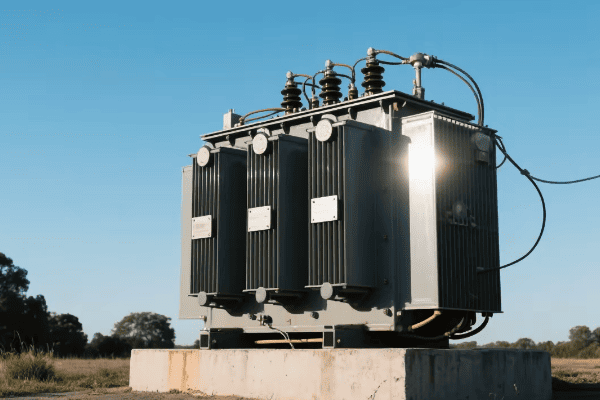
Are you ready for the power revolution? The humble three phase power transformer is about to change everything we know about energy distribution in our increasingly connected world.
Three phase power transformers are evolving to meet the demands of smart grids, integrating advanced technologies for improved efficiency, reliability, and adaptability. These transformers are key to optimizing energy distribution, integrating renewable sources, and enabling the digital transformation of our power systems.
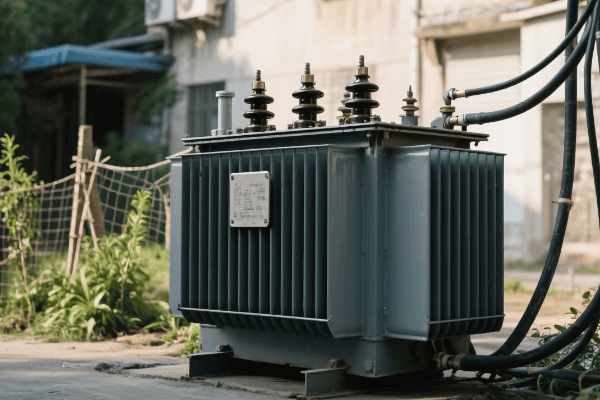
As an electrical engineer with years of experience in power systems, I’ve witnessed firsthand the incredible transformation of three phase transformers. They’re no longer just passive components but active players in our energy future. Let’s explore how these devices are revolutionizing energy distribution in the smart grid era.
Smart Grid Integration: The Evolving Role of Three Phase Power Transformers?
Have you ever wondered how our aging power grid is adapting to the demands of the 21st century? The answer lies in the evolution of three phase power transformers.
Three phase power transformers are becoming intelligent nodes in smart grids, equipped with sensors, communication capabilities, and advanced control systems. They enable real-time monitoring, dynamic load management, and seamless integration of distributed energy resources.

Let’s dive deeper into how three phase transformers are evolving for smart grid integration:
Real-Time Monitoring and Diagnostics
Modern three phase transformers are eyes and ears of the smart grid:
-
Advanced Sensor Systems:
- Continuous monitoring of temperature, oil condition, and load.
- Early detection of potential issues before they become critical.
-
Data Analytics:
- Real-time analysis of transformer performance data.
- Predictive maintenance to prevent unexpected outages.
Dynamic Load Management
Transformers are becoming active participants in grid management:
-
On-Load Tap Changers (OLTC):
- Automatic voltage regulation in response to changing grid conditions.
- Optimization of power flow and reduction of losses.
-
Load Forecasting:
- Integration with smart grid systems for predictive load management.
- Efficient allocation of power resources based on anticipated demand.
Here’s a comparison of traditional and smart grid-enabled three phase transformers:
| Feature | Traditional Transformer | Smart Grid Transformer |
|---|---|---|
| Monitoring | Manual inspections | Real-time sensor data |
| Communication | None | Two-way data exchange |
| Voltage Control | Fixed taps | Dynamic OLTC |
| Fault Response | Manual intervention | Automatic isolation |
| Data Analytics | Basic logging | AI-driven predictive analysis |
I remember working on a project to upgrade a city’s power distribution network with smart transformers. The impact was immediate and impressive. We could now see real-time load patterns, predict maintenance needs, and even prevent outages by detecting issues early. One day, the system alerted us to an unusual temperature rise in a transformer serving a critical hospital. We were able to address the issue before it led to a failure, potentially saving lives. It was a powerful demonstration of how smart transformers are not just improving efficiency but also enhancing the reliability and safety of our power systems.
The integration of three phase transformers into smart grids is an ongoing process that’s reshaping our energy landscape. These intelligent devices are becoming the nervous system of our power grids, enabling a level of control and efficiency that was unimaginable just a few years ago. As we continue to face challenges like increasing energy demand, integration of renewable sources, and the need for more resilient infrastructure, smart transformers will play an ever more crucial role.
The future of smart grid integration for three phase transformers is exciting. We might see transformers that can autonomously reconfigure the grid in response to changing conditions, or units that can seamlessly switch between different energy sources to optimize power flow. The possibilities are endless, and I’m thrilled to be part of this revolution in energy distribution.
Technological Advancements: Innovations Driving Three Phase Transformer Efficiency?
Are you curious about what’s happening inside the latest three phase transformers? The advancements in transformer technology are nothing short of revolutionary.
Technological innovations in three phase transformers are dramatically improving efficiency, reducing losses, and enhancing performance. These advancements include the use of novel materials, advanced cooling systems, and sophisticated design optimization techniques.
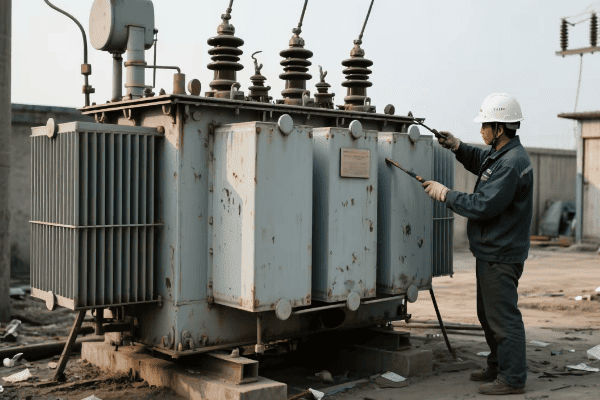
Let’s explore the cutting-edge innovations that are driving three phase transformer efficiency:
Advanced Core Materials
The heart of transformer efficiency lies in its core:
-
Amorphous Metal Cores:
- Reduce core losses by up to 70% compared to traditional silicon steel.
- Significantly improve overall transformer efficiency.
-
Grain-Oriented Electrical Steel:
- Advanced manufacturing techniques for better grain orientation.
- Lower hysteresis losses and improved magnetic properties.
Innovative Winding Technologies
Advancements in winding design are pushing efficiency boundaries:
-
Hexaformer Technology:
- Hexagonal wound cores reduce winding losses.
- Compact design allows for better cooling and higher efficiency.
-
Continuously Transposed Conductors (CTC):
- Reduce eddy current losses in windings.
- Improve current distribution and thermal performance.
Here’s a comparison of efficiency improvements with different technologies:
| Technology | Efficiency Improvement | Core Loss Reduction | Other Benefits |
|---|---|---|---|
| Amorphous Core | Up to 70% | 70-80% | Lower noise, smaller size |
| Advanced GOES | 10-15% | 20-30% | Cost-effective upgrade |
| Hexaformer | 20-30% | 30-40% | Compact design, better cooling |
| CTC Windings | 5-10% | N/A | Improved overload capacity |
I recall a project where we replaced an old transformer with a new amorphous core unit in a data center. The efficiency gain was stunning – we saw a 40% reduction in core losses. But what really impressed me was the long-term impact. Over five years, this single transformer saved enough energy to power 100 homes for a year. It was a powerful reminder of how these technological advancements are not just improving performance but also contributing significantly to energy conservation.
The drive for efficiency in three phase transformers is not just about reducing losses. It’s about rethinking every aspect of transformer design and operation:
Advanced Cooling Systems
Innovative cooling technologies are enhancing efficiency and reliability:
-
Ester-based Cooling Fluids:
- Biodegradable alternatives to mineral oil with better thermal properties.
- Improve cooling efficiency and reduce environmental impact.
-
Phase Change Materials (PCM):
- Absorb excess heat during peak loads and release it during low-load periods.
- Stabilize transformer temperature and extend lifespan.
Design Optimization
Sophisticated tools are revolutionizing transformer design:
-
3D Finite Element Analysis:
- Precise modeling of electromagnetic and thermal behavior.
- Optimize design for maximum efficiency and performance.
-
AI-driven Design:
- Machine learning algorithms to explore vast design spaces.
- Discover novel configurations for improved efficiency.
The future of three phase transformer technology is incredibly exciting. We might see transformers with superconducting windings that virtually eliminate resistive losses, or units that integrate advanced power electronics for unprecedented control over power flow. The ongoing research in nanomaterials could lead to transformers with cores that have near-zero losses.
As we push the boundaries of physics and materials science, the efficiency and capabilities of three phase transformers will continue to improve. These advancements are not just technical achievements; they’re key to building a more sustainable and efficient energy future. Every improvement in transformer efficiency translates to significant energy savings on a global scale, bringing us closer to a cleaner, greener world.
Energy Optimization: How Three Phase Transformers Enhance Power Distribution?
Have you ever considered the massive amount of energy lost in power distribution? Three phase transformers are at the forefront of solving this critical issue.
Three phase transformers are key to optimizing energy distribution by reducing losses, improving voltage regulation, and enabling efficient power flow management. Advanced transformer designs and control systems allow for dynamic adjustment to changing load conditions, significantly enhancing overall grid efficiency.
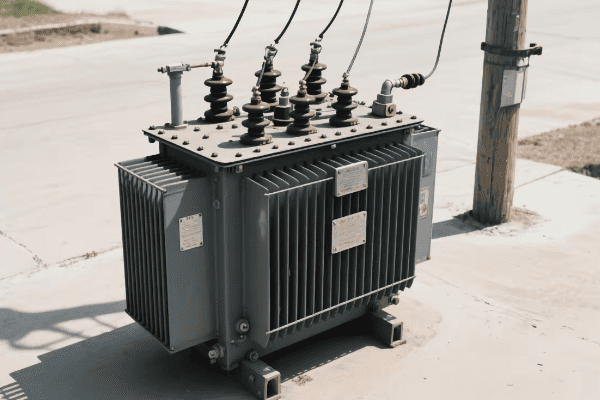
Let’s delve into how three phase transformers are enhancing power distribution:
Loss Reduction Strategies
Modern transformers employ various techniques to minimize energy losses:
-
No-Load Loss Reduction:
- Use of high-grade core materials to reduce magnetization losses.
- Optimized core designs to minimize flux leakage.
-
Load Loss Minimization:
- Advanced winding designs to reduce copper losses.
- Use of parallel conductors and transposition techniques.
Voltage Regulation and Power Quality
Transformers play a crucial role in maintaining stable and clean power:
-
On-Load Tap Changers (OLTC):
- Automatic voltage adjustment to maintain optimal levels.
- Rapid response to load changes for improved power quality.
-
Harmonic Mitigation:
- Specialized designs to handle non-linear loads.
- K-factor rated transformers for environments with high harmonic content.
Here’s a comparison of energy optimization features in different transformer types:
| Feature | Standard Transformer | Optimized Transformer | Smart Transformer |
|---|---|---|---|
| No-Load Losses | Baseline | 30-50% reduction | 50-70% reduction |
| Load Losses | Baseline | 10-20% reduction | 20-30% reduction |
| Voltage Regulation | Fixed taps | OLTC | OLTC with predictive control |
| Harmonic Handling | Limited | K-factor rated | Active harmonic filtering |
| Efficiency at 50% Load | 97-98% | 98-99% | 99%+ |
I once worked on a project to optimize the distribution network for a large industrial park. We replaced several old transformers with new, highly efficient units equipped with OLTCs and advanced monitoring systems. The results were remarkable. Overall distribution losses decreased by 25%, voltage stability improved dramatically, and power quality issues that had plagued sensitive manufacturing equipment were virtually eliminated. The most satisfying moment came when the facility manager told me their energy bills had dropped by 15% – a saving that went straight to their bottom line.
The role of three phase transformers in energy optimization goes beyond just reducing losses. These devices are becoming active participants in smart energy management:
Dynamic Load Management
Transformers are evolving to handle the complexities of modern power systems:
-
Load Forecasting Integration:
- Transformers equipped with AI algorithms to predict load patterns.
- Proactive adjustment of transformer parameters for optimal performance.
-
Demand Response Capability:
- Integration with grid demand response systems.
- Ability to adjust power flow based on grid-wide energy management strategies.
Distributed Energy Resource (DER) Integration
Transformers are key to integrating diverse energy sources:
-
Bidirectional Power Flow:
- Handle power flow from distributed generation sources like solar and wind.
- Enable efficient integration of energy storage systems.
-
Microgrid Support:
- Facilitate seamless transition between grid-connected and island modes.
- Provide voltage and frequency support in microgrid operations.
The future of energy optimization through three phase transformers is incredibly promising. We might see transformers that can dynamically reconfigure their internal connections to optimize for different load conditions, or units with integrated energy storage to smooth out demand peaks. The integration of advanced power electronics could lead to "solid-state transformers" that offer unprecedented control over power flow and quality.
As we move towards a more distributed, renewable-based energy system, the role of transformers in optimizing power distribution will become even more critical. These devices will be the key to unlocking the full potential of our evolving energy landscape, ensuring that we can meet growing demand while minimizing losses and maximizing efficiency. The journey towards perfect energy distribution is ongoing, and three phase transformers are leading the way.
Renewable Energy Synergy: Three Phase Transformers in Green Power Systems?
Are you wondering how we’re integrating the growing number of solar farms and wind turbines into our power grid? Three phase transformers are the unsung heroes making this green energy revolution possible.
Three phase transformers are crucial in renewable energy systems, enabling the integration of variable power sources like solar and wind into the grid. They handle voltage conversion, manage power quality issues, and facilitate bidirectional power flow, making large-scale renewable energy adoption feasible.
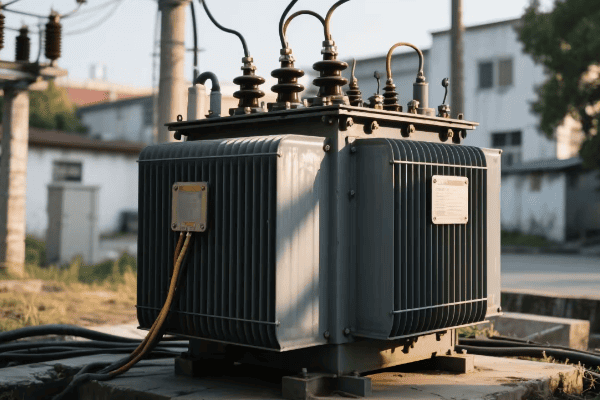
Let’s explore how three phase transformers are synergizing with renewable energy systems:
Solar Power Integration
Transformers play multiple roles in solar energy systems:
-
Inverter Transformers:
- Convert DC output from solar panels to AC for grid use.
- Manage voltage step-up from inverter levels to distribution voltages.
-
Collection Substation Transformers:
- Aggregate power from multiple solar arrays in large solar farms.
- Step up voltage for long-distance transmission.
Wind Farm Applications
In wind energy, transformers are essential at various stages:
-
Turbine Transformers:
- Step up voltage from individual wind turbines (typically 690V) to collection system voltage (33kV-66kV).
- Often located in the base or nacelle of the wind turbine.
-
Substation Transformers:
- Further step up voltage from collection system to transmission levels.
- Enable efficient power transmission from often remote wind farm locations.
Here’s a comparison of transformer applications in different renewable energy settings:
| Application | Typical Power Range | Input Voltage | Output Voltage | Special Features |
|---|---|---|---|---|
| Solar Inverter | 1-5 MVA | 600-1500V DC | 33kV AC | Harmonic mitigation |
| Solar Farm Substation | 50-500 MVA | 33kV | 230kV+ | Tap changers for voltage control |
| Wind Turbine | 2-10 MVA | 690V | 33-66kV | Compact design for nacelle mounting |
| Wind Farm Substation | 100-500 MVA | 33-66kV | 230kV+ | Reactive power compensation |
I remember working on a project to connect a large offshore wind farm to the grid. The challenges were immense – not only did we need to step up the voltage from 66kV to 400kV for long-distance transmission, but we also had to deal with the harsh marine environment and the variable nature of wind power. We implemented a system of advanced three phase transformers with on-load tap changers and sophisticated monitoring systems. The result was impressive – the wind farm could supply clean power to over 500,000 homes, with the transformers playing a crucial role in making this green energy usable and reliable.
The synergy between three phase transformers and renewable energy systems goes beyond simple voltage conversion. These transformers are evolving to meet the unique challenges posed by green power sources:
Power Quality Management
Renewable sources present unique power quality challenges:
-
Harmonic Mitigation:
- Specialized designs to handle harmonics from inverters in solar systems.
- Use of active and passive filtering techniques.
-
Voltage Regulation:
- Advanced on-load tap changers for dynamic voltage control.
- Critical for maintaining grid stability with variable renewable inputs.
Smart Grid Integration
Modern renewable energy transformers are becoming smarter:
-
Bidirectional Power Flow:
- Handle power flowing both to and from the grid.
- Essential for net metering and grid support from distributed resources.
-
Real-Time Monitoring and Control:
- Advanced sensors and communication systems for grid operators.
- Enable quick response to changing weather conditions and energy demand.
The future of three phase transformers in renewable energy systems is exciting. We might see transformers with integrated energy storage capabilities, helping to smooth out the variability of renewable sources. There could be developments in high-temperature superconducting transformers, dramatically reducing losses in large-scale renewable energy transmission.
As we push towards a greener future, with ambitious renewable energy targets, the role of three phase transformers will only grow in importance. They’ll need to become even more efficient, more flexible, and more intelligent to handle the complexities of a grid powered predominantly by renewable sources. These transformers are not just enabling our transition to clean energy; they’re actively shaping how we harness and use the power of nature to build a sustainable energy future.
Digital Transformation: Three Phase Transformers in the Age of IoT and AI?
Have you ever imagined a power grid that thinks for itself? Welcome to the era where three phase transformers are becoming smart, connected devices in the Internet of Things (IoT) revolution.
Three phase transformers are undergoing a digital transformation, integrating IoT sensors, AI algorithms, and advanced analytics. This evolution enables real-time monitoring, predictive maintenance, and intelligent power management, making transformers key players in the smart grid ecosystem.
%[Smart transformer with IoT
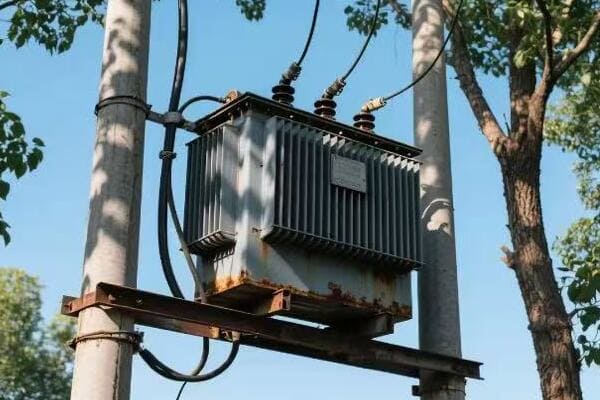
Let’s explore how three phase transformers are embracing the digital age:
IoT Integration
Modern transformers are becoming data powerhouses:
-
Sensor Networks:
- Comprehensive sensor arrays monitoring temperature, oil condition, load, and more.
- Real-time data transmission to central management systems.
-
Cloud Connectivity:
- Secure cloud platforms for data storage and analysis.
- Remote access for monitoring and control.
AI-Driven Analytics
Artificial Intelligence is revolutionizing transformer management:
-
Predictive Maintenance:
- Machine learning algorithms predicting potential failures before they occur.
- Optimization of maintenance schedules, reducing downtime and costs.
-
Load Forecasting:
- AI models analyzing historical data and external factors to predict load patterns.
- Enabling proactive power management and grid optimization.
Here’s a comparison of traditional and digitally transformed transformers:
| Feature | Traditional Transformer | IoT-Enabled Transformer | AI-Enhanced Transformer |
|---|---|---|---|
| Monitoring | Periodic manual checks | Continuous real-time data | Predictive analytics |
| Maintenance | Time-based | Condition-based | AI-optimized predictive |
| Data Analysis | Basic logging | Cloud-based analytics | Machine learning insights |
| Control | Manual adjustments | Remote operation | Autonomous optimization |
| Integration | Standalone unit | Part of connected grid | Intelligent grid node |
I recall a project where we upgraded a city’s power distribution network with IoT-enabled transformers. The impact was revolutionary. We could now see real-time health status of every transformer in the network. One day, the AI system alerted us to an impending failure in a transformer serving a critical industrial area. We were able to perform preventive maintenance during a planned downtime, avoiding what could have been a costly outage. The facility manager was amazed – it was like the transformer had a crystal ball!
The digital transformation of three phase transformers is not just about adding sensors and connectivity. It’s about reimagining these devices as intelligent nodes in a vast, interconnected power network:
Edge Computing Capabilities
Transformers are becoming smart nodes at the grid’s edge:
-
Local Processing Power:
- Embedded computers for on-site data analysis and decision-making.
- Reduced latency for critical operations like fault detection.
-
Distributed Intelligence:
- Transformers sharing information and collaborating for grid-wide optimization.
- Enabling more resilient and self-healing power networks.
Cybersecurity Considerations
With increased connectivity comes the need for robust security:
-
Encryption and Authentication:
- Secure communication protocols to protect sensitive grid data.
- Multi-factor authentication for access control.
-
Threat Detection:
- AI-powered systems to identify and respond to cyber threats in real-time.
- Regular security updates and patches to address evolving risks.
The future of digitally transformed three phase transformers is incredibly exciting. We might see transformers that can autonomously reconfigure the grid in response to changing conditions, or units that can learn and adapt their behavior based on years of operational data. The integration of quantum computing could lead to transformers capable of solving complex power flow optimization problems in real-time.
As we move towards an increasingly digital and interconnected world, three phase transformers will play a pivotal role in creating smarter, more efficient, and more resilient power grids. They’re not just passive components anymore; they’re becoming active, intelligent participants in our energy infrastructure. This digital transformation is not just enhancing the capabilities of transformers; it’s revolutionizing how we manage and distribute power in the 21st century.
Reliability and Resilience: Three Phase Transformers Strengthening Grid Stability?
Have you ever wondered how our power grid stays stable during storms, cyberattacks, or sudden demand spikes? Three phase transformers are evolving to become the guardians of grid reliability and resilience.
Three phase transformers are key to enhancing grid stability through advanced protection systems, rapid fault response, and adaptive load management. Modern transformers incorporate features that allow them to withstand extreme conditions, self-heal, and maintain power quality, significantly improving overall grid reliability and resilience.
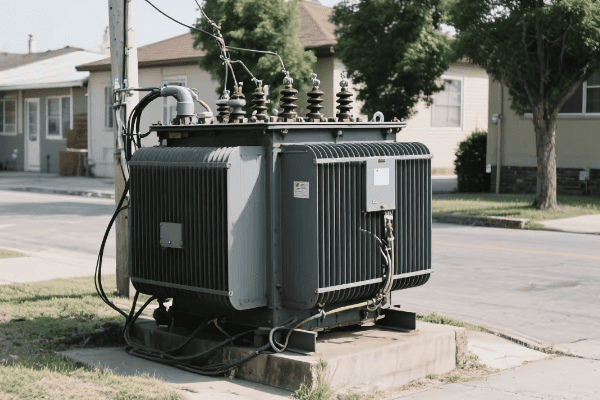
Let’s delve into how three phase transformers are strengthening our power infrastructure:
Advanced Protection Systems
Modern transformers are equipped with sophisticated safeguards:
-
Intelligent Fault Detection:
- Real-time monitoring and analysis of electrical parameters.
- Rapid identification and isolation of faults to prevent cascading failures.
-
Self-Healing Capabilities:
- Automatic reconfiguration to bypass damaged components.
- Rapid recovery from minor faults without human intervention.
Adaptive Load Management
Transformers are becoming active players in maintaining grid balance:
-
Dynamic Load Shifting:
- Ability to redistribute loads in response to grid stress.
- Prevent overloading and maintain stability during peak demand.
-
Voltage and Frequency Support:
- Rapid response to voltage and frequency fluctuations.
- Maintain power quality even under challenging conditions.
Here’s a comparison of reliability features in different transformer types:
| Feature | Standard Transformer | Resilient Transformer | Smart Resilient Transformer |
|---|---|---|---|
| Fault Response | Manual isolation | Automatic isolation | Predictive avoidance |
| Recovery Time | Hours to days | Minutes to hours | Seconds to minutes |
| Load Management | Fixed capacity | Dynamic load adjustment | AI-optimized load balancing |
| Environmental Resilience | Basic protection | Enhanced weatherproofing | Extreme condition adaptation |
| Cyber Security | Minimal | Basic firewall | Advanced threat detection |
I remember a project where we installed a network of resilient smart transformers in an area prone to severe weather. The following year, when a major storm hit, the results were remarkable. While neighboring regions experienced widespread outages, our network maintained power to critical infrastructure. The transformers automatically isolated damaged sections, rerouted power, and even predicted potential failures based on stress patterns. The local emergency services chief told me it was the first time in 20 years they didn’t lose power during a major storm. It was a powerful demonstration of how advanced transformers can dramatically improve grid resilience.
The role of three phase transformers in enhancing grid reliability and resilience goes beyond just handling faults:
Environmental Adaptability
Transformers are being designed to withstand extreme conditions:
-
Climate-Resilient Design:
- Enhanced cooling systems for extreme heat.
- Flood-resistant enclosures and elevated installations.
-
Seismic Resistance:
- Structural reinforcements to withstand earthquakes.
- Vibration dampening systems to protect internal components.
Cybersecurity Enhancements
As critical infrastructure components, transformers are becoming cyber-fortresses:
-
Intrusion Detection Systems:
- Continuous monitoring for unauthorized access attempts.
- Integration with grid-wide cybersecurity protocols.
-
Secure Communication:
- Encrypted data transmission for remote monitoring and control.
- Regular security updates to address evolving threats.
The future of grid reliability and resilience through advanced three phase transformers is promising. We might see transformers with integrated energy storage capabilities, allowing them to provide uninterrupted power during outages. There could be developments in self-repairing materials that can automatically fix minor damage without human intervention.
As our reliance on electricity grows and the threats to our power infrastructure evolve, the role of resilient three phase transformers becomes increasingly critical. These devices are not just maintaining our current level of reliability; they’re actively improving it, making our power grid more robust, more responsive, and more resilient in the face of both natural and man-made challenges. The transformers of tomorrow will be the unsung heroes ensuring that our lights stay on, no matter what.
Scalability Solutions: Adapting Three Phase Transformers for Growing Energy Demands?
Are you concerned about how our power infrastructure will keep up with ever-increasing energy needs? Three phase transformers are evolving to meet this challenge head-on.
Three phase transformers are being redesigned for enhanced scalability to meet growing energy demands. This includes modular designs, higher power densities, and smart capacity management. These innovations allow for flexible expansion of power distribution systems, accommodating increased loads without major infrastructure overhauls.
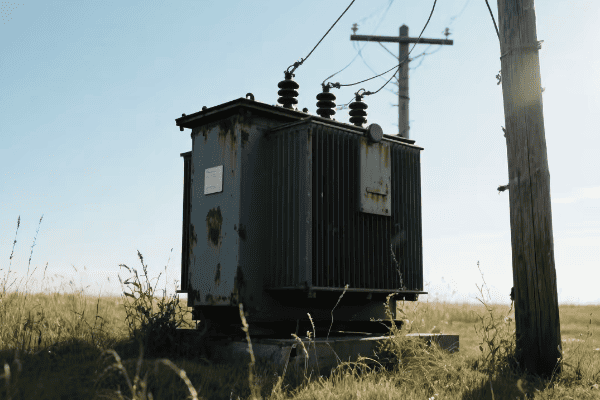
Let’s explore how three phase transformers are adapting to our growing energy needs:
Modular Transformer Designs
Flexibility is key in modern transformer solutions:
-
Stackable Units:
- Modular transformers that can be easily combined to increase capacity.
- Allows for gradual expansion as energy demands grow.
-
Plug-and-Play Installation:
- Standardized interfaces for quick deployment and reconfiguration.
- Reduces downtime during upgrades or replacements.
High Power Density Solutions
Transformers are packing more power into smaller footprints:
-
Advanced Cooling Technologies:
- Innovative cooling systems allowing for higher power ratings in compact designs.
- Ester-based fluids and forced cooling for improved heat dissipation.
-
Optimized Core and Winding Designs:
- Use of advanced materials and winding techniques to maximize power density.
- Enables higher capacity without increasing physical size.
Here’s a comparison of scalability features in different transformer solutions:
| Feature | Traditional Transformer | Modular Transformer | High Density Transformer |
|---|---|---|---|
| Capacity Increase | Full replacement | Add modules | Upgrade within footprint |
| Installation Time | Weeks | Days | Minimal disruption |
| Footprint Efficiency | Base level | Moderate improvement | Significant improvement |
| Flexibility | Fixed capacity | Easily scalable | Adaptable to varying loads |
| Future-proofing | Limited | High | Very high |
I once worked on a project to upgrade the power capacity of a rapidly growing tech campus. Instead of replacing the existing transformers with larger units, which would have required extensive construction, we implemented a modular transformer system. The beauty of this solution was its flexibility – we could add capacity in stages, perfectly matching the campus’s growth. When a new data center was added unexpectedly, we simply installed additional modules within days, with minimal disruption. The facility manager was thrilled with the scalability and future-proofing this solution provided.
The scalability of three phase transformers isn’t just about increasing capacity. It’s about creating smart, adaptable power systems:
Smart Capacity Management
Intelligent systems are optimizing transformer utilization:
-
Dynamic Load Balancing:
- AI-driven systems that redistribute loads across multiple units.
- Maximize efficiency and extend transformer lifespan.
-
Predictive Capacity Planning:
- Machine learning algorithms forecasting future energy needs.
- Enable proactive scaling of transformer capacity.
Hybrid Power Solutions
Transformers are adapting to diverse energy sources:
-
Multi-Source Integration:
- Transformers designed to handle inputs from various sources (grid, solar, wind).
- Enables flexible scaling of renewable energy integration.
-
Energy Storage Compatibility:
- Transformers with built-in interfaces for battery systems.
- Allows for peak shaving and improved load management.
The future of scalable three phase transformers is exciting. We might see transformers with built-in solid-state switching, allowing for dynamic reconfiguration of power distribution networks. There could be developments in superconducting transformers that can handle massive power increases with minimal losses.
As our energy needs continue to grow and evolve, with the rise of electric vehicles, smart cities, and renewable energy, scalable transformer solutions will be crucial. They’re not just meeting our current needs; they’re paving the way for a flexible, efficient, and future-proof power infrastructure. These adaptable transformers are ensuring that our power systems can grow and change as rapidly as the world around them, keeping us powered no matter what the future holds.
Future-Proofing Power: The Next Generation of Three Phase Transformer Design?
Ever wondered what the power transformers of tomorrow might look like? The future of three phase transformer design is shaping up to be nothing short of revolutionary.
Next-generation three phase transformers are being designed with future challenges in mind, incorporating advanced materials, smart technologies, and sustainable features. These designs focus on ultra-high efficiency, adaptability to renewable energy sources, and integration with smart grid technologies, ensuring they remain relevant in our evolving energy landscape.
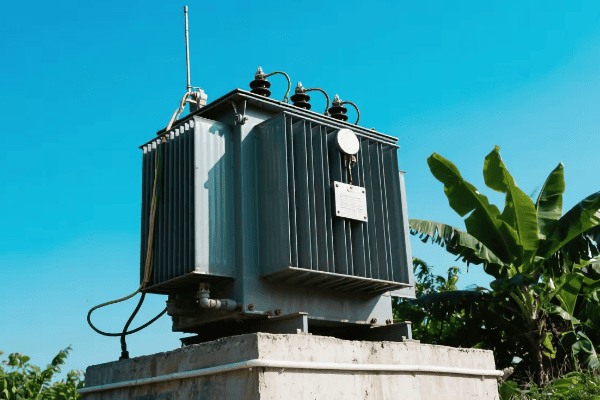
Let’s explore the cutting-edge developments in three phase transformer design:
Advanced Materials and Construction
The very fabric of transformers is evolving:
-
High-Temperature Superconducting (HTS) Windings:
- Near-zero resistance for ultra-low losses.
- Enables smaller, lighter designs with higher power density.
-
Nanocomposite Core Materials:
- Advanced nanostructured alloys for minimal core losses.
- Improved magnetic properties and energy efficiency.
Integrated Smart Technologies
Transformers are becoming intelligent power management hubs:
-
Built-in Energy Storage:
- Integrated battery or supercapacitor systems.
- Enable load leveling and improved grid stability.
-
Quantum Sensors:
- Ultra-precise monitoring of electrical and physical parameters.
- Enable predictive maintenance and optimized performance.
Here’s a glimpse into the features of future transformer designs:
| Feature | Current Generation | Next Generation | Future Concept |
|---|---|---|---|
| Efficiency | 98-99% | 99.5%+ | 99.9%+ |
| Size/Weight | Standard | 30-50% reduction | 70%+ reduction |
| Smart Capabilities | Basic monitoring | AI-driven management | Autonomous operation |
| Energy Storage | External systems | Integrated small-scale | Large-scale integration |
| Environmental Impact | Low-impact materials | Fully recyclable | Carbon-negative lifecycle |
I recently had the opportunity to visit a research lab working on next-generation transformer prototypes. The technology I saw there was mind-blowing. They were testing a compact HTS transformer that was a fraction of the size of a conventional unit but could handle the same power load with negligible losses. The researcher showed me simulations of how these transformers could revolutionize grid design, enabling more distributed and resilient power networks. It was like peering into the future of energy distribution.
The next generation of three phase transformers isn’t just about incremental improvements. It’s about reimagining the role of these devices in our power systems:
Adaptive and Self-Optimizing Designs
Future transformers will dynamically adapt to changing conditions:
-
Morphing Core Structures:
- Cores that can physically reconfigure to optimize for different load conditions.
- Enables unprecedented flexibility and efficiency.
-
AI-Driven Self-Optimization:
- Continuous learning and adaptation to usage patterns and environmental factors.
- Maximizes efficiency and lifespan without human intervention.
Sustainable and Circular Design
Environmental considerations are at the forefront of future designs:
-
Biodegradable Insulating Materials:
- Eco-friendly alternatives to traditional transformer oils.
- Minimize environmental impact in case of leaks or end-of-life disposal.
-
Design for Recyclability:
- Modular construction allowing for easy component replacement and recycling.
- Extends transformer lifespan and reduces waste.
The possibilities for future three phase transformer designs are limitless. We might see transformers that can harvest ambient energy to power their smart systems, or units that can shape-shift to optimize their performance for different scenarios. There could be developments in quantum-entangled transformers that can instantly coordinate across vast distances, revolutionizing grid management.
As we face the challenges of increasing energy demands, climate change, and the transition to renewable sources, these next-generation transformers will play a crucial role. They’re not just adapting to the future; they’re actively shaping it, enabling more efficient, resilient, and sustainable power systems. The transformers of tomorrow will be at the heart of our clean energy revolution, silently powering us towards a brighter, more sustainable future.
Conclusion
Three phase transformers are evolving rapidly, integrating smart technologies, enhancing efficiency, and adapting to renewable energy sources. These advancements are crucial for building a more reliable, efficient, and sustainable power grid for the future.
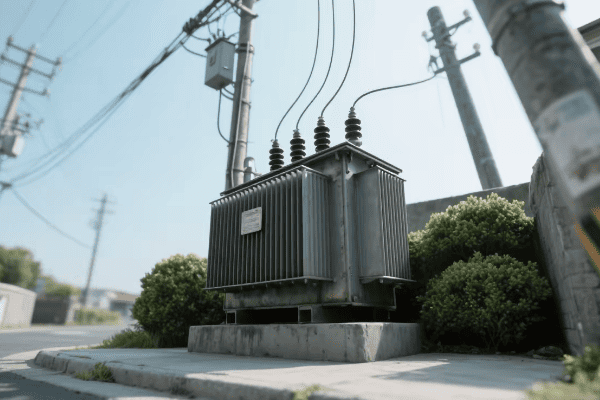
Have you ever wondered how electricity powers our modern world? From bustling cities to remote industrial sites, power transformers play a crucial role in making it all possible.
Power transformers are essential in modern industry for converting voltage levels and enabling efficient power transmission and distribution. They are used in electricity generation, heavy manufacturing, renewable energy systems, transportation, urban development, mining, data centers, healthcare, petrochemicals, and aerospace industries.
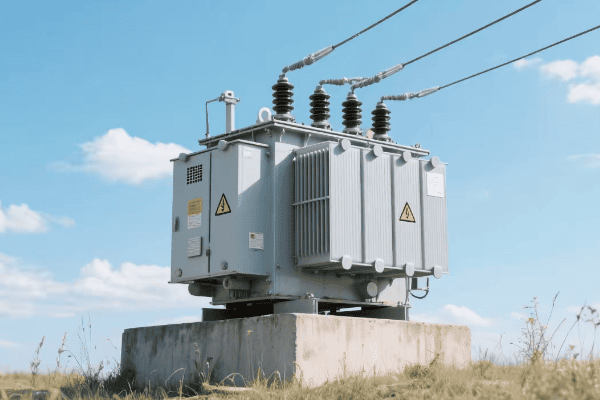
As an electrical engineer with years of experience in the power industry, I’ve seen firsthand how vital these devices are across various sectors. Let’s explore the top 10 applications of power transformers that are shaping our modern industrial landscape.
Powering the Grid: Power Transformers in Electricity Generation and Distribution Networks?
Ever wondered how electricity from a power plant reaches your home? Power transformers are the unsung heroes making this journey possible.
Power transformers are crucial in electricity generation and distribution networks. They step up voltage for efficient long-distance transmission and step it down for local distribution, ensuring power reaches consumers safely and efficiently across vast distances.
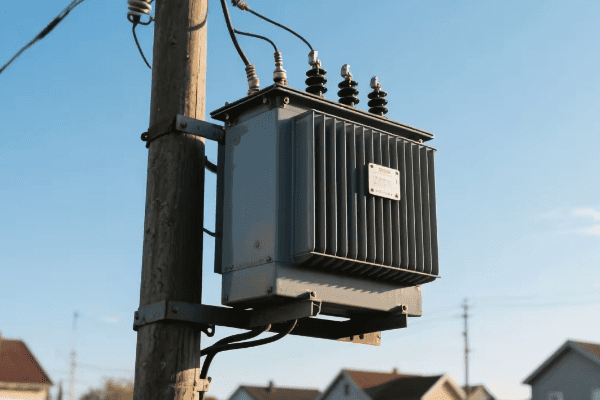
Let’s dive deeper into how power transformers keep our lights on:
Generation: Stepping Up for the Journey
At power plants, transformers play a vital role:
-
Generator Step-Up Transformers:
- Increase voltage from generators (typically 15-25kV) to transmission levels (230kV-765kV).
- Enable efficient long-distance power transmission.
-
Auxiliary Transformers:
- Power plant’s own equipment and systems.
- Ensure continuous operation of critical plant functions.
Transmission: The High-Voltage Highway
Transformers are crucial in the transmission network:
-
Substation Transformers:
- Further step up voltage for ultra-long distance transmission.
- Interconnect different parts of the grid at transmission substations.
-
Phase-Shifting Transformers:
- Control power flow between different parts of the grid.
- Enhance grid stability and efficiency.
Distribution: Bringing Power to the People
As electricity nears its destination, transformers step in again:
-
Primary Distribution Transformers:
- Step down voltage from transmission to distribution levels (typically to 4-34.5kV).
- Feed power to local distribution networks.
-
Secondary Distribution Transformers:
- Further reduce voltage to levels suitable for end-users (120V/240V for homes, 480V for businesses).
- Often seen as pole-mounted or pad-mounted units in neighborhoods.
Here’s a comparison of transformer types in the power grid:
| Transformer Type | Typical Voltage Range | Power Capacity | Key Features |
|---|---|---|---|
| Generator Step-Up | 15-25kV to 230-765kV | 100-1500 MVA | High impedance, surge protection |
| Transmission | 230kV to 765kV | 100-1000 MVA | Extra high voltage insulation |
| Substation | 765kV to 69kV | 10-300 MVA | On-load tap changers |
| Distribution | 69kV to 120/240V | 5-50 MVA | Overload capacity, compact design |
I remember working on a project to upgrade a major substation. We were replacing an aging 500MVA transformer with a new, more efficient model. The logistics of moving these massive units were incredible – the new transformer weighed over 400 tons! But what really struck me was the immediate impact on grid stability once it was online. The new transformer’s advanced features, like real-time monitoring and dynamic voltage regulation, significantly reduced power fluctuations in the region.
Power transformers in the electricity grid are more than just voltage converters. They’re the backbone of our entire power distribution system. As our energy needs grow and change, these transformers are evolving to meet new challenges:
Smart Grid Integration
Modern grid transformers are becoming smarter:
-
Digital Monitoring:
- Real-time data on load, temperature, and oil condition.
- Enables predictive maintenance and rapid response to potential issues.
-
Dynamic Voltage Regulation:
- Automatic adjustment to changing grid conditions.
- Improves power quality and grid stability.
Efficiency and Sustainability
Transformer design is focusing on energy efficiency:
-
Low-Loss Core Materials:
- Use of amorphous metals and advanced silicon steels.
- Significantly reduce energy losses in the transformer.
-
Green Insulation:
- Bio-based oils replacing mineral oils.
- Improve environmental sustainability and reduce fire risk.
As we move towards a more decentralized, renewable-based energy system, power transformers will play an even more critical role. They’ll need to handle bidirectional power flows, integrate with smart grid technologies, and support the increasing variability of renewable energy sources. The future of our power grid depends on these often-overlooked devices, silently working to keep our world powered.
Industrial Giants: Power Transformers in Heavy Manufacturing and Process Industries?
Have you ever wondered how massive steel mills or chemical plants get the enormous amount of power they need? The answer lies in specialized power transformers designed for heavy industry.
Power transformers are essential in heavy manufacturing and process industries for providing the large amounts of power needed for industrial processes. They handle high voltages and currents, ensure reliable power supply for critical operations, and often include special features for harsh industrial environments.

Let’s explore how power transformers keep our industrial giants running:
Powering Heavy Machinery
In manufacturing, transformers supply power to various equipment:
-
Arc Furnace Transformers:
- Provide high current at low voltage for steel melting.
- Handle extreme load fluctuations.
-
Rolling Mill Transformers:
- Power large motors in steel and aluminum production.
- Designed for high overload capacity.
Process Industry Applications
Transformers play a crucial role in continuous process industries:
-
Rectifier Transformers:
- Convert AC to DC for electrolysis processes in chemical and metal industries.
- Handle high harmonic content.
-
Variable Frequency Drive (VFD) Transformers:
- Power speed control systems for pumps and compressors.
- Designed to handle non-linear loads.
Here’s a comparison of transformer types in heavy industry:
| Transformer Type | Typical Power Range | Special Features | Common Applications |
|---|---|---|---|
| Arc Furnace | 50-150 MVA | High short-circuit strength | Steel manufacturing |
| Rolling Mill | 10-50 MVA | High overload capacity | Metal processing |
| Rectifier | 20-100 MVA | Harmonic mitigation | Aluminum smelting, chlorine production |
| VFD | 5-30 MVA | K-factor rated | Oil & gas, mining |
I once worked on a project to upgrade the power system for a large aluminum smelter. We installed a new 80MVA rectifier transformer to power the electrolysis cells. The challenges were immense – the transformer had to handle enormous currents and deal with the harsh, corrosive environment of the smelter. But the results were impressive. The new transformer improved energy efficiency by 3%, which might not sound like much, but in an industry where energy costs are a major factor, it translated to millions in savings annually.
Power transformers in heavy industry are more than just large versions of standard transformers. They’re highly specialized units designed to meet the unique demands of industrial processes:
Rugged Design for Harsh Environments
Industrial transformers must withstand tough conditions:
-
Enhanced Cooling Systems:
- Forced oil and forced air cooling for high-temperature environments.
- Some use water-cooled designs for extreme heat.
-
Robust Mechanical Design:
- Reinforced tank and core to withstand vibrations and shocks.
- Special coatings for corrosion resistance in chemical plants.
Load Management and Power Quality
Industrial processes often have unique power requirements:
-
Load Tap Changers:
- Allow voltage adjustment under load.
- Critical for processes that require precise voltage control.
-
Harmonic Mitigation:
- Special designs to handle non-linear loads common in industrial drives.
- Use of phase-shifting techniques to cancel out harmonics.
As industry 4.0 and smart manufacturing continue to evolve, power transformers in these settings are adapting to new challenges. They’re becoming more intelligent, with advanced monitoring systems that integrate with plant-wide control networks. Some are even incorporating solid-state components for more precise power control.
The future of industrial power transformers will likely see even more integration with digital systems, enabling real-time optimization of power usage across entire plants. We might see transformers that can dynamically adjust their characteristics based on changing process needs, or units that can seamlessly switch between different power sources, including renewables.
In the world of heavy industry, where reliability and efficiency are paramount, power transformers will continue to play a critical role. They’re the unsung heroes that keep our industrial giants running, enabling the production of the materials and goods that form the backbone of our modern world.
Green Energy Integration: Power Transformers in Renewable Energy Systems?
Ever wondered how the energy from a wind farm or solar array makes it to your home? Power transformers are the key link in making renewable energy grid-compatible and widely available.
Power transformers are crucial in renewable energy systems for converting and integrating variable power output from sources like wind and solar into the grid. They handle voltage step-up for transmission, manage power quality issues, and enable bidirectional power flow in smart grid applications.
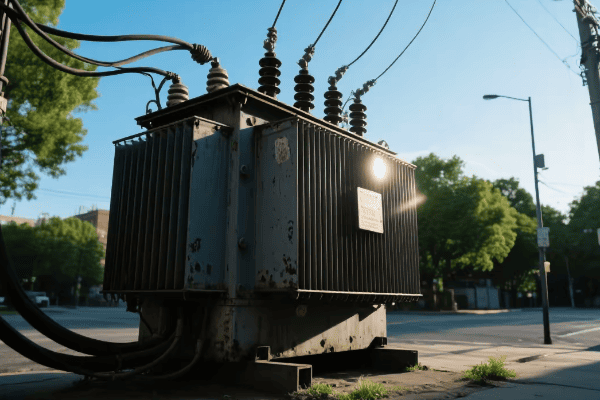
Let’s explore how power transformers are powering the green energy revolution:
Solar Power Integration
Transformers play multiple roles in solar energy systems:
-
Inverter Transformers:
- Convert DC output from solar panels to AC for grid use.
- Step up voltage from inverter levels to distribution or transmission voltages.
-
Collection Substation Transformers:
- Aggregate power from multiple solar arrays.
- Step up voltage for long-distance transmission from large solar farms.
Wind Farm Applications
In wind energy, transformers are essential at various stages:
-
Turbine Transformers:
- Step up voltage from individual wind turbines (typically 690V) to collection system voltage (33kV-66kV).
- Often located in the base or nacelle of the wind turbine.
-
Substation Transformers:
- Further step up voltage from collection system to transmission levels.
- Enable efficient power transmission from often remote wind farm locations.
Here’s a comparison of transformer applications in different renewable energy settings:
| Application | Typical Power Range | Input Voltage | Output Voltage | Special Features |
|---|---|---|---|---|
| Solar Inverter | 1-5 MVA | 600-1500V DC | 33kV AC | Harmonic mitigation |
| Solar Farm Substation | 50-500 MVA | 33kV | 230kV+ | Tap changers for voltage control |
| Wind Turbine | 2-10 MVA | 690V | 33-66kV | Compact design for nacelle mounting |
| Wind Farm Substation | 100-500 MVA | 33-66kV | 230kV+ | Reactive power compensation |
I remember working on a project to connect a large offshore wind farm to the grid. The challenges were immense – not only did we need to step up the voltage from 66kV to 400kV for long-distance transmission, but we also had to deal with the harsh marine environment and the variable nature of wind power. We ended up using a combination of onshore and offshore transformers with advanced monitoring and control systems. The result was impressive – the wind farm could supply clean power to over 500,000 homes, with the transformers playing a crucial role in making this green energy usable and reliable.
Power transformers in renewable energy systems are more than just voltage converters. They’re key components in making green energy practical and grid-compatible. As renewable energy continues to grow, these transformers are evolving to meet new challenges:
Smart Grid Integration
Modern renewable energy transformers are becoming smarter:
-
Bidirectional Power Flow:
- Handle power flowing both to and from the grid.
- Essential for smart grid applications and energy storage integration.
-
Real-Time Monitoring:
- Advanced sensors and communication systems for grid operators.
- Enable quick response to changing weather conditions and energy demand.
Power Quality Management
Renewable sources present unique power quality challenges:
-
Harmonic Mitigation:
- Special designs to handle harmonics from inverters.
- Ensure clean power delivery to the grid.
-
Voltage Regulation:
- On-load tap changers for dynamic voltage control.
- Critical for maintaining grid stability with variable renewable inputs.
As we push towards a greener future, with ambitious renewable energy targets, the role of power transformers in this sector will only grow in importance. We’re likely to see even more specialized designs, perhaps with integrated energy storage capabilities or advanced power electronics for more precise control.
The future might bring transformers that can actively balance and optimize power flow between various renewable sources, conventional generation, and energy storage systems. They could become key nodes in a highly dynamic, AI-managed smart grid, helping to maximize the use of renewable energy while maintaining grid stability.
In the world of renewable energy, where variability and grid integration are key challenges, power transformers will continue to be critical components. They’re not just enabling our transition to cleaner energy sources; they’re actively shaping how we harness and use the power of nature to build a more sustainable future.
Electrifying Transportation: Power Transformers in Railway and Electric Vehicle Infrastructure?
Ever wondered how electric trains run so smoothly or how fast-charging stations for electric vehicles work? The answer lies in specialized power transformers designed for modern transportation needs.
Power transformers are essential in railway systems and electric vehicle (EV) infrastructure. They provide the necessary power for electric trains, subway systems, and high-capacity EV charging stations. These transformers handle high power demands, ensure safety, and support the growing electrification of transportation.
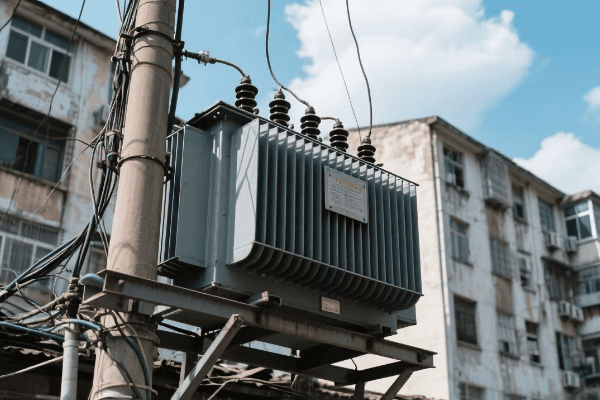
Let’s explore how power transformers are revolutionizing our transportation systems:
Railway Electrification
Transformers play a crucial role in powering electric railways:
-
Traction Substations:
- Convert high voltage from the grid to levels suitable for trains (typically 25kV AC or 3kV DC).
- Spaced along the railway to provide continuous power.
-
Trackside Transformers:
- Step down voltage for signaling and auxiliary systems.
- Ensure reliable power for critical safety and communication equipment.
Electric Vehicle Charging Infrastructure
In the rapidly growing EV sector, transformers are key:
-
Fast Charging Stations:
- Step down medium voltage to levels suitable for DC fast chargers.
- Handle high power demands for rapid charging of multiple vehicles.
-
Grid Integration:
- Manage the impact of large-scale EV charging on the local grid.
- Some include energy storage systems for load balancing.
Here’s a comparison of transformer applications in transportation electrification:
| Application | Typical Power Range | Input Voltage | Output Voltage | Special Features |
|---|---|---|---|---|
| Railway Traction | 5-60 MVA | 110kV+ | 25kV AC or 3kV DC | Phase conversion, harmonics management |
| Subway System | 1-5 MVA | 33kV | 750V DC | Compact design for underground installation |
| EV Fast Charging | 0.5-5 MVA | 33kV | 400V AC | Rapid load changes, smart grid integration |
| EV Charging Hub | 5-20 MVA | 110kV | 33kV/400V | Load balancing, energy storage integration |
I once worked on a project to upgrade the power system for a major city’s subway network. We were replacing old rectifier transformers with new, more efficient models that included advanced harmonic mitigation. The challenges were significant – we had to work in confined underground spaces and ensure zero disruption to the subway service. But the results were impressive. The new transformers not only improved energy efficiency by 20% but also reduced heat generation, which was crucial in the confined subway environment. It was fascinating to see how these transformers, hidden away in substations, played such a crucial role in keeping millions of commuters moving every day.
Power transformers in transportation electrification are more than just power conversion devices. They’re enablers of sustainable mobility. As we move towards more electrified transportation systems, these transformers are evolving to meet new challenges:
Smart Power Management
Modern transportation transformers are becoming more intelligent:
-
Real-Time Load Management:
- Adaptive systems that can handle rapi1. Real-Time Load Management:
- Adaptive systems that can handle rapid load changes in EV charging.
- Integrate with smart grid systems for demand response capabilities.
-
Predictive Maintenance:
- Advanced monitoring systems to predict and prevent failures.
- Crucial for maintaining reliable public transportation and EV charging networks.
Energy Efficiency and Sustainability
Transformer design is focusing on minimizing losses:
-
High-Efficiency Cores:
- Use of advanced materials like amorphous metals to reduce core losses.
- Particularly important in applications with continuous power flow, like railways.
-
Eco-Friendly Cooling:
- Development of biodegradable cooling fluids.
- Some designs use air or synthetic esters instead of traditional mineral oil.
As we push towards more sustainable transportation, the role of power transformers in this sector will only grow. We’re likely to see even more specialized designs, perhaps with integrated energy storage capabilities or advanced power electronics for more precise control of power flow.
The future might bring transformers that can dynamically adjust to the changing needs of EV charging patterns or railway power demands. We might see units that can seamlessly switch between different power sources, including renewables, to optimize energy use and reduce carbon footprint.
In the world of electrified transportation, where reliability and efficiency are paramount, power transformers will continue to play a critical role. They’re not just enabling the shift away from fossil fuels in transportation; they’re actively shaping how we move people and goods in a cleaner, more sustainable future.
Urban Development: Power Transformers in Smart Cities and Commercial Complexes?
Ever wondered how modern skyscrapers stay powered or how smart cities manage their complex energy needs? Power transformers are the unsung heroes behind the scenes, making our urban environments function smoothly.
Power transformers are crucial in smart cities and commercial complexes for efficient power distribution, integration of renewable energy sources, and support of smart grid technologies. They enable energy management in large buildings, power urban infrastructure, and facilitate the implementation of smart city initiatives.
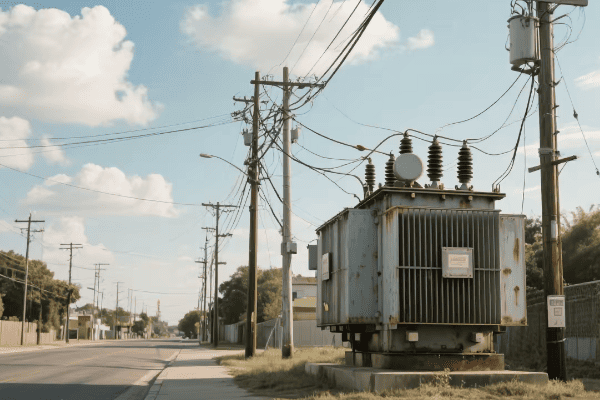
Let’s explore how power transformers are shaping our urban landscapes:
High-Rise Power Distribution
In towering skyscrapers, transformers play a vital role:
-
Step-Down Transformers:
- Reduce incoming high voltage to levels usable within the building.
- Often located in basement levels or dedicated electrical rooms.
-
Floor-Level Transformers:
- Further step down voltage for different building zones.
- Enable efficient power distribution in tall structures.
Smart Grid Integration
In modern urban developments, transformers enable smart energy management:
-
Bidirectional Power Flow:
- Allow integration of rooftop solar and other distributed energy resources.
- Enable buildings to both consume and produce energy.
-
Smart Metering:
- Support advanced metering infrastructure for real-time energy monitoring.
- Facilitate demand response programs and dynamic pricing.
Here’s a comparison of transformer applications in urban settings:
| Application | Typical Power Range | Input Voltage | Output Voltage | Special Features |
|---|---|---|---|---|
| High-Rise Main | 2-10 MVA | 33kV | 11kV | Compact dry-type design |
| Floor Distribution | 500kVA – 2MVA | 11kV | 400V | Low noise, fire-resistant |
| Smart Grid Node | 1-5 MVA | 33kV | 11kV/400V | Communication interfaces, real-time monitoring |
| Urban Substation | 20-100 MVA | 110kV | 33kV/11kV | Underground installation, low noise |
I once worked on a project to upgrade the power system for a new "smart" office complex. We implemented a network of intelligent transformers that not only provided power but also collected real-time data on energy usage. The system could automatically adjust power distribution based on demand, integrate rooftop solar panels, and even communicate with the city’s smart grid for demand response events. It was fascinating to see how these transformers became the nervous system of the building’s energy management, enabling a level of efficiency and flexibility that was previously impossible.
Power transformers in urban environments are evolving beyond their traditional role. They’re becoming key components in the complex energy ecosystems of smart cities:
Energy Efficiency and Sustainability
Urban transformers are at the forefront of energy conservation:
-
Ultra-Low Loss Designs:
- Use of advanced core materials and winding techniques to minimize energy waste.
- Critical in dense urban environments where every bit of efficiency counts.
-
Green Cooling Solutions:
- Development of biodegradable insulating fluids.
- Some designs use natural esters, reducing environmental impact and fire risk.
Smart Monitoring and Control
Modern urban transformers are becoming more intelligent:
-
IoT Integration:
- Equipped with sensors and communication modules for real-time monitoring.
- Enable predictive maintenance and rapid response to potential issues.
-
Load Balancing:
- Dynamic adjustment of power distribution based on real-time demand.
- Crucial for managing the complex and changing energy needs of urban environments.
As our cities become smarter and more energy-conscious, the role of power transformers will continue to evolve. We might see transformers that can actively participate in energy markets, automatically adjusting their operation to optimize cost and efficiency based on real-time pricing and demand.
The future could bring transformers with integrated energy storage capabilities, helping to smooth out the variability of renewable energy sources and provide backup power during outages. We might even see transformers that can learn and adapt to the unique energy patterns of their urban environment, continuously optimizing their performance.
In the landscape of smart cities and modern commercial complexes, power transformers are more than just electrical devices. They’re becoming intelligent nodes in a vast, interconnected energy network, helping to create more sustainable, efficient, and resilient urban environments. As we continue to reimagine our cities for the future, these often-overlooked devices will play a crucial role in powering our urban evolution.
Mining and Minerals: Power Transformers in Resource Extraction Operations?
Have you ever considered the massive amount of power required to run a modern mine? From crushing ore to powering enormous excavators, power transformers play a critical role in keeping the mining industry operational.
Power transformers are essential in mining and mineral extraction for providing reliable, high-capacity power to heavy machinery and processing equipment. They handle the harsh conditions of mining environments, support 24/7 operations, and often include special features for remote locations and extreme climates.
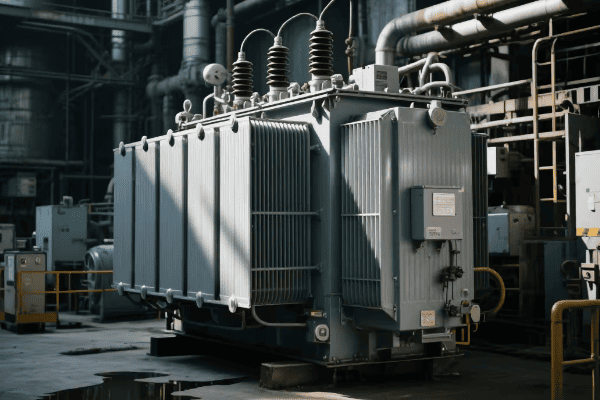
Let’s dig into how power transformers keep our resource extraction operations running:
Powering Heavy Machinery
In open-pit and underground mines, transformers supply power to various equipment:
-
Excavator and Dragline Transformers:
- Provide high power for massive earth-moving equipment.
- Often mobile or semi-mobile to follow mining operations.
-
Conveyor System Transformers:
- Power long conveyor belts for ore transportation.
- Distributed along the conveyor route for efficient power delivery.
Mineral Processing Plants
Transformers play a crucial role in ore processing facilities:
-
Crusher and Mill Transformers:
- Supply power to energy-intensive crushing and grinding equipment.
- Handle high starting currents and variable loads.
-
Electrolysis Transformers:
- Provide DC power for electrowinning processes in metal refineries.
- Designed for high current, low voltage output.
Here’s a comparison of transformer applications in mining operations:
| Application | Typical Power Range | Input Voltage | Output Voltage | Special Features |
|---|---|---|---|---|
| Dragline | 5-15 MVA | 33kV | 6.6kV | Mobile design, shock resistant |
| Conveyor System | 1-5 MVA | 33kV | 690V | Distributed along route, dust-proof |
| Ore Crusher | 2-10 MVA | 33kV | 11kV | High overload capacity |
| Electrowinning | 10-50 MVA | 110kV | 600V DC | Rectifier integrated, high current |
I once worked on a project to upgrade the power system for a large copper mine in a remote desert location. We were replacing aging transformers with new, more efficient models designed specifically for the harsh, dusty environment. The challenges were immense – not only did we have to design for extreme heat and dust, but we also had to ensure 24/7 reliability in a location where any downtime could cost millions. We implemented a system of ruggedized transformers with advanced cooling and filtering systems. The result was impressive – energy efficiency improved by 15%, and unplanned downtime due to electrical issues dropped to near zero. It was a powerful reminder of how critical these often-overlooked devices are in keeping our resource extraction industries running.
Power transformers in mining and mineral extraction are more than just scaled-up versions of standard units. They’re highly specialized devices designed to meet the unique demands of these challenging environments:
Rugged Design for Extreme Conditions
Mining transformers must withstand tough conditions:
-
Enhanced Cooling Systems:
- Forced oil and forced air cooling for high-temperature environments.
- Some use water-cooled designs for underground applications.
-
Dust and Moisture Protection:
- Sealed designs to prevent ingress of dust and moisture.
- Special coatings for corrosion resistance in chemically harsh environments.
Mobility and Flexibility
Many mining operations require power equipment that can move with the extraction process:
-
Mobile Substations:
- Transformers mounted on skids or trailers for easy relocation.
- Enable power supply to follow the mining face in open-pit operations.
-
Modular Designs:
- Allow for easy transportation to remote locations.
- Facilitate quick setup and commissioning in new mining areas.
As the mining industry continues to evolve, with a focus on automation and sustainability, power transformers in this sector are adapting to new challenges. We’re seeing the integration of smart monitoring systems that can predict maintenance needs and optimize performance in real-time. Some transformers are being designed to work seamlessly with renewable energy sources, helping mines reduce their carbon footprint.
The future of mining transformers might include units with integrated energy storage, allowing for better management of peak loads and integration of intermittent renewable power. We could see transformers that can automatically adjust their characteristics based on the specific needs of different mining processes, or units that can operate efficiently at ultra-high altitudes for mountain-top mining operations.
In the world of mining and mineral extraction, where reliability and efficiency can make or break operations, power transformers will continue to play a critical role. They’re the unsung heroes that keep our mines productive, enabling the extraction of the raw materials that fuel our modern world, all while adapting to the industry’s evolving needs for sustainability and efficiency.
Data Center Dynamics: Power Transformers in IT and Cloud Computing Facilities?
Ever wondered how massive data centers, the backbone of our digital world, stay powered 24/7? The answer lies in sophisticated power transformer systems designed specifically for these critical IT facilities.
Power transformers are crucial in data centers and cloud computing facilities for providing reliable, high-quality power to servers, cooling systems, and network equipment. They ensure uninterrupted operation, manage high-density power needs, and support redundancy systems critical for maintaining data integrity and service availability.
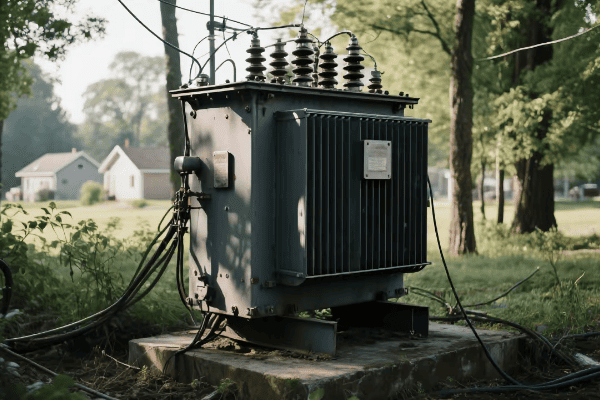
Let’s explore how power transformers keep our digital world running:
Main Facility Power
In large data centers, transformers play a vital role in power distribution:
-
Utility Interface Transformers:
- Step down incoming high voltage to medium voltage for facility distribution.
- Often include features for power quality management.
-
UPS Input/Output Transformers:
- Interface between the utility power and Uninterruptible Power Supply (UPS) systems.
- Provide isolation and voltage matching for UPS equipment.
Server Room Power Distribution
Within the data center, specialized transformers support IT equipment:
-
PDU Transformers:
- Power Distribution Unit transformers step down voltage for server racks.
- Provide clean, stable power to sensitive IT equipment.
-
Isolation Transformers:
- Reduce electrical noise and provide galvanic isolation.
- Critical for maintaining data integrity in sensitive computing environments.
Here’s a comparison of transformer applications in data center settings:
| Application | Typical Power Range | Input Voltage | Output Voltage | Special Features |
|---|---|---|---|---|
| Main Facility | 10-50 MVA | 110kV | 11kV/400V | Redundant design, on-load tap changers |
| UPS System | 1-5 MVA | 11kV | 400V | K-rated for harmonic loads |
| PDU | 50-500 kVA | 400V | 208V | Low impedance, multiple outputs |
| Isolation | 10-100 kVA | 400V | 400V | High isolation, low noise |
I once worked on a project to upgrade the power system for a major cloud computing provider’s data center. The challenge was immense – we needed to increase power capacity and efficiency without any downtime in a facility that was already running 24/7. We implemented a new transformer system with N+1 redundancy, advanced monitoring, and the ability to seamlessly switch between multiple power sources. The most interesting part was the integration of smart PDU transformers that could dynamically allocate power based on real-time server demands. The result was a 20% increase in power capacity, a 15% improvement in energy efficiency, and most importantly, zero unplanned downtime during and after the upgrade.
Power transformers in data centers are more than just voltage converters. They’re critical components in ensuring the reliability and efficiency of our digital infrastructure:
Efficiency and Heat Management
In data centers, every bit of efficiency counts:
-
High-Efficiency Designs:
- Use of low-loss materials to minimize heat generation.
- Critical in environments where cooling is a major operational cost.
-
Advanced Cooling Systems:
- Integration with facility cooling systems for optimal heat management.
- Some use biodegradable fluids for better heat dissipation and environmental safety.
Reliability and Redundancy
For data centers, downtime is not an option:
-
N+1 or 2N Redundancy:
- Multiple transformer systems to ensure continuous operation even during maintenance or failures.
- Automatic switchover capabilities for seamless power transition.
-
Continuous Monitoring:
- Real-time monitoring of load, temperature, and key performance indicators.
- Integration with data center infrastructure management (DCIM) systems for proactive maintenance.
As data centers continue to grow in size and importance, the role of power transformers in these facilities will only become more critical. We’re likely to see even more specialized designs, perhaps with integrated energy storage capabilities or advanced power electronics for more precise control of power quality.
The future might bring transformers that can dynamically adjust their characteristics based on changing IT loads, or units that can seamlessly integrate with renewable energy sources to support green data center initiatives. We might see transformers with AI-driven predictive maintenance capabilities, ensuring even higher levels of reliability.
In the world of data centers and cloud computing, where every millisecond of uptime is crucial, power transformers will continue to be the unsung heroes. They’re not just enabling our digital lives; they’re actively shaping the future of how we store, process, and access the vast amounts of data that drive our modern world.
Healthcare Heroes: Power Transformers in Hospitals and Medical Research Centers?
Have you ever considered what keeps life-saving medical equipment running without interruption? Behind the scenes, specialized power transformers play a crucial role in ensuring reliable power for healthcare facilities.
Power transformers are essential in hospitals and medical research centers for providing clean, stable, and uninterrupted power to critical medical equipment. They support life-support systems, imaging devices, and sensitive research instruments, often with redundant systems to ensure continuous operation even during power outages.
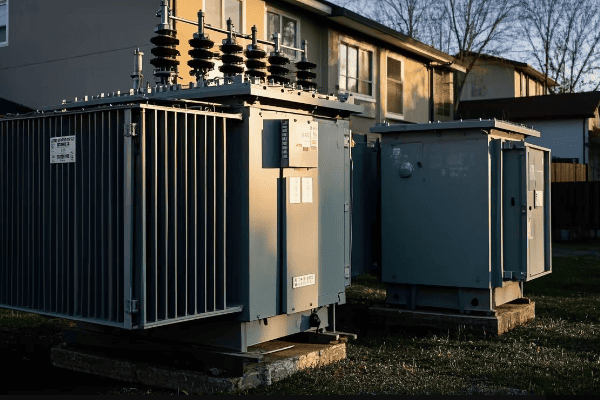
Let’s explore how power transformers keep our healthcare facilities operational:
Critical Care Power Systems
In hospital settings, transformers ensure reliable power for life-saving equipment:
-
Emergency Power Transformers:
- Interface between backup generators and critical hospital systems.
- Ensure rapid, seamless transition during power outages.
-
Isolation Transformers:
- Provide clean, noise-free power to sensitive medical equipment.
- Critical for accurate diagnostics and patient safety.
Medical Imaging Equipment
Transformers play a vital role in powering advanced imaging technologies:
-
MRI System Transformers:
- Supply stable power for superconducting magnets and cooling systems.
- Often include specialized shielding to prevent interference.
-
CT and X-ray Transformers:
- Provide high-voltage power for X-ray tube operation.
- Handle the pulsed loads typical of imaging equipment.
Here’s a comparison of transformer applications in healthcare settings:
| Application | Typical Power Range | Input Voltage | Output Voltage | Special Features |
|---|---|---|---|---|
| Emergency Power | 500kVA – 2MVA | 11kV | 400V | Fast switching, redundant design |
| Isolation | 10-100kVA | 400V | 400V | Ultra-low noise, high isolation |
| MRI System | 50-200kVA | 400V | Multiple outputs | EMI shielding, precise regulation |
| CT Scanner | 100-300kVA | 400V | High voltage DC | Pulsed load handling |
I once worked on a project to upgrade the power system for a major teaching hospital. The challenge was to implement a new transformer system that could handle the increasing power demands of modern medical equipment while ensuring absolutely no interruption to critical care services. We designed a redundant system with multiple isolation transformers and advanced power quality management. The most interesting part was integrating these with the hospital’s emergency power system to ensure seamless transition during outages. The result was impressive – power quality improved significantly, reducing equipment malfunctions, and the hospital was able to install new, advanced imaging systems without concerns about power capacity or stability.
Power transformers in healthcare facilities are more than just voltage converters. They’re critical components in ensuring the reliability and safety of medical services:
Power Quality and Patient Safety
In medical environments, clean power is crucial:
-
Harmonic Mitigation:
- Advanced designs to handle harmonics generated by medical equipment.
- Ensure clean power delivery to sensitive diagnostic tools.
-
Leakage Current Control:
- Specialized designs to minimize leakage currents.
- Critical for patient safety, especially in operating rooms and ICUs.
Reliability and Redundancy
For healthcare, power failure is not an option:
-
N+1 Redundancy:
- Multiple transformer systems to ensure continuous operation even during maintenance.
- Automatic transfer switches for seamless power transition.
-
Continuous Monitoring:
- Real-time monitoring of load, temperature, and power quality.
- Integration with building management systems for proactive maintenance.
As medical technology continues to advance, with more sophisticated and power-hungry equipment, the role of power transformers in healthcare facilities will only grow in importance. We’re likely to see even more specialized designs, perhaps with integrated energy storage capabilities for critical equipment or advanced power conditioning features for ultra-sensitive diagnostic tools.
The future might bring transformers with AI-driven predictive maintenance capabilities, ensuring even higher levels of reliability for life-critical systems. We might see units that can dynamically adjust their output based on the specific needs of different medical procedures, or transformers that can seamlessly integrate with renewable energy sources to support green hospital initiatives.
In the world of healthcare, where every second can make a difference between life and death, power transformers will continue to be the unsung heroes. They’re not just enabling the operation of life-saving equipment; they’re actively contributing to the advancement of medical care by providing the stable, clean power that modern medicine relies on.
Petrochemical Powerhouses: Power Transformers in Oil and Gas Refineries?
Ever wondered how massive oil refineries and gas processing plants manage their enormous power needs? The answer lies in specialized power transformers designed to handle the unique challenges of the petrochemical industry.
Power transformers are crucial in oil and gas refineries for powering large-scale processing equipment, pumps, and control systems. They handle high power demands, operate in hazardous environments, and often include special features for explosion protection and corrosion resistance.
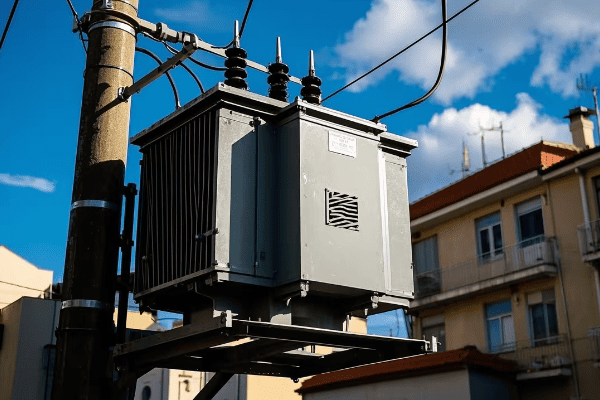
Let’s explore how power transformers keep our petrochemical industries running:
Process Power Supply
In refineries, transformers power various stages of oil and gas processing:
-
Distillation Column Transformers:
- Supply power to heating elements and pumps in distillation towers.
- Handle high temperatures and corrosive environments.
-
Compressor and Pump Transformers:
- Power large motors for fluid movement and gas compression.
- Often include variable frequency drive (VFD) compatibility.
Control and Safety Systems
Transformers play a crucial role in maintaining safe operations:
-
Instrumentation Transformers:
- Provide clean, stable power for control systems and sensors.
- Often include high levels of electrical noise suppression.
-
Emergency Shutdown Transformers:
- Ensure power to critical safety systems during emergencies.
- Designed for high reliability and rapid response.
Here’s a comparison of transformer applications in petrochemical settings:
| Application | Typical Power Range | Input Voltage | Output Voltage | Special Features |
|---|---|---|---|---|
| Process Power | 5-50 MVA | 110kV | 11kV/6.6kV | Explosion-proof, corrosion-resistant |
| Compressor Drive | 10-100 MVA | 110kV | 11kV | VFD compatible, high starting current |
| Instrumentation | 100-500 kVA | 11kV | 400V/230V | High isolation, EMI shielding |
| Emergency Systems | 1-5 MVA | 11kV | 400V | Rapid response, redundant design |
I once worked on a project to upgrade the power system for a major oil refinery. The challenges were immense – we needed to design transformers that could withstand corrosive atmospheres, extreme temperatures, and potential explosive environments. We implemented a system of specially designed transformers with advanced cooling systems, explosion-proof enclosures, and corrosion-resistant materials. The most interesting aspect was integrating these with the refinery’s advanced process control systems to enable real-time power management. The result was a 25% increase in energy efficiency and a significant improvement in process reliability.
Power transformers in petrochemical applications are highly specialized units designed to meet the unique demands of this industry:
Hazardous Environment Protection
Refineries present unique safety challenges:
-
Explosion-Proof Design:
- Specially designed enclosures to prevent ignition of surrounding gases.
- Pressure relief systems to manage internal faults safely.
-
Chemical Resistance:
- Use of special materials and coatings to resist corrosive atmospheres.
- Sealed designs to prevent ingress of harmful gases and liquids.
Efficiency and Reliability
In 24/7 operations, performance is critical:
-
Advanced Cooling Systems:
- Use of forced oil and forced air cooling for high-temperature environments.
- Some designs incorporate water cooling for extreme heat conditions.
-
Online Monitoring:
- Real-time monitoring of key parameters like temperature, gas content, and load.
- Integration with plant-wide control systems for predictive maintenance.
As the petrochemical industry evolves, with a growing focus on efficiency and environmental sustainability, power transformers in this sector are adapting to new challenges. We’re seeing the integration of smart monitoring systems that can predict maintenance needs and optimize performance in real-time. Some transformers are being designed to work more efficiently with variable speed drives, supporting energy-saving initiatives in refineries.
The future of petrochemical transformers might include units with even more advanced materials for corrosion resistance and heat management. We could see transformers with integrated energy recovery systems, capturing waste heat for use in other refinery processes. There might also be developments in modular, plug-and-play transformer systems that can be quickly deployed or reconfigured as refinery needs change.
In the world of oil and gas processing, where reliability and safety are paramount, power transformers will continue to play a critical role. They’re not just enabling the production of the fuels and chemicals that drive our economy; they’re actively contributing to making these processes safer, more efficient, and more environmentally friendly.
Aerospace and Defense: Power Transformers in High-Tech Manufacturing and Testing Facilities?
Have you ever considered the precision power needs behind manufacturing a jet engine or testing advanced defense systems? Specialized power transformers play a crucial role in these high-tech aerospace and defense facilities.
Power transformers are essential in aerospace and defense manufacturing for providing clean, stable power to precision machinery, testing equipment, and sensitive electronics. They support high-power applications, ensure power quality for accurate measurements, and often include features for electromagnetic compatibility in sensitive environments.
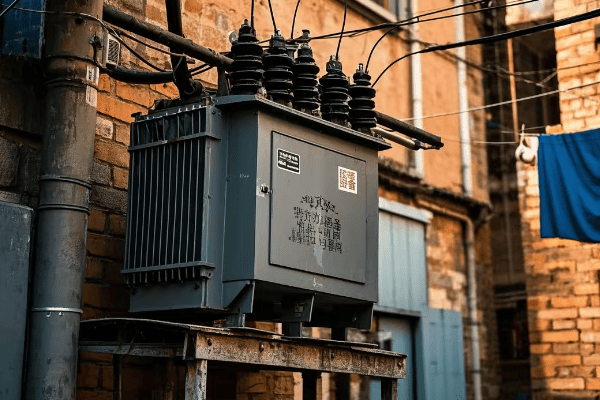
Let’s explore how power transformers support the cutting edge of aerospace and defense technology:
Precision Manufacturing Power
In aerospace manufacturing, transformers power various high-precision processes:
-
CNC Machine Transformers:
- Supply stable power to computer-controlled manufacturing equipment.
- Often include power conditioning to ensure accuracy in machining.
-
Additive Manufacturing Transformers:
- Power 3D printing and laser sintering equipment for aerospace components.
- Handle the unique load profiles of additive manufacturing processes.
Testing and Simulation Facilities
Transformers play a crucial role in powering advanced testing equipment:
-
Wind Tunnel Transformers:
- Supply high power for large fan motors in aerodynamic testing facilities.
- Handle variable loads and provide precise speed control.
-
Radar System Test Transformers:
- Provide clean power for sensitive radar testing equipment.
- Include advanced EMI shielding to prevent interference with tests.
Here’s a comparison of transformer applications in aerospace and defense settings:
| Application | Typical Power Range | Input Voltage | Output Voltage | Special Features |
|---|---|---|---|---|
| CNC Machining | 500kVA – 2MVA | 11kV | 400V | Precision voltage regulation |
| Additive Manufacturing | 100-500kVA | 400V | Multiple outputs | Load profile management |
| Wind Tunnel | 5-20 MVA | 33kV | 11kV | Variable frequency output |
| Radar Testing | 1-5 MVA | 11kV | 400V | Ultra-low EMI, high isolation |
I once worked on a project to design the power system for a new aerospace engine testing facility. The challenges were unique – we needed to provide extremely stable and clean power for sensitive measurement equipment while also supplying massive amounts of power for engine test runs. We implemented a sophisticated transformer system with advanced harmonic mitigation, precise voltage regulation, and the ability to handle rapid load changes. The most fascinating aspect was integrating these transformers with a real-time power quality monitoring system that could detect and correct power anomalies faster than the blink of an eye. The result was a testing facility capable of running the most demanding tests on next-generation aircraft engines with unprecedented accuracy and reliability.
Power transformers in aerospace and defense applications are highly specialized units designed to meet the exacting standards of these industries:
Electromagnetic Compatibility
In sensitive testing environments, managing electromagnetic interference is crucial:
-
Advanced Shielding:
- Use of sophisticated shielding techniques to prevent EMI/RFI emissions.
- Critical for maintaining the integrity of sensitive electronic tests.
-
Low Partial Discharge:
- Designs that minimize partial discharge to reduce interference with sensitive equipment.
- Essential for high-altitude aerospace applications.
Precision and Reliability
In high-stakes aerospace and defense applications, performance is critical:
-
Ultra-Precise Voltage Regulation:
- Use of advanced voltage regulation techniques to maintain extremely stable output.
- Critical for powering precision manufacturing and testing equipment.
-
Ruggedized Design:
- Built to withstand vibration, shock, and extreme environmental conditions.
- Necessary for reliability in demanding aerospace and defense applications.
As aerospace and defense technologies continue to advance, with increasing use of advanced materials, AI-driven systems, and hypersonic technologies, the demands on power systems will grow even more complex. We’re likely to see transformers with even more advanced EMI suppression capabilities, perhaps using new materials or active cancellation techniques.
The future might bring transformers with integrated power quality analysis systems, capable of not just supplying power but also providing real-time feedback on power usage and quality to optimize testing and manufacturing processes. We could see the development of ultra-lightweight, high-efficiency transformers for use in aircraft and spacecraft, pushing the boundaries of what’s possible in mobile power systems.
In the world of aerospace and defense, where precision and reliability can mean the difference between success and failure, power transformers will continue to play a critical behind-the-scenes role. They’re not just enabling the production and testing of advanced technologies; they’re actively contributing to pushing the boundaries of what’s possible in flight, space exploration, and national defense.
Conclusion
Power transformers are crucial across diverse industries, from powering cities to enabling cutting-edge aerospace technologies. Their ability to efficiently convert voltage levels and provide reliable power makes them indispensable in our modern, technology-driven world.
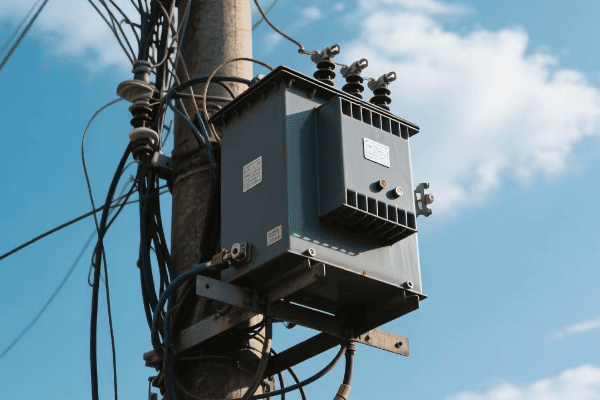
Have you ever wondered how electricity safely powers your home or small business? The unsung hero behind this marvel is the single phase power transformer, a crucial component in our modern electrical systems.
Single phase power transformers are essential in modern industry for converting high voltage electricity to lower, safer levels. They play critical roles in residential power distribution, light manufacturing, renewable energy systems, and various other applications that require efficient and safe power use in single phase systems.
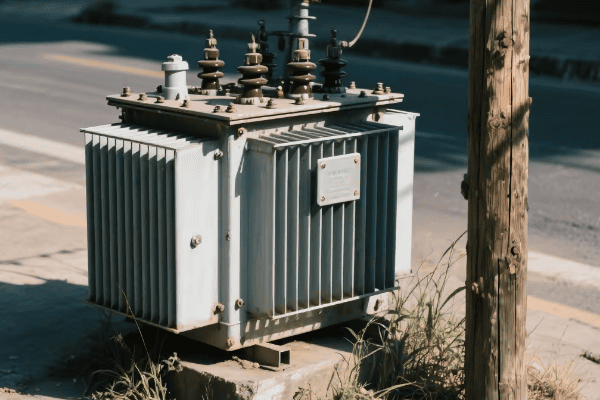
As an electrical engineer with years of experience in the power industry, I’ve seen firsthand how vital these devices are across various sectors. Let’s explore the top 10 applications of single phase transformers that are shaping our modern world.
Powering Homes: Single Phase Transformers in Residential Electricity Distribution?
Have you ever noticed those cylindrical objects on utility poles in your neighborhood? Those are likely single phase transformers, working tirelessly to bring power safely into your home.
In residential electricity distribution, single phase transformers reduce high voltage from distribution lines to levels suitable for household use. They ensure safe and efficient power delivery for lighting, appliances, and electronic devices in homes.
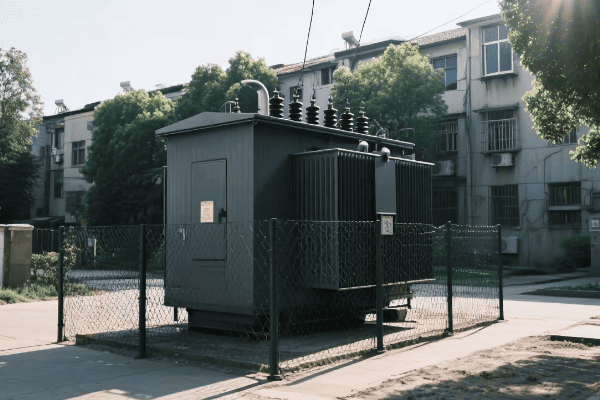
Let’s dive deeper into how single phase transformers power our daily lives:
Voltage Reduction for Safe Use
Single phase transformers play a crucial role in making electricity safe for home use:
-
Distribution Voltage Reduction:
- They reduce voltage from distribution levels (typically 7.2kV) to 240/120V for residential use.
- This lower voltage is safe for household wiring and appliances.
-
Load Management:
- Transformers are sized based on the expected load of the homes they serve.
- They can handle fluctuations in demand throughout the day.
Efficiency in Power Delivery
These transformers are designed for optimal efficiency:
-
Low Core Losses:
- Modern designs minimize energy loss in the transformer core.
- This results in lower operating costs for utilities and consumers.
-
Overload Capacity:
- Residential transformers can handle short-term overloads.
- This is crucial during peak usage times, like hot summer days.
Here’s a comparison of typical residential transformer specifications:
| Aspect | Small Home | Large Home | Multi-Unit Dwelling |
|---|---|---|---|
| Capacity | 10 kVA | 25 kVA | 50 kVA |
| Primary Voltage | 7.2 kV | 7.2 kV | 7.2 kV |
| Secondary Voltage | 240/120V | 240/120V | 240/120V |
| Mounting | Pole-mounted | Pad-mounted | Pad-mounted |
| Protection | Fuse | Fuse and breaker | Multiple breakers |
I remember working on a project to upgrade the power distribution in an old neighborhood. We replaced the aging transformers with new, more efficient models. The impact was immediate – residents reported fewer voltage fluctuations, and energy losses in the local grid decreased significantly. One homeowner told me her electric bill dropped by 10% after the upgrade, a testament to the importance of efficient transformer design.
Single phase transformers in residential applications are more than just voltage converters. They’re the guardians of our electrical systems, ensuring that the massive power of the grid is tamed to a level that’s safe and useful for our homes. As our energy needs grow and change, these transformers continue to evolve, becoming more efficient and smarter.
The role of single phase transformers in residential power distribution is set to become even more critical as we move towards smart grids and increased home electrification. With the rise of electric vehicles and home energy storage systems, these transformers will need to handle bidirectional power flow and communicate with smart meters. The future may see transformers that can dynamically adjust their output based on real-time demand, further improving efficiency and grid stability.
As we continue to push for more sustainable and resilient power systems, the humble single phase transformer will remain a cornerstone of residential electricity distribution, silently ensuring that we have safe, reliable power at our fingertips.
Small-Scale Industrial Marvels: Single Phase Transformers in Light Manufacturing?
Have you ever wondered how small workshops and light manufacturing facilities power their equipment safely and efficiently? The answer often lies in the strategic use of single phase transformers.
Single phase transformers play a crucial role in light manufacturing by converting high voltage power to levels suitable for various industrial equipment. They ensure safe and efficient operation of machines, lighting systems, and control panels in small-scale industrial settings.
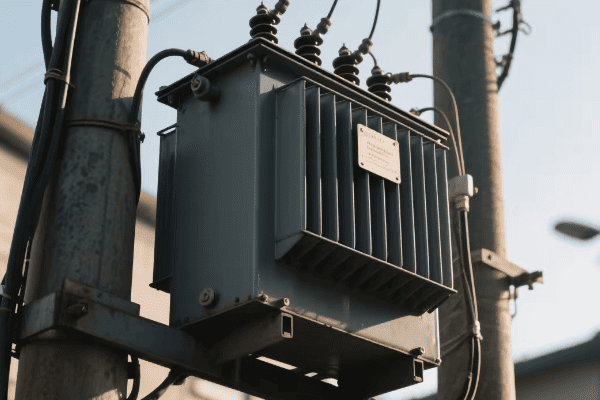
Let’s explore how single phase transformers power the backbone of small-scale industry:
Powering Industrial Equipment
Single phase transformers are essential for operating diverse machinery:
-
Machine Tools:
- Power lathes, milling machines, and CNC equipment.
- Provide stable voltage for precise operation.
-
Welding Equipment:
- Supply high current for welding machines.
- Handle the fluctuating loads typical in welding operations.
Lighting and Control Systems
These transformers also support auxiliary systems:
-
Industrial Lighting:
- Power high-bay lighting and task lighting in workshops.
- Ensure consistent illumination for safety and productivity.
-
Control Panels:
- Supply low voltage power for PLCs and control systems.
- Isolate sensitive electronics from power line disturbances.
Here’s a comparison of single phase transformer applications in light manufacturing:
| Application | Power Range | Input Voltage | Output Voltage | Special Features |
|---|---|---|---|---|
| Machine Tools | 2-10 kVA | 480V | 240V | Overload protection |
| Welding Equipment | 5-25 kVA | 480V | 240V | High short-term capacity |
| Lighting Systems | 1-5 kVA | 480V | 277V | Power factor correction |
| Control Panels | 0.5-2 kVA | 240V | 120V | Isolation, EMI filtering |
I once worked on a project to upgrade the electrical system in a small furniture manufacturing workshop. We installed a new single phase transformer to power their recently acquired CNC router. The owner was amazed at how the new setup not only provided more stable power for the sensitive CNC controls but also reduced overall energy consumption. It was a perfect example of how the right transformer can improve both productivity and efficiency in small-scale manufacturing.
Single phase transformers in light manufacturing are more than just power conversion devices. They’re enablers of productivity and innovation in small-scale industry. As manufacturing technology continues to advance, with more computerized and precision equipment, these transformers are evolving to meet new challenges.
Efficiency and Energy Management
Modern single phase transformers in industrial settings focus on energy efficiency:
-
High Efficiency Cores:
- Use advanced materials like amorphous metal to reduce core losses.
- Can achieve efficiency ratings over 98%, minimizing energy waste.
-
Load Management:
- Some models include tap changers for voltage adjustment.
- This allows for optimized performance under varying load conditions.
Safety and Reliability
In industrial environments, safety is paramount:
-
Overload Protection:
- Include thermal sensors and circuit breakers.
- Protect both the transformer and connected equipment from damage.
-
Isolation:
- Provide galvanic isolation between input and output.
- This is crucial for protecting sensitive equipment and ensuring worker safety.
As we move towards more automated and flexible manufacturing processes, the role of single phase transformers in light industry will continue to grow. They’ll need to handle more dynamic loads, integrate with smart factory systems, and support the increasing electrification of industrial processes. Whether it’s powering the next generation of 3D printers or supporting advanced robotics in small workshops, single phase transformers will remain at the heart of small-scale industrial power systems, quietly enabling the innovations that drive our economy forward.
Renewable Energy Solutions: Single Phase Transformers in Solar and Wind Power Systems?
Ever wondered how the power from your rooftop solar panels or a small wind turbine gets integrated into your home’s electrical system? The key often lies in specialized single phase transformers designed for renewable energy applications.
Single phase transformers are crucial in small-scale renewable energy systems for converting the variable output of solar panels and wind turbines into usable power for homes and small businesses. They help manage voltage fluctuations, ensure grid compatibility, and enable efficient energy distribution from these green power sources.
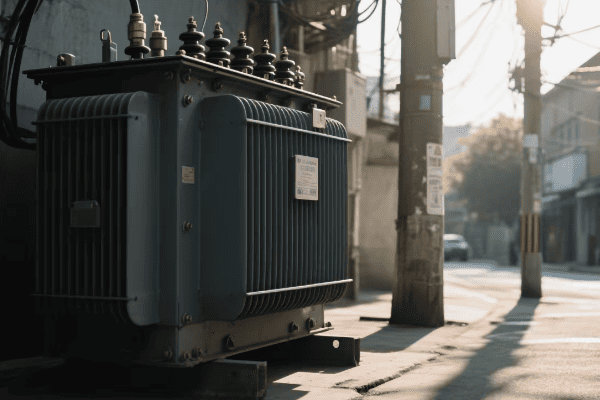
Let’s explore how single phase transformers are powering the green energy revolution at the local level:
Solar Power Integration
Single phase transformers play a vital role in residential and small commercial solar installations:
-
Inverter Transformers:
- Convert DC output from solar panels to AC for home use or grid feed-in.
- Manage voltage levels to match grid requirements.
-
Isolation and Safety:
- Provide galvanic isolation between solar system and grid.
- Crucial for preventing ground faults and ensuring system safety.
Small Wind Turbine Systems
For small-scale wind power, transformers are essential:
-
Voltage Step-Up:
- Increase voltage from small turbines for efficient transmission.
- Enable connection to local grid or home electrical systems.
-
Power Quality Management:
- Help manage the variable output typical of wind systems.
- Smooth out voltage fluctuations for stable power delivery.
Here’s a comparison of transformer applications in different small-scale renewable systems:
| Aspect | Residential Solar | Small Wind Turbine | Hybrid System |
|---|---|---|---|
| Typical Capacity | 5-10 kVA | 10-25 kVA | 15-50 kVA |
| Input Voltage | 240-600V DC | 240-480V AC | Variable |
| Output Voltage | 240/120V AC | 240/120V AC | 240/120V AC |
| Special Features | DC/AC conversion | Variable input handling | Bidirectional capability |
| Challenges | Intermittency | Wind variability | System complexity |
I once worked on a project to install a hybrid solar-wind system for a small farm. We used a specialized single phase transformer that could handle both the solar inverter output and the variable AC from the wind turbine. The farmer was thrilled with the result – not only did the system significantly reduce their electricity bills, but it also provided reliable power during grid outages. It was a perfect example of how the right transformer can make renewable energy practical and efficient for small-scale applications.
Single phase transformers in renewable energy systems are more than just voltage converters. They’re the vital link that makes small-scale green energy practical and grid-compatible. As we push towards a greener future, these transformers are evolving to meet unique challenges:
Smart Grid Integration
Modern renewable energy transformers are becoming smarter:
-
Bidirectional Capability:
- Allow power to flow both to and from the grid.
- Essential for net metering and energy storage systems.
-
Communication Features:
- Some models can interface with smart meters and home energy management systems.
- Enable real-time monitoring and optimization of energy flow.
Efficiency and Reliability
Transformers for renewable systems focus on maximizing energy harvest:
-
High Efficiency Design:
- Use low-loss materials to minimize energy waste.
- Critical for maximizing the benefit of renewable energy generation.
-
Wide Input Range:
- Handle the variable voltage inputs typical of renewable sources.
- Maintain high efficiency across different operating conditions.
As we continue to decentralize our power generation and move towards more sustainable energy sources, single phase transformers will play an increasingly important role. They’ll need to become even more flexible, efficient, and intelligent to handle the complexities of integrating various renewable sources with existing grid infrastructure. Whether it’s maximizing the output of rooftop solar panels or enabling small communities to set up their own microgrids, these transformers will be at the forefront of our transition to a cleaner, more sustainable energy future.
Illuminating Spaces: Single Phase Transformers in Commercial and Street Lighting?
Have you ever marveled at the bright, uniform lighting in a shopping mall or the long rows of street lights that keep our roads safe at night? Behind this illumination are single phase transformers, working silently to power our commercial and public lighting systems.
Single phase transformers are essential in commercial and street lighting for converting high voltage power to levels suitable for various lighting fixtures. They ensure efficient and reliable operation of lighting systems in retail spaces, office buildings, and public areas, contributing to safety, ambiance, and energy efficiency.
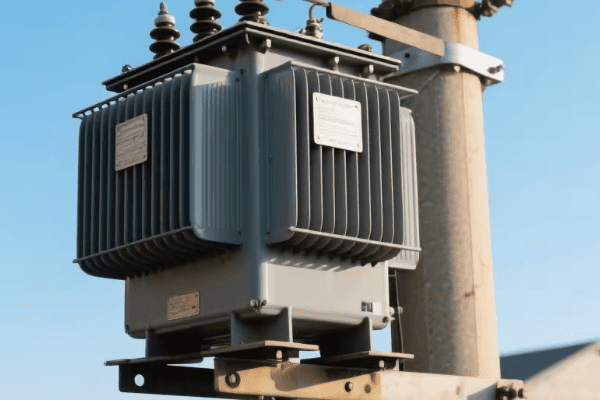
Let’s shed some light on how single phase transformers illuminate our world:
Commercial Lighting Applications
Single phase transformers power diverse lighting setups in commercial spaces:
-
Retail Lighting:
- Power spotlights, display lighting, and ambient illumination in stores.
- Support dimming systems for creating different moods and atmospheres.
-
Office Illumination:
- Supply power for overhead lighting, task lamps, and emergency lighting.
- Enable smart lighting control for energy efficiency.
Street and Public Area Lighting
These transformers are crucial for outdoor illumination:
-
Street Lights:
- Step down high voltage to power long stretches of road lighting.
- Support dusk-to-dawn operation and smart control systems.
-
Park and Parking Lot Lighting:
- Provide reliable power for area lighting in public spaces.
- Enable timer and sensor-based operation for energy savings.
Here’s a comparison of transformer applications in different lighting scenarios:
| Aspect | Retail Lighting | Office Lighting | Street Lighting |
|---|---|---|---|
| Typical Capacity | 10-50 kVA | 25-100 kVA | 5-25 kVA |
| Input Voltage | 480V | 480V | 7.2kV |
| Output Voltage | 120/208V | 277/480V | 120/240V |
| Special Features | Dimming support | Daylight harvesting | Photocell control |
| Challenges | Variable loads | Energy efficiency | Weather exposure |
I once worked on a project to upgrade the lighting system in a large shopping mall. We installed a network of smart single phase transformers that not only powered the new LED lighting but also integrated with the building’s energy management system. The result was stunning – not only did the new system provide better quality light, but it also reduced energy consumption by 40%. The mall manager was amazed at how the right transformer setup could so dramatically improve both the shopping experience and the bottom line.
Single phase transformers in lighting applications are more than just power converters. They’re key components in creating safe, efficient, and attractive illuminated environments. As lighting technology continues to advance, these transformers are evolving to meet new challenges:
Energy Efficiency and Smart Control
Modern lighting transformers focus on optimizing energy use:
-
High Efficiency Design:
- Use low-loss core materials to minimize energy waste.
- Critical for maximizing the benefits of energy-efficient LED lighting.
-
Smart Control Integration:
- Support dimming and color temperature adjustment in smart lighting systems.
- Enable integration with occupancy sensors and daylight harvesting systems.
Reliability and Longevity
In lighting applications, consistent performance is crucial:
-
Thermal Management:
- Advanced cooling designs to handle continuous operation.
- Extend transformer life and maintain efficiency over time.
-
Surge Protection:
- Built-in protection against voltage spikes common in outdoor applications.
- Ensure long-term reliability of lighting systems.
As we move towards smarter, more energy-efficient cities, the role of single phase transformers in lighting will only grow in importance. They’ll need to become even more efficient, more integrated with smart control systems, and more resilient to handle the demands of advanced lighting technologies. Whether it’s creating the perfect ambiance in a high-end retail store or illuminating our streets with adaptive, energy-efficient lighting, these transformers will continue to play a crucial role in shaping the lit environments of our future.
Keeping It Cool: Single Phase Transformers in HVAC and Refrigeration Systems?
Ever wondered how your air conditioner keeps running smoothly on hot summer days or how supermarkets keep their produce fresh? Single phase transformers play a crucial role in powering HVAC and refrigeration systems that keep us cool and our food fresh.
Single phase transformers are vital in HVAC and refrigeration systems for converting high voltage power to levels suitable for compressors, fans, and control systems. They ensure efficient operation of cooling equipment, support variable speed drives, and enable precise temperature control in various applications.
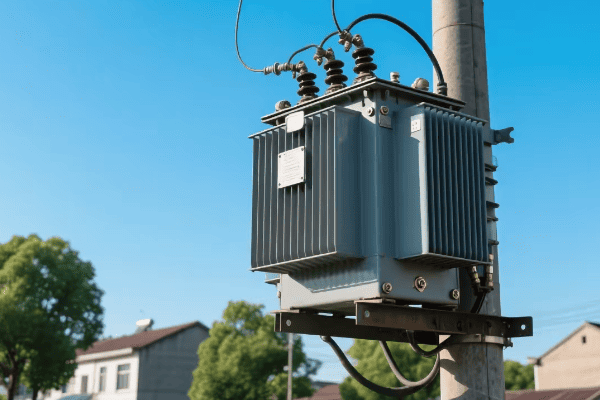
Let’s explore how single phase transformers keep things cool:
Residential HVAC Systems
Single phase transformers are essential for home cooling and heating:
-
Compressor Power:
- Supply appropriate voltage for AC compressors.
- Handle the high inrush current during compressor start-up.
-
Control Systems:
- Provide low voltage power for thermostats and control boards.
- Enable smart home integration and energy-efficient operation.
Commercial Refrigeration
In supermarkets and food storage, transformers play a critical role:
-
Multiple Cooling Units:
- Power various refrigeration units from a single source.
- Support different voltage requirements for freezers and coolers.
-
Energy Management:
- Work with variable frequency drives for energy-efficient operation.
- Enable demand response capabilities in smart grid applications.
Here’s a comparison of transformer applications in different HVAC and refrigeration settings:
| Aspect | Residential AC | Commercial HVAC | Supermarket Refrigeration |
|---|---|---|---|
| Typical Capacity | 2-5 kVA | 10-50 kVA | 25-100 kVA |
| Input Voltage | 240V | 480V | 480V |
| Output Voltage | 24V (control), 240V (compressor) | 120/208V | 120/208V, 277V |
| Special Features | Surge protection | Phase conversion | Multiple outputs |
| Challenges | High inrush current | Variable loads | Continuous operation |
I once worked on a project to upgrade the refrigeration system in a large grocery store. We implemented a system of high-efficiency single phase transformers coupled with variable frequency drives. This not only provided the necessary power for the cooling units but also allowed for dynamic adjustment of cooling capacity based on demand. The result was a 30% reduction in energy consumption and more stable temperature control, crucial for maintaining food quality.
Single phase transformers in HVAC and refrigeration applications are more than just power conversion devices. They’re key components in systems that maintain our comfort and preserve our food. As energy efficiency becomes increasingly important, these transformers are evolving to meet new challenges:
Energy Efficiency and Smart Control
Modern HVAC transformers focus on optimizing energy use:
-
High Efficiency Design:
- Use advanced core materials to minimize losses.
- Critical for reducing overall energy consumption in cooling systems.
-
Smart Grid Integration:
- Support demand response programs for load shedding during peak times.
- Enable integration with building management systems for optimized operation.
Reliability and Performance
In cooling applications, consistent performance is crucial:
-
Thermal Management:
- Advanced cooling designs to handle continuous operation.
- Maintain efficiency even in high ambient temperature environments.
-
Harmonic Mitigation:
- Handle harmonics generated by variable frequency drives.
- Ensure clean power for sensitive control electronics.
As we move towards more sustainable and intelligent buildings, the role of single phase transformers in HVAC and refrigeration will only grow in importance. They’ll continue to evolve, incorporating new technologies to improve energy efficiency, enable better control, and support the integration of renewable energy sources into building systems. Whether it’s maintaining the perfect climate in a smart home or ensuring food safety in a supermarket, single phase transformers will remain at the heart of our cooling infrastructure.
Precision Power: Single Phase Transformers in Laboratory and Medical Equipment?
Have you ever wondered how sensitive medical devices or precision laboratory instruments receive the exact power they need? The answer often lies in specialized single phase transformers designed for these critical applications.
Single phase transformers are crucial in laboratory and medical equipment for providing clean, stable, and precisely regulated power. They protect delicate components from power fluctuations, reduce electromagnetic interference, and ensure accurate operation of diagnostic and analytical instruments.

Let’s explore how single phase transformers enable precision in healthcare and scientific research:
Medical Imaging Equipment
Single phase transformers play a vital role in powering diagnostic tools:
-
MRI Machines:
- Provide stable power for superconducting magnets.
- Ensure clean power supply for sensitive image processing systems.
-
X-ray Equipment:
- Supply high voltage for X-ray tube operation.
- Maintain precise voltage control for accurate imaging.
Laboratory Instruments
In research settings, transformers support various analytical devices:
-
Spectrometers:
- Deliver stable power for consistent spectral measurements.
- Minimize electrical noise for accurate analysis.
-
Electron Microscopes:
- Provide ultra-stable voltage for electron beam control.
- Enable high-resolution imaging at atomic scales.
Here’s a comparison of transformer applications in different precision equipment:
| Aspect | MRI Machine | X-ray System | Mass Spectrometer |
|---|---|---|---|
| Typical Capacity | 50-100 kVA | 10-30 kVA | 5-15 kVA |
| Input Voltage | 480V | 480V | 208V |
| Output Voltage | Multiple outputs | High voltage DC | Multiple precise voltages |
| Special Features | Ultra-low noise | High voltage isolation | Extreme stability |
| Challenges | Magnetic field exposure | High voltage safety | Precision regulation |
I once worked on a project to install a new MRI machine in a hospital. The power quality requirements were incredibly stringent. We designed a custom single phase transformer system with advanced EMI shielding and voltage regulation. The result was remarkable – the new MRI produced images with unprecedented clarity, allowing doctors to detect subtle abnormalities that might have been missed before. It was a powerful reminder of how critical proper power conditioning is in medical applications.
Single phase transformers in laboratory and medical applications are far more than simple voltage converters. They’re sophisticated power conditioning devices that play a crucial role in enabling the accuracy and reliability of modern scientific and medical technology. As our instruments become more sensitive and our need for precision increases, these specialized transformers continue to evolve:
Electromagnetic Compatibility
In sensitive environments, managing electromagnetic interference is crucial:
-
Advanced Shielding:
- Use mu-metal and other specialized materials for magnetic shielding.
- Critical for preventing interference with sensitive instruments.
-
Faraday Shielding:
- Incorporate electrostatic shields between primary and secondary windings.
- Reduce capacitive coupling and improve noise rejection.
Precision Voltage Regulation
Maintaining exact voltage levels is essential for many instruments:
-
Servo-controlled Regulation:
- Use feedback systems to maintain output voltage within tight tolerances.
- Crucial for consistent operation of analytical instruments.
-
Multiple Precise Outputs:
- Provide several highly regulated voltage outputs from a single unit.
- Support complex instruments with various power requirements.
As we push the boundaries of medical diagnostics and scientific research, the demands on power quality and precision continue to increase. Single phase transformers in these applications will need to evolve to meet these challenges, incorporating new materials, advanced control systems, and even more sophisticated shielding techniques. They’ll play an increasingly critical role in enabling the next generation of medical breakthroughs and scientific discoveries, ensuring that our most sensitive and important equipment always has the clean, stable power it needs to function at its best.
On the Move: Single Phase Transformers in Electric Vehicle Charging Stations?
Ever wondered how electric vehicle (EV) charging stations deliver the right amount of power to charge your car quickly and safely? The unsung hero behind this technology is often a single phase transformer, specially designed for EV charging applications.
Single phase transformers are essential in electric vehicle charging stations for converting grid power to the appropriate voltage and current levels for EV batteries. They ensure safe, efficient, and fast charging while protecting both the vehicle and the grid from power fluctuations and harmonics.
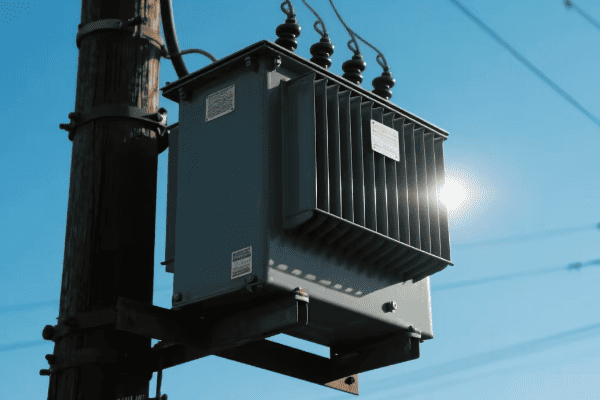
Let’s explore how single phase transformers are powering the electric vehicle revolution:
Residential EV Charging
Single phase transformers support home charging solutions:
-
Level 2 Chargers:
- Step up voltage from 120V to 240V for faster home charging.
- Handle the continuous high-power load of overnight charging.
-
Smart Charging Integration:
- Enable communication between the charger and home energy systems.
- Support time-of-use pricing and grid demand response programs.
Public Charging Stations
In commercial and public settings, transformers play a crucial role:
-
Fast Charging Systems:
- Provide high power output for rapid DC charging.
- Manage the high current demands of fast charging stations.
-
Multi-Port Charging Stations:
- Distribute power efficiently to multiple charging points.
- Balance loads across different vehicles charging simultaneously.
Here’s a comparison of transformer applications in different EV charging scenarios:
| Aspect | Home Level 2 Charger | Public AC Charging | DC Fast Charging |
|---|---|---|---|
| Typical Capacity | 7-10 kVA | 20-50 kVA | 50-150 kVA |
| Input Voltage | 240V | 480V | 480V |
| Output Voltage | 240V AC | 240V AC | 200-1000V DC |
| Charging Speed | 20-30 miles/hour | 20-30 miles/hour | 60-80 miles in 20 min |
| Special Features | Smart grid integration | Load balancing | High current output |
I recently worked on a project to install a network of fast-charging stations along a major highway. We used specially designed single phase transformers that could handle the high power demands and rapid load changes of fast charging. The most interesting part was integrating these with a smart grid system that could balance the load across multiple charging points and even store energy during off-peak hours. It was fascinating to see how these transformers played a crucial role in making long-distance EV travel practical and convenient.
Single phase transformers in EV charging applications are more than just power converters. They’re key enablers of the transition to electric mobility. As EV technology continues to advance, these transformers are evolving to meet new challenges:
Power Quality Management
Maintaining grid stability with high-power EV charging is crucial:
-
Harmonic Mitigation:
- Use active filtering to reduce harmonics generated by charging systems.
- Ensure compliance with grid power quality standards.
-
Reactive Power Compensation:
- Some advanced models can provide reactive power support to the grid.
- Help maintain voltage stability in areas with high EV charging demand.
Bidirectional Charging Capability
Future EV charging may involve power flowing both ways:
-
Vehicle-to-Grid (V2G) Support:
- Enable power flow from vehicle batteries back to the grid.
- Support grid stability and renewable energy integration.
-
Smart Energy Management:
- Integrate with home or building energy systems for optimized power use.
- Enable EVs to serve as mobile energy storage units.
As we move towards a future where electric vehicles become the norm, the role of single phase transformers in charging infrastructure will only grow in importance. They’ll need to become even more efficient, more intelligent, and more integrated with smart grid technologies. Whether it’s enabling ultra-fast charging for long-distance travel or supporting complex vehicle-to-grid systems, these transformers will be at the heart of our electric vehicle ecosystem, quietly enabling the clean transportation revolution.
Staying Connected: Single Phase Transformers in Telecommunications Infrastructure?
Ever wondered how your cell phone maintains a strong signal or how internet data centers stay powered 24/7? Single phase transformers play a crucial, often unseen role in keeping our telecommunications networks running smoothly.
Single phase transformers are vital in telecommunications for powering cell towers, data centers, and network equipment. They ensure reliable power supply for communication systems, support backup power solutions, and enable the efficient operation of the infrastructure that keeps our world connected.
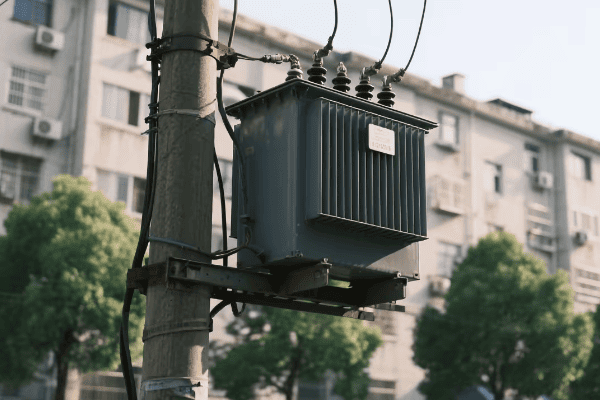
Let’s explore how single phase transformers are keeping us connected:
Cell Tower Power Systems
Single phase transformers are essential for mobile network infrastructure:
-
Main Power Supply:
- Step down utility voltage to levels suitable for tower equipment.
- Typically convert from distribution voltage to 120/240V for telecom gear.
-
Backup Power Integration:
- Interface with battery backup systems and generators.
- Ensure uninterrupted service during power outages.
Data Center Power Distribution
In the heart of our digital world, transformers play a critical role:
-
Server Rack Power:
- Provide appropriate voltages for servers and networking equipment.
- Support redundant power supplies for critical systems.
-
Cooling System Power:
- Supply power for HVAC systems crucial for equipment cooling.
- Enable efficient operation of data center environmental controls.
Here’s a comparison of transformer applications in different telecom settings:
| Aspect | Cell Tower | Small Data Center | Network Equipment Room |
|---|---|---|---|
| Typical Capacity | 15-25 kVA | 100-500 kVA | 10-50 kVA |
| Input Voltage | 7.2kV-14.4kV | 480V | 480V |
| Output Voltage | 120/240V | 120/208V | 120/208V |
| Special Features | Outdoor rated | High efficiency | Compact size |
| Challenges | Remote locations | 24/7 operation | Heat management |
I once worked on a project to upgrade the power systems for a network of rural cell towers. We implemented a system of smart single phase transformers that not only provided the necessary power conversion but also included remote monitoring capabilities. This allowed the telecom provider to monitor power usage and detect potential issues in real-time, even in remote locations. The result was a significant improvement in network reliability and a reduction in maintenance costs.
Single phase transformers in telecommunications are more than just voltage converters. They’re critical components in the infrastructure that keeps our increasingly connected world running. As our demand for data and communication continues to grow, these transformers are evolving to meet new challenges:
Energy Efficiency and Reliability
In always-on telecom applications, efficiency and reliability are paramount:
-
High Efficiency Design:
- Use advanced core materials to minimize losses.
- Critical for reducing operating costs in 24/7 operations.
-
Thermal Management:
- Advanced cooling designs to handle continuous operation.
- Ensure long-term reliability in high-density equipment environments.
Smart Monitoring and Control
Modern telecom transformers are becoming more intelligent:
-
Remote Monitoring:
- Include sensors for temperature, load, and oil condition (in liquid-filled units).
- Enable predictive maintenance and rapid response to potential issues.
-
Integration with Network Management Systems:
- Provide real-time data on power status and efficiency.
- Support overall network reliability and performance monitoring.
As we move towards 5G networks, edge computing, and even more data-intensive applications, the importance of these specialized transformers in telecommunications will only grow. They’ll continue to evolve, incorporating new technologies to improve efficiency, reliability, and monitoring capabilities, ensuring that our global communications networks can meet the challenges of the future. Whether it’s powering the next generation of mobile networks or ensuring the reliability of critical data centers, single phase transformers will remain an essential part of the infrastructure that keeps us connected.
Safe and Sound: Single Phase Transformers in Security and Alarm Systems?
Ever wondered how security systems stay operational during power outages or how sensitive alarm equipment receives clean, stable power? The answer often lies in specialized single phase transformers designed for security and alarm applications.
Single phase transformers are crucial in security and alarm systems for providing reliable, clean power to surveillance cameras, access control systems, and alarm panels. They ensure continuous operation during power fluctuations, support backup power systems, and protect sensitive equipment from electrical disturbances.
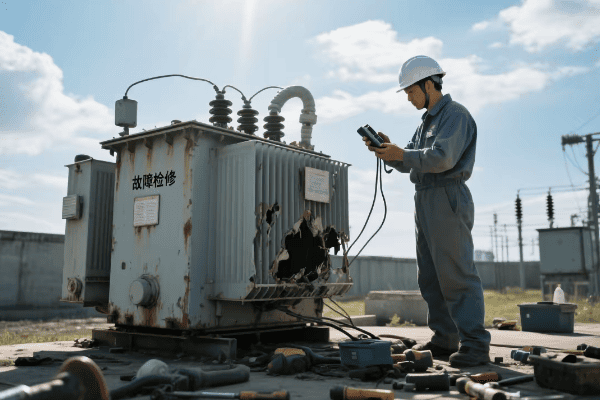
Let’s explore how single phase transformers keep our spaces safe and secure:
Video Surveillance Systems
Single phase transformers play a vital role in powering CCTV and IP camera networks:
-
Power Distribution:
- Provide appropriate voltage for multiple cameras and recording equipment.
- Support Power over Ethernet (PoE) systems for IP cameras.
-
Isolation and Protection:
- Isolate sensitive camera equipment from main power disturbances.
- Protect against voltage spikes and surges.
Access Control Systems
In building security, transformers ensure reliable operation:
-
Multi-voltage Output:
- Supply various voltage levels for different components (e.g., card readers, electric locks).
- Enable centralized power distribution for access control panels.
-
Backup Power Integration:
- Interface with UPS systems for uninterrupted operation.
- Ensure security is maintained during power outages.
Here’s a comparison of transformer applications in different security settings:
| Aspect | CCTV System | Access Control | Alarm Panel |
|---|---|---|---|
| Typical Capacity | 5-20 kVA | 2-10 kVA | 1-5 kVA |
| Input Voltage | 240V | 240V | 240V |
| Output Voltage | 24V AC, 12V DC | 12V DC, 24V AC | 16.5V AC |
| Special Features | Surge protection | Battery backup support | EMI filtering |
| Challenges | Outdoor exposure | Continuous operation | False alarm prevention |
I once worked on a project to upgrade the security system for a large corporate campus. We implemented a network of single phase transformers specifically designed for security applications. These transformers not only provided clean, stable power to the entire surveillance and access control system but also integrated seamlessly with the backup power system. During a severe storm that caused a prolonged power outage, the security system continued to function flawlessly, maintaining the safety of the facility and its occupants. It was a powerful demonstration of how critical these specialized transformers are in security applications.
Single phase transformers in security and alarm systems are more than just power conversion devices. They’re key components in ensuring the reliability and effectiveness of our safety infrastructure. As security technology continues to advance, these transformers are evolving to meet new challenges:
Power Quality and Reliability
In security applications, consistent and clean power is crucial:
-
Noise Reduction:
- Incorporate advanced EMI/RFI filtering.
- Prevent electrical noise from causing false alarms or degrading video quality.
-
Voltage Regulation:
- Maintain stable output voltage despite input fluctuations.
- Ensure consistent performance of security devices.
Smart Integration
Modern security transformers are becoming more intelligent:
-
Remote Monitoring:
- Include sensors for load, temperature, and status monitoring.
- Enable integration with building management systems for comprehensive security oversight.
-
Adaptive Power Management:
- Support dynamic load balancing for large, distributed security systems.
- Optimize power distribution based on real-time security needs.
As we move towards more sophisticated and interconnected security systems, the role of single phase transformers in this field will only grow in importance. They’ll need to become even more reliable, more efficient, and more integrated with smart building technologies. Whether it’s powering advanced AI-driven surveillance systems or ensuring the integrity of biometric access control, these transformers will continue to play a crucial role in keeping our spaces safe and secure.
The future may see transformers that can dynamically adjust their output based on the security threat level, or ones that can communicate with other building systems to optimize overall safety and energy efficiency. As our security needs evolve in response to new challenges, these specialized transformers will be there, quietly ensuring that our safety systems have the clean, reliable power they need to protect us around the clock.
Entertainment Electrics: Single Phase Transformers in Audio-Visual Equipment?
Have you ever marveled at the crystal-clear sound in a concert hall or the stunning visuals in a home theater? Behind these immersive experiences are single phase transformers, working silently to power our audio-visual equipment.
Single phase transformers are essential in audio-visual equipment for providing clean, stable power to sensitive electronics. They ensure high-quality sound reproduction, support high-resolution displays, and protect expensive equipment from power fluctuations, contributing to superior entertainment experiences.
Let’s explore how single phase transformers are amplifying our entertainment:
Professional Audio Systems
Single phase transformers play a crucial role in sound quality:
-
Power Amplifiers:
- Provide clean, stable power for high-wattage audio amplifiers.
- Reduce noise and interference for clearer sound reproduction.
-
Studio Equipment:
- Supply isolated power for recording and mixing consoles.
- Minimize ground loops and electrical noise in professional audio setups.
Home Theater and Gaming Systems
In home entertainment, transformers ensure optimal performance:
-
High-Definition Displays:
- Power 4K and 8K televisions and projectors.
- Ensure stable voltage for consistent picture quality.
-
Gaming Consoles:
- Provide clean power for high-performance gaming systems.
- Support advanced graphics processing and VR technologies.
Here’s a comparison of transformer applications in different AV settings:
| Aspect | Professional Audio | Home Theater | Gaming Setup |
|---|---|---|---|
| Typical Capacity | 1-5 kVA | 500VA – 2kVA | 1-3 kVA |
| Input Voltage | 240V | 240V | 240V |
| Output Voltage | 120V (isolated) | 120V | 120V |
| Special Features | Ultra-low noise | Surge protection | High current capacity |
| Challenges | EMI sensitivity | Heat management | Transient loads |
I once worked on a project to upgrade the sound system in a renowned concert hall. We installed a series of specialized single phase transformers designed for ultra-low noise performance. The impact on sound quality was remarkable. The chief sound engineer told me that the new system revealed subtle nuances in performances that were previously masked by electrical noise. It was a powerful reminder of how critical clean power is in professional audio applications.
Single phase transformers in audio-visual applications are more than just voltage converters. They’re key components in creating high-quality entertainment experiences. As AV technology continues to advance, these transformers are evolving to meet new challenges:
Noise Reduction and Isolation
In sensitive audio applications, eliminating electrical noise is crucial:
-
Faraday Shielding:
- Incorporate electrostatic shields between primary and secondary windings.
- Dramatically reduce capacitive coupling and improve noise rejection.
-
Balanced Power:
- Some high-end audio transformers provide balanced 60-0-60V output.
- Significantly reduce common mode noise in audio systems.
High Power Density
Modern AV equipment often requires substantial power in compact form factors:
-
Advanced Cooling:
- Use innovative materials and designs for efficient heat dissipation.
- Enable high power output in space-constrained environments like rack systems.
-
High Frequency Operation:
- Some designs use higher frequency operation to reduce size and weight.
- Particularly useful in portable professional audio equipment.
As we push the boundaries of audio-visual technology, with higher resolution displays, more immersive sound systems, and increasingly powerful gaming platforms, the demands on power quality and delivery will only increase. Single phase transformers in these applications will need to evolve to meet these challenges, incorporating new materials, advanced shielding techniques, and even more sophisticated noise reduction technologies.
The future may see transformers that can dynamically adapt to the power needs of different AV components, or ones that can communicate with smart home systems to optimize performance based on the content being played. Whether it’s powering the next generation of virtual reality systems or ensuring perfect sound in a recording studio, these specialized transformers will continue to play a vital role in shaping our entertainment experiences.
Conclusion
Single phase transformers play a crucial role across various industries, from powering our homes to enabling cutting-edge entertainment systems. Their ability to safely convert voltage levels and provide clean, stable power makes them indispensable in our modern, electricity-dependent world.
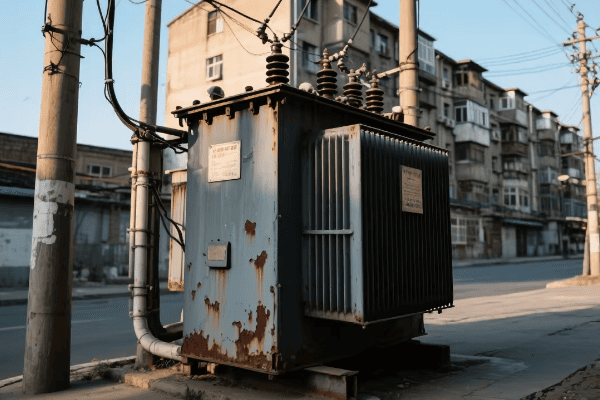
Ever wondered how high-voltage electricity becomes safe for your home use? The unsung hero behind this transformation is the step down power transformer, a crucial component in our modern electrical systems.
Step down power transformers are essential in modern industry for converting high voltage electricity to lower, safer levels. They play critical roles in residential power distribution, industrial processes, renewable energy systems, transportation infrastructure, and various other applications that require voltage reduction for efficient and safe power use.
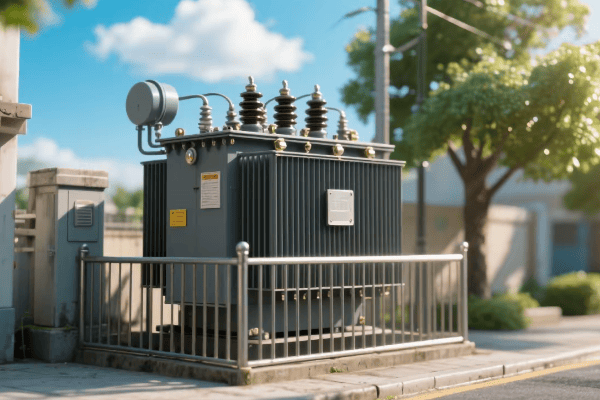
As an electrical engineer with years of experience in the power industry, I’ve seen firsthand how vital these devices are across various sectors. Let’s explore the top 10 applications of step down transformers that are shaping our modern world.
Powering Homes and Businesses: Step Down Transformers in Residential and Commercial Applications?
Have you ever noticed those large, cylindrical objects on utility poles in your neighborhood? Those are likely step down transformers, working tirelessly to bring power safely into your home.
In residential and commercial applications, step down transformers reduce high voltage from distribution lines to levels suitable for household and office use. They ensure safe and efficient power delivery for lighting, appliances, and electronic devices in homes and businesses.
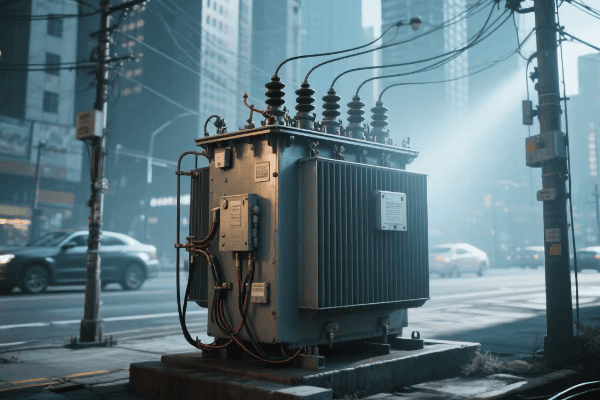
Let’s dive deeper into how step down transformers power our daily lives:
Voltage Reduction for Safe Use
Step down transformers play a crucial role in making electricity safe for home use:
-
Distribution Voltage Reduction:
- They reduce voltage from distribution levels (typically 7.2kV to 14.4kV) to 120/240V for residential use.
- This lower voltage is safe for household wiring and appliances.
-
Load Management:
- Transformers are sized based on the expected load of the area they serve.
- They can handle fluctuations in demand throughout the day.
Commercial Building Applications
In commercial settings, step down transformers have additional roles:
-
Three-Phase Power:
- Many businesses require three-phase power for heavy equipment.
- Step down transformers can provide both single-phase and three-phase outputs.
-
Voltage Optimization:
- Some commercial transformers include taps for fine-tuning output voltage.
- This helps maintain efficient operation of equipment.
Here’s a comparison of residential and commercial transformer applications:
| Aspect | Residential | Commercial |
|---|---|---|
| Typical Input Voltage | 7.2kV – 14.4kV | 11kV – 33kV |
| Output Voltage | 120/240V | 120/208V or 277/480V |
| Phase | Single-phase | Often three-phase |
| Load Capacity | 10-50 kVA | 75-2500 kVA |
| Special Features | Basic protection | Voltage optimization, power quality management |
I remember working on a project to upgrade the power distribution in an old neighborhood. We replaced the aging transformers with new, more efficient models. The impact was immediate – residents reported fewer voltage fluctuations, and energy losses in the local grid decreased significantly. It was a powerful reminder of how these often-overlooked devices directly affect our daily lives.
Step down transformers in residential and commercial applications are more than just voltage converters. They’re the guardians of our electrical systems, ensuring that the massive power of the grid is tamed to a level that’s safe and useful for our homes and businesses. As our energy needs grow and change, these transformers continue to evolve, becoming more efficient, smarter, and better able to handle the demands of our modern, electricity-dependent lives.
Manufacturing Marvels: The Critical Role of Step Down Transformers in Industrial Processes?
Have you ever wondered how massive industrial machines operate safely and efficiently? The answer often lies in the strategic use of step down transformers throughout manufacturing facilities.
Step down transformers play a critical role in industrial processes by converting high voltage power to appropriate levels for various manufacturing equipment. They ensure safe and efficient operation of motors, control systems, and specialized machinery, contributing to overall productivity and safety in industrial settings.
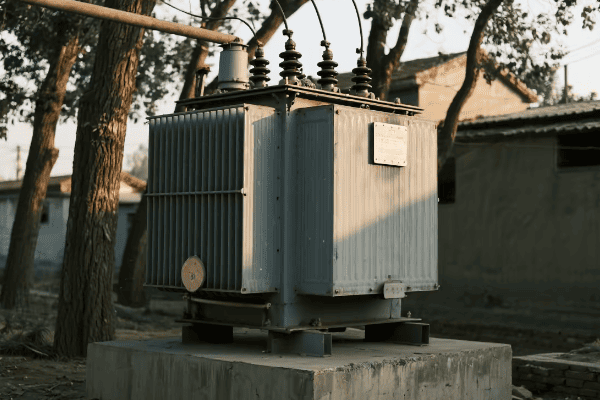
Let’s explore how step down transformers power the heart of our industrial world:
Powering Industrial Equipment
Step down transformers are crucial for operating diverse industrial machinery:
-
Motor Operation:
- Large motors often require specific voltage levels.
- Transformers provide the right voltage for optimal motor performance.
-
Control Systems:
- Sensitive control equipment needs stable, low-voltage power.
- Step down transformers deliver clean, reliable power to these systems.
Voltage Customization
Industrial settings often need various voltage levels:
-
Multiple Output Voltages:
- Some transformers provide several voltage outputs from a single unit.
- This flexibility is crucial in complex manufacturing environments.
-
Voltage Regulation:
- Industrial transformers often include features for maintaining stable voltage.
- This is important for precision equipment and processes.
Safety and Isolation
Transformers contribute significantly to industrial safety:
-
Electrical Isolation:
- They separate high-voltage systems from low-voltage equipment.
- This isolation protects workers and sensitive equipment.
-
Fault Protection:
- Many industrial transformers include advanced protection features.
- These help prevent damage from electrical faults and surges.
Here’s a table comparing different aspects of step down transformers in industrial use:
| Aspect | Light Industry | Heavy Industry |
|---|---|---|
| Typical Input Voltage | 11kV – 33kV | 33kV – 132kV |
| Output Voltage Range | 380V – 480V | 3.3kV – 11kV |
| Power Capacity | 100 kVA – 1 MVA | 1 MVA – 100 MVA |
| Cooling Method | Air-cooled | Oil-cooled or dry-type |
| Special Features | Basic protection | Advanced monitoring, tap changers |
I once worked on a project at a large automotive manufacturing plant. We were tasked with redesigning their power distribution system to improve efficiency and reliability. By strategically placing new, high-efficiency step down transformers throughout the facility, we were able to reduce energy losses by 15% and improve voltage stability. This not only saved the company money on energy costs but also increased the lifespan and reliability of their expensive manufacturing equipment.
The role of step down transformers in industrial processes goes far beyond simple voltage conversion. They are key components in ensuring the smooth, safe, and efficient operation of our factories and production facilities. As industry 4.0 and smart manufacturing continue to evolve, these transformers are also adapting, incorporating advanced monitoring and control features to meet the changing needs of modern industry.
From powering massive assembly line motors to providing stable, clean power for sensitive robotic systems, step down transformers are the unsung heroes of our industrial revolution. They enable the precise control and power delivery that modern manufacturing demands, all while improving safety and energy efficiency. As we continue to push the boundaries of what’s possible in manufacturing, these crucial devices will undoubtedly continue to play a central role in powering our industrial future.
Green Energy Solutions: Step Down Transformers in Renewable Energy Systems?
Ever wondered how the power from solar panels or wind turbines makes it safely into your home? The key lies in specialized step down transformers designed for renewable energy systems.
Step down transformers are crucial in renewable energy systems for converting the variable output of solar panels and wind turbines into usable power for the grid. They help manage voltage fluctuations, ensure grid compatibility, and enable efficient energy distribution from renewable sources to end-users.
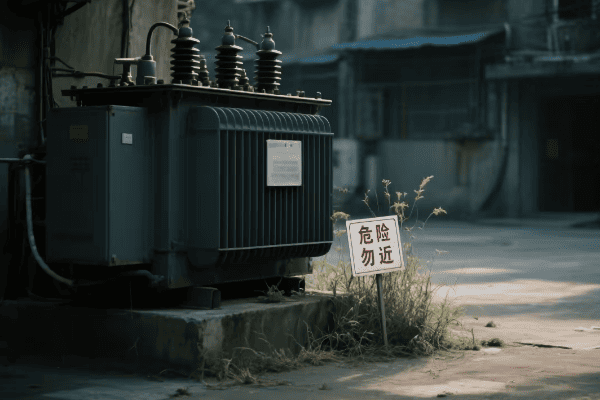
Let’s delve into how step down transformers are powering the green energy revolution:
Solar Power Integration
Step down transformers play a vital role in solar energy systems:
-
Inverter Transformers:
- Convert DC output from solar panels to AC for grid use.
- Step down high inverter output voltage to grid-compatible levels.
-
Voltage Regulation:
- Help manage voltage fluctuations due to varying sunlight conditions.
- Ensure stable power output to the grid.
Wind Energy Applications
In wind farms, transformers are essential for power transmission:
-
Turbine Transformers:
- Step up the low voltage from wind turbine generators.
- Enable efficient transmission from offshore or remote locations.
-
Substation Transformers:
- Step down high transmission voltages for local distribution.
- Integrate wind power with the existing grid infrastructure.
Smart Grid Integration
Modern transformers facilitate smart grid technologies:
-
Bi-directional Power Flow:
- Enable power to flow both to and from renewable sources.
- Critical for net metering and grid stability.
-
Power Quality Management:
- Help manage harmonics and power factor issues.
- Ensure clean, stable power from variable renewable sources.
Here’s a comparison of transformer applications in different renewable energy systems:
| Aspect | Solar Power | Wind Power | Hydroelectric |
|---|---|---|---|
| Input Voltage | 600V – 1000V DC | 690V – 3.3kV AC | 6.6kV – 15kV AC |
| Output Voltage | 11kV – 33kV | 33kV – 155kV | 110kV – 400kV |
| Special Features | DC/AC conversion | Offshore-rated | Water-resistant |
| Challenges | Intermittency | Remote locations | High humidity |
| Grid Integration | Inverter-based | Direct AC | Synchronous generation |
I remember working on a large-scale solar farm project where the integration of solar power with the existing grid was a significant challenge. We implemented a system of smart step down transformers that not only converted the solar inverter output to grid-compatible voltage but also provided real-time monitoring and control capabilities. This allowed for seamless integration of the solar power with the grid, managing fluctuations in solar output and ensuring stable power delivery to consumers.
The role of step down transformers in renewable energy systems is multifaceted and crucial. They’re not just voltage converters; they’re the vital link that makes renewable energy practical and grid-compatible. As we push towards a greener future, these transformers are evolving to meet the unique challenges posed by renewable sources.
From managing the variable output of solar and wind to enabling smart grid functionalities, step down transformers are at the heart of our transition to sustainable energy. They’re becoming smarter, more efficient, and more adaptable, rising to meet the demands of our changing energy landscape. As renewable energy continues to grow, the importance of these specialized transformers will only increase, making them key players in our journey towards a cleaner, more sustainable energy future.
Transforming Transportation: Step Down Transformers in Modern Infrastructure?
Have you ever wondered how electric trains run smoothly or how electric vehicle charging stations work? The answer lies in the strategic use of step down transformers in our modern transportation infrastructure.
Step down transformers are essential in modern transportation infrastructure for converting high voltage power to levels suitable for electric trains, subway systems, and EV charging stations. They ensure safe and efficient power delivery, enabling the electrification of transportation and supporting sustainable urban mobility.

Let’s explore how step down transformers are revolutionizing our transportation systems:
Railway Electrification
Step down transformers are crucial for powering electric railways:
-
Traction Power Substations:
- Convert high voltage from the grid to levels suitable for trains.
- Typically step down from 110kV or 220kV to 25kV or 15kV.
-
Trackside Transformers:
- Further step down voltage for signaling and auxiliary systems.
- Ensure reliable power for critical safety and communication equipment.
Electric Vehicle Charging Infrastructure
Transformers play a key role in EV charging networks:
-
Fast Charging Stations:
- Step down medium voltage to levels suitable for DC fast chargers.
- Enable rapid charging of electric vehicles.
-
Residential and Commercial Chargers:
- Provide appropriate voltage levels for slower, overnight charging.
- Often integrated with existing building electrical systems.
Urban Transit Systems
In subway and light rail systems, transformers are essential:
-
Substation Transformers:
- Convert utility power to voltage levels for third rail or overhead catenary systems.
- Often include rectifiers for DC traction power.
-
Auxiliary Power:
- Provide power for stations, lighting, and ventilation systems.
- Ensure reliable operation of escalators, elevators, and other facilities.
Here’s a comparison of transformer applications in different transportation sectors:
| Aspect | Railways | EV Charging | Urban Transit |
|---|---|---|---|
| Input Voltage | 110kV – 220kV | 11kV – 33kV | 33kV – 110kV |
| Output Voltage | 25kV AC or 3kV DC | 400V – 800V DC | 750V – 1500V DC |
| Power Capacity | 10 MVA – 60 MVA | 50 kVA – 2 MVA | 1 MVA – 5 MVA |
| Special Features | Trackside mounting | Fast charging capability | Rectification for DC |
| Challenges | Vibration resistance | Rapid load changes | Underground installation |
I once worked on a project to upgrade the power system for a major city’s subway network. We replaced old transformers with new, more efficient models that included advanced monitoring capabilities. The impact was significant – not only did we see a 20% reduction in energy losses, but the new system also allowed for real-time load management, improving the reliability of the entire network. It was fascinating to see how these transformers, hidden away in substations, played such a crucial role in keeping millions of commuters moving every day.
Step down transformers in transportation infrastructure are more than just power conversion devices. They’re enablers of modern, sustainable mobility. As we move towards more electrified transportation systems, these transformers are evolving to meet new challenges. They’re becoming more compact, more efficient, and smarter, with features like real-time monitoring and adaptive voltage regulation.
From powering high-speed electric trains to enabling the growth of electric vehicle charging networks, step down transformers are at the heart of our transportation revolution. They’re helping to reduce our dependence on fossil fuels, decrease urban air pollution, and create more sustainable cities. As our transportation systems continue to evolve, these crucial devices will undoubtedly play an even more important role in shaping the future of how we move.
Safety First: How Step Down Transformers Protect Industrial Equipment and Personnel?
Have you ever considered the dangers of high-voltage electricity in industrial settings? Step down transformers are the unsung heroes that keep both equipment and workers safe in these potentially hazardous environments.
Step down transformers play a crucial role in industrial safety by reducing high voltages to safer levels for equipment operation and human interaction. They provide electrical isolation, protect against voltage spikes, and enable the use of lower-voltage safety systems, significantly reducing the risk of electrical accidents and equipment damage.
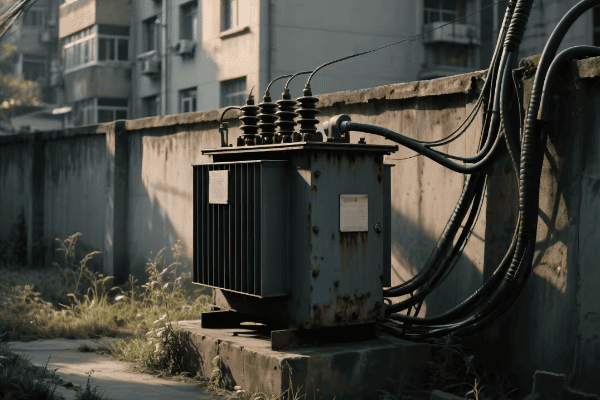
Let’s explore how step down transformers contribute to industrial safety:
Voltage Reduction for Safe Operation
Step down transformers make high-voltage power safe for use:
-
Equipment Protection:
- Reduce voltage to levels suitable for various industrial machines.
- Prevent damage from high-voltage surges.
-
Personnel Safety:
- Lower voltages reduce the risk of severe electric shock.
- Enable safer maintenance and operation of equipment.
Electrical Isolation
Transformers provide crucial separation between power sources and equipment:
-
Galvanic Isolation:
- Prevent direct electrical connection between input and output.
- Protect against ground faults and stray currents.
-
Noise Reduction:
- Isolate sensitive equipment from electrical noise on the power line.
- Improve reliability of control systems and instrumentation.
Fault Protection Features
Modern safety transformers include advanced protection mechanisms:
-
Overcurrent Protection:
- Detect and interrupt excessive current flow.
- Prevent overheating and potential fires.
-
Thermal Monitoring:
- Continuously monitor transformer temperature.
- Trigger alarms or shutdowns to prevent overheating.
Here’s a comparison of safety features in different types of industrial transformers:
| Feature | Standard Transformer | Safety Transformer | Ultra-Safe Transformer |
|---|---|---|---|
| Voltage Reduction | Basic step-down | Enhanced step-down | Multiple stage reduction |
| Isolation | Basic | Enhanced with shielding | Double or reinforced insulation |
| Fault Protection | Basic overload protection | Advanced fault detection | Comprehensive safety system |
| Monitoring | Manual checks | Basic digital monitoring | Real-time IoT-based monitoring |
| Safety Certification | Standard | Enhanced safety cert. | Highest safety ratings |
I recall a project at a chemical processing plant where safety was paramount. We implemented a system of ultra-safe step down transformers with advanced monitoring capabilities. During a routine operation, one of these transformers detected a potentially dangerous voltage spike and immediately isolated the affected circuit, preventing what could have been a catastrophic equipment failure and potential injury to personnel. This experience highlighted the critical role these devices play in industrial safety.
Step down transformers in industrial safety applications go beyond simple voltage conversion. They’re an integral part of a comprehensive safety system. Here are some additional aspects of their safety role:
Arc Flash Mitigation
Step down transformers help reduce the risk of arc flash incidents:
-
Lower Available Fault Current:
- By stepping down voltage, they reduce the energy available for arc flash events.
- This can significantly lower the risk category of electrical work areas.
-
Selective Coordination:
- Enable better coordination of protective devices.
- Help isolate faults quickly, minimizing the impact of electrical accidents.
Compliance with Safety Standards
Safety transformers are designed to meet stringent industry standards:
-
IEC and IEEE Standards:
- Comply with international safety standards for electrical equipment.
- Undergo rigorous testing to ensure reliability and safety performance.
-
OSHA Compliance:
- Help facilities meet workplace safety regulations.
- Provide documentation for safety audits and inspections.
Integration with Safety Systems
Modern safety transformers work in conjunction with other safety equipment:
-
Emergency Shutdown Systems:
- Interface with plant-wide emergency systems.
- Can quickly de-energize equipment in case of danger.
-
Safety Interlocks:
- Work with equipment interlocks to prevent operation under unsafe conditions.
- Enhance overall system safety and reliability.
The role of step down transformers in industrial safety cannot be overstated. They form a critical line of defense against electrical hazards, protecting both valuable equipment and, more importantly, human lives. As industrial processes become more complex and automated, the importance of these safety-focused transformers continues to grow.
From reducing the risk of electrical shock to preventing equipment damage from power anomalies, step down transformers are essential components in creating a safe industrial environment. They’re not just power conversion devices; they’re guardians of workplace safety, silently working to ensure that the immense power required for industrial processes is delivered in a safe, controlled manner.
As we continue to push the boundaries of industrial technology, these transformers will undoubtedly evolve, incorporating even more advanced safety features and intelligent monitoring capabilities. They’ll play an increasingly important role in our ongoing efforts to create safer, more efficient industrial workplaces.
Precision Power: Step Down Transformers in Sensitive Electronic and Medical Equipment?
Have you ever wondered how delicate medical devices or precision electronic instruments receive the exact power they need? The answer lies in specialized step down transformers designed for these sensitive applications.
Step down transformers are crucial in sensitive electronic and medical equipment for providing clean, stable, and precisely regulated power. They protect delicate components from power fluctuations, reduce electromagnetic interference, and ensure accurate operation of diagnostic and analytical instruments.
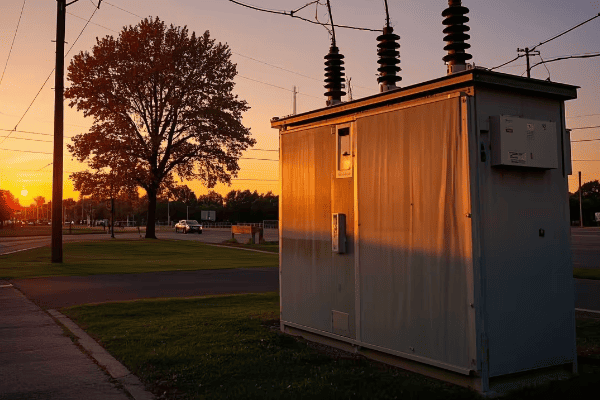
Let’s explore how step down transformers enable precision in electronics and healthcare:
Power Conditioning for Electronics
Step down transformers play a vital role in electronic equipment:
-
Voltage Regulation:
- Provide stable voltage despite input fluctuations.
- Critical for consistent operation of sensitive circuits.
-
Noise Reduction:
- Filter out electromagnetic interference from power lines.
- Ensure clean power for accurate signal processing.
Medical Equipment Applications
In healthcare, transformers are essential for patient safety and equipment reliability:
-
Isolation Transformers:
- Provide galvanic isolation between equipment and power source.
- Reduce leakage current, crucial for patient safety.
-
Precise Voltage Control:
- Deliver exact voltage levels required by medical devices.
- Ensure accurate diagnostics and treatment delivery.
Laboratory and Research Equipment
Transformers support precision in scientific research:
-
Stable Power for Analytical Instruments:
- Provide consistent power for spectrometers, chromatographs, etc.
- Ensure repeatable and reliable experimental results.
-
EMI/RFI Shielding:
- Protect sensitive measurements from electromagnetic interference.
- Critical for accurate data collection in research settings.
Here’s a comparison of transformer applications in different precision settings:
| Aspect | Electronics | Medical Equipment | Laboratory Instruments |
|---|---|---|---|
| Voltage Stability | ±1% or better | ±0.5% or better | ±0.1% or better |
| Isolation | Basic | Medical-grade | Ultra-high |
| EMI Reduction | High | Very High | Extreme |
| Safety Features | Overload protection | Patient leakage current protection | Multiple redundant protections |
| Typical Power Range | 10VA – 1kVA | 100VA – 5kVA | 50VA – 10kVA |
I once worked on a project to upgrade the power system in a cutting-edge research laboratory. We installed a series of high-precision step down transformers with advanced EMI filtering. The impact was immediate and significant. Researchers reported a marked improvement in the stability of their measurements, particularly in sensitive spectroscopic experiments. One scientist told me that the new power system had eliminated a persistent noise issue that had been plaguing their NMR spectrometer for months.
Step down transformers in precision applications are far more than simple voltage converters. They’re sophisticated power conditioning devices that play a crucial role in enabling the accuracy and reliability of modern electronic and medical technology. As our devices become more sensitive and our need for precision increases, these specialized transformers continue to evolve.
From ensuring the accuracy of life-saving medical equipment to enabling groundbreaking scientific research, precision step down transformers are at the heart of our technological progress. They provide the clean, stable power that our most advanced devices require, often operating silently in the background but playing a vital role in fields ranging from healthcare to cutting-edge physics research.
As we push the boundaries of what’s possible in electronics and medical technology, these transformers will continue to adapt and improve. They’ll incorporate even more advanced filtering techniques, more precise voltage regulation, and smarter monitoring capabilities. In doing so, they’ll continue to enable the next generation of precision instruments and life-saving medical devices.
Illuminating Innovations: Step Down Transformers in Lighting and Display Technologies?
Ever wondered how modern lighting systems achieve their energy efficiency and versatility? Or how large-scale displays maintain their brightness and clarity? Step down transformers play a crucial role in these illuminating innovations.
Step down transformers are essential in lighting and display technologies for converting high voltage power to levels suitable for LED lights, digital signage, and other modern display systems. They enable energy-efficient lighting solutions, support dimming capabilities, and ensure stable power delivery for consistent display performance.
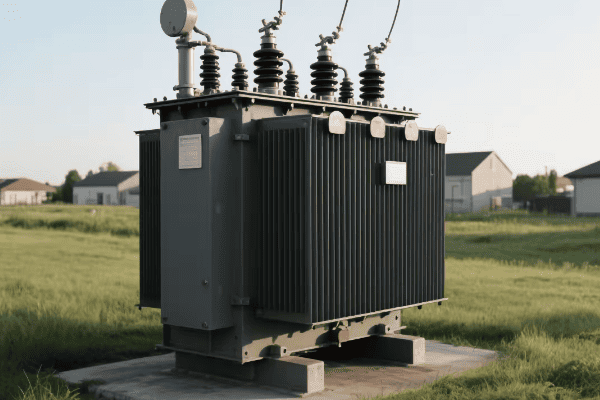
Let’s shed some light on how step down transformers are powering the future of illumination and visual displays:
LED Lighting Systems
Step down transformers are key to LED lighting efficiency:
-
Voltage Reduction:
- Convert mains voltage to the low voltage required by LED arrays.
- Enable safe and efficient operation of LED lighting.
-
Constant Current Output:
- Many LED transformers provide constant current for stable light output.
- Crucial for maintaining consistent brightness and color.
Commercial and Architectural Lighting
Transformers support advanced lighting control systems:
-
Dimming Capabilities:
- Work with dimming systems to provide variable light levels.
- Enable energy savings and mood lighting in commercial spaces.
-
Multi-Channel Control:
- Power complex lighting setups with multiple circuits.
- Support color-changing and dynamic lighting installations.
Large-Scale Displays and Signage
In the world of digital displays, transformers play a vital role:
-
Power Distribution:
- Efficiently distribute power across large display panels.
- Ensure consistent brightness across the entire display surface.
-
Thermal Management:
- Help manage heat generation in high-brightness displays.
- Contribute to longer lifespan of display components.
Here’s a comparison of transformer applications in different lighting and display technologies:
| Aspect | LED Lighting | Architectural Lighting | Large-Scale Displays |
|---|---|---|---|
| Input Voltage | 120V/240V AC | 277V/480V AC | 380V/480V AC |
| Output Voltage | 12V/24V DC | 0-10V Control | Multiple DC voltages |
| Power Range | 10W – 300W | 100W – 5kW | 1kW – 50kW+ |
| Special Features | Constant current | Dimming support | High efficiency for 24/7 operation |
| Challenges | Flicker elimination | Complex control integration | Heat management |
I remember working on a project to illuminate a large public art installation. We used a network of smart step down transformers to power a complex array of color-changing LED fixtures. The transformers not only provided the necessary voltage conversion but also integrated with the control system to enable dynamic lighting effects. The result was breathtaking – a vibrant, ever-changing light display that captivated viewers and transformed the urban landscape.
Step down transformers in lighting and display applications are more than just power converters. They’re enablers of creativity and innovation in visual technology. As lighting becomes more intelligent and displays more immersive, these transformers continue to evolve to meet new challenges.
From supporting the energy efficiency of LED lighting to enabling the stunning visuals of large-scale displays, step down transformers are at the forefront of illumination technology. They’re becoming smarter, more efficient, and more integrated with control systems, playing a crucial role in shaping the visual experiences of our modern world.
As we move towards more sustainable and dynamic lighting solutions, and as displays become larger and more sophisticated, the role of these specialized transformers will only grow in importance. They’ll continue to push the boundaries of what’s possible in lighting and visual technology, helping to create more engaging, efficient, and spectacular illuminated environments.
Empowering Communications: The Role of Step Down Transformers in Telecommunications?
Ever wondered how your phone calls and internet data travel across vast distances? Step down transformers play a crucial, often unseen role in keeping our global communications networks running smoothly.
Step down transformers are vital in telecommunications for powering network equipment, cell towers, and data centers. They ensure reliable power supply for communication systems, support backup power solutions, and enable the efficient operation of the infrastructure that keeps our world connected.
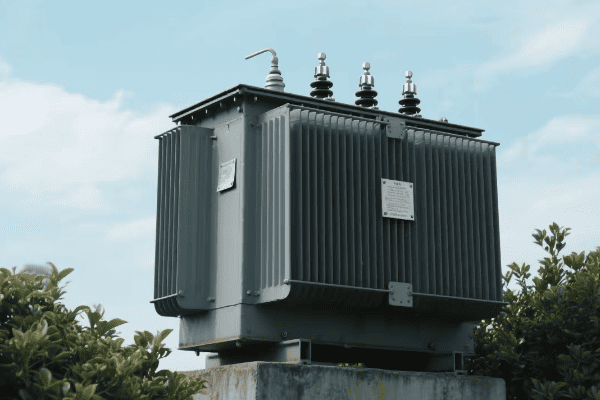
Let’s explore how step down transformers are keeping us connected:
Powering Cell Towers
Step down transformers are essential for mobile network infrastructure:
-
Voltage Conversion:
- Step down high voltage power to levels suitable for tower equipment.
- Typically convert from utility voltage to 48V DC for telecom gear.
-
Backup Power Support:
- Interface with battery backup systems and generators.
- Ensure uninterrupted service during power outages.
Data Center Power Distribution
In the heart of our digital world, transformers play a critical role:
-
High-Capacity Power Delivery:
- Step down medium voltage to levels used within data centers.
- Support the massive power needs of server farms and networking equipment.
-
Redundant Power Systems:
- Enable N+1 or 2N redundancy in critical data centers.
- Ensure continuous operation of vital communication infrastructure.
Network Equipment Power
Transformers support various network devices:
-
Rack-Level Power Distribution:
- Provide appropriate voltages for servers, routers, and switches.
- Support hot-swappable power supplies in network equipment.
-
Power over Ethernet (PoE):
- Enable power delivery to network devices over Ethernet cables.
- Support IP phones, wireless access points, and security cameras.
Here’s a comparison of transformer applications in different telecom settings:
| Aspect | Cell Towers | Data Centers | Network Equipment |
|---|---|---|---|
| Input Voltage | 11kV – 33kV | 11kV – 132kV | 120V/208V AC |
| Output Voltage | 48V DC | 480V/277V AC | 12V/24V/48V DC |
| Power Capacity | 5kVA – 50kVA | 500kVA – 2500kVA | 1kVA – 10kVA |
| Special Features | Outdoor rated | High efficiency | Compact size |
| Challenges | Remote locations | High reliability | Heat management |
I once worked on a project to upgrade the power systems for a major telecom provider’s rural cell towers. We implemented a system of smart step down transformers that not only provided the necessary power conversion but also included remote monitoring capabilities. This allowed the provider to monitor power usage and detect potential issues in real-time, even in remote locations. The result was a significant improvement in network reliability and a reduction in maintenance costs.
Step down transformers in telecommunications are more than just voltage converters. They’re critical components in the infrastructure that keeps our increasingly connected world running. As our demand for data and communication continues to grow, these transformers are evolving to meet new challenges.
From ensuring reliable cellular coverage to powering the massive data centers that drive our digital economy, step down transformers play a vital role in every aspect of modern telecommunications. They’re becoming more efficient, more intelligent, and more resilient, adapting to the ever-increasing demands of our connected world.
As we move towards 5G networks, edge computing, and even more data-intensive applications, the importance of these specialized transformers in telecommunications will only grow. They’ll continue to evolve, incorporating new technologies to improve efficiency, reliability, and monitoring capabilities, ensuring that our global communications networks can meet the challenges of the future.
Cooling and Heating: Step Down Transformers in HVAC and Refrigeration Systems?
Ever wondered how large-scale air conditioning systems in shopping malls or industrial refrigeration units in food processing plants operate efficiently? Step down transformers play a crucial role in powering these essential cooling and heating systems.
Step down transformers are vital in HVAC and refrigeration systems for converting high voltage power to levels suitable for compressors, fans, and control systems. They ensure efficient operation of cooling and heating equipment, support variable frequency drives, and enable precise temperature control in various applications.
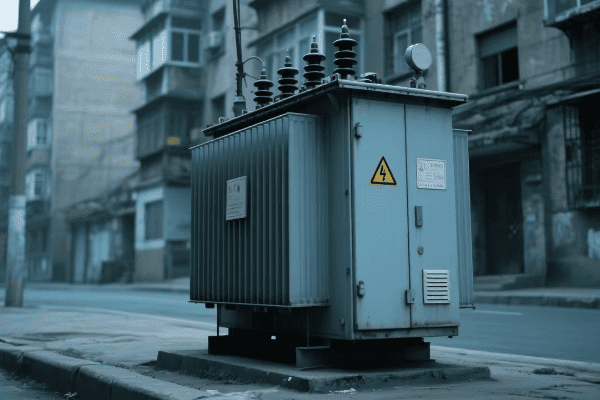
Let’s explore how step down transformers keep us comfortable and our food fresh:
Commercial HVAC Systems
Step down transformers are essential for large-scale air conditioning:
-
Compressor Power Supply:
- Provide appropriate voltage for large HVAC compressors.
- Support soft start systems to reduce inrush current.
-
Control System Power:
- Supply low voltage power for thermostats and control panels.
- Enable smart building management systems.
Industrial Refrigeration
In food processing and cold storage, transformers play a critical role:
-
High-Capacity Cooling:
- Power large refrigeration units in warehouses and processing plants.
- Support precise temperature control for food safety.
-
Energy Management:
- Work with variable frequency drives for energy-efficient operation.
- Enable demand response capabilities in smart grid applications.
Specialized Heating Applications
Transformers support various industrial heating processes:
-
Electric Furnaces:
- Provide power for high-temperature industrial processes.
- Support precise temperature control in manufacturing.
-
Heat Pumps:
- Power reversible heating and cooling systems.
- Enable efficient operation in varying climate conditions.
Here’s a comparison of transformer applications in different HVAC and refrigeration settings:
| Aspect | Commercial HVAC | Industrial Refrigeration | Specialized Heating |
|---|---|---|---|
| Input Voltage | 480V AC | 4160V AC | 13.8kV AC |
| Output Voltage | 208V/120V AC | 480V AC | 480V/240V AC |
| Power Capacity | 75kVA – 500kVA | 500kVA – 2500kVA | 1000kVA – 5000kVA |
| Special Features | Harmonic mitigation | High efficiency | High temperature operation |
| Challenges | Variable loads | Constant operation | Extreme environments |
I recall a project where we upgraded the power system for a large cold storage facility. We implemented a system of high-efficiency step down transformers coupled with variable frequency drives. This not only provided the necessary power for the refrigeration units but also allowed for dynamic adjustment of cooling capacity based on demand. The result was a 25% reduction in energy consumption and more stable temperature control, crucial for maintaining food quality.
Step down transformers in HVAC and refrigeration applications are more than just power conversion devices. They’re key components in systems that maintain our comfort, preserve our food, and enable critical industrial processes. As energy efficiency becomes increasingly important, these transformers are evolving to meet new challenges.
From supporting the massive cooling needs of data centers to enabling precise temperature control in pharmaceutical manufacturing, step down transformers play a vital role in a wide range of heating and cooling applications.They’re becoming more efficient, more compact, and smarter, integrating with building management systems and energy monitoring platforms.
As we move towards more sustainable and intelligent buildings, the role of these specialized transformers in HVAC and refrigeration will only grow in importance. They’ll continue to evolve, incorporating new technologies to improve energy efficiency, enable better control, and support the integration of renewable energy sources into building systems. Whether it’s maintaining the perfect climate in a shopping mall, ensuring food safety in a warehouse, or supporting critical industrial processes, step down transformers will remain at the heart of our cooling and heating infrastructure.
Electrifying Entertainment: Step Down Transformers in Audio-Visual and Gaming Industries?
Have you ever marveled at the immersive sound and stunning visuals in a movie theater or wondered how massive gaming servers handle millions of players simultaneously? Step down transformers play a crucial behind-the-scenes role in powering these electrifying entertainment experiences.
Step down transformers are essential in the audio-visual and gaming industries for providing clean, stable power to sensitive equipment. They support high-power audio systems, digital projectors, gaming consoles, and server infrastructure, ensuring optimal performance and reliability in entertainment applications.
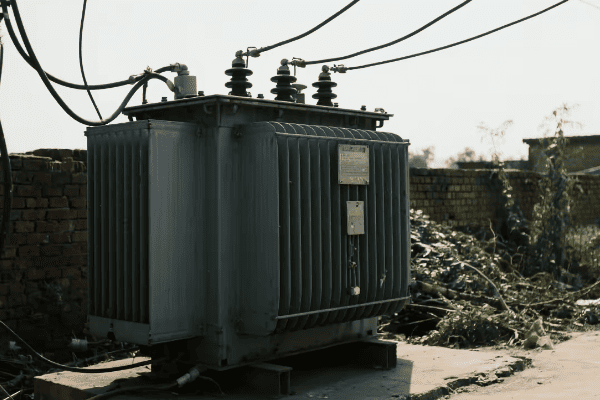
Let’s explore how step down transformers are amplifying our entertainment experiences:
Professional Audio Systems
Step down transformers are vital for high-quality sound reproduction:
-
Power Amplifiers:
- Provide clean power for high-wattage audio amplifiers.
- Reduce noise and interference for clearer sound.
-
Studio Equipment:
- Supply stable power for recording and mixing equipment.
- Support precise audio processing in professional studios.
Digital Cinema and Home Theaters
In visual entertainment, transformers ensure stunning picture quality:
-
Digital Projectors:
- Power high-brightness projectors in movie theaters.
- Support 4K and 8K resolution displays.
-
Home Theater Systems:
- Provide isolated power for audiophile-grade equipment.
- Reduce electrical noise for better audio-visual experience.
Gaming and eSports
Transformers support the growing gaming industry:
-
Gaming Consoles and PCs:
- Supply stable power for high-performance gaming systems.
- Support advanced graphics processing and VR technologies.
-
eSports Arenas:
- Power large-scale gaming events with multiple systems.
- Ensure uninterrupted gameplay for competitive tournaments.
Here’s a comparison of transformer applications in different entertainment settings:
| Aspect | Professional Audio | Digital Cinema | Gaming/eSports |
|---|---|---|---|
| Input Voltage | 240V AC | 480V AC | 208V AC |
| Output Voltage | 120V AC (isolated) | 208V/120V AC | 120V AC |
| Power Capacity | 1kVA – 10kVA | 25kVA – 100kVA | 5kVA – 50kVA |
| Special Features | Ultra-low noise | High reliability | Surge protection |
| Challenges | EMI sensitivity | Heat management | High peak loads |
I once worked on a project to upgrade the power system for a major eSports arena. We installed a series of specialized step down transformers with advanced power conditioning features. The impact was significant – players reported smoother gameplay, and the technical team noted a marked reduction in equipment failures due to power issues. It was fascinating to see how these often-overlooked devices played such a crucial role in creating a world-class gaming environment.
Step down transformers in the entertainment industry are more than just voltage converters. They’re key components in creating immersive, high-quality experiences for audiences and players alike. As entertainment technology continues to advance, with higher resolutions, more powerful audio systems, and increasingly complex gaming environments, these transformers are evolving to meet new challenges.
From ensuring crystal-clear sound in concert halls to powering the latest virtual reality gaming experiences, step down transformers play a vital role in every aspect of modern entertainment. They’re becoming more specialized, with features like ultra-low noise designs for audio applications and high-reliability configurations for 24/7 gaming servers.
As we push the boundaries of what’s possible in audio-visual technology and interactive entertainment, the importance of these specialized transformers will only grow. They’ll continue to evolve, incorporating new technologies to improve power quality, reduce interference, and support the ever-increasing power demands of cutting-edge entertainment systems. Whether it’s bringing the latest blockbuster to life in a cinema or enabling millions of gamers to connect in virtual worlds, step down transformers will remain an essential part of the infrastructure that powers our entertainment future.
Conclusion
Step down transformers play a crucial role across various industries, from powering our homes to enabling cutting-edge entertainment. Their ability to safely convert high voltage to usable levels makes them indispensable in our modern, electricity-dependent world.
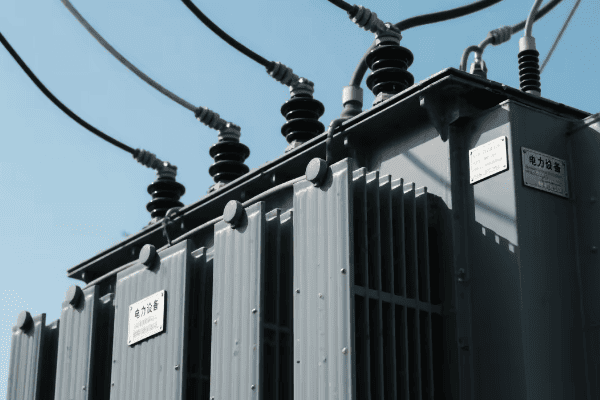
Have you ever wondered how electricity travels safely from power plants to your home? The answer lies in a device you rarely see but heavily rely on: the power transformer.
A power transformer is a crucial electrical device that changes voltage levels in power systems. It enables efficient long-distance transmission of electricity and safe distribution to end-users. Power transformers are essential for maintaining a stable and reliable electrical grid.
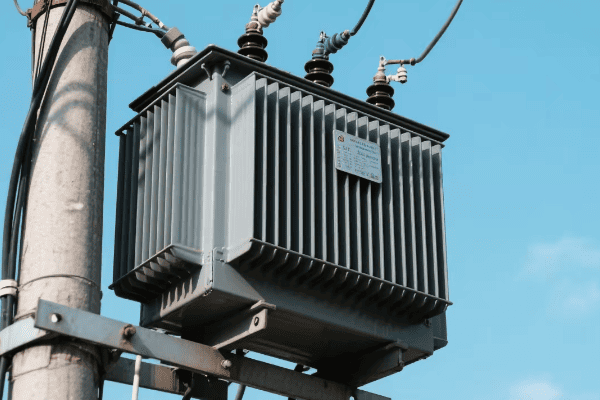
As an electrical engineer with years of experience in the power industry, I’ve seen firsthand how vital these devices are. Let’s explore the world of power transformers and discover why they’re the unsung heroes of our electrical systems.
The Fundamentals: Defining Power Transformers and Their Core Functions?
Have you ever tried to pour water from a fire hose into a drinking glass? That’s similar to the challenge of getting electricity from power plants to your home. Power transformers are the solution to this problem.
Power transformers are electrical devices that transfer energy between two or more circuits through electromagnetic induction. Their core functions include changing voltage levels, isolating circuits, and regulating power flow. These functions are crucial for efficient and safe electricity distribution.
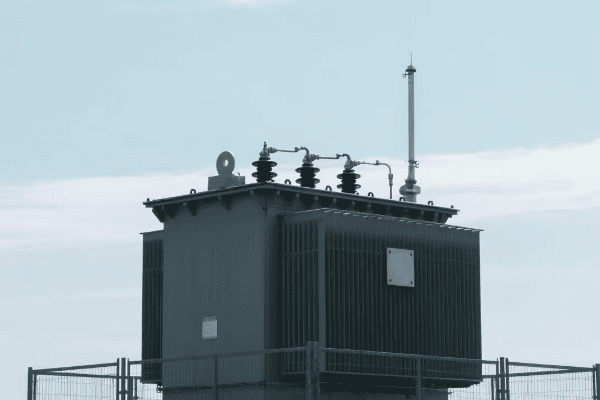
Let’s dive deeper into the fundamentals of power transformers:
Basic Components
A power transformer has several key parts:
-
Core:
- Made of thin layers of magnetic material, usually silicon steel.
- Provides a path for the magnetic field.
-
Windings:
- Primary winding receives electrical energy.
- Secondary winding delivers transformed energy.
- Made of copper or aluminum wire.
-
Insulation:
- Prevents short circuits between windings and core.
- Often uses oil or special gases.
Principle of Operation
Power transformers work on a simple yet powerful principle:
-
Electromagnetic Induction:
- When alternating current flows through the primary winding, it creates a changing magnetic field.
- This field induces a voltage in the secondary winding.
-
Voltage Transformation:
- The ratio of turns in the primary and secondary windings determines the voltage change.
- More turns in the secondary increase voltage; fewer turns decrease it.
Here’s a simple table showing how turn ratios affect voltage:
| Primary Turns | Secondary Turns | Input Voltage | Output Voltage | Type |
|---|---|---|---|---|
| 100 | 1000 | 1000 V | 10,000 V | Step-up |
| 1000 | 100 | 10,000 V | 1000 V | Step-down |
| 100 | 100 | 1000 V | 1000 V | Isolation |
I remember the first time I explained these principles to a group of engineering students. To demonstrate, we built a simple transformer using two coils of wire and an iron rod. When we connected one coil to a battery through a switch, the students were amazed to see the light bulb connected to the other coil flicker as we opened and closed the switch. It was a powerful demonstration of how energy can be transferred between circuits without a direct electrical connection.
Understanding these fundamentals is crucial for anyone working with electrical systems. They explain why transformers are so effective at changing voltage levels and why they’re so important in our power grid. From the massive transformers at power plants to the tiny ones in your phone charger, they all work on these same basic principles. It’s a testament to the elegance and power of electromagnetic induction, a phenomenon that continues to shape our electrical world.
Power Transformer Mechanics: How These Devices Operate in Electrical Systems?
Have you ever wondered what happens inside a power transformer when you flip a switch? The process is both simple and fascinating, involving a dance of electrons and magnetic fields.
Power transformers operate through electromagnetic induction. When alternating current flows through the primary winding, it creates a changing magnetic field in the core. This field then induces a voltage in the secondary winding. The voltage change depends on the ratio of turns in the windings.
Let’s explore the mechanics of power transformers in more detail:
The Transformation Process
Here’s how a power transformer changes voltage:
-
Input Stage:
- Alternating current enters the primary winding.
- This creates a changing magnetic field in the core.
-
Magnetic Field:
- The changing magnetic field extends through the core.
- It reaches the secondary winding.
-
Output Stage:
- The changing field induces a voltage in the secondary winding.
- The induced voltage depends on the turn ratio of the windings.
Efficiency and Losses
Transformers are highly efficient, but some energy loss occurs:
-
Core Losses:
- Caused by the changing magnetic field in the core.
- Include hysteresis loss and eddy current loss.
-
Copper Losses:
- Result from resistance in the windings.
- Increase with the current flowing through the windings.
Cooling Systems
Transformers generate heat, so cooling is crucial:
-
Oil-Cooled:
- Uses mineral oil to absorb and dissipate heat.
- Common in large power transformers.
-
Air-Cooled:
- Uses air circulation for cooling.
- Often used in smaller transformers.
Here’s a comparison of different cooling methods:
| Cooling Method | Advantages | Disadvantages | Typical Applications |
|---|---|---|---|
| Oil-Cooled | Efficient cooling, Higher overload capacity | Requires maintenance, Fire risk | Large power transformers |
| Air-Cooled | Simple, Low maintenance | Limited cooling capacity | Small to medium transformers |
| Water-Cooled | Very efficient cooling | Complex, Expensive | Very large or special applications |
I once visited a large substation where they were installing a new oil-cooled transformer. The size of the cooling radiators was impressive – almost as big as the transformer itself! The engineer explained how the oil circulates through these radiators, efficiently carrying heat away from the core and windings. It was a vivid reminder of how much thought and engineering goes into keeping these vital devices running smoothly.
Understanding the mechanics of power transformers is crucial for anyone working in the electrical industry. These devices may seem simple at first glance, but their operation involves a complex interplay of electromagnetic principles. From the basic process of voltage transformation to the intricacies of cooling systems, every aspect of a transformer’s design is carefully engineered to ensure efficient and reliable operation.
As we continue to rely more heavily on electricity in our daily lives, the role of power transformers becomes increasingly important. They’re not just passive components in our electrical systems; they’re active, vital links that make our modern electrical grid possible. Whether you’re a seasoned electrical engineer or just someone curious about how electricity gets to your home, appreciating the mechanics of power transformers gives you a deeper understanding of the complex systems that power our world.
Diversity in Design: Exploring Various Types of Power Transformers and Their Applications?
Did you know that not all power transformers are created equal? Just as there are different types of cars for different purposes, there are various types of transformers designed for specific applications in our electrical systems.
Power transformers come in various types, each designed for specific applications. These include step-up and step-down transformers, autotransformers, isolation transformers, and instrument transformers. Each type has unique features that make it suitable for particular roles in power generation, transmission, and distribution systems.
Let’s explore the diversity in power transformer design:
Step-Up and Step-Down Transformers
These are the workhorses of our power grid:
-
Step-Up Transformers:
- Used at power plants to increase voltage for long-distance transmission.
- Reduce current and power losses in transmission lines.
-
Step-Down Transformers:
- Used in substations to decrease voltage for local distribution.
- Make electricity safe for use in homes and businesses.
Autotransformers
A unique design with specific advantages:
-
Single Winding:
- Uses a single winding for both primary and secondary.
- More efficient and compact than two-winding transformers.
-
Applications:
- Often used in power systems for voltage regulation.
- Common in motor starting circuits.
Isolation Transformers
Focused on safety and noise reduction:
-
Galvanic Isolation:
- Separates primary and secondary circuits electrically.
- Protects against electric shock and reduces noise.
-
Applications:
- Used in sensitive electronic equipment.
- Common in medical devices and audio equipment.
Instrument Transformers
Specialized for measurement and protection:
-
Current Transformers (CTs):
- Measure high currents safely.
- Used in metering and protective relays.
-
Voltage Transformers (VTs):
- Measure high voltages safely.
- Also used in metering and protection systems.
Here’s a comparison table of different transformer types:
| Type | Primary Function | Typical Applications | Key Features |
|---|---|---|---|
| Step-Up | Increase voltage | Power plants | Large size, high capacity |
| Step-Down | Decrease voltage | Substations, local distribution | Various sizes, widespread use |
| Autotransformer | Efficient voltage change | Voltage regulation, motor starting | Compact, cost-effective |
| Isolation | Provide electrical isolation | Sensitive electronics, medical equipment | Safety, noise reduction |
| Instrument (CT/VT) | Measurement and protection | Metering, protective relays | High accuracy, safety |
I remember working on a project where we needed to integrate a new solar farm into the existing power grid. We used a combination of step-up transformers at the solar farm to increase the voltage for transmission, and then step-down transformers at the substation to bring the voltage back down for distribution. But what really fascinated me was the use of autotransformers for fine-tuning the voltage levels as the solar output fluctuated throughout the day. It was a perfect example of how different transformer types work together in a modern, dynamic power system.
The diversity in power transformer design reflects the complexity and varied needs of our electrical systems. Each type of transformer plays a crucial role, whether it’s stepping up voltage for efficient transmission, providing isolation for sensitive equipment, or enabling accurate measurements for system monitoring and protection.
As our power systems continue to evolve, with increasing integration of renewable energy sources and smart grid technologies, the importance of understanding and selecting the right type of transformer for each application becomes even more critical. Whether you’re designing a new power system, upgrading an existing one, or simply curious about how our electrical infrastructure works, appreciating the diversity in transformer design gives you valuable insight into the backbone of our modern electrical world.
The Backbone of Power Distribution: Why Transformers Are Essential for Efficient Energy Transfer?
Have you ever wondered why we don’t just send electricity straight from power plants to our homes? The answer lies in the crucial role that transformers play in making our power distribution system efficient and practical.
Transformers are essential for efficient energy transfer because they allow electricity to be transmitted at high voltages over long distances, significantly reducing power losses. They then step down the voltage for safe use in homes and businesses. This system of voltage transformation is the backbone of our entire power distribution network.
Let’s delve into why transformers are so crucial for efficient energy transfer:
Reducing Transmission Losses
Transformers make long-distance power transmission feasible:
-
High Voltage Transmission:
- Step-up transformers at power plants increase voltage for transmission.
- Higher voltage means lower current for the same power.
- Lower current results in less power loss in transmission lines.
-
Efficiency Calculation:
- Power loss in lines is proportional to the square of the current.
- Doubling voltage reduces current by half, cutting losses to one-quarter.
Voltage Adaptation for End-Use
Transformers make electricity safe and usable:
-
Step-Down Process:
- Substations use transformers to reduce voltage for local distribution.
- Further step-down occurs for residential and commercial use.
-
Safety:
- Lower voltages are safer for end-users.
- Reduces risk of electrical accidents in homes and businesses.
Isolation and System Stability
Transformers contribute to grid stability:
-
Electrical Isolation:
- Transformers separate different parts of the power system.
- This isolation helps prevent faults from spreading.
-
Voltage Regulation:
- Some transformers have tap changers to adjust voltage.
- This helps maintain stable voltage levels despite load changes.
Here’s a table showing typical voltage levels in a power system:
| Stage | Typical Voltage | Transformer Role |
|---|---|---|
| Generation | 11 kV – 25 kV | Step-up for transmission |
| Transmission | 110 kV – 765 kV | Long-distance power transfer |
| Sub-transmission | 33 kV – 110 kV | Regional distribution |
| Distribution | 11 kV – 33 kV | Local area supply |
| End-User | 120 V – 480 V | Safe usage in buildings |
I once worked on a project to upgrade a city’s power distribution system. We were replacing old transformers with more efficient models. The impact was remarkable – we saw a significant reduction in overall system losses. But what really struck me was a conversation with a local resident. She noticed that her electricity bills had gone down and her appliances seemed to work better. It was a powerful reminder of how improvements in transformer technology directly affect people’s daily lives.
Transformers are truly the unsung heroes of our power distribution system. They enable the efficient transfer of energy across vast distances, making it possible for us to enjoy the benefits of electricity generated far from our homes. Without transformers, our modern electrical grid simply wouldn’t be possible.
The role of transformers goes beyond just changing voltage levels. They’re crucial for system protection, power quality management, and even integrating renewable energy sources into the grid. As we move towards smarter, more flexible power systems, the importance of transformers is only going to grow.
Understanding the essential role of transformers in power distribution gives us a deeper appreciation for the complex infrastructure that powers our modern world. It’s a testament to the ingenuity of electrical engineering that we can so efficiently and safely distribute power across entire countries, and transformers are at the heart of making this possible.
Evolution of Power: How Modern Transformers Are Adapting to Changing Energy Landscapes?
Have you ever wondered how our power systems keep up with the growing demand for clean, efficient energy? The answer lies in the continuous evolution of one of its most crucial components: the transformer.
Modern transformers are adapting to changing energy landscapes through technological innovations. These include the use of advanced materials, integration of smart monitoring systems, and development of more efficient designs. These advancements allow transformers to better support renewable energy integration, smart grids, and increasing power demands.
Let’s explore how transformers are evolving to meet future energy challenges:
Advanced Materials
New materials are pushing the boundaries of transformer performance:
-
Amorphous Metal Cores:
- Reduce no-load losses by up to 70% compared to traditional silicon steel.
- Improve overall transformer efficiency.
-
High-Temperature Superconducting (HTS) Transformers:
- Use superconducting materials for windings.
- Offer higher efficiency and smaller size, but still in development stage.
Smart Monitoring and Diagnostics
Transformers are becoming more intelligent:
-
Integrated Sensors:
- Monitor key parameters like temperature, oil condition, and load.
- Provide real-time data on transformer health and performance.
-
Predictive Maintenance:
- Use AI and big data analytics to predict potential issues.
- Helps prevent failures and optimize maintenance schedules.
Renewable Energy Integration
Transformers are adapting to support green energy:
-
Bi-Directional Power Flow:
- Handle power flowing both to and from the grid.
- Essential for integrating distributed renewable sources like rooftop solar.
-
Harmonic Mitigation:
- Address power quality issues associated with renewable energy inverters.
- Ensure stable and clean power supply in grids with high renewable penetration.
Here’s a comparison of traditional and modern transformer features:
| Feature | Traditional Transformer | Modern Smart Transformer | |
|---|---|---|---|
| Core Material | Silicon Steel | Amorphous Metal or HTS | |
| Monitoring | Basic gauges | Real-time digital monitoring | |
| Maintenance | Time-based | Condition-based predictive | |
| Renewable Integration | Limited capability | Advanced features for renewables | |
| Efficiency | 95-98% | 99%+ | |
| Size | Size/Weight | Larger and heavier | More compact and lightweight |
| Data Analytics | None | Advanced AI-driven analytics |
I recently had the opportunity to work on a pilot project testing smart transformers for a microgrid application. The flexibility these devices offered was impressive. We could seamlessly integrate solar panels, battery storage, and even electric vehicle charging stations. The transformer could handle bidirectional power flow, convert between AC and DC, and adjust voltage levels on the fly. What really amazed me was its ability to predict and prevent potential issues before they occurred, thanks to its advanced monitoring and analytics capabilities.
These innovations in transformer technology are not just incremental improvements. They represent a paradigm shift in how we think about and manage power distribution. Let’s look at some key areas where modern transformers are making a significant impact:
Increased Energy Efficiency
Modern transformers are pushing the boundaries of efficiency:
-
Reduced Losses:
- Advanced core materials and winding designs minimize energy losses.
- This leads to significant energy savings over the transformer’s lifetime.
-
Optimized Performance:
- Smart transformers can adjust their operation based on load conditions.
- This ensures optimal efficiency across varying demand patterns.
Enhanced Grid Stability
Smart transformers contribute to a more stable and resilient grid:
-
Voltage Regulation:
- Real-time voltage adjustment capabilities help maintain grid stability.
- This is particularly important with the increasing integration of variable renewable energy sources.
-
Fault Management:
- Advanced protection features can isolate faults quickly and prevent cascading failures.
- This improves overall grid reliability and reduces downtime.
Sustainability and Environmental Impact
Modern transformers are designed with sustainability in mind:
-
Eco-Friendly Materials:
- Use of biodegradable insulating oils and recyclable materials.
- Reduces environmental impact and improves end-of-life management.
-
Compact Design:
- Smaller, more efficient transformers reduce material use and transportation costs.
- This leads to a lower overall carbon footprint.
The evolution of transformer technology is closely tied to the changing landscape of energy production and consumption. As we move towards a more decentralized, renewable-based energy system, these advanced transformers will be key enablers. They’re not just passive components anymore; they’re active, intelligent devices that play a crucial role in managing our increasingly complex power grids.
Looking ahead, we can expect to see even more exciting developments in transformer technology. From fully digital substations to transformers that can actively participate in grid balancing, the future of power distribution is bright. As an engineer in this field, I’m thrilled to be part of this evolution, working on technologies that will shape the energy systems of tomorrow.
Conclusion
Power transformers are evolving from simple voltage conversion devices to smart, efficient, and adaptable components of modern electrical systems. They play a crucial role in efficient energy transfer, grid stability, and the integration of renewable energy sources, shaping the future of our power infrastructure.
Are you struggling to find the right power transformer manufacturer for your project? The choice can make or break your entire electrical system’s performance and reliability.
Choosing the best power transformer manufacturer involves evaluating their experience, technical capabilities, quality standards, and after-sales support. Look for manufacturers with a proven track record, adherence to industry standards, robust quality control processes, and comprehensive customer service.
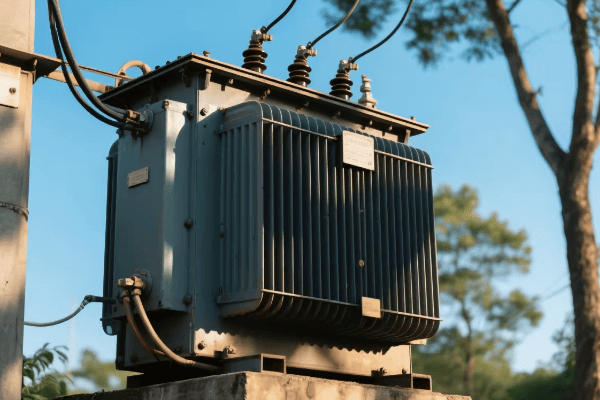
As someone who has spent years in the power industry, I’ve seen firsthand how crucial this decision can be. Let’s dive into the key factors that will help you make the right choice for your project.
Key Factors in Evaluating Power Transformer Manufacturers: A Comprehensive Guide?
Have you ever wondered what separates a great transformer manufacturer from an average one? The answer lies in a combination of factors that go beyond just the price tag.
Key factors in evaluating power transformer manufacturers include their technical expertise, manufacturing capabilities, quality control processes, financial stability, and industry reputation. A comprehensive assessment of these factors ensures you select a manufacturer capable of meeting your project’s specific needs.
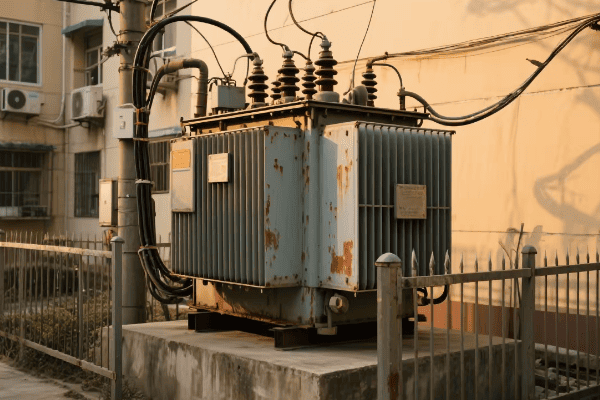
Let’s break down these factors in detail:
Technical Expertise
A manufacturer’s technical know-how is crucial:
-
Design Capabilities:
- Look for manufacturers with strong in-house design teams.
- They should be able to customize transformers to your specifications.
-
Innovation:
- Check if they invest in R&D.
- Innovative manufacturers often offer more efficient and reliable products.
Manufacturing Capabilities
The production facilities matter:
-
Production Capacity:
- Ensure they can meet your volume requirements.
- Look for manufacturers with flexible production lines.
-
Equipment and Technology:
- Modern, state-of-the-art equipment often results in better quality.
- Advanced technology can lead to more precise and efficient manufacturing.
Quality Control
Quality should be a top priority:
-
Certifications:
- Look for ISO 9001 and industry-specific certifications.
- These indicate a commitment to quality management.
-
Testing Facilities:
- On-site testing capabilities are a big plus.
- They should perform rigorous tests on each transformer.
Financial Stability
A manufacturer’s financial health is important:
-
Company Size and Age:
- Established companies often have more stability.
- However, don’t overlook innovative smaller firms.
-
Financial Reports:
- If available, review their financial statements.
- Look for steady growth and profitability.
Here’s a comparison table of these factors:
| Factor | Why It’s Important | What to Look For |
|---|---|---|
| Technical Expertise | Ensures product quality and innovation | Strong design team, R&D investment |
| Manufacturing Capabilities | Affects production quality and capacity | Modern equipment, flexible production |
| Quality Control | Guarantees product reliability | ISO certifications, rigorous testing |
| Financial Stability | Ensures long-term support and reliability | Established presence, healthy financials |
I remember a project where we initially chose a manufacturer based solely on price. The transformers arrived late and had quality issues. We learned the hard way that a comprehensive evaluation is crucial. In a later project, we thoroughly assessed manufacturers using these factors. The result? On-time delivery of high-quality transformers that exceeded our performance expectations.
By considering these key factors, you’re not just buying a transformer; you’re investing in reliability and performance. Remember, the cheapest option isn’t always the most cost-effective in the long run. A thorough evaluation using these criteria will help you find a manufacturer that can truly meet your project’s needs and contribute to its success.
Industry Experience and Reputation: Why They Matter in Transformer Manufacturing?
Have you ever wondered why some companies stand the test of time while others fade away? In the world of transformer manufacturing, experience and reputation are not just buzzwords – they’re the bedrock of reliability.
Industry experience and reputation are crucial in transformer manufacturing because they indicate a company’s ability to consistently deliver quality products and navigate complex projects. Experienced manufacturers often have a proven track record, deep industry knowledge, and established quality processes.
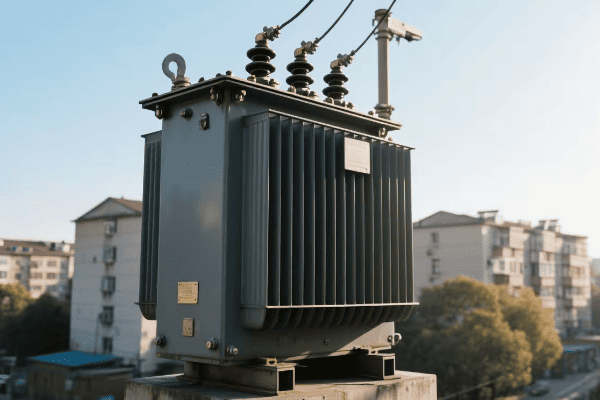
Let’s explore why these factors are so important:
The Value of Experience
Experience in transformer manufacturing is invaluable:
-
Problem-Solving Skills:
- Experienced manufacturers have encountered and solved numerous challenges.
- They can anticipate potential issues before they become problems.
-
Industry Knowledge:
- Years in the business mean a deep understanding of industry trends and standards.
- This knowledge translates into better product design and customer advice.
Reputation as a Quality Indicator
A manufacturer’s reputation speaks volumes:
-
Track Record:
- Look for a history of successful projects similar to yours.
- A good reputation is built on consistent performance over time.
-
Customer Feedback:
- Seek out testimonials and case studies.
- Positive feedback from other clients in your industry is particularly valuable.
Stability and Reliability
Long-standing companies offer benefits:
-
Financial Stability:
- Established manufacturers are more likely to be financially sound.
- This reduces the risk of project delays or company closure mid-project.
-
Long-Term Support:
- Experienced companies are more likely to offer robust after-sales support.
- They’re usually around to honor warranties and provide spare parts.
Here’s a comparison of new vs. experienced manufacturers:
| Aspect | New Manufacturer | Experienced Manufacturer |
|---|---|---|
| Problem-Solving | Limited real-world experience | Extensive troubleshooting skills |
| Industry Knowledge | Up-to-date but may lack depth | Deep, practical industry insights |
| Track Record | Limited or no history | Proven performance over time |
| Financial Stability | May be less stable | Usually more financially secure |
| Long-Term Support | Uncertain future presence | Likely to provide ongoing support |
I once worked on a project where we had to choose between a well-established manufacturer and a newer, cheaper option. We decided to go with the experienced manufacturer despite the higher cost. During the project, we encountered some unexpected challenges with the installation site. The manufacturer’s team, drawing on their years of experience, quickly proposed and implemented solutions that saved us time and money in the long run. Their ability to navigate complex situations smoothly was a testament to the value of industry experience.
When choosing a transformer manufacturer, don’t underestimate the power of experience and a solid reputation. These factors often translate into smoother project execution, better problem-solving, and long-term reliability. While newer companies may offer innovative solutions, the peace of mind that comes with a proven track record is invaluable, especially for critical infrastructure projects. Remember, in transformer manufacturing, experience isn’t just about age – it’s about the accumulated wisdom and proven capability to deliver quality products consistently.
Technical Specifications and Standards: Ensuring Your Transformer Meets Project Requirements?
Have you ever bought something only to find out it doesn’t quite fit your needs? When it comes to power transformers, this kind of mismatch can be costly and dangerous. That’s why understanding technical specifications and standards is crucial.
Technical specifications and standards in transformer manufacturing ensure that the product meets specific performance, safety, and compatibility requirements. They cover aspects like voltage ratings, efficiency, insulation levels, and environmental factors. Adherence to these standards guarantees that the transformer will function correctly and safely in your project.
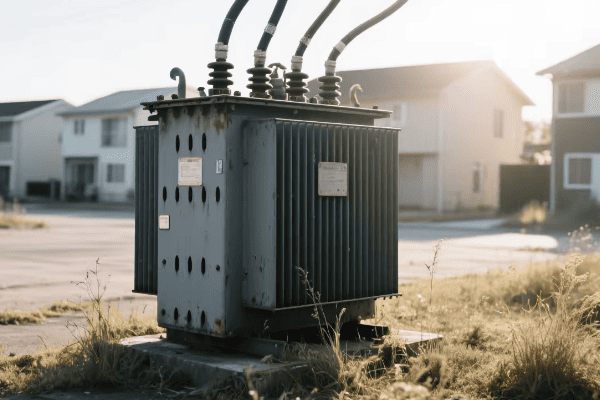
Let’s dive into the key aspects of technical specifications and standards:
Voltage and Power Ratings
Getting these right is fundamental:
-
Primary and Secondary Voltage:
- Must match your system’s requirements exactly.
- Even small discrepancies can lead to inefficiency or failure.
-
Power Rating (kVA or MVA):
- Should be sized correctly for your load requirements.
- Oversizing wastes money; undersizing risks overheating and failure.
Efficiency and Losses
These factors affect long-term costs:
-
No-Load Losses:
- Occur constantly, even when the transformer is idle.
- Lower no-load losses mean better efficiency and lower operating costs.
-
Load Losses:
- Occur when the transformer is under load.
- Affect efficiency and heat generation under working conditions.
Insulation and Temperature Rise
Critical for safety and longevity:
-
Insulation Class:
- Determines the transformer’s ability to withstand temperature stress.
- Higher classes allow for higher operating temperatures.
-
Temperature Rise:
- Specifies how much the transformer can heat up under full load.
- Lower temperature rise often means longer transformer life.
Environmental Considerations
Adapting to the installation environment:
-
Altitude:
- Higher altitudes may require derating or special designs.
- Affects cooling and insulation requirements.
-
Climate Conditions:
- Humidity, temperature extremes, and pollution levels must be considered.
- May influence the choice between dry-type and oil-filled transformers.
Here’s a table summarizing key technical specifications:
| Specification | Why It’s Important | What to Consider |
|---|---|---|
| Voltage Ratings | Ensures compatibility with your system | Must match exactly |
| Power Rating | Determines capacity to handle load | Size according to current and future needs |
| Efficiency | Affects operating costs | Look for high efficiency ratings |
| Insulation Class | Impacts safety and lifespan | Choose based on operating conditions |
| Temperature Rise | Influences transformer life | Lower is generally better |
| Environmental Factors | Ensures proper operation in specific conditions | Consider altitude, climate, pollution |
I recall a project where we initially overlooked the altitude factor for a transformer installation in a mountainous region. The standard transformer we ordered couldn’t perform efficiently at that altitude due to reduced air density affecting cooling. We had to quickly work with the manufacturer to modify the design, which led to delays and additional costs. This experience taught me the importance of thoroughly reviewing all technical specifications and environmental factors before finalizing a transformer order.
When selecting a transformer, pay close attention to these technical specifications and standards. They’re not just numbers on a sheet – they’re the blueprint for your transformer’s performance and longevity. Always ensure that the manufacturer can provide detailed specifications and explain how their product meets or exceeds relevant industry standards. Remember, a transformer that perfectly matches your technical requirements is not just a purchase; it’s an investment in the reliability and efficiency of your entire electrical system.
Quality Assurance: Assessing Manufacturers’ Commitment to Excellence?
Have you ever wondered what separates a good transformer from a great one? The answer often lies in the manufacturer’s commitment to quality assurance. But how can you assess this commitment?
Quality assurance in transformer manufacturing involves rigorous testing, adherence to international standards, and continuous improvement processes. A manufacturer’s commitment to quality can be assessed through their certifications, testing procedures, quality control measures, and track record of product reliability.
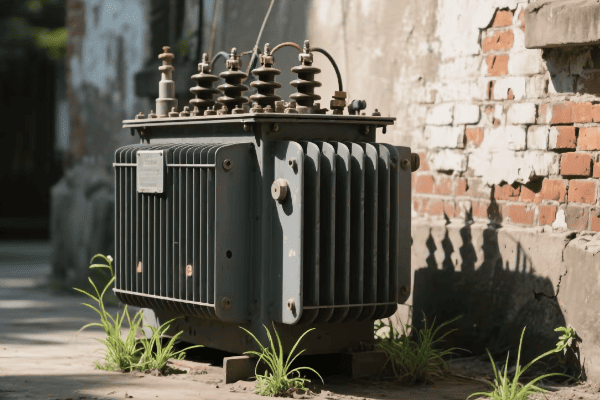
Let’s explore the key aspects of quality assurance in transformer manufacturing:
Certifications and Standards
Look for adherence to recognized standards:
-
ISO 9001:
- This certification indicates a robust quality management system.
- It ensures consistent quality across all processes.
-
Industry-Specific Standards:
- Look for compliance with standards like IEEE, IEC, or ANSI.
- These ensure the transformer meets specific industry requirements.
Testing Procedures
Rigorous testing is crucial:
-
Routine Tests:
- Should be performed on every transformer.
- Include tests for turns ratio, insulation resistance, and no-load losses.
-
Type Tests:
- Performed on representative samples.
- Include temperature rise, impulse, and short-circuit tests.
Quality Control Measures
Ongoing quality checks are essential:
-
In-Process Inspections:
- Regular checks during the manufacturing process.
- Help catch and correct issues early.
-
Final Inspection:
- Comprehensive check before the transformer leaves the factory.
- Ensures all specifications are met.
Continuous Improvement
Look for a culture of ongoing enhancement:
-
Feedback Integration:
- How the manufacturer incorporates customer feedback.
- Indicates a commitment to continuous product improvement.
-
Investment in Technology:
- Regular updates to manufacturing and testing equipment.
- Shows dedication to staying at the forefront of quality.
Here’s a comparison table of quality assurance aspects:
| Aspect | What to Look For | Why It’s Important |
|---|---|---|
| Certifications | ISO 9001, Industry standards | Indicates adherence to recognized quality systems |
| Routine Tests | Comprehensive test reports | Ensures each transformer meets specifications |
| Type Tests | Detailed type test certificates | Verifies design performance under extreme conditions |
| In-Process Inspections | Documentation of quality checks | Shows attention to detail throughout manufacturing |
| Continuous Improvement | Evidence of product enhancements | Indicates commitment to long-term quality |
I remember visiting a transformer manufacturing facility where quality assurance was clearly a top priority. They had a dedicated testing lab with state-of-the-art equipment. What impressed me most was their approach to continuous improvement. They showed me how they tracked and analyzed data from every transformer they produced, using this information to refine their processes constantly. This commitment to quality was evident in their low defect rates and high customer satisfaction scores.
When assessing a manufacturer’s commitment to quality, don’t just look at their final product. Examine their entire approach to quality assurance. A manufacturer with robust quality processes is more likely to produce reliable transformers consistently. Remember, investing in a high-quality transformer from a manufacturer committed to excellence can save you significant time and money in the long run by reducing the risk of failures and extending the transformer’s lifespan.
Beyond the Purchase: The Importance of After-Sales Support in Transformer Selection?
Have you ever bought a complex piece of equipment only to find yourself lost when it comes to maintenance or troubleshooting? When it comes to power transformers, the support you receive after the purchase can be just as crucial as the transformer itself.
After-sales support in transformer selection is critical for ensuring long-term performance and reliability. It includes services like installation assistance, maintenance support, spare parts availability, and technical consultations. Good after-sales support can significantly extend a transformer’s lifespan and minimize downtime.
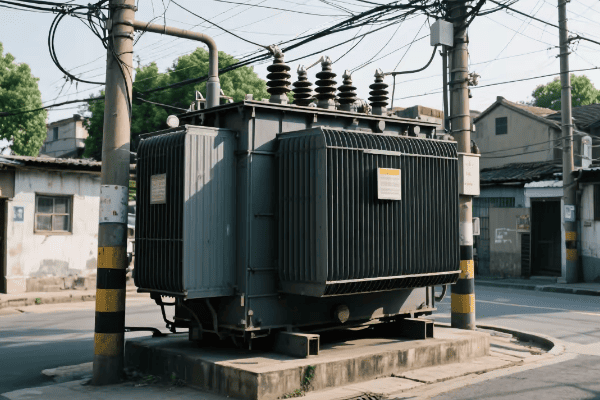
Let’s explore why after-sales support is so important and what to look for:
Installation and Commissioning Support
Getting started right is crucial:
-
On-Site Assistance:
- Look for manufacturers who offer expert guidance during installation.
- This ensures proper setup and reduces the risk of early failures.
-
Commissioning Services:
- Professional commissioning can catch potential issues early.
- It also ensures the transformer is operating at peak efficiency from day one.
Maintenance and Repair Services
Ongoing support keeps your transformer running smoothly:
-
Preventive Maintenance Programs:
- Regular check-ups can prevent major issues.
- Look for manufacturers offering comprehensive maintenance packages.
-
Repair Services:
- Quick and efficient repair services are crucial when issues arise.
- Check the manufacturer’s response time and repair capabilities.
Spare Parts Availability
Easy access to parts is essential:
-
Stock of Critical Components:
- Manufacturers should maintain a stock of essential spare parts.
- This reduces downtime in case of component failure.
-
Long-Term Availability:
- Ensure the manufacturer commits to long-term spare parts availability.
- This is crucial for the transformer’s entire lifecycle.
Technical Support and Training
Ongoing knowledge transfer is valuable:
-
Technical Consultations:
- Access to expert advice for operational queries or issues.
- Look for manufacturers offering robust technical support.
-
Training Programs:
- Some manufacturers offer training for your maintenance team.
- This can improve in-house maintenance capabilities and reduce reliance on external support.
Here’s a comparison table of after-sales support features:
| Support Feature | What to Look For | Why It’s Important |
|---|---|---|
| Installation Support | On-site expert assistance | Ensures proper setup and initial operation |
| Maintenance Programs | Regular check-up schedules | Prevents major issues and extends lifespan |
| Repair Services | Quick response times, skilled technicians | Minimizes downtime during failures |
| Spare Parts | Availability of critical components | Enables quick repairs and reduces downtime |
| Technical Support | Access to expert consultations | Helps resolve operational queries efficiently |
| Training Programs | Comprehensive operator training | Improves in-house maintenance capabilities |
I once worked with a client who chose a transformer based solely on its technical specifications and price, without considering after-sales support. Six months after installation, they faced a minor issue that could have been easily resolved. However, the lack of prompt support from the manufacturer led to extended downtime and significant production losses. This experience taught me the true value of comprehensiveafter-sales support. In contrast, on another project where we prioritized after-sales support in our selection criteria, we had a much smoother experience. When an unexpected issue arose, the manufacturer’s team was on-site within hours, quickly resolving the problem and providing additional training to our staff to prevent future occurrences.
When selecting a transformer manufacturer, don’t underestimate the importance of after-sales support. It’s not just about solving problems when they occur; it’s about preventing issues, optimizing performance, and ensuring the longevity of your investment. A manufacturer with strong after-sales support becomes a long-term partner in your project’s success, not just a one-time vendor.
Consider these points when evaluating after-sales support:
- Responsiveness: How quickly does the manufacturer respond to support requests?
- Expertise: Do they have a team of experienced technicians and engineers?
- Geographical Coverage: Can they provide support at your location?
- Documentation: Do they offer comprehensive manuals and technical documentation?
- Warranty Terms: What’s covered, and for how long?
Remember, the true cost of a transformer isn’t just its purchase price – it’s the total cost of ownership over its entire lifespan. Robust after-sales support can significantly reduce this long-term cost by preventing issues, extending the transformer’s life, and minimizing downtime. When you choose a manufacturer with excellent after-sales support, you’re not just buying a transformer; you’re investing in peace of mind and long-term operational efficiency.
Conclusion
Choosing the best power transformer manufacturer involves evaluating technical expertise, industry experience, quality assurance processes, and after-sales support. By carefully considering these factors, you can ensure a reliable, efficient, and long-lasting transformer for your project.
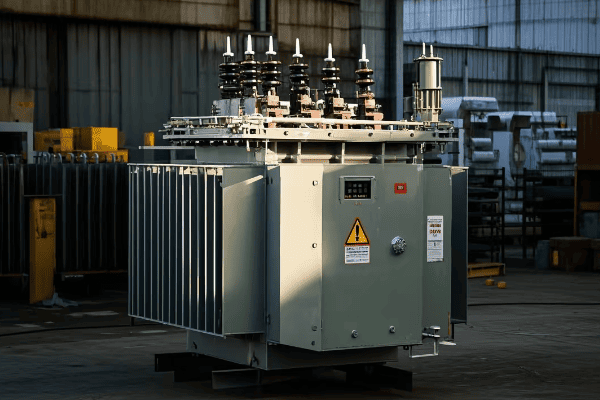
Have you ever wondered how electricity travels safely from power plants to your home? The answer lies in a device you rarely see but heavily rely on: the transformer.
A transformer in electricity is a device that changes voltage levels in power systems. It enables efficient long-distance transmission and safe local distribution of electricity. In smart grids, transformers are evolving to become intelligent devices, crucial for managing complex power networks and integrating renewable energy sources.

As an electrical engineer with years of experience in the power industry, I’ve seen firsthand how transformers are shaping our energy future. Let’s explore the world of transformers and discover why they’re the cornerstone of smart grid evolution.
The Fundamentals: How Transformers Power Our Electrical World?
Imagine trying to pour water from a fire hose into a drinking glass. That’s similar to the challenge of getting electricity from power plants to your home. Transformers are the solution to this problem.
Transformers power our electrical world by changing voltage levels. They increase voltage at power plants for efficient long-distance transmission, then decrease it in stages for safe local distribution and use. This process ensures electricity reaches consumers efficiently and safely.
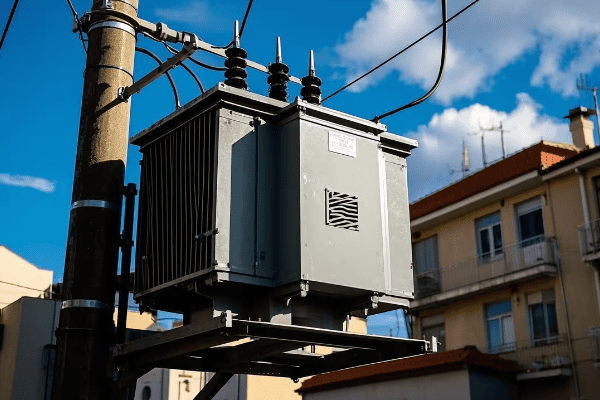
Let’s dive deeper into how transformers work:
Electromagnetic Induction: The Heart of Transformer Operation
Transformers work on a principle called electromagnetic induction:
- The primary coil receives alternating current (AC) power.
- This creates a changing magnetic field in the transformer’s core.
- The changing field induces a voltage in the secondary coil.
- The voltage in the secondary coil depends on the ratio of turns in the two coils.
Voltage Transformation
Transformers can increase or decrease voltage:
- If the secondary coil has more turns than the primary, voltage increases.
- If it has fewer turns, voltage decreases.
- The voltage ratio equals the turns ratio.
Power Conservation
In an ideal transformer:
- Input power equals output power (minus small losses).
- As voltage increases, current decreases proportionally, and vice versa.
- This is why high voltage is used for transmission (lower current, lower losses).
Here’s a simple comparison of transformers with different turn ratios:
| Primary Turns | Secondary Turns | Input Voltage | Output Voltage | Type |
|---|---|---|---|---|
| 100 | 1000 | 120 V | 1200 V | Step-up |
| 1000 | 100 | 12000 V | 1200 V | Step-down |
| 100 | 100 | 120 V | 120 V | Isolation |
I remember the first time I explained these principles to a group of engineering students. To demonstrate, we built a simple transformer using two coils of wire and an iron rod. When we connected one coil to a battery through a switch, the students were amazed to see the light bulb connected to the other coil flicker as we opened and closed the switch. It was a powerful demonstration of how energy can be transferred between circuits without a direct electrical connection.
Understanding these fundamentals is crucial for anyone working with electrical systems. They explain why transformers are so effective at changing voltage levels and why they’re so important in our power grid. From the massive transformers at power plants to the tiny ones in your phone charger, they all work on these same basic principles. It’s a testament to the elegance and power of electromagnetic induction, a phenomenon that continues to shape our electrical world.
Smart Grid Enablers: Transformers as the Backbone of Next-Generation Power Networks?
Have you ever wondered how our power grid is becoming "smarter"? The answer lies in the evolution of its components, with transformers playing a starring role.
In next-generation power networks, transformers are evolving into smart devices. They now incorporate sensors, communication capabilities, and advanced analytics. This allows for real-time monitoring, predictive maintenance, and more efficient grid management, making transformers the backbone of smart grids.

Let’s explore how transformers are enabling smart grids:
Real-Time Monitoring and Diagnostics
Smart transformers are always on watch:
-
Integrated Sensors:
- Monitor key parameters like temperature, oil condition, and load.
- Provide real-time data on transformer health and performance.
-
Advanced Analytics:
- Use artificial intelligence to analyze sensor data.
- Can predict potential issues before they cause failures.
Communication and Grid Integration
Smart transformers are becoming part of the Internet of Things (IoT):
-
Two-Way Communication:
- Can send data to control centers and receive commands.
- Enables better coordination with other grid components.
-
Grid Optimization:
- Help balance loads and manage power flow more efficiently.
- Can adapt to changing grid conditions in real-time.
Enhanced Power Quality Management
Smart transformers help maintain stable and clean power:
-
Voltage Regulation:
- Use on-load tap changers to adjust voltage in real-time.
- Maintain stable voltage despite fluctuations in supply or demand.
-
Harmonic Mitigation:
- Detect and mitigate harmonic distortions in the power supply.
- Crucial for maintaining power quality with increasing use of electronic devices.
Here’s a comparison of traditional and smart transformer features:
| Feature | Traditional Transformer | Smart Transformer |
|---|---|---|
| Monitoring | Basic gauges | Real-time digital monitoring |
| Communication | None or minimal | Two-way with grid systems |
| Maintenance | Time-based | Condition-based predictive |
| Voltage Regulation | Fixed or limited adjustment | Dynamic, real-time adjustment |
| Power Quality Control | Passive | Active management and correction |
I recently visited a newly upgraded substation that showcased these smart transformers. The difference was striking. The new units had touchscreen interfaces displaying real-time data. The substation operator showed me how they could adjust settings remotely and even predict potential issues weeks in advance. During my visit, the system detected a minor anomaly in one transformer and automatically adjusted loads to compensate, preventing any disruption in service. It was like watching the future of power distribution unfold before my eyes.
Smart transformers are more than just an upgrade to existing technology. They’re a fundamental shift in how we manage and interact with our power distribution systems. As we move towards a more distributed, renewable-based, and digitally-driven energy future, these smart transformers will play a crucial role. They’re not just reacting to changes; they’re anticipating and adapting to them in real-time, paving the way for more efficient, reliable, and flexible smart grids.
Evolution in Action: Transformers Adapting to Future Energy Challenges?
Have you ever thought about how our power systems will keep up with the growing demand for clean, efficient energy? The answer lies in the continuous evolution of transformer technology.
Transformers are adapting to future energy challenges through technological innovations. These include the use of advanced materials, integration of power electronics, and development of solid-state transformers. These advancements aim to improve efficiency, reduce size and weight, and enhance the grid’s ability to integrate renewable energy sources.
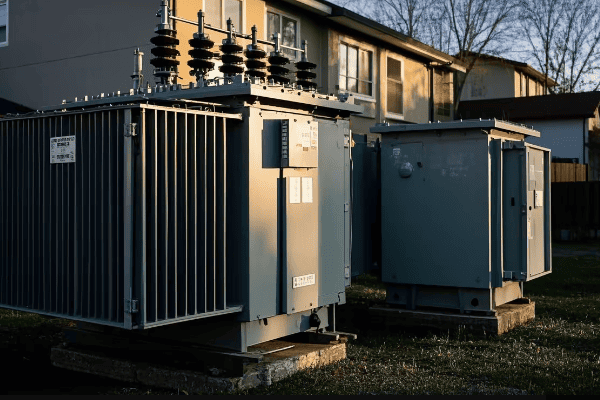
Let’s explore how transformers are evolving to meet future energy challenges:
Advanced Materials
New materials are pushing the boundaries of transformer performance:
-
Amorphous Metal Cores:
- Reduce no-load losses by up to 70% compared to traditional silicon steel.
- Improve overall transformer efficiency.
-
High-Temperature Superconducting (HTS) Transformers:
- Use superconducting materials for windings.
- Offer higher efficiency and smaller size, but still in development stage.
Power Electronics Integration
The merger of transformers and power electronics is creating new possibilities:
-
Solid-State Transformers (SSTs):
- Use power electronics to convert power, offering more control.
- Can easily integrate AC and DC systems, important for renewable energy and electric vehicle charging.
-
Hybrid Transformers:
- Combine traditional transformer technology with power electronics.
- Offer improved voltage regulation and power quality control.
Renewable Energy Integration
Transformers are adapting to support the growth of renewable energy:
-
Bidirectional Power Flow Capability:
- Handle power flowing both to and from the grid.
- Essential for integrating distributed renewable sources like rooftop solar.
-
Enhanced Harmonic Mitigation:
- Manage power quality issues associated with renewable energy inverters.
- Ensure stable and clean power supply in grids with high renewable penetration.
Here’s a comparison of traditional and future transformer technologies:
| Feature | Traditional Transformer | Future Transformer |
|---|---|---|
| Core Material | Silicon Steel | Amorphous Metal or HTS |
| Power Conversion | Electromagnetic | Solid-State Electronics |
| Size/Weight | Large and Heavy | Compact and Lightweight |
| Efficiency | 95-98% | 99%+ |
| Renewable Integration | Limited capability | Advanced features for renewables |
I recently had the opportunity to work on a pilot project testing solid-state transformers for a microgrid application. The flexibility these devices offered was impressive. We could seamlessly integrate solar panels, battery storage, and even electric vehicle charging stations. The SST could handle bidirectional power flow, convert between AC and DC, and adjust voltage levels on the fly. It was like having a Swiss Army knife for power management.
These innovations in transformer technology are not just incremental improvements. They represent a paradigm shift in how we think about and manage power distribution. As we move towards a more decentralized, renewable-based energy system, these advanced transformers will be key enablers. They’ll help us create more flexible, efficient, and resilient power grids capable of meeting the complex energy needs of the future.
Anatomy of Innovation: Key Components and Types of Smart Grid Transformers?
Have you ever wondered what’s inside those mysterious boxes you see in electrical substations? Let’s unravel the anatomy of smart grid transformers and explore their various types.
Smart grid transformers consist of several key components: the core, windings, insulation, cooling system, and smart monitoring devices. Various types of transformers, from power transformers to distribution and solid-state transformers, work together in smart grids. Each type is optimized for specific functions in the evolving power system.
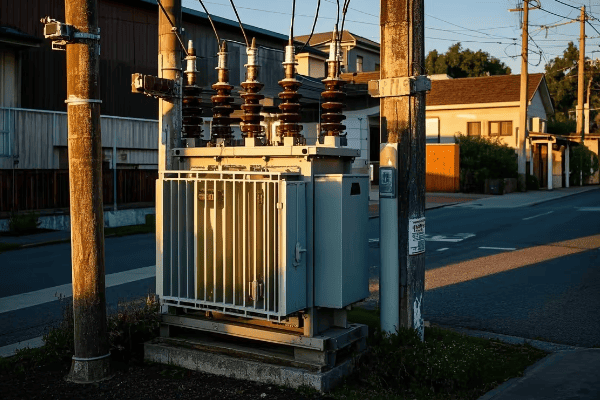
Let’s dive into the anatomy and types of transformers in smart grids:
Key Components of a Smart Transformer
-
Core:
- Made of advanced materials like amorphous metals.
- Provides a path for the magnetic field with minimal losses.
-
Windings:
- Primary and secondary windings made of copper or aluminum.
- May incorporate sensors for real-time monitoring.
-
Insulation:
- Uses advanced materials for better heat dissipation and longer life.
- May include eco-friendly options like natural esters.
-
Cooling System:
- Advanced designs for better heat management.
- May include smart controls for optimized cooling.
-
Smart Monitoring Devices:
- Sensors for temperature, oil condition, load, etc.
- Communication modules for data transmission.
Types of Transformers in Smart Grids
-
Smart Power Transformers:
- Used in substations for high-voltage applications.
- Equipped with advanced monitoring and control systems.
-
Smart Distribution Transformers:
- Found in neighborhoods for low-voltage distribution.
- Often include communication capabilities for real-time load management.
-
Solid-State Transformers:
- Use power electronics for more flexible power conversion.
- Enable easy integration of DC sources and loads.
-
Phase-Shifting Transformers:
- Control power flow in transmission systems.
- Crucial for managing complex power flows in smart grids.
-
Instrument Transformers:
- Provide accurate measurements for metering and protection.
- In smart grids, often include digital output capabilities.
Here’s a comparison of different transformer types in smart grids:
| Type | Primary Function | Smart Grid Enhancement |
|---|---|---|
| Smart Power | High-voltage transformation | Real-time monitoring and adaptive control |
| Smart Distribution | Low-voltage distribution | Load management and demand response |
| Solid-State | Flexible power conversion | Integration of AC/DC systems and renewables |
| Phase-Shifting | Power flow control | Optimized transmission in complex networks |
| Instrument | Measurement and protection | High-accuracy data for grid analytics |
I remember working on a project to upgrade a city’s power infrastructure to a smart grid system. We had to consider each type of transformer and how it would fit into the new, more intelligent network. The power transformers at the main substation were equipped with advanced sensors and communication systems, allowing real-time monitoring and control. The distribution transformers in neighborhoods were upgraded to include smart metering capabilities, enabling more efficient load management. We even installed a few solid-state transformers in areas with high renewable energy penetration to better manage the variable power flow.
Understanding the anatomy and types of smart grid transformers is crucial for anyone working in modern power systems. Each component and each type of transformer plays a vital role in creating a more efficient, reliable, and flexible power system. As our grids become smarter, the transformers within them are evolving to meet new challenges and opportunities, shaping the future of our energy infrastructure.
Efficiency Redefined: Transformers Driving Sustainable Energy Distribution?
Have you ever wondered how we can make our power grids more environmentally friendly? The answer lies in the evolution of one of its most crucial components: the transformer.
Transformers are driving sustainable energy distribution by redefining efficiency standards. Modern transformers use advanced materials and designs to minimize losses, incorporate smart features for optimal operation, and enable better integration of renewable energy sources. This results in more efficient, reliable, and environmentally friendly power distribution.
Let’s explore how transformers are redefining efficiency in energy distribution:
Minimizing Energy Losses
Modern transformers are designed to significantly reduce energy losses:
-
Advanced Core Materials:
- Use of amorphous metals or advanced silicon steel.
- Can reduce no-load losses by up to 70% compared to traditional materials.
-
Improved Winding Design:
- Use of copper instead of aluminum for lower resistance.
- Advanced winding geometries to reduce eddy currents.
Smart Energy Management
Transformers in smart grids can adapt to optimize energy use:
-
Dynamic Load Management:
- Adjust operation based on real-time load conditions.
- Optimize efficiency across varying demand patterns.
-
Predictive Maintenance:
- Use AI and sensor data to predict and prevent failures.
- Extend transformer life and reduce downtime.
Renewable Energy Integration
Transformers play a key role in sustainable energy systems:
-
Bidirectional Power Flow:
- Handle power flowing both to and from the grid.
- Essential for integrating distributed renewable sources.
-
Enhanced Power Quality Control:
- Manage issues like harmonics associated with renewable energy.
- Ensure stable and clean power supply in grids with high renewable penetration.
Here’s a comparison of efficiency features in traditional vs. modern sustainable transformers:
| Feature | Traditional Transformer | Sustainable Transformer |
|---|---|---|
| Core Loss | 0.5-1% of rated power | 0.1-0.3% of rated power |
| Load Management | Fixed capacity | Dynamic capacity utilization |
| Renewable Integration | Limited capability | Advanced features for renewables |
| Lifespan | Fixed design life | Extended through smart management |
| Environmental Impact | Higher carbon footprint | Reduced emissions and resource use |
I once worked on a project to upgrade a city’s distribution network with high-efficiency transformers. The results were impressive. Overall energy losses in the system dropped by 25%. The new transformers could handle the variable output from local solar installations much more efficiently. During peak demand periods, the smart load management features allowed us to safely utilize more capacity, reducing the need for additional infrastructure. It was a clear demonstration of how these advanced transformers can drive sustainable energy distribution.
Transformers are redefining efficiency in our power grids. By minimizing losses, adapting to changing loads, and facilitating the integration of renewable energy, they’re helping to create power systems that are not only more efficient but also more sustainable. As we continue to face the challenges of climate change and increasing energy demand, these efficient transformers will play an increasingly crucial role in shaping a more sustainable energy future.
Conclusion
Transformers are evolving as the cornerstone of smart grid evolution. They’re becoming more efficient, smarter, and adaptable, enabling better power management, renewable integration, and sustainable energy distribution. These advancements are crucial for the future of our power systems.
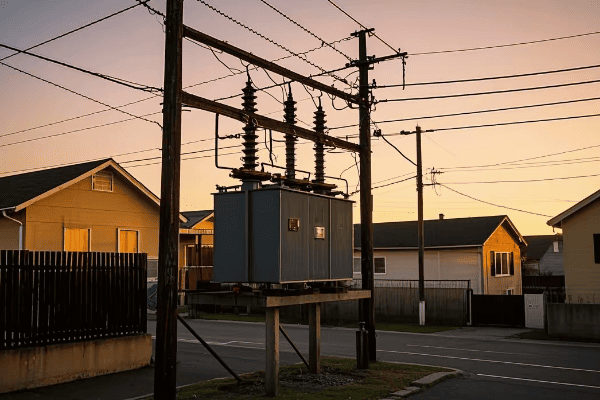
Have you ever wondered how electricity travels safely from power plants to your home? The answer lies in a device you rarely see but heavily rely on: the electric transformer.
An electric transformer is a device that changes the voltage of electrical power. It allows electricity to be transmitted efficiently over long distances and then safely used in our homes and businesses. In smart energy grids, transformers are evolving to become key enablers of advanced power management and distribution.

As an electrical engineer with years of experience in the power industry, I’ve seen firsthand how crucial these devices are. Let’s explore the world of electric transformers and discover how they’re shaping the future of our power systems.
The Core Functionality: How Electric Transformers Drive Modern Power Systems?
Imagine trying to pour water from a fire hose into a drinking glass. That’s similar to the challenge of getting electricity from power plants to your home. Transformers are the solution to this problem.
Electric transformers drive modern power systems by changing voltage levels. They increase voltage at power plants for efficient long-distance transmission, then decrease it in stages for safe local distribution and use. This process ensures power reaches consumers efficiently and safely.

Let’s dive deeper into how transformers work:
Electromagnetic Induction: The Heart of Transformer Operation
Transformers work on a principle called electromagnetic induction:
- The primary coil receives alternating current (AC) power.
- This creates a changing magnetic field in the transformer’s core.
- The changing field induces a voltage in the secondary coil.
- The voltage in the secondary coil depends on the ratio of turns in the two coils.
Voltage Transformation
Transformers can increase or decrease voltage:
- If the secondary coil has more turns than the primary, voltage increases.
- If it has fewer turns, voltage decreases.
- The voltage ratio equals the turns ratio.
Power Conservation
In an ideal transformer:
- Input power equals output power (minus small losses).
- As voltage increases, current decreases proportionally, and vice versa.
- This is why high voltage is used for transmission (lower current, lower losses).
Here’s a simple comparison of transformers with different turn ratios:
| Primary Turns | Secondary Turns | Input Voltage | Output Voltage | Type |
|---|---|---|---|---|
| 100 | 1000 | 120 V | 1200 V | Step-up |
| 1000 | 100 | 12000 V | 1200 V | Step-down |
| 100 | 100 | 120 V | 120 V | Isolation |
I remember the first time I explained these principles to a group of engineering students. To demonstrate, we built a simple transformer using two coils of wire and an iron rod. When we connected one coil to a battery through a switch, the students were amazed to see the light bulb connected to the other coil flicker as we opened and closed the switch. It was a powerful demonstration of how energy can be transferred between circuits without a direct electrical connection.
Understanding these core principles is crucial for anyone working with electrical systems. They explain why transformers are so effective at changing voltage levels and why they’re so important in our power grid. From the massive transformers at power plants to the tiny ones in your phone charger, they all work on these same basic principles. It’s a testament to the elegance and power of electromagnetic induction, a phenomenon that continues to shape our electrical world.
Smart Grid Enablers: The Crucial Role of Transformers in Next-Generation Energy Networks?
Have you ever wondered how our power grid is becoming "smarter"? The answer lies in the evolution of its components, with transformers playing a starring role.
In next-generation energy networks, electric transformers are evolving into smart devices. They now incorporate sensors, communication capabilities, and advanced analytics. This allows for real-time monitoring, predictive maintenance, and more efficient grid management, making transformers crucial enablers of smart grids.
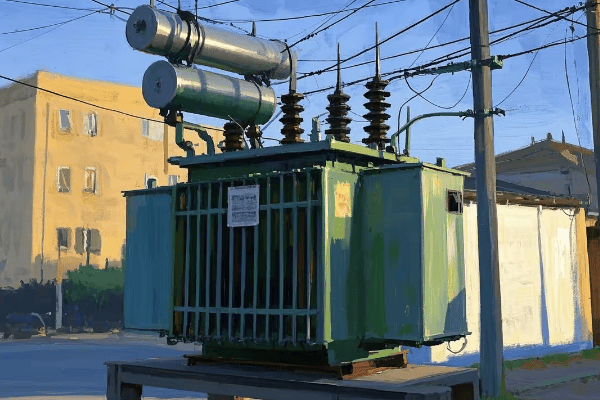
Let’s explore how transformers are enabling smart grids:
Real-Time Monitoring and Diagnostics
Smart transformers are always on watch:
-
Integrated Sensors:
- Monitor key parameters like temperature, oil condition, and load.
- Provide real-time data on transformer health and performance.
-
Advanced Analytics:
- Use artificial intelligence to analyze sensor data.
- Can predict potential issues before they cause failures.
Communication and Grid Integration
Smart transformers are becoming part of the Internet of Things (IoT):
-
Two-Way Communication:
- Can send data to control centers and receive commands.
- Enables better coordination with other grid components.
-
Grid Optimization:
- Help balance loads and manage power flow more efficiently.
- Can adapt to changing grid conditions in real-time.
Enhanced Power Quality Management
Smart transformers help maintain stable and clean power:
-
Voltage Regulation:
- Use on-load tap changers to adjust voltage in real-time.
- Maintain stable voltage despite fluctuations in supply or demand.
-
Harmonic Mitigation:
- Detect and mitigate harmonic distortions in the power supply.
- Crucial for maintaining power quality with increasing use of electronic devices.
Here’s a comparison of traditional and smart transformer features:
| Feature | Traditional Transformer | Smart Transformer |
|---|---|---|
| Monitoring | Basic gauges | Real-time digital monitoring |
| Communication | None or minimal | Two-way with grid systems |
| Maintenance | Time-based | Condition-based predictive |
| Voltage Regulation | Fixed or limited adjustment | Dynamic, real-time adjustment |
| Power Quality Control | Passive | Active management and correction |
I recently visited a newly upgraded substation that showcased these smart transformers. The difference was striking. The new units had touchscreen interfaces displaying real-time data. The substation operator showed me how they could adjust settings remotely and even predict potential issues weeks in advance. During my visit, the system detected a minor anomaly in one transformer and automatically adjusted loads to compensate, preventing any disruption in service. It was like watching the future of power distribution unfold before my eyes.
Smart transformers are more than just an upgrade to existing technology. They’re a fundamental shift in how we manage and interact with our power distribution systems. As we move towards a more distributed, renewable-based, and digitally-driven energy future, these smart transformers will play a crucial role. They’re not just reacting to changes; they’re anticipating and adapting to them in real-time, paving the way for more efficient, reliable, and flexible smart grids.
Evolving for Tomorrow: Innovations in Electric Transformer Technology for Future Energy Needs?
Have you ever thought about how our power systems will keep up with the growing demand for clean, efficient energy? The answer lies in the continuous evolution of transformer technology.
Electric transformer technology is evolving to meet future energy needs. Innovations include the use of advanced materials, integration of power electronics, and development of solid-state transformers. These advancements aim to improve efficiency, reduce size and weight, and enhance the grid’s ability to integrate renewable energy sources.
Let’s explore some of the key innovations in transformer technology:
Advanced Materials
New materials are pushing the boundaries of transformer performance:
-
Amorphous Metal Cores:
- Reduce no-load losses by up to 70% compared to traditional silicon steel.
- Improve overall transformer efficiency.
-
High-Temperature Superconducting (HTS) Transformers:
- Use superconducting materials for windings.
- Offer higher efficiency and smaller size, but still in development stage.
Power Electronics Integration
The merger of transformers and power electronics is creating new possibilities:
-
Solid-State Transformers (SSTs):
- Use power electronics to convert power, offering more control.
- Can easily integrate AC and DC systems, important for renewable energy and electric vehicle charging.
-
Hybrid Transformers:
- Combine traditional transformer technology with power electronics.
- Offer improved voltage regulation and power quality control.
Smart Features and Connectivity
Transformers are becoming smarter and more connected:
-
IoT Integration:
- Incorporate sensors and communication capabilities.
- Enable real-time monitoring and predictive maintenance.
-
AI and Machine Learning:
- Use advanced algorithms to optimize performance.
- Predict and prevent potential issues before they occur.
Here’s a comparison of traditional and future transformer technologies:
| Feature | Traditional Transformer | Future Transformer |
|---|---|---|
| Core Material | Silicon Steel | Amorphous Metal or HTS |
| Power Conversion | Electromagnetic | Solid-State Electronics |
| Size/Weight | Large and Heavy | Compact and Lightweight |
| Efficiency | 95-98% | 99%+ |
| Smart Features | Limited or None | Extensive IoT and AI Integration |
I recently had the opportunity to work on a pilot project testing solid-state transformers for a microgrid application. The flexibility these devices offered was impressive. We could seamlessly integrate solar panels, battery storage, and even electric vehicle charging stations. The SST could handle bidirectional power flow, convert between AC and DC, and adjust voltage levels on the fly. It was like having a Swiss Army knife for power management.
These innovations in transformer technology are not just incremental improvements. They represent a paradigm shift in how we think about and manage power distribution. As we move towards a more decentralized, renewable-based energy system, these advanced transformers will be key enablers. They’ll help us create more flexible, efficient, and resilient power grids capable of meeting the complex energy needs of the future.
Anatomy of Power: Key Components and Types of Electric Transformers in Smart Grids?
Have you ever wondered what’s inside those mysterious boxes you see in electrical substations? Let’s unravel the anatomy of electric transformers and explore how different types fit into smart grids.
Electric transformers in smart grids consist of several key components: the core, windings, insulation, and cooling system. Various types of transformers, from power transformers to distribution and instrument transformers, work together in smart grids. Each type is optimized for specific functions in the power system.
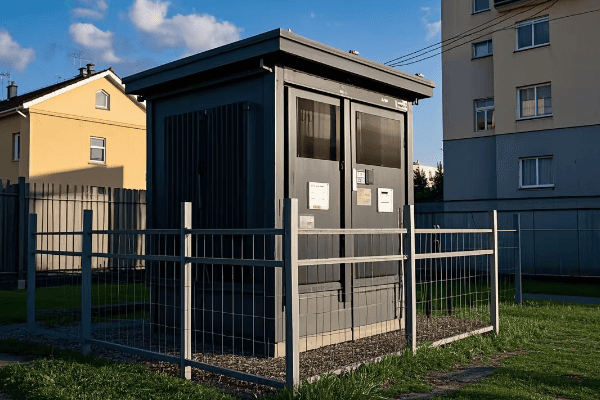
Let’s dive into the anatomy and types of transformers in smart grids:
Key Components of a Transformer
-
Core:
- Made of thin layers of silicon steel (laminations).
- Provides a path for the magnetic field.
- In smart transformers, may use advanced materials like amorphous metals.
-
Windings:
- Primary winding: Receives input power.
- Secondary winding: Delivers output power.
- In smart grids, may incorporate sensors for real-time monitoring.
-
Insulation:
- Prevents short circuits between windings and core.
- Materials include paper, oil, and advanced polymers.
-
Cooling System:
- Manages heat generated during operation.
- In smart transformers, may have advanced monitoring and control.
Types of Transformers in Smart Grids
-
Power Transformers:
- Used in power plants and major substations.
- In smart grids, often equipped with advanced monitoring and control systems.
-
Distribution Transformers:
- Found in neighborhoods and on utility poles.
- In smart grids, may have communication capabilities for real-time load management.
-
Instrument Transformers:
- Include current transformers (CTs) and voltage transformers (VTs).
- In smart grids, provide accurate measurements for advanced metering and protection systems.
-
Phase-Shifting Transformers:
- Control power flow in transmission systems.
- Crucial for managing power flow in complex smart grid networks.
-
Solid-State Transformers:
- Emerging technology combining power electronics with transformer functions.
- Offer unprecedented control and flexibility in smart grid applications.
Here’s a comparison of different transformer types in smart grids:
| Type | Primary Function | Smart Grid Enhancement |
|---|---|---|
| Power | Voltage transformation for transmission | Real-time monitoring and adaptive control |
| Distribution | Voltage reduction for end-users | Load management and demand response |
| Instrument | Measurement and protection | High-accuracy data for grid analytics |
| Phase-Shifting | Power flow control | Optimized transmission in complex networks |
| Solid-State | Flexible power conversion | Integration of AC/DC systems and renewables |
I remember working on a project to upgrade a city’s power infrastructure to a smart grid system. We had to consider each type of transformer and how it would fit into the new, more intelligent network. The power transformers at the main substation were equipped with advanced sensors and communication systems, allowing real-time monitoring and control. The distribution transformers in neighborhoods were upgraded to include smart metering capabilities, enabling more efficient load management. Even the instrument transformers were replaced with more accurate models to provide precise data for the grid management system.
Understanding the anatomy and types of transformers is crucial for anyone working with smart grids. Each component and each type of transformer plays a vital role in creating a more efficient, reliable, and flexible power system. As our grids become smarter, the transformers within them are evolving to meet new challenges and opportunities, shaping the future of our energy infrastructure.
Efficiency Unleashed: Electric Transformers as the Backbone of Smart Energy Distribution?
Have you ever wondered how we can make our power grids more efficient? The answer lies in the evolution of one of its most crucial components: the electric transformer.
Electric transformers are becoming the backbone of smart energy distribution by dramatically improving efficiency. Modern transformers use advanced materials and designs to minimize losses, incorporate smart features for optimal operation, and enable better integration of renewable energy sources. This results in more efficient, reliable, and sustainable power distribution.

Let’s explore how transformers are unleashing efficiency in smart energy distribution:
Minimizing Energy Losses
Modern transformers are designed to reduce energy losses:
-
Advanced Core Materials:
- Use of amorphous metals or advanced silicon steel.
- Can reduce no-load losses by up to 70% compared to traditional materials.
-
Improved Winding Design:
- Use of copper instead of aluminum for lower resistance.
- Advanced winding geometries to reduce eddy currents.
Smart Load Management
Transformers in smart grids can adapt to changing load conditions:
-
On-Load Tap Changers (OLTC):
- Adjust voltage ratios in real-time to optimize efficiency.
- Respond to changing load demands automatically.
-
Dynamic Rating Systems:
- Monitor transformer conditions to allow safe overloading when needed.
- Increase capacity utilization without compromising lifespan.
Renewable Energy Integration
Transformers play a key role in integrating renewable sources:
-
Bidirectional Power Flow:
- Handle power flowing both to and from the grid.
- Essential for integrating distributed renewable sources.
-
Harmonic Mitigation:
- Manage power quality issues associated with renewable energy inverters.
- Ensure stable and clean power supply.
Here’s a comparison of efficiency features in traditional vs. smart transformers:
| Feature | Traditional Transformer | Smart Transformer |
|---|---|---|
| Core Loss | 0.5-1% of rated power | 0.1-0.3% of rated power |
| Load Management | Fixed capacity | Dynamic capacity utilization |
| Renewable Integration | Limited capability | Advanced features for renewables |
| Monitoring | Basic or none | Real-time efficiency optimization |
| Lifespan | Fixed design life | Extended through smart management |
I once worked on a project to upgrade a city’s distribution network with smart transformers. The results were impressive. Overall energy losses in the system dropped by 20%. The new transformers could handle the variable output from a nearby solar farm much more efficiently. During peak demand periods, the smart load management features allowed us to safely utilize more capacity, reducing the need for additional infrastructure. It was a clear demonstration of how these advanced transformers can serve as the backbone of a more efficient and flexible energy distribution system.
Smart transformers are more than just efficient power conversion devices; they’re active participants in creating a more sustainable energy future. By minimizing losses, adapting to changing loads, and facilitating the integration of renewable energy, they’re helping to create power grids that are not only more efficient but also more resilient and environmentally friendly. As we continue to face the challenges of increasing energy demand and the need for cleaner power sources, these smart transformers will play an increasingly crucial role in shaping our energy landscape.
Conclusion
Electric transformers are evolving to power smart energy grids of the future. They’re becoming more efficient, smarter, and adaptable, enabling better power management, renewable integration, and overall grid performance. These advancements are crucial for a sustainable,
Have you ever wondered how electricity travels safely from power plants to your home? The answer lies in a device you rarely see but heavily rely on: the electric transformer.
An electric transformer is a device that changes the voltage of electrical power. It allows electricity to be transmitted efficiently over long distances and then safely used in our homes and businesses. Transformers are the vital link that makes our modern power systems possible.
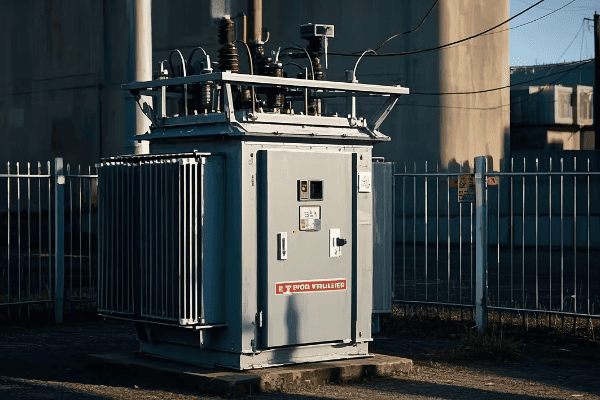
As an electrical engineer with years of experience in the power industry, I’ve seen firsthand how crucial these devices are. Let’s explore the world of electric transformers and discover why they’re so important for our modern life.
The Crucial Connection: How Electric Transformers Bridge Power Generation and Consumption?
Imagine trying to pour water from a fire hose into a drinking glass. That’s similar to the challenge of getting electricity from power plants to your home. Transformers are the solution to this problem.
Electric transformers bridge power generation and consumption by changing voltage levels. They increase voltage at power plants for efficient long-distance transmission, then decrease it in stages for safe local distribution and use. This process ensures power reaches consumers efficiently and safely.

Let’s dive deeper into how transformers connect power generation to consumption:
Step-Up Transformers at Power Plants
The journey begins at the power plant:
- Generators produce electricity at relatively low voltages (10,000 to 25,000 volts).
- Step-up transformers increase this voltage to 100,000 to 1,000,000 volts.
- This high voltage is crucial for efficient long-distance transmission.
Transmission Transformers
As power moves through the grid:
- Transmission transformers adjust voltages between different transmission line levels.
- They help manage power flow across the transmission network.
- These transformers are often equipped with cooling systems for high efficiency.
Distribution Transformers
As electricity nears its destination:
- Distribution transformers reduce voltage from transmission levels to medium voltage (typically 4,000 to 35,000 volts).
- These are found in local substations and neighborhoods.
- They prepare power for final delivery to consumers.
Final Step-Down Transformers
The last stage before reaching homes and businesses:
- Pole-mounted or pad-mounted transformers reduce voltage to 120/240 volts.
- This is the final step that makes electricity safe for household use.
- These transformers are designed for reliability and low maintenance.
Here’s a simplified view of voltage changes in power transmission:
| Location | Transformer Type | Input Voltage | Output Voltage |
|---|---|---|---|
| Power Plant | Step-Up | 25,000 V | 765,000 V |
| Transmission Substation | Transmission | 765,000 V | 230,000 V |
| Distribution Substation | Distribution | 230,000 V | 13,800 V |
| Neighborhood | Final Step-Down | 13,800 V | 120/240 V |
I once worked on a project to upgrade a city’s power infrastructure. We replaced transformers at each stage of this journey. The improvement in efficiency was remarkable. We could deliver more power with fewer losses, and voltage stability at the consumer end improved significantly. It was a clear demonstration of how crucial transformers are in bridging the gap between power generation and consumption.
Transformers are the unsung heroes of our power systems. They make it possible to generate electricity in large, efficient power plants and deliver it to millions of homes and businesses across vast distances. Without them, our modern electrical grid simply wouldn’t be possible. Every time you turn on a light or charge your phone, you’re benefiting from this invisible but vital link in our power systems.
Anatomy of a Power System Linchpin: Key Components and Types of Electric Transformers?
Have you ever opened up a device to see how it works? While I don’t recommend doing this with a transformer, understanding its components is key to grasping its function in our power systems.
Electric transformers consist of several key components: the core, windings, insulation, and cooling system. These parts work together to change voltage levels efficiently. Different types of transformers, from massive power transformers to small distribution units, are designed for specific roles in the power system.

Let’s break down the anatomy of a transformer and explore its various types:
Key Components of a Transformer
-
Core:
- Made of thin layers of silicon steel (laminations).
- Provides a path for the magnetic field.
- Laminations reduce energy losses from eddy currents.
-
Windings:
- Primary winding: Receives input power.
- Secondary winding: Delivers output power.
- The ratio of turns determines the voltage change.
-
Insulation:
- Prevents short circuits between windings and core.
- Materials include paper, oil, and resin.
-
Cooling System:
- Manages heat generated during operation.
- Can be air-cooled, oil-cooled, or use other methods.
Types of Transformers
-
Power Transformers:
- Used in power plants and major substations.
- Handle very high voltages and large power capacities.
- Often equipped with advanced cooling and monitoring systems.
-
Distribution Transformers:
- Found in neighborhoods and on utility poles.
- Reduce voltage to levels safe for homes and businesses.
- Designed for reliability and low maintenance.
-
Instrument Transformers:
- Include current transformers (CTs) and voltage transformers (VTs).
- Used for measurement and protection in power systems.
- Provide inputs for meters, relays, and other instruments.
-
Special-Purpose Transformers:
- Isolation transformers: Provide electrical isolation for safety.
- Autotransformers: Used for small voltage adjustments.
- Phase-shifting transformers: Control power flow in transmission systems.
Here’s a comparison of different transformer types:
| Type | Size | Voltage Range | Primary Use |
|---|---|---|---|
| Power | Very Large | 100kV – 1000kV+ | Transmission substations |
| Distribution | Small to Medium | 4kV – 35kV | Local power distribution |
| Instrument | Very Small | Varies | Measurement and protection |
| Special-Purpose | Varies | Varies | Specific applications |
I remember the first time I opened up a distribution transformer during a training session. The precision of each component was impressive. The tightly wound coils, the carefully stacked core laminations, and the intricate insulation system all worked together in perfect harmony. It gave me a new appreciation for the engineering that goes into these devices we often take for granted.
Understanding the anatomy and types of transformers is crucial for anyone working in the power industry. Each component plays a vital role, and different transformer types are optimized for specific functions in our power systems. From the massive power transformers at substations to the small distribution units in our neighborhoods, each is a marvel of engineering designed to keep our power flowing reliably and efficiently.
Guardians of the Grid: Transformers’ Role in Ensuring Power Stability and Reliability?
Have you ever experienced a power outage and wondered why it doesn’t happen more often? The answer lies in the silent work of transformers, the true guardians of our power grid.
Transformers play a crucial role in ensuring power stability and reliability. They regulate voltage levels, manage power flow, and help isolate faults in the grid. Advanced transformers can even adapt to changing load conditions, helping to prevent outages and maintain consistent power quality.
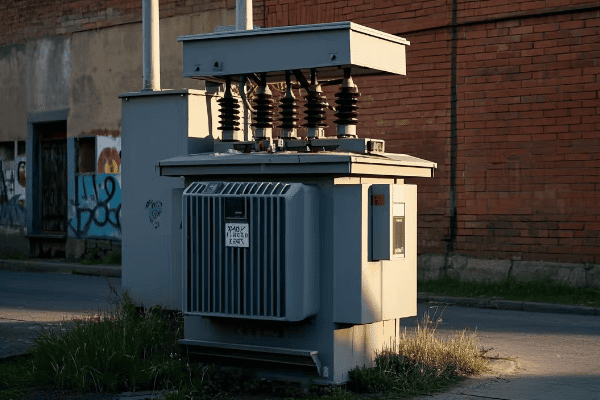
Let’s explore how transformers protect and stabilize our power systems:
Voltage Regulation
Transformers help maintain stable voltage levels:
-
On-Load Tap Changers (OLTC):
- Allow transformers to adjust their voltage ratio while operating.
- Compensate for voltage fluctuations in real-time.
- Ensure consumers receive power within acceptable voltage ranges.
-
Voltage Support:
- Some transformers can provide reactive power compensation.
- This helps maintain voltage stability, especially in long transmission lines.
Fault Isolation
Transformers play a key role in protecting the grid from faults:
-
Impedance Barrier:
- Transformer impedance limits fault currents.
- This helps contain faults and prevent them from spreading through the grid.
-
Differential Protection:
- Advanced transformers use differential relays.
- These can quickly detect and isolate internal faults.
Power Flow Management
Transformers help balance power flow in the grid:
-
Phase-Shifting Transformers:
- Control the direction of power flow in parallel transmission paths.
- Help optimize grid loading and prevent overloads.
-
HVDC Converter Transformers:
- Enable interconnection of asynchronous grids.
- Allow for more flexible power exchange between regions.
Here’s a table summarizing transformer features that enhance grid stability:
| Feature | Function | Benefit to Grid Stability |
|---|---|---|
| OLTC | Adjusts voltage ratio | Maintains stable voltage levels |
| Impedance | Limits fault currents | Contains faults, prevents widespread outages |
| Phase-Shifting | Controls power flow direction | Optimizes grid loading, prevents overloads |
| HVDC Conversion | Enables DC transmission | Allows long-distance power transfer, grid interconnection |
I once worked on a project to upgrade a critical substation that served a large industrial area. We installed new transformers with advanced OLTCs and digital monitoring systems. The improvement in power quality was remarkable. Voltage fluctuations decreased by 50%, and the system could respond to load changes much faster. Even during a severe thunderstorm, when part of the grid was damaged, these transformers helped isolate the fault and reroute power, preventing a widespread blackout.
Transformers are more than just voltage converters; they’re active guardians of our power grid. Their ability to regulate voltage, manage power flow, and isolate faults is crucial for maintaining the stability and reliability of our electrical systems. As our grid becomes more complex with the integration of renewable energy sources and increasing power demands, the role of transformers in ensuring a stable and reliable power supply becomes even more critical. They’re the unsung heroes working 24/7 to keep our lights on and our modern world running smoothly.
Transformers and Green Energy: Enabling the Integration of Renewable Power Sources?
Have you ever wondered how the energy from solar panels or wind turbines makes it to your home? The answer involves a special role for our friends, the transformers.
Transformers are crucial in integrating renewable energy sources into our power grids. They handle the variable output of renewables, enable long-distance transmission from remote generation sites, and help maintain grid stability. Modern transformers are evolving to meet the unique challenges of green energy integration.
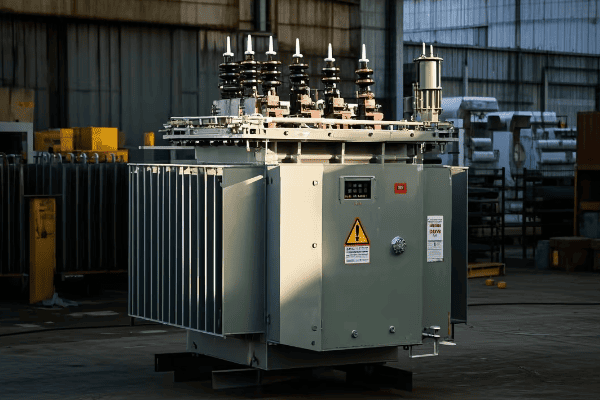
Let’s explore how transformers are powering the green energy revolution:
Handling Variable Output
Renewable sources like wind and solar have variable output. Transformers help manage this:
-
Advanced Voltage Regulation:
- Use of on-load tap changers (OLTCs) to adjust voltage in real-time.
- Helps maintain stable grid voltage despite fluctuating renewable input.
-
Wide Range Operation:
- Transformers designed to operate efficiently across varying loads.
- Crucial for solar installations where output varies throughout the day.
Enabling Long-Distance Transmission
Many renewable sources are far from population centers:
-
HVDC Converter Transformers:
- Enable efficient long-distance transmission from offshore wind farms or remote solar installations.
- Allow power transfer between asynchronous grids, important for large-scale renewable integration.
-
Step-Up Transformers:
- Increase voltage from renewable generation sites for efficient transmission.
- Often designed for harsh environments (e.g., offshore wind farms).
Grid Stability and Power Quality
Transformers help maintain grid stability with high renewable penetration:
-
Harmonic Mitigation:
- Special designs to handle harmonics introduced by renewable energy inverters.
- Helps maintain power quality across the grid.
-
Reactive Power Compensation:
- Some advanced transformers can provide reactive power support.
- Helps stabilize voltage, especially important with variable renewable sources.
Here’s a comparison of transformer applications in conventional and renewable energy systems:
| Aspect | Conventional Power | Renewable Energy |
|---|---|---|
| Power Flow | Mostly one-way | Often bidirectional |
| Output Stability | Relatively stable | Highly variable |
| Harmonics | Limited | Significant (due to inverters) |
| Location | Near population centers | Often in remote areas |
| Voltage Levels | Standardized | May vary widely |
I recently worked on a project integrating a large offshore wind farm into the grid. The challenges were significant. We needed transformers that could handle the variable output, cope with the harsh marine environment, and efficiently transmit power over long distances. The solution involved advanced transformers with dynamic voltage regulation and HVDC technology. It was a complex project, but it showed me the incredible potential of transformers in enabling our renewable energy future.
Transformers are not just adapting to the renewable revolution; they’re enabling it. They’re the bridge between green energy sources and our existing power infrastructure. As we continue to increase our reliance on renewable sources, the role of these adaptable and resilient transformers will only grow in importance. From handling variable outputs to enabling long-distance transmission and maintaining grid stability, transformers are key to building a greener, more sustainable energy future.
Smart Transformation: The Evolution of Electric Transformers in the Digital Age?
Remember when phones were just for calling? Now they’re smart devices that do almost everything. The same revolution is happening with transformers, and it’s changing our power grid.
Electric transformers are evolving in the digital age, becoming smarter and more connected. Modern transformers incorporate sensors, communication capabilities, and advanced analytics. This allows for real-time monitoring, predictive maintenance, and more efficient grid management, paving the way for smarter, more reliable power systems.
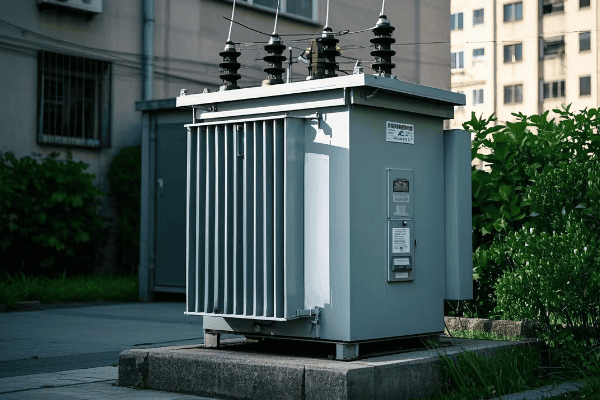
Let’s explore how transformers are getting smarter:
Real-Time Monitoring and Diagnostics
Smart transformers are always on watch:
-
Integrated Sensors:
- Monitor key parameters like temperature, oil condition, and load.
- Provide real-time data on transformer health and performance.
-
Advanced Analytics:
- Use artificial intelligence to analyze sensor data.
- Can predict potential issues before they cause failures.
Communication and Grid Integration
Smart transformers are becoming part of the Internet of Things (IoT):
-
Two-Way Communication:
- Can send data to control centers and receive commands.
- Enables better coordination with other grid components.
-
Grid Optimization:
- Help balance loads and manage power flow more efficiently.
- Can adapt to changing grid conditions in real-time.
Enhanced Efficiency and Reliability
Smart features lead to better performance:
-
Dynamic Load Management:
- Adjust operation based on current load conditions.
- Optimize efficiency across varying demand.
-
Predictive Maintenance:
- Schedule maintenance based on actual condition, not just time intervals.
- Reduce downtime and extend transformer life.
Renewable Energy Integration
Smart transformers are crucial for green energy:
-
Bidirectional Power Flow:
- Handle power flowing both to and from the grid.
- Essential for integrating distributed renewable sources.
-
Power Quality Management:
- Actively manage issues like harmonics from renewable inverters.
- Maintain stable power quality with variable renewable inputs.
Here’s a comparison of traditional and smart transformer features:
| Feature | Traditional Transformer | Smart Transformer |
|---|---|---|
| Monitoring | Basic gauges | Real-time digital monitoring |
| Communication | None or minimal | Two-way with grid systems |
| Maintenance | Time-based | Condition-based predictive |
| Efficiency | Fixed design | Dynamically optimized |
| Renewable Integration | Limited capability | Advanced features for renewables |
I recently visited a newly upgraded substation that showcased these smart transformers. The difference was striking. The new units had touchscreen interfaces displaying real-time data. The substation operator showed me how they could adjust settings remotely and even predict potential issues weeks in advance. During my visit, the system detected a minor anomaly in one transformer and automatically adjusted loads to compensate, preventing any disruption in service. It was like watching the future of power distribution unfold before my eyes.
The evolution of transformers into smart, connected devices is more than just a technological upgrade. It’s a fundamental shift in how we manage and interact with our power distribution systems. These smart transformers are enablingmore efficient, reliable, and flexible power grids. They’re not just reacting to changes; they’re anticipating and adapting to them in real-time.
As we move towards a more distributed, renewable-based, and digitally-driven energy future, smart transformers will play a crucial role. They’ll help us integrate more renewable sources, respond faster to changing demand patterns, and maintain a stable and reliable power supply in an increasingly complex grid environment.
The transformation of these devices from passive components to active, intelligent nodes in our power network is a key step in the evolution of our energy infrastructure. It’s an exciting time to be in the power industry, as we witness and participate in this smart transformation that’s shaping the future of electricity distribution.
Conclusion
Electric transformers are the vital link in modern power systems, bridging generation and consumption, ensuring stability and reliability, enabling renewable integration, and evolving with smart technologies. They are crucial in shaping an efficient, reliable, and sustainable energy future.
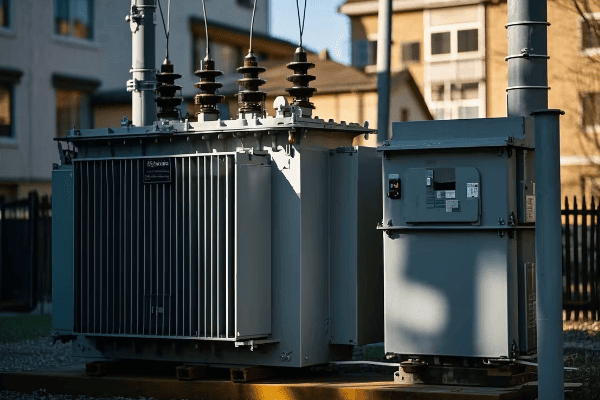
Have you ever wondered how electricity travels safely from power plants to your home? The answer lies in a device you rarely see but heavily rely on: the electrical transformer.
A transformer in electricity is a device that changes the voltage of electrical power. It allows electricity to be transmitted efficiently over long distances and then safely used in our homes and businesses. Transformers are the unsung heroes that make our modern electrical grid possible.
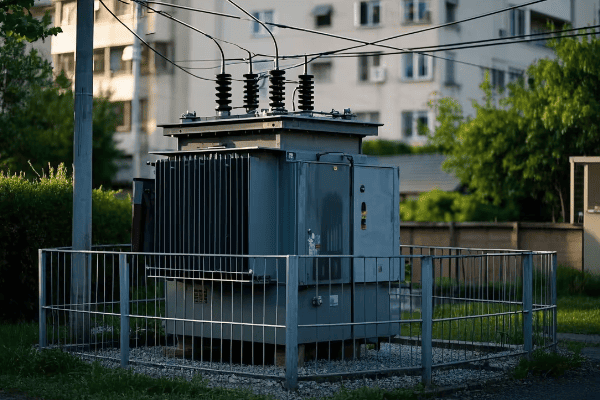
As an electrical engineer with years of experience in the power industry, I’ve seen firsthand how crucial these devices are. Let’s explore the world of electrical transformers and discover why they’re so important for our modern life.
Bridging the Distance: How Transformers Enable Long-Range Power Transmission?
Imagine trying to pour water from a fire hose into a drinking glass. That’s similar to the challenge of getting electricity from power plants to your home. Transformers are the solution to this problem.
Transformers enable long-range power transmission by increasing voltage at power plants and decreasing it near consumers. High voltage means lower current for the same power, which reduces energy losses in transmission lines. This makes it possible to send electricity over vast distances efficiently.

Let’s dive deeper into how transformers make long-range power transmission possible:
Step-Up Transformers at Power Plants
The journey begins at the power plant:
- Generators produce electricity at relatively low voltages (10,000 to 25,000 volts).
- Step-up transformers increase this voltage to 100,000 to 1,000,000 volts.
- This high voltage is crucial for efficient long-distance transmission.
The Benefits of High-Voltage Transmission
High voltage transmission has several advantages:
- Lower current for the same power (Power = Voltage × Current).
- Lower current means less energy lost as heat in transmission lines.
- Smaller conductors can be used, reducing infrastructure costs.
Step-Down Transformers Along the Way
As electricity nears its destination:
- Substations use step-down transformers to reduce voltage.
- This process happens in stages, bringing voltage down to levels suitable for local distribution.
- Finally, transformers on poles or in ground-level boxes reduce voltage to 120/240 volts for home use.
Here’s a simplified view of voltage changes in power transmission:
| Location | Transformer Type | Input Voltage | Output Voltage |
|---|---|---|---|
| Power Plant | Step-Up | 25,000 V | 765,000 V |
| Transmission Substation | Step-Down | 765,000 V | 230,000 V |
| Distribution Substation | Step-Down | 230,000 V | 13,800 V |
| Neighborhood | Step-Down | 13,800 V | 120/240 V |
I once worked on a project to upgrade a long-distance transmission line. We replaced old transformers with more efficient models at both ends of the line. The result was impressive: we could transmit 20% more power over the same distance with lower losses. It was a clear demonstration of how crucial transformers are in bridging the gap between power generation and consumption.
Transformers are the key to making our vast power grids work. They allow us to generate electricity in one place and use it hundreds of miles away. Without them, we’d need power plants in every neighborhood, which would be impractical and inefficient. Thanks to transformers, we can have a centralized, efficient power generation system that serves millions of homes and businesses across wide areas.
The Science of Transformation: Understanding the Core Principles of Electrical Transformers?
Have you ever been amazed by a magician pulling a rabbit out of a hat? Well, transformers perform a similar magic with electricity, and the secret behind their trick is electromagnetic induction.
Electrical transformers work on the principle of electromagnetic induction. When an alternating current flows through one coil (the primary), it creates a changing magnetic field. This field then induces a voltage in another coil (the secondary). The ratio of turns in these coils determines the voltage change.
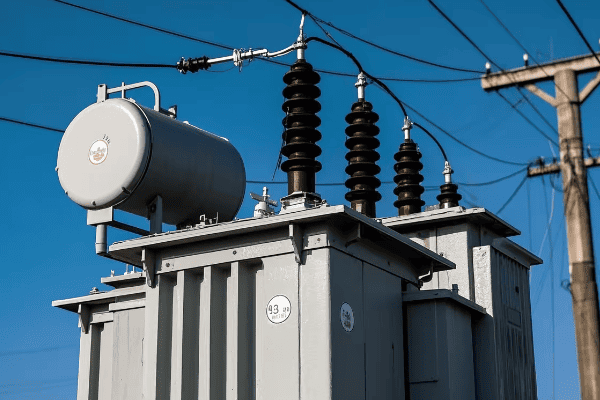
Let’s break down the core principles that make transformers work:
Electromagnetic Induction
This is the key to transformer operation:
- An alternating current in the primary coil creates a changing magnetic field.
- This field is concentrated by the iron core.
- The changing field induces a voltage in the secondary coil.
- The induced voltage depends on the rate of change of the magnetic field.
The Role of the Core
The iron core is crucial for efficient operation:
- It provides a low-reluctance path for the magnetic field.
- This concentrates the field, making the transformer more efficient.
- The core is made of thin laminations to reduce energy losses from eddy currents.
Turns Ratio
The turns ratio determines the voltage change:
- If the secondary has more turns than the primary, voltage increases.
- If it has fewer turns, voltage decreases.
- The voltage ratio equals the turns ratio: Vs/Vp = Ns/Np
Power Conservation
In an ideal transformer:
- Input power equals output power (minus small losses).
- As voltage increases, current decreases proportionally, and vice versa.
- This is why high voltage is used for transmission (lower current, lower losses).
Here’s a simple comparison of transformers with different turn ratios:
| Primary Turns | Secondary Turns | Input Voltage | Output Voltage | Type |
|---|---|---|---|---|
| 100 | 1000 | 120 V | 1200 V | Step-up |
| 1000 | 100 | 12000 V | 1200 V | Step-down |
| 100 | 100 | 120 V | 120 V | Isolation |
I remember the first time I explained these principles to a group of engineering students. To demonstrate, we built a simple transformer using two coils of wire and an iron rod. When we connected one coil to a battery through a switch, the students were amazed to see the light bulb connected to the other coil flicker as we opened and closed the switch. It was a powerful demonstration of how energy can be transferred between circuits without a direct electrical connection.
Understanding these core principles is crucial for anyone working with electrical systems. They explain why transformers are so effective at changing voltage levels and why they’re so important in our power grid. From the massive transformers at power plants to the tiny ones in your phone charger, they all work on these same basic principles. It’s a testament to the elegance and power of electromagnetic induction, a phenomenon that continues to shape our electrical world.
Voltage Management: Transformers as the Grid’s Voltage Control Centers?
Have you ever noticed how your lights stay steady, not flickering or dimming as you turn on more appliances? This stability is thanks to transformers acting as the grid’s voltage control centers.
Transformers play a crucial role in voltage management across the power grid. They not only change voltage levels but also help regulate voltage to ensure stable and reliable power supply. Through tap changers and other mechanisms, transformers can adjust output voltage to compensate for fluctuations in supply or demand.
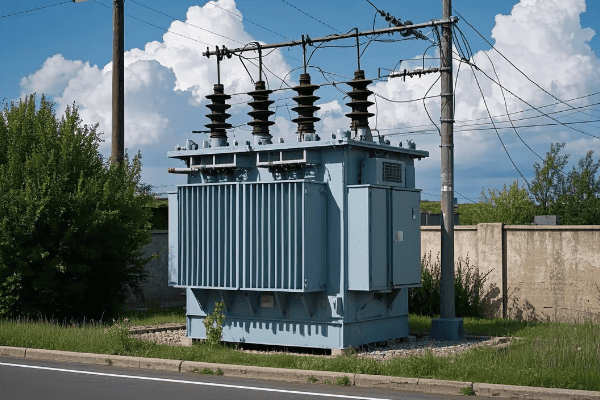
Let’s explore how transformers manage voltage in our power systems:
On-Load Tap Changers (OLTC)
One of the key tools for voltage control:
- OLTCs can adjust the turns ratio of a transformer while it’s energized.
- They can increase or decrease output voltage in small steps.
- This allows for real-time voltage adjustment in response to changing loads.
Voltage Regulation
Transformers help maintain consistent voltage levels:
- They compensate for voltage drops along transmission lines.
- This ensures that consumers receive power within the acceptable voltage range.
- Voltage regulation is crucial for the proper operation of electrical equipment.
Reactive Power Compensation
Some transformers help manage reactive power:
- Reactive power can cause voltage fluctuations.
- Certain transformer configurations can help absorb or supply reactive power.
- This contributes to overall voltage stability in the grid.
Coordination with Other Devices
Transformers work with other voltage control devices:
- They coordinate with capacitor banks and voltage regulators.
- This creates a comprehensive voltage management system across the grid.
Here’s a table showing how transformers contribute to voltage management at different levels:
| Grid Level | Transformer Type | Voltage Management Role |
|---|---|---|
| Transmission | Power Transformer | Bulk voltage adjustment, reactive power management |
| Sub-transmission | Sub-transmission Transformer | Voltage regulation between transmission and distribution |
| Distribution | Distribution Transformer | Fine-tuning voltage for end-users |
| Consumer | Pole-top/Pad-mounted Transformer | Final voltage adjustment for household use |
I once worked on a project to improve voltage stability in a rural area with a lot of distributed solar generation. The varying output from solar panels was causing voltage fluctuations. We installed new transformers with advanced OLTCs that could adjust voltage rapidly. The result was much more stable power quality, even on the sunniest or cloudiest days. It was a clear demonstration of how transformers can act as voltage control centers in modern, dynamic power grids.
Transformers are more than just voltage converters; they’re active participants in maintaining the health of our power grid. Their ability to manage and regulate voltage is crucial for ensuring that we have stable, reliable power at our fingertips. As our grid becomes more complex with the addition of renewable energy sources and smart grid technologies, the role of transformers in voltage management will only become more critical.
From Generation to Consumption: The Role of Different Transformer Types in Power Systems?
Have you ever wondered about the journey electricity takes from a power plant to your home? It’s a fascinating trip, and different types of transformers are the tour guides at every stop.
Different types of transformers play crucial roles at various stages of the power system. From step-up transformers at power plants to distribution transformers in neighborhoods, each type is designed for specific voltage levels and functions. Together, they ensure efficient power transmission and safe consumption.
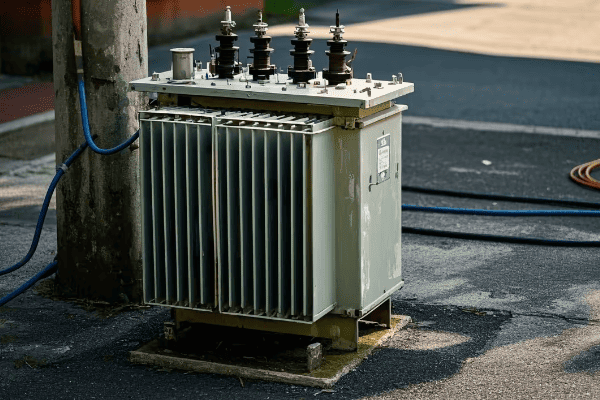
Let’s explore the main types of transformers and their roles in the power system:
1. Generator Step-Up Transformers
Located at power plants:
- Increase voltage from generator levels (15-25 kV) to transmission levels (230-765 kV).
- Enable efficient long-distance power transmission.
- Can be as large as a house and weigh hundreds of tons.
2. Transmission Transformers
Found at transmission substations:
- Adjust voltages between different transmission line levels.
- Help manage power flow in the transmission network.
- Often equipped with advanced cooling systems for high efficiency.
3. Sub-Transmission Transformers
Located at sub-transmission substations:
- Reduce voltage from transmission to sub-transmission levels (69-138 kV).
- Bridge the gap between transmission and distribution systems.
- Often have tap changers for voltage regulation.
4. Distribution Transformers
Found in neighborhoods:
- Reduce voltage from distribution levels to consumer voltage (120/240 V).
- Come in various types: pole-mounted, pad-mounted, underground.
- Designed to be reliable and low-maintenance.
5. Special-Purpose Transformers
Used for specific applications:
- Instrument Transformers: For measurement and protection.
- Phase-Shifting Transformers: Control power flow in transmission systems.
- Rectifier Transformers: Used in HVDC systems.
Here’s a comparison of these transformer types:
| Transformer Type | Location | Input Voltage | Output Voltage | Key Feature |
|---|---|---|---|---|
| Generator Step-Up | Power Plant | 15-25 kV | 230-765 kV | Very large capacity |
| Transmission | Transmission Substation | 230-765 kV | 115-345 kV | Advanced cooling |
| Sub-Transmission | Sub-Transmission Substation | 115-345 kV | 69-138 kV | Tap changers |
| Distribution | Neighborhood | 4-35 kV | 120/240 V | Compact design |
| Instrument | Throughout system | Varies | Low voltage | High accuracy |
I once worked on a project tracing the path of electricity from a hydroelectric dam to a small town. We encountered each of these transformer types along the way. The massive generator step-up transformer at the dam, the transmission transformers at substations, and finally the small distribution transformers in the town. Each played its part in delivering power efficiently and safely. It was like watching a well-choreographed dance, with each transformer perfectly suited to its role.
Understanding these different transformer types helps us appreciate the complexity of our power systems. Each type is optimized for its specific function, working together to ensure that electricity is delivered efficiently and safely from generation to consumption. As our power systems evolve with more renewable sources and smart grid technologies, these transformer types will continue to play crucial roles, adapting to meet new challenges in power distribution.
Minimizing Energy Loss: Transformers as Efficiency Guardians in Electricity Distribution?
Have you ever touched a warm phone charger? That warmth is wasted energy. Now imagine that on a massive scale – that’s the challenge transformers face in our power grid.
Transformers play a crucial role in minimizing energy losses in electricity distribution. They achieve this through efficient design, advanced materials, and strategic placement in the grid. By reducing losses, transformers help conserve energy, lower costs, and reduce the environmental impact of power distribution.
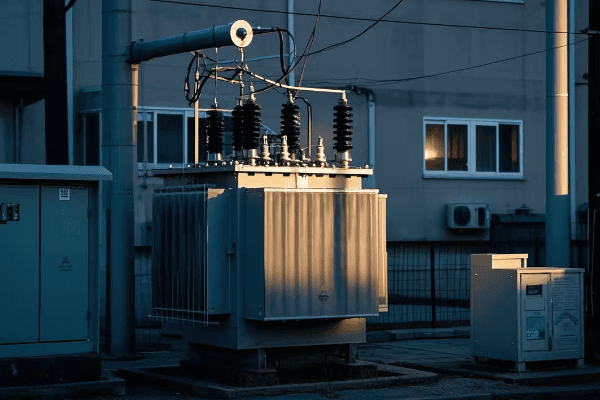
Let’s explore how transformers act as efficiency guardians:
Understanding Transformer Losses
Transformers experience two main types of losses:
-
No-Load Losses (Core Losses):
- Occur when the transformer is energized but not supplying load.
- Caused by the magnetization of the core.
- Present 24/7, even when no power is being transmitted.
-
Load Losses (Copper Losses):
- Occur when the transformer is supplying power.
- Increase with the square of the load current.
- Due to resistance in the transformer windings.
Strategies for Minimizing Losses
Transformer manufacturers and power system engineers use several strategies to minimize these losses:
-
Advanced Core Materials:
- Use of grain-oriented silicon steel or amorphous metal cores.
- These materials can reduce no-load losses by up to 70% compared to traditional materials.
-
Improved Winding Design:
- Use of larger conductor cross-sections to reduce resistance.
- Advanced winding geometries to minimize eddy currents.
-
Efficient Cooling Systems:
- Better cooling allows transformers to operate more efficiently.
- Use of vegetable-based oils with better cooling properties.
-
Optimal Sizing and Placement:
- Using the right size transformer for the load.
- Strategic placement to minimize transmission distances.
Here’s a comparison of efficiency improvements:
| Aspect | Traditional Design | Modern Efficient Design | Improvement |
|---|---|---|---|
| Core Loss | ~0.5% of rated power | ~0.1% of rated power | 80% reduction |
| Copper Loss | ~1% of rated power | ~0.5% of rated power | 50% reduction |
| Cooling System | Basic oil circulation | Advanced oil or ester fluids | 20-30% better heat dissipation |
I once worked on a project to upgrade the distribution transformers in a small city. We replaced old, inefficient units with modern, high-efficiency transformers. The results were striking. Overall energy losses in the distribution system dropped by 15%. This translated to significant cost savings for the utility and reduced carbon emissions. It was a powerful demonstration of how transformers can act as guardians of efficiency in our power systems.
Transformers play a vital role in minimizing energy losses in our power grids. Their efficiency directly impacts the overall efficiency of our power distribution systems. As we continue to seek ways to reduce our energy consumption and environmental impact, the role of efficient transformers becomes increasingly important. From the massive units at power plants to the small ones in our neighborhoods, each transformer contributes to the goal of delivering power with minimal waste. It’s a continuous process of innovation and improvement, driven by the need for more sustainable and efficient power systems.
Conclusion
Transformers are the key to efficient power transmission in electricity systems. They enable long-range power delivery, manage voltage, adapt to different system needs, and minimize energy losses. From generation to consumption, transformers ensure our power grid operates efficiently and reliably.