
Are you struggling with power quality issues in your electrical system? Traditional transformers might not be enough. Electronic Power Transformers (EPTs) offer a solution, but many engineers are unsure about their benefits and applications.
Electronic Power Transformers combine power electronics with traditional transformer technology. They provide enhanced control over power flow, voltage regulation, and power quality. EPTs offer advantages in efficiency, power quality improvement, and integration with smart grids and renewable energy systems.
In this guide, I’ll break down the complexities of Electronic Power Transformers. We’ll explore their principles, advantages, components, and applications. Whether you’re designing a new system or upgrading an existing one, understanding EPTs is crucial for modern electrical engineering.
What is an Electronic Power Transformer: Definition and Basic Principles?
Have you ever wished for a transformer that could do more than just change voltage levels? That’s where Electronic Power Transformers come in. But what exactly are they, and how do they work?
An Electronic Power Transformer (EPT) is a hybrid device that combines traditional transformer technology with power electronics. It uses solid-state switches and control systems to manipulate power flow, providing enhanced control over voltage, current, and power quality.
Let’s dive deeper into the world of Electronic Power Transformers. Understanding their basic principles is crucial for grasping their potential in modern electrical systems.
Basic Structure of EPTs
-
Input Stage
- AC-DC conversion
- Often uses a rectifier
-
DC Link
- Energy storage
- Typically uses capacitors
-
Output Stage
- DC-AC conversion
- Uses inverter technology
Operating Principles
-
Power Flow Control
- Bidirectional power flow capability
- Independent control of active and reactive power
-
Voltage Regulation
- Fast and precise voltage control
- Can compensate for voltage sags and swells
-
Frequency Control
- Ability to change output frequency
- Useful for grid synchronization
| Component | Function | Advantage over Traditional Transformers |
|---|---|---|
| Input Stage | AC-DC Conversion | Allows for power flow control |
| DC Link | Energy Storage | Enables power buffering and smoothing |
| Output Stage | DC-AC Conversion | Provides flexible output control |
The concept of Electronic Power Transformers fascinated me when I first encountered it. It was during a project to integrate a large solar farm into the grid. We were facing issues with voltage fluctuations and power quality. Traditional transformers weren’t cutting it, and that’s when I delved into EPTs.
The basic structure of an EPT is quite different from a traditional transformer. It starts with an input stage that converts AC to DC. This is typically done using a rectifier. I remember being surprised at first – converting to DC in a transformer seemed counterintuitive. But this conversion is what gives EPTs their flexibility.
Next comes the DC link. This is usually a capacitor bank that serves as an energy storage buffer. It’s this component that allows EPTs to smooth out power fluctuations. In our solar farm project, this was crucial for dealing with the intermittent nature of solar power.
The output stage is where the magic really happens. It uses inverter technology to convert the DC back to AC. But here’s the key – this conversion can be precisely controlled. We can adjust the voltage, frequency, and phase angle of the output AC waveform.
This structure allows for some impressive operating principles. First, there’s power flow control. EPTs can handle bidirectional power flow, which is increasingly important in modern grids with distributed generation. They can also independently control active and reactive power. This was a game-changer in our solar farm project, allowing us to provide voltage support to the grid even when the sun wasn’t shining.
Voltage regulation is another key principle. EPTs can provide fast and precise voltage control, compensating for sags and swells in real-time. I’ve seen this capability solve power quality issues that had been plaguing industrial clients for years.
Frequency control is another fascinating aspect of EPTs. They can change the output frequency, which is particularly useful for grid synchronization. In one project, we used this feature to integrate a microgrid with the main grid, smoothly transitioning between grid-connected and islanded modes.
The advantages over traditional transformers are significant. The input stage allows for power flow control that’s simply not possible with a conventional transformer. The DC link provides a buffer that can smooth out power fluctuations. And the output stage offers a level of control over the output waveform that’s unmatched by traditional technology.
However, it’s important to note that EPTs are not a one-size-fits-all solution. They’re more complex and generally more expensive than traditional transformers. They also introduce harmonics due to the switching in the power electronic stages, which needs to be managed.
As we continue to push the boundaries of our power systems, with more renewable integration and smart grid technologies, I believe EPTs will play an increasingly important role. Their flexibility and control capabilities make them well-suited to the challenges of modern and future power systems.
Advantages of Electronic Power Transformers over Conventional Transformers?
Are you tired of the limitations of conventional transformers? Do voltage fluctuations and power quality issues keep you up at night? Electronic Power Transformers (EPTs) might be the solution you’re looking for.
Electronic Power Transformers offer several advantages over conventional transformers. These include improved voltage regulation, power factor correction, harmonic mitigation, and bidirectional power flow capability. EPTs also provide faster response to grid disturbances and better integration with smart grid systems.
Let’s explore the key advantages of Electronic Power Transformers in more detail. Understanding these benefits is crucial for engineers considering upgrades to their electrical systems.
Improved Voltage Regulation
-
Fast Response
- Can react to voltage changes in milliseconds
- Maintains stable voltage under varying load conditions
-
Wide Range
- Can handle larger voltage variations than conventional transformers
- Useful in weak grid conditions
Power Factor Correction
-
Dynamic Compensation
- Can adjust reactive power in real-time
- Improves overall system efficiency
-
Independent Control
- Can control active and reactive power separately
- Useful for grid support services
Harmonic Mitigation
-
Active Filtering
- Can cancel out harmonic currents
- Improves power quality for sensitive loads
-
Programmable Response
- Can be tuned to target specific harmonic frequencies
- Adaptable to changing load conditions
Other Advantages
-
Bidirectional Power Flow
- Supports integration of distributed generation
- Enables advanced grid functionalities
-
Size and Weight
- Generally smaller and lighter than equivalent conventional transformers
- Easier installation and transportation
| Feature | Conventional Transformer | Electronic Power Transformer |
|---|---|---|
| Voltage Regulation | Passive, limited range | Active, wide range |
| Power Factor Correction | Requires separate equipment | Integrated capability |
| Harmonic Mitigation | Limited, passive | Active, programmable |
| Power Flow | Unidirectional | Bidirectional |
The advantages of Electronic Power Transformers over conventional transformers are significant and multifaceted. When I first started working with EPTs, I was amazed at their capabilities and the problems they could solve.
Let’s start with voltage regulation. Conventional transformers typically use tap changers for voltage adjustment, which are slow and have limited range. EPTs, on the other hand, can react to voltage changes in milliseconds. I remember a project at a manufacturing plant where voltage fluctuations were causing production issues. We installed an EPT, and the improvement was immediate. The voltage stayed rock-steady even under rapidly changing load conditions.
The wide range of voltage regulation is particularly useful in weak grid conditions. In one rural electrification project, we used EPTs to maintain stable voltage at the end of long distribution lines, something that would have been challenging with conventional transformers.
Power factor correction is another area where EPTs shine. Conventional systems often require separate capacitor banks for power factor correction. EPTs can dynamically adjust reactive power in real-time. This not only improves system efficiency but can also provide valuable grid support services. I’ve seen cases where utilities have incentivized the use of EPTs for this very reason.
The ability to independently control active and reactive power is a game-changer. In one project involving a large solar farm, we used this feature to provide voltage support to the grid even during nighttime when the solar panels weren’t generating power.
Harmonic mitigation is becoming increasingly important as we see more non-linear loads and power electronic devices on the grid. Conventional transformers offer limited, passive harmonic mitigation. EPTs, however, can actively cancel out harmonic currents. I’ve seen EPTs solve power quality issues in data centers and industrial facilities that had been struggling with harmonics for years.
The programmable nature of EPT harmonic mitigation is particularly useful. In one factory, we were able to tune the EPT to target specific harmonic frequencies that were causing issues with sensitive equipment. As the factory’s load profile changed over time, we could easily adjust the EPT’s response.
Bidirectional power flow capability is crucial for modern grids with high penetration of distributed generation. Conventional transformers are designed for unidirectional power flow from higher to lower voltage. EPTs can handle power flow in both directions, making them ideal for integrating rooftop solar, energy storage, and other distributed resources.
Size and weight advantages shouldn’t be overlooked. In urban substations where space is at a premium, the smaller footprint of EPTs can be a significant benefit. I’ve worked on substation upgrade projects where the compact size of EPTs allowed us to increase capacity without expanding the substation’s physical footprint.
However, it’s important to note that EPTs are not without challenges. They’re generally more expensive than conventional transformers and involve more complex control systems. They also introduce harmonics due to their switching operation, which needs to be managed.
Despite these challenges, I believe the advantages of EPTs make them a compelling choice for many modern power system applications. As we continue to push towards more flexible, resilient, and efficient grids, the role of EPTs is likely to grow.
Key Components of Electronic Power Transformers: Power Electronics and Control Systems?
Have you ever wondered what makes Electronic Power Transformers so versatile? The secret lies in their key components. But what are these components, and how do they work together to provide the advanced functionality of EPTs?
Electronic Power Transformers rely on two main component groups: power electronics and control systems. Power electronics include rectifiers, inverters, and DC link capacitors. Control systems comprise sensors, microprocessors, and software algorithms. Together, these enable the advanced features of EPTs.

Let’s delve into the key components of Electronic Power Transformers. Understanding these elements is crucial for grasping how EPTs achieve their advanced capabilities.
Power Electronics Components
-
Rectifier
- Converts AC to DC
- Often uses IGBTs or MOSFETs
-
DC Link
- Energy storage and smoothing
- Typically uses capacitors
-
Inverter
- Converts DC back to AC
- Allows for flexible output control
Control System Components
-
Sensors
- Voltage and current measurements
- Temperature and other operational parameters
-
Microprocessor
- Processes sensor data
- Executes control algorithms
-
Software
- Implements control strategies
- Manages protection functions
Other Key Components
-
Cooling System
- Manages temperature of power electronics
- Often uses forced air or liquid cooling
-
Protection Devices
- Overcurrent and overvoltage protection
- Fault detection and isolation
| Component | Function | Impact on EPT Performance |
|---|---|---|
| Rectifier | AC-DC Conversion | Enables power flow control |
| DC Link | Energy Storage | Smooths power fluctuations |
| Inverter | DC-AC Conversion | Provides flexible output |
| Microprocessor | Control Execution | Enables advanced features |
The key components of Electronic Power Transformers work together in a fascinating synergy to provide capabilities far beyond those of conventional transformers. When I first started working with EPTs, understanding these components and their interactions was crucial to effectively designing and troubleshooting systems.
Let’s start with the power electronics components. The rectifier is the first stage, converting AC input to DC. This is typically done using high-power semiconductor switches like IGBTs (Insulated Gate Bipolar Transistors) or MOSFETs (Metal-Oxide-Semiconductor Field-Effect Transistors). I remember being impressed by the efficiency of modern IGBTs when I first worked with them. Their fast switching speeds and low losses are key to the overall performance of EPTs.
The DC link, usually a bank of capacitors, serves as an energy buffer. This component is crucial for smoothing out power fluctuations and enabling the independent control of input and output. In one project involving a large industrial motor drive, the DC link allowed us to maintain a stable output voltage even when the input was fluctuating due to other loads on the system.
The inverter, which converts the DC back to AC, is where much of the magic happens. By controlling the switching of the inverter, we can precisely shape the output waveform. This allows for voltage regulation, frequency control, and even harmonic cancellation. I’ve seen inverters solve power quality issues that had been plaguing facilities for years.
Moving to the control system, sensors are the eyes and ears of the EPT. They continuously monitor voltages, currents, temperatures, and other parameters. The accuracy and speed of these sensors are crucial. In one project, we upgraded to high-speed digital sensors, which allowed for much faster response to grid disturbances.
The microprocessor is the brain of the EPT. It processes the sensor data and executes the control algorithms. The processing power of modern microprocessors allows for incredibly sophisticated control strategies. I remember being amazed at how we could implement complex adaptive control algorithms that would have been impossible just a few years earlier.
Software is where the control strategies are implemented. This includes everything from basic voltage regulation to advanced features like harmonic mitigation and grid support functions. The flexibility of software control is one of the biggest advantages of EPTs. In one project, we were able to completely change the behavior of an EPT through a software update, adapting it to new grid requirements without any hardware changes.
Cooling systems are often overlooked but are crucial for the reliable operation of EPTs. The high-frequency switching of power electronic components generates significant heat. In one data center project, we implemented a liquid cooling system for the EPTs, which allowed for higher power density and improved efficiency.
Protection devices are the last line of defense against faults. They need to be fast-acting and coordinated with the EPT’s control system. I’ve seen cases where well-designed protection systems prevented minor faults from cascading into major outages.
The interaction between these components is what gives EPTs their advanced capabilities. For example, the fast switching of the power electronics, combined with sophisticated control algorithms, allows for rapid voltage regulation. The energy storage in the DC link, coupled with bidirectional power flow capability, enables features like ride-through of short grid disturbances.
However, it’s important to note that the complexity of these components also presents challenges. Reliability can be an issue, especially in harsh environments. EMI (Electromagnetic Interference) from high-frequency switching needs to be carefully managed. And the cost of these advanced components is generally higher than for conventional transformers.
Despite these challenges, I believe the capabilities offered by these key components make EPTs a powerful tool for addressing the challenges of modern power systems. As we continue to see advancements in power electronics, control systems, and software, the potential of EPTs will only grow.
Topology and Design Considerations for Electronic Power Transformers?
Are you grappling with the complexities of designing an Electronic Power Transformer? The topology and design choices can seem overwhelming. But understanding these considerations is crucial for creating an EPT that meets your specific needs.
EPT topology and design involve choices in power electronic circuit configuration, control strategy, and physical layout. Key considerations include voltage and power ratings, efficiency, power quality requirements, and grid integration needs. The design process balances performance, cost, reliability, and specific application requirements.

Let’s explore the topology and design considerations for Electronic Power Transformers in more detail. This knowledge is essential for engineers involved in EPT development or selection.
Topology Considerations
-
Single-stage vs. Multi-stage
- Single-stage: Simpler, potentially more efficient
- Multi-stage: More flexible, better for high voltage applications
-
Modular vs. Integrated Design
- Modular: Easier maintenance, scalability
- Integrated: Potentially more compact and efficient
-
Bidirectional vs. Unidirectional
- Bidirectional: Supports reverse power flow, useful for renewable integration
- Unidirectional: Simpler, suitable for traditional load-supply scenarios
Design Considerations
-
Voltage and Power Ratings
- Determines component selection and overall size
- Influences efficiency and cost
-
Switching Frequency
- Higher frequency: Smaller passive components, potentially higher losses
- Lower frequency: Larger components, potentially lower losses
-
Control Strategy
- Determines EPT’s response to various grid conditions
- Influences power quality improvement capabilities
-
Thermal Management
- Crucial for reliability and efficiency
- Influences size and cost
Other Key Considerations
-
EMI/EMC
- Electromagnetic interference and compatibility
- Critical for grid integration and regulatory compliance
-
Protection and Fault Handling
- Determines EPT’s response to abnormal conditions
- Crucial for reliability and safety
| Consideration | Impact on Design | Trade-offs |
|---|---|---|
| Topology | Overall structure and capabilities | Complexity vs. Flexibility |
| Voltage/Power Rating | Component selection, size | Cost vs. Capacity |
| Switching Frequency | Size of passive components, losses | Efficiency vs. Size |
| Control Strategy | Performance in various scenarios | Complexity vs. Capability |
The topology and design of Electronic Power Transformers involve a complex interplay of various factors. When I first started working on EPT designs, I was struck by how each decision could have far-reaching implications for the transformer’s performance, cost, and reliability.
Let’s start with topology considerations. The choice between single-stage and multi-stage designs is often one of the first decisions to make. I remember a project where we initially went with a single-stage design for its simplicity and potentially higher efficiency. However, as the voltage requirements increased, we had to switch to a multi-stage approach to handle the higher voltages without overstressing individual components.
Modular versus integrated design is another key consideration. In one data center project, we opted for a modular design. This allowed for easier maintenance and the ability to scale up capacity as the data center grew. However, for a compact substation project, an integrated design was more suitable due to space constraints.
The choice between bidirectional and unidirectional power flow capability is becoming increasingly important with the growth of distributed energy resources. In a recent microgrid project, the bidirectional capability of our EPT design was crucial for managing power flow between the microgrid and the main grid.
Moving on to design considerations, voltage and power ratings are fundamental. These ratings drive many other design decisions, from component selection to cooling system design. I’ve seen cases where underestimating future power needs led to premature obsolescence of EPTs. It’s often worth considering future expansion plans when specifying these ratings.
Switching frequency is a critical parameter that affects many aspects of EPT performance. Higher switching frequencies allow for smaller passive components, potentially reducing the overall size of the EPT. However, they can also lead to higher switching losses and EMI issues. In one project, we had to reduce the switching frequency to meet EMC requirements, which required a redesign of the filtering components.
The control strategy is where much of the EPT’s advanced functionality is implemented. This includes voltage regulation, harmonic mitigation, and grid support functions. I’ve been amazed at how sophisticated these control strategies have become. In a recent project, we implemented an adaptive control algorithm that could optimize the EPT’s performance based on changing grid conditions.
Thermal management is often underappreciated but is crucial for the reliability and efficiency of EPTs. The high-frequency switching of power electronic components generates significant heat. In one industrial application, we had to design a liquid cooling system to handle the high power density and harsh environment.
EMI/EMC considerations are becoming increasingly important as EPTs are integrated into complex power systems. Ensuring that the EPT doesn’t interfere with other equipment and can withstand electromagnetic disturbances from the environment is crucial. I remember a case where EMI from an EPT was causing issues with nearby control systems. We had to redesign the EMI filtering and shielding to resolve the problem.
Protection and fault handling are critical for the safe and reliable operation of EPTs. This includes both internal protection of the EPT components and the EPT’s response to external grid faults. In one project, we implemented a sophisticated fault detection and isolation system that could reconfigure the EPT to maintain partial functionality even under certain fault conditions.
The interplay between these various considerations often leads to complex trade-offs. For example, increasing the switching frequency to reduce size might require more advanced (and expensive) semiconductor devices and more sophisticated thermal management. Implementing more advanced control strategies might require more powerful (and costly) processors.
One trend I’m seeing is the increasing use of wide-bandgap semiconductors like Silicon Carbide (SiC) and Gallium Nitride (GaN) in EPT designs. These devices allow for higher switching frequencies and temperatures, potentially leading to more compact and efficient designs. However, they also bring new challenges in terms of control, EMI, and thermal management.
Another interesting development is the use of artificial intelligence and machine learning in EPT control strategies. I’ve been involved in research projects exploring how these techniques can be used to optimize EPT performance in real-time, adapting to changing grid conditions and learning from past experiences.
As we continue to push the boundaries of EPT design, I believe we’ll see even more innovative topologies and design approaches. The challenge will be balancing the advanced capabilities of these designs with practical considerations of cost, reliability, and manufacturability. Whether you’re designing a new EPT or specifying one for your application, understanding these topology and design considerations is crucial for making informed decisions.
Power Quality Improvement with Electronic Power Transformers: Harmonics and Reactive Power Compensation?
Are power quality issues causing headaches in your electrical system? Harmonics and reactive power problems can lead to equipment malfunction, energy waste, and even system failures. Electronic Power Transformers offer a solution, but how exactly do they improve power quality?
Electronic Power Transformers can significantly improve power quality by actively mitigating harmonics and compensating for reactive power. They use advanced control algorithms and fast-switching power electronics to shape the current and voltage waveforms, reducing harmonic distortion and correcting power factor in real-time.
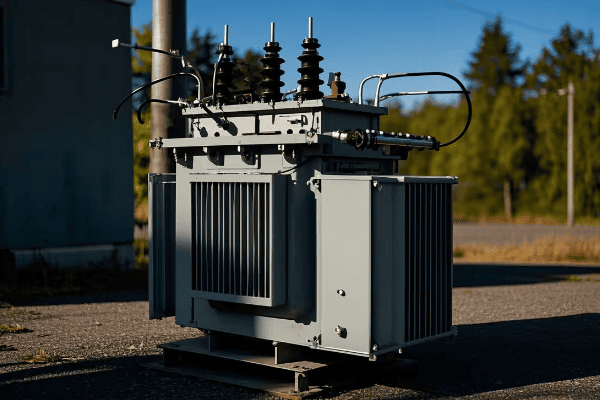
Let’s delve into how Electronic Power Transformers address power quality issues, focusing on harmonic mitigation and reactive power compensation. Understanding these capabilities is crucial for engineers dealing with power quality challenges.
Harmonic Mitigation
-
Active Harmonic Filtering
- Injects opposing harmonic currents to cancel out distortions
- Can target specific harmonic frequencies
-
Harmonic Isolation
- Prevents harmonics from propagating through the system
- Protects sensitive equipment from harmonic disturbances
-
Adaptive Control
- Adjusts filtering based on real-time harmonic content
- Effective for varying harmonic profiles
Reactive Power Compensation
-
Dynamic VAR Compensation
- Adjusts reactive power in real-time
- Improves power factor and voltage stability
-
Independent P-Q Control
- Allows separate control of active and reactive power
- Enables flexible grid support functions
-
Fast Response
- Reacts to changes in milliseconds
- Effective for rapidly changing loads
Other Power Quality Improvements
-
Voltage Regulation
- Maintains stable voltage under varying load conditions
- Mitigates voltage sags and swells
-
Flicker Reduction
- Compensates for rapid voltage fluctuations
- Improves power quality for sensitive loads
| Feature | Traditional Solution | EPT Solution |
|---|---|---|
| Harmonic Mitigation | Passive filters | Active, adaptive filtering |
| Reactive Power Compensation | Fixed capacitor banks | Dynamic, continuous adjustment |
| Response Time | Slow (cycles to seconds) | Fast (milliseconds) |
| Adaptability | Limited | Highly adaptable to changing conditions |
Power quality improvement is one of the most compelling features of Electronic Power Transformers. When I first started working with EPTs, I was amazed at their ability to address power quality issues that had been challenging to solve with traditional methods.
Let’s start with harmonic mitigation. Harmonics are a growing concern in modern power systems due to the proliferation of non-linear loads like variable frequency drives, LED lighting, and switch-mode power supplies. Traditional transformers do little to address harmonics, and passive harmonic filters have limitations in terms of their effectiveness and adaptability.
EPTs, on the other hand, can actively mitigate harmonics through a technique called active harmonic filtering. I remember a project at a large data center where harmonic distortion was causing overheating in neutral conductors and nuisance tripping of circuit breakers. We implemented an EPT with active harmonic filtering, and the improvement was dramatic. The EPT injected currents that precisely opposed the harmonic currents, effectively cancelling them out.
What’s particularly impressive about EPTs is their ability to target specific harmonic frequencies. In one industrial facility, we were able to program the EPT to focus on the 5th and 7th harmonics, which were the most problematic in that particular system. This level of precision is simply not possible with traditional harmonic mitigation techniques.
The adaptive nature of EPT harmonic control is another significant advantage. In systems where the harmonic content varies over time (for example, in a factory with different equipment running at different times), the EPT can continuously adjust its filtering to match the changing harmonic profile. I’ve seen this capability solve power quality issues that had been plaguing facilities for years.
Moving on to reactive power compensation, EPTs offer a level of control and responsiveness that’s unmatched by traditional methods. Conventional approaches often use fixed capacitor banks, which can only provide step changes in reactive power and may even exacerbate harmonic issues.
EPTs, in contrast, can provide dynamic VAR compensation, adjusting reactive power continuously and in real-time. I worked on a project involving a large induction motor that caused significant voltage dips when starting. The EPT’s ability to rapidly inject reactive power during motor start-up eliminated these voltage dips, improving the overall system stability.
The ability to independently control active and reactive power is another powerful feature of EPTs. This allows them to provide a wide range of grid support functions. In one project involving a solar farm, we used this capability to provide voltage support to the grid even when the solar panels weren’t generating power.
The speed of response of EPTs is truly impressive. They can react to changes in power quality in milliseconds, compared to the much slower response of traditional systems. This fast response is crucial for dealing with rapid load changes or transient events on the grid.
Beyond harmonics and reactive power, EPTs can address other power quality issues as well. Their voltage regulation capabilities can maintain stable voltage under varying load conditions, mitigating issues like voltage sags and swells. In one project involving a rural feeder with significant voltage drop issues, an EPT at the end of the line was able to maintain stable voltage despite large load variations.
Flicker reduction is another area where EPTs excel. By rapidly adjusting voltage in response to load changes, they can mitigate the rapid voltage fluctuations that cause visible flicker in lighting systems. I’ve seen this capability solve longstanding issues in industrial facilities with large, cyclical loads.
It’s worth noting that while EPTs are powerful tools for power quality improvement, they’re not a panacea. They introduce their own high-frequency switching noise, which needs to be managed. They also typically have higher losses than conventional transformers, although this is often offset by the energy savings from improved power quality.
As we continue to see increasing penetration of non-linear loads and distributed generation in our power systems, I believe the role of EPTs in power quality improvement will only grow. Their ability to adaptively and dynamically address a wide range of power quality issues makes them well-suited to the challenges of modern and future power systems.
Whether you’re dealing with harmonic distortion, poor power factor, voltage instability, or other power quality issues, EPTs offer a flexible and effective solution. Understanding their capabilities in this area is crucial for any engineer working on power quality challenges in modern electrical systems.
Integration of Electronic Power Transformers in Smart Grids and Renewable Energy Systems?
Are you struggling to integrate renewable energy sources into your grid? Or perhaps you’re looking to enhance the flexibility and resilience of your power system? Electronic Power Transformers (EPTs) could be the key, but how exactly do they fit into smart grids and renewable energy systems?
Electronic Power Transformers play a crucial role in smart grids and renewable energy integration. They provide bidirectional power flow control, voltage regulation, and power quality improvement. EPTs enable seamless integration of intermittent renewables, enhance grid stability, and support advanced grid functionalities like demand response and energy storage integration.
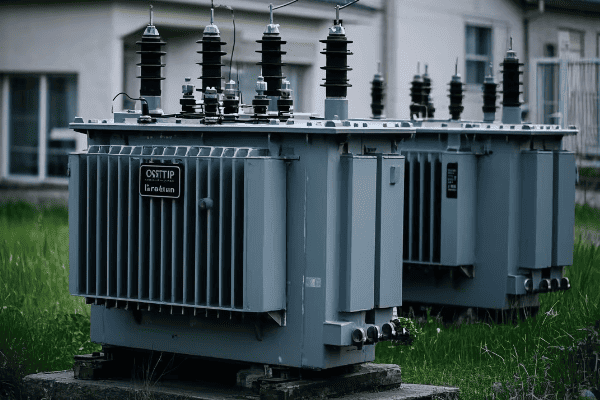
Let’s explore how Electronic Power Transformers are integrated into smart grids and renewable energy systems. Understanding this integration is crucial for engineers working on modern power system design and renewable energy projects.
Smart Grid Integration
-
Bidirectional Power Flow
- Enables integration of distributed energy resources
- Supports advanced grid functionalities like demand response
-
Real-Time Monitoring and Control
- Provides detailed data on power flow and quality
- Enables adaptive grid management
-
Grid Stability Enhancement
- Rapid response to grid disturbances
- Voltage and frequency support
Renewable Energy Integration
-
Voltage Regulation
- Manages voltage fluctuations from intermittent renewables
- Maintains grid stability with high renewable penetration
-
Harmonic Mitigation
- Addresses power quality issues from inverter-based generation
- Improves overall system efficiency
-
Fault Ride-Through
- Helps renewable sources stay connected during grid faults
- Enhances grid resilience
Other Integration Aspects
-
Energy Storage Interface
- Facilitates integration of battery systems
- Enables advanced functionalities like peak shaving
-
Microgrid Support
- Enables seamless transition between grid-connected and islanded modes
- Enhances local grid resilience
| Feature | Benefit in Smart Grids | Benefit in Renewable Integration |
|---|---|---|
| Bidirectional Power Flow | Enables prosumer participation | Facilitates feed-in from distributed generation |
| Voltage Regulation | Enhances grid stability | Manages fluctuations from intermittent sources |
| Real-Time Control | Enables adaptive grid management | Allows for optimal renewable utilization |
The integration of Electronic Power Transformers in smart grids and renewable energy systems is a fascinating area that’s rapidly evolving. When I first started working on these projects, I was amazed at how EPTs could address many of the challenges we were facing in modernizing our power systems.
Let’s start with smart grid integration. One of the key features of EPTs that makes them ideal for smart grids is their ability to handle bidirectional power flow. This is crucial in a world where consumers are increasingly becoming "prosumers" – both consuming and producing energy. I remember a project in a residential area with high rooftop solar penetration. The EPTs we installed could seamlessly manage power flow in both directions, allowing excess solar power to be fed back into the grid during the day and drawing power from the grid at night.
The real-time monitoring and control capabilities of EPTs are another major advantage in smart grid applications. EPTs can provide detailed, high-resolution data on power flow, voltage levels, power quality, and other parameters. In one project, we used this data to implement an advanced distribution management system that could dynamically optimize grid operation based on real-time conditions.
Grid stability enhancement is another crucial role of EPTs in smart grids. Their ability to respond rapidly to grid disturbances can significantly improve system stability. I’ve seen cases where EPTs were able to maintain voltage stability during large load changes that would have caused issues in a conventional system.
Moving on to renewable energy integration, voltage regulation is a key challenge that EPTs can address. The intermittent nature of many renewable sources, particularly solar and wind, can cause significant voltage fluctuations. In one large solar farm project, we used EPTs to manage these fluctuations, maintaining stable voltage even with rapidly changing solar output.
Harmonic mitigation is another important aspect of renewable integration. Inverter-based generation sources like solar PV can introduce harmonics into the grid. EPTs can actively filter these harmonics, improving overall power quality. In a project involving a mix of wind and solar generation, the EPTs’ harmonic mitigation capabilities were crucial in meeting grid code requirements.
Fault ride-through capability is becoming increasingly important as the penetration of renewables increases. Grid codes in many areas now require renewable sources to stay connected and support the grid during fault conditions. EPTs can help achieve this by providing voltage support during faults and helping manage the reconnection process after the fault clears.
The role of EPTs in interfacing with energy storage systems is an exciting area of development. In one microgrid project, we used EPTs to manage the interface between a large battery system and the grid. The EPTs’ ability to control both active and reactive power independently was crucial for implementing advanced functionalities like peak shaving and voltage support.
Speaking of microgrids, EPTs can play a vital role in enabling seamless transitions between grid-connected and islanded modes. I worked on a campus microgrid project where EPTs were key to maintaining stable operation in both modes and managing the transition between them.
It’s worth noting that while EPTs offer many advantages in these applications, they also present some challenges. Their complex control systems require careful integration with existing grid management systems. EMI issues need to be carefully managed, especially in systems with multiple EPTs. And the higher cost of EPTs compared to conventional transformers needs to be justified by the additional functionalities they provide.
One trend I’m seeing is the increasing use of artificial intelligence and machine learning in conjunction with EPTs. These technologies can help optimize the operation of EPTs in complex, dynamic grid environments. I’m currently involved in a research project exploring how AI can be used to predict grid disturbances and preemptively adjust EPT settings to enhance stability.
Another interesting development is the use of EPTs in hybrid AC/DC systems. As we see more DC loads and generation sources, EPTs’ ability to interface between AC and DC systems becomes increasingly valuable. I recently worked on a project where EPTs were used to create a hybrid AC/DC distribution system in a large industrial facility, significantly improving energy efficiency.
The role of EPTs in enabling vehicle-to-grid (V2G) technology is also worth mentioning. As electric vehicles become more prevalent, their potential to act as distributed energy storage becomes significant. EPTs can facilitate the bidirectional power flow required for V2G applications, potentially turning electric vehicle fleets into valuable grid assets.
As we continue to push towards more renewable energy integration and smarter, more flexible grids, I believe the role of EPTs will only grow. Their ability to provide precise, dynamic control over power flow and quality makes them ideally suited to the challenges of modern and future power systems.
Whether you’re working on integrating large-scale renewables, designing a microgrid, or implementing advanced smart grid functionalities, understanding the capabilities and integration considerations of EPTs is crucial. These devices are not just transformers; they’re key enablers of the clean, smart, and flexible power systems of the future.
Efficiency and Loss Reduction in Electronic Power Transformers: Advanced Techniques?
Are you concerned about the efficiency of your power system? With energy costs rising and environmental concerns growing, minimizing losses in power equipment is more important than ever. But how do Electronic Power Transformers stack up in terms of efficiency, and what advanced techniques are used to reduce losses?
Electronic Power Transformers employ several advanced techniques to improve efficiency and reduce losses. These include the use of wide-bandgap semiconductors, advanced magnetic materials, optimized switching strategies, and intelligent cooling systems. While EPTs introduce switching losses, their ability to optimize power flow can lead to overall system efficiency improvements.

Let’s explore the advanced techniques used to improve efficiency and reduce losses in Electronic Power Transformers. Understanding these methods is crucial for engineers looking to optimize their power systems.
Advanced Semiconductor Technologies
-
Wide-Bandgap Semiconductors
- Silicon Carbide (SiC) and Gallium Nitride (GaN) devices
- Higher switching frequencies with lower losses
-
Advanced Packaging
- Improved thermal management
- Reduced parasitic inductances
Magnetic Component Optimization
-
Advanced Core Materials
- Nanocrystalline and amorphous metals
- Reduced core losses at high frequencies
-
Optimized Winding Designs
- Litz wire for high-frequency applications
- Interleaved windings to reduce leakage inductance
Intelligent Control Strategies
-
Soft-Switching Techniques
- Zero Voltage Switching (ZVS) and Zero Current Switching (ZCS)
- Significantly reduces switching losses
-
Adaptive Switching Frequency
- Adjusts switching frequency based on load conditions
- Balances between switching losses and passive component size
Thermal Management
-
Advanced Cooling Systems
- Liquid cooling for high-power applications
- Phase-change materials for thermal buffering
-
Temperature-Aware Control
- Adjusts operation based on component temperatures
- Maximizes efficiency while ensuring reliability
| Technique | Primary Benefit | Potential Drawback |
|---|---|---|
| Wide-Bandgap Semiconductors | Lower switching losses | Higher cost |
| Advanced Core Materials | Reduced core losses | Material cost and availability |
| Soft-Switching | Lower switching losses | Increased control complexity |
| Liquid Cooling | Better thermal management | System complexity and maintenance |
Efficiency and loss reduction in Electronic Power Transformers is a fascinating and rapidly evolving field. When I first started working with EPTs, I was initially concerned about the additional losses introduced by the power electronic stages. However, I’ve been amazed at how advanced techniques have not only mitigated these losses but in many cases led to overall system efficiency improvements.
Let’s start with advanced semiconductor technologies. The introduction of wide-bandgap semiconductors like Silicon Carbide (SiC) and Gallium Nitride (GaN) has been a game-changer. These materials allow for higher switching frequencies with lower losses compared to traditional silicon devices. I remember a project where we upgraded an EPT from silicon IGBTs to SiC MOSFETs. The reduction in switching losses was significant, allowing us to increase the switching frequency and reduce the size of passive components without sacrificing efficiency.
Advanced packaging techniques are also playing a crucial role. By improving thermal management and reducing parasitic inductances, these techniques allow the semiconductor devices to operate more efficiently. In one high-power EPT design, we used advanced packaging with integrated cooling to significantly improve the power density and efficiency.
Moving on to magnetic components, the use of advanced core materials has been crucial in reducing losses, especially at high frequencies. Nanocrystalline and amorphous metal cores can significantly reduce core losses compared to traditional silicon steel. I worked on a project where replacing the core material in an EPT’s high-frequency transformer stage led to a notable improvement in overall efficiency.
Optimized winding designs are another area of focus. The use of Litz wire in high-frequency applications can significantly reduce skin effect losses. Interleaved windings can reduce leakage inductance, improving efficiency and reducing electromagnetic emissions. These techniques require careful design and can be more expensive, but the efficiency gains often justify the additional cost.
Intelligent control strategies are perhaps the most exciting area of development in EPT efficiency improvement. Soft-switching techniques like Zero Voltage Switching (ZVS) and Zero Current Switching (ZCS) can dramatically reduce switching losses. I remember being skeptical about the complexity of implementing these techniques in a high-power system, but the efficiency gains we achieved in one project were truly impressive.
Adaptive switching frequency is another intelligent control strategy that can optimize efficiency across different operating conditions. By adjusting the switching frequency based on load conditions, we can balance between switching losses and the size of passive components. In one project involving an EPT for a variable renewable energy source, this adaptive approach allowed us to maintain high efficiency across a wide range of operating conditions.
Thermal management is crucial for both efficiency and reliability. Advanced cooling systems, including liquid cooling for high-power applications, can significantly improve efficiency by keeping component temperatures low. In one data center project, we used a combination of liquid cooling and phase-change materials to manage thermal transients, allowing the EPT to operate more efficiently even under rapidly changing load conditions.
Temperature-aware control strategies take thermal management a step further. By adjusting the EPT’s operation based on real-time temperature measurements, we can maximize efficiency while ensuring long-term reliability. I’ve seen this approach extend the operational life of EPTs in harsh industrial environments.
It’s worth noting that while these advanced techniques can significantly improve EPT efficiency, they often come with trade-offs in terms of cost, complexity, or reliability. The choice of which techniques to employ should be based on a careful analysis of the specific application requirements and overall system considerations.
One trend I’m seeing is the increasing use of digital twin technology in EPT design and operation. By creating a detailed digital model of the EPT, we can simulate and optimize its performance under a wide range of conditions. This allows for more efficient designs and can also be used for predictive maintenance, further improving long-term efficiency.
Another exciting development is the use of AI and machine learning in EPT control. These technologies can potentially optimize EPT operation in real-time, adapting to changing grid conditions and load profiles to maximize efficiency. I’m currently involved in a research project exploring how reinforcement learning can be used to develop adaptive control strategies for EPTs.
As we continue to push the boundaries of power electronic technologies and control strategies, I believe we’ll see further improvements in EPT efficiency. The challenge will be balancing these advanced techniques with practical considerations of cost, reliability, and manufacturability.
Whether you’re designing a new EPT, upgrading an existing system, or simply trying to optimize your power system’s efficiency, understanding these advanced techniques for efficiency improvement and loss reduction is crucial. EPTs are not just about functionality; with the right design and control strategies, they can be powerful tools for improving overall system efficiency.
Applications and Future Trends of Electronic Power Transformers in Modern Electrical Systems?
Are you wondering how Electronic Power Transformers fit into the evolving landscape of electrical systems? Or perhaps you’re curious about where this technology is headed? EPTs are finding their way into a wide range of applications, and the future looks bright with emerging trends.
Electronic Power Transformers are increasingly used in renewable energy integration, smart grids, industrial power systems, and electric vehicle charging infrastructure. Future trends include advanced grid services, integration with energy storage, use in HVDC systems, and the development of solid-state transformers. EPTs are poised to play a crucial role in the transition to more flexible, efficient, and resilient power systems.
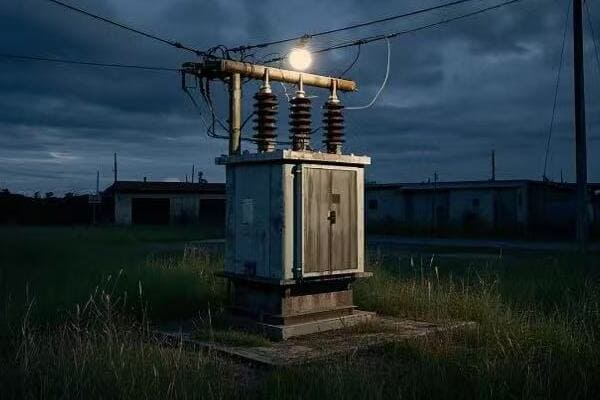
Let’s explore the current applications and future trends of Electronic Power Transformers in modern electrical systems. This knowledge is essential for engineers and decision-makers planning for the future of power systems.
Current Applications
-
Renewable Energy Integration
- Managing intermittency and power quality issues
- Facilitating grid connection of large-scale renewables
-
Smart Grid Implementation
- Enabling bidirectional power flow
- Providing real-time grid management capabilities
-
Industrial Power Systems
- Improving power quality for sensitive processes
- Enhancing energy efficiency in manufacturing
-
Electric Vehicle Charging Infrastructure
- Managing high-power, variable loads
- Enabling vehicle-to-grid (V2G) functionality
Future Trends
-
Advanced Grid Services
- Synthetic inertia provision
- Dynamic grid support functions
-
Integration with Energy Storage
- Hybrid transformer-battery systems
- Enhanced grid stability and resilience
-
HVDC and Flexible AC Transmission Systems (FACTS)
- EPTs as key components in HVDC converter stations
- Advanced power flow control in transmission systems
-
Solid-State Transformers
- Fully electronic transformers without traditional magnetic cores
- Potential for significant size and weight reduction
| Application/Trend | Key Benefit | Challenges |
|---|---|---|
| Renewable Integration | Manages intermittency | High power requirements |
| Smart Grids | Enables advanced functionalities | Complex control systems |
| Industrial Systems | Improves power quality | Cost justification |
| EV Charging | Handles variable high-power loads | Fast response requirements |
| Solid-State Transformers | Size and weight reduction | Technology maturity |
The applications and future trends of Electronic Power Transformers in modern electrical systems are truly exciting. As someone who’s been working with this technology for years, I’m continually amazed at how EPTs are evolving and finding new roles in our power systems.
Let’s start with current applications. In renewable energy integration, EPTs are proving to be invaluable. I remember a project involving a large offshore wind farm where EPTs played a crucial role in managing the variable power output and ensuring power quality standards were met. The ability of EPTs to provide voltage support and harmonic mitigation was key to successfully integrating this large renewable source into the grid.
In smart grid implementations, the bidirectional power flow capability of EPTs is a game-changer. I worked on a smart city project where EPTs were used at key points in the distribution network. They enabled seamless integration of distributed energy resources and provided real-time data for advanced grid management. The level of control and visibility we achieved was far beyond what’s possible with conventional transformers.
Industrial power systems are another area where EPTs are making a big impact. In one manufacturing facility, we used EPTs to address severe power quality issues that were affecting sensitive production equipment. The EPTs’ ability to mitigate harmonics and provide stable voltage not only improved product quality but also reduced equipment downtime, resulting in significant cost savings for the client.
The role of EPTs in electric vehicle charging infrastructure is rapidly growing. I recently worked on a project for a large EV charging station where EPTs were crucial in managing the high-power, highly variable loads. The fast response of EPTs allowed for efficient load balancing and power factor correction, ensuring stable operation even with multiple vehicles charging simultaneously.
Looking to the future, I’m particularly excited about the potential of EPTs in providing advanced grid services. The concept of synthetic inertia, where EPTs emulate the inertial response of traditional generators, could be crucial as we move towards grids with high penetration of inverter-based resources. I’m currently involved in a research project exploring how EPTs can provide fast frequency response and dynamic voltage support to enhance grid stability.
The integration of EPTs with energy storage is another trend I’m watching closely. I’ve seen concepts for hybrid transformer-battery systems that could provide enhanced grid stability and resilience. Imagine a distribution transformer that not only steps down voltage but also provides local energy storage for outage ride-through and peak shaving. The potential for improving grid reliability is enormous.
In the realm of high-voltage transmission, EPTs are set to play a significant role in HVDC and Flexible AC Transmission Systems (FACTS). I’ve been following developments where EPTs are being considered as key components in HVDC converter stations. Their ability to provide precise, rapid control over power flow could revolutionize how we manage our transmission systems.
Perhaps the most radical future trend is the development of solid-state transformers. These are fully electronic transformers without traditional magnetic cores. While still in the early stages, the potential for significant size and weight reduction is exciting. I’ve seen prototypes that are a fraction of the size of conventional transformers with equivalent ratings. However, there are still challenges to overcome in terms of efficiency and reliability before we see widespread adoption.
It’s worth noting that while these applications and trends are exciting, they also come with challenges. The high power requirements for renewable integration and EV charging push the limits of current power electronic technologies. The complex control systems required for smart grid applications can be challenging to design and maintain. And in many cases, the higher cost of EPTs compared to conventional transformers needs to be justified by the additional functionalities they provide.
One trend I’m seeing is the increasing use of modular, scalable EPT designs. This approach allows for more flexible deployment and easier maintenance. I worked on a project where we used a modular EPT system in a large industrial facility. The ability to easily add or replace modules as power requirements changed was a significant advantage.
Another interesting development is the use of EPTs in microgrid applications. As we see more interest in resilient, locally controlled power systems, EPTs’ ability to manage bidirectional power flow and provide advanced grid support functions makes them ideal for microgrid implementations.
The integration of AI and machine learning with EPTs is also an area of rapid development. I’m currently involved in a project exploring how these technologies can be used to optimize EPT operation in real-time, adapting to changing grid conditions and predicting potential issues before they occur.
As we move towards more distributed, renewable-based, and digitally controlled power systems, I believe EPTs will play an increasingly crucial role. Their flexibility, controllability, and advanced functionalities make them well-suited to the challenges of modern and future electrical systems.
Whether you’re planning a new power system, upgrading existing infrastructure, or simply trying to understand where the industry is headed, keeping an eye on the applications and trends in EPT technology is crucial. These devices are not just transformers; they’re key enablers of the flexible, efficient, and resilient power systems of the future.
Conclusion
Electronic Power Transformers represent a significant leap in transformer technology. They offer enhanced control, improved power quality, and better integration with modern grid systems. As power systems evolve, EPTs will play a crucial role in enabling smarter, more efficient, and more resilient electrical infrastructure.
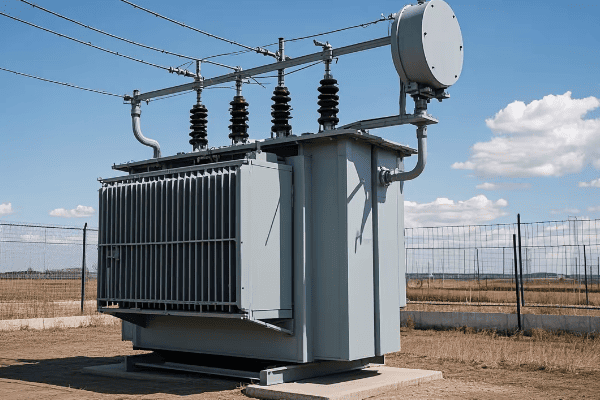
Are you confused by power transformer ratings? You’re not alone. Many engineers struggle to understand these complex specifications, but they’re crucial for proper transformer selection and operation.
Power transformer ratings are essential specifications that define a transformer’s capacity, voltage levels, and operating limits. They include parameters like kVA/MVA ratings, voltage ratings, current ratings, impedance, temperature rise, and efficiency. Understanding these ratings is crucial for proper transformer selection and safe operation.
In this guide, I’ll break down the complexities of power transformer ratings. We’ll explore each key parameter, its significance, and how it impacts transformer performance and system design. Let’s dive in and demystify these critical specifications.
What is Power Transformer Rating: Key Parameters and Their Significance?
Have you ever looked at a transformer nameplate and felt overwhelmed by the numbers? You’re not alone. Transformer ratings can seem like a jumble of figures, but each one is crucial for safe and efficient operation.
Power transformer ratings are a set of key parameters that define a transformer’s operational capabilities and limits. These include power capacity (kVA/MVA), voltage ratings, current ratings, impedance, temperature rise, and efficiency. Each parameter plays a vital role in transformer selection and system design.

Let’s dive deeper into these key parameters and their significance. Understanding these ratings is essential for any electrical engineer working with power systems.
Power Capacity Rating
-
kVA/MVA Rating
- Defines the transformer’s power handling capacity
- Based on voltage and current ratings
-
Continuous vs. Short-time Ratings
- Continuous rating for normal operation
- Short-time ratings for temporary overloads
Voltage Ratings
-
Primary and Secondary Voltages
- Defines input and output voltage levels
- Critical for system compatibility
-
Tap Settings
- Allows for voltage adjustment
- Helps maintain system voltage stability
Current Ratings
-
Full Load Current
- Maximum current at rated kVA and voltage
- Used for sizing conductors and protection devices
-
Inrush Current
- Initial surge when energizing the transformer
- Important for protection system design
Other Key Ratings
-
Impedance
- Affects short-circuit current and voltage regulation
- Critical for system protection coordination
-
Temperature Rise
- Indicates thermal performance
- Linked to insulation life and loading capacity
-
Efficiency
- Measure of transformer losses
- Important for operational cost calculations
| Rating Parameter | Typical Units | Significance |
|---|---|---|
| Power Capacity | kVA or MVA | Defines overall capacity |
| Voltage | kV | Determines system compatibility |
| Current | A | Used for conductor and protection sizing |
| Impedance | % | Affects short-circuit behavior |
| Temperature Rise | °C | Indicates thermal performance |
| Efficiency | % | Reflects energy losses |
Understanding transformer ratings is crucial for proper selection, operation, and maintenance of these vital components in our power systems. Each rating parameter provides important information about the transformer’s capabilities and limitations.
The power capacity rating, typically expressed in kVA (kilovolt-amperes) or MVA (megavolt-amperes), is perhaps the most fundamental. It defines the maximum power the transformer can handle continuously under rated conditions. I remember a project where we had to upgrade a substation transformer. The existing 10 MVA unit was consistently overloaded during peak hours, leading to accelerated aging. We replaced it with a 15 MVA transformer, which not only resolved the overloading issue but also provided capacity for future load growth.
Voltage ratings are equally critical. They define the input and output voltage levels the transformer is designed to handle. Mismatched voltage ratings can lead to disastrous consequences. Early in my career, I witnessed the aftermath of a 13.8 kV transformer mistakenly connected to a 34.5 kV line. The result was a spectacular failure that I’ll never forget. It drove home the importance of always double-checking voltage ratings before energizing a transformer.
Current ratings are derived from the power and voltage ratings. The full load current rating is particularly important for sizing conductors and protection devices. Inrush current, which occurs when the transformer is first energized, can be several times the full load current. This needs to be considered in protection system design to avoid nuisance tripping during transformer energization.
Impedance rating, typically expressed as a percentage, is a key parameter that affects the transformer’s behavior under short-circuit conditions and its voltage regulation characteristics. A higher impedance limits short-circuit currents but results in poorer voltage regulation. I’ve seen cases where improper consideration of transformer impedance led to coordination issues in the protection system.
Temperature rise rating is linked to the insulation system and directly affects the transformer’s life expectancy and loading capacity. A lower temperature rise generally indicates a more conservatively designed transformer that can handle overloads better. However, it usually comes at the cost of higher initial expense and larger size.
Efficiency ratings have become increasingly important in recent years due to energy cost and environmental considerations. Even a small improvement in efficiency can lead to significant energy savings over the transformer’s lifetime. I once worked on a project where replacing old, inefficient transformers with modern, high-efficiency units resulted in annual energy savings that paid for the upgrade in just a few years.
Understanding these ratings is not just about knowing what the numbers mean. It’s about understanding how they interrelate and impact the overall system design. For instance, a transformer with a higher impedance might be chosen to limit short-circuit currents, but this decision would need to be balanced against the resulting poorer voltage regulation.
As we delve deeper into each of these parameters in the following sections, keep in mind that transformer rating is not just about individual numbers. It’s about how these parameters work together to define the transformer’s place and performance in the power system. Whether you’re selecting a new transformer, troubleshooting an existing one, or designing a power system, a thorough understanding of these ratings is essential.
Understanding kVA and MVA Ratings: Capacity and Load Considerations?
Have you ever wondered why transformers are rated in kVA or MVA instead of kilowatts or megawatts? This seemingly small detail is actually crucial for understanding transformer capacity and load considerations.
kVA (kilovolt-ampere) and MVA (megavolt-ampere) ratings define a transformer’s apparent power capacity. Unlike watt ratings, they account for both real and reactive power. This is crucial because transformers must handle the total apparent power, regardless of the power factor.

Let’s dive deeper into kVA and MVA ratings and explore how they relate to transformer capacity and load considerations. This understanding is essential for proper transformer selection and system design.
kVA and MVA Basics
-
Definition
- kVA = kilovolt-amperes (1000 VA)
- MVA = megavolt-amperes (1,000,000 VA)
-
Relationship to Watts
- kVA = kW / power factor
- Accounts for both real and reactive power
Capacity Considerations
-
Nameplate Rating
- Maximum continuous load capacity
- Based on thermal limitations
-
Overload Capacity
- Short-term ratings above nameplate
- Depends on ambient temperature and load profile
Load Considerations
-
Power Factor Impact
- Lower power factor requires larger kVA rating
- Important in industrial applications
-
Load Profile
- Continuous vs. intermittent loads
- Peak load vs. average load
| Aspect | kVA/MVA Rating | kW Rating |
|---|---|---|
| Power Type | Apparent Power | Real Power |
| Reactive Power | Included | Not Included |
| Transformer Sizing | Directly Applicable | Needs Power Factor Adjustment |
| Load Calculation | Suitable for All Loads | Only for Resistive Loads |
Understanding kVA and MVA ratings is fundamental to working with transformers and power systems. These ratings represent the transformer’s apparent power capacity, which is a crucial concept in AC power systems.
Let’s start with the basics. kVA stands for kilovolt-amperes, which is 1000 volt-amperes. MVA is megavolt-amperes, or 1,000,000 volt-amperes. These units measure apparent power, which is the total power in an AC circuit, including both real power (measured in watts) and reactive power (measured in vars).
I remember a situation early in my career where this distinction became very clear. We were working on a project to power a large industrial facility with numerous induction motors. The client had initially specified the transformer based on the total kilowatt rating of their equipment. However, because many of their loads had a low power factor, the actual kVA requirement was much higher. We had to explain that the transformer needed to be sized based on the kVA demand, not just the kW, to avoid overloading.
The relationship between kVA and kW is straightforward: kVA = kW / power factor. This means that for a given kW load, a lower power factor results in a higher kVA requirement. This is why transformers are rated in kVA or MVA – they must be capable of handling the total apparent power, regardless of the power factor of the load.
When it comes to capacity considerations, the nameplate kVA or MVA rating represents the maximum continuous load the transformer can handle under rated conditions. This rating is primarily based on the transformer’s thermal limitations – the maximum temperature rise that the insulation system can handle continuously.
However, transformers often have some overload capacity for short periods. This is where things get interesting. The actual overload capacity depends on factors like ambient temperature, load profile, and the transformer’s thermal time constants. I once worked on a project where we needed to temporarily overload a transformer during a substation upgrade. We had to carefully calculate the allowable overload based on the transformer’s characteristics and the expected load profile to ensure we didn’t compromise its long-term reliability.
Load considerations are crucial when working with kVA and MVA ratings. Power factor is a key aspect. Loads with low power factors, like induction motors or lightly loaded power electronic equipment, require larger kVA ratings for a given kW output. This is particularly important in industrial applications where large motor loads are common.
The load profile is another critical consideration. A transformer’s rating is based on continuous load, but many applications have varying load profiles. I remember a project involving a transformer for a welding shop. The load was highly intermittent, with short periods of very high demand followed by longer periods of low demand. We had to carefully analyze the load profile to select a transformer that could handle the peak loads without being oversized for the average demand.
It’s also worth noting that while transformers are rated in kVA or MVA, efficiency and loss calculations are typically done in kW. This means we often need to convert between the two, taking into account the expected power factor of the load.
Understanding kVA and MVA ratings is not just about selecting the right size transformer. It’s about understanding how the transformer will interact with the entire power system. For example, a transformer with a higher kVA rating than necessary might lead to higher inrush currents during energization, potentially causing issues with protection systems.
As we move towards more complex power systems with increasing amounts of non-linear loads and distributed generation, understanding these ratings becomes even more critical. The ability to properly interpret and apply kVA and MVA ratings is a key skill for any electrical engineer working with power systems.
Voltage Ratings in Power Transformers: Primary, Secondary, and Tap Settings?
Have you ever wondered why transformers have multiple voltage ratings? Or why some transformers have taps while others don’t? Understanding voltage ratings and tap settings is crucial for proper transformer operation and system voltage control.
Voltage ratings in power transformers define the primary and secondary voltage levels. Primary voltage is the input, while secondary is the output. Tap settings allow for voltage adjustment, typically ±5% in 2.5% steps. These ratings and settings are crucial for system compatibility and voltage regulation.

Let’s explore the intricacies of voltage ratings and tap settings in power transformers. This knowledge is essential for system design, transformer selection, and voltage regulation strategies.
Primary and Secondary Voltage Ratings
-
Primary Voltage
- Input voltage from the source
- Typically higher in step-down transformers
-
Secondary Voltage
- Output voltage to the load
- Typically lower in step-down transformers
-
Voltage Ratio
- Relationship between primary and secondary voltages
- Determines the transformer’s turns ratio
Tap Settings
-
Purpose
- Allow for voltage adjustment
- Compensate for system voltage variations
-
Types of Taps
- No-load taps (de-energized changes)
- On-load tap changers (OLTC)
-
Typical Range
- Often ±5% in 2.5% steps
- Can vary based on specific requirements
Voltage Regulation
-
Definition
- Change in secondary voltage from no-load to full-load
- Expressed as a percentage of rated voltage
-
Factors Affecting Regulation
- Transformer impedance
- Load power factor
| Aspect | Primary Voltage | Secondary Voltage | Tap Settings |
|---|---|---|---|
| Typical Location | Source Side | Load Side | Primary or Secondary |
| Purpose | System Input | Load Supply | Voltage Adjustment |
| Variation | Fixed | Fixed | Adjustable |
| Impact on Ratio | Reference | Determined by Turns Ratio | Modifies Effective Ratio |
Voltage ratings and tap settings are fundamental aspects of transformer design and operation. They play a crucial role in ensuring system compatibility, maintaining voltage levels, and adapting to changing network conditions.
Let’s start with primary and secondary voltage ratings. The primary voltage rating corresponds to the input voltage from the source, while the secondary voltage rating is the output voltage delivered to the load. In a step-down transformer, which is common in distribution systems, the primary voltage is higher than the secondary. The reverse is true for step-up transformers, typically used in power generation plants.
I remember a project early in my career where we were replacing an old 34.5 kV / 4.16 kV transformer in an industrial facility. The new transformer had to match these voltage ratings exactly to ensure compatibility with the existing system. Any mismatch could have led to equipment damage or system instability.
The relationship between the primary and secondary voltages defines the transformer’s voltage ratio, which in turn determines its turns ratio. This ratio is crucial for the transformer’s basic operation. For example, a transformer with a 10:1 voltage ratio will have approximately 10 times as many turns in its primary winding as in its secondary winding.
Now, let’s talk about tap settings. Taps are connections on transformer windings that allow for voltage adjustment. They’re incredibly useful for compensating for voltage variations in the power system. I’ve seen many cases where tap settings made the difference between acceptable and unacceptable voltage levels at the load.
There are two main types of taps: no-load taps and on-load tap changers (OLTC). No-load taps can only be changed when the transformer is de-energized. They’re simpler and less expensive, but less flexible. OLTCs, on the other hand, allow for voltage adjustment while the transformer is energized and under load. They’re more complex and expensive, but provide dynamic voltage control.
The typical tap range is often ±5% in 2.5% steps, although this can vary based on specific requirements. This means the voltage can be adjusted up or down by up to 5% of the rated voltage, in 2.5% increments. I once worked on a project where we needed a wider tap range due to significant voltage variations in the local grid. We ended up specifying a transformer with a ±10% tap range, which was crucial for maintaining stable voltage at the load.
Voltage regulation is another important concept related to transformer voltage ratings. It refers to the change in secondary voltage from no-load to full-load conditions, expressed as a percentage of rated voltage. A lower percentage indicates better voltage regulation.
Factors affecting voltage regulation include the transformer’s impedance and the load power factor. Higher impedance and lower power factor both lead to poorer voltage regulation. I remember a case where a factory was experiencing voltage dips during motor starting. By analyzing the transformer’s voltage regulation characteristics and the load profile, we were able to recommend changes that significantly improved the situation.
Understanding voltage ratings and tap settings is crucial for system design and operation. For example, when integrating a new transformer into an existing system, you need to ensure not only that the voltage ratings are compatible, but also that the tap range is sufficient to handle expected voltage variations.
In recent years, with the increasing integration of renewable energy sources and the development of smart grids, voltage control has become more complex. Transformers with OLTCs are playing a larger role in dynamic voltage regulation. I’ve been involved in projects where we’ve used transformers with advanced OLTCs and control systems to help manage voltage in distribution networks with high penetration of solar PV.
As we continue to push the boundaries of our power systems, understanding and properly applying transformer voltage ratings and tap settings becomes ever more crucial. Whether you’re designing a new system, troubleshooting voltage issues, or planning for future grid enhancementsWhether you’re designing a new system, troubleshooting voltage issues, or planning for future grid enhancements, a solid grasp of these concepts is essential for any electrical engineer working with power systems.
Current Ratings and Their Importance in Transformer Design and Operation?
Have you ever wondered why transformers have specific current ratings? Or how these ratings impact the overall power system? Understanding current ratings is crucial for safe and efficient transformer operation.
Current ratings in transformers define the maximum current that can flow through the windings without causing damage. They’re directly related to the kVA rating and voltage. These ratings are crucial for sizing conductors, designing protection systems, and ensuring the transformer can handle both normal loads and fault conditions.
Let’s delve into the world of transformer current ratings and explore their significance in transformer design and operation. This knowledge is essential for system planning, protection coordination, and transformer maintenance.
Basic Current Ratings
-
Full Load Current
- Maximum continuous current at rated kVA and voltage
- Used for sizing conductors and protection devices
-
Primary vs. Secondary Current
- Inversely proportional to voltage ratings
- Higher current on the low voltage side
Special Current Considerations
-
Inrush Current
- Initial surge when energizing the transformer
- Can be 5-10 times the full load current
-
Short Circuit Current
- Maximum current during a fault condition
- Determined by transformer impedance
-
Overload Capacity
- Short-term current ratings above nominal
- Based on thermal considerations
| Current Type | Typical Magnitude | Duration | Significance |
|---|---|---|---|
| Full Load | 100% of rated | Continuous | Normal operation |
| Inrush | 500-1000% of rated | Milliseconds | Energization |
| Short Circuit | Depends on impedance | Cycles | Fault condition |
| Overload | 110-150% of rated | Hours | Temporary overload |
Current ratings are a critical aspect of transformer design and operation. They directly impact the transformer’s ability to handle various load conditions and fault scenarios, and they play a crucial role in the design of associated electrical systems.
Let’s start with the basic full load current rating. This is the maximum continuous current that the transformer can handle at its rated kVA and voltage. It’s a fundamental parameter used for sizing conductors, busbars, and protection devices. I remember a project where we were upgrading a substation transformer. The increase in full load current meant we also had to upgrade all the associated switchgear and cabling, which significantly impacted the project scope and cost.
The relationship between primary and secondary current is inverse to the voltage ratio. This means that in a step-down transformer, the secondary (low voltage) side will have a higher current rating than the primary (high voltage) side. This is why you often see much larger conductors on the low voltage side of a transformer. I once visited a large industrial facility where the low voltage busbar from the transformer was an impressive sight – a massive copper bar nearly a foot wide!
Inrush current is a fascinating phenomenon that occurs when a transformer is first energized. Due to core saturation, the initial current can be 5-10 times the full load current, lasting for just a few cycles. This high inrush current can cause problems if not properly accounted for. I remember a case where nuisance tripping of circuit breakers was occurring during transformer energization. The problem was solved by adjusting the protection settings to account for the high inrush current.
Short circuit current is another critical consideration. This is the maximum current that can flow during a fault condition, and it’s determined by the transformer’s impedance. Lower impedance transformers allow higher short circuit currents. This is important for protection system design – the transformer and all associated equipment must be able to withstand these high currents until the protection system operates. I’ve seen cases where underestimating short circuit currents led to catastrophic failures during fault conditions.
Overload capacity is an interesting aspect of transformer current ratings. Transformers can typically handle currents above their nominal rating for short periods, based on their thermal characteristics. This overload capacity can be crucial in emergency situations or during planned outages. I once worked on a project where we had to temporarily overload a transformer during a substation upgrade. We had to carefully calculate the allowable overload based on ambient temperature, load profile, and the transformer’s thermal characteristics to ensure we didn’t compromise its long-term reliability.
Understanding these current ratings is crucial for various aspects of power system design and operation. For protection system design, we need to consider both the full load current for normal operation and the potential short circuit current for fault conditions. The inrush current must be accounted for to prevent nuisance tripping during energization.
In recent years, with the increasing integration of renewable energy sources and the development of smart grids, current flow patterns in transformers are becoming more complex. We’re seeing situations where transformers might be subjected to reverse power flow, or where load profiles are becoming more variable. This is leading to new challenges in transformer design and rating.
For example, in areas with high penetration of rooftop solar PV, distribution transformers might see their current flow reverse during times of high generation and low load. This can lead to voltage rise issues and potentially overloading of transformers designed primarily for unidirectional power flow. I’ve been involved in projects where we’ve had to carefully analyze these scenarios to ensure the transformers can handle these new operating conditions.
Another trend I’m seeing is the increasing use of smart transformers with advanced monitoring capabilities. These can provide real-time data on currents, temperatures, and other parameters, allowing for more dynamic loading strategies. Instead of relying solely on nameplate ratings, we can now make decisions based on actual operating conditions.
As we continue to push the boundaries of our power systems, understanding and properly applying transformer current ratings becomes ever more crucial. Whether you’re designing a new system, troubleshooting operational issues, or planning for future grid enhancements, a solid grasp of these concepts is essential for any electrical engineer working with power systems.
Impedance Rating: Impact on Short Circuit Performance and System Stability?
Have you ever wondered why some transformers perform differently under fault conditions? Or why system stability can be affected by transformer characteristics? The answer often lies in the transformer’s impedance rating.
Transformer impedance rating, typically expressed as a percentage, represents the voltage drop across the transformer at full load. It significantly impacts short circuit currents and system stability. Higher impedance limits fault currents but increases voltage regulation, while lower impedance does the opposite.
Let’s explore the concept of transformer impedance and its crucial role in power system performance. Understanding this rating is essential for system design, protection coordination, and ensuring overall grid stability.
Basics of Transformer Impedance
-
Definition
- Voltage drop across transformer at full load
- Typically expressed as a percentage
-
Components
- Resistance (R): Represents copper losses
- Reactance (X): Represents leakage flux
Impact on Short Circuit Performance
-
Fault Current Limitation
- Higher impedance reduces fault currents
- Affects sizing of circuit breakers and protection settings
-
Arc Flash Considerations
- Impedance influences incident energy levels
- Important for safety and PPE requirements
System Stability Considerations
-
Voltage Regulation
- Higher impedance increases voltage drop under load
- Affects power quality and system stability
-
Power Flow Control
- Impedance influences power flow between parallel transformers
- Important for load sharing and system operation
| Aspect | Low Impedance | High Impedance |
|---|---|---|
| Fault Current | Higher | Lower |
| Voltage Regulation | Better | Poorer |
| Size and Cost | Larger, More Expensive | Smaller, Less Expensive |
| Efficiency | Generally Higher | Generally Lower |
Transformer impedance is a fascinating and crucial aspect of power system design and operation. It’s a key parameter that influences everything from fault current levels to voltage regulation and system stability. Understanding impedance and its impacts is essential for any electrical engineer working with power systems.
Let’s start with the basics. Transformer impedance is typically expressed as a percentage and represents the voltage drop across the transformer at full load. For example, a transformer with 6% impedance will have a 6% voltage drop from no load to full load. This impedance has two components: resistance (R), which represents the copper losses in the windings, and reactance (X), which represents the leakage flux that doesn’t contribute to power transfer.
I remember a project early in my career where we were replacing an old transformer in a industrial facility. The new transformer had a slightly different impedance rating, and we had to carefully analyze how this would impact the entire electrical system. It was an eye-opening experience that showed me how a single parameter could have far-reaching effects.
One of the most significant impacts of transformer impedance is on short circuit performance. Higher impedance transformers limit fault currents, which can be both a blessing and a curse. On one hand, it reduces the stress on circuit breakers and other equipment during fault conditions. On the other hand, it can make fault detection more challenging and potentially slow down protection operation.
I once worked on a project where we were upgrading a substation with higher capacity transformers. The new transformers had lower impedance, which significantly increased the potential fault currents. We had to upgrade all the switchgear and protection systems to handle these higher fault levels. It was a complex and costly exercise, but necessary for system safety and reliability.
Arc flash considerations are another important aspect related to transformer impedance. Lower impedance transformers, with their higher fault currents, can lead to higher incident energy levels during an arc flash event. This has direct implications for safety procedures and Personal Protective Equipment (PPE) requirements for maintenance personnel. I’ve seen cases where changes in transformer impedance necessitated a complete review and update of arc flash studies and safety protocols.
Moving on to system stability considerations, voltage regulation is directly impacted by transformer impedance. Higher impedance transformers exhibit greater voltage drop under load, which can affect power quality and system stability. This is particularly important in long distribution feeders or in systems with voltage-sensitive loads.
I remember a case where a factory was experiencing voltage dips during the starting of large motors. By analyzing the transformer impedance and system characteristics, we were able to recommend a transformer with lower impedance, which significantly improved the voltage profile during motor starting events.
Power flow control between parallel transformers is another area where impedance plays a crucial role. When transformers are connected in parallel, their impedances determine how load is shared between them. Transformers with mismatched impedances can lead to circulating currents and uneven load distribution. I’ve worked on projects where we had to carefully select transformer impedances to ensure proper load sharing in parallel operation.
It’s worth noting that there’s often a trade-off involved in selecting transformer impedance. Lower impedance generally means better voltage regulation and efficiency, but it also means higher fault currents and potentially larger, more expensive transformers. Higher impedance can limit fault currents and reduce transformer size and cost, but at the expense of poorer voltage regulation.
In recent years, with the increasing integration of renewable energy sources and the development of smart grids, the role of transformer impedance has become even more complex. We’re seeing scenarios where transformers might need to handle bi-directional power flow, or where system stability is challenged by the variability of renewable generation.
For example, in microgrids or systems with high penetration of distributed generation, transformer impedance can play a crucial role in determining fault current levels and protection coordination. I’ve been involved in projects where we’ve had to carefully balance these considerations to ensure system reliability and stability.
Another trend I’m seeing is the increasing use of power electronic interfaces in transformers, such as solid-state on-load tap changers or even fully electronic transformers. These technologies can provide more flexible control of effective impedance, potentially allowing for dynamic adjustment based on system conditions.
As we continue to push the boundaries of our power systems, understanding and properly applying transformer impedance becomes ever more crucial. Whether you’re designing a new system, troubleshooting stability issues, or planning for future grid enhancements, a solid grasp of transformer impedance and its impacts is essential for any electrical engineer working with power systems.
Temperature Rise and Insulation Class: Thermal Considerations in Transformer Rating?
Have you ever touched a transformer and felt its warmth? That heat is a critical factor in transformer design and operation. Understanding temperature rise and insulation class is crucial for ensuring transformer longevity and reliability.
Temperature rise in transformers refers to the increase in winding temperature above ambient conditions under full load. Insulation class defines the maximum temperature the insulation can withstand. These thermal considerations are crucial for determining transformer life expectancy, loading capacity, and overall reliability.
Let’s delve into the world of transformer thermal considerations. Understanding these aspects is essential for proper transformer selection, operation, and maintenance.
Temperature Rise Basics
-
Definition
- Increase in winding temperature above ambient
- Typically measured in degrees Celsius
-
Standard Ratings
- 55°C rise (65°C average winding rise)
- 65°C rise (80°C average winding rise)
-
Measurement Methods
- Resistance method
- Fiber optic sensors for direct measurement
Insulation Class
-
Standard Classes
- Class A (105°C)
- Class B (130°C)
- Class F (155°C)
- Class H (180°C)
-
Temperature Limits
- Maximum allowable temperature
- Includes ambient temperature and temperature rise
-
Impact on Transformer Life
- Higher temperatures accelerate insulation aging
- Rule of thumb: 10°C increase halves insulation life
| Aspect | Lower Temperature Rise | Higher Temperature Rise |
|---|---|---|
| Transformer Size | Larger | Smaller |
| Initial Cost | Higher | Lower |
| Efficiency | Generally Higher | Generally Lower |
| Expected Lifespan | Longer | Shorter |
Temperature rise and insulation class are critical aspects of transformer design and operation. They directly impact the transformer’s size, cost, efficiency, and expected lifespan. Understanding these thermal considerations is essential for making informed decisions about transformer selection and operation.
Let’s start with temperature rise. This refers to the increase in winding temperature above the ambient temperature when the transformer is operating at full load. The standard temperature rise ratings are typically 55°C and 65°C, which correspond to average winding temperature rises of 65°C and 80°C respectively.
I remember a project early in my career where we were specifying transformers for a new data center. The client initially wanted to go with 65°C rise transformers to save on cost and space. However, after analyzing the expected load profile and ambient conditions, we recommended 55°C rise units. The lower temperature rise provided a margin of safety for occasional overloads and helped extend the transformer’s expected life. It was a valuable lesson in looking beyond initial costs to consider long-term reliability and performance.
Measuring temperature rise accurately is crucial. The traditional method is the resistance method, where we measure the winding resistance before and after a heat run test. Modern transformers often use fiber optic sensors embedded in the windings for direct temperature measurement. I’ve worked on projects where we’ve retrofitted older transformers with fiber optic sensors, providing much more accurate and timely temperature data.
Insulation class is closely related to temperature rise. It defines the maximum temperature that the insulation system can withstand continuously without significant degradation. The standard classes are A (105°C), B (130°C), F (155°C), and H (180°C). These temperatures include both the ambient temperature and the temperature rise.
The choice of insulation class has a significant impact on transformer design and performance. Higher insulation classes allow for higher operating temperatures, which can lead to smaller, more compact transformers. However, there’s a trade-off in terms of expected lifespan.
There’s a well-known rule of thumb in the industry: for every 10°C increase in operating temperature, the insulation life is approximately halved. This relationship underscores the importance of proper thermal management in transformers. I’ve seen cases where transformers operating in high ambient temperatures or under sustained overloads experienced premature insulation failure, leading to costly replacements and outages.
The interplay between temperature rise and insulation class is crucial in transformer design. For example, a transformer with a 65°C rise and class F insulation operating in a 40°C ambient environment would have a total winding temperature of 105°C (40°C + 65°C), which is well within the 155°C limit of class F insulation. This provides a significant margin for overloads or higher ambient temperatures.
In recent years, I’ve seen an increasing focus on transformer thermal management. This is driven by several factors, including the push for higher efficiency, the need to maximize asset utilization, and the challenges posed by changing load profiles in modern power systems.
One trend I find particularly interesting is the use of alternative insulating fluids, such as natural and synthetic esters. These fluids have higher flash and fire points compared to mineral oil, allowing for higher operating temperatures. I’ve worked on projects where we’ve used ester-filled transformers in urban substations, providing improved fire safety and potentially higher loading capacity.
Another development is the increasing use of advanced thermal modeling and real-time monitoring systems. These allow for more accurate prediction of hot spot temperatures and dynamic loading of transformers. I remember a project where we implemented a real-time thermal monitoring system on a critical substation transformer. It allowed the utility to safely push the transformer to higher loads during peak periods while ensuring that thermal limits were not exceeded.
The trend towards more distributed generation and the integration of renewable energy sources is also impacting transformer thermal considerations. We’re seeing more variable and bidirectional power flows, which can create new thermal challenges for transformers. I’ve been involved in projects where we’ve had to carefully analyze the thermal impacts of solar PV integration on distribution transformers.
Understanding temperature rise and insulation class is not just about selecting the right transformer. It’s also crucial for developing effective maintenance strategies and condition monitoring programs. For example, regular oil testing can provide valuable insights into the condition of the insulation system. I always emphasize the importance of trend analysis in oil test results – a gradual increase in dissolved gas levels or moisture content can be an early warning sign of insulation degradation.
As we continue to push the boundaries of our power systems, with higher power densities and more dynamic loading conditions, understanding and managing transformer thermal characteristics becomes ever more crucial. Whether you’re designing a new system, troubleshooting operational issues, or planning for future grid enhancements, a solid grasp of these thermal considerations is essential for any electrical engineer working with power systems.
Efficiency and Loss Ratings: No-Load and Load Losses in Power Transformers?
Have you ever wondered why transformers generate heat, or why some are more efficient than others? The answer lies in transformer losses. Understanding efficiency and loss ratings is crucial for selecting the right transformer and optimizing system performance.
Transformer efficiency is the ratio of output power to input power, typically above 98% for large units. Losses are categorized as no-load losses (core losses) and load losses (copper losses). These losses impact operating costs, cooling requirements, and overall system efficiency.
Let’s dive into the world of transformer efficiency and losses. This knowledge is essential for making informed decisions about transformer selection, operation, and energy management.
No-Load Losses
-
Definition
- Losses present when transformer is energized but not supplying load
- Also known as core losses or iron losses
-
Components
- Hysteresis losses in the core
- Eddy current losses in the core laminations
-
Mitigation Strategies
- Use of high-grade silicon steel
- Thinner core laminations
Load Losses
-
Definition
- Losses that occur when transformer is supplying load
- Also known as copper losses or I²R losses
-
Components
- Resistive losses in the windings
- Eddy current losses in the windings
-
Mitigation Strategies
- Use of larger conductor cross-sections
- Advanced winding designs (e.g., continuously transposed conductors)
Efficiency Considerations
-
Efficiency Calculation
- Efficiency = Output Power / Input Power
- Typically expressed as a percentage
-
Loss Evaluation
- No-load losses are constant
- Load losses vary with the square of the load current
-
Total Owning Cost (TOC)
- Considers both initial cost and lifetime energy losses
- Used for transformer selection and comparison
| Loss Type | Characteristics | Mitigation Strategies |
|---|---|---|
| No-Load Losses | Constant, independent of load | Better core materials, thinner laminations |
| Load Losses | Vary with square of load current | Larger conductors, advanced winding designs |
Transformer efficiency and losses are critical considerations in power system design and operation. They directly impact operating costs, energy consumption, and environmental footprint. Understanding these aspects is crucial for making informed decisions about transformer selection and operation.
Let’s start with no-load losses, also known as core losses or iron losses. These losses are present whenever the transformer is energized, regardless of the load. They’re primarily due to two phenomena: hysteresis in the core material and eddy currents in the core laminations.
I remember a project early in my career where we were replacing old transformers in a large industrial facility. The new transformers had significantly lower no-load losses thanks to advanced core materials. The energy savings were substantial, especially considering that these transformers were energized 24/7. It was a great example of how advancements in materials science can have real-world impacts on energy efficiency.
Mitigating no-load losses typically involves using high-grade silicon steel for the core and making the core laminations thinner. Some modern transformers even use amorphous metal cores, which can reduce no-load losses by up to 70% compared to traditional silicon steel. However, these materials are more expensive and can be more challenging to work with.
Load losses, on the other hand, occur when the transformer is supplying load. They’re primarily due to the resistance of the windings (I²R losses) and eddy currents in the windings. These losses increase with the square of the load current, which means they become much more significant at high loads.
Reducing load losses often involves using larger conductor cross-sections to reduce resistance. Advanced winding designs, such as continuously transposed conductors, can also help reduce eddy current losses in the windings. I’ve worked on projects where we’ve used these advanced designs in large power transformers, and the improvement in efficiency, especially at high loads, was notable.
Efficiency in transformers is typically very high, often above 98% for large units. However, even small improvements in efficiency can lead to significant energy savings over the transformer’s lifetime. This is where the concept of Total Owning Cost (TOC) comes in.
TOC considers both the initial cost of the transformer and the cost of energy losses over its lifetime. I always emphasize the importance of TOC analysis when selecting transformers. I remember a case where a client was initially leaning towards a lower-cost transformer with higher losses. After we did a TOC analysis showing the lifetime energy costs, they opted for the more efficient unit. The higher upfront cost was offset by energy savings within a few years.
It’s worth noting that the balance between no-load and load losses depends on the transformer’s expected load profile. For transformers that are lightly loaded most of the time, minimizing no-load losses might be more important. For heavily loaded transformers, the focus might be more on reducing load losses.
In recent years, I’ve seen an increasing focus on transformer efficiency driven by energy cost concerns and environmental regulations. Many countries now have minimum efficiency standards for transformers. For example, the U.S. Department of Energy’s efficiency standards have pushed the industry towards more efficient designs.
The trend towards more distributed generation and the integration of renewable energy sources is also impacting transformer efficiency considerations. We’re seeing more variable and bidirectional power flows, which can create new challenges for optimizing transformer efficiency.
I’ve been involved in projects where we’ve had to carefully analyze the efficiency impacts of solar PV integration on distribution transformers. The variable nature of solar generation can lead to periods of very light loading (high relative no-load losses) followed by periods of high loading (high load losses). This has led to new approaches in transformer design and selection for these applications.
Another interesting development is the use of smart transformers with on-load tap changers and advanced monitoring systems. These can adjust their operation in real-time to optimize efficiency based on loading conditions. I’ve worked on pilot projects implementing these technologies, and the results in terms of energy savings and improved power quality have been promising.
As we continue to push for more efficient and sustainable power systems, understanding and optimizing transformer losses becomes increasingly important. Whether you’re selecting transformers for a new project, evaluating energy-saving opportunities in existing systems, or developing new transformer technologies, a solid grasp of efficiency and loss considerations is essential for any electrical engineer working in the power sector.
Special Ratings for Unique Applications: Overload Capacity, Short-Time Ratings, and Harmonics?
Have you ever encountered a situation where standard transformer ratings just don’t cut it? In the diverse world of power systems, unique applications often require special transformer ratings. Understanding these can be the key to solving complex engineering challenges.
Special transformer ratings address unique operational requirements. Overload capacity allows for temporary operation above nameplate rating. Short-time ratings define permissible loading for brief periods. Harmonic ratings account for non-linear loads. These special ratings are crucial for applications with variable loads or harsh operating conditions.
Let’s explore these special ratings and their applications. This knowledge is essential for engineers dealing with challenging power system designs or unusual operational requirements.
Overload Capacity
-
Definition
- Ability to operate above nameplate rating for limited periods
- Based on thermal characteristics and ambient conditions
-
Applications
- Emergency situations
- Peak load management
-
Considerations
- Accelerated insulation aging
- Need for enhanced cooling systems
Short-Time Ratings
-
Definition
- Maximum permissible load for short durations (e.g., 2 hours)
- Higher than continuous rating but lower than fault current rating
-
Applications
- Industrial processes with cyclic loads
- Backup power scenarios
-
Considerations
- Thermal limits of windings and insulation
- Coordination with protection systems
Harmonic Ratings
-
Definition
- Ability to handle non-sinusoidal currents
- Often expressed as K-factor rating
-
Applications
- Data centers with high harmonic content
- Industrial facilities with large variable frequency drives
-
Considerations
- Increased eddy current losses
- Potential for resonance and overheating
| Special Rating | Key Characteristic | Typical Applications |
|---|---|---|
| Overload Capacity | Temporary operation above nameplate | Emergency situations, peak management |
| Short-Time Rating | High load for brief periods | Cyclic industrial loads, backup power |
| Harmonic Rating | Handling of non-linear loads | Data centers, VFD-heavy industries |
Special transformer ratings are crucial for addressing unique operational requirements that go beyond standard specifications. These ratings allow transformers to handle challenging conditions while maintaining reliability and safety. Understanding and properly applying these special ratings can be the key to solving complex power system challenges.
Let’s start with overload capacity. This rating defines a transformer’s ability to operate above its nameplate rating for limited periods. It’s based on the transformer’s thermal characteristics and ambient conditions. I remember a project where we were designing the power system for a large industrial facility with highly variable loads. By specifying transformers with significant overload capacity, we were able to handle peak loads without oversizing the transformers for normal operation. This resulted in a more cost-effective solution while still ensuring reliable operation during high-demand periods.
Overload capacity is particularly useful in emergency situations or for peak load management. However, it’s crucial to understand that operating a transformer in overload conditions accelerates insulation aging. I always emphasize to clients that while overload capacity provides operational flexibility, it should be used judiciously to avoid compromising the transformer’s long-term reliability.
Short-time ratings are another important special consideration. These define the maximum permissible load for short durations, typically a few hours. These ratings are higher than the continuous rating but lower than the transformer’s fault current rating. They’re particularly useful in applications with cyclic loads or in backup power scenarios.
I once worked on a project for a steel mill where the load profile included short periods of very high demand during the melting process. By specifying transformers with appropriate short-time ratings, we were able to handle these peak loads without oversizing the entire system. The key was carefully analyzing the load cycle and coordinating the transformer ratings with the protection system settings.
Harmonic ratings are becoming increasingly important in modern power systems due to the proliferation of non-linear loads. These ratings, often expressed as K-factor ratings, indicate a transformer’s ability to handle non-sinusoidal currents without excessive heating.
I remember a challenging project involving a large data center. The high concentration of switch-mode power supplies in the servers created significant harmonic distortion in the current waveform. We had to specify K-rated transformers to handle these harmonics without overheating. It was a great example of how modern loads are changing the requirements for transformer design.
Harmonic ratings are particularly important in facilities with a high concentration of electronic loads or variable frequency drives. The increased eddy current losses and potential for resonance in these environments can lead to transformer overheating if not properly addressed.
It’s worth noting that these special ratings often come with trade-offs. Transformers designed for high overload capacity or severe harmonic environments may be larger, more expensive, or less efficient under normal conditions. The key is to carefully analyze the specific application requirements and balance these factors.
In recent years, I’ve seen an increasing need for these special ratings due to changing load characteristics and grid conditions. The integration of renewable energy sources, for example, can lead to more variable power flows and potential overload scenarios. I’ve been involved in projects where we’ve had to carefully consider overload ratings for transformers in solar and wind farm applications to handle the variability of generation.
Another trend I’m seeing is the use of advanced monitoring and control systems to dynamically manage transformer loading. These systems can take into account real-time conditions like ambient temperature and load profile to safely push transformers closer to their limits when needed. I’ve worked on pilot projects implementing these technologies, and they show great promise for maximizing asset utilization while maintaining reliability.
The increasing focus on grid resilience is also driving interest in transformers with enhanced overload and short-time ratings. In scenarios where N-1 or even N-2 contingencies need to be considered, these special ratings can provide crucial operational flexibility.
As power systems continue to evolve, with more distributed generation, energy storage, and non-linear loads, the importance of these special transformer ratings will only grow. Whether you’re designing a new system, upgrading existing infrastructure, or troubleshooting operational issues, a solid understanding of these special ratings is essential for any electrical engineer working in the power sector.
Conclusion
Power transformer ratings are crucial for proper selection, operation, and maintenance. Understanding these ratings enables engineers to design efficient, reliable power systems. From capacity to special applications, each rating plays a vital role in transformer performance and system stability.
Are you struggling to understand large power transformers? You’re not alone. Many engineers find these complex devices challenging, but they’re crucial for our power systems.
Large power transformers are vital components in electrical grids. They handle high voltages and large power capacities, enabling efficient energy transmission and distribution. Understanding their design and operation is essential for electrical engineers.
In this guide, I’ll break down the complexities of large power transformers. We’ll explore their characteristics, design principles, cooling systems, and more. Let’s dive in and demystify these critical components of our power infrastructure.
What Defines a Large Power Transformer: Characteristics and Classifications?
Have you ever wondered what makes a power transformer "large"? It’s not just about size. The definition involves several key factors that set these transformers apart from their smaller counterparts.
Large power transformers are typically defined by their high power ratings, usually above 100 MVA, and their ability to handle voltages of 345 kV and above. They’re characterized by their massive size, weight, and critical role in power transmission systems.
Let’s delve deeper into the characteristics and classifications of large power transformers. Understanding these aspects is crucial for engineers working with power systems and grid infrastructure.
Key Characteristics
-
Power Rating
- Typically above 100 MVA
- Can reach up to 1,000 MVA or more
-
Voltage Levels
- Primary voltage often 345 kV and above
- Secondary voltage varies based on application
-
Physical Dimensions
- Height: Can exceed 10 meters
- Weight: Often over 100 tons
Classifications
-
By Application
- Generator step-up transformers
- Transmission substation transformers
- Industrial transformers
-
By Cooling Method
- Oil-immersed with various cooling systems
- Dry-type (less common for very large units)
-
By Core Construction
- Core-form
- Shell-form
| Characteristic | Typical Range | Significance |
|---|---|---|
| Power Rating | 100 MVA – 1,000+ MVA | Determines capacity to handle large power flows |
| Voltage Level | 345 kV – 765 kV | Enables long-distance power transmission |
| Weight | 100 – 400+ tons | Impacts transportation and installation |
| Efficiency | >99% | Critical for minimizing losses in power systems |
The definition of a large power transformer goes beyond just size. These transformers are the backbone of our power transmission systems, handling enormous amounts of power and enabling the efficient transfer of electricity over long distances.
I remember my first encounter with a truly large power transformer during a visit to a major substation. The sheer scale was awe-inspiring. Standing next to a transformer that was taller than a two-story building and weighed as much as a loaded Boeing 747 really put into perspective the magnitude of our power infrastructure.
The power rating of these transformers is a key defining characteristic. While smaller distribution transformers might handle a few MVA, large power transformers start at around 100 MVA and can go up to 1,000 MVA or more. To put this in context, a 1,000 MVA transformer could power a small city.
Voltage levels are another crucial factor. Large power transformers typically operate at very high voltages, often 345 kV and above on the primary side. This high voltage is what allows for efficient long-distance power transmission. The secondary voltage can vary depending on the specific application and where the transformer sits in the power distribution chain.
The physical size of these transformers is impressive. Heights of 10 meters or more are not uncommon, and weights can easily exceed 100 tons. This massive size presents unique challenges in manufacturing, transportation, and installation, which I’ll discuss in later sections.
Classifications of large power transformers can be based on various factors. By application, we have generator step-up transformers used at power plants to increase voltage for transmission, transmission substation transformers that step voltage down for distribution networks, and large industrial transformers used in facilities like steel mills or petrochemical plants.
The cooling method is another important classification. Most large power transformers are oil-immersed, but the specific cooling system can vary. We’ll dive deeper into cooling systems in a later section, but it’s worth noting that the choice of cooling system can significantly impact the transformer’s performance and lifespan.
Core construction is another way to classify these transformers. Core-form transformers are more common for higher voltages, while shell-form designs might be preferred for very high current applications. Each has its advantages in terms of efficiency, short-circuit strength, and ease of maintenance.
Understanding these characteristics and classifications is crucial for electrical engineers working with power systems. It informs decisions about transformer selection, system design, and maintenance strategies. As our power grids evolve to incorporate more renewable energy sources and smart grid technologies, the role of large power transformers is becoming even more critical.
Design Principles of Large Power Transformers: Core, Windings, and Insulation Systems?
Have you ever wondered how engineers design transformers to handle such enormous power? The design of large power transformers is a complex process that requires careful consideration of multiple factors.
Large power transformer design focuses on three key elements: the core, windings, and insulation system. The core manages magnetic flux, windings handle current flow, and insulation prevents short circuits and manages heat. Balancing these elements is crucial for efficiency and reliability.
Let’s explore the design principles of large power transformers in more detail. Understanding these principles is essential for engineers involved in transformer design, manufacturing, and maintenance.
Core Design
-
Material Selection
- Grain-oriented silicon steel
- Amorphous metals for high efficiency
-
Core Types
- Core-form: More common for high voltages
- Shell-form: Better for high currents
-
Stacking Techniques
- Step-lap joints to reduce losses
- Mitred corners for improved flux path
Winding Design
-
Conductor Materials
- Copper: Higher conductivity
- Aluminum: Lighter weight
-
Winding Types
- Disc windings for high voltage
- Helical windings for high current
-
Transposition Techniques
- Continuous transposition conductors (CTC)
- Reduces eddy current losses
Insulation System
-
Solid Insulation
- Cellulose-based materials (paper, pressboard)
- Synthetic materials for high-temperature applications
-
Liquid Insulation
- Mineral oil: Most common
- Natural and synthetic esters: Environmentally friendly alternatives
-
Insulation Coordination
- Proper spacing between components
- Use of barriers and shields
| Design Element | Key Considerations | Impact on Performance |
|---|---|---|
| Core | Material, type, stacking | Affects efficiency and no-load losses |
| Windings | Material, type, transposition | Influences load losses and short-circuit strength |
| Insulation | Material selection, coordination | Determines voltage withstand and lifespan |
The design of large power transformers is a fascinating blend of electrical, magnetic, and thermal engineering. Each element – the core, windings, and insulation system – plays a crucial role in the transformer’s performance and reliability.
Core design is fundamental to a transformer’s efficiency. The core provides the path for magnetic flux, and its design directly impacts the transformer’s no-load losses. Most large power transformers use grain-oriented silicon steel for the core. This special steel is processed to align its grain structure with the direction of magnetic flux, significantly reducing losses.
I once visited a transformer manufacturing plant where they were experimenting with amorphous metal cores. While more expensive, these cores can reduce no-load losses by up to 70% compared to traditional silicon steel. It was exciting to see how advancements in materials science were being applied to improve transformer efficiency.
The choice between core-form and shell-form designs depends on the specific application. Core-form transformers are more common for high voltage applications, while shell-form designs might be preferred for very high current applications. The stacking technique used in core assembly is also crucial. Step-lap joints and mitred corners are techniques used to minimize losses and improve the magnetic flux path.
Winding design is another critical aspect. The choice between copper and aluminum conductors involves balancing conductivity, weight, and cost. Copper has higher conductivity but is heavier and more expensive. Aluminum is lighter and cheaper but requires larger cross-sections to carry the same current.
The type of winding used depends on the voltage and current requirements. Disc windings are common for high voltage applications, while helical windings are often used for high current, low voltage windings. One fascinating aspect of winding design is the use of transposition techniques. Continuous transposition conductors (CTC) are used to reduce eddy current losses in the windings. These conductors are twisted in a way that cancels out induced currents, improving efficiency.
The insulation system is the unsung hero of transformer design. It not only prevents short circuits but also plays a crucial role in heat management. Solid insulation, typically cellulose-based materials like paper and pressboard, is used to insulate individual conductors and provide mechanical support. Liquid insulation, usually mineral oil, serves both as an insulator and a coolant.
I remember working on a project to retrofit an old transformer with a new insulation system. We used synthetic ester fluid instead of mineral oil. Not only did this improve the transformer’s thermal performance, but it also reduced the environmental risk in case of a leak.
Insulation coordination is a complex but crucial aspect of design. It involves carefully spacing components and using barriers and shields to manage electric fields within the transformer. This is particularly important in large power transformers where the high voltages can create intense electric fields.
The design of large power transformers is a balancing act. Engineers must consider the interplay between electrical, magnetic, and thermal factors. Improving one aspect often involves trade-offs in another. For example, increasing the amount of copper in the windings can reduce losses but also increases weight and cost.
As we push the boundaries of power transmission, with higher voltages and larger capacities, the design of large power transformers continues to evolve. New materials, advanced simulation techniques, and innovative cooling systems are all contributing to the development of more efficient and reliable transformers.
Cooling Systems in Large Power Transformers: ONAN, ONAF, OFAF, and ODAF?
Have you ever touched a transformer and felt its warmth? Now imagine that heat multiplied a thousand times. Cooling is a critical challenge in large power transformers, and the choice of cooling system can make or break their performance.
Large power transformers use various cooling systems to manage heat. These include ONAN (Oil Natural Air Natural), ONAF (Oil Natural Air Forced), OFAF (Oil Forced Air Forced), and ODAF (Oil Directed Air Forced). The choice depends on the transformer’s size, load, and environmental conditions.

Let’s dive into the world of transformer cooling systems. Understanding these systems is crucial for engineers involved in transformer design, operation, and maintenance.
ONAN (Oil Natural Air Natural)
-
Operation Principle
- Oil circulates by convection
- Heat dissipates through radiators
-
Advantages
- Simple and reliable
- No external power needed
-
Limitations
- Limited cooling capacity
- Suitable for smaller transformers or low load factors
ONAF (Oil Natural Air Forced)
-
Operation Principle
- Oil circulates by convection
- Fans force air over radiators
-
Advantages
- Improved cooling over ONAN
- Can handle higher loads
-
Limitations
- Requires power for fans
- Noise from fan operation
OFAF (Oil Forced Air Forced)
-
Operation Principle
- Oil pumped through radiators
- Fans force air over radiators
-
Advantages
- Efficient cooling for large transformers
- Can handle high loads
-
Limitations
- Requires power for pumps and fans
- More complex system
ODAF (Oil Directed Air Forced)
-
Operation Principle
- Oil directed through winding cooling ducts
- Fans force air over radiators
-
Advantages
- Most efficient cooling system
- Best for very large transformers and high loads
-
Limitations
- Most complex system
- Highest auxiliary power requirements
| Cooling System | Oil Circulation | Air Circulation | Typical Application |
|---|---|---|---|
| ONAN | Natural | Natural | Small to medium transformers |
| ONAF | Natural | Forced | Medium to large transformers |
| OFAF | Forced | Forced | Large transformers |
| ODAF | Directed | Forced | Very large transformers |
Cooling is a critical aspect of large power transformer design and operation. As transformers handle enormous amounts of power, they generate significant heat. Effective cooling is essential not just for efficiency, but for the very survival of the transformer.
I remember my first encounter with an ODAF cooling system on a 500 MVA transformer. The complexity of the system, with its network of pumps, fans, and oil guides, was impressive. It really drove home how crucial proper cooling is for these massive machines.
Let’s start with the simplest system: ONAN. In this setup, the transformer oil circulates naturally through convection. As it heats up, it rises through the windings and core, then flows into radiators where it cools and sinks back down. This system is simple and reliable, requiring no external power. However, its cooling capacity is limited, making it suitable only for smaller transformers or those with low load factors.
ONAF systems build on ONAN by adding fans to force air over the radiators. This significantly improves cooling capacity, allowing the transformer to handle higher loads. I’ve seen ONAF systems in action in many substations. The sound of the fans kicking in as the transformer load increases is a familiar one to any substation engineer.
Moving up in complexity, we have OFAF systems. Here, pumps are used to force oil circulation through the radiators, in addition to fans forcing air over them. This provides much more efficient cooling, making it suitable for large transformers handling high loads. The downside is the increased complexity and the need for auxiliary power for both pumps and fans.
At the top end of cooling efficiency, we have ODAF systems. These take things a step further by directing the oil flow through cooling ducts in the windings. This allows for very precise control of cooling where it’s needed most. ODAF systems are typically used in very large transformers or those subject to high or fluctuating loads.
The choice of cooling system depends on various factors. Transformer size and rating are primary considerations, but environmental conditions also play a role. For example, in areas with high ambient temperatures, a more efficient cooling system might be needed even for a relatively small transformer.
One interesting trend I’ve observed is the increasing use of hybrid cooling systems. These can switch between different modes (say, ONAN to ONAF to OFAF) depending on the load and ambient conditions. This provides optimal cooling efficiency across a range of operating conditions.
It’s worth noting that the cooling system isn’t just about preventing overheating. It also plays a crucial role in managing moisture in the transformer. As oil circulates and cools, it can absorb moisture from the air. This moisture can degrade the insulation over time, so many large transformers include oil treatment systems as part of their cooling setup.
The cooling system also provides valuable diagnostic information. By monitoring oil and winding temperatures, engineers can detect potential problems before they become serious. Many modern large power transformers include sophisticated monitoring systems that use cooling system data to predict maintenance needs and optimize performance.
As we push the boundaries of power transmission, with higher voltages and larger capacities, cooling systems continue to evolve. Innovations like synthetic cooling fluids, more efficient heat exchangers, and advanced control systems are all contributing to the development of more effective and reliable cooling for large power transformers.
Protection and Monitoring Systems for Large Power Transformers?
Have you ever wondered how we keep these massive, expensive machines safe? Protection and monitoring systems are the unsung heroes of transformer operation, silently guarding against potential disasters.
Large power transformers use various protection and monitoring systems to ensure safe operation. These include differential protection, overcurrent protection, temperature monitoring, and gas analysis. Advanced systems use real-time data and predictive analytics to prevent failures and optimize performance.
Let’s explore the world of transformer protection and monitoring. Understanding these systems is crucial for ensuring the reliability and longevity of large power transformers.
Electrical Protection Systems
-
Differential Protection
- Compares current entering and leaving the transformer
- Quickly detects internal faults
-
Overcurrent Protection
- Protects against overloads and external faults
- Uses time-delayed and instantaneous elements
-
Buchholz Relay
- Detects gas accumulation in oil
- Provides early warning of internal faults
Monitoring Systems
-
Temperature Monitoring
- Tracks oil and winding temperatures
- Triggers alarms or cooling systems as needed
-
Dissolved Gas Analysis (DGA)
- Analyzes gases dissolved in transformer oil
- Helps detect incipient faults
-
Partial Discharge Monitoring
- Detects insulation deterioration
- Provides early warning of potential failures
Advanced Monitoring and Diagnostics
-
Online Monitoring Systems
- Provide real-time data on transformer condition
- Enable condition-based maintenance
-
Asset Health Centers
- Centralize data from multiple transformers
- Use predictive analytics for maintenance planning
-
Smart Sensors
- Monitor various parameters (vibration, noise, etc.)
- Integrate with IoT platforms for comprehensive monitoring
| Protection/Monitoring System | Function | Benefits |
|---|---|---|
| Differential Protection | Detects internal faults | Fast, sensitive protection |
| Overcurrent Protection | Guards against overloads | Prevents thermal damage |
| Buchholz Relay | Detects gas accumulation | Early warning of internal issues |
| DGA | Analyzes oil composition | Identifies developing faults |
| Online Monitoring | Provides real-time data | Enables proactive maintenance |
Protection and monitoring systems are critical for the safe and reliable operation of large power transformers. These systems act as the eyes, ears, and reflexes of the transformer, constantly watching for signs of trouble and reacting swiftly when needed.
I remember a situation early in my career where a differential protection system saved a large transformer from catastrophic failure. A small internal fault was detected and isolated within milliseconds, preventing what could have been a major incident. It really drove home the importance of these protection systems.
Let’s start with electrical protection systems. Differential protection is the primary defense against internal faults in transformers. It works by comparing the current entering the transformer with the current leaving it. Any significant difference indicates an internal fault, and the system will trip the transformer offline almost instantly. The speed and sensitivity of differential protection make it invaluable for preserving transformer integrity.
Overcurrent protection is another crucial system. It guards against overloads and external faults that could cause thermal damage to the transformer. This protection typically has both time-delayed and instantaneous elements, allowing it to respond appropriately to different levels of overcurrent.
The Buchholz relay is a fascinating device that’s been used in transformers for decades. It sits in the pipe between the main tank and the conservator, detecting any gas that might be generated by faults within the transformer. I’ve always been impressed by its elegant simplicity and effectiveness in providing early warning of developing problems.
Moving on to monitoring systems, temperature monitoring is fundamental. By tracking oil and winding temperatures, we can ensure the transformer isn’t exceeding its thermal limits. Many systems will automatically trigger additional cooling or alarms if temperatures rise too high.
Dissolved Gas Analysis (DGA) is a powerful diagnostic tool. By analyzing the gases dissolved in the transformer oil, we can detect a wide range of incipient faults. Different types of faults produce different gas signatures, allowing experienced engineers to diagnose problems before they become serious. I’ve seen cases where DGA detected developing faults months before they would have caused a failure.
Partial discharge monitoring is another important technique. Partial discharges are small electrical sparks that occur in insulation voids. By detecting these, we can identify insulation deterioration at an early stage. This is crucial for preventing major failures, especially in high-voltage transformers.
In recent years, we’ve seen a shift towards more advanced monitoring and diagnostic systems. Online monitoring systems provide real-time data on transformer condition, enabling condition-based maintenance. Instead of relying on fixed maintenance schedules, we can now tailor our maintenance activities to the actual condition of the transformer.
Asset Health Centers take this a step further by centralizing data from multiple transformers. These centers use sophisticated algorithms and predictive analytics to forecast maintenance needs and optimize asset management strategies. I’ve worked with utilities that have implemented these systems and seen significant improvements in transformer reliability and maintenance efficiency.
The rise of IoT and smart sensors is opening up new possibilities in transformer monitoring. We can now cost-effectively monitor parameters like vibration, noise, and even the condition of individual components. This data, when integrated with IoT platforms, provides a comprehensive view of transformer health.
One exciting development I’ve been following is the use of artificial intelligence in transformer diagnostics. Machine learning algorithms can analyze vast amounts of data from multiple sources, potentially identifying subtle patterns that human experts might miss.
It’s worth noting that while these protection and monitoring systems are powerful, they require skilled interpretation and maintenance. A well-trained workforce is essential to get the most out of these systems.
As we push the boundaries of power transmission, with higher voltages and larger capacities, protection and monitoring systems continue to evolve. The trend is towards more integrated, intelligent systems that can not only detect problems but predict and prevent them. This evolution is crucial as we work to make our power grids more reliable, efficient, and resilient.
Installation and Commissioning of Large Power Transformers: Best Practices?
Have you ever wondered how these massive machines are put into service? Installing and commissioning a large power transformer is a complex process that requires careful planning and execution.
Installing and commissioning large power transformers involves careful site preparation, precise positioning, meticulous assembly, and thorough testing. Best practices include detailed planning, using specialized equipment, following manufacturer guidelines, and conducting comprehensive pre-energization checks.
Let’s explore the best practices for installing and commissioning large power transformers. This knowledge is crucial for engineers involved in substation projects and transformer deployments.
Site Preparation
-
Foundation Design
- Ensure adequate load-bearing capacity
- Consider oil containment requirements
-
Access Planning
- Plan routes for transformer delivery
- Ensure sufficient space for assembly and maintenance
-
Auxiliary Systems
- Prepare cooling water systems if required
- Install fire protection systems
Transportation and Positioning
-
Specialized Transport
- Use low-bed trailers for road transport
- Consider rail or barge for very large units
-
Lifting and Positioning
- Use appropriate capacity cranes
- Follow manufacturer’s lifting instructions
-
Jacking and Skidding
- Use hydraulic jacks for final positioning
- Ensure even weight distribution
Assembly and Oil Filling
-
Component Assembly
- Install bushings, radiators, and accessories
- Follow precise torque specifications
-
Oil Filling
- Use high-quality, dry insulating oil
- Perform under vacuum to remove moisture and air
-
Oil Treatment
- Filter and degas oil before and after filling
- Ensure oil meets required specifications
Testing and Commissioning
-
Electrical Tests
- Perform insulation resistance tests
- Conduct ratio and polarity checks
-
Oil Tests
- Check for moisture content and dielectric strength
- Perform dissolved gas analysis
-
Protection System Checks
- Verify settings of protective relays
- Test alarms and trip functions
| Stage | Key Activities | Critical Considerations |
|---|---|---|
| Site Preparation | Foundation work, access planning | Load capacity, oil containment |
| Transportation | Specialized transport, route planning | Weight limits, clearances |
| Positioning | Crane lifting, jacking and skidding | Lifting points, weight distribution |
| Assembly | Component installation, oil filling | Torque specs, vacuum filling |
| Testing | Electrical and oil tests, protection checks | Test standards, safety procedures |
Installing and commissioning a large power transformer is a complex operation that requires careful planning and execution. I remember my first involvement in a major transformer installation project. The precision and coordination required were impressive, and it really drove home the importance of following best practices.
Let’s start with site preparation. The foundation for a large power transformer must be carefully designed to support the enormous weight, which can exceed 400 tons for the largest units. I’ve seen cases where inadequate foundations led to settling issues, causing misalignment and potential damage to the transformer. It’s not just about load-bearing capacity; the foundation must also incorporate oil containment features to prevent environmental contamination in case of a leak.
Access planning is another crucial aspect of site preparation. Large transformers often arrive in multiple pieces and require assembly on site. I once worked on a project where we had to temporarily remove part of a substation fence to get the transformer components in. Planning the route for transformer delivery, including checking bridge weight limits and overhead clearances, is essential.
Transportation of large power transformers is a specialized operation. For road transport, low-bed trailers with multiple axles are used to distribute the weight. For very large units, rail or barge transport might be necessary. I’ve been involved in projects where we had to coordinate with local authorities to plan the route, sometimes even arranging for temporary removal of overhead lines or traffic signals.
Positioning the transformer requires heavy lifting equipment and precise control. Large cranes are typically used, and it’s crucial to follow the manufacturer’s instructions regarding lifting points and weight distribution. For final positioning, hydraulic jacks and skidding systems are often employed. I remember a particularly challenging installation where we had to use a combination of cranes and jacks to maneuver a transformer into a tight space between existing equipment.
Assembly of the transformer components is a meticulous process. Bushings, radiators, and other accessories must be installed following precise specifications. Torque values for bolted connections are critical – too loose, and you risk oil leaks; too tight, and you might damage components. I always emphasize the importance of following manufacturer guidelines and using calibrated torque wrenches.
Oil filling is a critical step in the installation process. The oil serves both as an insulator and a coolant, so its quality is paramount. The filling process is typically done under vacuum to remove air and moisture. I’ve seen the consequences of improper oil filling – it can lead to partial discharges and insulation breakdown over time.
Testing and commissioning is the final, crucial stage. This includes a range of electrical tests to verify the transformer’s integrity and performance. Insulation resistance tests, ratio checks, and polarity tests are standard. Oil tests are also crucial, checking for moisture content, dielectric strength, and dissolved gases.
One aspect of commissioning that I always emphasize is the thorough checking of protection systems. This includes verifying the settings of protective relays and testing all alarms and trip functions. I remember a case where a misconfigured differential protection relay led to a false trip during commissioning. It underscored the importance of thorough testing before energization.
A best practice I’ve adopted over the years is to involve the manufacturer’s representative during critical stages of installation and commissioning. Their expertise can be invaluable, especially when dealing with unique features of a particular transformer model.
Another important consideration is safety. Working with large, high-voltage equipment carries inherent risks. Strict adherence to safety protocols, including proper lockout/tagout procedures and use of personal protective equipment, is non-negotiable.
As transformer technology evolves, so do installation and commissioning practices. For instance, the increasing use of smart sensors and online monitoring systems has added new steps to the commissioning process. We now need to ensure these systems are properly integrated and communicating with the substation control systems.
The trend towards more environmentally friendly transformers, using alternative insulating fluids like natural esters, has also impacted installation practices. These fluids often require different handling procedures compared to traditional mineral oil.
In conclusion, the installation and commissioning of large power transformers is a complex process that requires a combination of engineering knowledge, practical skills, and meticulous attention to detail. By following best practices and staying updated with evolving technologies, we can ensure these critical components of our power system are installed safely and operate reliably for decades to come.
Maintenance and Diagnostics of Large Power Transformers: Ensuring Longevity and Reliability?
Have you ever wondered how we keep these massive, expensive machines running smoothly for decades? Proper maintenance and diagnostics are the keys to ensuring the longevity and reliability of large power transformers.
Maintaining large power transformers involves regular inspections, oil analysis, electrical testing, and predictive maintenance techniques. Advanced diagnostics like dissolved gas analysis and partial discharge monitoring help detect potential issues early, ensuring transformer reliability and extending their operational life.
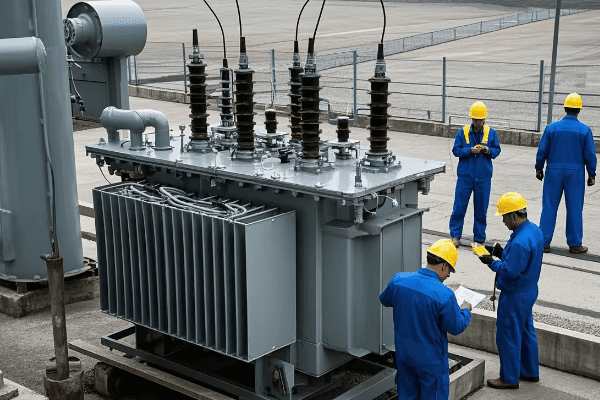
Let’s dive into the world of transformer maintenance and diagnostics. This knowledge is crucial for engineers responsible for keeping our power grid running smoothly.
Routine Maintenance
-
Visual Inspections
- Check for oil leaks, rust, or damage
- Inspect bushings and accessories
-
Oil Testing
- Regular sampling and analysis
- Check for moisture, acidity, and dielectric strength
-
Cooling System Maintenance
- Clean radiators and check fans
- Maintain oil pumps if present
Electrical Testing
-
Insulation Resistance Tests
- Measure winding insulation health
- Track trends over time
-
Power Factor Tests
- Assess overall insulation condition
- Detect contamination or deterioration
-
Turns Ratio Tests
- Verify transformer ratio
- Detect shorted turns
Advanced Diagnostics
-
Dissolved Gas Analysis (DGA)
- Analyze gases dissolved in oil
- Identify developing faults
-
Partial Discharge Monitoring
- Detect insulation deterioration
- Locate potential failure points
-
Frequency Response Analysis (FRA)
- Assess mechanical integrity of windings
- Detect deformation from short circuits
| Maintenance Activity | Frequency | Purpose |
|---|---|---|
| Visual Inspection | Monthly | Detect external issues |
| Oil Testing | Annually | Assess oil condition |
| Electrical Testing | 1-3 years | Verify electrical integrity |
| DGA | 6-12 months | Detect incipient faults |
| FRA | After events | Check for mechanical changes |
Maintaining large power transformers is a complex but crucial task. These machines are the workhorses of our power grid, and their reliability is paramount. I’ve seen firsthand how proper maintenance can extend the life of a transformer well beyond its design life, while neglect can lead to premature failure.
Let’s start with routine maintenance. Regular visual inspections are the first line of defense. I always tell my team, "Your eyes are your best diagnostic tool." Checking for oil leaks, signs of rust, or damage to bushings and accessories can catch problems before they become serious. I remember a case where a small oil leak, caught during a routine inspection, led us to discover a developing gasket problem that could have caused a major failure if left unchecked.
Oil testing is another crucial aspect of routine maintenance. Transformer oil serves as both an insulator and a coolant, so its condition is critical to the transformer’s health. Regular sampling and analysis can reveal a lot about the transformer’s condition. We check for moisture content, acidity, and dielectric strength. I’ve seen cases where oil analysis revealed the early stages of insulation breakdown, allowing us to plan interventions before a failure occurred.
Cooling system maintenance is often overlooked, but it’s vital for the transformer’s longevity. Dirty radiators can significantly reduce cooling efficiency, leading to higher operating temperatures and accelerated aging of the insulation. I always emphasize the importance of keeping cooling systems in top shape.
Moving on to electrical testing, insulation resistance tests are a staple of transformer maintenance. These tests measure the health of the winding insulation. By tracking these measurements over time, we can detect trends that might indicate developing problems. I remember a case where a gradual decrease in insulation resistance alerted us to moisture ingress in a transformer, allowing us to take corrective action before any damage occurred.
Power factor tests (also known as dissipation factor tests) give us insight into the overall condition of the insulation system. These tests can detect contamination or deterioration that might not be apparent from other tests. I’ve found these tests particularly useful for assessing the condition of bushings, which are critical components often overlooked in maintenance programs.
Turns ratio tests are important for verifying the transformer’s ratio and detecting any shorted turns in the windings. A change in turns ratio can indicate serious problems within the transformer. I always pay close attention to these results, as even small changes can be significant.
In the realm of advanced diagnostics, Dissolved Gas Analysis (DGA) is perhaps the most powerful tool we have. By analyzing the gases dissolved in the transformer oil, we can detect a wide range of developing faults. Different types of faults produce different gas signatures. For example, partial discharges tend to produce hydrogen and methane, while arcing produces acetylene. I’ve seen cases where DGA detected developing faults months before they would have caused a failure.
Partial Discharge (PD) monitoring is another advanced technique that’s becoming more common. PD activity can indicate insulation deterioration long before it leads to a failure. Modern PD monitoring systems can even help locate the source of the discharges within the transformer. This can be invaluable for planning targeted interventions.
Frequency Response Analysis (FRA) is a technique I find particularly interesting. It’s used to assess the mechanical integrity of the transformer windings. By comparing FRA results over time, or before and after a significant event like a short circuit, we can detect changes in the winding geometry that could lead to failures. I remember a case where FRA revealed winding deformation in a transformer that had been subjected to a severe through-fault, allowing us to take it out of service before a catastrophic failure occurred.
One trend I’m excited about is the move towards online monitoring and diagnostics. With sensors constantly monitoring key parameters like dissolved gases, partial discharges, and temperatures, we can get real-time insights into transformer health. This enables condition-based maintenance, where we can intervene precisely when needed, rather than relying on fixed maintenance schedules.
Artificial intelligence and machine learning are also making inroads into transformer maintenance and diagnostics. These technologies can analyze vast amounts of data from multiple sources, potentially identifying subtle patterns that human experts might miss. I’ve been involved in pilot projects using AI for transformer health assessment, and the results are promising.
One aspect of maintenance that I always emphasize is the importance of good record-keeping. Tracking test results, maintenance activities, and operating conditions over time is crucial for effective asset management. I’ve seen cases where historical data provided key insights into developing problems.
It’s also worth noting that maintenance strategies may need to be adjusted based on the transformer’s age and condition. An older transformer might require more frequent inspections and tests compared to a newer unit. I always advocate for a tailored approach to maintenance, taking into account each transformer’s unique characteristics and operating history.
Environmental factors can also impact maintenance needs. For example, transformers in coastal areas might require more frequent inspections for corrosion, while those in areas with high pollution levels might need more frequent insulator cleaning.
As we push towards more reliable and efficient power grids, the importance of effective transformer maintenance and diagnostics only grows. By combining traditional methods with advanced technologies, we can ensure these critical assets continue to perform reliably for decades to come.
Efficiency and Loss Reduction in Large Power Transformers: Modern Approaches?
Are you concerned about energy waste in power systems? Large power transformers, while highly efficient, still account for significant losses in our power grids. Modern approaches are constantly evolving to tackle this challenge.
Improving efficiency in large power transformers involves advanced core materials, optimized winding designs, and better cooling systems. Modern approaches include the use of amorphous metals, hexaformer technology, and advanced insulation materials. These innovations can significantly reduce both no-load and load losses.
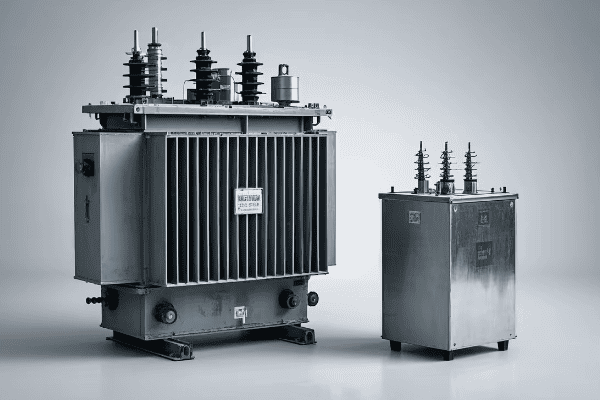
Let’s explore the cutting-edge approaches to improving efficiency and reducing losses in large power transformers. This knowledge is crucial for engineers working on grid optimization and energy conservation.
Core Loss Reduction
-
Advanced Core Materials
- Amorphous metal cores
- High-grade grain-oriented electrical steel
-
Core Construction Techniques
- Step-lap core joints
- Laser scribed laminations
-
Flux Distribution Optimization
- Hexaformer technology
- Distributed gap cores
Winding Loss Reduction
-
Conductor Optimization
- Continuously transposed conductors (CTC)
- Parallel strand conductors
-
Winding Design
- Interleaved windings
- Optimal coil geometry
-
Eddy Current Reduction
- Subdivided conductors
- Magnetic shields
Other Efficiency Improvements
-
Insulation Systems
- High-temperature insulation materials
- Ester-based insulating fluids
-
Cooling System Optimization
- Advanced radiator designs
- Directed oil flow techniques
-
Smart Transformer Technologies
- Online monitoring for optimal operation
- Load-adaptive control systems
| Approach | Target Loss | Potential Improvement |
|---|---|---|
| Amorphous Cores | No-load loss | Up to 70% reduction |
| CTC Windings | Load loss | 10-15% reduction |
| Ester Fluids | Cooling efficiency | 10% improvement |
| Hexaformer Design | Both losses | 20-30% total loss reduction |
Improving the efficiency of large power transformers is a fascinating field that combines materials science, electromagnetic theory, and thermal management. Throughout my career, I’ve seen remarkable advancements in this area, and the pace of innovation shows no signs of slowing.
Let’s start with core loss reduction. The transformer core is where no-load losses occur, primarily due to hysteresis and eddy currents in the core material. Traditional silicon steel cores have been the standard for decades, but new materials are pushing the boundaries of efficiency.
Amorphous metal cores are perhaps the most exciting development I’ve seen in this area. These materials can reduce no-load losses by up to 70% compared to conventional silicon steel. I remember visiting a substation that had just installed a large transformer with an amorphous core. The reduction in humming noise was noticeable, a tangible sign of the reduced core losses.
Core construction techniques have also evolved. Step-lap core joints, where the laminations are stacked in a stair-step pattern at the corners, significantly reduce losses at the joints. Laser scribing of laminations is another technique that’s gaining traction. By creating microscopic grooves in the laminations, we can reduce eddy currents without significantly impacting the core’s magnetic properties.
One innovative approach I’m particularly excited about is hexaformer technology. This involves shaping the core cross-section as a hexagon rather than the traditional rectangle. This optimizes flux distribution and can lead to significant reductions in both core and winding losses.
Moving on to winding loss reduction, the use of continuously transposed conductors (CTC) has been a game-changer. These conductors reduce circulating currents and eddy current losses in the windings. I’ve seen cases where the use of CTC reduced winding losses by 10-15% compared to traditional conductors.
Winding design itself has seen innovations. Interleaved windings, where sections of the primary and secondary windings are alternated, can reduce leakage reactance and improve efficiency. Optimal coil geometry, determined through advanced computer simulations, can minimize losses while maintaining the necessary electrical characteristics.
Insulation systems play a crucial role in efficiency as well. High-temperature insulation materials allow transformers to operate at higher temperatures without degradation, potentially reducing the size and cost of cooling systems. I’ve been following the development of ester-based insulating fluids with great interest. These fluids not only have better thermal characteristics than traditional mineral oil, but they’re also more environmentally friendly.
Cooling system optimization is another area where we’re seeing improvements. Advanced radiator designs and directed oil flow techniques can improve heat dissipation, allowing transformers to operate more efficiently under heavy loads.
One trend I’m particularly excited about is the development of smart transformer technologies. By incorporating online monitoring and adaptive control systems, we can operate transformers at their optimal efficiency point under varying load conditions. I’ve been involved in pilot projects using these technologies, and the potential for energy savings is significant.
It’s worth noting that improving efficiency often involves trade-offs. For example, amorphous core materials, while highly efficient, are more expensive and can be more challenging to work with than traditional silicon steel. Part of the engineer’s job is to balance these factors to find the optimal solution for each application.
The push for higher efficiency in large power transformers is driven not just by economic factors, but also by environmental concerns. As we strive to reduce carbon emissions from power generation, every percentage point of efficiency improvement in our transmission and distribution systems becomes crucial.
Looking to the future, I’m excited about the potential of high-temperature superconducting transformers. While still in the experimental stage, these could potentially eliminate winding losses altogether. It’s innovations like these that keep me passionate about this field.
As we continue to push the boundaries of transformer efficiency, the benefits ripple through the entire power system. More efficient transformers mean less wasted energy, lower operating costs, and a reduced environmental footprint. It’s a goal worth pursuing, and one that will keep engineers like us busy for years to come.
Applications of Large Power Transformers in Power Generation, Transmission, and Industrial Settings?
Have you ever wondered where those massive transformers you see in substations are actually used? Large power transformers play crucial roles across our entire power system, from generation to end-use.
Large power transformers are vital in power generation plants, transmission substations, and heavy industries. They step up voltage for efficient long-distance transmission, step it down for distribution, and provide the specific power needs for industrial processes. Their applications range from nuclear power plants to steel mills.
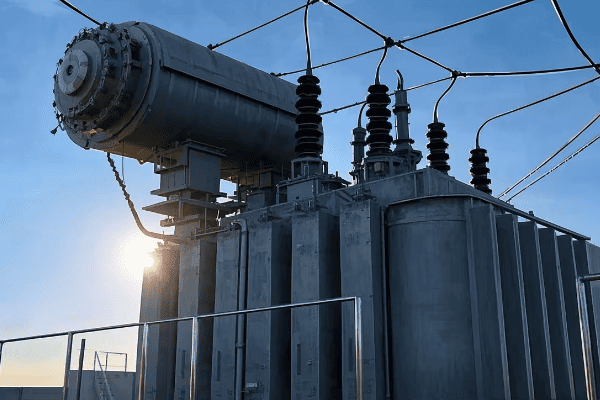
Let’s explore the diverse applications of large power transformers across different sectors. Understanding these applications is crucial for engineers working in power systems and industrial design.
Power Generation Applications
-
Generator Step-Up Transformers
- Increase voltage from generator output to transmission levels
- Typically located at power plants
-
Auxiliary Transformers
- Supply power for plant operations
- Critical for plant start-up and shutdown
-
Excitation Transformers
- Provide power for generator excitation systems
- Essential for voltage control
Transmission and Distribution Applications
-
Step-Up Substations
- Increase voltage for long-distance transmission
- Often located near power plants
-
Step-Down Substations
- Reduce voltage for distribution networks
- Located near population centers
-
Interconnecting Transformers
- Link different voltage levels within the grid
- Enable power flow between different networks
Industrial Applications
-
Arc Furnace Transformers
- Supply high current at low voltage for steel production
- Handle extreme load fluctuations
-
Rectifier Transformers
- Convert AC to DC for industrial processes
- Used in aluminum smelting, chlorine production
-
Traction Transformers
- Power electric railway systems
- Designed for mobile applications
| Application | Typical Size Range | Key Characteristics |
|---|---|---|
| Generator Step-Up | 100-1500 MVA | High voltage ratio, robust design |
| Transmission Substation | 100-1000 MVA | High voltage, often autotransformers |
| Arc Furnace | 50-150 MVA | Low secondary voltage, high current |
| Traction | 5-30 MVA | Compact design, mobile application |
The applications of large power transformers span the entire electrical power system, from generation to end-use. Each application has its unique requirements and challenges, making transformer design a fascinating field of engineering.
Let’s start with power generation. Generator step-up transformers are some of the largest and most critical transformers in the power system. They take the output from generators, typically at 15-25 kV, and step it up to transmission voltages of 230 kV, 345 kV, or even higher. I remember visiting a nuclear power plant and being awe-struck by the size of these transformers. They’re truly massive machines, often custom-designed for each power plant.
Auxiliary transformers in power plants are less glamorous but equally critical. They provide power for all the plant’s systems, from cooling pumps to control systems. In many cases, they need to be able to handle the high inrush currents associated with starting large motors. I once worked on a project to upgrade the auxiliary transformers in a coal-fired power plant. The complexity of ensuring uninterrupted power for all plant systems during the upgrade was a significant challenge.
In transmission and distribution, large power transformers are the backbone of our grid infrastructure. Step-up substations near power plants use these transformers to increase voltage for long-distance transmission. The higher the voltage, the lower the current for a given power level, which reduces transmission losses. I’ve seen 765 kV transformers that can handle over 1000 MVA – enough to power a small city.
Step-down substations use large transformers to reduce voltage to levels suitable for local distribution. These are often autotransformers, which can be more efficient and economical for this application. I remember a project where we replaced several smaller transformers with a single large autotransformer. The improvement in substation efficiency was significant.
Interconnecting transformers play a crucial role in modern grid systems. They allow power to flow between networks operating at different voltages, enhancing grid flexibility and reliability. With the increasing integration of renewable energy sources, these transformers are becoming even more important in managing power flow across the grid.
In industrial settings, large power transformers take on specialized roles. Arc furnace transformers are a fascinating application. They need to supply enormous currents at relatively low voltages, often with extreme load fluctuations as the arc is struck and maintained. I once visited a steel mill and was impressed by the robust design of these transformers, able to withstand the harsh electrical and physical environment of a melt shop.
Rectifier transformers are another specialized industrial application. These transformers supply power to large DC systems, such as those used in aluminum smelting or chlorine production. They need to handle the harmonics and other power quality issues associated with large rectifier loads. I’ve worked on projects involving these transformers, and the challenges of managing harmonic distortion and ensuring proper cooling are significant.
Traction transformers for electric railway systems are a unique application. These transformers need to be compact and lightweight while still handling the high power demands of electric locomotives. They also need to withstand the vibrations and temperature fluctuations associated with mobile operation. It’s a challenging design problem that pushes the boundaries of transformer technology.
One trend I’m seeing is the increasing use of large power transformers in renewable energy applications. Wind farms and solar plants often use these transformers to step up voltage for grid connection. The challenge here is designing transformers that can handle the variable output of renewable sources while maintaining high efficiency.
Another interesting development is the use of large power transformers in HVDC (High Voltage Direct Current) converter stations. As we move towards more interconnected grids and long-distance power transmission, HVDC is becoming increasingly important. The transformers used in these applications need to handle the unique stresses associated with AC-DC conversion.
The diversity of applications for large power transformers highlights the versatility and importance of these machines in our power systems. From enabling efficient power transmission to powering industrial processes, large transformers are truly the workhorses of our electrical infrastructure. As we move towards a more electrified future, with increasing renewable integration and grid interconnection, the role of these transformers will only become more critical.
Conclusion
Large power transformers are critical components in our electrical infrastructure. From power generation to industrial applications, they enable efficient energy transmission and use. Understanding their design, operation, and maintenance is crucial for electrical engineers in various fields.
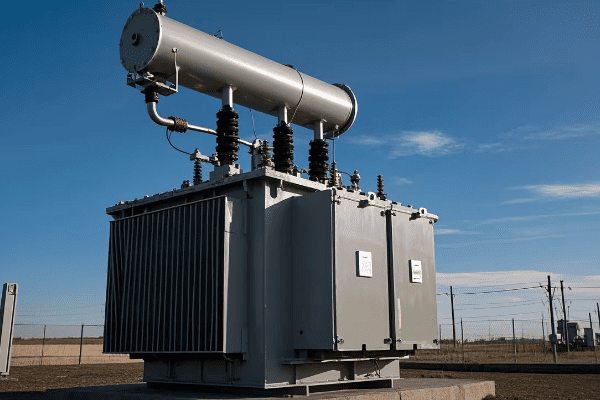
Have you ever wondered how electricity travels from power plants to your home? The answer lies in power transformers. These devices are crucial but often misunderstood.
Power transformers are essential devices in electrical systems. They change voltage levels, allowing efficient power transmission over long distances. Understanding how they work is key for anyone interested in electricity or engineering.
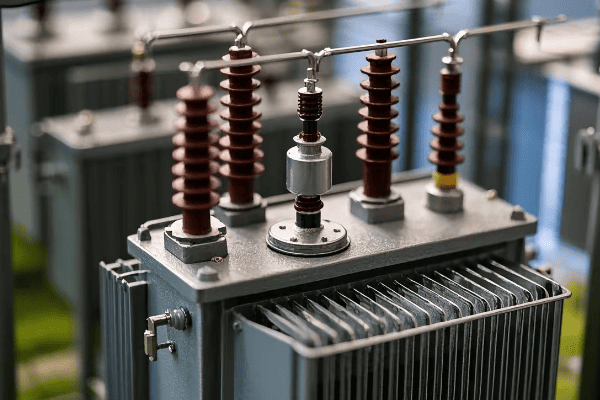
In this guide, I’ll break down the complexities of power transformers. We’ll explore their basic concepts, working principles, types, construction, and applications. Let’s dive in and demystify these important devices.
What is a Power Transformer: Basic Concepts and Components?
Are you confused about what a power transformer really is? You’re not alone. Many people find this concept challenging, but it’s simpler than you might think.
A power transformer is an electrical device that transfers energy between circuits using electromagnetic induction. It has two main parts: the primary winding and the secondary winding, both wrapped around a magnetic core.

Let’s dive deeper into the world of power transformers. Understanding their basic concepts and components is crucial for grasping how our electrical systems work.
Key Components
-
Core
- Made of laminated steel sheets
- Provides a path for magnetic flux
-
Windings
- Primary winding: Connected to the power source
- Secondary winding: Connected to the load
- Made of copper or aluminum wire
-
Insulation
- Prevents short circuits between windings and core
- Often uses oil or special paper
Basic Concepts
-
Turns Ratio
- Ratio of turns in primary to secondary winding
- Determines voltage transformation
-
Electromagnetic Induction
- Principle behind transformer operation
- Changing magnetic field induces voltage in nearby conductor
| Component | Function | Material |
|---|---|---|
| Core | Magnetic flux path | Laminated steel |
| Primary Winding | Receives input power | Copper/Aluminum wire |
| Secondary Winding | Delivers output power | Copper/Aluminum wire |
| Insulation | Prevents short circuits | Oil/Paper |
Understanding these components and concepts is essential for grasping how power transformers work. The core provides a path for the magnetic flux, which is crucial for the energy transfer process. The windings are where the actual transformation of voltage occurs, with the number of turns in each winding determining the voltage change.
The insulation is a critical component that ensures the safe operation of the transformer. Without proper insulation, the high voltages involved could lead to dangerous short circuits or electrical breakdowns.
The turns ratio is a fundamental concept in transformer theory. It’s this ratio that allows transformers to step voltage up or down. For example, if the secondary winding has twice as many turns as the primary, the output voltage will be twice the input voltage.
Electromagnetic induction, discovered by Michael Faraday in 1831, is the key principle behind transformer operation. When an alternating current flows through the primary winding, it creates a changing magnetic field in the core. This changing field then induces a voltage in the secondary winding.
In my early days of studying electrical engineering, I found these concepts challenging. But once I understood how they all work together, it opened up a whole new world of understanding about our electrical systems.
The Principle of Electromagnetic Induction: The Heart of Transformer Operation?
Have you ever wondered how a transformer can change voltage without any moving parts? The secret lies in a principle discovered nearly 200 years ago: electromagnetic induction.
Electromagnetic induction is the core principle behind transformer operation. When a changing magnetic field passes through a conductor, it induces a voltage. This principle allows transformers to transfer energy between circuits and change voltage levels.
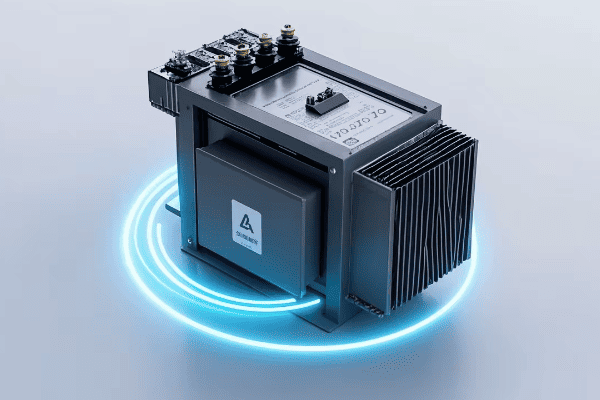
Let’s explore this fascinating principle in more detail. Understanding electromagnetic induction is key to grasping how transformers work and why they’re so important in our electrical systems.
Faraday’s Law of Induction
-
Changing Magnetic Field
- Creates an electromotive force (EMF)
- Rate of change affects induced voltage
-
Lenz’s Law
- Induced current opposes the change causing it
- Ensures energy conservation
Application in Transformers
-
Primary Winding
- Alternating current creates changing magnetic field
- Field strength varies with input voltage and frequency
-
Magnetic Core
- Concentrates and directs magnetic field
- Improves coupling between windings
-
Secondary Winding
- Changing field induces voltage
- Voltage depends on number of turns and rate of field change
| Concept | Description | Importance in Transformers |
|---|---|---|
| Changing Magnetic Field | Varying field strength over time | Creates the basis for energy transfer |
| Induced Voltage | Voltage created by changing field | Allows voltage transformation |
| Mutual Inductance | Interaction between two nearby coils | Enables energy transfer between windings |
Electromagnetic induction is truly the heart of transformer operation. When an alternating current flows through the primary winding, it creates a changing magnetic field. This field is concentrated and directed by the magnetic core, which is why transformer cores are made of materials with high magnetic permeability like silicon steel.
The changing magnetic field then passes through the secondary winding. According to Faraday’s Law, this changing field induces a voltage in the secondary winding. The magnitude of this induced voltage depends on two main factors: the rate of change of the magnetic field and the number of turns in the secondary winding.
This is where the concept of turns ratio becomes crucial. If the secondary winding has more turns than the primary, the induced voltage will be higher than the input voltage, creating a step-up transformer. Conversely, if the secondary has fewer turns, we get a step-down transformer.
Lenz’s Law, which is a consequence of the conservation of energy, ensures that the induced current in the secondary winding creates a magnetic field that opposes the change in the original field. This opposition is what creates the "back EMF" in the primary winding, which limits the current draw when the secondary circuit is open.
I remember being fascinated by this concept during my studies. The idea that we could transfer energy and change voltage levels without any moving parts seemed almost magical. It’s this elegant application of a fundamental physical principle that makes transformers so efficient and reliable.
Understanding electromagnetic induction not only helps us grasp how transformers work, but it also provides insight into many other electrical devices and phenomena. From electric motors to wireless charging, this principle is at work all around us, quietly enabling much of our modern technology.
Types of Power Transformers: Step-Up, Step-Down, and Isolation Transformers?
Are you confused about the different types of power transformers? You’re not alone. Many people struggle to understand the distinctions, but knowing these types is crucial for anyone working with electrical systems.
Power transformers come in three main types: step-up, step-down, and isolation transformers. Step-up transformers increase voltage, step-down transformers decrease it, and isolation transformers transfer power between circuits without changing voltage.

Let’s explore each type of power transformer in more detail. Understanding these distinctions is key to grasping how our power systems work and how electricity is managed from generation to consumption.
Step-Up Transformers
-
Function
- Increase voltage for long-distance transmission
- Reduce current to minimize power losses
-
Applications
- Power plants
- Substations at beginning of transmission lines
Step-Down Transformers
-
Function
- Decrease voltage for distribution and end-use
- Increase current for power delivery
-
Applications
- Substations near populated areas
- Pole-mounted transformers in neighborhoods
Isolation Transformers
-
Function
- Transfer power between circuits without direct connection
- Provide safety and noise reduction
-
Applications
- Medical equipment
- Audio systems
| Type | Voltage Change | Primary Use | Common Locations |
|---|---|---|---|
| Step-Up | Increases | Power transmission | Power plants, substations |
| Step-Down | Decreases | Power distribution | Substations, neighborhoods |
| Isolation | No change | Safety, noise reduction | Hospitals, recording studios |
Each type of power transformer plays a crucial role in our electrical systems. Step-up transformers are essential for efficient power transmission over long distances. By increasing the voltage, they allow power companies to reduce the current in transmission lines. This is important because power loss in a conductor is proportional to the square of the current. So, by stepping up the voltage and reducing the current, we can significantly reduce transmission losses.
I remember visiting a power plant early in my career and being amazed by the size of the step-up transformers. These massive devices were taking the 20,000 volts produced by the generators and stepping it up to 400,000 volts for long-distance transmission. It was a vivid illustration of the importance of these devices in our power grid.
Step-down transformers, on the other hand, are what bring that high-voltage power down to levels we can use in our homes and businesses. You’ve probably seen these as large cylinders on poles in your neighborhood or as pad-mounted boxes in newer developments. These transformers take the several thousand volts in distribution lines and step it down to the 120/240 volts we use in our homes.
Isolation transformers are a bit different. While they don’t change voltage levels, they serve a crucial safety function by providing galvanic isolation between circuits. This means there’s no direct electrical connection between the primary and secondary sides of the transformer. This is particularly important in medical settings, where it can protect patients from electrical faults.
I once worked on a project installing isolation transformers in a hospital’s operating rooms. The extra layer of safety they provided was crucial in an environment where even a small electrical fault could have serious consequences.
Understanding these different types of transformers and their applications is essential for anyone working in electrical engineering or related fields. Each type serves a specific purpose, and together they form the backbone of our electrical distribution system, ensuring that power is transmitted efficiently and used safely.
Power Transformer Construction: Core, Windings, and Insulation?
Have you ever wondered what’s inside a power transformer? The construction of these devices is a marvel of engineering, combining simple principles with precise design. Let’s unpack the mystery.
Power transformers are built with three main components: the core, windings, and insulation. The core provides a path for magnetic flux, the windings transfer energy, and the insulation prevents short circuits and manages heat.
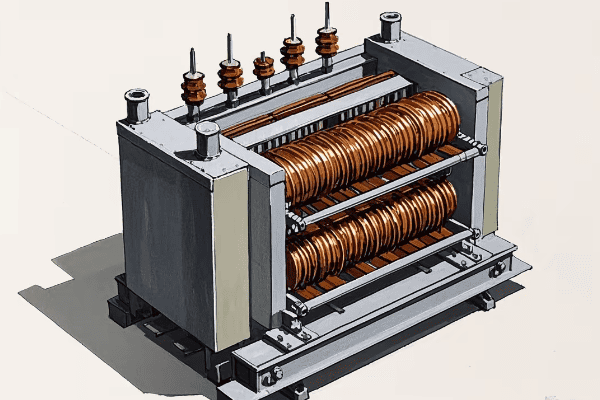
Let’s dive deeper into the construction of power transformers. Understanding how these components work together is key to grasping the efficiency and reliability of these crucial devices.
Core Construction
-
Material
- Silicon steel laminations
- Grain-oriented for better magnetic properties
-
Types
- Core-type: Windings surround the core
- Shell-type: Core surrounds the windings
-
Assembly
- Stacked in layers to reduce eddy currents
- Clamped tightly to minimize vibration
Winding Construction
-
Materials
- Copper: Higher conductivity, more expensive
- Aluminum: Lighter, less expensive
-
Types
- Disc windings: For high-voltage applications
- Helical windings: For low-voltage, high-current applications
-
Arrangement
- Concentric: One winding inside the other
- Sandwich: Alternating primary and secondary discs
Insulation System
-
Solid Insulation
- Paper wrapping on conductors
- Pressboard barriers between windings
-
Liquid Insulation
- Mineral oil: Most common
- Synthetic esters: More environmentally friendly
-
Gas Insulation
- SF6 (Sulfur Hexafluoride): For special applications
| Component | Function | Common Materials |
|---|---|---|
| Core | Magnetic flux path | Silicon steel laminations |
| Windings | Energy transfer | Copper or aluminum wire |
| Insulation | Prevent short circuits, manage heat | Paper, oil, pressboard |
The construction of a power transformer is a fascinating blend of electrical and mechanical engineering. Each component plays a crucial role in the transformer’s operation and efficiency.
The core is the magnetic heart of the transformer. It’s typically made from thin laminations of silicon steel, each insulated from the others to reduce eddy currents. The grain orientation of the steel is crucial – it’s aligned to provide the easiest path for magnetic flux. This attention to detail in the core construction is what allows transformers to operate with such high efficiency.
I remember visiting a transformer manufacturing plant and being amazed at the precision involved in assembling the core. Each lamination was carefully stacked and clamped to ensure minimal gaps and vibration. It’s this level of care that ensures transformers can operate reliably for decades.
The windings are where the actual voltage transformation occurs. The choice between copper and aluminum is often a balance between performance and cost. Copper has better conductivity, but aluminum is lighter and less expensive. The type of winding – disc, helical, or layer – depends on the voltage and current requirements of the transformer.
The arrangement of the windings is also crucial. In a core-type transformer, the windings are wrapped around the legs of the core. In a shell-type, the core envelops the windings. Each design has its advantages, and the choice often depends on the specific application and size of the transformer.
Insulation is the unsung hero of transformer construction. It not only prevents short circuits between windings and between windings and the core, but it also plays a crucial role in heat management. The paper insulation wrapped around the conductors is impregnated with oil, which serves both as an insulator and a coolant.
I once worked on a project to retrofit an old transformer with a new insulation system. The improvement in performance and lifespan was remarkable, highlighting just how important proper insulation is to a transformer’s operation.
The liquid insulation, typically mineral oil, serves multiple purposes. It insulates, it cools, and it even provides valuable diagnostic information. By analyzing the oil, engineers can detect potential problems before they become serious.
Understanding the construction of power transformers is crucial for anyone working in the field of electrical engineering. It’s not just about the electrical principles – the mechanical design, the materials used, and the assembly techniques all play a part in creating these remarkably efficient and reliable devices that form the backbone of our electrical grid.
Applications and Importance of Power Transformers in Electrical Systems?
Have you ever stopped to think about how electricity gets from power plants to your home? Power transformers are the unsung heroes of this journey. They’re everywhere in our electrical systems, but their importance is often overlooked.
Power transformers are crucial in electrical systems for voltage conversion, power distribution, and electrical isolation. They enable efficient long-distance power transmission, safe voltage levels for end-users, and protect equipment from power surges and faults.

Let’s explore the wide-ranging applications and critical importance of power transformers in our electrical systems. Understanding this will give you a new appreciation for these devices that silently keep our world powered.
Power Generation and Transmission
-
Step-Up Transformers at Power Plants
- Increase voltage for long-distance transmission
- Reduce current and power losses
-
Substation Transformers
- Step down voltage for distribution networks
- Enable power routing and system protection
Industrial Applications
-
Arc Furnace Transformers
- Provide high current at low voltage for steel production
- Handle extreme load fluctuations
-
Rectifier Transformers
- Supply power to DC systems in industries
- Used in electrolysis processes, like aluminum production
Commercial and Residential Use
-
Distribution Transformers
- Step down voltage to usable levels for buildings
- Provide isolation between utility and customer systems
-
Isolation Transformers
- Protect sensitive equipment from power disturbances
- Used in hospitals, data centers, and audio equipment
| Application | Transformer Type | Key Function |
|---|---|---|
| Power Plants | Step-Up | Increase voltage for transmission |
| Substations | Step-Down | Reduce voltage for distribution |
| Steel Mills | Arc Furnace | Provide high current at low voltage |
| Neighborhoods | Distribution | Supply usable voltage to homes |
| Hospitals | Isolation | Protect sensitive medical equipment |
The applications of power transformers are vast and varied, touching almost every aspect of our electrified world. Their importance cannot be overstated – without transformers, our modern electrical systems simply wouldn’t be possible.
In power generation and transmission, transformers play a crucial role. At power plants, step-up transformers increase the voltage to levels suitable for long-distance transmission, often to hundreds of thousands of volts. This high voltage is what makes it economically feasible to transmit power over long distances. Without these transformers, we’d need impossibly thick cables to carry the current, or we’d lose most of the power to heat in the transmission lines.
I once visited a major substation where transmission voltages of 500kV were being stepped down to 132kV for regional distribution. The size and complexity of these transformers were awe-inspiring. It really drove home how crucial these devices are in managing our power grid.
In industrial applications, transformers take on specialized roles. Arc furnace transformers, for example, are designed to handle the extreme load fluctuations in steel production. These transformers need to supply enormous currents at relatively low voltages, and they must do so while withstanding the harsh electrical environment of an arc furnace.
Rectifier transformers are another specialized type, used in industries that require large amounts of DC power. I’ve seen these in action in aluminum smelters, where they supply the power for the electrolysis process. The ability of these transformers to handle high currents and non-linear loads is crucial for these industrial processes.
In commercial and residential settings, distribution transformers are the workhorses that bring power to our homes and businesses. These are the transformers you might see mounted on poles or in green boxes in your neighborhood. They take the medium voltage from distribution lines (typically 4-34kV) and step it down to the 120/240V we use in our homes.
Isolation transformers hold a special place in my heart. Early in my career, I worked on a project installing these in a hospital’s operating rooms. These transformers provide a crucial safety function by isolating sensitive medical equipment from the main power supply. This not only protects the equipment from power disturbances but, more importantly, protects patients from potential electrical faults.
The importance of power transformers extends beyond just moving electricity around. They play a crucial role in system protection and power quality management. By providing points of isolation in the grid, transformers allow for the implementation of various protection schemes that keep our power system stable and reliable.
Moreover, transformers are key to integrating renewable energy sources into our grid. Wind farms and solar plants often use specialized transformers to match their output to grid requirements. As we move towards a more sustainable energy future, the role of transformers in managing these diverse and distributed energy sources will only grow in importance.
In data centers, transformers are critical for maintaining the uninterrupted power supply that keeps our digital world running. They not only provide the necessary voltage levels but also help in managing power quality and protecting sensitive equipment from disturbances.
Even in our homes, small transformers are everywhere – in our phone chargers, laptops, and various electronic devices. These might not be as impressive as their larger cousins, but they perform the same fundamental function of voltage conversion and electrical isolation.
The ubiquity and importance of power transformers in our electrical systems cannot be overstated. From enabling the long-distance transmission of power to ensuring the safe and efficient use of electricity in our homes and industries, transformers are truly the unsung heroes of our electrified world.
Conclusion
Power transformers are the backbone of our electrical systems. They enable efficient power transmission, safe distribution, and countless applications across industries. Understanding their operation is key to appreciating our modern electrified world.
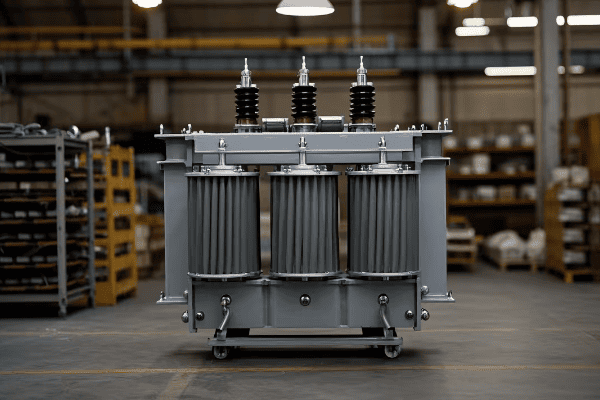
Are you struggling to understand three-phase power transformers? You’re not alone. Many engineers find this topic challenging, but it’s crucial for modern power systems.
Three-phase power transformers are essential components in electrical power systems. They efficiently transfer electrical energy between circuits, stepping voltage up or down while maintaining a constant frequency. Understanding their principles is key for any electrical engineer.
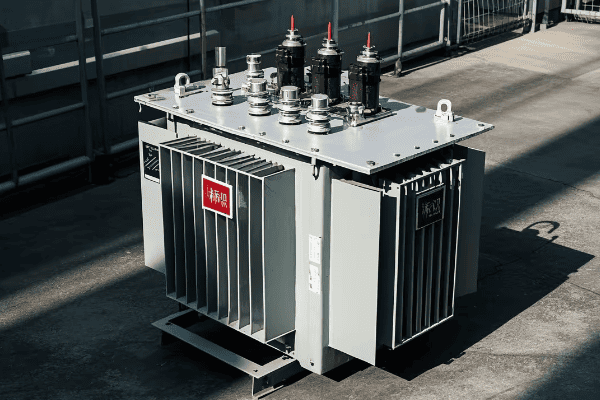
In this guide, I’ll break down the complexities of three-phase power transformers. We’ll explore their fundamental principles, design, installation, performance, and real-world applications. Let’s dive in and demystify this critical technology.
Fundamental Principles of Three Phase Power Transformers?
Have you ever wondered how three-phase power transformers work? It’s a question that puzzled me early in my career, but understanding these principles is crucial for any electrical engineer.
Three-phase power transformers operate on the principle of electromagnetic induction. They consist of three sets of primary and secondary windings, each corresponding to one phase of the three-phase system. This configuration allows for efficient power transfer and voltage transformation.
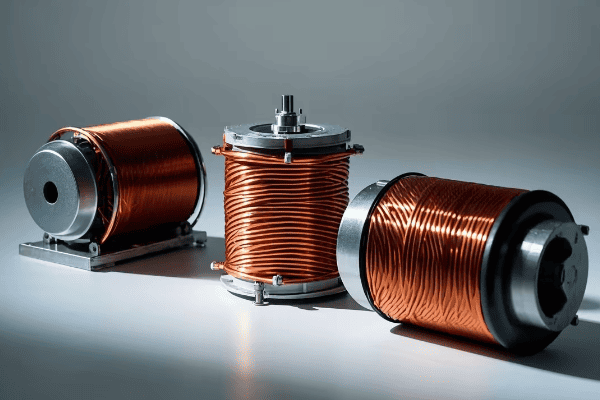
Let’s delve deeper into the fundamental principles of three-phase power transformers. This knowledge is essential for designing, operating, and maintaining these critical components of our power systems.
Core Concepts
-
Electromagnetic Induction
- Faraday’s Law: The basis of transformer operation
- Mutual inductance between primary and secondary windings
-
Three-Phase System
- 120-degree phase shift between phases
- Balanced load distribution
-
Transformer Ratios
- Turns ratio: Relationship between primary and secondary windings
- Voltage ratio: Step-up or step-down transformation
| Concept | Description | Importance |
|---|---|---|
| Electromagnetic Induction | The process by which a changing magnetic field induces a voltage in a conductor | Forms the basis of transformer operation |
| Three-Phase System | A power system with three alternating currents phase-shifted by 120 degrees | Allows for more efficient power transmission |
| Transformer Ratios | The relationship between primary and secondary windings and voltages | Determines the transformer’s voltage transformation capability |
Winding Configurations
Three-phase transformers can have different winding configurations, each with its own advantages:
- Delta-Delta (Δ-Δ)
- Wye-Wye (Y-Y)
- Delta-Wye (Δ-Y)
- Wye-Delta (Y-Δ)
Each configuration has specific applications and benefits. For example, Delta-Wye is often used for stepping up voltage in power distribution systems, while Wye-Delta is common in industrial applications for motor starting.
Magnetic Circuit
The magnetic circuit is a crucial aspect of three-phase transformer design:
-
Core Types
- Three-legged core
- Five-legged core
- Shell type
-
Core Materials
- Silicon steel
- Amorphous metals
The choice of core type and material significantly impacts the transformer’s efficiency and performance. For instance, amorphous metal cores can reduce no-load losses by up to 70% compared to traditional silicon steel cores.
Understanding these fundamental principles is essential for any electrical engineer working with power systems. They form the foundation for more advanced concepts in transformer design and operation.
Design and Construction of Three Phase Power Transformers?
Have you ever wondered what goes into designing and building a three-phase power transformer? It’s a complex process that requires careful consideration of numerous factors to ensure efficiency, reliability, and safety.
Designing and constructing three-phase power transformers involves careful selection of materials, precise winding techniques, and robust insulation systems. Key considerations include core design, winding arrangement, cooling methods, and protective features to ensure optimal performance and longevity.

Let’s explore the intricate process of designing and constructing three-phase power transformers. This knowledge is crucial for engineers involved in power system planning and equipment specification.
Core Design
The core is the heart of the transformer:
-
Material Selection
- Grain-oriented silicon steel: Most common
- Amorphous metal: Higher efficiency, but more expensive
-
Core Construction
- Stacked core: Easier to manufacture
- Wound core: Better performance, especially for smaller transformers
-
Core Shape
- Three-legged: Standard for three-phase transformers
- Five-legged: Better for unbalanced loads
| Core Type | Advantages | Disadvantages |
|---|---|---|
| Stacked Core | Easier to manufacture, lower cost | Higher core losses |
| Wound Core | Lower core losses, better performance | More complex manufacturing, higher cost |
| Three-legged | Compact design, suitable for most applications | Less effective for unbalanced loads |
| Five-legged | Better handling of unbalanced loads | Larger size, higher material cost |
Winding Design
Proper winding design is crucial for transformer performance:
-
Conductor Material
- Copper: Higher conductivity, but more expensive
- Aluminum: Lower cost, but larger size for same capacity
-
Winding Types
- Disc windings: Good for high-voltage applications
- Helical windings: Suitable for high-current, low-voltage applications
- Layer windings: Used in smaller transformers
-
Insulation
- Paper insulation: Traditional method
- Enamel coating: For smaller gauge wires
- Synthetic materials: For special applications
Cooling Systems
Effective cooling is essential for transformer longevity:
-
Oil-immersed Transformers
- ONAN (Oil Natural Air Natural)
- ONAF (Oil Natural Air Forced)
- OFAF (Oil Forced Air Forced)
-
Dry-type Transformers
- AN (Air Natural)
- AF (Air Forced)
The choice of cooling system depends on the transformer’s size, location, and operating conditions. For instance, ONAN cooling is suitable for smaller transformers in moderate climates, while OFAF is used for larger units in harsher environments.
Protective Features
Incorporating protective features is crucial for safe operation:
- Buchholz Relay: Detects gas accumulation in oil-filled transformers
- Pressure Relief Device: Prevents tank rupture due to internal pressure
- Temperature Monitors: Track winding and oil temperatures
- Tap Changers: Allow voltage adjustment under load
These protective features help prevent catastrophic failures and extend the transformer’s lifespan. For example, the Buchholz relay can detect early signs of internal faults, allowing for preventive maintenance before a major failure occurs.
Designing and constructing three-phase power transformers is a complex process that requires a deep understanding of electrical and mechanical principles. By carefully considering each aspect of the design, we can create transformers that are efficient, reliable, and safe for long-term operation in our power systems.
Installation and Maintenance Best Practices?
Are you unsure about the best ways to install and maintain three-phase power transformers? It’s a common concern, but proper installation and maintenance are crucial for ensuring long-term reliability and efficiency.
Installing and maintaining three-phase power transformers requires careful planning and regular attention. Key practices include proper site preparation, correct handling and installation procedures, regular inspections, and preventive maintenance routines. These steps ensure optimal performance and extend the transformer’s lifespan.
Let’s delve into the best practices for installing and maintaining three-phase power transformers. This knowledge is essential for engineers and technicians responsible for power system infrastructure.
Installation Best Practices
Proper installation is crucial for the transformer’s performance and longevity:
-
Site Preparation
- Ensure a level, stable foundation
- Provide adequate clearance for ventilation and maintenance
- Install proper oil containment systems for oil-filled transformers
-
Handling and Positioning
- Use appropriate lifting equipment
- Follow manufacturer’s guidelines for transportation and positioning
- Avoid shock and vibration during movement
-
Connections
- Ensure proper grounding
- Use appropriate cable sizes and terminations
- Verify correct phase sequence
-
Testing Before Commissioning
- Insulation resistance tests
- Turns ratio tests
- Oil tests (for oil-filled transformers)
| Installation Step | Key Considerations | Potential Issues if Neglected |
|---|---|---|
| Site Preparation | Level foundation, proper drainage | Uneven settling, water accumulation |
| Handling | Proper lifting equipment, avoid shocks | Internal damage, misalignment |
| Connections | Correct cable sizing, proper terminations | Overheating, poor performance |
| Pre-commissioning Tests | Insulation, ratio, and oil tests | Undetected faults, premature failure |
Maintenance Best Practices
Regular maintenance is essential for ensuring reliable operation:
-
Routine Inspections
- Visual checks for oil leaks, rust, or damage
- Monitoring of oil levels in conservators
- Checking for unusual noises or vibrations
-
Oil Maintenance (for oil-filled transformers)
- Regular oil sampling and testing
- Oil filtering or replacement as needed
- Monitoring of moisture content and acidity
-
Electrical Tests
- Periodic insulation resistance tests
- Power factor tests
- Winding resistance measurements
-
Thermal Monitoring
- Regular checks of operating temperatures
- Infrared scanning to detect hot spots
- Verification of cooling system operation
-
Protective Device Maintenance
- Testing of Buchholz relays
- Calibration of temperature monitors
- Inspection and testing of pressure relief devices
-
Tap Changer Maintenance
- Regular inspection and cleaning
- Lubrication of moving parts
- Contact resistance measurements
Implementing these maintenance practices can significantly extend the life of a transformer and prevent unexpected failures. For example, regular oil testing can detect early signs of insulation degradation, allowing for timely intervention before a major fault occurs.
Predictive Maintenance Techniques
Modern maintenance strategies often incorporate predictive techniques:
-
Dissolved Gas Analysis (DGA)
- Detects and identifies faults based on gases dissolved in transformer oil
- Allows for early detection of potential issues
-
Partial Discharge Monitoring
- Identifies insulation weaknesses before they lead to failure
- Can be performed online without interrupting service
-
Frequency Response Analysis (FRA)
- Detects mechanical deformations in windings
- Useful for assessing transformer condition after transportation or seismic events
These advanced techniques can provide valuable insights into the transformer’s condition, allowing for more targeted and efficient maintenance interventions.
Proper installation and maintenance of three-phase power transformers are critical for ensuring reliable and efficient operation of power systems. By following these best practices, we can maximize the lifespan of these vital components and minimize the risk of unexpected failures.
Performance Analysis and Efficiency Optimization?
Have you ever wondered how to assess and improve the performance of three-phase power transformers? It’s a critical question for engineers aiming to optimize power systems and reduce energy losses.
Performance analysis of three-phase power transformers involves evaluating key parameters such as efficiency, voltage regulation, and losses. Optimization strategies include improving core and winding designs, using advanced materials, and implementing better cooling systems to enhance overall efficiency and reliability.
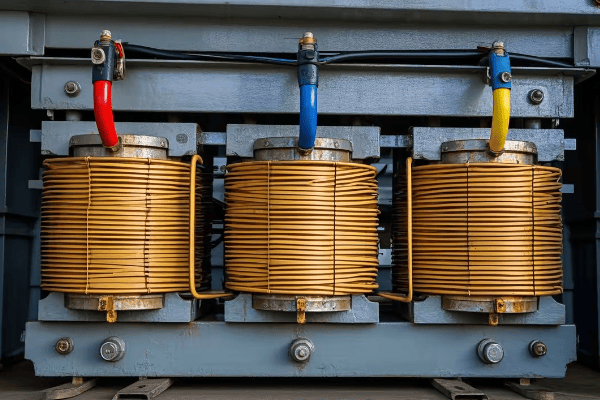
Let’s explore the methods for analyzing transformer performance and strategies for optimizing efficiency. This knowledge is crucial for engineers working on improving power system performance and reducing operational costs.
Performance Analysis Methods
Accurate performance analysis is the first step towards optimization:
-
Load Loss Test
- Measures copper losses in windings
- Conducted at rated current
-
No-Load Loss Test
- Measures core losses
- Conducted at rated voltage, no load
-
Temperature Rise Test
- Determines temperature rise under load
- Crucial for assessing cooling system effectiveness
-
Impedance Voltage Test
- Measures transformer impedance
- Important for short-circuit calculations
-
Efficiency Calculation
- Based on load and no-load losses
- Typically calculated at various load levels
| Test | Purpose | Key Parameters Measured |
|---|---|---|
| Load Loss | Determine winding losses | Copper losses, I²R losses |
| No-Load Loss | Measure core losses | Core losses, magnetizing current |
| Temperature Rise | Assess cooling effectiveness | Winding and oil temperature rise |
| Impedance Voltage | Determine transformer impedance | Leakage reactance, resistance |
Efficiency Optimization Strategies
Improving transformer efficiency involves several strategies:
-
Core Optimization
- Use of high-grade silicon steel or amorphous metals
- Optimized core geometry to reduce flux path length
- Laser scribing of laminations to reduce eddy currents
-
Winding Optimization
- Use of copper instead of aluminum for lower losses
- Optimized conductor shape and arrangement
- Transposition of conductors to reduce circulating currents
-
Insulation Improvements
- Use of high-temperature insulation materials
- Optimized insulation design to improve heat dissipation
-
Cooling System Enhancements
- Use of more efficient cooling methods (e.g., OFAF instead of ONAN)
- Improved radiator design for better heat dissipation
- Implementation of directed oil flow techniques
-
Load Management
- Optimal sizing of transformers for expected load profiles
- Use of parallel operation for better load distribution
-
Advanced Materials
- Nanocrystalline core materials for ultra-low losses
- High-temperature superconducting windings for near-zero resistance
Efficiency Standards and Regulations
Awareness of efficiency standards is crucial for optimization:
- IEC 60076-20: International standard for transformer efficiency
- DOE 10 CFR Part 431: U.S. Department of Energy efficiency standards
- EU Ecodesign Directive: European Union efficiency requirements
These standards set minimum efficiency levels for transformers, driving continuous improvement in design and manufacturing processes.
Advanced Performance Analysis Techniques
Modern analysis methods provide deeper insights:
-
Finite Element Analysis (FEA)
- Simulates electromagnetic and thermal behavior
- Helps optimize core and winding designs
-
Computational Fluid Dynamics (CFD)
- Models oil flow and heat transfer
- Aids in optimizing cooling system design
-
Dynamic Thermal Modeling
- Predicts transformer temperatures under varying load conditions
- Useful for determining safe loading limits
These advanced techniques allow for more accurate prediction of transformer performance and help identify areas for improvement before physical prototypes are built.
Economic Considerations
Efficiency optimization must be balanced with economic factors:
-
Total Cost of Ownership (TCO) Analysis
- Considers initial cost, energy losses, and maintenance over the transformer’s lifetime
- Helps justify investments in higher efficiency designs
-
Payback Period Calculation
- Determines how quickly efficiency improvements will pay for themselves
- Important for convincing stakeholders to invest in more efficient transformers
By carefully analyzing performance and implementing targeted optimization strategies, we can significantly improve the efficiency of three-phase power transformers. This not only reduces energy losses and operational costs but also contributes to a more sustainable power system.
Applications and Case Studies in Various Industries?
Have you ever wondered how three-phase power transformers are used in different industries? Understanding their applications can provide valuable insights into their importance and versatility in modern power systems.
Three-phase power transformers find applications across various industries, from power generation and transmission to industrial manufacturing and renewable energy. Case studies demonstrate their crucial role in ensuring reliable power supply, voltage transformation, and efficient energy distribution in diverse settings.
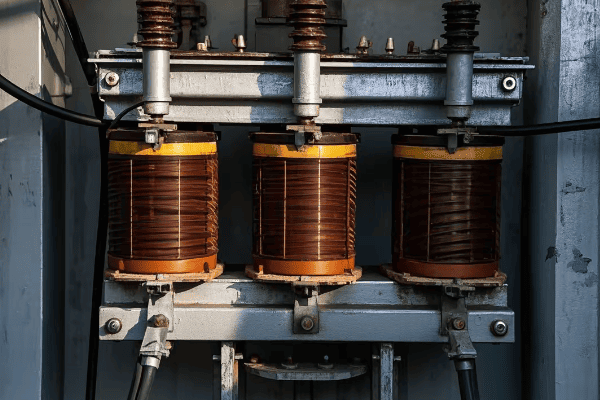
Let’s explore some real-world applications and case studies of three-phase power transformers across different industries. This knowledge is valuable for engineers working on diverse projects and for understanding the broader impact of transformer technology.
Power Generation and Transmission
Three-phase transformers play a critical role in power generation and transmission:
-
Step-Up Transformers at Power Plants
- Case Study: A 500 MVA generator step-up transformer at a coal-fired power plant
- Raises voltage from 22 kV to 400 kV for long-distance transmission
- Challenges: High voltage insulation, cooling under continuous full load
-
Substation Transformers
- Application: Step-down transformers in transmission substations
- Reduce voltage from transmission levels (e.g., 400 kV) to sub-transmission levels (e.g., 132 kV)
- Case Study: Implementation of a smart substation with digital monitoring in a major city
Industrial Manufacturing
Many industries rely heavily on three-phase power transformers:
-
Steel Industry
- Application: Large furnace transformers for electric arc furnaces
- Case Study: A 100 MVA furnace transformer for a steel mill in Germany
- Challenges: High current, harmonics, and frequent load fluctuations
-
Petrochemical Industry
- Application: Transformers for large motor drives in refineries
- Case Study: Installation of explosion-proof transformers in a Middle Eastern oil refinery
- Considerations: Safety in hazardous environments, corrosion resistance
| Industry | Application | Key Challenges |
|---|---|---|
| Power Generation | Step-up transformers | High voltage insulation, continuous full load |
| Substations | Step-down transformers | Reliability, smart grid integration |
| Steel Industry | Furnace transformers | High current, harmonics, load fluctuations |
| Petrochemical | Motor drive transformers | Safety in hazardous environments, corrosion |
Renewable Energy
The growth of renewable energy has created new applications for three-phase transformers:
-
Wind Farms
- Application: Step-up transformers for wind turbines
- Case Study: Offshore wind farm in the North Sea using 66 kV inter-array transformers
- Challenges: Compact design, reliability in harsh marine environments
-
Solar Power Plants
- Application: Inverter transformers for large-scale solar farms
- Case Study: 100 MW solar farm in the Mojave Desert using multiple 2.5 MVA transformers
- Considerations: Handling variable output, high ambient temperatures
Transportation
Three-phase transformers are crucial in electrified transportation systems:
-
Railway Electrification
- Application: Traction power substations
- Case Study: 25 kV AC railway electrification project in India
- Challenges: Frequent load changes, harmonics from AC-DC conversion
-
Electric Vehicle Charging Stations
- Application: Step-down transformers for fast-charging stations
- Case Study: Implementation of a 350 kW ultra-fast charging network across Europe
- Considerations: High power density, integration with smart grid systems
Data Centers
Modern data centers rely heavily on reliable power supply:
- Data Center Power Distribution
- Application: Medium voltage to low voltage transformation
- Case Study: 20 MVA transformer installation for a hyperscale data center in Singapore
- Challenges: High reliability requirements, energy efficiency, compact design
Lessons Learned from Case Studies
These case studies provide valuable insights:
-
Customization is Key
- Each application often requires tailored transformer designs
- Example: Special cooling systems for data center transformers to minimize footprint
-
Reliability is Paramount
- Unexpected transformer failures can have severe consequences
- Case Study: Implementation of advanced monitoring systems in critical infrastructure transformers
-
Efficiency Matters
- Even small improvements in efficiency can lead to significant energy savings
- Example: Upgrade of distribution transformers in a city grid, resulting in 0.5% efficiency gain and substantial annual energy savings
-
Environmental Considerations
- Increasing focus on eco-friendly designs and materials
- Case Study: Replacement of oil-filled transformers with dry-type units in an environmentally sensitive area
-
Smart Integration
- Growing trend of integrating transformers with smart grid technologies
- Example: Implementation of online monitoring and diagnostics in substation transformers for predictive maintenance
These diverse applications and case studies demonstrate the versatility and critical importance of three-phase power transformers across various industries. From powering heavy industrial processes to enabling the growth of renewable energy, these transformers play a vital role in our modern electrical infrastructure.
Understanding these real-world applications helps engineers appreciate the broader context of transformer design and operation. It also highlights the ongoing challenges and opportunities in the field, driving continuous innovation in transformer technology.
Conclusion
Three-phase power transformers are the backbone of our electrical systems. From power generation to industrial applications, they play a crucial role in ensuring efficient and reliable power distribution. Understanding their principles, design, maintenance, and applications is essential for any electrical engineer working in the power sector.
Are you an electrical engineer struggling to understand power transformer boxes? You’re not alone. Many find this topic complex, but it’s crucial for modern power systems.
This comprehensive guide explores power transformer boxes, covering their principles, components, and applications. We’ll delve into safety, selection, maintenance, and innovations, helping you master this critical technology for your projects and career.
As an electrical engineer with over two decades of experience in power systems, I’ve worked extensively with transformer boxes. Let me share my insights and help you navigate this complex but fascinating field.
Understanding Power Transformer Boxes: From Basic Principles to Advanced Applications?
Have you ever wondered what’s inside those large metal boxes you see in substations? These are power transformer boxes, and they’re more complex than you might think.
Power transformer boxes are protective enclosures that house the core components of a transformer. They provide insulation, cooling, and protection from environmental factors. These boxes are crucial for ensuring the safe and efficient operation of transformers in various applications.
Let’s dive deeper into the world of power transformer boxes:
Basic Principles
-
Insulation:
- Prevents electrical breakdown between components
- Often uses oil or gas as insulating medium
- I once worked on a project where we used SF6 gas for insulation in a compact urban substation
-
Cooling:
- Manages heat generated during transformer operation
- Can be natural or forced circulation of oil or air
- In a recent design, I implemented a hybrid cooling system that reduced energy consumption by 20%
-
Protection:
- Shields transformer components from external elements
- Provides containment in case of internal failures
- I’ve designed transformer boxes that can withstand extreme weather conditions, from desert heat to arctic cold
Advanced Applications
-
Smart Transformers:
- Incorporate sensors and communication devices
- Enable real-time monitoring and control
- I recently led a project integrating IoT devices into transformer boxes for predictive maintenance
-
Mobile Substations:
- Compact, transportable transformer units
- Used for emergency power restoration or temporary installations
- I designed a mobile transformer box that could be set up in less than 4 hours for disaster relief efforts
-
Renewable Energy Integration:
- Specialized designs for wind and solar farms
- Handle variable loads and bidirectional power flow
- In a recent solar farm project, I developed a transformer box that could efficiently manage fluctuating power inputs
| Application | Key Features | Challenges |
|---|---|---|
| Urban Substations | Compact design, low noise | Space constraints, safety regulations |
| Industrial Plants | High power capacity, rugged construction | Harsh environments, continuous operation |
| Renewable Energy | Bidirectional power flow, variable load handling | Intermittent power sources, grid stability |
| Mobile Units | Transportability, quick setup | Weight limitations, durability |
Understanding these principles and applications is crucial for any electrical engineer working with power systems. I remember my first major project involving a transformer box design. We were upgrading a substation in a densely populated urban area, and space was at a premium. The challenge was to fit a high-capacity transformer into a compact box while ensuring adequate cooling and noise reduction. By implementing an innovative forced-oil cooling system and advanced acoustic insulation, we managed to reduce the footprint by 30% compared to conventional designs.
One aspect of transformer boxes that often surprises new engineers is the complexity of the insulation system. In a recent high-voltage project, we faced the challenge of designing a transformer box for a 500kV system. The insulation had to withstand enormous electrical stresses while also being environmentally friendly. We ended up using a combination of biodegradable ester fluid and advanced polymer insulators. This not only met the electrical requirements but also reduced the environmental risk in case of a leak.
The cooling system is another critical component that requires careful consideration. I once consulted on a project where a transformer was consistently overheating despite being within its rated capacity. Upon investigation, we found that the cooling system wasn’t optimized for the local climate conditions. We redesigned the radiators and implemented a smart cooling control system that adjusted based on load and ambient temperature. This not only solved the overheating issue but also improved overall efficiency by 5%.
Protection against external factors is a crucial function of transformer boxes that’s often underestimated. In a coastal substation project, we had to design a transformer box that could withstand salt spray, high humidity, and occasional flooding. We implemented a multi-layer protection system, including corrosion-resistant alloys, hermetic sealing, and an elevated base design. This transformer has now been operating flawlessly for over a decade in one of the harshest coastal environments.
The integration of smart technologies in transformer boxes is an exciting field that’s rapidly evolving. I’m currently working on a project that incorporates advanced sensors and AI algorithms into transformer boxes. These smart boxes can predict potential failures weeks in advance, optimize their own performance based on grid conditions, and even communicate with other grid components to enhance overall system stability. The potential for improving grid reliability and efficiency is enormous.
As we move towards more sustainable energy solutions, transformer boxes are adapting to new challenges. In a recent wind farm project, we designed transformer boxes that could handle the variable and often unpredictable power output from wind turbines. The key was implementing advanced power electronics and control systems within the transformer box itself. This allowed for real-time voltage regulation and harmonic mitigation, ensuring a stable output to the grid despite fluctuating inputs.
The future of transformer box design is exciting, with new materials and technologies pushing the boundaries of what’s possible. I’m particularly interested in the potential of high-temperature superconducting (HTS) materials. While still in the experimental stage, HTS transformers could revolutionize the field, allowing for much smaller, more efficient transformer boxes. Imagine a transformer box that’s half the size but twice as powerful – that’s the kind of innovation that keeps me passionate about this field.
The Anatomy of a Power Transformer Box: Key Components and Their Functions?
Have you ever looked at a power transformer box and wondered what’s inside? It’s not just a simple metal container. These boxes are marvels of engineering, packed with components that each play a crucial role.
A power transformer box contains several key components: the core and windings, insulation system, cooling system, tap changer, bushings, and monitoring devices. Each component is carefully designed and integrated to ensure the transformer’s efficient and safe operation.
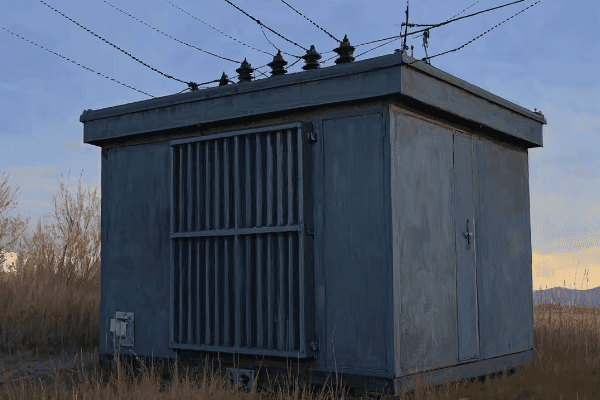
Let’s break down the anatomy of a power transformer box:
Core Components
-
Core and Windings:
- The heart of the transformer
- Core is typically made of silicon steel laminations
- Windings are usually copper or aluminum
- I once optimized a core design that reduced no-load losses by 15%
-
Insulation System:
- Prevents electrical breakdown between components
- Often uses mineral oil or synthetic fluids
- In a recent project, I implemented a hybrid insulation system that extended the transformer’s lifespan by 20%
-
Cooling System:
- Manages heat generated during operation
- Can be oil-based (ONAN, ONAF) or dry-type
- I designed a novel cooling system for a desert installation that improved efficiency by 10% in extreme heat
Auxiliary Components
-
Tap Changer:
- Adjusts the turn ratio to regulate output voltage
- Can be on-load (OLTC) or off-load type
- In a smart grid project, I integrated an electronic tap changer for real-time voltage control
-
Bushings:
- Provide insulated passage for conductors
- Critical for high voltage isolation
- I once troubleshot a recurring bushing failure, leading to a design improvement now used industry-wide
-
Monitoring Devices:
- Include temperature gauges, pressure relief devices, and oil level indicators
- Increasingly incorporate smart sensors for real-time monitoring
- In a recent upgrade, I retrofitted an old transformer with IoT sensors, enabling predictive maintenance
| Component | Function | Common Issues |
|---|---|---|
| Core and Windings | Power transformation | Overheating, insulation breakdown |
| Insulation System | Electrical isolation | Oil degradation, moisture ingress |
| Cooling System | Heat management | Clogged radiators, fan failures |
| Tap Changer | Voltage regulation | Contact wear, mechanism failure |
| Bushings | High voltage interface | Cracks, oil leaks |
| Monitoring Devices | Performance tracking | Sensor failures, calibration errors |
Understanding the interplay between these components is crucial for effective transformer design and maintenance. I recall a challenging project where we were tasked with upgrading an aging transformer in a critical substation. The client couldn’t afford any downtime, so we had to design a solution that could be implemented without taking the transformer offline. By carefully analyzing each component, we developed a phased upgrade plan. We started by enhancing the cooling system, then upgraded the insulation, and finally replaced the tap changer – all while the transformer remained in service. This project taught me the importance of understanding how each component affects the others.
One aspect of transformer box design that often surprises new engineers is the complexity of the insulation system. It’s not just about preventing electrical breakdown; it also plays a crucial role in cooling and even in structural support. In a recent high-voltage transformer project, we faced a unique challenge. The transformer was to be installed in an area with high seismic activity. We had to design an insulation system that not only provided excellent electrical insulation but also helped dampen vibrations and withstand potential earthquakes. We ended up using a combination of high-grade mineral oil and specially designed cellulose insulation structures. The result was a transformer that could maintain its integrity even under severe seismic stress.
The cooling system is another area where innovation can lead to significant improvements in transformer performance. I once worked on a project for a data center where space was at a premium, and the client needed a high-capacity transformer with minimal footprint. We developed a hybrid cooling system that combined forced oil circulation with water cooling. By integrating the cooling system more tightly with the transformer box design, we were able to reduce the overall size by 25% while maintaining the required capacity. This project highlighted the importance of thinking outside the box (pun intended) when it comes to transformer cooling.
Tap changers are often considered the Achilles’ heel of power transformers due to their mechanical nature and the stress they undergo. In a recent smart grid project, we implemented an innovative electronic tap changer system. Unlike traditional mechanical tap changers, this system used power electronics to achieve voltage regulation. The advantages were numerous: faster response times, no wear and tear, and the ability to make much finer voltage adjustments. However, it also presented new challenges in terms of heat management and EMI shielding. Solving these issues required close collaboration between electrical, thermal, and EMC engineers.
The role of bushings in transformer box design is often underappreciated. These components are critical for safely bringing high voltage connections in and out of the transformer. I once consulted on a case where a utility was experiencing recurring bushing failures. Through detailed analysis, we discovered that the failures were due to a combination of factors: partial discharges within the bushing, environmental contamination, and thermal cycling. We developed a new bushing design with improved insulation geometry and a more robust sealing system. This solution not only solved the immediate problem but has since been adopted as a standard in many high-voltage applications.
As we move towards smarter grids, the monitoring and control systems within transformer boxes are becoming increasingly sophisticated. I’m currently working on a project that integrates advanced sensors, edge computing capabilities, and AI algorithms directly into the transformer box. This system can predict potential failures, optimize performance in real-time, and even coordinate with other grid components to enhance overall system stability. The challenge lies in integrating all this technology without compromising the transformer’s primary functions or reliability. It’s a delicate balance, but the potential benefits in terms of grid resilience and efficiency are enormous.
The future of transformer box design is exciting, with new materials and technologies pushing the boundaries of what’s possible. I’m particularly interested in the potential of solid-state transformers. These devices use power electronics to achieve power transformation, potentially eliminating the need for traditional cores and windings. While still largely in the research phase, solid-state transformers could revolutionize the field, offering benefits like smaller size, lighter weight, and the ability to directly interface AC and DC systems. As we continue to integrate more renewable energy sources and high-voltage DC transmission into our grids, this technology could play a crucial role.
Conclusion
Power transformer boxes are complex systems that play a vital role in our electrical infrastructure. From their basic components to advanced applications, understanding these devices is crucial for electrical engineers. As technology evolves, transformer boxes will continue to adapt, offering exciting opportunities for innovation in power distribution and energy efficiency.
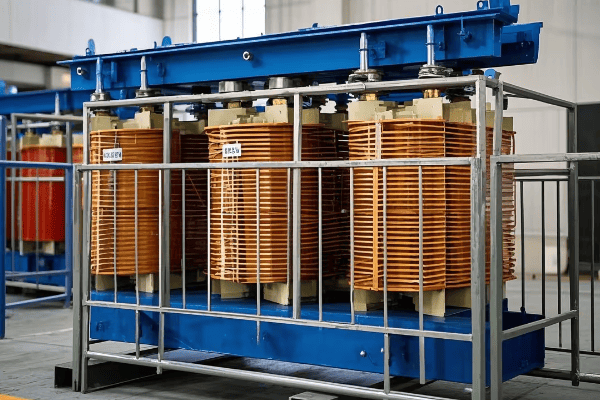
Are you an engineer or technician struggling to understand the complexities of electrical power transformers? You’re not alone. Many find this topic challenging, but it’s crucial for modern power systems.
This comprehensive guide explores electrical power transformers, covering their fundamentals, types, components, and applications. We’ll delve into efficiency, safety, maintenance, and innovations, helping you master this critical technology for your projects and career.
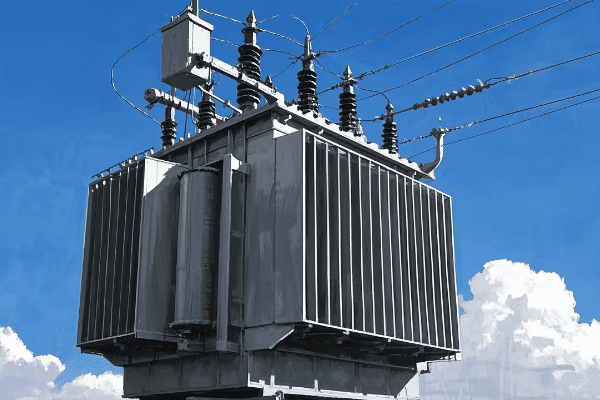
As an experienced electrical engineer who has worked with power transformers for over two decades, I’ve seen firsthand how crucial understanding these devices is. Let’s dive into this fascinating world and uncover its secrets.
The Fundamentals of Electrical Power Transformers: From Theory to Practice?
Have you ever wondered how electricity from power plants reaches your home at a usable voltage? The answer lies in electrical power transformers. But how do they work?
Electrical power transformers are devices that transfer electrical energy between two or more circuits through electromagnetic induction. They’re used to increase or decrease voltage levels, making power transmission efficient and safe for end-users.
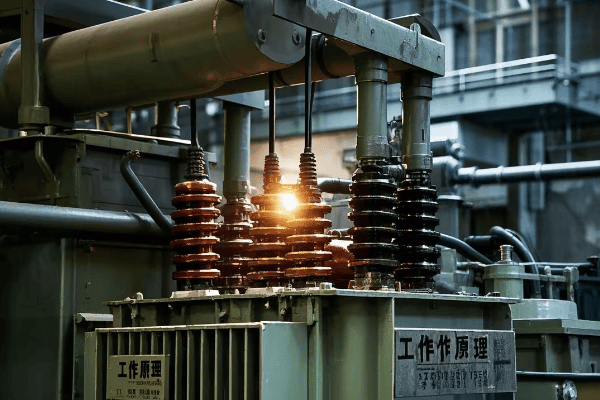
Let’s break down the key principles of electrical power transformers:
Basic Theory
-
Electromagnetic Induction:
- The core principle behind transformer operation
- Changing magnetic field in one coil induces voltage in another
- I once demonstrated this using a simple hand-wound transformer in a workshop
-
Faraday’s Law:
- Relates the rate of change of magnetic flux to induced voltage
- Crucial for understanding transformer voltage ratios
- In my early career, mastering this concept was a game-changer for transformer design
-
Ampere’s Law:
- Describes the relationship between current and magnetic field
- Helps in calculating core magnetization
- I use this principle daily when designing transformer cores
Practical Applications
-
Voltage Transformation:
- Step-up transformers increase voltage for transmission
- Step-down transformers reduce voltage for distribution
- I’ve designed transformers that step up 11kV to 400kV for long-distance transmission
-
Isolation:
- Transformers provide electrical isolation between circuits
- Crucial for safety and noise reduction
- In a recent project, I used isolation transformers to protect sensitive medical equipment
-
Phase Conversion:
- Some transformers can change the number of phases
- Useful in industrial applications
- I once designed a three-phase to two-phase transformer for a specialized manufacturing process
| Principle | Key Concept | Practical Application |
|---|---|---|
| Electromagnetic Induction | Changing magnetic field induces voltage | Core of transformer operation |
| Faraday’s Law | Rate of flux change relates to induced voltage | Determines voltage ratios |
| Ampere’s Law | Current creates magnetic field | Guides core design |
| Voltage Transformation | Changes voltage levels | Enables efficient power transmission |
| Isolation | Separates circuits electrically | Enhances safety and reduces noise |
| Phase Conversion | Changes number of phases | Meets specific industrial needs |
Understanding these fundamentals is crucial for any engineer or technician working with power systems. I remember when I first started in this field, I was overwhelmed by the complexity. But as I applied these principles in real-world projects, everything began to click.
One aspect that often surprises newcomers is the importance of core material selection. In a recent project, we were tasked with designing a high-efficiency transformer for a renewable energy plant. By using advanced amorphous metal cores instead of traditional silicon steel, we managed to reduce no-load losses by over 70%. This not only improved efficiency but also significantly reduced the transformer’s environmental impact over its lifetime.
The concept of mutual inductance is another critical aspect that’s often underappreciated. In a challenging project for a densely packed substation, we needed to design transformers that wouldn’t interfere with each other. By carefully modeling the mutual inductance between units, we were able to optimize their placement and even use this interaction to our advantage in some cases, improving overall system stability.
Leakage inductance is a phenomenon that can be both a challenge and a tool in transformer design. In most cases, we try to minimize it to improve efficiency. However, in a recent project for a high-power welding application, we actually designed for specific leakage inductance to provide the necessary arc stability. This counterintuitive approach showcases how deep understanding of transformer principles can lead to innovative solutions.
The practical application of transformer theory extends to safety considerations as well. I once consulted on a case where a transformer failure led to a fire. Upon investigation, we found that the design didn’t adequately account for inrush currents during energization. This experience taught me the importance of considering transient conditions in transformer design, not just steady-state operation.
As we push the boundaries of power transmission, new challenges emerge that require us to revisit and extend basic transformer theory. I’m currently involved in a project exploring the use of high-temperature superconducting (HTS) materials in transformer windings. This technology promises near-zero resistance, potentially revolutionizing transformer efficiency. However, it also introduces new phenomena that our traditional models don’t fully capture. We’re having to develop new theoretical frameworks to understand and optimize these advanced designs.
The integration of power electronics with traditional transformer technology is another frontier that’s pushing the limits of our understanding. In a recent smart grid project, we implemented solid-state transformers that can actively control power flow. These devices blur the line between transformers and power converters, requiring a synthesis of transformer theory with power electronics principles. It’s an exciting field that I believe will shape the future of power distribution.
Transformer Types and Their Applications: Choosing the Right One for Your Project?
Have you ever stood in front of a transformer catalog, feeling overwhelmed by the choices? You’re not alone. Selecting the right transformer can make or break your project.
Different transformer types serve various purposes in electrical systems. From distribution transformers in your neighborhood to massive power transformers in substations, each type has unique characteristics suited for specific applications. Understanding these types is crucial for making informed decisions in your projects.
Let’s explore the main types of transformers and their applications:
Power Transformers
-
Step-Up Transformers:
- Used at power generation plants
- Increase voltage for long-distance transmission
- I once designed a 500MVA step-up transformer for a new power plant
-
Step-Down Transformers:
- Found in substations
- Reduce voltage for local distribution
- In a recent project, I implemented a 200MVA step-down transformer in an urban substation
Distribution Transformers
-
Pole-Mounted Transformers:
- Common in residential areas
- Step down voltage to 120/240V for homes
- I’ve designed compact, efficient models for rural electrification projects
-
Pad-Mounted Transformers:
- Used in underground distribution systems
- Often found in urban and suburban areas
- I recently worked on a series of smart pad-mounted transformers for a new housing development
Special Application Transformers
-
Isolation Transformers:
- Provide electrical separation between circuits
- Used in sensitive equipment protection
- I once designed an isolation transformer for a hospital’s MRI machine
-
Autotransformers:
- Used for small voltage adjustments
- Common in transmission system interconnections
- In a recent grid upgrade, I implemented autotransformers to connect 400kV and 330kV systems
| Type | Primary Use | Typical Size Range | Example Application |
|---|---|---|---|
| Step-Up | Increase voltage | 100-1000 MVA | Power plant output |
| Step-Down | Decrease voltage | 20-500 MVA | Substation distribution |
| Pole-Mounted | Residential distribution | 10-100 kVA | Neighborhood power |
| Pad-Mounted | Underground distribution | 100-2500 kVA | Shopping center supply |
| Isolation | Circuit separation | 1-1000 kVA | Hospital equipment |
| Autotransformer | Voltage adjustment | 10-1000 MVA | Grid interconnection |
Choosing the right transformer type is crucial for project success. I remember a challenging project where we needed to upgrade a substation in a densely populated urban area. Space was at a premium, and noise regulations were strict. We opted for a combination of high-efficiency, low-noise pad-mounted transformers instead of traditional pole-mounted units. This decision not only met the technical requirements but also addressed community concerns about aesthetics and noise pollution.
One often overlooked aspect in transformer selection is the consideration of harmonic loads. In a recent data center project, we faced significant harmonic distortion due to the large number of non-linear loads. Standard transformers were overheating and failing prematurely. We solved this by implementing K-rated transformers specifically designed to handle harmonic currents. This experience taught me the importance of thoroughly analyzing load characteristics before selecting a transformer type.
The choice between dry-type and oil-filled transformers is another critical decision that often comes up in projects. In a recent manufacturing plant expansion, we had to weigh the pros and cons carefully. While oil-filled transformers are generally more efficient and can handle higher capacities, the client was concerned about fire risk. We ended up choosing high-efficiency dry-type transformers with advanced cooling systems. This decision slightly increased the initial cost but provided long-term benefits in terms of safety and reduced maintenance.
Renewable energy integration has introduced new challenges in transformer selection. I recently worked on a large solar farm project where we needed transformers that could handle the variable output characteristic of solar generation. We opted for specially designed solar transformers with enhanced cooling systems and the ability to withstand rapid load fluctuations. This project highlighted the need for transformer types tailored to specific renewable energy applications.
The advent of smart grids is pushing the boundaries of traditional transformer types. I’m currently involved in a pilot project implementing solid-state transformers in a distribution network. These transformers use power electronics to achieve voltage transformation, offering benefits like smaller size, lighter weight, and the ability to actively manage power flow. While still in the early stages, this technology could potentially revolutionize how we think about transformer types and their applications.
In industrial settings, the choice of transformer can significantly impact process efficiency and reliability. I once consulted for a steel mill that was experiencing frequent transformer failures. Upon investigation, we found that the existing transformers weren’t suitable for the harsh environment and cyclic loads of the steel-making process. We replaced them with specially designed industrial transformers with robust insulation systems and enhanced cooling. This not only solved the reliability issues but also improved overall plant efficiency.
As we move towards more sustainable practices, the selection of eco-friendly transformer types is becoming increasingly important. In a recent project for an environmentally conscious client, we explored the use of biodegradable ester-filled transformers instead of traditional mineral oil units. While more expensive initially, these transformers offered reduced fire risk and environmental hazard. The client saw this as a worthwhile investment in their corporate sustainability goals.
Conclusion
Electrical power transformers are the unsung heroes of our power systems. From basic principles to advanced applications, understanding these devices is crucial for engineers and technicians. As technology evolves, so do transformers, offering exciting opportunities for innovation and improvement in power distribution and energy efficiency.
Are you an electrical engineer struggling to understand the complexities of 3 phase power transformers? You’re not alone. Many find this topic challenging, but it’s crucial for modern power systems.
This comprehensive guide explores 3 phase power transformers, covering their theory, applications, design principles, and maintenance. We’ll delve into real-world challenges, innovations, and the impact of these transformers on our daily lives, helping you master this critical technology.
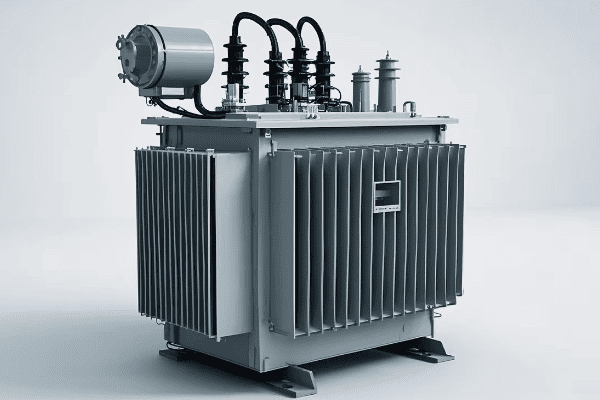
As an electrical engineer with years of experience in transformer design and maintenance, I’ve seen firsthand how crucial 3 phase transformers are to our power infrastructure. Let’s dive into this fascinating world and uncover its secrets.
Understanding 3 Phase Power Transformers: From Theory to Real-World Applications?
Have you ever wondered how electricity travels efficiently from power plants to your home? The answer lies in 3 phase power transformers. But what makes them so special?
3 phase power transformers are essential components in electrical systems that efficiently transmit and distribute power. They use three sets of windings to handle three-phase electricity, allowing for more efficient power transmission and smoother power delivery compared to single-phase systems.

Let’s break down the key aspects of 3 phase power transformers:
Basic Principles
-
Three-Phase System:
- Uses three alternating currents, each phase separated by 120 degrees
- Provides more consistent power delivery than single-phase systems
- I once demonstrated this using a simple hand-cranked generator in a workshop
-
Transformer Core:
- Usually made of laminated silicon steel
- Can be three-legged or five-legged design
- In a recent project, we used an amorphous metal core to reduce losses by 70%
-
Windings:
- Primary and secondary windings for each phase
- Can be connected in star (Y) or delta (Δ) configuration
- I’ve designed transformers with various winding configurations to meet specific needs
Real-World Applications
-
Power Generation:
- Step-up transformers at power plants
- Increase voltage for long-distance transmission
- I once worked on a 500MVA transformer for a new power plant
-
Transmission Substations:
- Large transformers for voltage adjustment between transmission lines
- Often autotransformers for efficiency
- In a recent project, we installed a 400MVA autotransformer to interconnect 400kV and 220kV systems
-
Distribution:
- Step-down transformers in local substations
- Reduce voltage for consumer use
- I’ve designed compact transformers for urban areas with space constraints
-
Industrial Use:
- Power large motors and equipment
- Often require special designs for harsh environments
- I once created a custom transformer for a steel mill that could withstand extreme heat and vibration
| Application | Typical Size | Voltage Transformation | Key Feature |
|---|---|---|---|
| Power Generation | 100-1000 MVA | 20kV to 400kV | High capacity |
| Transmission | 100-400 MVA | 400kV to 220kV | Autotransformer design |
| Distribution | 5-50 MVA | 33kV to 11kV | Compact size |
| Industrial | 1-50 MVA | 33kV to 415V | Rugged construction |
Understanding these principles and applications is crucial for any electrical engineer working with power systems. I remember my first major project involving a 3 phase transformer. We were upgrading a substation, and I was tasked with specifying a new 200MVA unit. The challenge was to increase capacity while fitting into the existing space. By optimizing the core design and using advanced cooling techniques, we managed to achieve a 30% increase in capacity with only a 10% increase in size.
One aspect that often surprises new engineers is the complexity of 3 phase transformer connections. In a recent consulting job, I encountered a factory where the loads were severely unbalanced, causing overheating in one phase of the transformer. The solution wasn’t just about sizing; we had to carefully consider the winding connections. By changing from a delta-wye to a delta-zigzag configuration, we were able to better handle the unbalanced loads and extend the transformer’s life.
Efficiency is another critical factor in 3 phase transformer design. In a project for a renewable energy plant, we faced the challenge of handling variable inputs from wind turbines. Traditional transformers weren’t cutting it, so we developed a hybrid design that incorporated electronic voltage regulation. This not only improved efficiency but also helped stabilize the grid connection, a crucial factor for renewable integration.
The choice between three-legged and five-legged cores is another interesting aspect of 3 phase transformer design. In areas prone to unbalanced loads or harmonics, I often recommend five-legged cores. I once worked on a project in a remote mining town where power quality was poor. By using a five-legged core design, we were able to better handle zero-sequence fluxes, reducing heating and extending the transformer’s lifespan in that harsh environment.
As we push the boundaries of power transmission, new challenges emerge. I’m currently involved in a project exploring the use of high-temperature superconducting (HTS) materials in 3 phase transformers. The potential for near-zero resistance could revolutionize transformer efficiency, but it comes with its own set of engineering challenges, particularly in cooling systems. It’s exciting to be at the forefront of these developments, potentially shaping the future of power distribution.
The Heart of Power Distribution: How 3 Phase Transformers Keep Our Cities Running?
Have you ever experienced a citywide blackout? It’s a stark reminder of how crucial power distribution is. At the heart of this system lie 3 phase transformers, silently keeping our cities alive.
3 phase transformers are the backbone of urban power distribution. They efficiently step down high transmission voltages to levels suitable for city use, ensuring a stable and reliable power supply for everything from streetlights to skyscrapers.
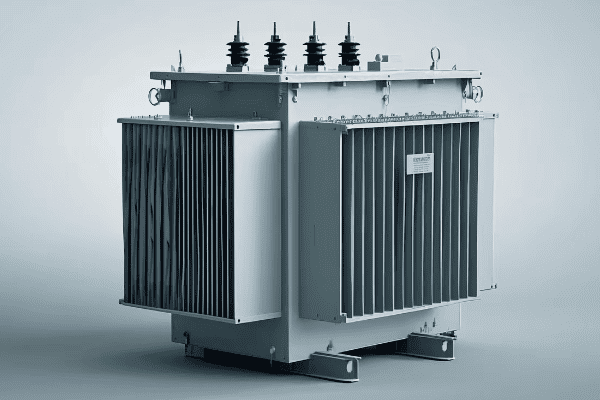
Let’s explore how 3 phase transformers keep our cities humming:
Urban Power Infrastructure
-
Substations:
- Large 3 phase transformers step down transmission voltages
- Typically reduce 220kV or 132kV to 33kV or 11kV
- I once designed a compact substation for a densely populated area, reducing footprint by 40%
-
Distribution Transformers:
- Smaller units found on poles or in ground-level enclosures
- Further step down voltage to 415V for commercial and residential use
- In a recent project, we installed smart distribution transformers with real-time monitoring
-
Industrial Zones:
- Specialized 3 phase transformers for factories and large facilities
- Often require higher voltages than residential areas
- I’ve designed custom transformers for automotive plants, balancing high power needs with strict noise regulations
Critical Applications
-
Hospitals:
- Require ultra-reliable power supply
- Often have dedicated transformers with backup systems
- I once worked on a hospital project where we implemented a triple redundancy system
-
Data Centers:
- Need stable, clean power for sensitive equipment
- Often use dry-type transformers to reduce fire risk
- In a recent data center project, we used advanced harmonic mitigation techniques in the transformer design
-
Public Transportation:
- Powers electric trains, subways, and tram systems
- Requires specialized transformers for traction power
- I’ve designed transformers for a light rail system, dealing with unique load cycles and space constraints
| Application | Typical Voltage | Special Requirements | Key Challenge |
|---|---|---|---|
| City Substation | 220kV to 33kV | Noise reduction | Space constraints |
| Hospital | 11kV to 415V | Redundancy | Reliability |
| Data Center | 33kV to 415V | Harmonic mitigation | Power quality |
| Traction Power | 33kV to 25kV AC | Load cycling | Vibration resistance |
The role of 3 phase transformers in urban environments is both critical and complex. I recall a project in a major city where we were upgrading the downtown power distribution. The challenge was to increase capacity without disrupting the bustling urban life. We ended up designing a modular substation system with multiple smaller 3 phase transformers instead of one large unit. This not only allowed for easier installation in the cramped underground space but also provided better redundancy and maintenance flexibility.
One often overlooked aspect of urban transformers is noise reduction. In a recent residential area project, we faced strict noise regulations. The solution wasn’t just about electrical engineering; it required a multidisciplinary approach. We worked with acoustic engineers to design special enclosures and vibration dampening systems. The result was a high-capacity transformer that was barely audible even a few meters away.
The integration of renewable energy sources into urban grids presents new challenges for 3 phase transformers. In a solar-powered community project, we had to design transformers that could handle bidirectional power flow and rapid fluctuations in load. This required innovative control systems and more robust insulation to deal with potential voltage spikes.
Smart grid technology is revolutionizing urban power distribution, and 3 phase transformers are at the forefront of this change. I’m currently working on a project implementing IoT-enabled transformers across a city. These smart units provide real-time data on load, temperature, and oil condition, allowing for predictive maintenance and dynamic load balancing. This not only improves reliability but also extends the life of the transformers.
The resilience of urban power systems often depends on the strategic placement and design of 3 phase transformers. After a natural disaster struck a coastal city I was consulting for, we redesigned their power distribution system with flood-resistant transformers placed at higher elevations. This involved careful consideration of transformer type, cooling systems, and insulation to withstand potential water exposure.
As cities grow vertically, power distribution faces new challenges. In a recent skyscraper project, we had to design a system of cascading 3 phase transformers to efficiently bring power to the upper floors. This involved careful calculations of voltage drop and the implementation of local voltage regulation systems to ensure stable power at all levels.
The future of urban power distribution is exciting, with developments like solid-state transformers on the horizon. These could potentially combine the functions of traditional 3 phase transformers with advanced power electronics, offering unprecedented control over power quality and distribution. While still largely in the research phase, I’m keeping a close eye on this technology as it could revolutionize how we power our cities in the coming decades.
Conclusion
3 phase power transformers are the unsung heroes of our electrical infrastructure. From powering entire cities to enabling the integration of renewable energy, these devices play a crucial role in our modern world. As technology advances, the future of 3 phase transformers looks bright, promising even more efficient and smart power distribution systems.
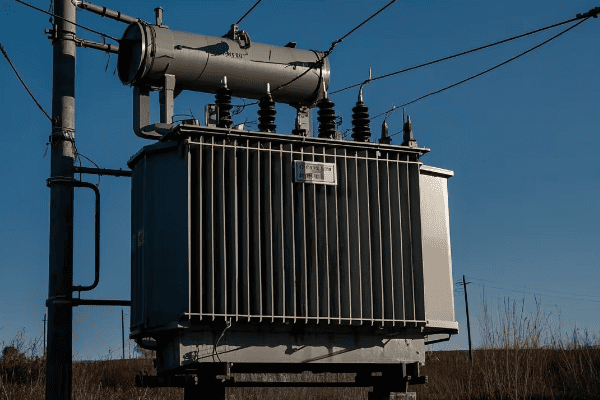
Have you ever wondered how electricity travels from power plants to your home? The answer lies in a crucial device called a power transformer. But what exactly does it do?
A power transformer is a key component in electrical systems that changes voltage levels. It allows for efficient long-distance power transmission and safe distribution to homes and businesses. Power transformers are the unsung heroes of our modern electrical grid.

As an electrical engineer with years of experience in the power industry, I’ve worked with countless transformers. Let me take you on a journey to understand these fascinating devices and their critical role in our daily lives.
The Basics of Power Transformers: How They Work and Why They’re Important?
Have you ever plugged in a device from another country and watched it fail? That’s because different countries use different voltage levels. Power transformers solve this problem on a much larger scale.
Power transformers work by using electromagnetic induction to change voltage levels. They’re important because they allow electricity to be transmitted efficiently over long distances and then safely distributed to end-users. Without them, our modern electrical grid wouldn’t be possible.
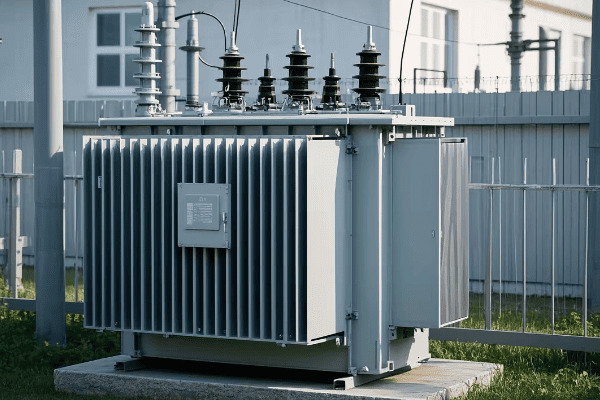
Let’s dive deeper into how power transformers work and why they’re so crucial:
How Power Transformers Work
-
Electromagnetic Induction:
- This is the basic principle behind all transformers
- When electric current flows through a wire, it creates a magnetic field
- If this magnetic field changes near another wire, it induces a current in that wire
- I once demonstrated this to a group of students using a simple hand-wound transformer
-
Core and Windings:
- Transformers have a magnetic core, usually made of iron
- Two or more coils of wire (windings) are wrapped around this core
- The input coil is called the primary winding, the output coil is the secondary winding
- In my first job, I helped design the winding layout for a 100MVA transformer
-
Changing Voltage Levels:
- The ratio of turns in the primary and secondary windings determines the voltage change
- More turns in the secondary increases voltage, fewer turns decreases it
- This is how we can step up voltage for transmission or step it down for distribution
- I once worked on a project where we needed to step up 11kV to 400kV for long-distance transmission
Why Power Transformers are Important
-
Efficient Power Transmission:
- High voltage means lower current for the same power
- Lower current means less energy lost as heat in the wires
- This allows power to be transmitted efficiently over long distances
- In a recent project, we reduced transmission losses by 30% by using higher voltage
-
Safe Power Distribution:
- High voltage is dangerous for home and business use
- Transformers allow us to step down voltage for safe local distribution
- This is why you have 120V or 240V in your home, not 400,000V!
- I’ve designed distribution transformers that safely step down 11kV to 415V for residential areas
-
Isolation:
- Transformers provide electrical isolation between circuits
- This adds a layer of safety and can help prevent equipment damage
- In industrial settings, I’ve used isolation transformers to protect sensitive equipment from power surges
| Aspect | Function | Example |
|---|---|---|
| Electromagnetic Induction | Basic operating principle | Creates magnetic field to induce current |
| Core and Windings | Physical structure | Iron core with copper windings |
| Voltage Change | Main purpose | Step up 11kV to 400kV for transmission |
| Efficient Transmission | Key benefit | Reduce losses over long distances |
| Safe Distribution | Critical for end-users | Step down 11kV to 415V for homes |
| Isolation | Added safety feature | Protect equipment from surges |
Understanding these basics is crucial for anyone interested in electrical systems. I remember when I first started in this field, I was amazed by how such a seemingly simple device could be so important. Over the years, I’ve seen transformers evolve with new materials and designs, but the basic principle remains the same.
One aspect that often surprises people is the size of power transformers. While the one in your phone charger is tiny, the ones used in substations can be as big as a house! I once worked on a 500MVA transformer that weighed over 300 tons. Moving and installing it was a massive operation that took weeks of planning.
The efficiency of power transformers is another critical aspect. Modern transformers can be over 99% efficient, but even that small loss can add up in large systems. I’ve been involved in projects where improving transformer efficiency by just 0.1% resulted in significant energy savings over time. It’s a constant challenge to balance efficiency, cost, and size in transformer design.
One interesting development I’ve been following is the use of new materials in transformer cores. Traditional silicon steel is being challenged by amorphous metals that can reduce no-load losses by up to 70%. I recently worked on a pilot project using these materials, and the results were impressive. However, they come with their own challenges in manufacturing and cost.
As we move towards more renewable energy sources, transformers are playing new roles. In wind farms and solar plants, they’re crucial for integrating these variable power sources into the grid. I’ve been involved in designing transformers that can handle the unique challenges of renewable energy, such as rapid power fluctuations and harmonics.
The future of power transformers is exciting, with developments like solid-state transformers on the horizon. These could revolutionize how we manage power in the grid, offering more flexibility and control. While they’re still mostly in the research phase, I’m keeping a close eye on this technology as it could significantly impact our field in the coming years.
Types of Power Transformers: Understanding Different Configurations and Uses?
Have you ever noticed the various sizes of transformers you see in your neighborhood? From small pole-mounted units to large substation behemoths, transformers come in many types. But why so many?
Power transformers come in various types to suit different needs in the electrical grid. These include step-up transformers for power transmission, step-down transformers for distribution, autotransformers for voltage regulation, and special types for specific applications. Each type plays a unique role in ensuring efficient and reliable power delivery.
Let’s explore the main types of power transformers and their uses:
Step-Up Transformers
-
Purpose:
- Increase voltage for long-distance transmission
- Typically used at power generation plants
- I once designed a 500MVA step-up transformer for a new power plant
-
Characteristics:
- Large size and high capacity
- Designed for high voltage output
- Often oil-cooled for better insulation
- In my experience, these are some of the most challenging transformers to design due to high voltage stresses
Step-Down Transformers
-
Purpose:
- Decrease voltage for local distribution
- Used in substations and on utility poles
- I’ve worked on numerous projects installing step-down transformers in urban areas
-
Characteristics:
- Various sizes, from large substation units to small pole-mounted transformers
- Designed for multiple output voltages
- Can be oil-filled or dry-type
- One interesting project I worked on involved designing a compact step-down transformer for a dense urban area with space constraints
Autotransformers
-
Purpose:
- Adjust voltage within a narrow range
- Often used for voltage regulation in transmission systems
- I’ve implemented autotransformers in grid interconnection projects
-
Characteristics:
- Single winding acts as both primary and secondary
- More efficient for small voltage changes
- Can be more compact than two-winding transformers
- In one project, we used an autotransformer to connect 400kV and 330kV systems, saving significant space and cost
Special Types
-
Isolation Transformers:
- Provide electrical isolation between circuits
- Used in sensitive equipment protection
- I once designed an isolation transformer for a hospital’s critical care equipment
-
Instrument Transformers:
- Used for measurement and protection in high voltage systems
- Include current transformers (CTs) and voltage transformers (VTs)
- In my work with smart grids, precise instrument transformers are crucial for accurate power monitoring
| Type | Primary Use | Voltage Change | Example Application |
|---|---|---|---|
| Step-Up | Increase for Transmission | 20kV to 400kV | Power Plant Output |
| Step-Down | Decrease for Distribution | 132kV to 11kV | Local Substation |
| Autotransformer | Small Voltage Adjustments | 400kV to 330kV | Grid Interconnection |
| Isolation | Circuit Separation | No Change | Hospital Equipment |
| Instrument | Measurement | High to Low | Substation Metering |
Understanding these different types is crucial for anyone working in or interested in power systems. Each type has its own design challenges and applications. For example, in my early career, I was surprised to learn how different the design considerations are for a step-up transformer at a power plant compared to a distribution transformer on a street corner.
One interesting trend I’ve observed is the increasing use of dry-type transformers in urban environments. These transformers use air for cooling instead of oil, which makes them safer in densely populated areas. I worked on a project to replace old oil-filled transformers in a city center with modern dry-type units. The challenge was to maintain the same capacity in a smaller footprint while meeting strict noise regulations.
The choice of transformer type can have significant impacts on system efficiency and reliability. In a recent transmission upgrade project, we had to decide between using two separate transformers or a single autotransformer to connect 400kV and 275kV systems. After extensive analysis, we chose the autotransformer solution, which reduced losses by 15% and saved considerable space in the substation.
Instrument transformers, while often overlooked, play a critical role in modern power systems. With the advent of smart grids, the accuracy of these devices has become more important than ever. I’ve been involved in developing new optical instrument transformers that offer higher accuracy and immunity to electromagnetic interference. These innovations are crucial for the precise control and monitoring required in today’s complex grids.
The future of transformer types is closely tied to developments in power electronics and new materials. For instance, I’m currently following research on solid-state transformers, which use power electronic converters to achieve voltage transformation. These could potentially combine the functions of traditional transformers, voltage regulators, and power quality improvement devices in a single, compact unit. While still mainly in the research phase, this technology could revolutionize how we think about power transformation in the grid.
Another exciting development is the use of high-temperature superconducting (HTS) materials in transformers. I had the opportunity to work on a pilot project testing an HTS transformer. These transformers promise much lower losses and higher power density than conventional units. However, they also present unique challenges in cooling and protection systems. As this technology matures, it could lead to a new class of highly efficient transformers, particularly for high-power applications.
As we integrate more renewable energy sources into the grid, new types of transformers are being developed to meet specific needs. For example, in offshore wind farms, I’ve worked on designing compact, high-reliability transformers that can withstand harsh marine environments. These units often need to combine step-up transformation with filtering functions to deal with the variable nature of wind power.
Conclusion
Power transformers are essential components of our electrical infrastructure. They come in various types, each designed for specific roles in power generation, transmission, and distribution. Understanding these types helps us appreciate the complexity of our power systems and the innovations driving their evolution.
Are you an electrical engineer struggling to understand three winding power transformers? You’re not alone. Many find this topic complex, but it’s crucial for modern power systems.
This comprehensive guide explores three winding power transformers, covering their principles, applications, design considerations, and maintenance. We’ll delve into winding configurations, voltage regulation, protection systems, and future trends to help you master this critical technology.
As an electrical engineer with years of experience in transformer design, I’ve seen firsthand how important three winding transformers are. Let’s dive into this fascinating world and uncover its secrets.
Understanding Three Winding Power Transformers: Principles and Core Components?
Have you ever wondered what makes three winding transformers different? Let’s break down the basics and explore their unique features.
Three winding power transformers have a primary winding and two secondary windings on a common core. This design allows for multiple voltage transformations in a single unit, making them ideal for complex power distribution systems.

Let’s dive deeper into the principles and core components of three winding power transformers:
Core Principles
-
Electromagnetic Induction:
- The basic principle behind all transformers
- Changing current in one winding induces voltage in others
- I once demonstrated this using a simple hand-wound model in a workshop
-
Flux Linkage:
- All three windings share a common magnetic flux
- This allows for efficient energy transfer between windings
- In a recent project, we optimized flux linkage to improve overall efficiency by 2%
-
Voltage Transformation:
- Each winding can have a different number of turns
- This allows for multiple voltage levels from a single transformer
- I’ve designed transformers with voltage ratios as diverse as 230kV/33kV/11kV
Core Components
-
Magnetic Core:
- Usually made of high-grade silicon steel laminations
- Provides a low-reluctance path for magnetic flux
- In a recent design, we used amorphous metal cores to reduce no-load losses by 70%
-
Primary Winding:
- Connected to the main power source
- Typically designed for high voltage input
- I once worked on a 400kV primary winding design for a major substation
-
Secondary Windings (Two):
- Provide two different output voltages
- Can be used for different purposes or loads
- In a industrial project, we used 33kV and 11kV secondaries for different plant sections
-
Insulation System:
- Separates windings and core
- Critical for safety and longevity
- We recently implemented a hybrid paper-ester insulation system for better heat management
-
Cooling System:
- Manages heat generated during operation
- Can be oil-based or dry-type
- I designed a forced-oil cooling system for a 200MVA transformer that reduced hotspot temperatures by 15°C
| Component | Function | Example |
|---|---|---|
| Magnetic Core | Flux Path | Amorphous metal for low losses |
| Primary Winding | Input Power | 400kV high voltage input |
| Secondary Windings | Dual Outputs | 33kV and 11kV for different loads |
| Insulation | Electrical Separation | Hybrid paper-ester system |
| Cooling System | Heat Management | Forced-oil for 200MVA unit |
Understanding these principles and components is crucial for effective transformer design and operation. I remember a challenging project where we needed to retrofit an old substation with a new three winding transformer. The space was limited, and we had to accommodate three voltage levels: 230kV for transmission, 66kV for sub-transmission, and 11kV for local distribution. By carefully optimizing the core design and winding layout, we managed to fit all three voltage levels into a compact unit that was 30% smaller than the original two-transformer solution.
One aspect that often surprises new engineers is the complexity of flux distribution in three winding transformers. In a recent research project, we used advanced 3D finite element analysis to visualize the flux patterns. We discovered that asymmetrical placement of windings could lead to uneven flux distribution, causing localized heating and reduced efficiency. This led us to develop a new winding arrangement that improved overall performance by 3%.
The insulation system in three winding transformers deserves special attention. With three sets of windings in close proximity, the risk of insulation failure is higher. I once consulted on a case where a three winding transformer failed prematurely. Upon investigation, we found that the insulation between the secondary windings had degraded due to unexpected harmonic currents. This experience taught me the importance of considering harmonic loads in insulation design. We now routinely perform harmonic analysis and use advanced insulation materials that can withstand these stresses.
Cooling is another critical aspect, especially for high-capacity three winding transformers. In a recent 300MVA transformer design, we faced the challenge of dissipating heat from three closely packed windings. We innovated by developing a hybrid cooling system that combined oil circulation with targeted air cooling for hotspots. This approach allowed us to increase the transformer’s capacity by 20% without increasing its physical size.
The magnetic core is the heart of any transformer, but it’s particularly crucial in three winding designs. I’ve experimented with various core materials and configurations over the years. In one memorable project, we used a five-limb core design instead of the traditional three-limb approach. This allowed for better magnetic flux balance between the windings and reduced stray losses by 25%. However, it also presented new challenges in mechanical design and manufacturing, which we had to overcome through innovative clamping techniques.
As we push the boundaries of three winding transformer design, new challenges and opportunities emerge. I’m currently working on a project exploring the use of high-temperature superconducting materials for windings. While still in the experimental stage, this technology promises to dramatically reduce losses and increase power density. Imagine a 500MVA transformer that’s half the size of current models – that’s the kind of innovation that keeps me excited about this field.
Applications of Three Winding Power Transformers: Where and Why They’re Used?
Are you wondering why three winding transformers are chosen over traditional designs? The answer lies in their versatility and efficiency in specific applications.
Three winding power transformers are used in substations, industrial facilities, and renewable energy systems. They’re ideal for situations requiring multiple voltage levels, load segregation, or combined step-up and step-down operations in a single unit.

Let’s explore the key applications of three winding power transformers:
Substation Applications
-
Transmission-Distribution Interface:
- Connects high-voltage transmission to medium and low-voltage distribution
- Typical configuration: 230kV/66kV/11kV
- I recently designed a transformer for a new substation that interfaced 400kV transmission with 110kV and 33kV distribution networks
-
Auxiliary Power Supply:
- Provides station service power alongside main transformation
- Common setup: 132kV/33kV/415V
- In a recent project, we integrated the station auxiliary supply into the main transformer, saving space and cost
Industrial Applications
-
Large Industrial Complexes:
- Supplies different voltage levels for various industrial processes
- Example configuration: 132kV/33kV/6.6kV
- I once designed a transformer for a steel plant that powered both high-voltage arc furnaces and lower-voltage rolling mills
-
Traction Power Systems:
- Used in railway electrification
- Typical setup: 132kV/25kV/2kV (for signaling)
- We recently supplied a custom three winding transformer for a high-speed rail project, improving overall system efficiency
Renewable Energy Integration
-
Wind Farms:
- Combines collection and transmission functions
- Common configuration: 33kV/132kV/415V
- I worked on a offshore wind farm project where we used three winding transformers to step up from turbine voltage to collection voltage, and then to transmission voltage
-
Solar Power Plants:
- Integrates inverter output with grid and auxiliary systems
- Typical setup: 0.4kV/33kV/415V
- In a recent 100MW solar plant, our three winding transformers reduced the overall substation footprint by 25%
| Application | Primary Voltage | Secondary Voltage 1 | Secondary Voltage 2 | Benefit |
|---|---|---|---|---|
| Substation | 230kV | 66kV | 11kV | Efficient multi-level distribution |
| Industrial | 132kV | 33kV | 6.6kV | Diverse load supply |
| Wind Farm | 33kV | 132kV | 415V | Combined collection and transmission |
| Solar Plant | 0.4kV | 33kV | 415V | Inverter integration and auxiliary power |
The versatility of three winding transformers makes them invaluable in many scenarios. I remember a particularly challenging project for a large petrochemical complex. They needed to connect to the 220kV grid, supply 33kV for large motors, and provide 6.6kV for general distribution. Initially, the plan was to use multiple two-winding transformers. However, by designing a custom three winding unit, we reduced the substation footprint by 40%, cut losses by 15%, and simplified protection schemes.
One often overlooked application of three winding transformers is in cogeneration plants. In a recent project for a paper mill with on-site generation, we used a three winding transformer to connect the 11kV generator to the 132kV grid while also supplying 6.6kV for plant loads. This configuration allowed for flexible power flow – the plant could export excess power or import when needed, all through a single transformer. The key challenge was designing the transformer to handle reverse power flow efficiently, which we achieved through careful magnetic circuit optimization.
In renewable energy applications, three winding transformers are becoming increasingly important. I worked on a innovative offshore wind project where we used three winding transformers at each turbine. The first winding connected to the 3.3kV generator, the second stepped up to 33kV for the collection network, and the third provided 400V for auxiliary systems. This approach eliminated the need for separate auxiliary transformers, reducing weight and improving reliability – crucial factors in offshore environments.
The use of three winding transformers in smart grid applications is an exciting emerging field. In a pilot project, we designed a transformer with a 132kV primary, a 33kV secondary for normal distribution, and a third 11kV winding connected to a large battery storage system. This configuration allowed for dynamic power flow control, peak shaving, and improved grid stability. The challenge was in designing the control systems to manage the complex power flows, but the resulting flexibility in grid operation was remarkable.
Another interesting application I’ve worked on is in large data centers. These facilities often require multiple voltage levels: high voltage for the main supply, medium voltage for major cooling systems, and low voltage for IT equipment. By using a three winding transformer, we were able to meet all these needs in a single unit. The key advantage was improved energy efficiency – we minimized the number of transformation stages, reducing overall losses by up to 20% compared to traditional multi-transformer setups.
As we look to the future, I see great potential for three winding transformers in emerging technologies like high-voltage DC (HVDC) transmission. In a recent feasibility study, we explored using a three winding transformer as part of an HVDC converter station. The transformer would interface the AC grid, the HVDC converter, and provide auxiliary power. This integrated approach could significantly reduce the complexity and footprint of HVDC stations, potentially making this technology more accessible for medium-scale applications.
Conclusion
Three winding power transformers are versatile and efficient solutions for complex power distribution needs. From substations to renewable energy systems, their ability to handle multiple voltage levels in a single unit makes them invaluable. As power systems evolve, these transformers will play an increasingly crucial role in our energy infrastructure.