Send us a message if you have any questions or request a quote. Our experts will give you a reply within 24 hours and help you select the right valve you want.
Many buyers struggle when deciding between pad mounted, pole mounted, and vault type transformers. The wrong choice can lead to higher costs, safety risks, and performance issues. This guide compares cost, efficiency, aesthetics, and ideal applications, helping you select the best transformer type for your project and avoid costly mistakes.
This guide compares pad mounted, pole-mounted, and vault-type transformers. We’ll explore their key differences, installation requirements, safety features, environmental factors, aesthetics, costs, performance metrics, and ideal applications. By the end, you’ll be equipped to make an informed decision for your specific needs.
pad vs pole vs vault transformer
As an electrical engineer with over two decades of experience, I’ve seen firsthand how crucial the right transformer choice can be. I’ve worked on projects where the wrong selection led to significant issues down the line. Let’s dive into the details to ensure you don’t make the same mistakes.
What Are the Key Differences Between Pad, Pole, and Vault Transformers?
Have you ever wondered why some transformers are hidden underground while others are perched high on poles? The answer lies in their design and purpose. Let’s unpack the fundamental differences between these transformer types1.
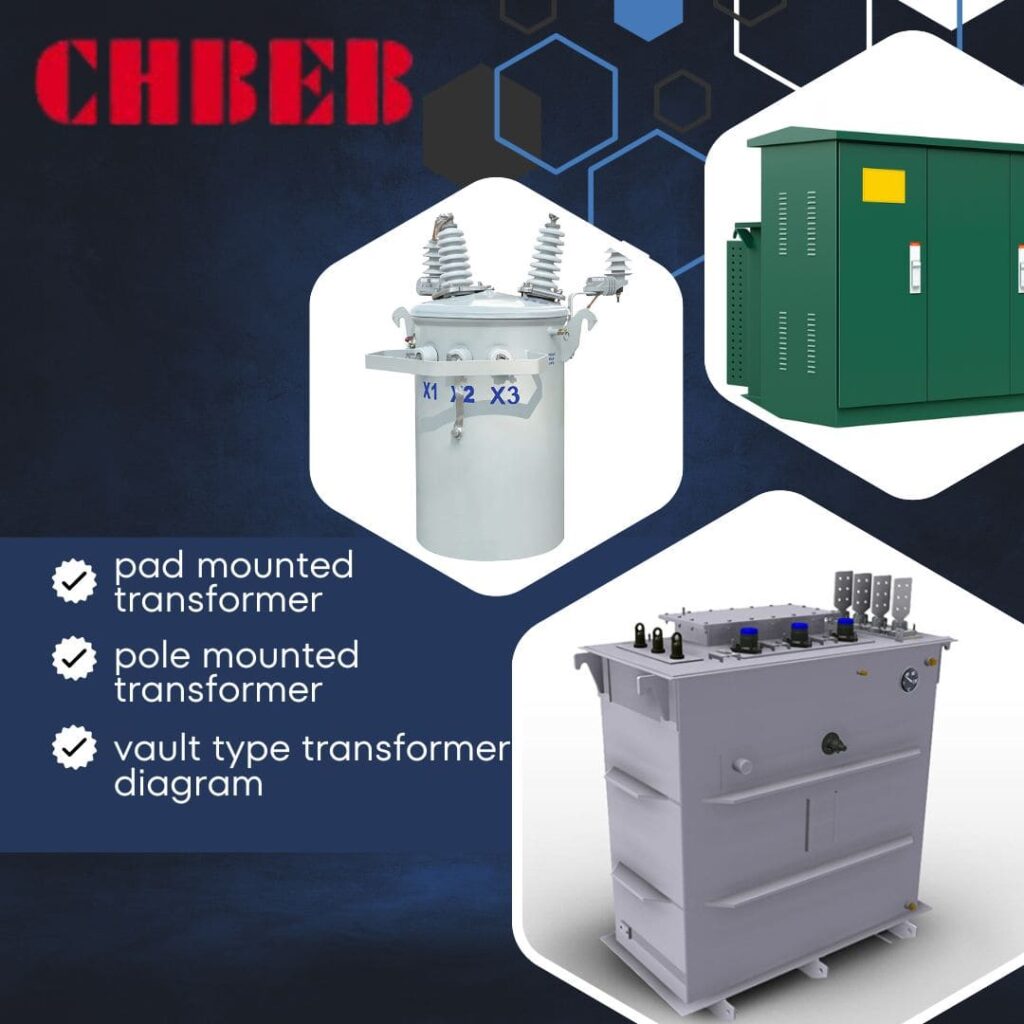
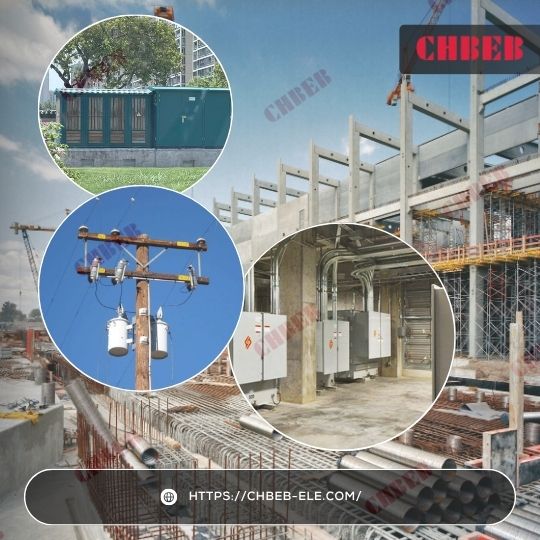
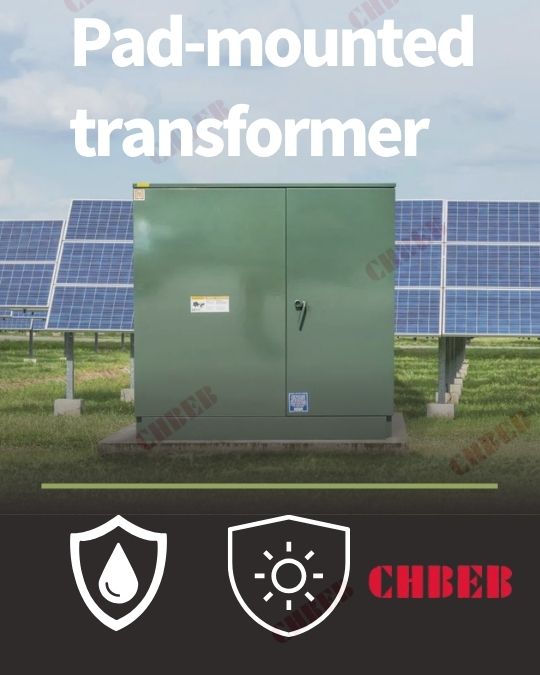
Pad mounted transformers sit on the ground, pole-mounted transformers are elevated on utility poles, and vault-type transformers are installed underground. Each type has unique features suited for different environments and applications, affecting their accessibility, safety, and maintenance requirements.
Let’s break down the key characteristics of each type:
Pad vs Pole vs Vault Transformers: Basic Features Explained
Pad Mounted Transformers:
Ground-level installation
Enclosed in a metal cabinet
Often used in residential and commercial areas
Pole-Mounted Transformers:
Installed on utility poles
Open to the air for cooling
Common in rural and older urban areas
Vault-Type Transformers:
Underground installation
Requires a dedicated vault or room
Often used in dense urban areas or where aesthetics are crucial
I remember a project where we initially planned for pole-mounted transformers in a new suburban development. After considering the area’s future growth and aesthetic requirements, we switched to pad mounted units. This decision not only improved the neighborhood’s look but also made future maintenance much easier.
pad mounted vs pole mounted vs vault transformer infographic
Here’s a comparison table of the basic features:
Feature
Pad Mounted
Pole-Mounted
Vault-Type
Installation Location
Ground level
Elevated on poles
Underground
Accessibility
Easy
Requires climbing
Limited
Visual Impact
Moderate
High
Low
Space Required
Moderate
Minimal ground space
Significant underground space
Cooling Method
Air or oil-cooled
Air-cooled
Air or oil-cooled
Typical Size Range
Up to 5000 kVA
Up to 167 kVA
Up to 10000 kVA
How Much Space Do Pad, Pole, and Vault Transformers Require?
Ever tried to fit a square peg in a round hole? Choosing a transformer without considering space requirements can feel just like that. Let’s explore how each transformer type fits into different spaces.
Space requirements vary significantly among transformer types. Pad mounted transformers need accessible ground space, pole-mounted transformers require minimal ground area but vertical clearance, and vault-type transformers demand underground space. Proper planning is crucial to ensure adequate room for installation, maintenance, and safety clearances.
Let’s dive into the spatial needs of each transformer type:
Space and Installation Needs of Pad, Pole, and Vault Transformers
Pad Mounted Transformers:
Require level ground surface
Need space for access doors to open fully
Typically need 3-10 feet of clearance on all sides
Pole-Mounted Transformers:
Minimal ground footprint
Require strong poles and overhead clearance
Need space for bucket trucks for maintenance
Vault-Type Transformers:
Require excavation and underground vault construction
Need access for ventilation and maintenance
Often require specialized lifting equipment for installation
I once worked on a project in a densely packed urban area. We initially considered pad mounted transformers, but space was at a premium. By opting for vault-type transformers, we were able to utilize underground space effectively, freeing up valuable real estate above ground.
pad vs pole vs vault transformer comparison photo
Here’s a detailed look at space requirements:
Aspect
Pad Mounted
Pole-Mounted
Vault-Type
Typical Footprint
4′ x 4′ to 8′ x 8′
2′ x 2′ pole base
10′ x 10′ to 20′ x 20′ vault
Clearance Needed
3-10 feet on all sides
15-30 feet vertical clearance
Access hatch and ventilation
Installation Surface
Concrete pad
Utility pole
Underground vault
Access for Maintenance
Front and/or side access
Aerial lift access
Vault entry, may need crane
Additional Space Needs
Oil containment area
Guy wires for support
Drainage and ventilation systems
Which Transformer Type Is Safest and Easiest to Maintain?
Have you ever tried to change a light bulb in a hard-to-reach place? Now imagine doing that with a multi-ton piece of electrical equipment. That’s the challenge of transformer maintenance and repair.
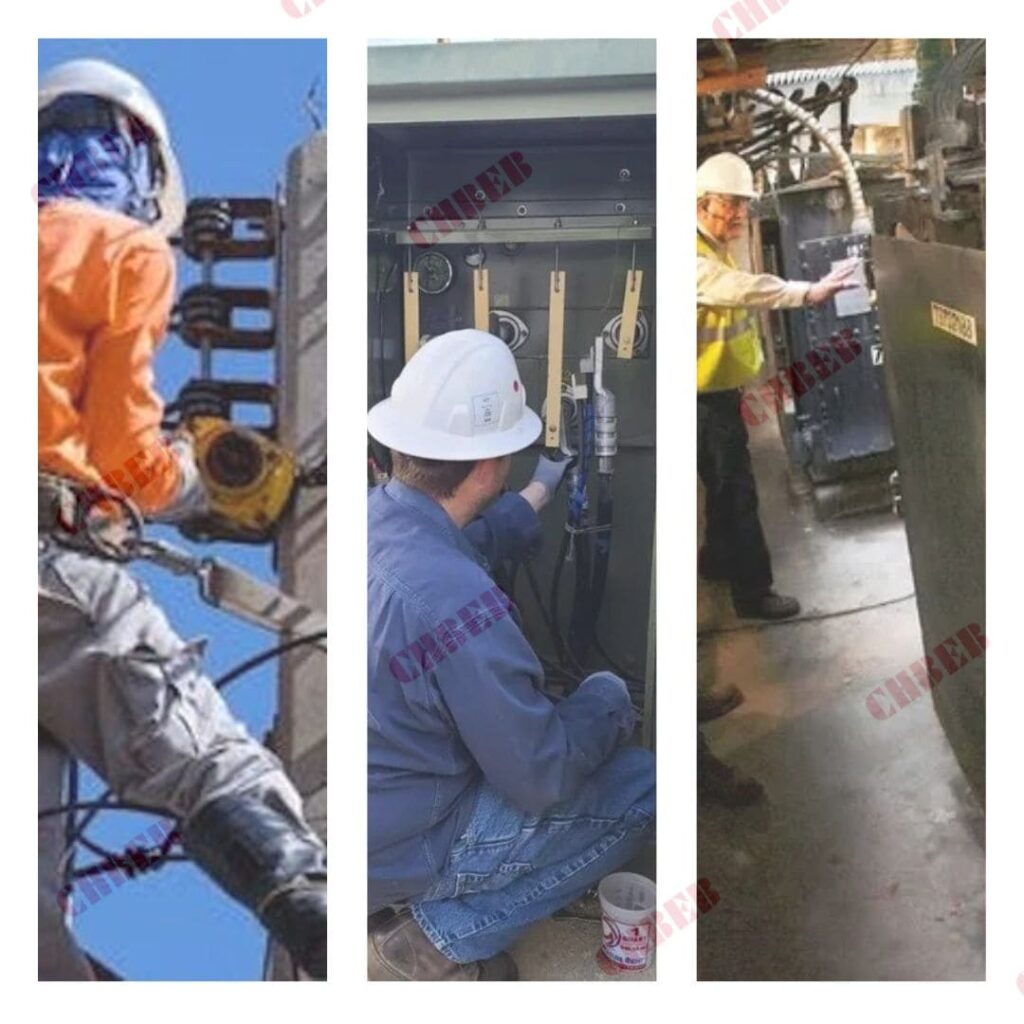
Safety and accessibility vary greatly among transformer types. Pad mounted units offer ground-level access but require secure enclosures. Pole-mounted transformers present height-related risks. Vault-type transformers provide the most protection but can be challenging to access. Each type demands specific safety protocols and maintenance approaches.
Let’s explore the safety and accessibility aspects of each transformer type:
Safety and Maintenance Access of Pad, Pole, and Vault Transformers
Pad Mounted Transformers:
Ground-level access simplifies maintenance
Locked enclosures prevent unauthorized access
Regular visual inspections are easy to perform
Pole-Mounted Transformers:
Require specialized equipment for access (bucket trucks)
Exposed to elements, making some maintenance tasks challenging
Height poses safety risks for workers
Vault-Type Transformers:
Limited access can complicate maintenance
Confined space entry procedures often required
Excellent protection from external factors
I recall a project where we replaced old pole-mounted transformers with pad mounted units in a residential area. The change dramatically improved safety for maintenance crews and reduced repair times. One technician told me they could now complete in an hour what used to take half a day.
pad mounted transformer maintenance inspection
Here’s a comparison of safety and accessibility factors:
Factor
Pad Mounted
Pole-Mounted
Vault-Type
Access Method
Ground level
Aerial lift
Vault entry
Safety Risks
Minimal
Fall hazards
Confined space
Inspection Ease
High
Moderate
Low
Maintenance Frequency
Quarterly to Annually
Bi-annually to Annually
Annually to Bi-annually
Emergency Repair Time
Typically 2-4 hours
4-8 hours
6-12 hours
Public Safety Concern
Moderate (ground-level)
Low (elevated)
Low (underground)
How Do Pad, Pole, and Vault Transformers Handle Weather and Environment?
Ever left a book out in the rain? Now imagine if that book was a critical piece of electrical infrastructure. Environmental protection is crucial for transformer longevity and reliability.
Environmental factors significantly impact transformer performance and lifespan. Pad mounted transformers offer good protection with proper enclosures. Pole-mounted units are exposed but designed for outdoor conditions. Vault-type transformers provide the best environmental protection but face moisture challenges. Each type has specific containment features for oil leaks.
pad mounted transformer weather resistant enclosure
Diagram showing weather resistance and containment measures for different transformer types
Let’s examine how each transformer type stands up to environmental challenges:
Environmental Protection Features of Pad, Pole, and Vault Transformers
Pad Mounted Transformers:
Enclosed in weather-resistant cabinets
Often include oil containment basins
Can be designed for flood-prone areas
Pole-Mounted Transformers:
Exposed to direct sunlight, rain, and wind
Designed with weather-resistant materials
Limited oil containment capabilities
Vault-Type Transformers:
Protected from most weather conditions
Require moisture control and ventilation
Often include sophisticated oil containment systems
I once worked on a coastal project where salt air corrosion was a major concern. We opted for specially designed pad mounted transformers with enhanced corrosion resistance. Five years later, they’re still performing excellently, while nearby pole-mounted units have required significant maintenance.
Here’s a comparison of environmental factors:
Factor
Pad Mounted
Pole-Mounted
Vault-Type
Weather Exposure
Limited
High
Minimal
Temperature Fluctuation
Moderate
High
Low
Flooding Risk
Moderate (can be mitigated)
Low
High (if not properly designed)
Oil Containment
Often included
Limited
Typically comprehensive
Corrosion Resistance
Good
Moderate
Excellent
Wildlife Interference
Low
Moderate
Very Low
How Do Pad, Pole, and Vault Transformers Affect Visual Aesthetics?
Have you ever seen a beautiful landscape marred by unsightly electrical equipment? The visual impact of transformers is a crucial consideration, especially in residential and commercial areas.
Aesthetic impact varies significantly among transformer types. Pad mounted units can be concealed but are visible at ground level. Pole-mounted transformers are more noticeable but take up less ground space. Vault-type transformers offer the least visual impact but require careful urban planning. The choice can significantly affect the look and feel of an area.
Let’s explore how each transformer type can be integrated into different environments:
Blending In or Standing Out – Transformer Design Impact
Pad Mounted Transformers:
Can be painted to match surroundings
Often screened by landscaping
Compact designs available for tight spaces
Pole-Mounted Transformers:
Part of the overhead line aesthetic
Can be clustered with other utilities
More noticeable in open areas
Vault-Type Transformers:
Nearly invisible when properly installed
Require only small access points above ground
Can be integrated into urban design elements
I remember a project in a historic district where visual impact was a top priority. We used pad mounted transformers but worked with a local artist to create decorative wraps that featured scenes from the town’s history. The transformers became talking points rather than eyesores.
Here’s a comparison of aesthetic considerations:
Aspect
Pad Mounted
Pole-Mounted
Vault-Type
Visual Prominence
Moderate
High
Low
Customization Options
High
Limited
Moderate
Impact on Landscaping
Moderate
Low
Low (after installation)
Urban Design Integration
Moderate
Challenging
Excellent
Historical Area Suitability
Good (with effort)
Poor
Excellent
Residential Acceptance
Moderate
Low
High
Transformer Cost Analysis: Upfront Price vs Long-Term Operating Expenses
Ever heard the phrase “penny wise, pound foolish”? When it comes to transformer selection, focusing solely on initial costs can lead to higher expenses down the road. Let’s break down the financial aspects of each transformer type.
Cost considerations for transformers include initial purchase, installation, maintenance, and operational expenses. Pad mounted transformers often have moderate upfront costs but lower maintenance expenses. Pole-mounted units are typically cheaper initially but can have higher long-term costs. Vault-type transformers have the highest initial investment but can offer long-term savings in certain scenarios.
Let’s dive into the financial implications of each transformer type:
Crunching the Numbers – Pad, Pole, Vault Cost Compared
Pad Mounted Transformers:
Moderate initial cost
Lower maintenance expenses
Potential for longer lifespan due to better protection
Pole-Mounted Transformers:
Lower upfront costs
Higher maintenance expenses over time
Potentially shorter lifespan in harsh environments
Vault-Type Transformers:
Highest initial investment
Lower ongoing maintenance costs
Longest potential lifespan with proper care
I once advised a client who was leaning towards pole-mounted transformers due to lower upfront costs. After a comprehensive 20-year cost analysis, we found that pad mounted units would save them nearly 15% in total ownership costs, primarily due to reduced maintenance and longer life expectancy.
Here’s a detailed cost comparison:
Cost Factor
Pad Mounted
Pole-Mounted
Vault-Type
Initial Equipment Cost
$$$
$$
$$$$
Installation Cost
$$
$
$$$$
Annual Maintenance Cost
$
$$
$
Lifespan (years)
30-40
20-30
40-50
Replacement Frequency
Low
Moderate
Very Low
Energy Efficiency
High
Moderate
Very High
Total 20-Year Ownership Cost
$$$$
$$$$
$$$$$
Transformer Performance Metrics2: Comparing Efficiency and Reliability
Have you ever wondered why some electrical systems seem to hum along smoothly while others are plagued with issues? The secret often lies in the performance of their transformers. Let’s examine how different transformer types stack up in terms of efficiency and reliability.
Performance metrics vary among transformer types. Pad mounted units often offer high efficiency and reliability due to their protected environment. Pole-mounted transformers can be less efficient due to exposure but are easily accessible for repairs. Vault-type transformers typically provide the highest efficiency and reliability but can have longer downtimes if issues occur.
Let’s delve into the performance aspects of each transformer type:
Pad, Pole, and Vault Transformers – Efficiency & Reliability Compared
Pad Mounted Transformers:
High efficiency due to modern designs
Good reliability with proper maintenance
Lower losses due to shorter secondary cables
Pole-Mounted Transformers:
Moderate efficiency, affected by environmental factors
Generally reliable but more susceptible to weather-related issues
Can have higher losses due to longer secondary cables
Vault-Type Transformers:
Highest potential efficiency
Excellent reliability when properly maintained
Very low losses in well-designed systems
I recall a project where we replaced aging pole-mounted transformers with modern pad mounted units in a suburban area. The utility company reported a 3% increase in overall distribution efficiency and a 40% reduction in weather-related outages within the first year.
Here’s a comparison of key performance metrics:
Metric
Pad Mounted
Pole-Mounted
Vault-Type
Efficiency at Rated Load
98-99%
97-98%
98-99.5%
No-Load Losses
Low
Moderate
Very Low
Load Losses
Low
Moderate
Low
Mean Time Between Failures
15-20 years
10-15 years
20-25 years
Average Outage Duration
2-4 hours
4-6 hours
6-12 hours
Overload Capacity
Good
Moderate
Excellent
Power Quality Impact
Low
Moderate
Very Low
Application Scenarios: Best Use Cases for Pad, Pole, and Vault Transformers
Ever tried to use a sledgehammer to hang a picture frame? Using the wrong tool for the job can be disastrous. The same principle applies to choosing the right transformer for specific applications. Let’s explore where each type shines.
Application scenarios greatly influence transformer choice. Pad mounted transformers excel in residential and commercial areas. Pole-mounted units are ideal for rural settings and quick installations. Vault-type transformers are best for high-density urban areas and locations where aesthetics are crucial. Choosing the right type for each scenario optimizes performance, cost, and reliability.
Let’s examine the ideal applicationsfor each transformer type:
Staying Safe – Transformer Maintenance & Access
Pad Mounted Transformers:
Ideal for suburban residential areas
Excellent for commercial zones and shopping centers
Great for new housing developments
Pole-Mounted Transformers:
Perfect for rural and agricultural settings
Suitable for temporary power needs (construction sites)
Good for areas with frequent flooding concerns
Vault-Type Transformers:
Optimal for dense urban environments
Excellent for high-rise buildings and underground networks
Ideal for areas with strict aesthetic requirements
I once worked on a project for a new mixed-use development. We used pad mounted transformers for the residential areas, vault-type for the high-rise commercial section, and even included a few pole-mounted units for quick deployment during the construction phase. This mix allowed us to optimize for each specific area’s needs.
Here’s a detailed look at application scenarios:
Scenario
Pad Mounted
Pole-Mounted
Vault-Type
Suburban Residential
Excellent
Good
Poor
Urban High-Density
Good
Poor
Excellent
Rural Areas
Moderate
Excellent
Poor
Commercial Zones
Excellent
Moderate
Good
Industrial Parks
Good
Moderate
Excellent
Historic Districts
Good (with aesthetics)
Poor
Excellent
Temporary Installations
Moderate
Excellent
Poor
Underground Networks
Poor
Poor
Excellent
Flood-Prone Areas
Good (with elevation)
Excellent
Moderate
Conclusion: Making the Right Transformer Choice for Long-Term Success
Selecting between pad mounted, pole mounted, and vault type transformers is both a technical decision and a strategic investment in safety, cost control, and long-term reliability. Each option has clear advantages depending on project location, budget, and future expansion needs.
Key Comparisons
Pad Mounted Transformers — Ground-level installation, accessible maintenance, customizable cabinet/enclosure. Suitable for residential neighborhoods, commercial complexes, and industrial parks where safety and appearance both matter.
Pole Mounted Transformers — Elevated installation, minimal land use, fast deployment. Best for rural areas, agricultural projects, and temporary sites with limited budgets.
Vault Type Transformers — Fully underground, protected from weather and vandalism, invisible to the public. Ideal for dense urban environments, premium properties, and areas with strict aesthetic regulations.
Cost and Maintenance Considerations
Pole Mounted: Lowest initial investment, higher long-term maintenance requirements.
Pad Mounted: Balanced upfront cost with moderate maintenance; strong lifecycle value.
Vault Type: Highest upfront investment, lowest total cost of ownership with reduced risk.
Choosing the Right Distribution Transformer Partner
CHBEB transformer factory
As the report highlights, utilities and developers face persistent pain points in Total Cost of Ownership (TCO), operational risks, and regulatory compliance when selecting pole-mounted, pad-mounted, or vault-type transformer systems. Hidden liabilities—from higher maintenance and energy losses in pole systems, to clearance conflicts in pad units, and confined-space regulations for vault designs—can erode long-term value.
This is where CHBEB brings strategic advantages. With over 60 years of manufacturing expertise, three modern factories in Wenzhou and Nanjing, and an office in Beijing, we are a trusted supplier for China’s State Grid and international markets. Our transformers are built with 100% new raw materials, undergo full factory testing before shipment, and are certified to international standards (IEC, ISO, CE). This ensures reliability, safety, and compliance across diverse application scenarios.
Lower TCO – High-efficiency designs and strict QC reduce losses and long-term OpEx.
Faster Deployment – Modular production and flexible inventory planning shorten delivery times, even within one week for urgent orders.
Regulatory Confidence – Support for local certifications and detailed testing reports make approval and acceptance smoother worldwide.
Customized Fit – Tailored solutions for utilities, industrial sites, and renewable projects, ensuring the right balance of cost, reliability, and compliance.
By addressing the pain points of TCO, operational risk, and regulatory hurdles, CHBEB is not only a transformer manufacturer but also a long-term partner for power infrastructure reliability. Contact us today to explore how our pad-mounted, pole-mounted, and vault-type solutions can support your next project.
Hello! 👋 Welcome to CHBEB.
We are a transformer manufacturer with 60+ years of experience.
✅ Distribution & Power Transformers (Oil & Dry Type)
✅ Customized EPC & OEM Solutions
✅ Fast Delivery & International Certifications