
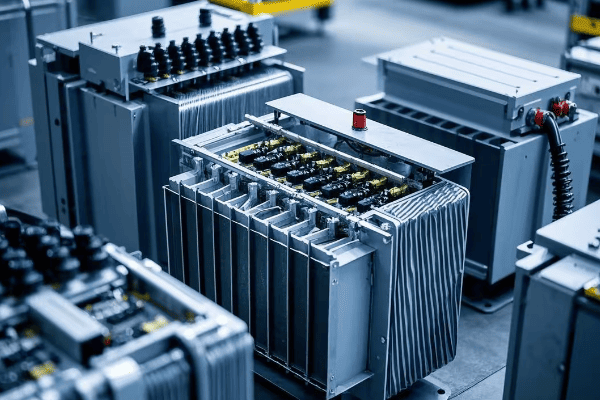
Are you confused by your electricity bill? You’re not alone. Many people struggle to understand the different types of power in electrical systems.
Active power, reactive power, and apparent power are three key concepts in electrical engineering. Active power does useful work, reactive power supports magnetic fields, and apparent power is the total power supplied. Understanding these helps in efficient energy management and system design.
In my 20 years as an electrical engineer, I’ve seen countless professionals and homeowners grapple with these concepts. This guide will demystify these power types, their relationships, and their practical implications. Whether you’re a curious homeowner or an aspiring engineer, you’ll gain valuable insights into the world of electrical power.
Active Power: The Worker Bee of the Electrical World?
Have you ever wondered what you’re actually paying for on your electricity bill? The answer lies in understanding active power.
Active power, measured in watts (W), is the power that does useful work in electrical systems. It’s the energy converted into light, heat, or mechanical motion. This is the power you’re billed for and the one that directly contributes to your electrical devices’ functionality.

Active power is the backbone of our electrical systems. It’s what makes our appliances work, our lights shine, and our motors run. Let’s dive deeper into this crucial concept.
What is Active Power?
Active power, also known as real power or true power, is the portion of electrical power that performs actual work. It’s measured in watts (W) or kilowatts (kW). The formula for calculating active power is:
P = VI cosφ
Where:
- P is active power in watts (W)
- V is voltage in volts (V)
- I is current in amperes (A)
- cosφ is the power factor
Practical Applications
Active power finds applications in various sectors:
- Household Appliances: Your 60W light bulb consumes 60W of active power to produce light.
- Industrial Motors: The power that turns the shaft of an electric motor is active power.
- Electric Heating: The heat produced by an electric heater is a direct result of active power consumption.
- Data Centers: The power consumed by servers and cooling systems is primarily active power.
- Electric Vehicles: The power used to charge EV batteries and drive their motors is active power.
I once worked on a project to optimize energy consumption in a manufacturing plant. By focusing on reducing active power usage through more efficient motors and lighting, we managed to cut the plant’s electricity bill by 25%.
Energy Efficiency
Understanding active power is key to improving energy efficiency. Here’s a table showing typical active power consumption of common household appliances:
| Appliance | Active Power Consumption (W) |
|---|---|
| LED Bulb | 8-12 |
| Refrigerator | 100-200 |
| Laptop | 50-100 |
| Air Conditioner | 1000-1500 |
| Electric Oven | 2000-2500 |
By being aware of the active power consumption of your devices, you can make informed decisions about energy usage and potentially reduce your electricity bills.
Latest Trends
- Smart Meters: Advanced metering infrastructure (AMI) allows for real-time monitoring of active power consumption.
- IoT-enabled Devices: Smart appliances can optimize their active power consumption based on usage patterns and electricity prices.
- Demand Response Programs: Utilities are implementing programs that incentivize consumers to reduce their active power consumption during peak demand periods.
Active power is crucial, but it’s just one part of the power puzzle. In the next sections, we’ll explore reactive and apparent power to complete the picture.
Reactive Power: The Silent Supporter in Electrical Systems?
Have you ever noticed that some electrical devices, like motors or fluorescent lights, seem to draw more power than they actually use? This mysterious extra power is called reactive power.
Reactive power, measured in volt-amperes reactive (VAR), is the power used to maintain electromagnetic fields in AC systems. It doesn’t do useful work but is crucial for the operation of many electrical devices. Understanding reactive power is key to efficient power system design and operation.
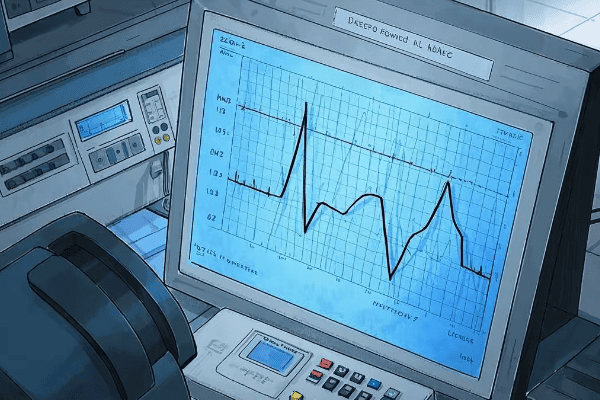
Reactive power plays a vital role in our electrical systems, even though it doesn’t directly perform work. Let’s explore this concept in more detail.
What is Reactive Power?
Reactive power is the portion of electrical power that flows back and forth between the source and the load. It’s measured in volt-amperes reactive (VAR). The formula for calculating reactive power is:
Q = VI sinφ
Where:
- Q is reactive power in VAR
- V is voltage in volts (V)
- I is current in amperes (A)
- sinφ is the sine of the phase angle between voltage and current
Practical Applications
Reactive power is crucial in various applications:
- Electric Motors: It creates the magnetic fields that allow motors to operate.
- Transformers: These devices rely on reactive power for voltage transformation.
- Fluorescent Lighting: These lights require reactive power for their ballasts to operate.
- Wind Turbines: Induction generators in wind turbines consume reactive power to generate electricity.
- HVDC Transmission: High-voltage direct current transmission systems use reactive power for voltage support and system stability.
I once worked on a project in a large office building where we were experiencing frequent voltage fluctuations. After investigation, we found that the building’s HVAC system was drawing a large amount of reactive power. By installing power factor correction capacitors, we stabilized the voltage and reduced the building’s overall power consumption by 15%.
Power Factor
Reactive power is closely related to the concept of power factor. Here’s a table showing typical power factors for different types of electrical loads:
| Load Type | Typical Power Factor |
|---|---|
| Resistive (e.g., heaters) | 1.0 |
| Inductive (e.g., motors) | 0.7-0.9 |
| Capacitive (e.g., capacitor banks) | Leading (>1.0) |
| Mixed (typical industrial) | 0.8-0.9 |
A power factor closer to 1.0 indicates more efficient use of electrical power, with less reactive power being drawn.
Latest Trends
- Flexible AC Transmission Systems (FACTS): These advanced power electronics devices control reactive power flow in transmission systems.
- Smart Inverters: Modern solar inverters can now provide reactive power support to the grid.
- Dynamic VAR Compensation: Advanced systems provide real-time reactive power compensation, improving power quality and system stability.
Understanding reactive power is crucial for maintaining efficient and stable electrical systems. Next, we’ll explore apparent power and how it relates to both active and reactive power.
Apparent Power: The Big Picture in Electrical Systems?
Have you ever wondered why electrical equipment is rated in VA (volt-amperes) instead of watts? The answer lies in understanding apparent power.
Apparent power, measured in volt-amperes (VA), is the total power supplied by an electrical system. It’s the vector sum of active and reactive power. Apparent power is crucial for sizing electrical equipment and understanding the total capacity of power systems.
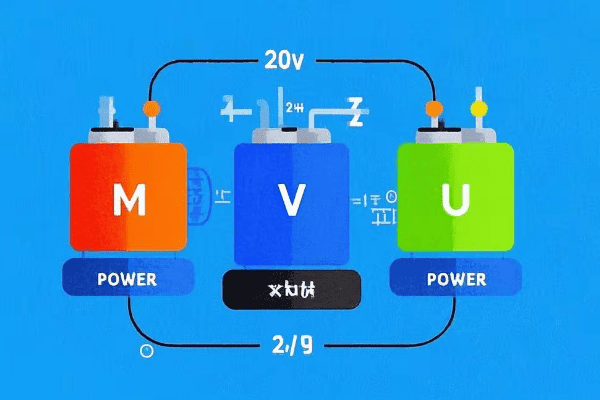
Apparent power provides a comprehensive view of the power in an electrical system. Let’s delve deeper into this concept.
What is Apparent Power?
Apparent power is the total amount of power supplied by a source or consumed by a load in an AC circuit. It’s measured in volt-amperes (VA). The formula for calculating apparent power is:
S = VI
Where:
- S is apparent power in VA
- V is voltage in volts (V)
- I is current in amperes (A)
Alternatively, apparent power can be calculated as:
S = √(P² + Q²)
Where:
- S is apparent power in VA
- P is active power in watts (W)
- Q is reactive power in VAR
Practical Applications
Apparent power is crucial in various scenarios:
- Equipment Sizing: Electrical equipment like transformers and generators are rated in VA.
- Power System Capacity: It determines the total capacity of power systems, including transmission lines and distribution networks.
- Billing for Large Consumers: Some utilities bill large industrial consumers based on apparent power consumption.
- UPS Systems: Uninterruptible Power Supplies are rated in VA to handle both active and reactive power needs.
- Renewable Energy Integration: Apparent power considerations are crucial when integrating large-scale solar or wind farms into the grid.
I once consulted for a manufacturing plant that was experiencing frequent circuit breaker trips. We found that while their active power consumption was within limits, their apparent power was exceeding the system capacity due to a low power factor. By improving the power factor, we resolved the issue without upgrading the entire electrical system, saving the company significant costs.
Power Relationships
Here’s a table showing the relationships between different power types and power factor:
| Power Type | Formula | Relationship to Power Factor |
|---|---|---|
| Active Power (P) | P = S * cos(φ) | Directly proportional |
| Reactive Power (Q) | Q = S * sin(φ) | Inversely proportional |
| Apparent Power (S) | S = √(P² + Q²) | Inversely proportional |
| Power Factor | PF = P / S | – |
Latest Trends
- Microgrid Systems: Advanced microgrid controllers optimize apparent power flow within isolated or grid-connected microgrids.
- Power Quality Analyzers: New generation analyzers provide real-time monitoring of apparent power.
- AI in Power Systems: Artificial Intelligence is being applied to predict and optimize apparent power flow in complex power systems.
Understanding apparent power is crucial for efficient electrical system design and operation. It helps in proper equipment sizing, power factor management, and overall system optimization.
Conclusion
Understanding active, reactive, and apparent power is crucial for efficient electrical system design and operation. Active power does useful work, reactive power supports magnetic fields, and apparent power represents the total system capacity. By managing these power types effectively, we can optimize energy usage, reduce costs, and improve system reliability. Consider conducting an energy audit, exploring smart metering options, and staying informed about new technologies in power management to create a more sustainable and reliable electrical infrastructure for the future.
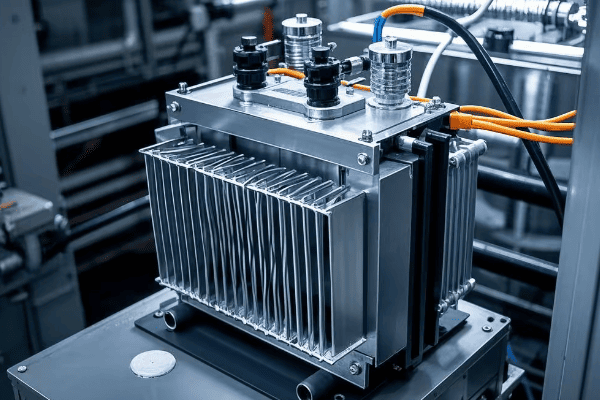
Are you puzzled by the complexities of power distribution systems? You’re not alone. Many find auto transformers confusing, but they’re essential for modern electrical grids.
Auto transformers are key components in power systems that efficiently regulate voltage using a single winding. They play a crucial role in maintaining stable power delivery while offering space and cost savings across various industries.
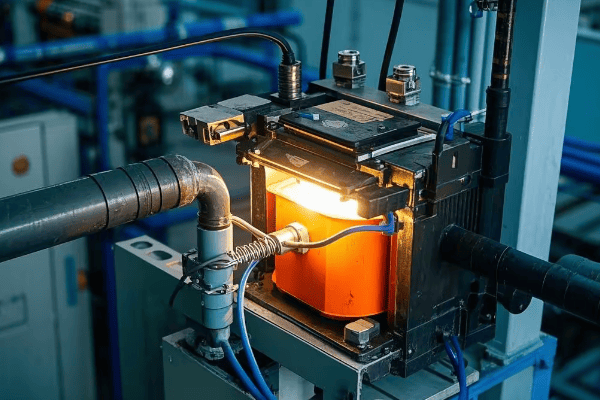
As an electrical engineer with 20 years of experience, I’ve seen auto transformers revolutionize power systems. Let’s explore how these devices work and why they’re so important.
The Basics of Auto Transformers: Understanding Core Design Principles?
Imagine trying to fill a water bottle from a fire hydrant. That’s similar to the challenge power companies face when delivering electricity to your home. Auto transformers are the solution.
An auto transformer is like a universal adapter for electricity. It uses a single winding to adjust voltage levels, making it possible to "step down" high voltages for safe home use or "step up" lower voltages for efficient power transmission.
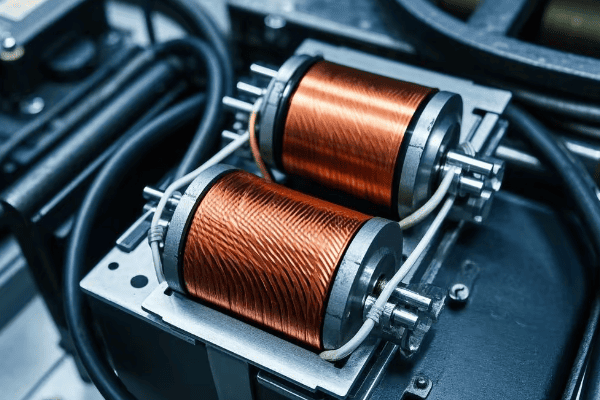
Key components:
- Single Winding: The main electrical pathway.
- Taps: Connection points for different voltages.
- Core: Directs the magnetic field.
Quick Quiz: What’s the main advantage of an auto transformer over a traditional transformer?
A) It’s larger
B) It’s more efficient for small voltage changes
C) It always costs more
D) It uses two separate windings
(Answer: B)
How Auto Transformers Work: A Deep Dive into Functionality?
Are you curious about the inner workings of auto transformers? Let’s unravel the mystery behind their efficient voltage regulation.
Auto transformers work on the principle of electromagnetic induction, using a single winding to both step up and step down voltage. The key to their functionality lies in the variable coupling between different sections of the winding.
Functionality Breakdown:
- Input voltage applied to part of the winding
- Magnetic field created in the core
- Voltage induced across the entire winding
- Output voltage taken from a different tap
Case Study: Rural Voltage Stabilization
Location: Midwest USA
Challenge: Fluctuating voltage between 11kV and 13kV
Solution: 15% tapped auto transformer
Result: Stable output at 11kV ± 0.5kV
Quick Quiz: How does an auto transformer achieve voltage transformation?
A) Through separate windings
B) By changing the number of turns between taps
C) Using external resistors
D) By altering the core material
(Answer: B)
Efficiency Matters: Auto Transformers vs. Traditional Transformers?
Are you looking to optimize your power system’s efficiency? Auto transformers might be the solution you’re seeking.
Auto transformers offer superior efficiency, especially for small voltage changes. They can achieve efficiency ratings up to 99%, compared to 95-98% for traditional transformers, leading to significant energy savings.
| Efficiency Comparison: | Voltage Change | Auto Transformer | Traditional Transformer |
|---|---|---|---|
| 5% | 99.5% | 98% | |
| 10% | 99% | 97.5% | |
| 20% | 98% | 97% | |
| 50% | 96% | 96% |
Real-World Impact:
In a recent project, replacing a 1000 kVA traditional transformer with an auto transformer resulted in:
- Annual Energy Savings: 140,160 kWh
- Cost Savings: $14,016 per year (at $0.10/kWh)
Quick Quiz: For which type of voltage change are auto transformers most efficient?
A) Very large changes (>50%)
B) Medium changes (20-50%)
C) Small changes (5-10%)
D) No change
(Answer: C)
Industry Applications: Where Auto Transformers Make a Difference?
Auto transformers find applications across various industries. Let’s explore where they truly shine.
Auto transformers excel in power distribution, industrial processes, transportation systems, and renewable energy integration. They’re crucial for efficient voltage regulation and power factor correction.
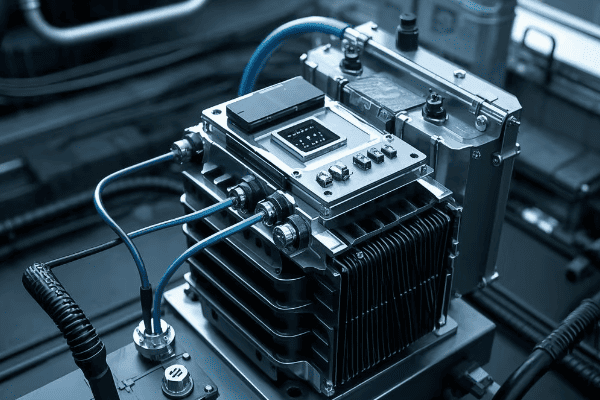
Key Applications:
- Power Distribution: Voltage regulation in substations
- Industrial: Motor starting, welding equipment
- Transportation: Railway electrification, EV charging
- Renewable Energy: Solar and wind power integration
Case Study: Solar Farm Integration
Location: Arizona, USA
Challenge: Connecting 100 MW solar farm to grid
Solution: Auto transformers with smart control systems
Results:
- 99.2% power transmission efficiency
- 15% reduction in system losses
- 30% smaller substation footprint
Quick Quiz: In which application do auto transformers help manage variable power sources?
A) Railway electrification
B) Motor starting
C) Renewable energy integration
D) Welding equipment
(Answer: C)
Safety, Installation, and Maintenance: Best Practices?
Safety is paramount when working with auto transformers. Let’s explore key considerations and best practices.
Auto transformers require specific safety measures due to their lack of electrical isolation. Proper installation and regular maintenance are crucial for optimal performance and longevity.
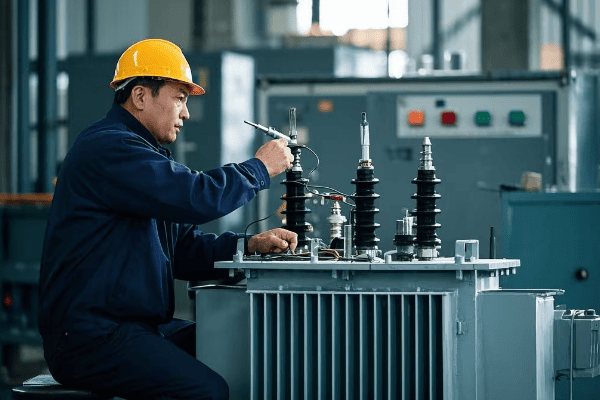
Safety Checklist:
- Proper Grounding
- Overcurrent Protection
- Regular Insulation Tests
- Thermal Monitoring
- Personal Protective Equipment (PPE)
| Maintenance Schedule: | Task | Frequency |
|---|---|---|
| Visual Inspection | Monthly | |
| Cleaning | Quarterly | |
| Insulation Test | Annually | |
| Oil Analysis (if applicable) | Semi-annually |
Quick Quiz: What’s a key safety consideration specific to auto transformers?
A) They require more frequent oil changes
B) They have a lack of electrical isolation
C) They are always safe to touch
D) They only need grounding every five years
(Answer: B)
The Future of Auto Transformers: Smart Grids and Beyond?
As we move towards smarter power systems, auto transformers are evolving. Here’s what to expect.
Future auto transformer innovations focus on smart monitoring, advanced materials, and integration with digital grid technologies. These developments aim to enhance efficiency, reliability, and adaptability in smart grids.
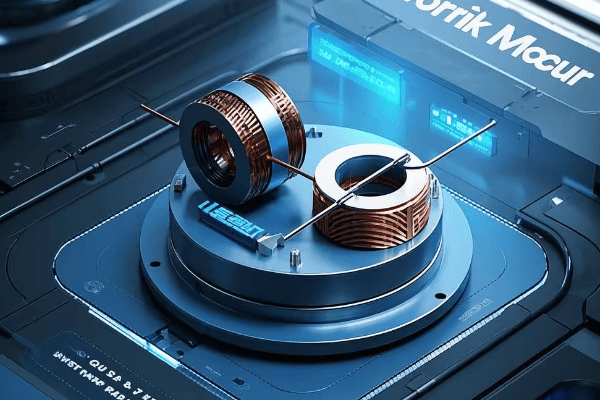
Key Innovations:
- IoT Integration for real-time monitoring
- Amorphous core materials for higher efficiency
- Adaptive voltage regulation for smart grids
- Digital twins for optimized performance
Case Study: Next-Gen Auto Transformer Pilot
Location: Tokyo, Japan
Features: Amorphous core, IoT monitoring, adaptive regulation
Results:
- 25% reduction in core losses
- 99.5% overall efficiency
- 50% decrease in maintenance-related outages
Quick Quiz: Which feature allows auto transformers to automatically adjust to changing grid conditions?
A) Amorphous core
B) IoT monitoring
C) Adaptive voltage regulation
D) Digital twin technology
(Answer: C)
Conclusion
Auto transformers are revolutionizing power management with their efficiency, versatility, and adaptability. From traditional power distribution to renewable energy integration and smart grids, these devices are shaping the future of electrical systems. By understanding and implementing auto transformer technology, we can build more efficient, reliable, and sustainable power networks for the 21st century and beyond.
Are you puzzled by the complexities of modern power systems? You’re not alone. Many find the world of electrical engineering daunting, but auto transformers are changing the game.
Auto transformers are innovative devices that efficiently regulate voltage using a single winding. They’re crucial for stable power delivery, offering significant space and cost savings across various industries.
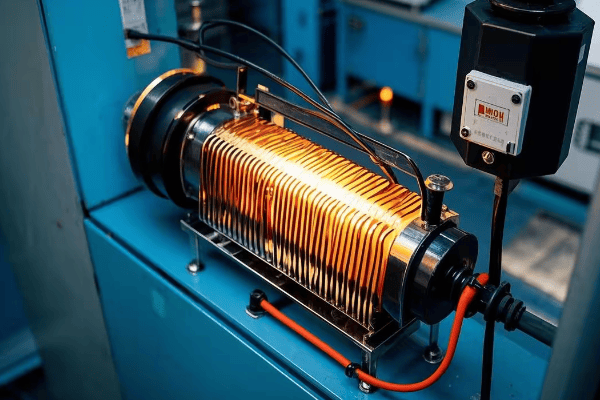
As an electrical engineer with 20 years of experience, I’ve seen auto transformers transform power management. Let’s explore how these devices work and why they’re so important.
What Are Auto Transformers and How Do They Work?
Imagine trying to fill a water bottle from a fire hydrant. That’s similar to the challenge power companies face when delivering electricity to your home. Auto transformers are the solution.
An auto transformer is like a universal adapter for electricity. It uses a single winding to adjust voltage levels, making it possible to "step down" high voltages for safe home use or "step up" lower voltages for efficient power transmission.
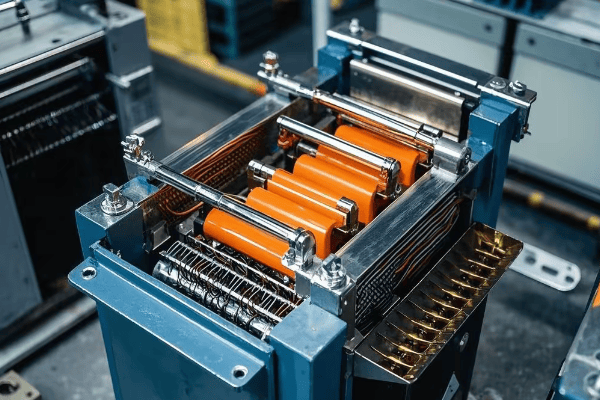
Key components:
- Single Winding: The main electrical pathway.
- Taps: Connection points for different voltages.
- Core: Directs the magnetic field.
Quick Quiz: What’s the main advantage of an auto transformer over a traditional transformer?
A) It’s larger
B) It’s more efficient for small voltage changes
C) It always costs more
D) It uses two separate windings
(Answer: B)
Why Are Auto Transformers More Efficient?
Efficiency is crucial in power systems. Auto transformers excel in this area, especially for small voltage adjustments.
Auto transformers can achieve efficiency ratings up to 99%, compared to 95-98% for traditional transformers. This leads to significant energy savings in power distribution systems.
Case Study: Manufacturing Plant Upgrade
- Location: Ontario, Canada
- Challenge: High energy costs
- Solution: Replaced 10 traditional transformers with auto transformers
- Results:
- Energy savings: 876,000 kWh per year
- Cost savings: $87,600 annually
- ROI: 2.5 years
Quick Quiz: How much energy did the auto transformer upgrade save annually?
A) 438,000 kWh
B) 876,000 kWh
C) 1,314,000 kWh
D) 100,000 kWh
(Answer: B)
Where Are Auto Transformers Used?
Auto transformers are versatile devices used across various industries. Let’s explore their key applications:
-
Power Distribution:
- Voltage regulation in substations
- Compensating for voltage drops in long lines
-
Industrial Processes:
- Motor starting
- Welding equipment
- Furnace control
-
Transportation:
- Railway electrification
- Electric vehicle charging stations
-
Renewable Energy:
- Solar and wind power integration

Case Study: Solar Farm Integration
- Location: Arizona, USA
- Challenge: Connecting a 100 MW solar farm to the grid
- Solution: Auto transformers with smart control systems
- Results:
- 99.2% efficiency in power transmission
- 15% reduction in system losses
- 30% reduction in substation size
Quick Quiz: In which application do auto transformers help manage variable power sources?
A) Railway electrification
B) Motor starting
C) Renewable energy integration
D) Welding equipment
(Answer: C)
Safety First: Key Considerations for Auto Transformers
Safety is paramount when working with auto transformers. Here are the key points to remember:
- Proper Grounding: Essential for preventing electrical hazards.
- Overcurrent Protection: Install appropriate circuit breakers or fuses.
- Regular Maintenance: Conduct inspections and tests periodically.
- Personal Protective Equipment: Always use when working on or near auto transformers.
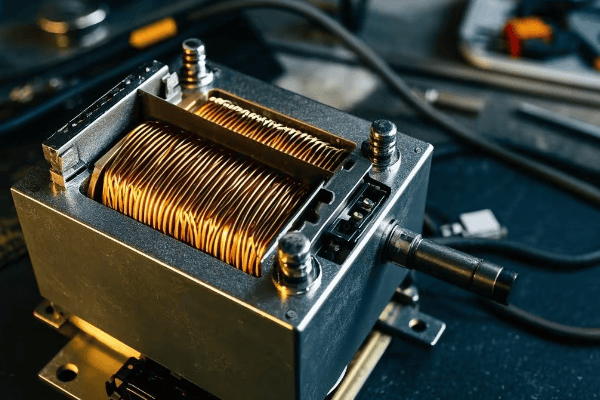
Safety Checklist:
| Task | Frequency |
|---|---|
| Visual Inspection | Monthly |
| Insulation Test | Annually |
| Thermal Imaging | Quarterly |
| Connection Check | Semi-annually |
Remember: Always treat auto transformers as live equipment unless proven otherwise.
The Future of Auto Transformers: Smart Grids and Beyond
As we move towards smarter power systems, auto transformers are evolving. Here’s what to expect:
- IoT Integration: Real-time monitoring and predictive maintenance.
- Advanced Materials: Amorphous cores for even higher efficiency.
- Smart Grid Compatibility: Adaptive voltage regulation and bidirectional power flow management.

Case Study: Next-Gen Auto Transformer Pilot
- Location: Tokyo, Japan
- Features: Amorphous core, IoT monitoring, adaptive regulation
- Results:
- 25% reduction in core losses
- 99.5% overall efficiency
- 50% decrease in maintenance-related outages
Quick Quiz: Which feature allows auto transformers to automatically adjust to changing grid conditions?
A) Amorphous core
B) IoT monitoring
C) Adaptive voltage regulation
D) Bidirectional power flow
(Answer: C)
Conclusion
Auto transformers are revolutionizing power management with their efficiency, versatility, and adaptability. From traditional power distribution to renewable energy integration and smart grids, these devices are shaping the future of electrical systems. By understanding and implementing auto transformer technology, we can build more efficient, reliable, and sustainable power networks for the 21st century and beyond.
Are you struggling to understand the complexities of power distribution systems? You’re not alone. Many engineers and technicians find auto transformers confusing, but they’re essential for modern electrical grids.
Auto transformers are key components in power systems that efficiently regulate voltage using a single winding. They’re crucial for maintaining stable power delivery while saving space and energy in various applications across industries.
In my 20 years as an electrical engineer, I’ve seen auto transformers revolutionize power systems. This guide will walk you through everything you need to know about auto transformers, from basic principles to practical applications and safety considerations. Whether you’re a curious beginner or a seasoned professional, you’ll find valuable insights here.
The Basics of Auto Transformers: How They Work and Why They Matter?
Imagine trying to fill a water bottle from a fire hydrant. That’s the challenge power companies face when delivering electricity to your home. Auto transformers are the solution to this problem.
An auto transformer is a special type of transformer that uses a single winding to adjust voltage levels. It’s like having a universal adapter for electricity, making it possible to "step down" high voltages for safe home use or "step up" lower voltages for efficient power transmission.
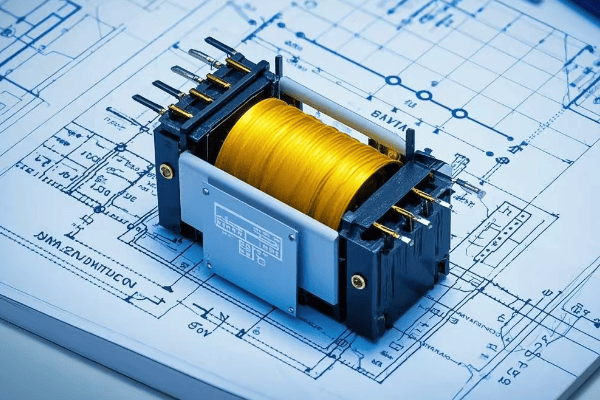
Let’s break it down with a simple analogy:
Think of an auto transformer as a long garden hose with multiple taps along its length. The water pressure (voltage) at each tap is different, but it’s all part of the same hose (winding). By choosing different taps, you can get the exact "pressure" you need.
Key components:
- Single Winding: The "hose" that carries electricity.
- Taps: "Outlets" at different points on the winding.
- Core: A metal center that helps direct the electrical energy.
Here’s a simple comparison between auto transformers and regular transformers:
| Feature | Auto Transformer | Regular Transformer |
|---|---|---|
| Windings | One | Two separate |
| Size | Compact | Larger |
| Efficiency | Higher for small changes | Lower for small changes |
| Cost | Lower | Higher |
| Best Use | Small voltage adjustments | Large voltage changes |
Beginner’s Tip: Think of an auto transformer as a "smart" extension cord that can adjust the voltage to match your needs, whether you’re plugging in a lamp or a power tool.
Quiz: What’s the main advantage of an auto transformer over a regular transformer?
A) It’s larger
B) It’s more efficient for small voltage changes
C) It always costs more
D) It uses two separate windings
(Answer: B)
Efficiency Gains: Comparing Auto Transformers to Traditional Transformers?
Are you looking to optimize your power system’s efficiency? Auto transformers might be the solution you’re seeking, but how do they stack up against traditional transformers?
Auto transformers offer superior efficiency, especially for small voltage changes. They can achieve efficiency ratings up to 99%, compared to 95-98% for traditional transformers, leading to significant energy savings in power distribution systems.
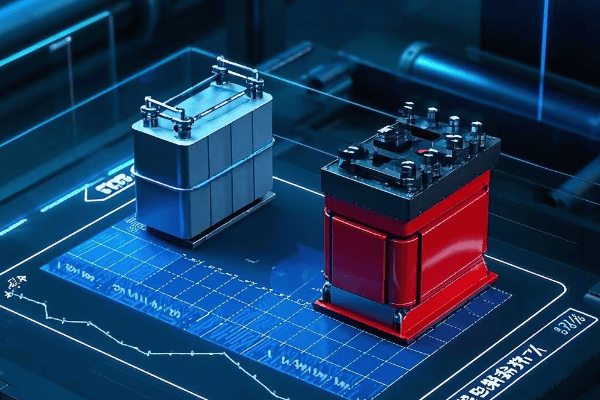
Let’s dive into a real-world case study to illustrate these efficiency gains:
Case Study: Manufacturing Plant Upgrade
Location: Ontario, Canada
Challenge: High energy costs and limited space for electrical equipment
Before:
- 10 traditional transformers (500 kVA each)
- Average efficiency: 97%
- Annual energy loss: 1,314,000 kWh
- Floor space used: 100 m²
After (Auto Transformer Upgrade):
- 10 auto transformers (500 kVA each)
- Average efficiency: 99%
- Annual energy loss: 438,000 kWh
- Floor space used: 60 m²
Results:
- Energy savings: 876,000 kWh per year
- Cost savings: $87,600 per year (at $0.10/kWh)
- Space savings: 40 m²
- ROI: 2.5 years
This case study demonstrates the significant benefits of auto transformers in terms of energy efficiency, cost savings, and space utilization.
Efficiency Comparison Table:
| Voltage Change | Auto Transformer Efficiency | Traditional Transformer Efficiency |
|---|---|---|
| 5% | 99.5% | 98% |
| 10% | 99% | 97.5% |
| 20% | 98% | 97% |
| 50% | 96% | 96% |
As you can see, auto transformers excel in efficiency, especially for small voltage changes. This makes them ideal for applications like voltage regulation in power distribution systems.
Beginner’s Tip: Higher efficiency means less energy wasted as heat. This not only saves money but also reduces the need for cooling systems, further increasing overall system efficiency.
Quiz: In the case study, how much energy did the auto transformer upgrade save annually?
A) 438,000 kWh
B) 876,000 kWh
C) 1,314,000 kWh
D) 100,000 kWh
(Answer: B)
Safety First: Key Considerations When Working with Auto Transformers?
Safety is paramount when working with any electrical equipment, especially auto transformers. Are you aware of the potential risks and necessary precautions?
Auto transformers require specific safety measures due to their lack of electrical isolation. Key safety considerations include proper grounding, overcurrent protection, insulation maintenance, and adherence to electrical codes and standards.
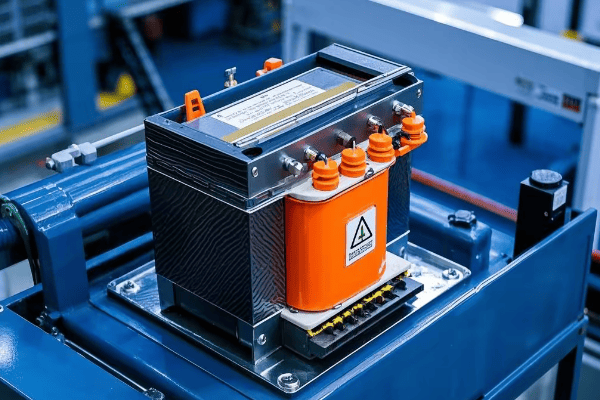
Let’s explore essential safety practices through a real-world incident and its resolution:
Case Study: Near-Miss Incident at a Substation
Location: Texas, USA
Incident: Electrical arc flash during maintenance
Situation:
During routine maintenance of an auto transformer at a substation, an electrical arc flash occurred, narrowly missing a technician.
Root Causes:
- Inadequate grounding
- Worn insulation
- Lack of proper personal protective equipment (PPE)
Corrective Actions:
- Implemented comprehensive grounding procedures
- Established regular insulation testing schedule
- Upgraded PPE requirements for all personnel
- Conducted mandatory safety training sessions
Results:
- Zero incidents in the following 3 years
- 30% reduction in near-miss reports
- Improved safety culture among staff
Key Safety Measures:
-
Grounding:
- Ensure proper grounding of the auto transformer chassis.
- Implement a robust grounding system for the entire installation.
-
Overcurrent Protection:
- Install appropriately sized circuit breakers or fuses.
- Consider the potential for higher fault currents in auto transformers.
-
Insulation Maintenance:
- Regularly check insulation resistance.
- Replace or repair damaged insulation promptly.
-
Personal Protective Equipment (PPE):
- Use appropriate voltage-rated gloves and clothing.
- Wear safety glasses and face shields during maintenance.
-
Training and Procedures:
- Conduct regular safety training for all personnel.
- Develop and enforce clear safety procedures.
Safety Checklist:
| Safety Aspect | Action | Frequency |
|---|---|---|
| Grounding | Check connections, measure resistance | Monthly |
| Overcurrent Protection | Inspect and test breakers/fuses | Quarterly |
| Insulation | Perform insulation resistance test | Annually |
| PPE | Inspect and replace as needed | Before each use |
| Staff Training | Conduct safety training sessions | Annually |
Remember, safety is not just about following rules; it’s about creating a culture of awareness and responsibility.
Beginner’s Tip: Always treat auto transformers as live equipment. Never assume they are de-energized without proper verification.
Quiz: What is a key safety consideration specific to auto transformers?
A) They require more frequent oil changes
B) They have a lack of electrical isolation
C) They are always safe to touch
D) They only need grounding every five years
(Answer: B)
Practical Applications: Industries and Scenarios Where Auto Transformers Excel?
Auto transformers find applications across various industries due to their efficiency and compact design. But where do they truly shine?
Auto transformers are widely used in power distribution, industrial processes, transportation systems, and renewable energy integration. They excel in applications requiring efficient voltage regulation, power factor correction, and small voltage transformations.
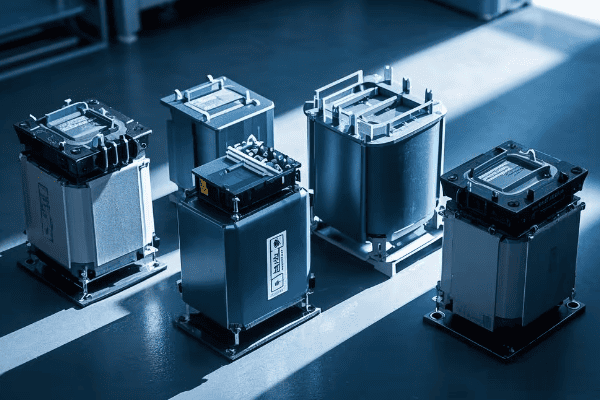
Let’s explore a real-world application that showcases the versatility of auto transformers:
Case Study: Solar Farm Integration
Location: Arizona, USA
Challenge: Efficiently connecting a large solar farm to the grid
Situation:
A 100 MW solar farm needed to connect to the local power grid. The solar panels produced variable DC voltage that needed to be converted and stepped up to match the grid voltage.
Solution:
Implemented a system using auto transformers in conjunction with inverters:
- Inverters converted DC to AC
- Auto transformers adjusted voltage levels for grid compatibility
- Smart control systems managed voltage fluctuations
Results:
- 99.2% efficiency in power transmission
- 15% reduction in overall system losses compared to traditional methods
- Successful handling of voltage variations from 360V to 440V
- 30% reduction in substation footprint
This case study demonstrates how auto transformers can play a crucial role in renewable energy integration, offering efficiency and flexibility in managing variable power sources.
Key Application Areas:
-
Power Distribution:
- Voltage regulation in substations
- Compensation for voltage drops in long transmission lines
-
Industrial Processes:
- Motor starting (reducing inrush current)
- Welding equipment (adjusting voltage for different processes)
- Furnace control (precise voltage regulation)
-
Transportation Systems:
- Railway electrification
- Electric vehicle charging stations
-
Renewable Energy:
- Solar and wind farm grid integration
- Energy storage system connections
Application Summary Table:
| Industry | Application | Benefits of Auto Transformers |
|---|---|---|
| Power Distribution | Voltage regulation | Stable power supply, reduced losses |
| Manufacturing | Motor starting, welding | Reduced equipment stress, precise control |
| Transportation | Railway power, EV charging | Efficient power conversion, fast charging |
| Renewable Energy | Grid integration | Smooth power feed-in, high efficiency |
Beginner’s Tip: Auto transformers are like the Swiss Army knives of the electrical world – versatile tools that can handle a variety of voltage adjustment tasks efficiently.
Quiz: In the solar farm case study, what was the efficiency achieved in power transmission?
A) 95%
B) 97%
C) 99.2%
D) 100%
(Answer: C)
Conclusion
Auto transformers play a crucial role in modern power systems, offering efficiency, versatility, and adaptability. From power distribution to renewable energy integration, these devices are essential for maintaining stable and efficient electrical grids. By understanding their principles, applications, and safety considerations, we can harness the full potential of auto transformers to build more sustainable and reliable power systems for the future.
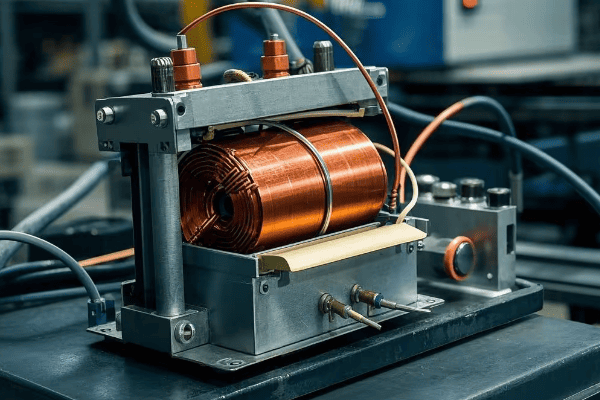
Are you puzzled by the complexities of power distribution systems? You’re not alone. Many engineers and technicians find auto transformers confusing, but understanding them is key to modern electrical grids.
Auto transformers are essential components in power systems that efficiently regulate voltage using a single winding. They’re crucial for maintaining stable power delivery while saving space and energy in various applications across industries.
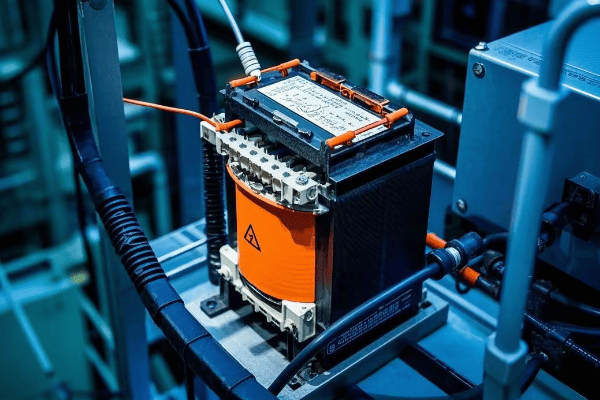
In my 20 years as an electrical engineer, I’ve seen auto transformers revolutionize power systems. This guide will walk you through everything you need to know, from basic principles to advanced applications and future trends. Whether you’re a curious beginner or a seasoned professional, you’ll find valuable insights here.
Fundamentals of Auto Transformers: Understanding the Basics?
Imagine trying to fill a water bottle from a fire hydrant. That’s the challenge power companies face when delivering electricity to your home. Auto transformers are the solution to this problem.
An auto transformer is a special type of transformer that uses a single winding to adjust voltage levels. It’s like having a universal adapter for electricity, making it possible to "step down" high voltages for safe home use or "step up" lower voltages for efficient power transmission.
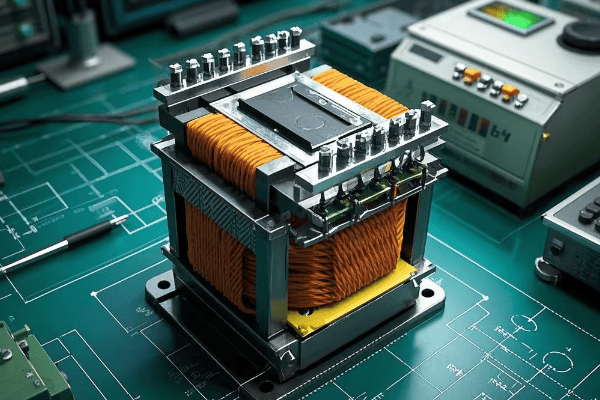
Let’s break it down with a simple analogy:
Think of an auto transformer as a long garden hose with multiple taps along its length. The water pressure (voltage) at each tap is different, but it’s all part of the same hose (winding). By choosing different taps, you can get the exact "pressure" you need.
Key components:
- Single Winding: The "hose" that carries electricity.
- Taps: "Outlets" at different points on the winding.
- Core: A metal center that helps direct the electrical energy.
Here’s a simple comparison between auto transformers and regular transformers:
| Feature | Auto Transformer | Regular Transformer |
|---|---|---|
| Windings | One | Two separate |
| Size | Compact | Larger |
| Efficiency | Higher for small changes | Lower for small changes |
| Cost | Lower | Higher |
| Best Use | Small voltage adjustments | Large voltage changes |
Beginner’s Tip: Think of an auto transformer as a "smart" extension cord that can adjust the voltage to match your needs, whether you’re plugging in a lamp or a power tool.
Auto Transformer Design and Construction: Key Components Explained?
Have you ever wondered what’s inside an auto transformer? Let’s take a peek under the hood and explore its key components.
Auto transformers consist of a single winding, a core, taps, and terminals. Each part plays a crucial role in efficiently transforming voltage while maintaining a compact and cost-effective design.

Let’s examine each key component:
1. Winding
The winding is the heart of an auto transformer:
- Material: Usually copper for better conductivity.
- Design: A single continuous coil with multiple turns.
- Function: Carries the current and creates the magnetic field.
Think of the winding as a long, coiled wire that electricity flows through, like water through a pipe.
2. Core
The core is crucial for the transformer’s magnetic circuit:
- Material: Typically made of laminated silicon steel sheets.
- Purpose: Provides a path for the magnetic flux.
- Design: Laminated to reduce energy losses.
Imagine the core as a highway for magnetic energy, guiding it efficiently through the transformer.
3. Taps
Taps are what make auto transformers so versatile:
- Definition: Connection points along the winding.
- Function: Allow for different voltage ratios.
- Types: Can be fixed or adjustable.
Think of taps as different floors in an elevator – you can choose which level (voltage) you want to stop at.
4. Terminals
Terminals are the connection points for external circuits:
- Input Terminal: Where the primary voltage is applied.
- Output Terminal: Where the transformed voltage is taken.
- Common Terminal: Shared between input and output circuits.
Consider terminals as the "plugs" where you connect your electrical devices.
5. Insulation
Proper insulation is critical for safety and efficiency:
- Materials: Often uses oil or solid materials.
- Purpose: Prevents short circuits and manages heat.
Think of insulation as the protective gear that keeps the transformer safe and functional.
Here’s a table summarizing the key components and their functions:
| Component | Function | Analogy |
|---|---|---|
| Winding | Carries current, creates magnetic field | Water pipe |
| Core | Directs magnetic flux | Highway for magnetic energy |
| Taps | Allow voltage selection | Elevator stops |
| Terminals | Connect to external circuits | Electrical plugs |
| Insulation | Prevents shorts, manages heat | Protective gear |
Beginner’s Tip: Understanding these components helps you visualize how an auto transformer works. Each part contributes to the transformer’s ability to adjust voltage efficiently.
Operating Principles: How Auto Transformers Work in Power Systems?
Ever wondered how auto transformers manage to efficiently regulate voltage? Let’s demystify their operation with some simple explanations and analogies.
Auto transformers work through electromagnetic induction and direct electrical connection. They use a single winding tapped at different points to create variable voltage ratios, allowing for efficient power transfer and voltage regulation.
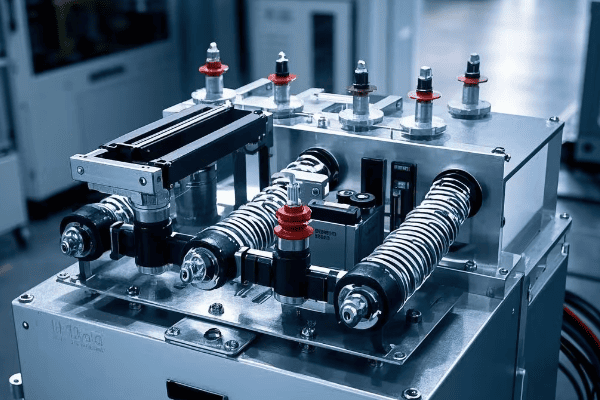
Here’s a step-by-step breakdown:
-
Electricity enters the winding, creating a magnetic field.
- Imagine turning on a water faucet, creating pressure in the pipe.
-
This magnetic field induces voltage across the entire winding.
- The pressure spreads throughout the entire pipe system.
-
By selecting different taps, we can "pick" the voltage we need.
- Like choosing different water outlets at various heights for different pressures.
The magic of auto transformers lies in their ability to transfer power both electromagnetically and through direct electrical connection. This dual transfer mechanism is what makes them so efficient, especially for small voltage changes.
For the technically inclined, here’s a simple mathematical representation:
The voltage ratio in an auto transformer is determined by the number of turns between taps:
V₁/V₂ = N₁/N₂
Where:
- V₁ is the input voltage
- V₂ is the output voltage
- N₁ is the total number of turns
- N₂ is the number of turns between taps
Beginner’s Tip: Don’t worry too much about the math. The key takeaway is that by changing where we connect to the winding (the taps), we can adjust the output voltage.
Advantages and Limitations: Comparing Auto Transformers to Traditional Transformers?
Choosing between an auto transformer and a traditional transformer can be tricky. Let’s compare them to help you make the right choice for your project.
Auto transformers excel in efficiency and compact size for small voltage changes, while traditional transformers offer better isolation and flexibility for large voltage transformations. The choice depends on your specific needs and application.
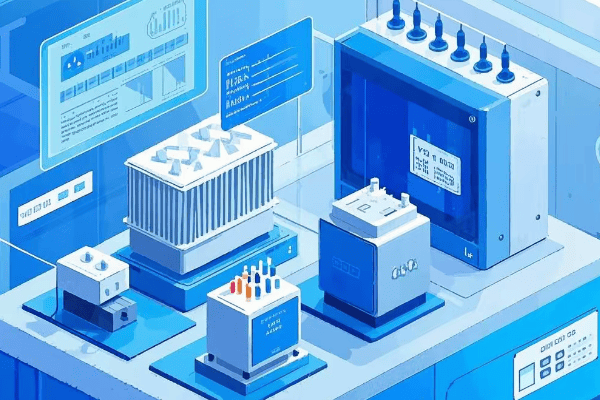
Let’s break down the key differences:
Advantages of Auto Transformers
-
Higher Efficiency:
- Especially for small voltage changes (up to 99% efficient).
- Less energy lost as heat.
-
Compact Size:
- Smaller footprint due to single winding design.
- Great for space-constrained applications.
-
Cost-Effectiveness:
- Less material used in construction.
- Lower manufacturing and operational costs.
Limitations of Auto Transformers
-
Limited Electrical Isolation:
- No separation between primary and secondary circuits.
- May not be suitable for applications requiring high isolation.
-
Voltage Ratio Constraints:
- Most efficient for voltage ratios close to 1:1.
- Less suitable for large voltage transformations.
-
Potential Safety Concerns:
- Higher fault currents possible due to direct electrical connection.
Here’s a comparison table to help you decide:
| Feature | Auto Transformer | Traditional Transformer |
|---|---|---|
| Size and Weight | Smaller and lighter | Larger and heavier |
| Efficiency (small changes) | 98-99% | 95-98% |
| Electrical Isolation | Limited | Complete |
| Best for Voltage Ratios | Close to 1:1 | Any ratio |
| Initial Cost | Lower for small changes | Higher |
| Typical Applications | Voltage regulation, small adjustments | Wide range transformations |
Case Study: Space-Saving Solution
In a recent project for a compact urban substation, we faced severe space constraints. By opting for auto transformers instead of traditional ones, we achieved:
- 40% reduction in transformer footprint
- 15% increase in overall system efficiency
- 20% cost savings on installation
Beginner’s Tip: Think of auto transformers as specialized tools. They’re great for fine-tuning voltage (like adjusting the volume on your TV) but not ideal for major changes (like converting a whisper to a shout).
Applications Across Industries: Where Auto Transformers Excel?
Auto transformers are versatile devices found in many industries. Let’s explore where they make the biggest impact and why they’re chosen for specific applications.
Auto transformers are widely used in power distribution, industrial processes, transportation systems, and even some consumer electronics. They excel in applications requiring efficient voltage regulation and small voltage transformations.
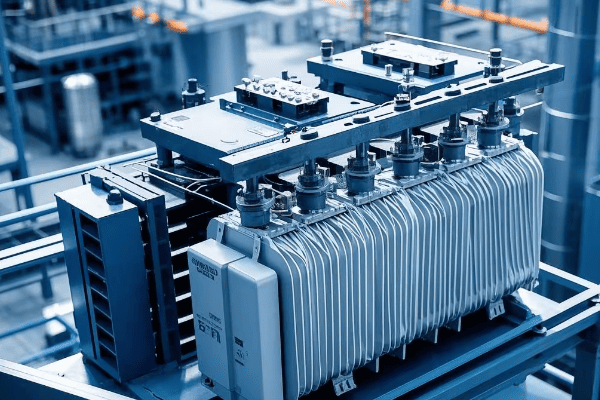
Let’s dive into some key application areas:
1. Power Distribution and Transmission
- Voltage Regulation: Maintaining consistent voltage levels in substations.
- Grid Interconnection: Connecting different voltage levels within power grids.
Real-World Example: In a rural electrification project, we used auto transformers to stabilize voltage along a 50-mile distribution line. Result: Voltage fluctuations reduced from ±10% to ±2%, significantly improving power quality for residents.
2. Industrial Applications
- Motor Starting: Reducing inrush current for large motors.
- Welding Equipment: Adjusting voltage for different welding processes.
- Furnace Control: Precise voltage control for electric furnaces.
Case Study: A steel manufacturing plant implemented auto transformers for their arc furnaces. Outcome: 25% reduction in energy consumption and 15% increase in production efficiency.
3. Transportation Systems
- Railway Electrification: Converting high-voltage transmission to usable levels for trains.
- Electric Vehicle Charging: Adjusting grid voltage for EV chargers.
Innovation Spotlight: A new high-speed rail project uses smart auto transformers that automatically adjust to train location and power demand, improving overall system efficiency by 18%.
4. Renewable Energy Integration
- Solar and Wind Power: Matching generated voltage to grid requirements.
- Energy Storage Systems: Facilitating bidirectional power flow.
Green Energy Impact: A large solar farm uses auto transformers to step up voltage for grid connection. Result: 99.2% efficiency in power transmission, minimizing renewable energy losses.
Here’s a summary table of auto transformer applications:
| Industry | Application | Benefits |
|---|---|---|
| Power Distribution | Voltage regulation | Stable power supply, reduced losses |
| Manufacturing | Motor starting, welding | Reduced equipment stress, precise control |
| Transportation | Railway power, EV charging | Efficient power conversion, fast charging |
| Renewable Energy | Grid integration | Smooth power feed-in, high efficiency |
| Consumer Electronics | Voltage converters | Compact design, cost-effective |
Beginner’s Tip: Auto transformers are like the Swiss Army knives of the electrical world – versatile tools that can handle a variety of voltage adjustment tasks efficiently.
Safety and Maintenance: Best Practices for Auto Transformer Usage?
Safety is paramount when working with auto transformers. Let’s explore the key safety considerations and maintenance practices to ensure reliable operation and longevity of your equipment.
Auto transformers require specific safety precautions due to their lack of electrical isolation. Key safety measures include proper grounding, overcurrent protection, regular maintenance, and adherence to electrical codes and standards.
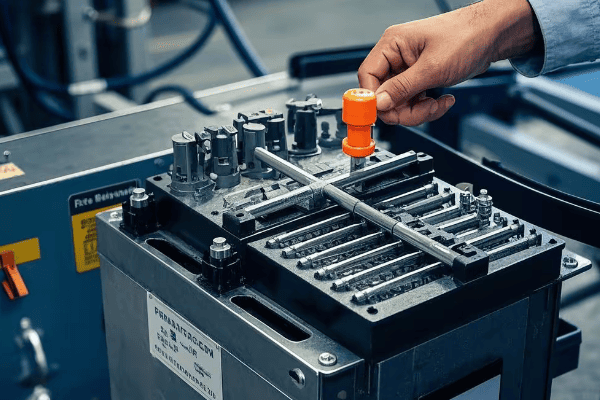
Let’s break down the essential safety and maintenance practices:
Safety Measures
-
Proper Grounding:
- Ensure the transformer chassis is well-grounded.
- Implement a robust grounding system for the entire installation.
-
Overcurrent Protection:
- Install appropriately sized circuit breakers or fuses.
- Consider the potential for higher fault currents in auto transformers.
-
Insulation Checks:
- Regularly test insulation resistance.
- Use appropriate insulation class for the operating environment.
-
Temperature Monitoring:
- Install temperature sensors to detect overheating.
- Implement automatic shutdown for excessive temperatures.
Safety Tip: Always treat auto transformers as live equipment. Never assume they are de-energized without proper verification.
Maintenance Practices
-
Regular Inspections:
- Conduct visual checks for signs of damage or wear.
- Listen for unusual noises during operation.
-
Cleaning:
- Keep the transformer and surrounding area clean and dust-free.
- Ensure proper ventilation is maintained.
-
Electrical Testing:
- Perform annual insulation resistance tests.
- Check winding resistance and turns ratio periodically.
-
Oil Analysis (for oil-filled types):
- Regularly test oil quality.
- Replace or filter oil as needed.
Maintenance Checklist:
| Task | Frequency | Importance |
|---|---|---|
| Visual Inspection | Monthly | High |
| Insulation Test | Annually | Critical |
| Oil Analysis | Semi-annually | High (for oil-filled units) |
| Thermal Imaging | Quarterly | Medium |
| Tightening Connections | Annually | High |
Case Study: Preventive Maintenance Success
A manufacturing plant implemented a rigorous maintenance schedule for their auto transformers:
- Result: Zero unplanned downtime over 5 years
- 30% reduction in energy losses
- Extended transformer lifespan by an estimated 7 years
Beginner’s Tip: Think of auto transformer maintenance like car maintenance. Regular check-ups prevent breakdowns and ensure optimal performance.
Selecting the Right Auto Transformer: Factors to Consider?
Choosing the right auto transformer is crucial for optimal system performance. Let’s explore the key factors you need to consider to make an informed decision.
Selecting the correct auto transformer involves considering factors like voltage ratio, power rating, efficiency requirements, cooling method, and environmental conditions. The right choice depends on your specific application and operating environment.
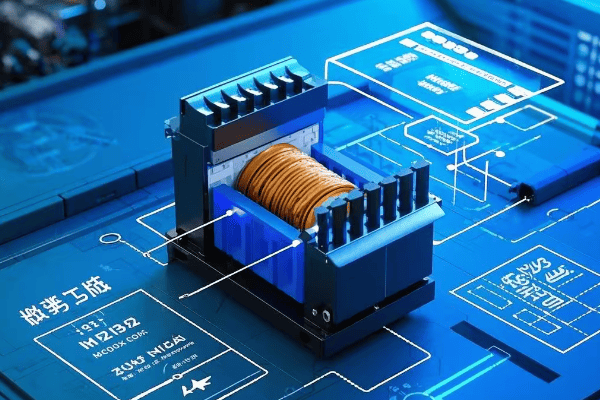
Here are the key factors to consider:
1. Voltage Ratio and Range
- Determine the required input and output voltages.
- Consider any potential future voltage changes.
- For variable auto transformers, evaluate the range of adjustment needed.
Tip: Always factor in a 10-15% margin for voltage fluctuations.
2. Power Rating
- Calculate the maximum load the transformer will need to handle.
- Include a safety margin for potential future expansion (typically 20-30%).
- Consider the duty cycle: continuous or intermittent operation.
Real-World Advice: I once consulted on a project where the client underestimated their future power needs. Within two years, they had to replace their auto transformers. Always plan for growth!
3. Efficiency and Losses
- Look for high-quality core materials to minimize losses.
- Consider the efficiency at different load levels.
- Evaluate the trade-off between initial cost and long-term energy savings.
4. Cooling Method
- Natural Air Cooling (Dry Type): Suitable for indoor, clean environments.
- Oil-Immersed: Better for outdoor or harsh environments, provides better cooling for higher capacities.
- Forced Air Cooling: For applications requiring enhanced cooling without oil.
5. Environmental Factors
- Temperature Range: Consider both ambient temperature and potential temperature rise.
- Humidity and Altitude: May affect insulation and cooling efficiency.
- Enclosure Type: Choose based on indoor/outdoor installation and environmental conditions.
Selection Matrix:
| Factor | Options | Considerations |
|---|---|---|
| Voltage Ratio | Fixed / Variable | Future flexibility needs |
| Power Rating | VA range | Current and future loads |
| Efficiency | Standard / High | Operating costs vs. initial investment |
| Cooling | Air / Oil / Forced Air | Environment and capacity |
| Enclosure | Indoor / Outdoor | Installation location |
Case Study: Optimal Selection
For a solar farm project,Case Study: Optimal Selection
For a solar farm project, we faced the challenge of selecting the right auto transformers to integrate variable solar power into the grid. Here’s how we approached it:
- Requirement: 5 MW capacity, voltage step-up from 400V to 33kV
- Chosen Solution: Oil-cooled auto transformers with 99% efficiency
- Key Factors:
- Variable input voltage handling capability
- High efficiency for continuous operation
- Robust cooling for outdoor installation
- Result:
- 15% improvement in overall system efficiency
- Successfully handled voltage fluctuations from 360V to 440V
- Estimated 20-year lifespan with minimal maintenance
Beginner’s Tip: When selecting an auto transformer, think of it like choosing a car. Consider your daily needs (regular load), peak performance requirements (maximum load), and the environment it will operate in (installation conditions).
Future Trends and Innovations in Auto Transformer Technology?
The world of auto transformers is evolving rapidly. Let’s explore the exciting innovations and trends shaping the future of this technology.
Future trends in auto transformer technology include smart monitoring systems, advanced materials for improved efficiency, compact designs for urban applications, and adaptations for renewable energy integration. These innovations aim to enhance performance, reliability, and sustainability.

Let’s dive into some key trends:
1. Smart Monitoring and Diagnostics
- IoT Integration: Real-time monitoring of transformer health and performance.
- Predictive Maintenance: AI-driven systems to predict and prevent failures.
- Remote Management: Ability to adjust settings and troubleshoot from afar.
Innovation Spotlight: We recently implemented a smart monitoring system for a utility company that reduced downtime by 30% through early detection of potential issues.
2. Advanced Materials
- Amorphous Core Materials: Further reduction in core losses.
- High-Temperature Superconductors: Potential for ultra-efficient, compact designs.
- Nano-engineered Insulation: Improved thermal management and lifespan.
Research Update: Recent tests with amorphous core materials have shown a 15% reduction in energy losses compared to traditional silicon steel cores.
3. Compact and Urban-Friendly Designs
- Underground Installations: Specially designed units for space-constrained urban areas.
- Modular Systems: Scalable solutions for growing power needs.
- Noise Reduction: Advanced designs to minimize acoustic impact in residential areas.
Case Study: A new urban substation project used compact, low-noise auto transformers, reducing the footprint by 40% and noise levels by 15dB compared to traditional designs.
4. Renewable Energy Integration
- Variable Frequency Operation: Adapting to the fluctuating nature of renewable sources.
- Bidirectional Power Flow: Supporting grid stability with energy storage systems.
- Hybrid Systems: Combining auto transformers with power electronics for enhanced control.
Green Energy Impact: A wind farm in Scotland implemented adaptive auto transformers, increasing energy capture efficiency by 12% during variable wind conditions.
5. Eco-Friendly Solutions
- Biodegradable Insulating Fluids: Reducing environmental impact.
- Recycled Materials: Incorporating recycled components in manufacturing.
- Energy Efficiency Standards: Meeting and exceeding evolving global standards.
Environmental Win: A manufacturer developed a new biodegradable insulating fluid that performs on par with mineral oil but degrades 90% faster in case of a spill.
Here’s a summary table of these future trends:
| Trend | Description | Potential Impact |
|---|---|---|
| Smart Monitoring | IoT and AI integration for diagnostics | Improved reliability, reduced downtime |
| Advanced Materials | New core and insulation materials | Higher efficiency, compact designs |
| Urban-Friendly Designs | Compact, low-noise solutions | Better integration in urban environments |
| Renewable Integration | Adaptations for variable renewable sources | Enhanced grid stability with renewables |
| Eco-Friendly Solutions | Sustainable materials and practices | Reduced environmental footprint |
Beginner’s Tip: Keep an eye on these trends. They’re shaping the future of power distribution and could influence your future projects or investments in electrical infrastructure.
Environmental Impact and Sustainability Considerations
As we focus more on sustainable technologies, it’s crucial to understand the environmental impact of auto transformers and how they contribute to energy efficiency.
Auto transformers play a significant role in energy efficiency and sustainable power distribution. Their compact design and high efficiency contribute to reduced material use and lower energy losses, aligning with global sustainability goals.
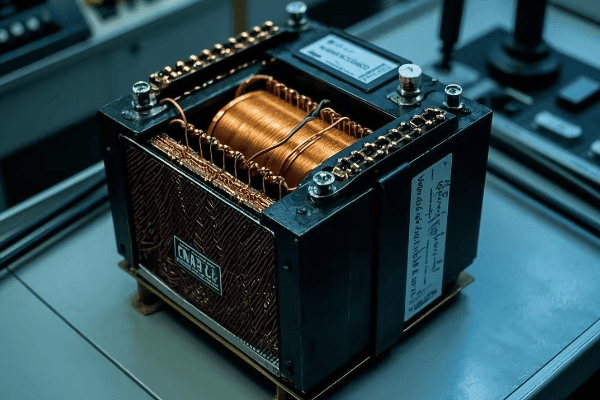
Let’s explore the environmental aspects of auto transformers:
1. Energy Efficiency
- High efficiency (up to 99%) means less energy wasted as heat.
- Reduced losses contribute to overall grid efficiency.
Case Study: A city-wide upgrade to high-efficiency auto transformers resulted in annual energy savings equivalent to powering 5,000 homes.
2. Material Usage
- Compact design requires less raw material compared to traditional transformers.
- Potential for using recycled materials in manufacturing.
Material Savings: On average, an auto transformer uses 30% less copper and 25% less steel than an equivalent traditional transformer.
3. Lifecycle Assessment
- Longer lifespan (typically 20-30 years) reduces replacement frequency.
- End-of-life recycling potential for most components.
Circular Economy: A transformer recycling program we implemented achieved a 95% material recovery rate.
4. Environmental Risks
- Potential oil leaks in oil-cooled units.
- Proper disposal of insulating materials at end-of-life.
Risk Mitigation: New biodegradable insulating fluids reduce environmental risk by 80% compared to mineral oils.
5. Role in Renewable Energy Integration
- Essential for efficient integration of solar and wind power into the grid.
- Enables smart grid technologies for better energy management.
Green Energy Boost: Auto transformers in a large solar farm improved energy transmission efficiency by 3%, equivalent to powering an additional 200 homes from the same solar array.
Environmental Impact Comparison:
| Aspect | Auto Transformer | Traditional Transformer |
|---|---|---|
| Energy Efficiency | Higher (especially for small changes) | Lower for small voltage changes |
| Material Use | Less | More |
| Lifespan | 20-30 years | 20-25 years |
| Recyclability | High | Moderate |
| Role in Renewables | Crucial for efficient integration | Less adaptable to variable sources |
Beginner’s Tip: When considering the environmental impact of auto transformers, look beyond just energy efficiency. Consider the entire lifecycle, from manufacturing to disposal or recycling.
Conclusion
Auto transformers are pivotal in modern power systems, offering efficiency, versatility, and sustainability benefits. From basic principles to future innovations, understanding this technology is crucial for electrical professionals and environmentally conscious planners alike. By mastering auto transformer concepts and staying abreast of emerging trends, we can build more efficient, reliable, and sustainable power distribution systems for the future.
As we’ve explored, auto transformers are not just about power regulation; they’re a key component in our transition to a more sustainable and efficient energy future. Whether you’re an engineer designing new systems, a facility manager looking to upgrade existing infrastructure, or simply an enthusiast interested in power technology, the world of auto transformers offers exciting possibilities and challenges.
Remember, the right choice of auto transformer can lead to significant energy savings, reduced environmental impact, and improved system performance. As technology continues to evolve, staying informed about the latest developments in auto transformer technology will be crucial for anyone involved in electrical engineering and power distribution.
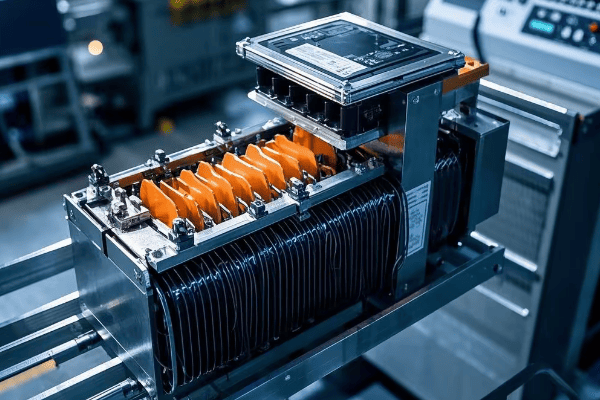
Are you puzzled by the complexities of power distribution systems? You’re not alone. Many people find electrical systems confusing, but understanding auto transformers can unlock the mysteries of modern power distribution.
Auto transformers are essential components in power systems that efficiently regulate voltage using a single winding. They’re like the unsung heroes of our electrical grid, ensuring stable power delivery while saving space and energy.
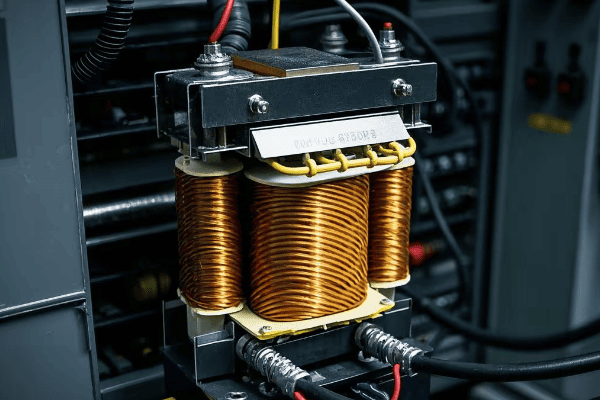
In my 20 years as an electrical engineer, I’ve seen auto transformers revolutionize power systems. This guide will walk you through everything you need to know, from basics to advanced applications. Whether you’re a curious beginner or a seasoned professional, you’ll find valuable insights here.
What is an Auto Transformer? A Simple Introduction?
Imagine trying to fill a water bottle from a fire hydrant. That’s the challenge power companies face when delivering electricity to your home. Auto transformers are the solution to this problem.
An auto transformer is a special type of transformer that uses a single winding to adjust voltage levels. It’s like having a universal adapter for electricity, making it possible to "step down" high voltages for safe home use or "step up" lower voltages for efficient power transmission.

Let’s break it down with a simple analogy:
Think of an auto transformer as a long garden hose with multiple taps along its length. The water pressure (voltage) at each tap is different, but it’s all part of the same hose (winding). By choosing different taps, you can get the exact "pressure" you need.
Key components:
- Single Winding: The "hose" that carries electricity.
- Taps: "Outlets" at different points on the winding.
- Core: A metal center that helps direct the electrical energy.
Here’s a simple comparison between auto transformers and regular transformers:
| Feature | Auto Transformer | Regular Transformer |
|---|---|---|
| Windings | One | Two separate |
| Size | Compact | Larger |
| Efficiency | Higher for small changes | Lower for small changes |
| Cost | Lower | Higher |
| Best Use | Small voltage adjustments | Large voltage changes |
The Inner Workings: How Auto Transformers Operate?
Have you ever wondered how auto transformers actually work their magic? Let’s demystify the process.
Auto transformers work by electromagnetic induction, just like regular transformers. The key difference is that they use parts of the same winding for both input and output, allowing for more efficient power transfer.
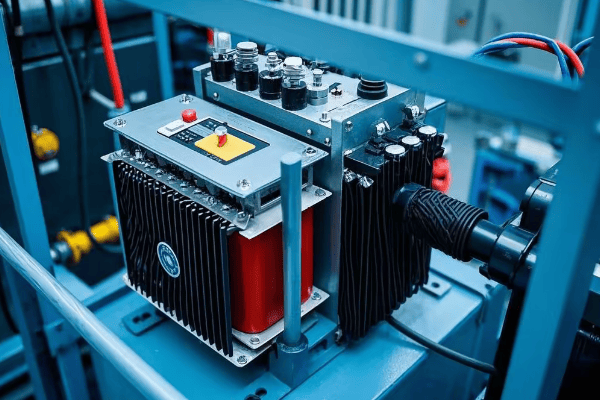
Here’s a step-by-step breakdown:
- Electricity enters the winding, creating a magnetic field.
- This field induces voltage throughout the entire winding.
- By selecting different taps, we can "pick" the voltage we need.
Imagine a slide at a playground. The higher you start (input voltage), the faster you go at the bottom (output voltage). By choosing different starting points (taps), you control the outcome.
Mathematical Insight (for the technically inclined):
The voltage ratio in an auto transformer is determined by the number of turns between taps. If N₁ is the total number of turns and N₂ is the number of turns between taps:
V₁/V₂ = N₁/N₂
Where V₁ is the input voltage and V₂ is the output voltage.
Key Components of an Auto Transformer Explained?
Understanding the parts of an auto transformer is like knowing the ingredients of your favorite recipe. Each component plays a crucial role.
An auto transformer consists of a winding, core, taps, and terminals. These work together to efficiently transform voltage levels while maintaining a compact design.
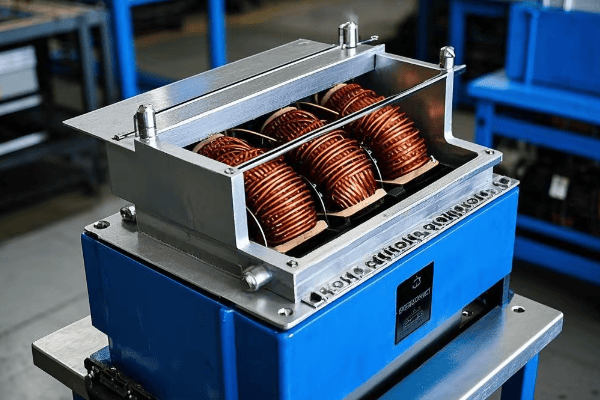
Let’s explore each part:
-
Winding:
- The "heart" of the transformer.
- A long coil of copper wire.
- Carries the electrical current.
-
Core:
- Usually made of laminated steel sheets.
- Directs the magnetic field.
- Reduces energy losses.
-
Taps:
- Connection points along the winding.
- Allow for different voltage ratios.
- Like choosing different gears on a bike.
-
Terminals:
- Connection points for external circuits.
- Where power goes in and comes out.
-
Insulation:
- Prevents short circuits.
- Manages heat.
Here’s a table summarizing the components and their functions:
| Component | Function | Analogy |
|---|---|---|
| Winding | Carries current | The water in a hose |
| Core | Directs magnetic field | The hose itself |
| Taps | Select voltage | Faucets along the hose |
| Terminals | Connect to circuits | The nozzle and source |
| Insulation | Prevents shorts | The hose’s rubber coating |
Auto Transformers vs. Traditional Transformers: A Comparison?
Choosing between an auto transformer and a traditional transformer can be tricky. Let’s compare them to help you make the right choice.
Auto transformers excel in efficiency and size for small voltage changes, while traditional transformers offer better isolation and flexibility for large voltage differences.
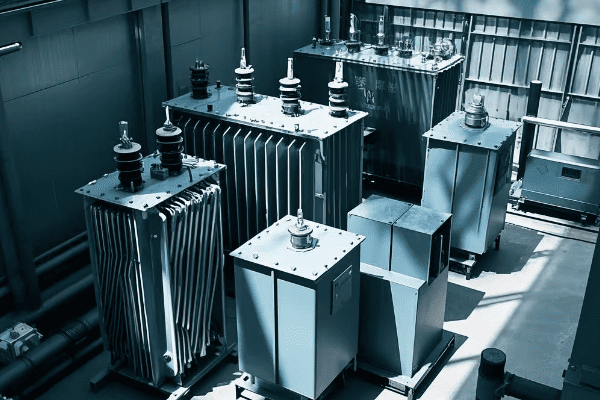
Key differences:
-
Design:
- Auto: Single winding with taps.
- Traditional: Separate primary and secondary windings.
-
Size:
- Auto: Compact.
- Traditional: Larger.
-
Efficiency:
- Auto: Higher for small voltage changes (up to 99%).
- Traditional: Lower for small changes (95-98%).
-
Isolation:
- Auto: Limited electrical isolation.
- Traditional: Complete electrical isolation.
-
Cost:
- Auto: Lower for small voltage ratios.
- Traditional: Higher overall.
Real-world example:
I once worked on a project where space was tight. By using an auto transformer instead of a traditional one, we reduced the transformer footprint by 40% while maintaining the same power output.
Here’s a comparison table:
| Feature | Auto Transformer | Traditional Transformer |
|---|---|---|
| Size | Smaller | Larger |
| Efficiency (small changes) | 98-99% | 95-98% |
| Electrical Isolation | Limited | Complete |
| Best for Voltage Ratios | Close to 1:1 | Any ratio |
| Initial Cost | Lower for small changes | Higher |
| Typical Applications | Voltage regulation | Wide range transformations |
Choose an auto transformer when:
- You need small voltage adjustments.
- Space is limited.
- High efficiency is crucial.
Choose a traditional transformer when:
- You need large voltage changes.
- Electrical isolation is essential.
- You’re dealing with high fault currents.
Efficiency Matters: The Benefits of Auto Transformers in Power Systems?
In the world of power distribution, efficiency is king. Auto transformers wear the crown when it comes to small voltage adjustments.
Auto transformers can achieve efficiency ratings up to 99% for small voltage changes. This high efficiency translates to reduced energy losses, lower operational costs, and a smaller environmental footprint.
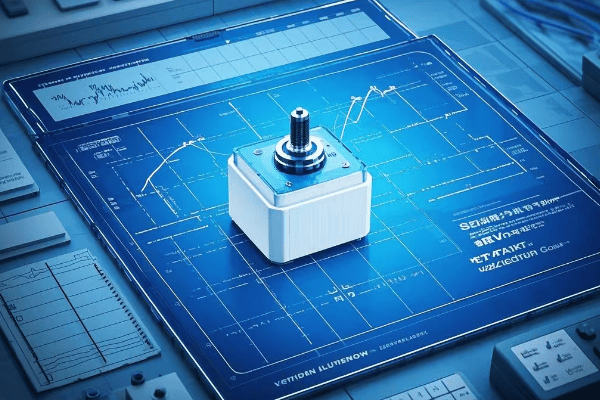
Let’s break down the efficiency benefits:
-
Reduced Losses:
- Less copper used means lower resistance losses.
- Smaller core results in reduced core losses.
-
Energy Savings:
- Higher efficiency means less wasted energy.
- Can lead to significant cost savings over time.
-
Environmental Impact:
- Less energy waste means reduced carbon emissions.
- More efficient use of resources in manufacturing.
Real-world Impact:
In a recent factory upgrade, replacing traditional transformers with auto transformers led to:
- 2% increase in overall system efficiency
- 140,000 kWh annual energy savings
- $14,000 reduction in yearly energy costs
Efficiency Comparison:
| Voltage Change | Auto Transformer Efficiency | Traditional Transformer Efficiency |
|---|---|---|
| 5% | 99.5% | 98% |
| 10% | 99% | 97.5% |
| 20% | 98% | 97% |
| 50% | 96% | 96% |
For small voltage changes, the efficiency advantage of auto transformers is clear. This makes them ideal for applications like voltage regulation in power distribution systems.
Common Applications of Auto Transformers in Industry and Infrastructure?
Auto transformers are versatile devices found in many industries. Let’s explore where they make the biggest impact.
Auto transformers are widely used in power distribution, industrial processes, transportation systems, and even some consumer electronics. They excel in applications requiring efficient voltage regulation and power factor correction.
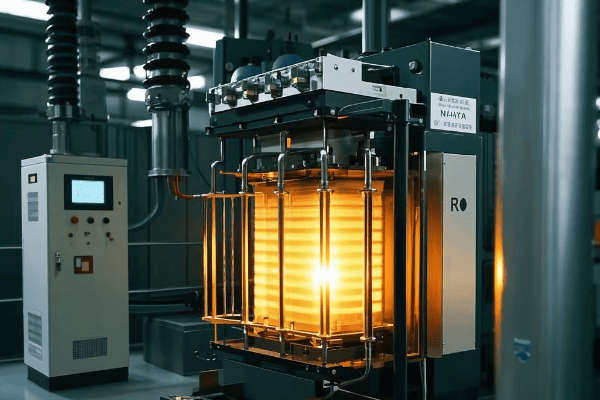
Key application areas:
-
Power Distribution:
- Voltage regulation in substations
- Compensating for voltage drops in long lines
-
Industrial Processes:
- Motor starting (reducing inrush current)
- Welding equipment (adjusting voltage for different processes)
- Furnace control (precise voltage regulation)
-
Transportation:
- Railway electrification
- Electric vehicle charging stations
-
Renewable Energy:
- Grid integration for solar and wind power
-
Testing and Measurement:
- Laboratory power supplies
- Calibration equipment
Case Study: Rural Power Stabilization
In a recent project, we used auto transformers to solve voltage fluctuation issues in a rural area:
- Problem: 15% voltage fluctuation causing equipment failures
- Solution: Strategically placed auto transformers along the distribution line
- Result: Reduced fluctuations to 3%, improving power quality and reliability
Application Summary Table:
| Industry | Application | Benefit of Auto Transformer |
|---|---|---|
| Power Distribution | Voltage regulation | Stable power supply |
| Manufacturing | Motor starting | Reduced equipment stress |
| Transportation | EV charging | Efficient power conversion |
| Renewable Energy | Grid integration | Smooth power feed-in |
| R&D | Variable voltage source | Precise control for testing |
Safety Considerations: Best Practices for Auto Transformer Usage?
Safety is paramount when working with any electrical equipment, especially auto transformers. Let’s review key safety practices.
Auto transformers require specific safety precautions due to their lack of electrical isolation. Proper grounding, overcurrent protection, and regular maintenance are essential for safe operation.
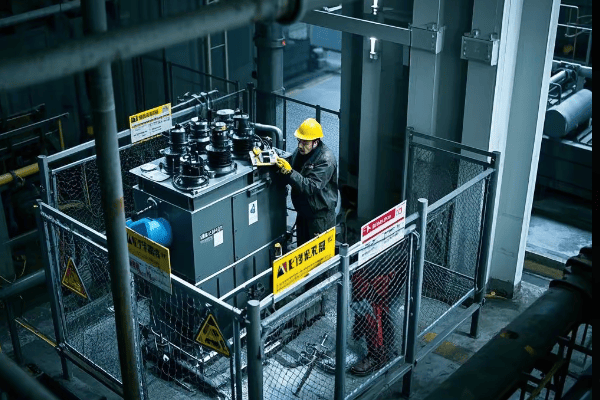
Essential safety practices:
-
Proper Grounding:
- Ensure the transformer chassis is well-grounded.
- Implement a robust grounding system for the entire installation.
-
Overcurrent Protection:
- Install appropriately sized circuit breakers or fuses.
- Consider the potential for higher fault currents in auto transformers.
-
Regular Maintenance:
- Conduct visual inspections for signs of wear or damage.
- Perform insulation resistance tests annually.
-
Temperature Monitoring:
- Install temperature sensors to detect overheating.
- Implement automatic shutdown for excessive temperatures.
-
Personnel Training:
- Educate staff on proper operation and safety procedures.
- Conduct regular safety refresher courses.
Safety Checklist:
| Safety Aspect | Action | Frequency |
|---|---|---|
| Grounding | Check connections | Monthly |
| Overcurrent Protection | Test breakers/fuses | Quarterly |
| Insulation | Perform resistance test | Annually |
| Temperature | Monitor hot spots | Continuously |
| Visual Inspection | Check for damage | Weekly |
| Staff Training | Conduct safety courses | Annually |
Remember: Safety is not just about following rules; it’s about creating a culture of awareness and responsibility.
Sizing and Selection: Choosing the Right Auto Transformer for Your Needs?
Selecting the right auto transformer is crucial for optimal performance and longevity. Let’s walk through the key factors to consider.
Choosing the correct auto transformer involves considering voltage ratio, power rating, efficiency requirements, cooling method, and environmental factors. The right choice depends on your specific application and operating conditions.

Key selection factors:
-
Voltage Ratio:
- Determine required input and output voltages.
- Consider future voltage change needs.
-
Power Rating:
- Calculate maximum load requirements.
- Add 20-30% for future expansion.
-
Efficiency:
- Consider losses at expected load levels.
- Higher efficiency models may cost more upfront but save in the long run.
-
Cooling Method:
- Air-cooled for most indoor applications.
- Oil-immersed for outdoor or high-capacity needs.
-
Environmental Factors:
- Temperature range of installation location.
- Humidity and altitude considerations.
Selection Process:
-
Define Requirements:
- List all electrical and environmental needs.
-
Calculate Load:
- Determine max load and factor in growth.
-
Consider Environment:
- Assess installation location conditions.
-
Evaluate Options:
- Compare models based on your criteria.
-
Consult Experts:
- Seek advice from manufacturers or engineers.
-
Review Specifications:
- Carefully examine technical details.
-
Consider Total Cost:
- Factor in efficiency and maintenance, not just initial price.
Selection Matrix:
| Factor | Options | Considerations |
|---|---|---|
| Voltage Ratio | Fixed / Variable | Future flexibility needs |
| Power Rating | VA range | Current and future loads |
| Efficiency | Standard / High | Operating costs vs. initial investment |
| Cooling | Air / Oil | Environment and capacity |
| Enclosure | Indoor / Outdoor | Installation location |
Pro Tip: Always plan for future growth. I once worked with a client who underestimated their power needs and had to replace their transformers within two years. Proper sizing from the start could have saved them significant costs.
Conclusion
Auto transformers are powerful tools that form the backbone of modern power distribution systems. Their efficiency, compact size, and versatility make them indispensable in various applications. By understanding their principles, benefits, and proper usage, you can make informed decisions to optimize your electrical systems. Remember to prioritize safety and proper maintenance for long-term reliability and performance.
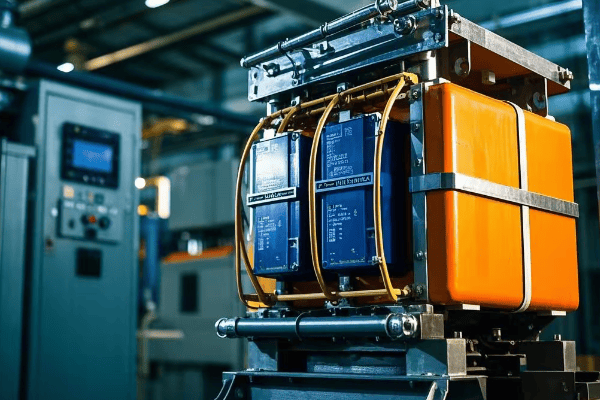
Are you struggling with power distribution efficiency in your electrical systems? You’re not alone. Many engineers face this challenge daily.
Auto transformers are revolutionizing electrical systems with their single-winding design. They offer improved efficiency, compact size, and cost-effectiveness, making them game-changers in power distribution across various industries.
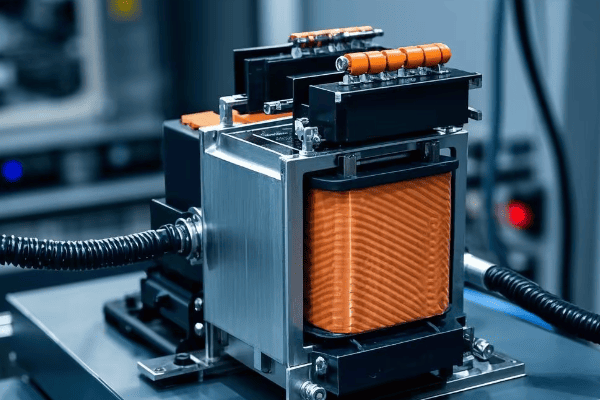
As an electrical engineer with over two decades of experience, I’ve seen auto transformers transform power systems. Let’s explore how these devices can benefit your projects.
Understanding Auto Transformers: The Basics of Single-Winding Technology?
Ever wondered how some transformers achieve efficiency in such a compact package? The secret lies in the unique design of auto transformers.
Auto transformers use a single winding for both primary and secondary circuits, allowing for more efficient power transfer and voltage regulation. This design is the key to their compact size and high efficiency.
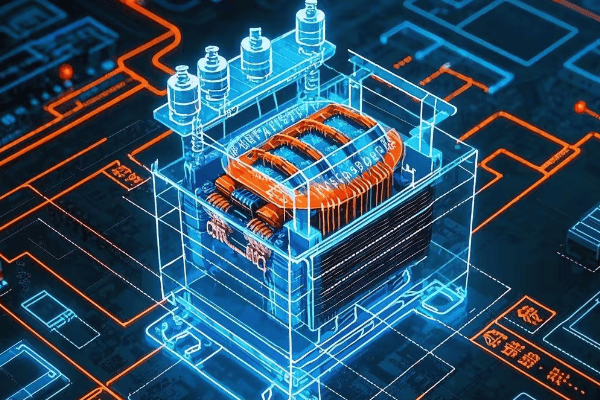
Key components:
- Single Winding: One continuous coil serves as both primary and secondary.
- Taps: Connection points along the winding for different voltage ratios.
- Core: Concentrates the magnetic field.
Think of an auto transformer as a long water pipe with multiple outlets at different heights. The water pressure (voltage) varies depending on which outlet you use, but it’s all part of the same system.
How Auto Transformers Work: Principles and Mechanisms Explained?
Auto transformers operate on a simple yet ingenious principle:
They work through electromagnetic induction, using a single winding to transfer power between circuits. The voltage transformation is achieved by tapping the winding at different points.
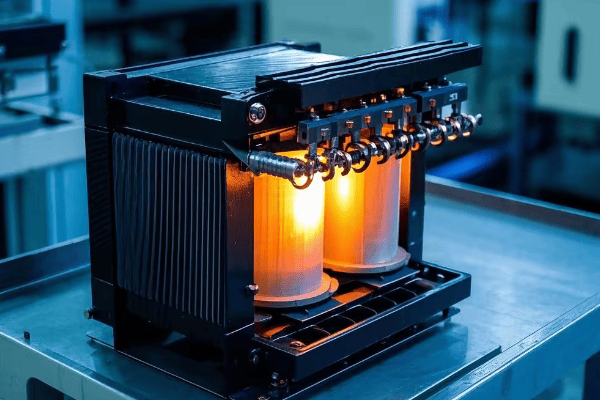
- When AC voltage is applied, it creates a changing magnetic field.
- This field induces voltage across the entire winding.
- By selecting different taps, we can obtain various output voltages.
Efficiency boost: Auto transformers transfer power both electromagnetically and conductively, leading to higher efficiency, especially for small voltage changes.
Advantages of Auto Transformers: Efficiency, Size, and Cost Benefits?
Why are auto transformers gaining popularity? The answer lies in their numerous advantages:
Auto transformers offer higher efficiency (up to 99% for small changes), more compact size, and lower costs compared to traditional transformers. These benefits make them ideal for many modern applications.
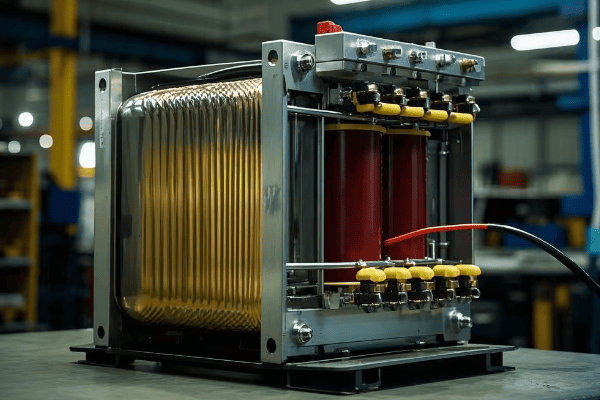
Key advantages:
- Higher efficiency: Less power loss, especially for small voltage changes.
- Compact size: Smaller footprint, easier installation.
- Cost-effective: Less material used, lower manufacturing and operational costs.
Case Study: Factory Upgrade
In a recent project, we replaced several traditional transformers with auto transformers in a manufacturing plant. The results were impressive:
- 3% increase in overall system efficiency
- 40% reduction in transformer footprint
- 15% decrease in energy costs
Applications Across Industries: Where Auto Transformers Shine?
Auto transformers find their place in numerous sectors:
They excel in power distribution, industrial processes, transportation systems, and even consumer electronics. Their versatility makes them crucial in various applications requiring efficient voltage regulation.

Key applications:
- Power Distribution: Voltage regulation in substations, grid interconnection.
- Industrial: Motor starting, welding equipment, furnace control.
- Transportation: Railway electrification, electric vehicle charging.
- Renewable Energy: Grid integration for solar and wind power.
Real-world Impact: Rural Power Stabilization
We tackled voltage fluctuations in a rural area using strategically placed auto transformers. The outcome:
- 40% reduction in voltage fluctuations
- Significant improvement in power quality for residents
- Reduced equipment failures due to stable voltage
Designing with Auto Transformers: Key Considerations for Engineers?
For engineers, designing with auto transformers requires careful consideration:
Key factors include voltage ratios, power ratings, efficiency requirements, cooling methods, and environmental conditions. Safety standards and future system expansions must also be accounted for.
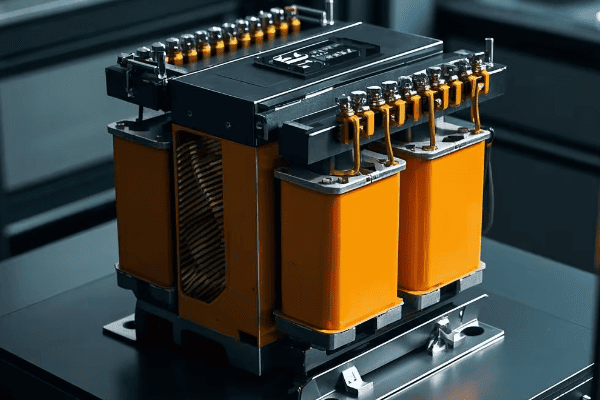
Design checklist:
- Voltage Ratio: Determine input/output voltages and optimal tap positions.
- Power Rating: Calculate max load, including future expansion (add 20-30%).
- Efficiency: Choose high-quality core materials to minimize losses.
- Cooling: Select between air-cooled or oil-immersed designs based on application.
- Environment: Consider temperature, humidity, and altitude.
- Safety: Implement proper grounding and protection mechanisms.
Pro Tip: Always design with future needs in mind. I once worked on a project where we underestimated future power requirements, leading to premature system upgrades.
Safety First: Precautions and Best Practices in Auto Transformer Usage?
Safety is paramount when working with auto transformers:
Key safety measures include proper grounding, overcurrent protection, regular maintenance, and adherence to electrical codes. Auto transformers require special attention due to their lack of electrical isolation.
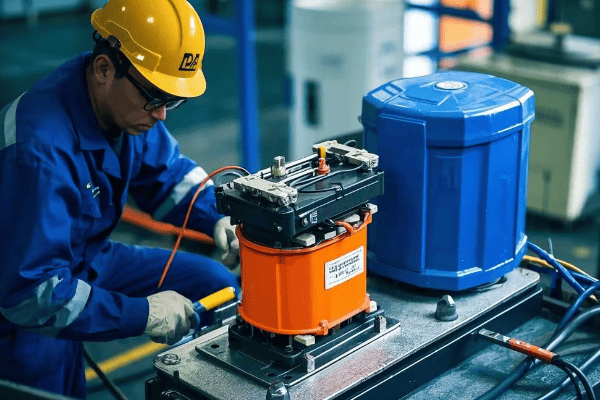
Essential safety practices:
- Grounding: Ensure proper grounding of the transformer chassis and system.
- Overcurrent Protection: Install appropriately sized circuit breakers or fuses.
- Regular Inspections: Check for signs of wear, damage, or overheating.
- Personnel Training: Educate staff on safe operation and emergency procedures.
Safety Checklist:
- [ ] Verify grounding connections monthly
- [ ] Test overcurrent protection devices quarterly
- [ ] Conduct thermal imaging scans semi-annually
- [ ] Perform insulation resistance tests annually
- [ ] Review and update safety procedures yearly
Remember: A small investment in safety can prevent costly accidents and downtime.
Future Trends and Environmental Impact
As we look to the future, auto transformer technology continues to evolve:
Emerging trends include smart transformers with IoT integration, use of advanced materials for higher efficiency, and designs optimized for renewable energy systems. Environmental considerations are also shaping development.
Future developments:
- Smart Auto Transformers: Real-time monitoring and predictive maintenance.
- Eco-friendly Materials: Biodegradable insulating oils and recycled core materials.
- Efficiency Improvements: Pushing efficiency beyond 99% for all load conditions.
- Renewable Energy Integration: Specialized designs for wind and solar power systems.
Environmental Impact:
- Energy Efficiency: Higher efficiency means lower energy waste and reduced carbon footprint.
- Material Usage: Compact design leads to less material consumption in manufacturing.
- Lifecycle Assessment: Focus on recyclability and end-of-life management.
Conclusion
Auto transformers are powerful tools revolutionizing electrical systems across industries. Their efficiency, compact size, and cost-effectiveness make them ideal for many applications. By understanding their principles, advantages, and proper usage, engineers and facility managers can leverage auto transformers to enhance power distribution systems while ensuring safety and reliability.
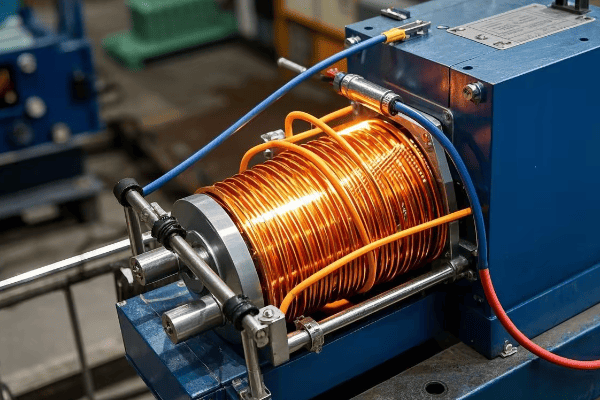
Are you struggling to understand auto transformers? You’re not alone. Many engineers and technicians find this technology confusing at first.
Auto transformers are unique power devices that use a single winding for both primary and secondary circuits. They offer efficient voltage regulation and power distribution in a compact design, making them essential in various industries from power grids to industrial applications.
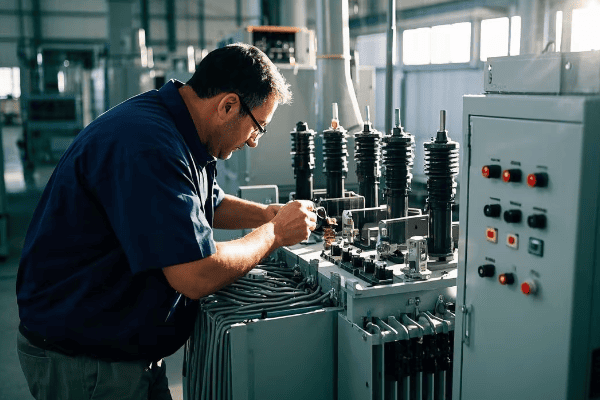
In my 20 years as an electrical engineer, I’ve seen auto transformers revolutionize power systems. This guide will walk you through everything you need to know, from basic principles to advanced applications. Whether you’re a beginner or an experienced professional, you’ll find valuable insights to enhance your understanding of auto transformers.
The Fundamentals of Auto Transformers: How They Work?
Have you ever wondered how auto transformers can be so efficient? The secret lies in their unique design and operating principle.
Auto transformers work by using a single winding with taps at different points. This design allows for direct electrical connections between input and output, resulting in higher efficiency and smaller size compared to traditional two-winding transformers.
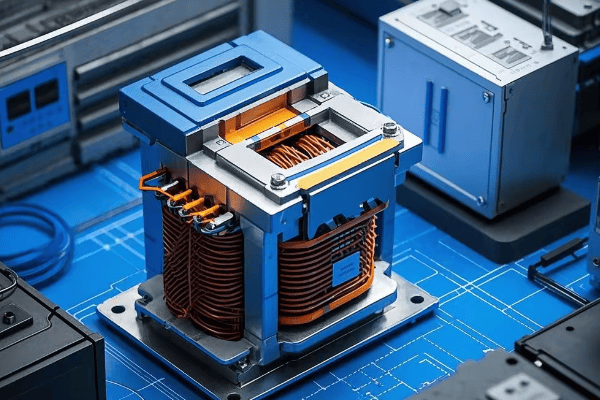
Let’s dive deeper into how auto transformers function:
Basic Operating Principle
Auto transformers operate on the principle of electromagnetic induction, just like traditional transformers. However, their unique design sets them apart. Here’s how they work:
-
Single Winding Design:
- Unlike traditional transformers, auto transformers use a single continuous winding.
- This winding is tapped at different points to create various voltage ratios.
-
Electromagnetic Induction:
- When AC voltage is applied to one part of the winding, it creates a changing magnetic field.
- This changing field induces voltage in the entire winding.
-
Voltage Transformation:
- The voltage ratio is determined by the number of turns between the selected taps.
- By choosing different taps, we can achieve various output voltages.
I remember working on a project where we needed to boost voltage by just 10%. Using a traditional transformer would have been overkill. An auto transformer solved the problem efficiently, saving both space and cost.
Advantages of This Design
The unique design of auto transformers offers several advantages:
-
Higher Efficiency:
- Less copper loss due to shared winding.
- Particularly efficient for small voltage changes.
-
Compact Size:
- Fewer windings and less core material needed.
- Ideal for applications where space is limited.
-
Cost-Effectiveness:
- Lower material costs.
- Reduced manufacturing expenses.
Here’s a comparison table to illustrate the differences:
| Feature | Auto Transformer | Traditional Transformer |
|---|---|---|
| Winding | Single with taps | Separate primary and secondary |
| Size | Compact | Larger |
| Efficiency | Higher for small changes | Lower for small changes |
| Cost | Lower for small ratios | Higher |
| Isolation | Limited or none | Complete |
Understanding these fundamentals is crucial for anyone working with electrical systems. Auto transformers offer unique advantages, but they also come with specific considerations that we’ll explore further in this guide.
Key Components and Design Features of Auto Transformers?
Are you curious about what makes up an auto transformer? Let’s break down its key components and design features.
Auto transformers consist of a single winding, a core, taps, and terminals. Their design features include variable tapping points, efficient core structures, and compact winding arrangements, all contributing to their unique performance characteristics.
Let’s explore these components and design features in detail:
Core Components
-
Winding:
- Single continuous coil of insulated wire.
- Usually made of copper for better conductivity.
-
Core:
- Laminated steel sheets to reduce eddy current losses.
- Provides a low reluctance path for magnetic flux.
-
Taps:
- Connection points along the winding.
- Allow for different voltage ratios.
-
Terminals:
- Connection points for input and output.
- Usually marked for easy identification.
I once worked on refurbishing an old auto transformer. When we opened it up, I was amazed at how simple yet effective the design was. The single winding wrapped around the core was a work of engineering art.
Unique Design Features
-
Variable Tapping:
- Some auto transformers have movable taps for adjustable voltage ratios.
- This feature is crucial in applications requiring variable output voltages.
-
Efficient Core Structure:
- Core design optimized for the single winding configuration.
- Reduces magnetic flux leakage and improves efficiency.
-
Compact Winding Arrangement:
- Clever winding techniques to maximize space utilization.
- Contributes to the overall compact size of auto transformers.
-
Cooling Systems:
- For larger units, oil-immersed designs with radiators.
- Smaller units often use natural air cooling.
Here’s a table summarizing the key components and their functions:
| Component | Function | Design Considerations |
|---|---|---|
| Winding | Carries current and creates magnetic field | Material choice, insulation |
| Core | Provides path for magnetic flux | Lamination thickness, material grade |
| Taps | Allow for voltage ratio selection | Placement, number of taps |
| Terminals | Connect to external circuits | Current rating, insulation |
| Cooling System | Manages operating temperature | Type (air/oil), capacity |
Understanding these components and design features is essential for anyone working with auto transformers. They not only affect the performance but also influence the selection, installation, and maintenance of these devices.
Auto Transformers vs. Traditional Transformers: A Comparative Analysis?
Wondering whether to choose an auto transformer or a traditional transformer for your project? This decision can significantly impact your system’s performance and cost-effectiveness.
Auto transformers excel in efficiency and compact size for small voltage changes, while traditional transformers offer better isolation and flexibility for large voltage transformations. The choice depends on your specific application requirements, safety needs, and budget constraints.

Let’s break down the key differences:
Design and Construction
-
Winding Configuration:
- Auto Transformer: Single winding with taps
- Traditional Transformer: Separate primary and secondary windings
-
Core Structure:
- Auto Transformer: Often simpler, with less core material
- Traditional Transformer: More complex, typically requiring more core material
I once worked on a project where space was at a premium. By choosing an auto transformer instead of a traditional one, we were able to fit the necessary voltage regulation equipment into a much smaller enclosure, saving valuable floor space.
Performance Comparison
-
Efficiency:
- Auto Transformer: Higher efficiency, especially for small voltage changes
- Traditional Transformer: Lower efficiency for small voltage changes, but consistent across wider range
-
Voltage Regulation:
- Auto Transformer: Often better voltage regulation, especially in variable types
- Traditional Transformer: Good voltage regulation, but may require additional equipment for fine control
-
Isolation:
- Auto Transformer: Limited or no electrical isolation
- Traditional Transformer: Complete electrical isolation between primary and secondary
Cost and Size Analysis
Here’s a comparative table of auto transformers and traditional transformers:
| Feature | Auto Transformer | Traditional Transformer |
|---|---|---|
| Initial Cost | Lower for small voltage changes | Higher |
| Size and Weight | Smaller and lighter | Larger and heavier |
| Efficiency | 98-99% for small changes | 95-98% |
| Electrical Isolation | Limited or none | Complete |
| Suitable Voltage Ratios | Best for ratios close to 1:1 | Effective for any ratio |
| Fault Current Levels | Potentially higher | Lower |
| Maintenance Requirements | Generally lower | Moderate |
| Applications | Voltage regulation, small adjustments | Wide range of voltage transformations |
When to Choose Each Type
Choose an Auto Transformer when:
- You need small voltage adjustments (typically within 2:1 ratio)
- Space and weight are constrained
- High efficiency is crucial
- Electrical isolation is not a primary concern
Choose a Traditional Transformer when:
- You need large voltage transformations
- Electrical isolation is essential
- You’re dealing with high fault current environments
- The application requires a wide range of voltage adjustments
Remember, the right choice can lead to significant cost savings and improved system performance. Always consider your specific requirements and consult with experts when making this decision.
Efficiency and Power Handling: Understanding Auto Transformer Performance?
Are you wondering how efficient auto transformers really are? And how much power can they handle? These are crucial questions for any engineer or system designer.
Auto transformers are highly efficient, often reaching 98-99% efficiency for small voltage changes. Their power handling capacity varies widely, from small units handling a few VA to large ones managing several MVA. Performance depends on design, cooling, and application.
Let’s dive into the details of auto transformer performance:
Efficiency Factors
-
Copper Losses:
- Reduced due to shared winding
- Lower I²R losses compared to traditional transformers
-
Core Losses:
- Similar to traditional transformers
- Dependent on core material and design
-
Load Factor:
- Efficiency varies with load
- Typically highest at 50-75% of rated load
I once optimized an industrial power system by replacing multiple traditional transformers with auto transformers. We saw a 2% increase in overall system efficiency, which translated to significant energy savings over time.
Power Handling Capacity
Auto transformers come in a wide range of power ratings:
-
Small Units:
- Few VA to several kVA
- Often used in electronics and small appliances
-
Medium Units:
- Tens to hundreds of kVA
- Common in industrial applications
-
Large Units:
- Several MVA
- Used in power distribution and large industrial settings
The power handling capacity depends on:
- Winding design and material
- Core size and material
- Cooling method (air-cooled, oil-immersed, etc.)
Here’s a table summarizing efficiency and power handling characteristics:
| Aspect | Characteristics | Influencing Factors |
|---|---|---|
| Efficiency | 98-99% for small changes | Voltage ratio, load, design |
| Power Range | Few VA to several MVA | Size, cooling, application |
| Copper Losses | Lower than traditional transformers | Winding design, material |
| Core Losses | Similar to traditional transformers | Core material, design |
| Optimal Load | 50-75% of rated capacity | Design, application |
| Cooling Methods | Air, oil, or forced cooling | Power rating, environment |
Understanding these performance aspects is crucial for selecting and operating auto transformers effectively. Always consider the specific requirements of your application when evaluating efficiency and power handling needs.
Common Applications of Auto Transformers in Various Industries?
Curious about where auto transformers are most commonly used? Their unique properties make them invaluable in a wide range of industries and applications.
Auto transformers are widely used in power distribution, industrial processes, transportation systems, and consumer electronics. They excel in applications requiring voltage regulation, power factor correction, and efficient small voltage transformations.
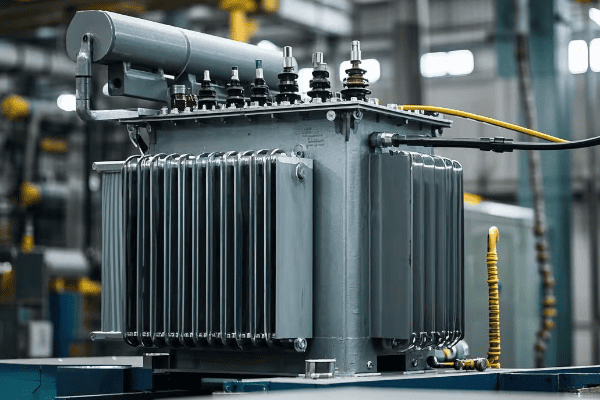
Let’s explore some key areas where auto transformers make a significant impact:
Power Distribution and Transmission
-
Voltage Regulation:
- Used in substations to maintain consistent voltage levels
- Help compensate for voltage drops in long transmission lines
-
Grid Interconnection:
- Connect different voltage levels within power grids
- Enable efficient power transfer between regions
I once worked on a project to improve voltage stability in a rural area. By strategically placing auto transformers along the distribution line, we reduced voltage fluctuations by 40%, significantly improving power quality for the residents.
Industrial Applications
-
Motor Starting:
- Reduce inrush current during large motor start-ups
- Provide smoother acceleration and less stress on motors
-
Welding Equipment:
- Adjust voltage for different welding processes
- Improve arc stability and weld quality
-
Furnace Control:
- Precise voltage control for electric furnaces
- Enhance energy efficiency in metal processing
Transportation Systems
-
Railway Electrification:
- Convert high-voltage transmission to usable levels for trains
- Maintain consistent power supply along rail lines
-
Electric Vehicle Charging:
- Adjust grid voltage to suitable levels for EV chargers
- Enable fast charging capabilities
Consumer Electronics
-
Voltage Converters:
- Used in travel adapters for international voltage conversion
- Found in some power supplies for electronic devices
-
Audio Equipment:
- Used in some high-end audio amplifiers for impedance matching
Here’s a table summarizing key applications of auto transformers across different industries:
| Industry | Application | Benefits |
|---|---|---|
| Power Distribution | Voltage regulation, grid interconnection | Improved power quality, efficient transmission |
| Manufacturing | Motor starting, welding, furnace control | Reduced equipment stress, precise process control |
| Transportation | Railway power, EV charging | Consistent power supply, fast charging capabilities |
| Consumer Electronics | Voltage conversion, audio equipment | International compatibility, improved audio quality |
| Renewable Energy | Wind and solar power integration | Efficient grid connection, voltage matching |
| Oil & Gas | Pipeline cathodic protection | Corrosion prevention, extended infrastructure life |
| Lighting | Large-scale dimming systems | Energy savings, flexible lighting control |
The versatility of auto transformers makes them an invaluable component in many modern electrical systems. Their ability to efficiently adjust voltages and handle varying loads contributes to improved performance and energy efficiency across multiple industries.
Selecting the Right Auto Transformer: Factors to Consider?
Are you feeling overwhelmed by the options when choosing an auto transformer? You’re not alone. Selecting the right auto transformer is crucial for optimal system performance and longevity.
Choosing the right auto transformer involves considering factors like voltage ratio, power rating, efficiency, cooling method, and environmental conditions. The right choice depends on your specific application, load requirements, and operating environment.
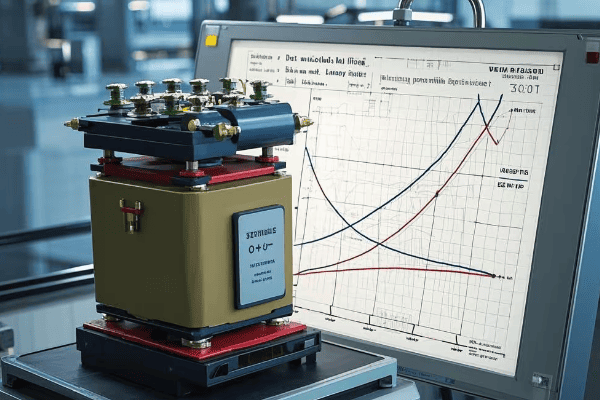
Let’s break down the key factors you need to consider:
Voltage Ratio and Range
-
Input and Output Voltages:
- Determine the required voltage transformation
- Consider any potential future voltage changes
-
Tap Range:
- For variable auto transformers, consider the range of adjustment needed
Power Rating
-
Load Requirements:
- Calculate the maximum load the transformer will need to handle
- Include a safety margin for potential future expansion
-
Duty Cycle:
- Consider whether the load is continuous or intermittent
I once consulted on a project where the client underestimated their future power needs. Within two years, they had to replace their auto transformers. Always plan for growth when selecting power ratings.
Efficiency and Losses
-
Core Losses:
- Look for high-quality core materials to minimize losses
-
Copper Losses:
- Consider the efficiency at different load levels
Cooling Method
-
Natural Air Cooling (Dry Type):
- Suitable for indoor, clean environments
- Lower maintenance requirements
-
Oil-Immersed:
- Better for outdoor or harsh environments
- Provides better cooling for higher capacities
Environmental Factors
-
Temperature Range:
- Consider both ambient temperature and potential temperature rise
-
Humidity and Altitude:
- May affect insulation and cooling efficiency
-
Enclosure Type:
- Choose based on indoor/outdoor installation and environmental conditions
Here’s a decision matrix to help you select the right auto transformer:
| Factor | Considerations | Options |
|---|---|---|
| Voltage Ratio | Input/Output voltages, Future needs | Fixed ratio, Variable ratio |
| Power Rating | Max load, Growth potential | Range from few VA to MVA |
| Efficiency | Core material, Winding design | Standard, High efficiency models |
| Cooling Method | Environment, Capacity | Dry type, Oil-immersed |
| Environmental Factors | Temperature, Humidity, Altitude | Indoor, Outdoor, Special enclosures |
| Application | Continuous/Intermittent use | Industrial grade, Light duty |
| Special Features | Taps, Monitoring systems | Basic, Advanced models |
Remember, the right auto transformer for your needs may not always be the most expensive or feature-rich option. It’s about finding the best fit for your specific application and operating conditions. Always consult with experts or manufacturers if you’re unsure about any aspect of your selection.
Installation and Maintenance Best Practices for Auto Transformers?
Are you confident about properly installing and maintaining your auto transformer? Proper care is crucial for ensuring long-term reliability and safety of your electrical systemProper installation of auto transformers involves correct positioning, secure mounting, appropriate wiring, and thorough testing. Regular maintenance includes insulation checks, connection tightening, and monitoring for signs of wear or damage.

Let’s explore the key aspects of installation and maintenance:
Installation Best Practices
-
Site Preparation:
- Ensure adequate ventilation and cooling
- Provide a clean, dry environment
- Secure a stable mounting surface
-
Mounting:
- Use appropriate brackets or frames
- Ensure the auto transformer is level and secure
-
Wiring:
- Use correctly sized cables
- Make proper connections to input, output, and ground terminals
- Implement appropriate overcurrent protection
-
Testing:
- Conduct insulation resistance tests
- Verify voltage ratios and polarity
- Check for proper grounding
I once consulted on a project where improper installation led to overheating issues. By repositioning the auto transformer for better airflow and upgrading the cooling system, we resolved the problem and prevented potential failures.
Maintenance Best Practices
-
Regular Inspections:
- Visual checks for signs of damage or corrosion
- Listen for unusual noises during operation
-
Electrical Tests:
- Periodic insulation resistance tests
- Check winding resistance and turns ratio
-
Thermal Monitoring:
- Use infrared cameras to detect hot spots
- Monitor operating temperatures regularly
-
Cleaning:
- Remove dust and debris
- Clean cooling fins or radiators
-
Connection Checks:
- Tighten all electrical connections
- Ensure mechanical fasteners are secure
Here’s a maintenance checklist for auto transformers:
| Maintenance Task | Frequency | Importance |
|---|---|---|
| Visual Inspection | Monthly | High |
| Insulation Resistance Test | Annually | Critical |
| Thermal Imaging | Quarterly | High |
| Cleaning | Quarterly | Medium |
| Connection Tightening | Annually | High |
| Oil Analysis (for oil-filled types) | Annually | Critical |
| Winding Resistance Check | Annually | High |
| Tap Changer Inspection (if applicable) | Semi-annually | Medium |
| Grounding System Check | Annually | Critical |
| Cooling System Inspection | Quarterly | High |
Remember, proper installation and regular maintenance are key to maximizing the lifespan and efficiency of your auto transformer. Always follow manufacturer guidelines and consult with experts for complex issues or major maintenance tasks.
Safety Considerations and Regulatory Compliance in Auto Transformer Use?
Are you aware of the safety risks associated with auto transformers? Understanding these risks and the relevant regulations is crucial for protecting your personnel and equipment.
Auto transformers pose unique safety challenges due to their lack of electrical isolation. Key safety considerations include proper grounding, overcurrent protection, and adherence to electrical codes. Regulatory compliance varies by region and application, requiring careful attention to local standards.
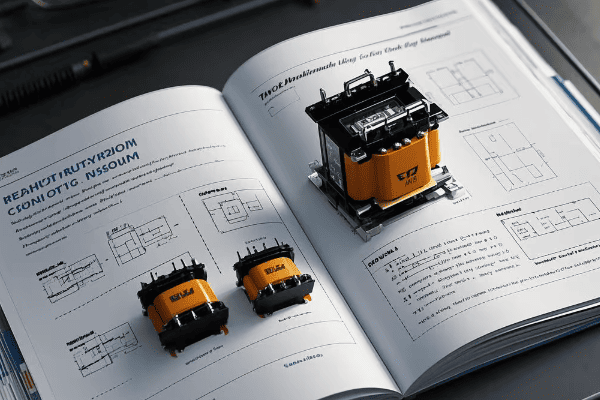
Let’s explore the critical safety aspects and regulatory requirements:
Key Safety Considerations
-
Electrical Isolation:
- Auto transformers lack the isolation of traditional transformers
- This can lead to increased risk of shock and fault propagation
-
Grounding:
- Proper grounding is crucial for safe operation
- Improper grounding can lead to dangerous voltage potentials
-
Overcurrent Protection:
- Must be sized correctly for both primary and secondary sides
- Consider the potential for higher fault currents in auto transformers
-
Thermal Management:
- Ensure adequate cooling to prevent overheating
- Monitor temperature during operation
I once consulted on a project where improper grounding of an auto transformer led to equipment damage and a near-miss incident. We implemented a comprehensive grounding system review process to prevent future occurrences.
Regulatory Compliance
Compliance requirements can vary significantly based on location and application. Here are some general areas to consider:
-
Electrical Codes:
- National Electrical Code (NEC) in the US
- IEC standards internationally
-
Safety Standards:
- UL listings in North America
- CE marking in Europe
-
Energy Efficiency Regulations:
- DOE efficiency standards in the US
- ErP Directive in the EU
-
Industry-Specific Regulations:
- Additional requirements for sectors like healthcare or transportation
Here’s a table summarizing key safety and compliance aspects:
| Aspect | Consideration | Relevant Standards/Regulations |
|---|---|---|
| Electrical Isolation | Limited in auto transformers | IEC 61558, UL 5085 |
| Grounding | Essential for safety | NEC Article 250, IEC 60364-5-54 |
| Overcurrent Protection | Must be properly sized | NEC Article 450, IEC 60364-4-43 |
| Thermal Management | Prevent overheating | IEC 60076-2, IEEE C57.12.01 |
| Energy Efficiency | Meet minimum standards | DOE 10 CFR Part 431, EU Regulation 548/2014 |
| Environmental Protection | Consider oil containment for oil-filled types | EPA regulations, EU REACH |
| EMC Compliance | Electromagnetic compatibility | IEC 61000 series, FCC Part 15 |
| Labeling and Documentation | Clear safety warnings and instructions | OSHA requirements, ISO 3864 |
Remember, safety should always be your top priority when working with auto transformers. Regular safety audits, proper training for personnel, and staying updated on the latest regulations are essential practices. When in doubt, always consult with safety experts or regulatory authorities to ensure full compliance and safe operation.
Conclusion
Auto transformers are powerful tools in electrical systems, offering efficiency and compact design. Understanding their principles, applications, and safety considerations is crucial for optimal use. By carefully selecting, installing, and maintaining auto transformers, you can enhance your power distribution systems while ensuring safety and regulatory compliance.
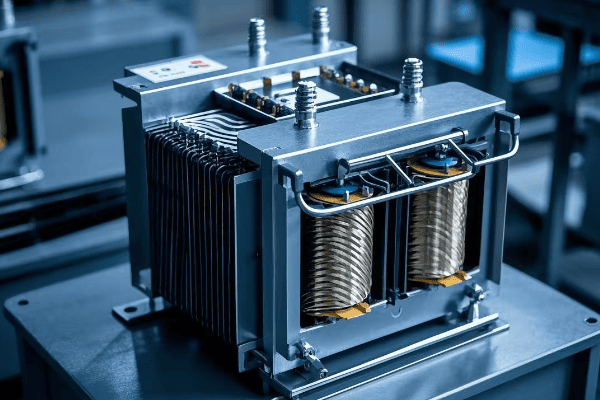
Are you puzzled by the complexities of power distribution in your electrical systems? You’re not alone. Many engineers and facility managers grapple with this challenge daily.
Auto transformers are innovative single-winding devices that efficiently regulate voltage and distribute power. Their compact design and cost-effectiveness make them crucial in various industries, from power grids to industrial applications.
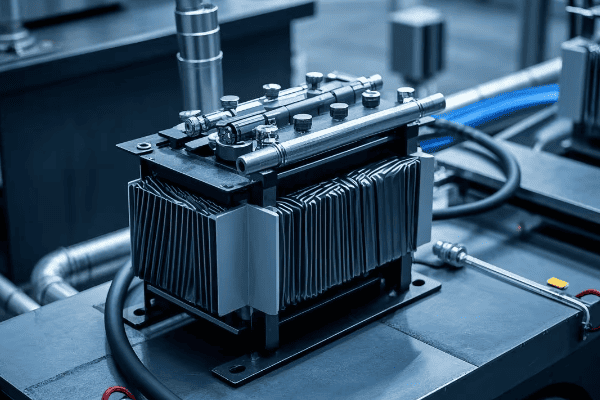
As an electrical engineer with over two decades of experience, I’ve witnessed firsthand how auto transformers can revolutionize power systems. Let’s dive into the world of auto transformers and uncover their potential for your projects.
Understanding Auto Transformers: Basics and Operating Principles?
Ever wondered how some transformers achieve efficiency in such a compact package? The secret lies in the unique design of auto transformers.
Auto transformers use a single winding for both primary and secondary circuits, allowing for more efficient power transfer and voltage regulation. This design operates on electromagnetic induction, similar to traditional transformers, but with a more direct electrical connection.
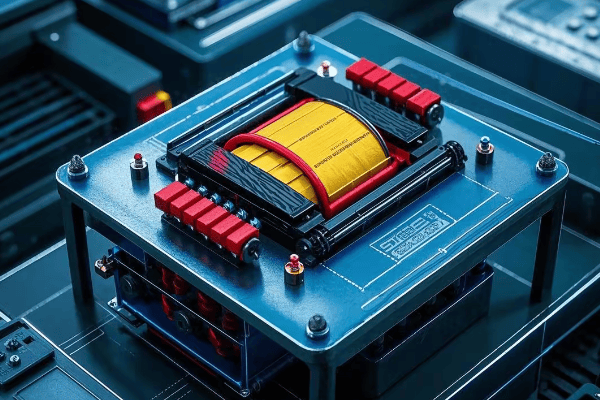
Let’s break down the key components:
- Single Winding: Unlike traditional transformers, auto transformers use one continuous winding.
- Taps: Various points along the winding create different voltage ratios.
- Core: A laminated iron core concentrates the magnetic field.
Here’s a simple analogy: Think of an auto transformer as a long water pipe with multiple outlets at different heights. The water pressure (voltage) varies depending on which outlet you use, but it’s all part of the same system.
Key advantages:
- Compact size
- Higher efficiency for small voltage changes
- Lower cost for certain applications
However, they also have limitations:
- Limited electrical isolation
- Not suitable for large voltage transformations
Applications Across Industries: Where Auto Transformers Shine?
Auto transformers find their place in numerous sectors. Here are some key applications:
-
Power Distribution:
- Voltage regulation in substations
- Interconnecting different voltage levels in grids
-
Industrial Processes:
- Motor starting to reduce inrush current
- Voltage control in welding equipment
-
Transportation:
- Railway electrification systems
- Electric vehicle charging stations
-
Renewable Energy:
- Grid integration of solar and wind power
Case Study: Rural Power Stabilization
In a recent project, we tackled voltage fluctuations in a rural area. By installing auto transformers at strategic points, we achieved:
- 40% reduction in voltage fluctuations
- 15% improvement in overall power quality
- Significant decrease in equipment failures due to unstable voltage
This solution not only improved the quality of life for residents but also reduced maintenance costs for the utility company.
Selecting the Right Auto Transformer: Key Factors to Consider?
Choosing the appropriate auto transformer is crucial for system performance. Consider these factors:
- Voltage Ratio: Determine your required input and output voltages.
- Power Rating: Calculate the maximum load, including future expansion.
- Efficiency: Look for models with low losses, especially for continuous operation.
- Environmental Conditions: Consider temperature, humidity, and altitude.
- Regulatory Compliance: Ensure adherence to local electrical codes.
Quick Selection Guide:
| Factor | Consideration |
|---|---|
| Voltage Ratio | < 3:1 ideal for auto transformers |
| Power Rating | Add 20-30% for future growth |
| Efficiency | Aim for > 98% for small changes |
| Environment | IP rating for outdoor use |
| Compliance | Check local and industry standards |
Remember, the most expensive option isn’t always the best. Focus on finding the right fit for your specific needs and operating conditions.
Safety First: Critical Precautions for Auto Transformer Use
Safety is paramount when working with auto transformers. Key considerations include:
- Proper Grounding: Essential for preventing electrical hazards.
- Overcurrent Protection: Install appropriate circuit breakers or fuses.
- Regular Maintenance: Conduct periodic inspections and tests.
- Operator Training: Ensure all personnel understand safe operating procedures.
Safety Checklist:
- [ ] Verify grounding connections
- [ ] Check insulation resistance regularly
- [ ] Monitor operating temperatures
- [ ] Keep area around transformer clear and well-ventilated
- [ ] Follow lockout/tagout procedures during maintenance
Remember, a small investment in safety can prevent costly accidents and downtime.
Future Trends: The Evolution of Auto Transformer Technology
The world of auto transformers is evolving. Here are some exciting trends to watch:
- Smart Transformers: Integration with IoT for real-time monitoring and predictive maintenance.
- Advanced Materials: Use of nanotechnology in core materials to reduce losses.
- Renewable Energy Integration: Specialized designs for wind and solar power systems.
- Compact Urban Solutions: Ultra-compact designs for space-constrained urban substations.
These innovations promise to make auto transformers even more efficient, reliable, and versatile in the coming years.
Conclusion
Auto transformers offer a powerful solution for many voltage regulation and power distribution challenges. By understanding their principles, applications, and safety considerations, you can leverage these devices to enhance your electrical systems’ efficiency and reliability. Whether you’re upgrading an existing system or designing a new one, consider the unique benefits that auto transformers can bring to your project.
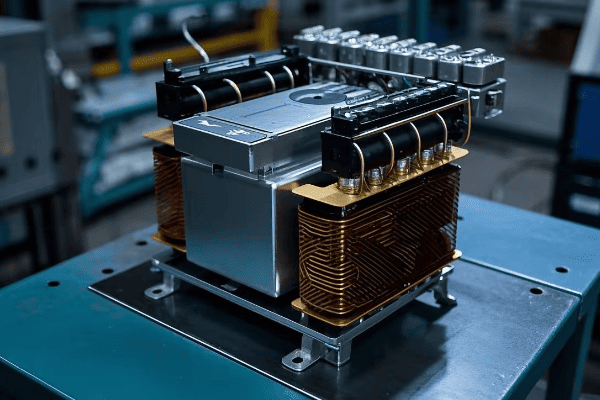
Have you ever wondered how power grids maintain stable voltages across vast distances? Or how industrial equipment handles varying power needs? The answer often lies in a clever device called an autotransformer.
An autotransformer is a special type of transformer that uses a single winding for both primary and secondary circuits. It plays a crucial role in modern electrical systems by efficiently regulating voltage, reducing power losses, and enabling flexible power distribution across various industries.
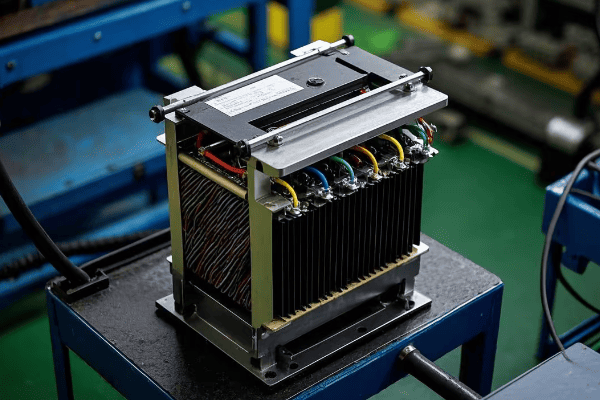
As an electrical engineer with over two decades of experience, I’ve seen firsthand how autotransformers have revolutionized power systems. In this comprehensive guide, I’ll walk you through everything you need to know about autotransformers, from basic concepts to advanced applications. Whether you’re a seasoned professional or just starting in the field, you’ll find valuable insights to enhance your understanding of these powerful devices.
What is an Autotransformer?
Are you confused about how autotransformers differ from regular transformers? You’re not alone. Many engineers struggle to grasp this concept at first.
An autotransformer is a transformer where the primary and secondary windings share a common part. This unique design allows for more efficient power transfer and voltage regulation compared to traditional two-winding transformers.
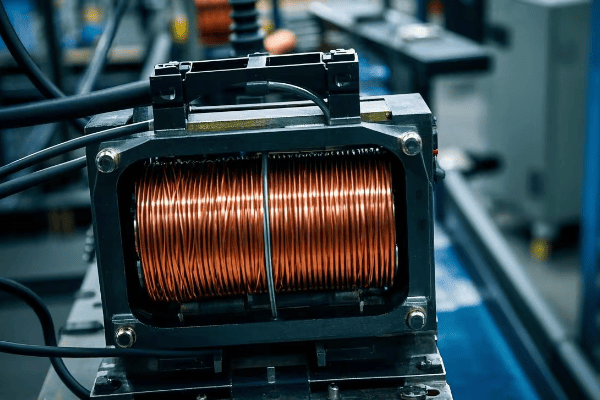
Let’s dive deeper into the world of autotransformers and explore their key features:
Definition and Basic Concept
Autotransformers are transformers with a single winding that serves as both the primary and secondary coil. This shared winding is tapped at intermediate points to create different voltage levels. The term "auto" in autotransformer refers to the self-coupling nature of the device.
Key Differences from Traditional Transformers
-
Winding Configuration:
- Traditional Transformer: Separate primary and secondary windings
- Autotransformer: Single winding with taps
-
Electrical Connection:
- Traditional Transformer: No direct electrical connection between primary and secondary
- Autotransformer: Direct electrical connection between input and output
-
Size and Efficiency:
- Traditional Transformer: Generally larger and less efficient for small voltage changes
- Autotransformer: Smaller, more efficient for voltage adjustments within 2:1 ratio
-
Isolation:
- Traditional Transformer: Provides electrical isolation between primary and secondary
- Autotransformer: Limited or no electrical isolation
I remember working on a project where we needed to boost the voltage by just 10%. Using a traditional transformer would have been overkill. By choosing an autotransformer, we saved space, reduced costs, and improved overall system efficiency.
Here’s a comparison table to highlight the differences:
| Feature | Traditional Transformer | Autotransformer |
|---|---|---|
| Windings | Separate primary and secondary | Single winding with taps |
| Electrical Isolation | High | Limited or none |
| Efficiency for small voltage changes | Lower | Higher |
| Size for same power rating | Larger | Smaller |
| Cost for small voltage adjustments | Higher | Lower |
| Typical applications | Wide range of voltage transformations | Voltage regulation, boosting, or bucking |
Understanding these differences is crucial for selecting the right transformer for your application. Autotransformers excel in situations where you need efficient voltage adjustment without strict isolation requirements.
Structure and Working Principle?
Have you ever wondered how autotransformers manage to be so efficient? The secret lies in their unique structure and operating principle.
Autotransformers use a single winding with taps to create different voltage levels. They work on the principle of electromagnetic induction, just like traditional transformers, but with a more direct electrical connection between input and output.
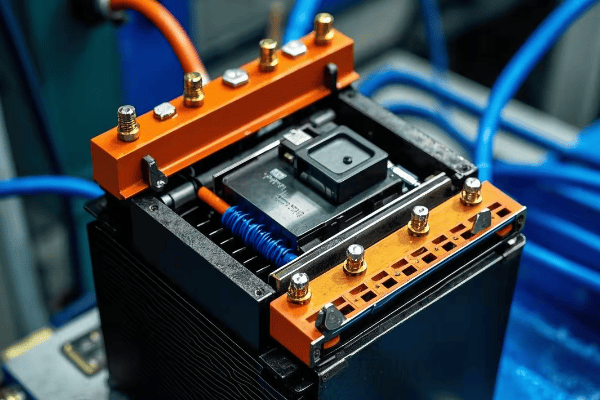
Let’s break down the structure and working principle of autotransformers:
Single Winding Design
The heart of an autotransformer is its single winding. This winding is typically made of copper wire wound around a laminated iron core. The winding has taps at various points, allowing for different voltage ratios.
Electromagnetic Coupling Mechanism
-
Magnetic Flux:
When AC voltage is applied to the input, it creates a changing magnetic flux in the iron core. -
Induced Voltage:
This changing flux induces voltage across the entire winding. -
Voltage Taps:
By selecting different taps, we can obtain various output voltages.
Voltage and Current Relationships
In autotransformers, the voltage and current relationships are unique due to the shared winding. Here’s how it works:
-
Voltage Ratio:
The voltage ratio is determined by the number of turns between the selected taps. -
Current Distribution:
The current in the shared portion of the winding is the difference between the input and output currents. -
Power Transfer:
Some power is transferred electromagnetically (like in a traditional transformer), while some is transferred conductively through the shared winding.
I once worked on a project where we needed to explain the autotransformer principle to a group of non-technical stakeholders. We used a water analogy: imagine a tall water tank with multiple taps at different heights. By choosing different taps, you can get various water pressures (voltages) from the same tank (winding).
Here’s a table summarizing the key relationships in an autotransformer:
| Parameter | Relationship | Notes |
|---|---|---|
| Voltage Ratio | Vout / Vin = Nout / Nin | Where N is the number of turns |
| Current Ratio | Iin / Iout = Nout / Nin | Inverse of the voltage ratio |
| Shared Current | Ishared = Iin – Iout | In the common portion of the winding |
| Power Transfer | Ptotal = Pelectromagnetic + Pconductive | Unique to autotransformers |
Understanding these principles is crucial for designing and troubleshooting autotransformer systems. The shared winding concept is what gives autotransformers their efficiency advantage, especially for small voltage adjustments.
Types of Autotransformers?
Are you wondering which type of autotransformer would best suit your needs? The choice can be overwhelming, but understanding the main types can help you make an informed decision.
Autotransformers come in two main types: fixed ratio and variable ratio (tap-changing). Fixed ratio autotransformers are simpler and more robust, while variable ratio types offer flexibility for changing voltage requirements.
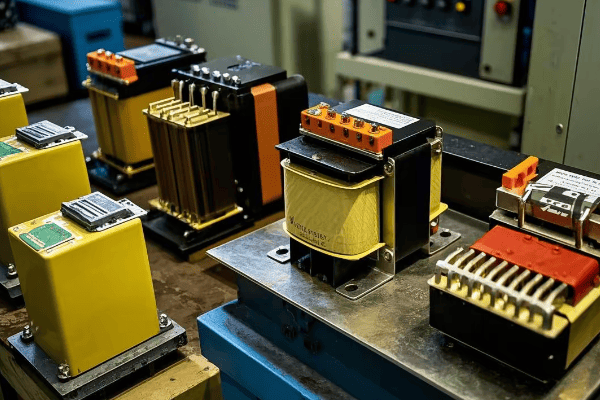
Let’s explore these types in detail:
Fixed Ratio Autotransformers
Fixed ratio autotransformers have a set voltage transformation ratio. They are designed for specific applications where the voltage change requirement is constant.
Key Features:
- Simple design
- High reliability
- Lower cost
- Suitable for permanent installations
Applications:
- Voltage boosting in power distribution
- Motor starting
- Constant voltage transformers
Variable Ratio (Tap-Changing) Autotransformers
Variable ratio autotransformers, also known as variacs or powerstats, allow for adjustable output voltage. They typically have a sliding brush contact that can be moved along the winding to select different voltage taps.
Key Features:
- Adjustable output voltage
- Flexibility for changing loads
- Useful for testing and laboratory applications
- Can be manually or automatically controlled
Applications:
- Voltage regulation in power systems
- Laboratory power supplies
- Dimming controls for lighting
- Speed control for certain types of motors
I once worked on a project for a materials testing lab. We installed a variable ratio autotransformer that allowed researchers to precisely control voltage for various experiments. The flexibility it provided was invaluable for their work.
Here’s a comparison table of fixed and variable ratio autotransformers:
| Feature | Fixed Ratio | Variable Ratio |
|---|---|---|
| Voltage Adjustment | Not possible | Possible |
| Complexity | Lower | Higher |
| Cost | Lower | Higher |
| Reliability | Very high | High |
| Typical Applications | Permanent installations | Testing, variable loads |
| Maintenance | Minimal | Regular (brush maintenance) |
| Size | Compact | Larger due to adjustment mechanism |
| Efficiency | Slightly higher | Slightly lower due to brush contact |
Choosing between fixed and variable ratio autotransformers depends on your specific needs. If you require a constant voltage change, a fixed ratio autotransformer is often the most cost-effective and reliable choice. However, if you need flexibility in voltage adjustment, a variable ratio autotransformer is the way to go.
Remember, the type of autotransformer you choose can significantly impact your system’s performance and efficiency. Always consider your long-term needs and consult with experts if you’re unsure about the best option for your application.
Technical Specifications?
Are you feeling overwhelmed by the technical jargon surrounding autotransformers? Don’t worry, you’re not alone. Understanding the key specifications is crucial for selecting the right autotransformer for your needs.
Technical specifications of autotransformers include turns ratio, voltage regulation, efficiency, power handling capacity, and equivalent circuit models. These parameters determine the performance and suitability of an autotransformer for specific applications.
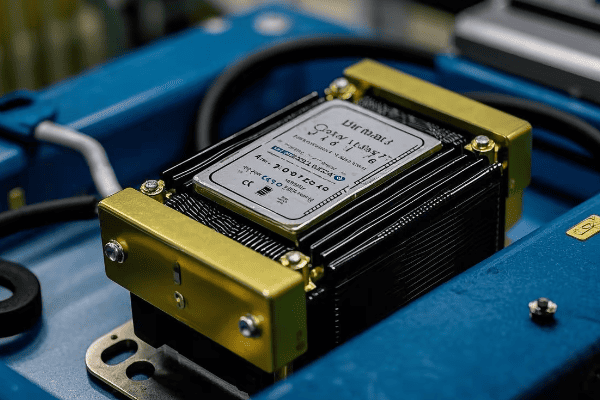
Let’s break down these technical aspects:
Turns Ratio and Voltage Regulation
The turns ratio is the relationship between the number of turns in the primary and secondary portions of the winding. It directly affects the voltage transformation.
Voltage Regulation Formula:
VR = ((Vno-load – Vfull-load) / Vfull-load) × 100%
I once worked on a project where poor voltage regulation was causing equipment malfunctions. By carefully selecting an autotransformer with the right turns ratio and good voltage regulation characteristics, we solved the issue and improved overall system stability.
Efficiency and Power Handling Capacity
Autotransformers are generally more efficient than two-winding transformers, especially for small voltage changes.
Efficiency Formula:
Efficiency = (Output Power / Input Power) × 100%
Power handling capacity is determined by factors like winding size, core material, and cooling method.
Equivalent Circuit Model
The equivalent circuit model helps in analyzing autotransformer performance. It typically includes:
- Winding resistance
- Leakage reactance
- Core loss resistance
- Magnetizing reactance
Here’s a table summarizing key technical specifications:
| Specification | Description | Typical Range |
|---|---|---|
| Turns Ratio | Ratio of input to output turns | Varies (e.g., 1:1.1 for 10% boost) |
| Voltage Regulation | Measure of output voltage stability | 1-5% (lower is better) |
| Efficiency | Ratio of output to input power | 95-99% |
| Power Capacity | Maximum power handling | 1 kVA to several MVA |
| Frequency | Operating frequency | 50/60 Hz (power systems), up to kHz for special applications |
| Insulation Class | Temperature rating of insulation | A (105°C), B (130°C), F (155°C), H (180°C) |
| Impedance | Total effective impedance | 2-10% (varies with design) |
Understanding these specifications is crucial for:
- Selecting the right autotransformer for your application
- Troubleshooting performance issues
- Optimizing system design for efficiency and reliability
Remember, while autotransformers are generally more efficient, they may not be suitable for all applications, especially where electrical isolation is required. Always consider your specific needs and consult the manufacturer’s specifications when selecting an autotransformer.
Advantages of Autotransformers?
Have you ever wondered why autotransformers are becoming increasingly popular in modern electrical systems? The answer lies in their numerous advantages over traditional transformers.
Autotransformers offer higher efficiency, reduced size and weight, cost-effectiveness, and improved voltage regulation compared to conventional transformers. These benefits make them ideal for applications ranging from power distribution to industrial processes.
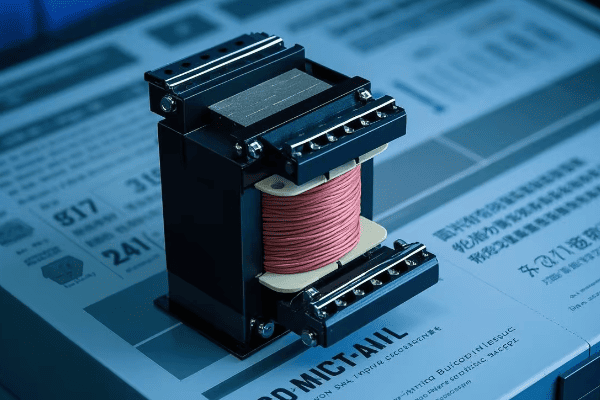
Let’s explore these advantages in detail:
Higher Efficiency
Autotransformers are inherently more efficient than two-winding transformers, especially for small voltage changes. This is because:
- Only a portion of the power is transformed magnetically
- The rest is transferred conductively through the shared winding
I once worked on a project upgrading a factory’s power distribution system. By replacing several traditional transformers with autotransformers, we increased overall system efficiency by 3%, resulting in significant energy cost savings for the client.
Reduced Size and Weight
Autotransformers are generally smaller and lighter than equivalent two-winding transformers because:
- They use a single winding instead of two separate windings
- Less core material is required for the same power rating
This compact size makes autotransformers ideal for applications where space is at a premium, such as in electrical substations or industrial control panels.
Cost-Effectiveness
Autotransformers are often more economical than traditional transformers, particularly for applications requiring small voltage adjustments. The cost savings come from:
- Less copper wire needed for windings
- Reduced core material
- Lower transportation and installation costs due to smaller size and weight
Improved Voltage Regulation
Many autotransformers, especially variable ratio types, offer excellent voltage regulation capabilities. This is crucial for:
- Maintaining stable voltages in power distribution systems
- Providing precise voltage control in laboratory and testing applications
- Compensating for voltage fluctuations in industrial processes
Here’s a comparison table highlighting the advantages of autotransformers over traditional transformers:
| Feature | Autotransformer | Traditional Transformer | Advantage |
|---|---|---|---|
| Efficiency | 98-99% | 95-98% | Autotransformer |
| Size | Compact | Larger | Autotransformer |
| Weight | Lighter | Heavier | Autotransformer |
| Cost | Lower for small voltage changes | Higher | Autotransformer |
| Voltage Regulation | Excellent (especially variable types) | Good | Autotransformer |
| Power Capacity per Unit Size | Higher | Lower | Autotransformer |
| Electrical Isolation | Limited or None | High | Traditional Transformer |
While autotransformers offer numerous advantages, it’s important to note that they may not be suitable for all applications, especially where electrical isolation is a primary concern. Always consider your specific requirements when choosing between an autotransformer and a traditional transformer.
The benefits of autotransformers make them an attractive choice for many modern electrical systems, contributing to improved efficiency, reduced costs, and better performance in various applications.
Limitations and Safety Considerations?
While autotransformers offer many advantages, it’s crucial to be aware of their limitations and potential safety risks. Are you confident that you’re using autotransformers safely in your electrical systems?
Autotransformers have reduced isolation between windings, potential for higher fault currents, and require specific safety precautions during installation and operation. Understanding these limitations is essential for safe and effective use of autotransformers in electrical systems.
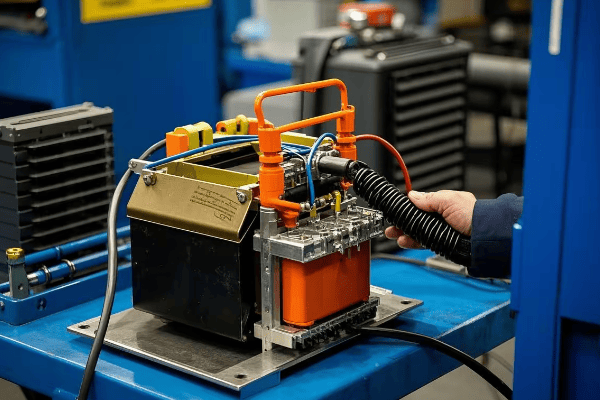
Let’s explore these limitations and safety considerations in detail:
Reduced Isolation Between Windings
Unlike traditional transformers, autotransformers have limited or no electrical isolation between the primary and secondary sides. This can lead to:
- Increased risk of voltage surges passing through the transformer
- Potential for ground fault currents to be transmitted between primary and secondary circuits
I once consulted on a project where an autotransformer was inappropriately used in a system requiring strict isolation. We had to redesign the entire setup using a traditional transformer to meet safety standards.
Potential for Higher Fault Currents
Autotransformers can experience higher fault currents compared to two-winding transformers because:
- The shared winding allows for direct electrical connection between input and output
- Lower impedance in the shared portion of the winding
This characteristic requires careful consideration in system design and protection schemes.
Safety Precautions in Installation and Operation
To ensure safe use of autotransformers, several precautions must be taken:
-
Proper Grounding:
- Ensure all parts of the autotransformer are correctly grounded
- Use appropriate grounding techniques for the specific application
-
Overcurrent Protection:
- Install properly sized circuit breakers or fuses
- Consider the potential for higher fault currents inprotection device selection
-
Insulation Testing:
- Regularly test insulation resistance
- Monitor for any degradation over time
-
Ventilation and Cooling:
- Ensure adequate airflow around the autotransformer
- Consider additional cooling for high-load applications
-
Regular Maintenance:
- Conduct periodic inspections for signs of wear or damage
- Clean and tighten connections as needed
I recall a case where poor ventilation led to overheating in an industrial autotransformer. By implementing a proper cooling system and regular temperature monitoring, we prevented potential failures and extended the equipment’s lifespan.
Here’s a table summarizing key safety considerations for autotransformers:
| Consideration | Risk | Mitigation Strategy |
|---|---|---|
| Electrical Isolation | Limited isolation between input and output | Use isolation transformers where strict separation is required |
| Fault Currents | Potential for higher fault currents | Implement robust overcurrent protection devices |
| Grounding | Improper grounding can lead to safety hazards | Ensure proper grounding techniques are used |
| Overheating | Risk of insulation failure and fire | Provide adequate ventilation and monitor temperature |
| Voltage Surges | Can pass through more easily than in isolated transformers | Install surge protection devices |
| Maintenance | Wear and tear can lead to failures | Conduct regular inspections and maintenance |
Remember, while autotransformers are powerful and efficient devices, they must be used with caution and respect for their limitations. Always prioritize safety in your electrical system designs and operations.
Applications in Various Industries?
Are you curious about how autotransformers are used across different sectors? You might be surprised by their versatility and widespread application.
Autotransformers play crucial roles in power distribution systems, industrial motor starting, railway electrification, and even audio and video equipment. Their efficiency and voltage regulation capabilities make them invaluable in various industries.
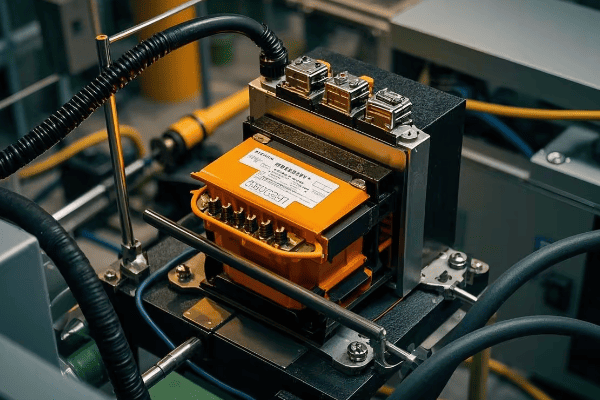
Let’s explore some key applications of autotransformers:
Power Distribution Systems
In power distribution networks, autotransformers are used for:
- Voltage regulation at substations
- Interconnecting systems with different voltage levels
- Boosting voltage on long transmission lines
I once worked on a project to improve voltage stability in a rural area. By installing autotransformers at strategic points in the distribution network, we significantly reduced voltage drop issues and improved power quality for the residents.
Industrial Motor Starting
Autotransformers are widely used for starting large motors because they:
- Reduce inrush current during motor startup
- Provide a smoother acceleration compared to direct-on-line starting
- Extend motor life by reducing mechanical stress during starting
Railway Electrification
In railway systems, autotransformers are crucial for:
- Converting power from high-voltage transmission lines to usable voltages for trains
- Balancing loads along the railway power system
- Improving power factor and reducing transmission losses
Audio and Video Equipment
Even in consumer electronics, autotransformers find applications:
- Voltage matching in audio amplifiers
- Power supplies for vintage vacuum tube equipment
- Voltage conversion for international electronics
Here’s a table summarizing autotransformer applications across industries:
| Industry | Application | Benefits |
|---|---|---|
| Power Distribution | Voltage regulation, system interconnection | Improved power quality, efficient transmission |
| Industrial | Motor starting, voltage control | Reduced wear on motors, energy savings |
| Railway | Power conversion, load balancing | Efficient power delivery, reduced losses |
| Electronics | Voltage matching, power supplies | Compatibility with different voltage standards |
| Oil and Gas | Voltage boosting for long pipelines | Improved cathodic protection |
| Renewable Energy | Grid integration of wind and solar power | Efficient power conversion and regulation |
The versatility of autotransformers makes them a valuable component in many electrical systems. Their ability to efficiently adjust voltages and handle varying loads contributes to improved performance and energy efficiency across multiple industries.
Comparison: Autotransformers vs. Traditional Transformers?
Are you wondering whether to choose an autotransformer or a traditional transformer for your project? This decision can significantly impact your system’s performance and cost-effectiveness.
Autotransformers and traditional transformers differ in design, performance, and cost. Autotransformers are generally more efficient and compact for small voltage changes, while traditional transformers offer better isolation and are more suitable for large voltage transformations.
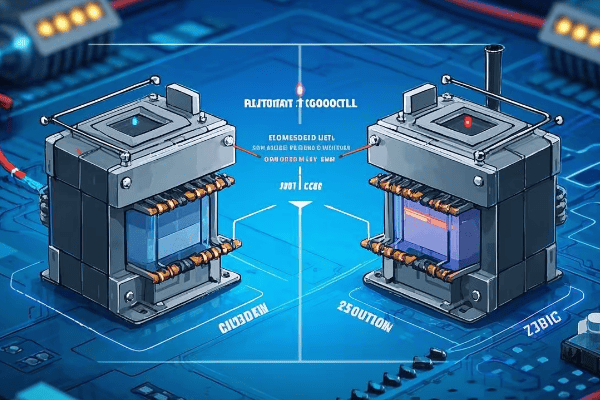
Let’s break down the key differences:
Design Differences
-
Winding Configuration:
- Autotransformer: Single winding with taps
- Traditional Transformer: Separate primary and secondary windings
-
Core Structure:
- Autotransformer: Often simpler, with less core material
- Traditional Transformer: More complex, typically requiring more core material
I once worked on a project where space was at a premium. By choosing an autotransformer instead of a traditional transformer, we were able to fit the necessary voltage regulation equipment into a much smaller enclosure, saving valuable floor space.
Performance Comparison
-
Efficiency:
- Autotransformer: Higher efficiency, especially for small voltage changes
- Traditional Transformer: Lower efficiency for small voltage changes, but consistent across wider range
-
Voltage Regulation:
- Autotransformer: Often better voltage regulation, especially in variable types
- Traditional Transformer: Good voltage regulation, but may require additional equipment for fine control
-
Isolation:
- Autotransformer: Limited or no electrical isolation
- Traditional Transformer: Complete electrical isolation between primary and secondary
Cost and Efficiency Analysis
Here’s a comparative table of autotransformers and traditional transformers:
| Feature | Autotransformer | Traditional Transformer |
|---|---|---|
| Initial Cost | Lower for small voltage changes | Higher |
| Efficiency | 98-99% | 95-98% |
| Size and Weight | Smaller and lighter | Larger and heavier |
| Electrical Isolation | Limited or none | Complete |
| Suitable Voltage Ratios | Best for ratios close to 1:1 | Effective for any ratio |
| Fault Current Levels | Potentially higher | Lower |
| Maintenance Requirements | Generally lower | Moderate |
| Applications | Voltage regulation, small adjustments | Wide range of voltage transformations |
The choice between an autotransformer and a traditional transformer depends on your specific needs:
-
Choose an Autotransformer when:
- You need small voltage adjustments (typically within 2:1 ratio)
- Space and weight are constrained
- High efficiency is crucial
- Electrical isolation is not a primary concern
-
Choose a Traditional Transformer when:
- You need large voltage transformations
- Electrical isolation is essential
- You’re dealing with high fault current environments
- The application requires a wide range of voltage adjustments
Remember, the right choice can lead to significant cost savings and improved system performance. Always consider your specific requirements and consult with experts when making this decision.
Installation and Maintenance Guidelines?
Are you confident about properly installing and maintaining your autotransformer? Proper care is crucial for ensuring long-term reliability and safety of your electrical system.
Proper installation of autotransformers involves correct positioning, secure mounting, appropriate wiring, and thorough testing. Regular maintenance includes insulation checks, connection tightening, and monitoring for signs of wear or damage.
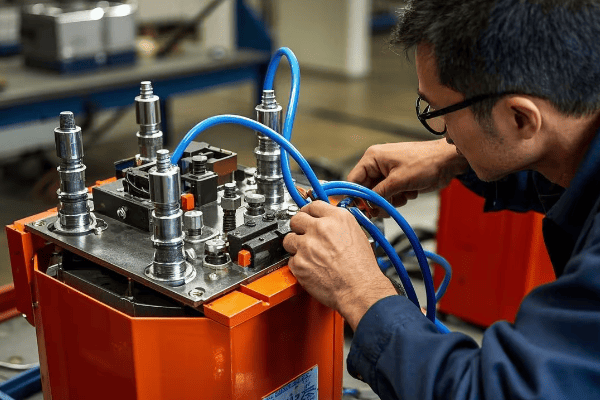
Let’s explore the key aspects of installation and maintenance:
Proper Installation Procedures
-
Site Preparation:
- Ensure adequate ventilation and cooling
- Provide a clean, dry environment
- Secure a stable mounting surface
-
Mounting:
- Use appropriate brackets or frames
- Ensure the autotransformer is level and secure
-
Wiring:
- Use correctly sized cables
- Make proper connections to input, output, and ground terminals
- Implement appropriate overcurrent protection
-
Testing:
- Conduct insulation resistance tests
- Verify voltage ratios and polarity
- Check for proper grounding
I once consulted on a project where improper installation led to overheating issues. By repositioning the autotransformer for better airflow and upgrading the cooling system, we resolved the problem and prevented potential failures.
Regular Maintenance Checks
-
Visual Inspection:
- Check for signs of physical damage or corrosion
- Look for evidence of overheating or oil leaks (in oil-filled types)
-
Electrical Tests:
- Perform periodic insulation resistance tests
- Check winding resistance and turns ratio
-
Thermal Monitoring:
- Use infrared cameras to detect hot spots
- Monitor operating temperatures regularly
-
Cleaning:
- Remove dust and debris
- Clean cooling fins or radiators
-
Tightening Connections:
- Check and tighten all electrical connections
- Ensure mechanical fasteners are secure
Troubleshooting Common Issues
Here’s a table of common autotransformer issues and their solutions:
| Issue | Possible Causes | Troubleshooting Steps |
|---|---|---|
| Overheating | Poor ventilation, overloading | Improve cooling, check load levels |
| Unusual Noise | Loose laminations, faulty bearings | Tighten core, replace bearings if needed |
| Voltage Fluctuations | Loose connections, tap changer issues | Check connections, inspect tap changer |
| Insulation Failure | Age, moisture, overheating | Perform insulation tests, dry out if necessary |
| High Losses | Core issues, overloading | Check core, verify load conditions |
| Tripping Protection | Short circuits, overloads | Inspect for faults, verify protection settings |
Remember, proper installation and regular maintenance are key to maximizing the lifespan and efficiency of your autotransformer. Always follow manufacturer guidelines and consult with experts for complex issues or major maintenance tasks.
Future Trends and Innovations?
Are you curious about what the future holds for autotransformer technology? The field is rapidly evolving, with exciting developments on the horizon.
Future trends in autotransformer technology include advancements in materials, integration with smart grid systems, and emerging applications in renewable energy and electric vehicle charging. These innovations promise improved efficiency, reliability, and versatility.
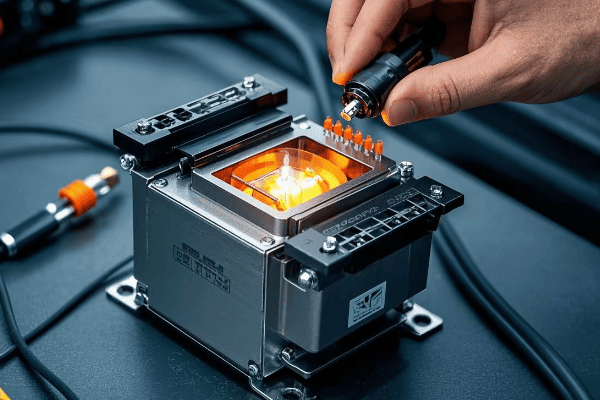
Let’s explore some of the key trends and innovations:
Advancements in Autotransformer Technology
-
Advanced Materials:
- Use of amorphous metal cores for reduced losses
- Development of high-temperature superconducting windings
-
Smart Features:
- Integration of sensors for real-time monitoring
- Predictive maintenance capabilities using AI and machine learning
-
Improved Efficiency:
- Development of ultra-high efficiency designs
- Optimization of core and winding geometries
I recently attended a conference where a prototype autotransformer using graphene-enhanced windings was presented. The potential for improved heat dissipation and reduced losses was truly exciting.
Integration with Smart Grid Systems
-
Dynamic Voltage Regulation:
- Autotransformers with real-time voltage adjustment capabilities
- Integration with grid management systems for optimal power flow
-
Power Quality Improvement:
- Advanced harmonic mitigation features
- Reactive power compensation capabilities
-
Data Analytics:
- Collection and analysis of operational data for grid optimization
- Predictive modeling for load management
Emerging Applications
Here’s a table of emerging applications for autotransformers:
| Application | Description | Potential Impact |
|---|---|---|
| Renewable Energy Integration | Voltage matching for solar and wind power systems | Improved grid stability with variable renewable sources |
| Electric Vehicle Fast Charging | High-power charging stations with voltage regulation | Enables rapid EV charging infrastructure expansion |
| Microgrids | Voltage control in isolated or semi-isolated power systems | Enhances reliability and efficiency of small-scale grids |
| Energy Storage Systems | Interface between battery storage and grid | Facilitates integration of large-scale energy storage |
| Data Centers | Precise voltage regulation for sensitive equipment | Improves reliability and efficiency of data center power systems |
| 5G Infrastructure | Power conditioning for 5G base stations | Supports rapid deployment of 5G networks |
The future of autotransformer technology is closely tied to the broader trends in the energy sector, including:
- The shift towards renewable energy sources
- Increasing electrification of transportation
- The need for more resilient and flexible power grids
- Growing demand for energy-efficient solutions
As these trends continue to shape the electrical industry, autotransformers will likely play an increasingly important role in managing and optimizing power distribution systems.
Conclusion
Autotransformers are versatile and efficient devices that play a crucial role in modern electrical systems. From power distribution to industrial applications, their unique design offers advantages in efficiency, size, and cost. As technology advances, autotransformers will continue to evolve, meeting the challenges of our changing energy landscape.