
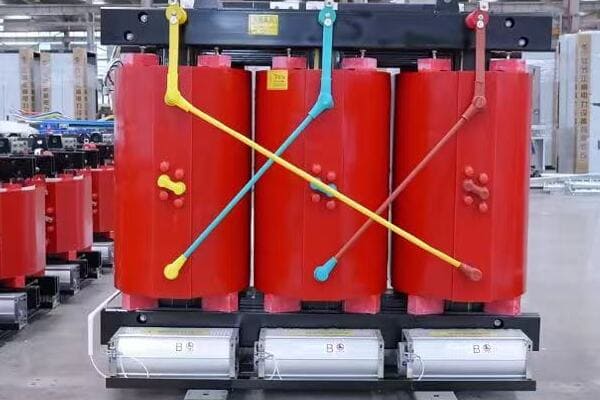
Have you ever wondered how electricity travels from power plants to your home? It’s not as simple as you might think. The journey involves a crucial component: transformer electricity.
Transformer electricity is the process of changing voltage levels in electrical power systems. It’s essential for efficient power distribution because it allows electricity to be transmitted over long distances with minimal losses and then safely used in our homes and businesses.
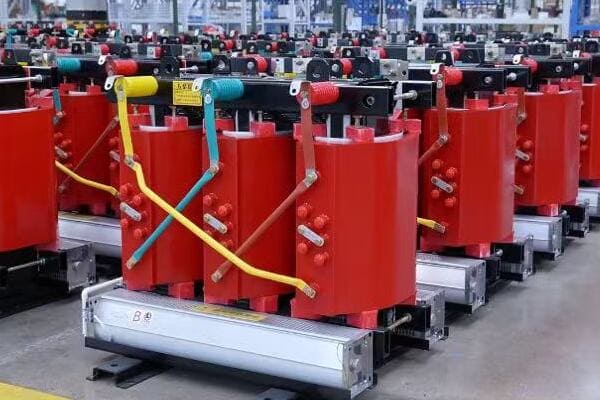
As someone who has worked in the power industry for years, I’ve seen firsthand how transformers shape our modern electrical grid. Let’s dive deeper into this fascinating topic and explore why it’s so important for our daily lives.
Understanding Transformer Electricity: From Power Plants to Your Home?
Imagine trying to fill a small glass with water from a fire hose. That’s similar to what would happen if we tried to use electricity directly from power plants in our homes.
Transformer electricity is the process that makes it possible to safely bring power from large generating stations to our homes. It involves stepping up the voltage for long-distance transmission and then stepping it down for local distribution and use.
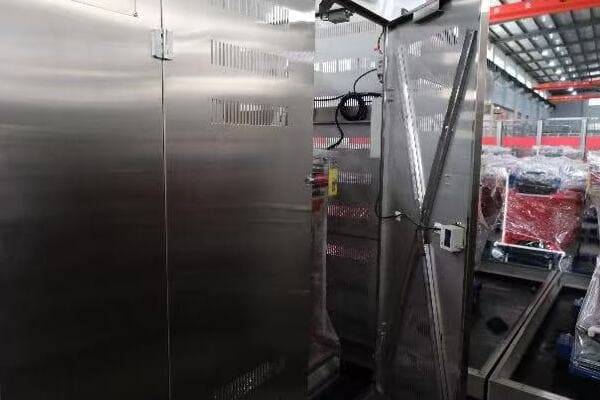
Let me take you on a journey of how electricity travels from power plants to your home, and why transformers are crucial at every step.
The Power Plant: Where It All Begins
At the power plant, electricity is generated at a relatively low voltage, typically around 20,000 volts. However, this voltage is too low for efficient long-distance transmission.
Step-Up Transformers: Preparing for the Journey
Before the electricity leaves the power plant, it passes through step-up transformers. These increase the voltage to very high levels, often between 155,000 to 765,000 volts. This high voltage is crucial for minimizing power losses during transmission.
Transmission Lines: The Long-Distance Journey
The high-voltage electricity then travels through transmission lines, which can span hundreds of miles. The high voltage allows the electricity to travel long distances with minimal losses.
Substation Step-Down Transformers: Preparing for Local Distribution
When the electricity reaches local areas, it passes through substation transformers. These step down the voltage to lower levels, typically around 4,000 to 69,000 volts, suitable for local distribution.
Distribution Transformers: The Final Step
Finally, just before reaching our homes and businesses, the electricity passes through distribution transformers. These further reduce the voltage to levels we use in our daily lives – 120/240 volts in most U.S. homes.
| Stage | Voltage Level | Purpose |
|---|---|---|
| Generation | ~20,000 V | Initial electricity production |
| Step-Up | 155,000 – 765,000 V | Prepare for long-distance transmission |
| Transmission | 155,000 – 765,000 V | Efficient long-distance power transfer |
| Substation Step-Down | 4,000 – 69,000 V | Prepare for local distribution |
| Distribution | 120/240 V | Safe use in homes and businesses |
This journey, made possible by transformer electricity, ensures that we can safely and efficiently use the power generated at distant plants in our everyday lives.
The Science Behind Voltage Transformation: How Transformers Work?
Have you ever been curious about the magic behind transformers? How can they change voltage levels so efficiently? The answer lies in a fascinating interplay of electromagnetic principles.
Transformers work based on the principle of electromagnetic induction. They use two coils of wire wrapped around an iron core. When alternating current flows through one coil (the primary), it creates a changing magnetic field that induces a voltage in the other coil (the secondary).
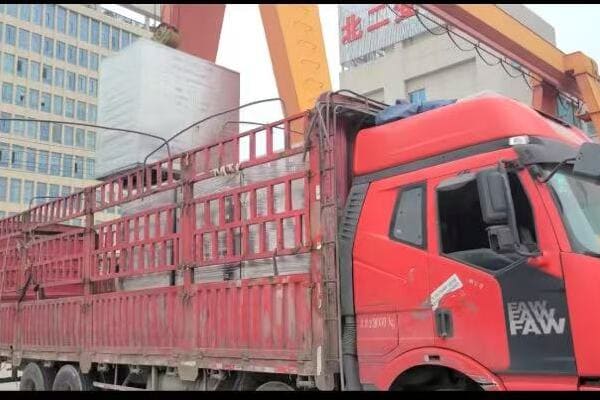
Let’s break down the science behind transformers and explore how they perform their voltage transformation magic.
The Basic Components of a Transformer
A transformer consists of three main parts:
- Primary Coil: This is where the input voltage is applied.
- Secondary Coil: This is where the transformed voltage is output.
- Iron Core: This helps to concentrate and direct the magnetic field between the coils.
The Principle of Electromagnetic Induction
The key to a transformer’s operation is electromagnetic induction, discovered by Michael Faraday in 1831. Here’s how it works in a transformer:
- When an alternating current flows through the primary coil, it creates a changing magnetic field.
- This changing magnetic field is concentrated and directed by the iron core.
- The changing magnetic field then induces an alternating voltage in the secondary coil.
The Transformer Equation
The relationship between the number of turns in each coil and the voltages is given by the transformer equation:
(Vs / Vp) = (Ns / Np)
Where:
- Vs = Secondary Voltage
- Vp = Primary Voltage
- Ns = Number of turns in the Secondary Coil
- Np = Number of turns in the Primary Coil
This means that if we want to step up the voltage, we need more turns in the secondary coil than in the primary. Conversely, to step down the voltage, we need fewer turns in the secondary coil.
| Transformer Type | Primary Turns | Secondary Turns | Voltage Change |
|---|---|---|---|
| Step-Up | Fewer | More | Increases |
| Step-Down | More | Fewer | Decreases |
Efficiency and Power Conservation
One of the remarkable aspects of transformers is their high efficiency. In an ideal transformer, the power out equals the power in. This means:
Vp Ip = Vs Is
Where Ip and Is are the primary and secondary currents respectively.
In practice, transformers are not 100% efficient due to factors like core losses and copper losses, but modern large transformers can achieve efficiencies over 99%.
Understanding these principles has been crucial in my work designing and optimizing power systems. It’s this science that allows us to efficiently transmit power over long distances and use it safely in our homes and businesses.
Transformer’s Role in Efficient Power Distribution: Overcoming Distance Challenges?
Have you ever wondered why we need such high voltages for power transmission? The answer lies in the challenges of distributing power over long distances, and transformers play a crucial role in overcoming these challenges.
Transformers enable efficient power distribution by allowing electricity to be transmitted at high voltages over long distances, which significantly reduces power losses. They then step down the voltage for safe local distribution, balancing the needs of long-distance transmission with local power usage.
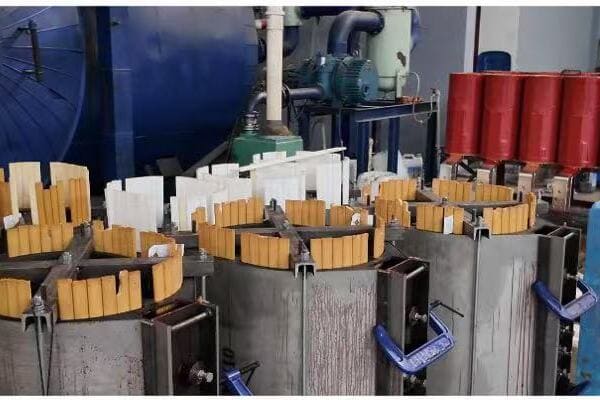
Let me share some insights from my experience in the power industry about how transformers help us overcome the challenges of distance in power distribution.
The Challenge of Distance in Power Distribution
Distributing power over long distances presents several challenges:
- Power Losses: As electricity flows through transmission lines, some energy is lost as heat due to the resistance of the wires.
- Voltage Drop: Over long distances, the voltage at the receiving end can be significantly lower than at the sending end.
- Cost: Thicker wires can reduce losses but are much more expensive.
How Transformers Address These Challenges
Transformers help overcome these challenges in several ways:
-
Enabling High-Voltage Transmission: By stepping up the voltage at the power plant, transformers allow electricity to be transmitted at very high voltages.
-
Reducing Current: Since Power = Voltage * Current, increasing the voltage means we can transmit the same amount of power with less current.
-
Minimizing Power Losses: Power loss in transmission lines is proportional to the square of the current (P = I^2 * R). By reducing the current, we significantly reduce power losses.
The Mathematics of Power Loss Reduction
Let’s look at a simple example to illustrate how transformers help reduce power losses:
| Scenario | Voltage | Current | Resistance | Power Loss |
|---|---|---|---|---|
| Without Transformer | 10,000 V | 100 A | 10 Ω | 100,000 W |
| With Transformer | 100,000 V | 10 A | 10 Ω | 1,000 W |
In this example, by increasing the voltage by a factor of 10 (which a transformer can do), we reduce the current by the same factor. This results in power losses being reduced by a factor of 100!
Balancing Transmission and Distribution Needs
Transformers also allow us to balance the needs of long-distance transmission with local power usage:
- Step-Up Transformers at Power Plants: Increase voltage for efficient long-distance transmission.
- Step-Down Transformers at Substations: Reduce voltage for local distribution.
- Distribution Transformers: Further reduce voltage for safe use in homes and businesses.
This system of transformers creates a flexible and efficient power distribution network that can adapt to the needs of different areas and users.
In my work designing power systems, I’ve seen how crucial this balance is. Without transformers, our modern power grid simply wouldn’t be possible. They’re the unsung heroes that make our electrified world work.
Everyday Applications of Transformer Technology: Beyond the Power Grid?
When most people think of transformers, they picture those large, humming boxes in electrical substations. But did you know that transformer technology is all around us, even inside our homes?
Transformer technology is used in a wide range of everyday applications beyond the power grid. From the chargers for our electronic devices to the ballasts in fluorescent lights, transformers play a crucial role in many of the technologies we use daily.
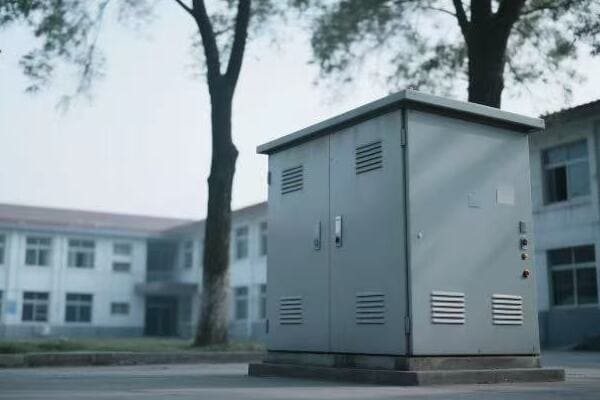
As someone who’s worked with electrical systems for years, I’m always fascinated by how ubiquitous transformer technology is. Let’s explore some of these everyday applications.
Electronic Device Chargers
One of the most common applications of transformer technology that we interact with daily is in our electronic device chargers.
-
Smartphone Chargers: These small adapters contain miniature transformers that step down the 120V AC from your wall outlet to the low DC voltage your phone needs.
-
Laptop Power Supplies: The "brick" in your laptop charger contains a transformer to convert high voltage AC to low voltage DC.
Lighting Systems
Transformers play a crucial role in many lighting systems:
-
Low-Voltage Lighting: Outdoor lighting systems often use transformers to step down voltage for safety and efficiency.
-
Fluorescent Lights: The ballasts in fluorescent lights contain small transformers that regulate the current flow.
Home Appliances
Many home appliances use transformers:
-
Microwave Ovens: These contain a large transformer to step up the voltage for the magnetron that generates microwaves.
-
Doorbells: Transformers reduce the 120V house current to the low voltage needed for doorbells.
Audio Equipment
Transformers are crucial in audio systems:
-
Guitar Amplifiers: Output transformers are key components in tube amplifiers, contributing to their distinctive sound.
-
High-End Audio Systems: Some audiophiles prefer systems with transformer-coupled outputs for their sound quality.
Industrial Applications
Beyond consumer applications, transformers are used extensively in industry:
-
Welding Equipment: Arc welders use transformers to produce the high currents needed for welding.
-
Electric Furnaces: Transformers supply the high currents needed for electric arc furnaces in steel production.
| Application | Input Voltage | Output Voltage | Purpose |
|---|---|---|---|
| Smartphone Charger | 120V AC | 5V DC | Safe charging |
| Laptop Power Supply | 120V AC | 19V DC | Power laptop |
| Low-Voltage Lighting | 120V AC | 12V AC | Safe outdoor lighting |
| Doorbell | 120V AC | 16V AC | Safe operation |
| Microwave Oven | 120V AC | ~2000V AC | Power magnetron |
| Welding Equipment | 240V AC | 20-40V AC | High current for welding |
These everyday applications demonstrate the versatility and importance of transformer technology. From ensuring the safety of our electronic devices to enabling industrial processes, transformers are a fundamental part of our technological world.
In my work, I’ve seen how the principles of transformer design that we use in large power systems are applied on a smaller scale in these everyday devices. It’s a testament to the elegance and utility of this technology.
The Future of Power Distribution: Transformers and Renewable Energy Integration?
As we move towards a more sustainable future, the role of transformers in power distribution is evolving. How will transformer technology adapt to the challenges and opportunities presented by renewable energy sources?
The integration of renewable energy sources into the power grid presents new challenges for transformer technology. Smart transformers, capable of handling bidirectional power flow and voltage fluctuations, will be crucial for managing the intermittent nature of renewables and enabling a more flexible, resilient grid.
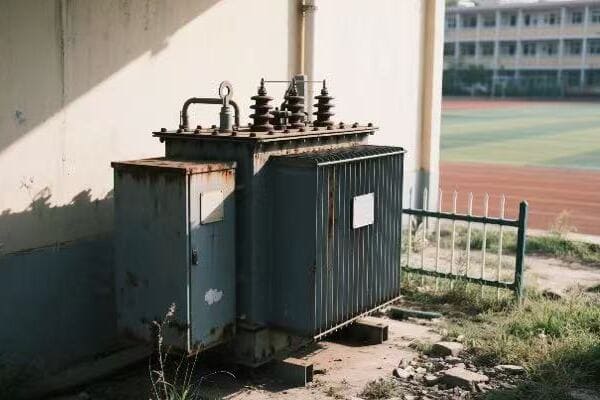
As someone who’s been in the power industry for years, I’ve witnessed the beginning of this transformation. Let me share some insights into how transformers are adapting to the renewable energy revolution.
The Challenge of Renewable Energy Integration
Renewable energy sources like solar and wind present several challenges for traditional power distribution systems:
-
Intermittency: Unlike traditional power plants, renewable sources don’t produce a constant, predictable output.
-
Distributed Generation: Renewable sources are often spread out, rather than centralized like traditional power plants.
-
Bidirectional Power Flow: With home solar panels, power can now flow both to and from homes.
Smart Transformers: The Future of Power Distribution
To address these challenges, the future of transformers lies in "smart" or "solid-state" transformers. These advanced devices offer several advantages:
-
Voltage Regulation: They can quickly adjust to voltage fluctuations caused by intermittent renewable sources.
-
Bidirectional Power Flow: They can handle power flowing in both directions, essential for integrating distributed renewable sources.
-
Power Quality Management: They can actively manage power quality issues like harmonics and reactive power.
-
Data Collection and Communication: They can provide real-time data about power flow and grid conditions.
Transformer Efficiency in the Renewable Era
As we integrate more renewables, transformer efficiency becomes even more crucial:
-
Low-Loss Materials: Advanced magnetic materials like amorphous metals can significantly reduce transformer losses.
-
Optimized Design: Computer modeling allows for more efficient transformer designs.
-
Cooling Innovations: New cooling methods can improve efficiency and extend transformer life.
Microgrids and Transformers
Microgrids – small, semi-independent power systems – are becoming increasingly important for grid resilience and renewable integration. Transformers play a key role in microgrid systems:
-
Isolation: Transformers can electrically isolate microgrids from the main grid when needed.
-
Voltage Matching: They help match the microgrid’s voltage to the main grid for seamless integration.
The Role of High-Voltage DC (HVDC) Transmission
As renewable energy sources are often located far from population centers, HVDC transmission is becoming more important. This technology relies on specialized transformers:
-
AC/DC Conversion: Special transformers are used in the converter stations that change AC to DC and back.
-
Efficiency: HVDC can be more efficient than AC for very long-distance transmission, especially for connecting offshore wind farms.
| Technology | Key Features | Benefits for Renewable Integration |
|---|---|---|
| Smart Transformers | Bidirectional power flow, voltage regulation | Manages intermittent sources, enables distributed generation |
| Low-Loss Materials | Reduced energy losses | Improves overall system efficiency |
| Microgrids | Semi-independent operation | Increases grid resilience, facilitates local renewable integration |
| HVDC Transmission | Efficient long-distance transmission | Connects remote renewable sources to population centers |
In my work, I’ve seen how these advancements in transformer technology are enabling the transition to a more sustainable energy future. It’s an exciting time in the power industry, and transformers are at the heart of this revolution.
Conclusion
Transformer electricity is the unsung hero of our modern power systems. From enabling efficient long-distance transmission to safely powering our homes, transformers are crucial at every step of power distribution.
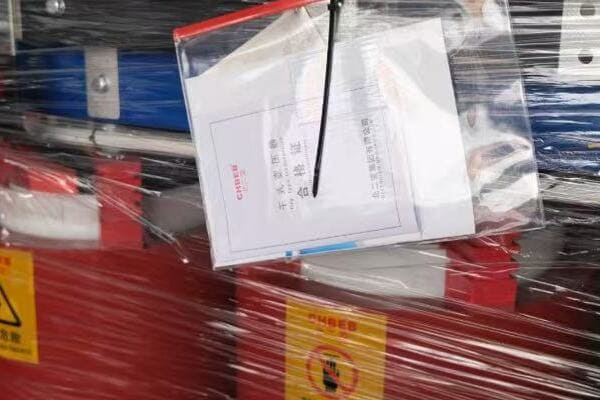
Are you considering a dry type transformer for your next project? You’re not alone. With their increasing popularity in various industries, from data centers to renewable energy installations, dry type transformers are becoming a go-to choice for many engineers and project managers. But what exactly are they, and how do you choose the right one?
A dry type transformer is an electrical transformer that uses air as its cooling medium instead of oil. It’s known for its fire safety, environmental friendliness, and low maintenance requirements. Dry type transformers are ideal for indoor installations, areas with strict fire safety regulations, and applications where oil leaks could be catastrophic.
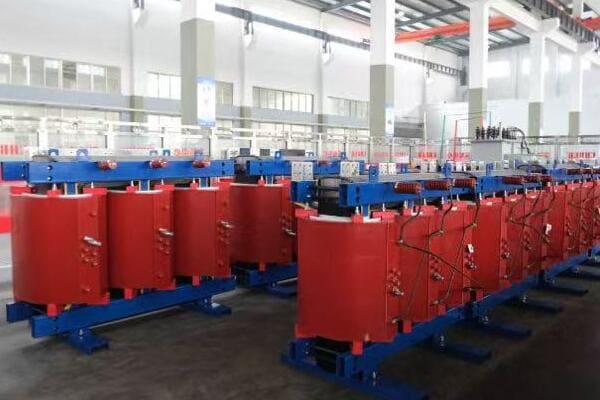
As the founder of CHBEB-ELE, with over two decades of experience in both dry type and oil-filled transformers, I’ve seen firsthand how choosing the right transformer can make or break a project. In this comprehensive guide, we’ll explore everything you need to know about dry type transformers, from their basic principles to why CHBEB-ELE is your best choice for high-quality, innovative transformer solutions. Let’s dive in!
What is a Dry Type Transformer and How Does It Work?
Have you ever wondered how electricity safely makes its way from high-voltage transmission lines to the outlets in your office? The answer often involves a dry type transformer. But what exactly is it, and how does it perform this crucial task?
A dry type transformer is an electrical device that transfers electrical energy between two or more circuits through electromagnetic induction. Unlike oil-filled transformers, dry types use air and solid insulation materials for cooling and insulation. They typically operate at temperatures up to 150°C and are designed for indoor use or environments where fire safety is paramount.
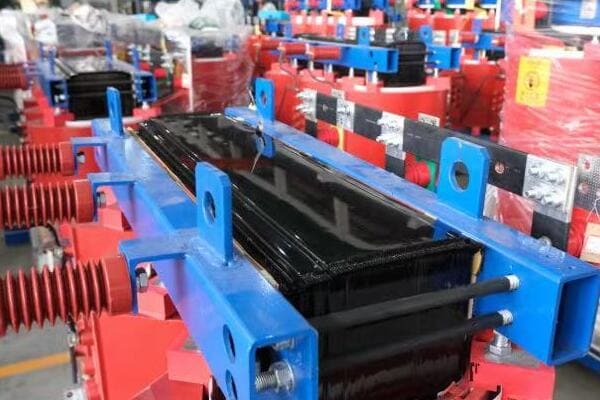
I remember the first time I designed a dry type transformer for CHBEB-ELE. The challenge of creating a unit that was both efficient and safe without the use of oil was exciting. Let’s break down how these transformers work and why they’re becoming increasingly popular.
Basic Principles of Operation
CHBEB-ELE dry type transformers, like all transformers, work on the principle of electromagnetic induction:
- Primary Winding: Receives electrical energy from the source.
- Core: We use advanced silicon steel laminations to provide an optimal path for magnetic flux.
- Secondary Winding: Induces voltage due to the changing magnetic field, delivering power to the load.
- Insulation: We use high-quality air and solid materials like epoxy resin instead of oil.
Types of Dry Type Transformers
At CHBEB-ELE, we offer several types of dry type transformers, each with its own advantages:
-
Vacuum Pressure Impregnated (VPI) Transformers:
- Our windings are impregnated with varnish under vacuum for excellent moisture resistance.
- Perfect for coastal or humid environments.
-
Cast Resin Transformers:
- We encapsulate windings in epoxy resin for superior fire resistance and environmental protection.
- Ideal for indoor installations in high-rise buildings and hospitals.
-
Open Wound Transformers:
- Our cost-effective solution for less demanding environments.
- Suitable for indoor substations and low-risk areas.
Here’s a quick comparison of our CHBEB-ELE models:
| Type | Environmental Protection | Cost | Typical Applications |
|---|---|---|---|
| CHBEB-ELE VPI | Excellent | Moderate | Commercial buildings, Light industry |
| CHBEB-ELE Cast Resin | Superior | High | Hospitals, High-rise buildings, Marine |
| CHBEB-ELE Open Wound | Good | Low | Indoor substations, Low-risk areas |
Advantages of CHBEB-ELE Dry Type Transformers
Our dry type transformers offer several benefits that make them attractive for many applications:
-
Fire Safety:
- Minimal fire risk due to absence of flammable oil.
- We recently supplied transformers for a major museum project where fire safety was paramount.
-
Environmental Friendliness:
- No risk of oil leaks or spills.
- Our transformers are designed for easy recycling at end of life.
-
Low Maintenance:
- No need for regular oil checks or replacements.
- Our customers report significant reductions in maintenance costs over time.
-
Indoor Installation:
- Can be installed close to the load center.
- Our compact designs save space and reduce power losses in long cables.
-
Overload Capacity:
- CHBEB-ELE transformers can handle short-term overloads better than oil-filled types.
Understanding these principles and advantages is crucial when considering a dry type transformer for your project. At CHBEB-ELE, we work closely with our clients to ensure they get the right transformer for their specific requirements and long-term operational needs.
Why Choose CHBEB-ELE for Your Dry Type Transformer Needs?
With so many dry type transformer manufacturers out there, how do you choose the right one? At CHBEB-ELE, we believe our combination of experience, innovation, and customer focus sets us apart. But don’t just take our word for it – let’s explore what makes CHBEB-ELE your best choice.
CHBEB-ELE combines 60 years of industry experience with cutting-edge technology to produce dry type transformers that excel in efficiency, reliability, and environmental friendliness. Our commitment to innovation, quality manufacturing, and exceptional customer service makes us the ideal partner for your transformer needs.
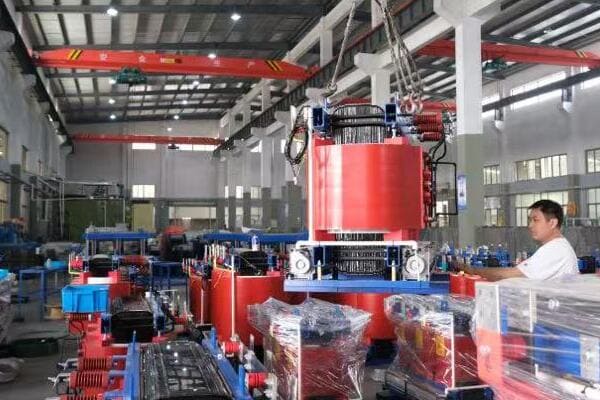
As the founder of CHBEB-ELE, I’ve overseen our growth from a small local manufacturer to a global player in the transformer industry. Let me share with you why CHBEB-ELE should be your first choice for dry type transformers.
Our Strengths
-
Unparalleled Experience:
- With 60 years in the power industry, we bring a wealth of knowledge to every project.
- Our team has tackled challenges across various sectors, from renewable energy to data centers.
-
Cutting-Edge Manufacturing:
- Our state-of-the-art facility in China is equipped with the latest technology.
- We employ advanced automation and rigorous quality control processes.
-
Innovative Product Range:
- We offer a wide range of dry type transformers, from standard models to custom solutions.
- Our product line includes VPI, cast resin, and amorphous core transformers.
-
Focus on Efficiency:
- Our transformers are designed to meet and exceed the latest energy efficiency standards.
- We use advanced materials like amorphous metals to reduce core losses.
-
Global Reach with Local Support:
- While we’re based in China, we serve customers worldwide.
- Our international team ensures smooth communication and support.
-
Commitment to Sustainability:
- We’re dedicated to producing environmentally friendly transformers.
- Our products are designed for long life and easy recycling at end-of-life.
Our Product Highlights
Let’s take a closer look at some of our standout products:
-
CHBEB-ELE Amorphous Core Dry Type Transformer:
- Up to 70% lower no-load losses compared to traditional silicon steel cores.
- Ideal for applications requiring high efficiency and low environmental impact.
-
CHBEB-ELE Smart Monitored VPI Transformer:
- Integrated IoT sensors for real-time monitoring and predictive maintenance.
- Perfect for critical applications where reliability is paramount.
-
CHBEB-ELE Compact Cast Resin Transformer:
- Designed for space-constrained urban environments.
- Excellent fire safety ratings, ideal for high-rise buildings and hospitals.
Here’s a quick comparison of our main product lines:
| Product Line | Key Features | Best For |
|---|---|---|
| CHBEB-ELE Amorphous Core | High efficiency, Low losses | Energy-sensitive applications |
| CHBEB-ELE Smart Monitored VPI | Real-time monitoring, Predictive maintenance | Critical infrastructure, Data centers |
| CHBEB-ELE Compact Cast Resin | Space-saving design, Fire resistant | Urban installations, High-rise buildings |
Our Commitment to You
At CHBEB-ELE, we’re not just selling transformers; we’re building partnerships. Here’s what you can expect when you choose us:
-
Expert Consultation:
- Our engineering team will work closely with you to understand your needs.
- We provide detailed technical support throughout the project lifecycle.
-
Quality Assurance:
- Every transformer undergoes rigorous testing before shipment.
- We’re ISO 9001 certified and comply with international standards like IEEE and IEC.
-
Timely Delivery:
- We understand the importance of keeping your project on schedule.
- Our efficient production and logistics ensure on-time delivery.
-
After-Sales Support:
- We offer comprehensive warranty coverage.
- Our global support team is always ready to assist with any issues.
-
Continuous Innovation:
- We invest heavily in R&D to stay at the forefront of transformer technology.
- As our partner, you’ll always have access to the latest advancements.
What Are the Latest Innovations in CHBEB-ELE Dry Type Transformer Technology?
At CHBEB-ELE, we’re constantly pushing the boundaries of dry type transformer technology. Our innovations are aimed at improving efficiency, reducing size, and enhancing safety. But what are these cutting-edge developments, and how might they benefit your next project?
Recent innovations in CHBEB-ELE dry type transformer technology include the use of advanced materials like amorphous metals for cores, the integration of smart monitoring systems, the development of more efficient cooling techniques, and the creation of eco-friendly insulation materials. These advancements are leading to transformers that are more efficient, compact, and environmentally friendly.
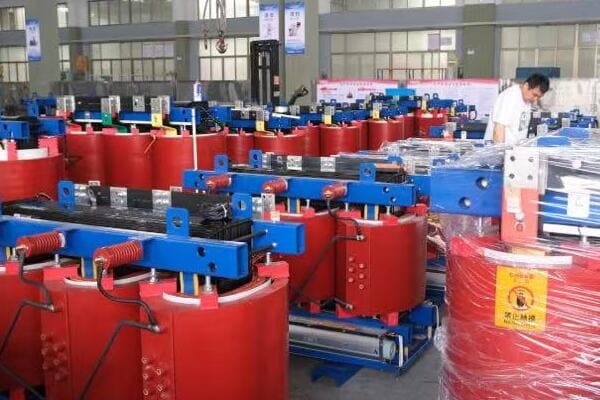
As the leader of CHBEB-ELE’s R&D team, I’ve overseen the development of numerous technological advancements. Let’s explore some of our most exciting innovations that are shaping the future of dry type transformers.
Advanced Core Materials
One of our most significant advancements has been in core materials:
-
CHBEB-ELE Amorphous Metal Cores:
- Reduce no-load losses by up to 70% compared to traditional silicon steel.
- We recently supplied these transformers to a major data center, resulting in significant energy savings for the client.
-
CHBEB-ELE Nanocrystalline Core Technology:
- Our latest development, offering even lower losses than amorphous metals.
- Currently in field testing with promising results.
Smart Monitoring and Diagnostics
We’re revolutionizing transformer maintenance with our smart technology:
-
CHBEB-ELE IoT Sensor Suite:
- Real-time monitoring of temperature, load, and other critical parameters.
- Enables predictive maintenance, reducing downtime and extending transformer life.
-
CHBEB-ELE AI Diagnostic System:
- Our advanced algorithms predict potential failures before they occur.
- Recently, this system detected a developing fault weeks in advance for a customer, allowing for planned maintenance instead of emergency repairs.
Enhanced Cooling Techniques
Our innovations in cooling are allowing for more compact and efficient designs:
-
CHBEB-ELE Phase Change Cooling System:
- Helps manage temperature fluctuations more effectively.
- Particularly useful in our transformers designed for renewable energy applications with variable loads.
-
CHBEB-ELE Advanced Air Flow Design:
- We use computational fluid dynamics to optimize cooling efficiency.
- Results in our smallest transformers yet that can handle higher loads.
Eco-Friendly Insulation Materials
Our commitment to sustainability drives the development of new insulation materials:
-
CHBEB-ELE Bio-Based Resin:
- Made from renewable resources.
- Offers similar performance to traditional epoxy resins but with a lower environmental impact.
-
CHBEB-ELE Recyclable Insulation:
- Our latest materials can be more easily recycled at end-of-life.
- Reduces the environmental footprint of transformer disposal.
Here’s a quick look at how our innovations are impacting transformer performance:
| CHBEB-ELE Innovation | Impact on Efficiency | Impact on Size | Environmental Benefit |
|---|---|---|---|
| Amorphous Cores | Up to 70% lower no-load losses | Slight increase | Significant energy savings |
| Smart Monitoring | Improved overall efficiency | No direct impact | Extended lifespan, reduced waste |
| Advanced Cooling | Higher efficiency at peak loads | 10-20% reduction | Reduced material use |
| Eco-Friendly Insulation | Similar to traditional | No significant change | Reduced environmental impact |
| Compact Designs | Slight improvement | Up to 30% reduction | Less material use, easier recycling |
At CHBEB-ELE, we’re not just keeping pace with industry trends – we’re setting them. Our commitment to innovation ensures that when you choose a CHBEB-ELE transformer, you’re getting the most advanced, efficient, and environmentally friendly solution available.
Conclusion
Dry type transformers have come a long way, and at CHBEB-ELE, we’re proud to be at the forefront of this evolution. From our basic principles to our latest innovations, we’re committed to providing transformers that meet and exceed your expectations. Whether you’re looking for standard units or custom solutions, CHBEB-ELE has the expertise, technology, and dedication to meet your specific project requirements and long-term operational needs. Choose CHBEB-ELE for transformers that truly transform your power distribution systems.
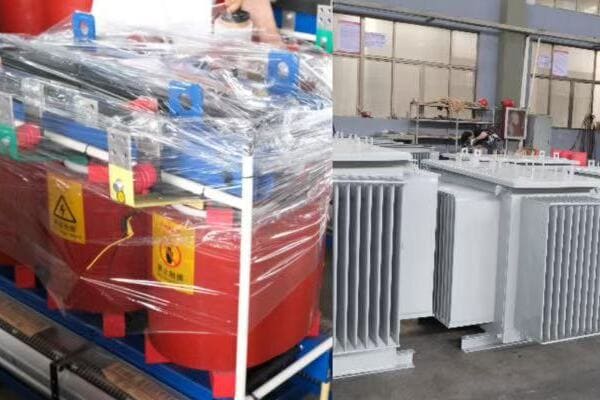
Are you struggling to choose between a dry type and an oil filled transformer for your next project? You’re not alone. This decision can significantly impact your system’s efficiency, safety, and long-term costs. But don’t worry, I’m here to help you make an informed choice.
Dry type transformers use air for cooling and are ideal for indoor installations due to their fire safety, while oil filled transformers use oil for cooling and insulation, offering higher efficiency and capacity. The choice depends on factors like installation location, maintenance requirements, environmental conditions, and project budget.

As someone who has worked with both types of transformers for years, I’ve seen their strengths and weaknesses in various applications. In this article, I’ll guide you through the key differences and help you determine which type is best for your specific needs. Let’s dive into the world of transformers and uncover the secrets to making the right choice.
What is a Dry Type Transformer: Understanding the Air-Cooled Giant?
Have you ever wondered how transformers can operate safely inside buildings without the risk of oil leaks or fires? The answer lies in dry type transformers. But what exactly are they, and how do they work?
A dry type transformer is an electrical transformer that uses air as its cooling medium instead of oil. It typically uses high-temperature insulation materials like epoxy resin to encapsulate its windings. These transformers are ideal for indoor installations, especially in areas where fire safety is a primary concern.
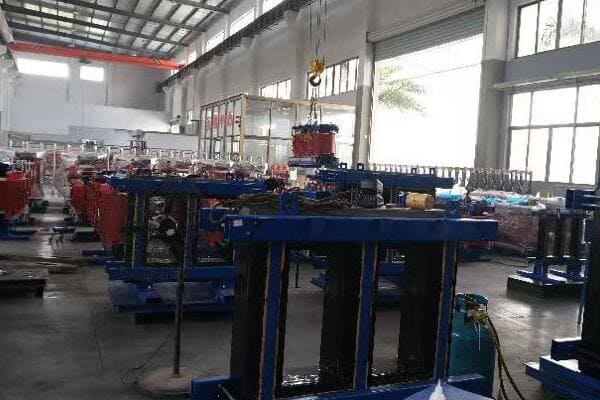
I remember the first time I installed a dry type transformer in a high-rise office building. The client was amazed at how we could place such a powerful electrical component right in the basement without worrying about fire hazards. Let’s explore the ins and outs of these air-cooled marvels.
Types of Dry Type Transformers
Dry type transformers come in several varieties, each with its own advantages:
-
Vacuum Pressure Impregnated (VPI) Transformers:
- Windings are impregnated with varnish under vacuum.
- Offers excellent moisture resistance.
- I once used a VPI transformer in a humid coastal environment, and it performed flawlessly.
-
Vacuum Pressure Encapsulated (VPE) Transformers:
- Windings are fully encapsulated in epoxy resin.
- Provides superior protection against environmental factors.
- Ideal for harsh industrial environments.
-
Cast Resin Transformers:
- Windings are cast in epoxy resin under vacuum.
- Offers excellent fire resistance and low noise operation.
- Perfect for hospitals and educational institutions.
-
Open Wound Transformers:
- Simplest design with exposed windings.
- Cost-effective but limited in application due to lower protection.
Here’s a quick comparison of these types:
| Type | Environmental Protection | Cost | Typical Applications |
|---|---|---|---|
| VPI | Good | Moderate | Commercial buildings, Light industry |
| VPE | Excellent | High | Heavy industry, Offshore platforms |
| Cast Resin | Excellent | High | Hospitals, Schools, High-rise buildings |
| Open Wound | Limited | Low | Indoor substations, Low-risk areas |
Advantages of Dry Type Transformers
Dry type transformers offer several benefits:
-
Fire Safety:
- Minimal fire risk due to absence of flammable oil.
- I once recommended a dry type transformer for a museum, where fire safety was paramount.
-
Environmental Friendliness:
- No risk of oil leaks or spills.
- Easier to dispose of at end of life.
-
Low Maintenance:
- No need for regular oil checks or replacements.
- Reduced maintenance costs over time.
-
Indoor Installation:
- Can be installed close to the load center.
- Saves space and reduces power losses in long cables.
-
Overload Capacity:
- Can handle short-term overloads better than oil filled types.
Limitations of Dry Type Transformers
However, they do have some drawbacks:
-
Limited Capacity:
- Typically available up to 35kV and 40MVA.
- For higher ratings, oil filled transformers are usually preferred.
-
Higher Initial Cost:
- Generally more expensive upfront than oil filled transformers.
- However, this can be offset by lower maintenance costs.
-
Noise:
- Can be noisier than oil filled types.
- I once had to design a special enclosure to reduce noise in a library installation.
-
Sensitivity to Harsh Environments:
- May require special enclosures in very dusty or humid conditions.
Applications of Dry Type Transformers
Dry type transformers are widely used in:
-
Commercial Buildings:
- Office complexes, shopping malls, hotels.
-
Industrial Facilities:
- Factories, processing plants, data centers.
-
Institutional Buildings:
- Schools, hospitals, government buildings.
-
Renewable Energy:
- Wind farms, solar power plants.
-
Transportation:
- Airports, subway stations, electric vehicle charging stations.
Remember, choosing a dry type transformer isn’t just about avoiding oil. It’s about selecting the right solution for your specific environment and safety requirements. In my experience, dry type transformers shine in indoor applications where fire safety and environmental concerns are top priorities.
What is an Oil Filled Transformer: Diving into the Liquid-Cooled Powerhouse?
Have you ever seen those large, cylindrical tanks at electrical substations and wondered what’s inside? Chances are, you’re looking at an oil filled transformer. But what exactly are they, and why are they so common in our power distribution systems?
An oil filled transformer, also known as a liquid immersed transformer, is an electrical transformer that uses oil for both cooling and insulation. The core and windings are immersed in specially treated mineral oil, which dissipates heat and provides excellent electrical insulation. These transformers are capable of handling higher voltages and power ratings than dry type transformers.
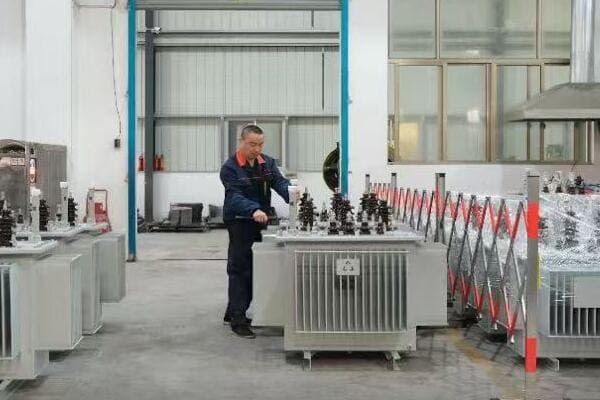
I remember the first time I worked on a large oil filled transformer at a power substation. The sheer size and complexity of the unit were impressive, but what really struck me was its efficiency in handling massive amounts of power. Let’s explore these liquid-cooled powerhouses in detail.
Types of Oil Filled Transformers
Oil filled transformers come in various types:
-
Distribution Transformers:
- Used in the final voltage transformation on the distribution grid.
- Typically range from 5 kVA to 2500 kVA.
- I once installed these in a new residential development, bringing power to hundreds of homes.
-
Power Transformers:
- Used in transmission networks and for large power users.
- Ratings can go up to several hundred MVA.
- These giants are the backbone of our power transmission system.
-
Pad-Mounted Transformers:
- Ground-mounted units often seen in residential areas.
- Combine the transformer and switchgear in one enclosure.
-
Pole-Mounted Transformers:
- Smaller units mounted on utility poles.
- Common in rural power distribution.
Here’s a quick comparison:
| Type | Typical Capacity Range | Primary Application | Installation |
|---|---|---|---|
| Distribution | 5 kVA – 2500 kVA | Local power distribution | Ground/Pole |
| Power | Up to 1000 MVA | Power transmission | Substation |
| Pad-Mounted | 75 kVA – 5000 kVA | Urban/Suburban distribution | Ground |
| Pole-Mounted | 5 kVA – 167 kVA | Rural distribution | Utility Pole |
Advantages of Oil Filled Transformers
Oil filled transformers offer several benefits:
-
Excellent Cooling:
- Oil is an efficient cooling medium, allowing for higher power ratings.
- I’ve seen these transformers handle massive overloads during peak demand periods.
-
Higher Efficiency:
- Generally more efficient than dry type, especially at higher ratings.
- This translates to lower operating costs over time.
-
Longer Lifespan:
- With proper maintenance, can last 30-40 years or more.
- I’ve worked on transformers older than me that were still going strong!
-
Higher Voltage Capabilities:
- Can handle voltages up to 765 kV or higher.
- Essential for long-distance power transmission.
-
Cost-Effective for High Ratings:
- More economical than dry type for high power applications.
Limitations of Oil Filled Transformers
However, they do have some drawbacks:
-
Fire Risk:
- Transformer oil is flammable, posing a potential fire hazard.
- Requires additional fire safety measures.
-
Environmental Concerns:
- Risk of oil leaks and spills.
- Proper containment and disposal procedures are crucial.
-
Maintenance Requirements:
- Regular oil testing and potential oil replacement needed.
- I once had to coordinate an emergency oil change in the middle of a heatwave!
-
Weight and Size:
- Generally heavier and larger than equivalent dry type units.
- Can be a challenge in space-constrained installations.
Applications of Oil Filled Transformers
Oil filled transformers are widely used in:
-
Power Generation Plants:
- Step-up transformers to increase voltage for transmission.
-
Transmission Substations:
- Large power transformers for long-distance power transmission.
-
Distribution Networks:
- Bringing power from substations to end-users.
-
Industrial Facilities:
- Large factories, mining operations, steel plants.
-
Renewable Energy:
- Wind farms and large solar installations.
Remember, while oil filled transformers require more maintenance and have some environmental considerations, they’re often the go-to choice for high power applications and outdoor installations. Their efficiency and ability to handle high voltages make them indispensable in our power distribution systems.
Dry Type vs Oil Filled Transformer: Key Differences You Need to Know?
Have you ever found yourself staring at transformer specifications, feeling like you’re trying to compare apples and oranges? You’re not alone. The choice between dry type and oil filled transformers can be daunting, but understanding their key differences is crucial for making the right decision for your project.
Dry type and oil filled transformers differ in their cooling methods, maintenance requirements, fire safety, efficiency, and suitable applications. Dry types use air for cooling and are safer for indoor use, while oil filled types use oil for cooling and insulation, offering higher efficiency and capacity but requiring more maintenance and safety precautions.
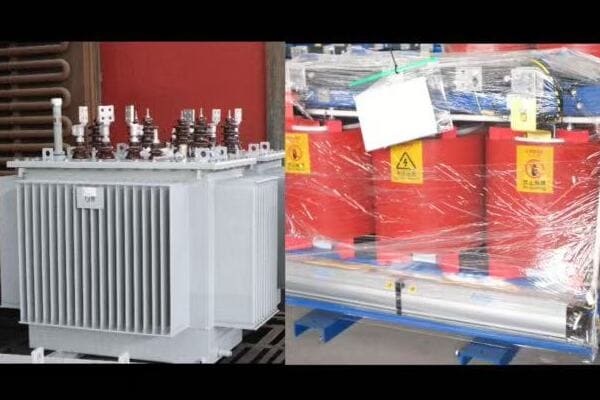
I’ve been in situations where choosing the wrong type of transformer could have led to disastrous consequences. Let’s break down the key differences to help you make an informed decision.
Cooling and Insulation: Air vs Oil
The most fundamental difference lies in their cooling and insulation methods:
-
Dry Type Transformers:
- Use air for cooling.
- Insulation typically consists of high-temperature materials like epoxy resin.
- I once installed a dry type transformer in a high-rise building where oil wasn’t an option due to fire regulations.
-
Oil Filled Transformers:
- Use oil for both cooling and insulation.
- The oil acts as a heat dissipator and provides excellent electrical insulation.
- In a power substation project, we used oil filled transformers for their superior cooling efficiency under high loads.
Fire Safety and Environmental Considerations
Safety and environmental impact are crucial factors:
-
Dry Type Transformers:
- Lower fire risk due to absence of flammable oil.
- Environmentally friendly with no risk of oil leaks.
- Ideal for indoor installations and environmentally sensitive areas.
-
Oil Filled Transformers:
- Higher fire risk due to flammable oil.
- Potential environmental hazard if oil leaks occur.
- Require additional fire safety measures and containment systems.
I once had to replace an oil filled transformer with a dry type in a hospital renovation project due to stricter fire safety regulations.
Efficiency and Power Capacity
Performance characteristics vary significantly:
-
Dry Type Transformers:
- Generally less efficient, especially at higher ratings.
- Typically available up to 35kV and 40MVA.
- Better suited for lower to medium power applications.
-
Oil Filled Transformers:
- More efficient, especially at higher ratings.
- Can handle voltages up to 765kV or higher.
- Ideal for high power and long-distance transmission applications.
Here’s a quick efficiency comparison:
| Rating | Dry Type Efficiency | Oil Filled Efficiency |
|---|---|---|
| 500 kVA | ~98% | ~98.5% |
| 2000 kVA | ~98.5% | ~99% |
| 10 MVA | ~99% | ~99.5% |
Maintenance Requirements
Maintenance needs differ significantly:
-
Dry Type Transformers:
- Lower maintenance requirements.
- No oil to monitor or replace.
- Periodic cleaning and inspection usually sufficient.
-
Oil Filled Transformers:
- Higher maintenance needs.
- Regular oil testing and potential oil replacement required.
- More complex maintenance procedures.
I once managed a facility where switching from oil filled to dry type transformers reduced annual maintenance costs by 30%.
Installation and Space Requirements
Location and space considerations are important:
-
Dry Type Transformers:
- Can be installed indoors, close to the load.
- Generally smaller and lighter.
- Ideal for space-constrained environments.
-
Oil Filled Transformers:
- Typically installed outdoors or in dedicated electrical rooms.
- Larger and heavier.
- Require more space and stronger foundations.
Noise Levels
Noise can be a significant factor in some installations:
-
Dry Type Transformers:
- Generally noisier due to core vibrations.
- Noise levels can be an issue in quiet environments.
-
Oil Filled Transformers:
- Usually quieter as oil helps dampen vibrations.
- Better suited for noise-sensitive applications.
I once had to design a special enclosure for a dry type transformer in a library to reduce noise levels.
Cost Considerations
Initial and long-term costs vary:
-
Dry Type Transformers:
- Higher initial cost, especially at lower ratings.
- Lower long-term maintenance costs.
-
Oil Filled Transformers:
- Lower initial cost, especially at higher ratings.
- Higher long-term maintenance costs.
Application Suitability
Different types suit different applications:
-
Dry Type Transformers:
- Ideal for indoor installations: office buildings, hospitals, schools.
- Good for areas with high fire safety requirements.
- Suitable for environments where oil leaks could be catastrophic.
-
Oil Filled Transformers:
- Perfect for outdoor substations and power transmission.
- Suitable for high power industrial applications.
- Ideal for harsh environments where the oil provides protection against moisture and contaminants.
Choosing between dry type and oil filled transformers isn’t just about technical specifications. It’s about understanding your specific needs, environment, and long-term operational requirements. In my experience, there’s no one-size-fits-all solution. The right choice depends on a careful evaluation of all these factors in the context of your unique project requirements.
Conclusion
Choosing between dry type and oil filled transformers depends on various factors including installation location, power requirements, maintenance capabilities, and environmental considerations. Dry type transformers excel in indoor and fire-sensitive applications, while oil filled transformers are superior for high power and outdoor installations. Carefully evaluate your specific needs to make the best choice for your project.
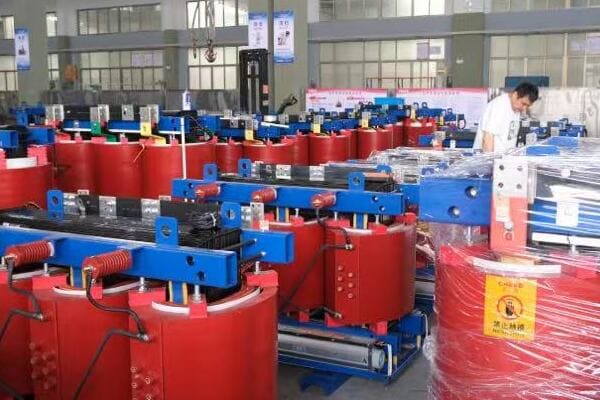
Are you worried about the reliability of your oil immersed transformer? You’re not alone. Many engineers and facility managers struggle with maintaining these critical components of our power systems. But don’t worry, I’m here to help.
Proper maintenance of oil immersed transformers is crucial for ensuring their longevity and efficiency. This involves regular inspections, oil testing, cleaning, and safety precautions. By following a comprehensive maintenance routine, you can prevent unexpected failures, improve performance, and extend the life of your transformer.
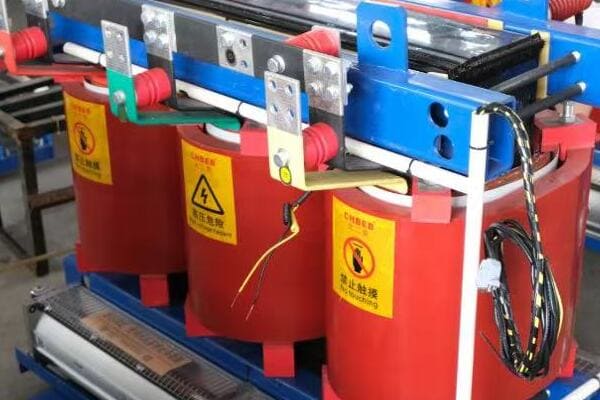
As someone who has worked with oil immersed transformers for years, I’ve seen firsthand how proper maintenance can make all the difference. In this article, I’ll guide you through the essential maintenance procedures and precautions that will keep your transformer running smoothly. Let’s dive in and explore how to keep your electrical giant in top shape.
How to Perform Oil Immersed Transformer Maintenance: Step-by-Step Guide?
Have you ever felt overwhelmed by the complexity of transformer maintenance? You’re not alone. Many technicians find the process daunting, but with the right approach, it can be straightforward and effective.
Maintaining an oil immersed transformer involves a series of systematic steps: safety preparations, visual inspections, oil testing, component checks, and cleaning. Each step is crucial for ensuring the transformer’s reliability, efficiency, and longevity. Regular maintenance can prevent unexpected failures and extend the transformer’s operational life.
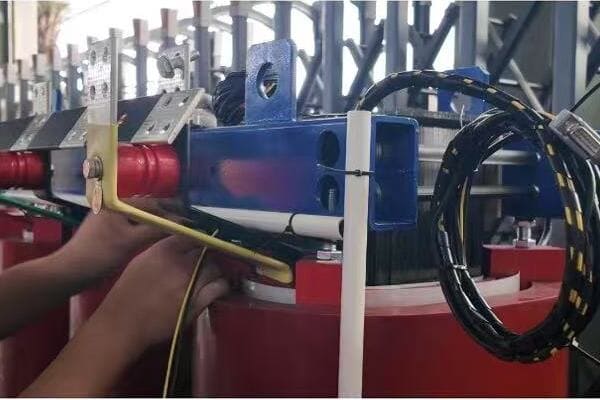
I remember my first time performing a full maintenance routine on a large oil immersed transformer. It was intimidating, but following a step-by-step approach made the process manageable. Let me walk you through the essential steps to maintain your transformer effectively.
Safety First: Preparing for Maintenance
Before you even touch the transformer, safety should be your top priority:
-
Power Isolation:
- Disconnect the low-voltage side circuit breaker.
- Open the high-voltage side load switch.
- Confirm disconnection and close the grounding knife.
- Hang appropriate warning tags on all switches.
-
Verification of Power-Off State:
- Use a high-voltage electroscope to confirm the transformer is de-energized.
- Never skip this step – it could save your life.
-
Personal Protective Equipment (PPE):
- Wear insulated shoes and gloves.
- Use appropriate eye protection.
- Wear flame-resistant clothing if required.
I once witnessed a near-miss incident where a technician almost started work without proper isolation. Always double-check your safety measures.
Visual Inspection: The Devil is in the Details
A thorough visual inspection can catch many issues before they become serious problems:
-
External Components Check:
- Inspect the transformer shell for any deformations or damage.
- Check porcelain bushings for cracks or chips.
- Examine lead wires for signs of wear or damage.
-
Oil Level and Leaks:
- Check the oil level in the sight glass.
- Look for any signs of oil leakage around gaskets and seals.
- If you spot leaks, note their location for later repair.
-
Silica Gel Desiccant:
- Check the color of the silica gel in the breather.
- Blue indicates good condition, pink means it needs replacement.
-
Auxiliary Equipment:
- Inspect cooling fans and radiators for proper operation.
- Check the condition of temperature gauges and pressure relief devices.
Here’s a quick checklist for visual inspection:
| Component | What to Look For |
|---|---|
| Shell | Dents, rust, paint damage |
| Bushings | Cracks, chips, oil leaks |
| Oil Level | Within acceptable range |
| Silica Gel | Color (blue is good, pink needs replacement) |
| Cooling System | Fan operation, radiator cleanliness |
Oil Testing: The Lifeblood of Your Transformer
Oil in a transformer is more than just a coolant; it’s a key component of the insulation system:
-
Sampling:
- Take oil samples from designated valves.
- Use clean, dry containers to avoid contamination.
-
Dielectric Strength Test:
- Measures the oil’s ability to withstand electrical stress.
- Should be performed at least annually.
-
Dissolved Gas Analysis (DGA):
- Detects gases produced by oil and paper degradation.
- Can indicate potential faults before they become serious.
-
Acidity Test:
- Measures the acid content of the oil.
- High acidity can indicate oil degradation.
-
Moisture Content Test:
- Excessive moisture can severely degrade insulation.
- Should be kept below 20 ppm for most transformers.
I once detected an early-stage winding fault through DGA that would have led to a catastrophic failure if left unchecked. Regular oil testing is your best early warning system.
Component Checks: Ensuring Everything’s in Working Order
After visual inspection and oil testing, it’s time to check individual components:
-
Bushings:
- Clean the porcelain surfaces.
- Check for proper tightness of connections.
- Perform power factor tests if equipment is available.
-
Cooling System:
- Clean radiator fins.
- Check fan motors for proper operation.
- Lubricate bearings if necessary.
-
Gauges and Sensors:
- Verify accuracy of temperature gauges.
- Check operation of pressure relief devices.
- Calibrate sensors if needed.
-
Tap Changer (if equipped):
- Check for proper operation through all positions.
- Inspect contacts for wear.
- Verify oil level in the tap changer compartment.
Cleaning and Final Checks
The final steps in your maintenance routine:
-
General Cleaning:
- Wipe down the transformer body and bushings.
- Clean any accumulated dust or debris.
- Ensure all cooling passages are clear.
-
Tightness Check:
- Verify all bolted connections are properly tightened.
- Check gasket compression on removable parts.
-
Grounding:
- Inspect and clean all grounding connections.
- Measure grounding resistance if possible.
-
Documentation:
- Record all maintenance activities performed.
- Note any abnormalities or items needing future attention.
- Update maintenance logs and schedules.
Remember, thorough documentation is crucial. I once avoided a major dispute by referring to detailed maintenance records that proved we had followed all necessary procedures.
By following these steps, you’ll ensure that your oil immersed transformer remains in top condition. Regular, thorough maintenance not only prevents unexpected failures but can also extend the life of your transformer significantly. It’s an investment of time and effort that pays off in improved reliability and reduced long-term costs.
What Are the Key Precautions for Oil Immersed Transformer Maintenance?
Have you ever felt that sinking feeling when something goes wrong during maintenance? It’s a common experience, but one that can be avoided with the right precautions. When it comes to oil immersed transformers, safety and care are paramount.
Key precautions for oil immersed transformer maintenance include ensuring proper power isolation, using appropriate personal protective equipment, maintaining a clean work environment, handling oil carefully to prevent spills, and following all safety protocols. These measures protect both the technicians and the equipment, ensuring safe and effective maintenance.
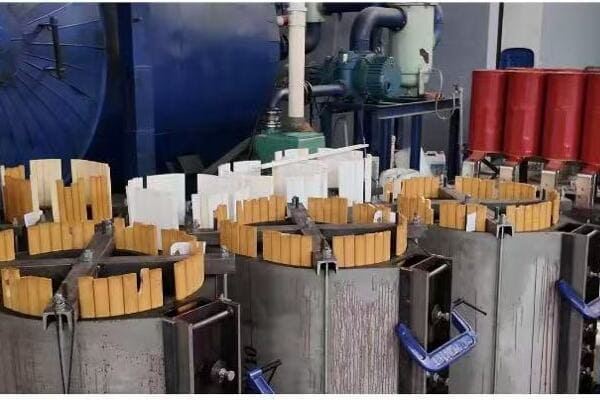
I once witnessed a maintenance job go awry due to overlooked precautions. It was a stark reminder of why these safety measures are so crucial. Let’s explore the key precautions you should always keep in mind when maintaining oil immersed transformers.
Environmental Considerations: Setting the Stage for Safe Maintenance
The environment around your transformer plays a crucial role in maintenance safety:
-
Location Requirements:
- Ensure the transformer is in a non-corrosive environment.
- Ambient temperature should be between -30°C to +40°C.
- Wind speed should not exceed 350 m/s (though this seems unusually high and might be a typo in the original text – typical safe wind speeds are much lower).
-
Ventilation:
- Ensure proper ventilation in indoor locations.
- Be aware of confined space regulations if applicable.
-
Lighting:
- Provide adequate lighting for detailed inspections.
- Use explosion-proof lighting in areas with potential oil vapors.
-
Work Area Preparation:
- Clear the area of unnecessary equipment and personnel.
- Set up barriers to prevent unauthorized access.
I once had to postpone maintenance due to unexpected high winds. It’s always better to wait for safe conditions than to risk an accident.
Personal Protective Equipment (PPE): Your Last Line of Defense
Never underestimate the importance of proper PPE:
-
Insulated Footwear:
- Wear boots with electrical insulation properties.
- Ensure they’re free from metal parts.
-
Insulated Gloves:
- Use gloves rated for the voltage level you’re working with.
- Inspect gloves for holes or damage before each use.
-
Eye Protection:
- Wear safety glasses or goggles to protect against oil splashes.
- Consider a face shield for additional protection.
-
Flame-Resistant Clothing:
- Wear FR-rated coveralls when working with energized equipment.
- Ensure clothing fits properly to avoid snagging.
Here’s a quick PPE checklist:
| PPE Item | Requirement | Inspection Frequency |
|---|---|---|
| Insulated Boots | Electrical rating appropriate for work | Before each use |
| Insulated Gloves | Voltage rating meets or exceeds system voltage | Before each use |
| Safety Glasses | ANSI Z87.1 compliant | Daily |
| FR Clothing | NFPA 70E compliant | Before each use |
Electrical Safety: Respecting the Power
Electrical safety is paramount when working with transformers:
-
Power Isolation:
- Always follow proper lockout/tagout procedures.
- Use a personal lock and tag on isolation points.
-
Verification of De-energized State:
- Use a properly rated voltage detector.
- Test the detector on a known live source before and after use.
-
Grounding:
- Apply temporary grounding cables where necessary.
- Ensure proper grounding of test equipment.
-
Prevention of Backfeed:
- Be aware of potential sources of backfeed.
- Take steps to prevent inadvertent re-energization.
I once encountered a situation where a generator backfed into a supposedly de-energized system. Always be vigilant about unexpected sources of power.
Oil Handling: Respect the Lifeblood of Your Transformer
Proper oil handling is crucial for both safety and environmental reasons:
-
Spill Prevention:
- Use drip trays when taking oil samples or performing maintenance.
- Have spill kits readily available.
-
Oil Storage:
- Store oil in appropriate, sealed containers.
- Keep oil away from sources of contamination.
-
Disposal:
- Follow local regulations for oil disposal.
- Use licensed disposal companies for large quantities.
-
Fire Safety:
- Keep fire extinguishers rated for electrical fires nearby.
- Be aware of the flash point of transformer oil.
Documentation and Communication: The Often Overlooked Precaution
Proper documentation and communication can prevent many issues:
-
Maintenance Records:
- Keep detailed records of all maintenance activities.
- Document any abnormalities or concerns.
-
Communication:
- Ensure all team members are briefed on the maintenance plan.
- Use clear communication during the maintenance process.
-
Emergency Procedures:
- Have clear emergency procedures in place.
- Ensure all team members know how to respond to potential incidents.
-
Post-Maintenance Reporting:
- Provide clear reports on work completed and any issues found.
- Communicate any follow-up actions needed.
Remember, good documentation isn’t just about compliance – it’s about safety and continuity. I once resolved a dispute over a transformer failure by referring to our detailed maintenance logs, which proved we had followed all necessary procedures.
By following these precautions, you’ll create a safer environment for both personnel and equipment during oil immersed transformer maintenance. Safety isn’t just about avoiding accidents; it’s about creating a culture of care and attention to detail that ensures the longevity and reliability of your electrical systems.
Conclusion
Proper maintenance of oil immersed transformers is crucial for their longevity and efficiency. By following a systematic approach to maintenance and adhering to key safety precautions, you can ensure the reliable operation of your transformer, prevent unexpected failures, and create a safer working environment. Remember, a well-maintained transformer is the backbone of a stable electrical system.
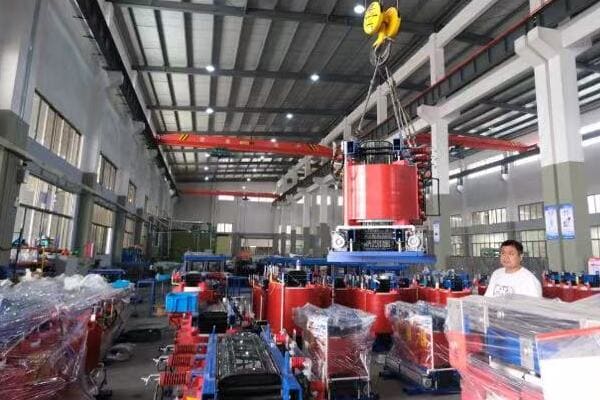
Have you ever wondered how the transformers powering our world have changed over time? From humble beginnings to cutting-edge technology, dry type transformers have come a long way. But what does their future hold?
Dry type transformers have evolved from simple air-cooled designs to advanced, efficient, and environmentally friendly units. This evolution encompasses improvements in materials, cooling techniques, and smart technologies. The future promises even more innovations in sustainability, efficiency, and integration with smart grids.
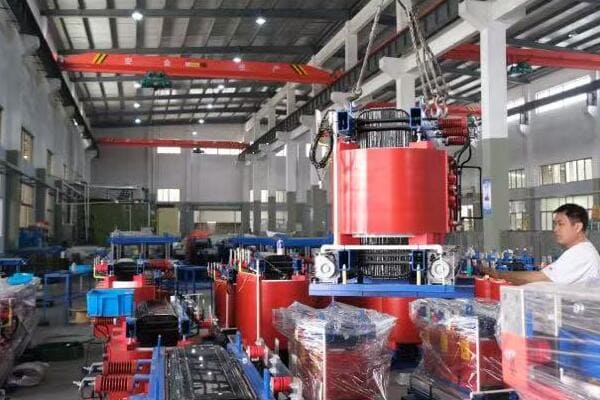
As someone who has worked with transformers for decades, I’ve witnessed this evolution firsthand. In this article, I’ll take you on a journey through the past, present, and future of dry type transformers. Let’s explore how these crucial components of our power systems have changed and what exciting developments lie ahead.
The Origins of Dry Type Transformers: Tracing the Roots of Modern Power Distribution?
Have you ever thought about how our cities were lit before the advent of modern transformers? The story of dry type transformers is a fascinating journey that starts in the early days of electricity distribution. But where did it all begin?
Dry type transformers originated in the early 20th century as a safer alternative to oil-filled transformers. They started with simple air-cooled designs and evolved to use better insulation materials. This development was driven by the need for safer, more compact transformers in urban and indoor settings.
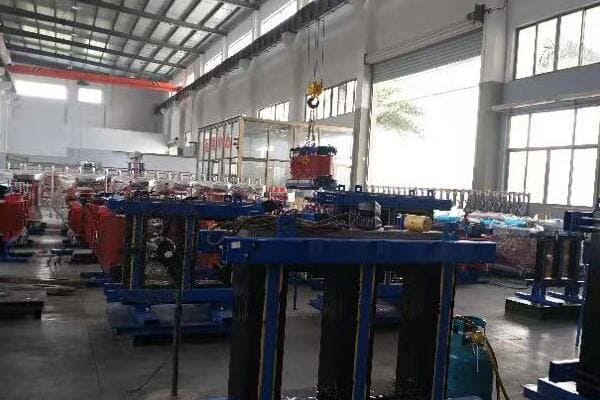
I remember when I first saw an early dry type transformer in a museum. It was a far cry from the sleek units we use today, but it represented a huge leap in electrical safety. Let’s dive into the origins of these transformers and see how they’ve shaped our modern world.
The Early Days: From Oil to Air
The story of dry type transformers begins with a problem:
-
Fire Hazard of Oil Transformers:
- Early transformers used oil for insulation and cooling.
- This posed significant fire risks, especially in buildings.
-
The Search for Alternatives:
- Engineers sought safer, non-flammable options.
- Air-cooled designs emerged as a promising solution.
-
First Dry Type Designs:
- Early 1900s saw the first air-cooled transformers.
- They were bulky and less efficient than oil types.
I once restored an early dry type transformer from the 1920s. It was massive compared to modern units of the same capacity, but it was a marvel of early electrical engineering.
Evolution of Insulation Materials
The key to improving dry type transformers was better insulation:
-
Early Insulation:
- Paper and cloth were common insulating materials.
- They were prone to moisture absorption and degradation.
-
Introduction of Synthetic Materials:
- 1940s-1950s saw the advent of synthetic resins.
- These offered better insulation and moisture resistance.
-
Modern Insulation Systems:
- Today’s transformers use advanced epoxy resins and silicone.
- These materials offer excellent insulation and heat resistance.
Here’s a quick look at the evolution of insulation materials:
| Era | Primary Insulation | Characteristics |
|---|---|---|
| Early 1900s | Paper, Cloth | Poor moisture resistance |
| 1940s-1950s | Early Synthetic Resins | Improved insulation |
| 1960s-1980s | Epoxy Resins | Better heat resistance |
| Modern | Advanced Epoxies, Silicone | High performance, environmentally friendly |
The Rise of Vacuum Pressure Impregnation (VPI)
A major breakthrough came with the development of VPI:
-
VPI Process:
- Introduced in the 1960s.
- Involves impregnating windings with resin under vacuum.
-
Benefits of VPI:
- Improved insulation quality.
- Better protection against moisture and contaminants.
- Enhanced overall reliability.
I remember the first time I saw a VPI process in action. It was like watching a transformer get a high-tech spa treatment, emerging stronger and more resilient.
Advancements in Cooling Technologies
Cooling has always been a challenge for dry type transformers:
-
Natural Air Cooling:
- The earliest method, relying on natural air circulation.
- Limited in capacity and efficiency.
-
Forced Air Cooling:
- Introduction of fans improved cooling capacity.
- Allowed for more compact designs and higher ratings.
-
Modern Cooling Solutions:
- Advanced airflow designs.
- Use of heat pipes and other innovative cooling technologies.
The evolution of dry type transformers is a testament to human ingenuity. From fire-prone oil-filled units to safe, efficient dry types, we’ve come a long way. This journey laid the foundation for the modern transformers we rely on today, and it continues to inspire innovations for the future.
Technological Milestones: Key Innovations in Dry Type Transformer Design?
Have you ever marveled at how your smartphone packs so much power into such a small device? The story of dry type transformers is similar – a tale of continuous innovation making them smaller, more efficient, and more powerful. But what were the game-changing innovations?
Key innovations in dry type transformer design include the development of cast resin technology, advancements in core materials like amorphous metals, improved cooling systems, and the integration of smart monitoring technologies. These innovations have significantly enhanced efficiency, reliability, and safety of dry type transformers.
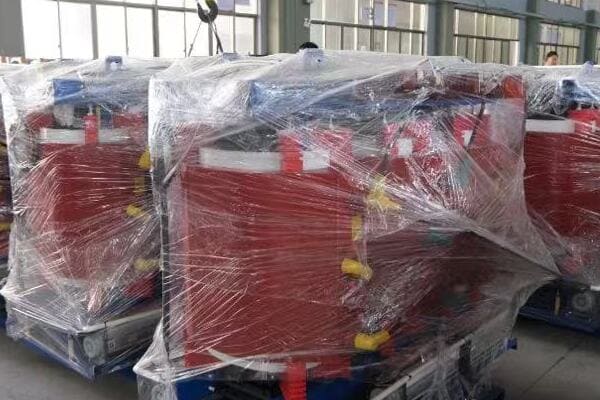
I remember when cast resin transformers first hit the market. It was like watching science fiction become reality. Let’s explore the technological milestones that have shaped modern dry type transformers.
Cast Resin Technology: A Revolution in Insulation
Cast resin technology was a game-changer:
-
Introduction of Cast Resin:
- Developed in the 1960s and refined in the 1970s.
- Windings encapsulated in epoxy resin.
-
Advantages:
- Excellent moisture resistance.
- Improved fire safety.
- Enhanced short-circuit strength.
-
Impact on Design:
- Allowed for more compact transformers.
- Expanded use in harsh environments.
I once visited a coastal substation that had been plagued by failures due to salt air. The switch to cast resin transformers solved their problems almost overnight.
Core Material Innovations: Amorphous Metals
The heart of a transformer is its core:
-
Traditional Core Materials:
- Silicon steel was the standard for decades.
- Grain-oriented steel improved efficiency.
-
Amorphous Metal Cores:
- Introduced in the 1980s.
- Offers significantly lower core losses.
-
Impact on Efficiency:
- Reduced no-load losses by up to 70%.
- Improved overall transformer efficiency.
Here’s a comparison of core materials:
| Core Material | Relative Core Loss | Advantages |
|---|---|---|
| Silicon Steel | 100% (baseline) | Cost-effective, widely available |
| Grain-Oriented Steel | 70-80% | Improved efficiency |
| Amorphous Metal | 25-35% | Highest efficiency, lower operating costs |
Advancements in Cooling Systems
Keeping transformers cool has always been a challenge:
-
Natural Air Cooling (AN):
- The original method, still used in smaller units.
- Limited capacity but simple and reliable.
-
Forced Air Cooling (AF):
- Introduction of fans significantly increased capacity.
- Allowed for more compact designs.
-
Air-Forced Air-Natural (AFAN):
- Combines natural and forced air cooling.
- Improves reliability and efficiency.
-
Advanced Cooling Technologies:
- Heat pipes and phase change materials.
- Provides more efficient heat dissipation.
I once worked on upgrading a data center’s transformers. The switch to advanced cooling systems allowed for higher capacity in the same footprint, solving their space constraints.
Smart Monitoring and Diagnostics
The digital revolution didn’t leave transformers behind:
-
Temperature Monitoring:
- Advanced sensors for real-time temperature tracking.
- Allows for dynamic load management.
-
Partial Discharge Detection:
- Early warning system for insulation breakdown.
- Helps prevent catastrophic failures.
-
Online Monitoring Systems:
- Real-time data on transformer health.
- Enables predictive maintenance.
-
Integration with Smart Grids:
- Transformers become nodes in intelligent power systems.
- Allows for optimized power distribution.
Environmentally Friendly Designs
Environmental concerns have driven several innovations:
-
Biodegradable Insulation Materials:
- Development of eco-friendly resins.
- Reduces environmental impact at end-of-life.
-
Reduced Use of Harmful Materials:
- Elimination of PCBs and other hazardous substances.
- Compliance with RoHS and other environmental standards.
-
Noise Reduction Technologies:
- Development of low-noise cores and windings.
- Important for urban and indoor installations.
These technological milestones have transformed dry type transformers from simple air-cooled units to sophisticated, efficient, and environmentally friendly devices. Each innovation has brought improvements in performance, reliability, and safety. As we continue to push the boundaries of technology, who knows what amazing advancements the future will bring to transformer design?
Current State of the Art: Analyzing Modern Dry Type Transformer Technologies?
Have you ever wondered what makes modern dry type transformers so much more efficient and reliable than their predecessors? It’s like comparing a modern smartphone to an old rotary dial telephone – the basic function is the same, but the technology is worlds apart.
Modern dry type transformers incorporate advanced materials, smart technologies, and innovative designs. Key features include high-efficiency cores, advanced insulation systems, integrated monitoring capabilities, and environmentally friendly components. These technologies result in transformers that are more efficient, reliable, and easier to maintain than ever before.
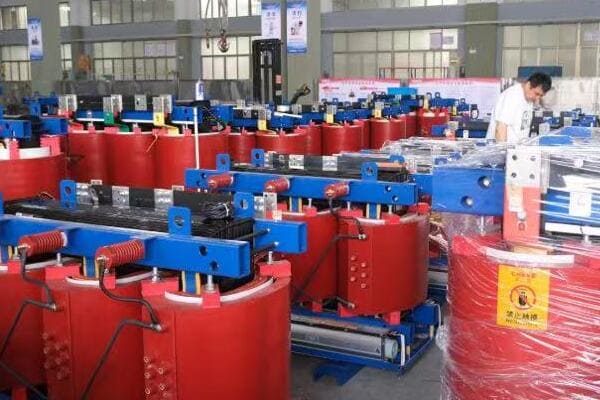
I remember the first time I installed a state-of-the-art dry type transformer. The level of technology packed into that unassuming box was astounding. Let’s dive into the current state of the art in dry type transformer technology.
High-Efficiency Core Technologies
The heart of modern transformers is more efficient than ever:
-
Advanced Core Materials:
- Amorphous metal cores now common in high-efficiency units.
- Nanocrystalline materials emerging for even lower losses.
-
Core Design Optimization:
- Computer-aided design for optimal flux distribution.
- Stepped core designs reduce wasted material and improve efficiency.
-
Laser-Etched Laminations:
- Precision manufacturing reduces eddy current losses.
- Tighter stacking of laminations improves overall core performance.
I once compared the efficiency of a modern amorphous core transformer to a 20-year-old unit of the same rating. The energy savings were so significant that the new transformer paid for itself in just three years.
Advanced Insulation Systems
Modern insulation is a far cry from the paper and varnish of old:
-
Cast Resin Technology:
- Now the standard for medium voltage dry type transformers.
- Offers excellent environmental protection and fire safety.
-
Vacuum Pressure Impregnation (VPI):
- Used in both low and medium voltage applications.
- Provides superior insulation and moisture resistance.
-
Hybrid Insulation Systems:
- Combining different materials for optimal performance.
- Example: Nomex-enhanced epoxy systems for extreme environments.
Here’s a comparison of modern insulation systems:
| Insulation Type | Best For | Key Advantages |
|---|---|---|
| Cast Resin | Medium Voltage | Excellent environmental protection, fire safety |
| VPI | Low/Medium Voltage | Good moisture resistance, cost-effective |
| Hybrid Systems | Extreme Environments | Tailored performance, high reliability |
Integrated Monitoring and Diagnostics
Modern transformers are smarter than ever:
-
Real-Time Monitoring:
- Temperature, load, and health indicators constantly tracked.
- Allows for predictive maintenance and optimized operation.
-
Advanced Sensor Technologies:
- Fiber optic sensors for temperature and partial discharge detection.
- Acoustic sensors for early fault detection.
-
IoT Integration:
- Transformers now part of the Internet of Things.
- Remote monitoring and control capabilities.
-
AI-Powered Diagnostics:
- Machine learning algorithms predict potential failures.
- Helps schedule maintenance before problems occur.
I recently worked on a project integrating AI diagnostics into a substation’s transformer fleet. The system’s ability to predict and prevent issues before they became critical was truly impressive.
Cooling Innovations
Keeping cool is cooler than ever:
-
Advanced Air Flow Designs:
- Computational fluid dynamics optimizes cooling efficiency.
- Reduces hotspots and improves overall performance.
-
Phase Change Materials:
- Used in some designs to absorb and dissipate heat more effectively.
- Helps manage peak loads and temperature fluctuations.
-
Heat Pipe Technology:
- Emerging technology for more efficient heat transfer.
- Allows for even more compact designs.
Environmentally Friendly Features
Modern transformers are greener than ever:
-
Biodegradable Materials:
- Some resins and insulation materials now biodegradable.
- Reduces environmental impact at end-of-life.
-
Recyclable Components:
- Increased use of recyclable materials in construction.
- Easier to dispose of or recycle at end-of-life.
-
Low-Noise Designs:
- Advanced core designs and enclosures reduce operational noise.
- Important for urban and indoor installations.
-
Energy Efficiency Standards:
- Compliance with stringent efficiency regulations (e.g., DOE 2016 in the US).
- Drives continuous improvement in transformer efficiency.
Modular and Scalable Designs
Flexibility is key in modern transformer design:
-
Modular Construction:
- Allows for easier transportation and installation.
- Simplifies maintenance and upgrades.
-
Scalable Systems:
- Multiple smaller units can be combined for higher capacity.
- Provides redundancy and flexibility in power distribution.
-
Compact Designs:
- Higher power density than ever before.
- Important for space-constrained installations.
The current state of the art in dry type transformers is a testament to continuous innovation in the field. These modern marvels are more efficient, reliable, and environmentally friendly than ever before. They’re not just transformers; they’re smart, connected devices playing a crucial role in our evolving power infrastructure. As we look to the future, it’s exciting to imagine what new advancements will further revolutionize this essential technology.
Future Horizons: Emerging Trends and Predictions in Dry Type Transformer Development?
Have you ever tried to imagine what the world will look like in 20 years? It’s a fun exercise, isn’t it? Now, let’s apply that same forward-thinking to dry type transformers. What amazing innovations are on the horizon?
Future dry type transformers are likely to feature advanced materials like high-temperature superconductors, integrate more deeply with smart grid technologies, and incorporate AI for self-diagnosis and optimization. We may also see developments in modular designs, renewable energy integration, and even more environmentally friendly materials and manufacturing processes.
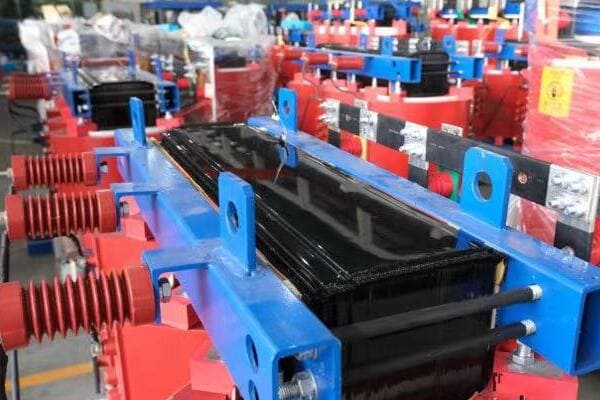
I’ve been in this industry for decades, and the pace of innovation never ceases to amaze me. Let’s explore some of the exciting trends and predictions for the future of dry type transformers.
Superconducting Transformers: The Next Frontier?
Superconductivity could revolutionize transformer technology:
-
High-Temperature Superconductors (HTS):
- Could dramatically reduce losses.
- Potential for much smaller, lighter transformers.
-
Challenges:
- Cost of superconducting materials.
- Cooling requirements still complex.
-
Potential Impact:
- Could lead to near-100% efficiency.
- Might enable new applications in space-constrained areas.
I recently attended a conference where a prototype HTS transformer was demonstrated. The efficiency gains were staggering, but there’s still work to be done to make it commercially viable. It’s exciting to think about the possibilities once these challenges are overcome.
AI and Machine Learning Integration
The future of transformers is smart:
-
Self-Diagnosing Transformers:
- AI algorithms for real-time health monitoring.
- Predictive maintenance taken to the next level.
-
Adaptive Load Management:
- Transformers that adjust their operation based on demand patterns.
- Integration with smart grid systems for optimal power distribution.
-
Autonomous Decision Making:
- Transformers that can make decisions to protect themselves and the grid.
- Potential for self-healing grid systems.
I’m currently working on a project to integrate machine learning algorithms into transformer monitoring systems. The potential for these systems to predict and prevent failures before they occur is truly revolutionary.
Advanced Materials and Nanotechnology
The materials science revolution will change transformers:
-
Nanocomposite Insulation:
- Enhanced thermal and electrical properties.
- Potential for even more compact designs.
-
Graphene Applications:
- Possible use in windings for improved conductivity.
- Could lead to significant efficiency improvements.
-
Bio-based Materials:
- Fully biodegradable insulation and cooling fluids.
- Reduced environmental impact throughout the lifecycle.
Here’s a speculative look at future materials:
| Material | Potential Application | Expected Benefit |
|---|---|---|
| Nanocomposites | Insulation | Higher temperature resistance, better dielectric strength |
| Graphene | Windings | Lower losses, higher current capacity |
| Bio-based Polymers | Structural components | Fully biodegradable, renewable source |
Modular and Scalable Designs
Flexibility will be key in future transformer designs:
-
Plug-and-Play Transformers:
- Easily scalable to meet changing power needs.
- Simplified installation and maintenance.
-
Mobile Transformer Units:
- Rapid deployment for emergency situations or temporary power needs.
- Integration with renewable energy systems for off-grid applications.
-
Distributed Transformer Networks:
- Multiple smaller units instead of one large transformer.
- Improved reliability and easier maintenance.
I recently consulted on a project exploring the concept of a transformer "swarm" – multiple small, interconnected units that could adapt to changing power needs. The potential for resilience and flexibility is enormous.
Integration with Renewable Energy Systems
Future transformers will be key in the renewable energy revolution:
-
Bidirectional Power Flow:
- Designed to handle power flow from distributed generation sources.
- Crucial for integrating solar and wind power into the grid.
-
Energy Storage Integration:
- Transformers with built-in energy storage capabilities.
- Helps manage the intermittency of renewable sources.
-
DC Transformation:
- As DC microgrids become more common, we may see the rise of DC-to-DC transformers.
- Could revolutionize power distribution in data centers and electric vehicle charging stations.
Quantum Technologies
While still in the realm of science fiction, quantum technologies could impact transformer design:
-
Quantum Sensors:
- Ultra-sensitive detection of magnetic fields and current flow.
- Could lead to unprecedented levels of monitoring accuracy.
-
Quantum Computing for Design:
- Optimization of transformer design using quantum algorithms.
- Potential for breakthroughs in efficiency and material use.
Environmental and Sustainability Focus
The future is green, and transformers are no exception:
-
Zero-Waste Manufacturing:
- Closed-loop production processes.
- 100% recyclable or biodegradable components.
-
Carbon-Neutral Transformers:
- Lifecycle carbon footprint becomes a key design consideration.
- Integration of carbon capture technologies in production.
-
End-of-Life Management:
- Design for easy disassembly and recycling.
- Transformer-as-a-service models, where manufacturers are responsible for the entire lifecycle.
As we look to the future of dry type transformers, it’s clear that the pace of innovation is only accelerating. From superconducting materials to AI integration, from modular designs to quantum technologies, the possibilities are truly exciting. While some of these predictions may seem like science fiction today, remember that many of our current technologies would have seemed equally fantastical just a few decades ago.
The transformers of tomorrow will be smarter, more efficient, and more environmentally friendly than ever before. They’ll play a crucial role in our transition to a sustainable, renewable energy future. As someone who has spent a career in this field, I can’t wait to see which of these innovations will become reality, and what new ideas will emerge that we haven’t even thought of yet.
Sustainability and Smart Technology: Shaping the Next Generation of Dry Type Transformers?
Have you ever wondered how our increasing focus on sustainability and the rapid advancement of smart technology will shape the future of power distribution? The next generation of dry type transformers is set to be at the forefront of this revolution. But how exactly will these changes manifest?
The next generation of dry type transformers will be characterized by a strong focus on sustainability and integration of smart technologies. This includes the use of eco-friendly materials, designs optimized for energy efficiency, integration with smart grids, and advanced monitoring and self-diagnostic capabilities. These transformers will play a crucial role in creating a more sustainable and intelligent power infrastructure.
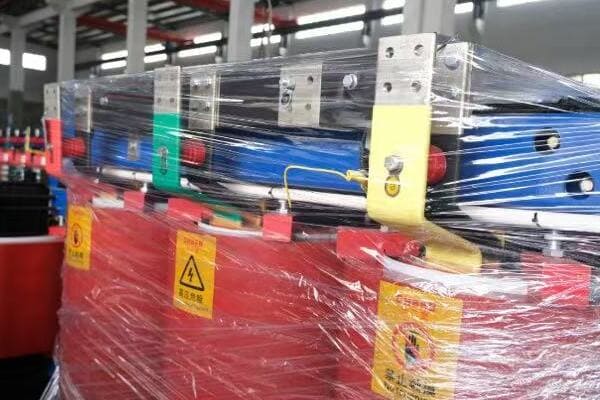
I recently visited a "transformer of the future" exhibit at a tech conference, and I was blown away by the innovations on display. Let’s explore how sustainability and smart technology are set to reshape dry type transformers.
Eco-Friendly Materials: The Green Revolution
The materials used in transformers are getting a green makeover:
-
Biodegradable Insulation:
- Development of fully biodegradable epoxy resins.
- Reduces environmental impact at end-of-life.
-
Recycled and Recyclable Components:
- Increased use of recycled materials in construction.
- Design for easy disassembly and recycling.
-
Bio-Based Cooling Fluids:
- Natural esters derived from renewable sources.
- Biodegradable and non-toxic alternatives to traditional fluids.
I recently worked on a project using a prototype transformer with a bio-based epoxy insulation. The performance was comparable to traditional materials, but with a significantly reduced environmental footprint.
Energy Efficiency: Pushing the Boundaries
Energy efficiency is becoming more critical than ever:
-
Ultra-Low Loss Core Materials:
- Advanced amorphous and nanocrystalline materials.
- Potential for near-zero core losses.
-
Optimized Winding Designs:
- Use of AI and machine learning for winding optimization.
- Reduced copper losses and improved efficiency.
-
Dynamic Efficiency Adjustment:
- Transformers that can adjust their operation for optimal efficiency under varying loads.
- Integration with smart grid systems for load balancing.
Here’s a speculative look at future efficiency improvements:
| Component | Current Best Practice | Future Potential |
|---|---|---|
| Core Losses | 0.2% of rated power | < 0.1% of rated power |
| Copper Losses | 1% of rated power | < 0.5% of rated power |
| Overall Efficiency | 99% | > 99.5% |
Smart Grid Integration: The Connected Transformer
Future transformers will be key nodes in smart grids:
-
Real-Time Data Exchange:
- Continuous communication with grid management systems.
- Enables dynamic load balancing and fault prediction.
-
Adaptive Voltage Regulation:
- Automatic adjustment of voltage levels based on grid conditions.
- Improves power quality and reduces losses.
-
Demand Response Capabilities:
- Transformers that can adjust their output based on demand signals.
- Helps manage peak loads and integrate renewable energy sources.
I’m currently involved in a pilot project testing smart grid-integrated transformers. The ability of these units to respond to grid conditions in real-time is impressive and promises significant improvements in grid stability and efficiency.
Advanced Monitoring and Self-Diagnostics
The transformers of the future will be self-aware:
-
IoT Sensor Networks:
- Comprehensive monitoring of all critical parameters.
- Real-time data on temperature, load, gas levels, and more.
-
AI-Powered Diagnostics:
- Machine learning algorithms for predictive maintenance.
- Can predict potential failures weeks or months in advance.
-
Digital Twin Technology:
- Virtual replicas of transformers for simulation and analysis.
- Allows for optimization and troubleshooting without physical intervention.
-
Augmented Reality for Maintenance:
- AR interfaces for maintenance personnel.
- Provides real-time data and guided procedures for servicing.
Resilience and Adaptability
Future transformers will be designed for a changing world:
-
Climate Resilience:
- Designed to withstand extreme weather events.
- Adaptive cooling systems for varying climate conditions.
-
Cybersecurity Features:
- Built-in protection against cyber threats.
- Secure communication protocols for grid integration.
-
Modular and Scalable Designs:
- Easy to upgrade and adapt to changing power needs.
- Reduces waste and extends useful life.
Lifecycle Management and Circular Economy
Sustainability goes beyond just materials:
-
Lifecycle Carbon Footprint Tracking:
- Embedded systems to track and report carbon footprint throughout the transformer’s life.
- Helps in making informed decisions for upgrades or replacements.
-
Manufacturer Take-Back Programs:
- Responsibility for end-of-life management shifts to manufacturers.
- Encourages design for recyclability and reuse.
-
Performance-Based Contracts:
- Shift towards selling transformer services rather than products.
- Aligns manufacturer incentives with long-term efficiency and sustainability.
Integration with Renewable Energy Systems
The next generation of transformers will be key to renewable energy integration:
-
Bidirectional Power Flow Management:
- Designed to handle variable inputs from solar and wind sources.
- Enables efficient integration of distributed energy resources.
-
Energy Storage Integration:
- Built-in or easily connectable energy storage capabilities.
- Helps manage intermittency of renewable sources.
-
Microgrid Compatibility:
- Designed to operate seamlessly in both grid-connected and island modes.
- Crucial for resilience and local energy independence.
The next generation of dry type transformers, shaped by sustainability concerns and smart technology, will be more than just power distribution devices. They’ll be intelligent, adaptive, and environmentally responsible components of our future energy infrastructure. These transformers will play a crucial role in enabling the transition to a more sustainable and resilient power grid.
As we move towards this future, it’s exciting to think about the possibilities. The transformers of tomorrow will not only be more efficient and reliable but will also actively contribute to our goals of sustainability and smart energy management. It’s a future where our power infrastructure works in harmony with the environment and responds intelligently to our changing energy needs.
Conclusion
The evolution of dry type transformers from their early origins to the current state-of-the-art technologies, and the exciting future developments, showcases remarkable progress in efficiency, safety, and sustainability. As we look ahead, innovations in materials, smart technologies, and eco-friendly designs promise to make transformers even more integral to our sustainable energy future.
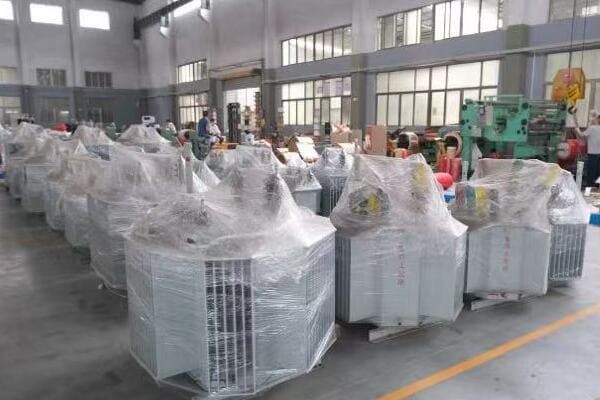
Are you worried about the safety risks of installing and operating an oil immersed transformer? You’re not alone. Many engineers and facility managers lose sleep over the potential hazards these powerful machines pose.
Safety in oil immersed transformer installation and operation is crucial. Key precautions include proper handling during installation, fire prevention measures, regular maintenance, environmental protection strategies, and thorough cleaning procedures. Following these guidelines ensures the safety of personnel, equipment, and the environment.

As someone who has worked with oil immersed transformers for years, I’ve seen firsthand the importance of proper safety measures. In this article, I’ll share critical safety precautions that will help you install and operate your oil immersed transformer with confidence. Let’s dive in and explore how to keep your electrical giant safe and sound.
Transformer Touchdown: How to Safely Land Your Oil-Filled Giant?
Have you ever tried to move a waterbed? Now imagine that waterbed weighs several tons and is filled with electricity instead of water. That’s the challenge of installing an oil immersed transformer. But how do you do it safely?
Safely installing an oil immersed transformer requires careful planning, proper equipment, and skilled personnel. Key steps include site preparation, transportation safety, proper lifting techniques, and correct positioning. Following these procedures ensures the safety of workers and prevents damage to the transformer.
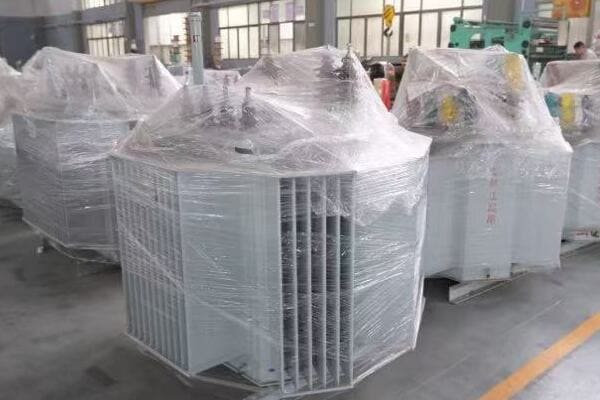
I remember my first big transformer installation. We were all nervous, but with the right precautions, it went smoothly. Let me walk you through the key safety steps for your transformer touchdown.
Preparing for Touchdown: Site Safety
Before your transformer arrives, you need to prepare the landing site:
-
Foundation Check:
- Ensure the foundation is level and can support the transformer’s weight.
- Check for any cracks or weaknesses in the concrete pad.
-
Clearance Check:
- Verify there’s enough space around the installation site for the transformer and maintenance access.
- Check for overhead obstructions like power lines or tree branches.
-
Access Route:
- Plan and clear a safe route for the transformer to be moved from the delivery vehicle to the installation site.
- Remove any obstacles and ensure the path can support the weight of the transformer and transport equipment.
I once had to halt an installation because the access route wasn’t properly cleared. It cost us a day’s delay, but it prevented a potential accident.
The Big Move: Transportation Safety
Moving the transformer to its new home is a critical phase:
-
Proper Equipment:
- Use a trailer rated for the transformer’s weight.
- Ensure the transformer is securely fastened to prevent shifting during transport.
-
Speed Control:
- Move slowly and steadily to avoid sudden jolts or tilting.
- Use spotters to guide the driver, especially in tight spaces.
-
Weather Considerations:
- Avoid moving transformers in high winds or heavy rain.
- If weather conditions are poor, postpone the move if possible.
The Lift: Crane Safety
Lifting the transformer into place is perhaps the most nerve-wracking part:
-
Crane Selection:
- Choose a crane with a capacity well above the transformer’s weight.
- Factor in the lift radius and any obstacles.
-
Rigging Check:
- Inspect all lifting equipment before use.
- Use properly rated slings and shackles.
-
Lift Plan:
- Develop and review a detailed lift plan with all team members.
- Designate a single person to direct the lift.
Here’s a quick checklist for a safe lift:
| Step | Action | Safety Check |
|---|---|---|
| 1 | Attach rigging | Double-check connections |
| 2 | Clear area | Ensure no personnel underneath |
| 3 | Lift slowly | Watch for swinging or tilting |
| 4 | Guide into place | Use tag lines for control |
| 5 | Lower carefully | Align with mounting points |
The Final Touchdown: Positioning and Securing
Once your transformer is on the ground, you’re not done yet:
-
Alignment:
- Ensure the transformer is perfectly level.
- Align it correctly with electrical connections.
-
Anchoring:
- Secure the transformer to its foundation.
- Use appropriate anchor bolts and follow torque specifications.
-
Final Inspection:
- Check for any damage that may have occurred during the move.
- Verify all parts are intact and properly positioned.
I once saw a transformer tip over during final positioning because it wasn’t properly secured. Luckily, no one was hurt, but it was a stark reminder of the importance of these final steps.
Remember, safely landing your oil-filled giant is all about preparation, the right equipment, and careful execution. Take your time, follow these steps, and your transformer touchdown will be smooth and safe. After all, a safe installation is the first step to years of reliable operation.
Fire and Oil Don’t Mix: Keeping Your Transformer from Becoming a Barbecue?
Have you ever watched a chef flambé a dish and felt a mix of awe and fear? Now imagine that dish is a multi-ton transformer filled with thousands of gallons of oil. Scary, right? But how do you prevent your transformer from turning into an unintended fireworks display?
Preventing fires in oil immersed transformers involves multiple safety measures. These include proper insulation maintenance, temperature monitoring, the use of fire-resistant fluids, installation of fire suppression systems, and regular safety inspections. Implementing these precautions significantly reduces the risk of transformer fires.
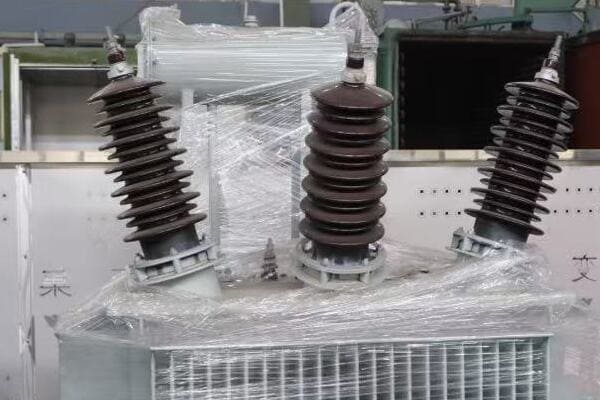
I once witnessed a transformer fire up close. It was terrifying, but it taught me the importance of fire prevention. Let me share some key strategies to keep your transformer from becoming an accidental barbecue.
Understanding the Fire Triangle
To prevent fires, we need to understand what causes them. The fire triangle consists of three elements:
- Fuel (transformer oil)
- Oxygen (air)
- Heat (from electrical faults or external sources)
Remove any one of these, and you prevent a fire. Let’s look at how we can address each element.
Tackling the Fuel: Oil Safety
Transformer oil is the primary fuel in a potential fire. Here’s how to manage it:
-
Regular Oil Testing:
- Test oil quality at least annually.
- Check for moisture content, acidity, and dissolved gas analysis (DGA).
-
Oil Maintenance:
- Filter or replace oil when tests show degradation.
- Maintain proper oil levels to ensure good insulation.
-
Use of Fire-Resistant Fluids:
- Consider using less flammable fluids like silicone or ester-based oils.
- These have higher flash points, reducing fire risk.
I once worked on upgrading a substation where we replaced mineral oil with ester fluid in critical transformers. The improved fire safety gave everyone peace of mind.
Controlling Oxygen: Sealed Systems
While we can’t eliminate oxygen entirely, we can limit its access:
-
Sealed Tank Design:
- Use transformers with sealed tank designs to minimize air contact with oil.
- Maintain proper seals and gaskets.
-
Nitrogen Blanket Systems:
- Some transformers use nitrogen gas above the oil to displace oxygen.
- Regularly check and maintain these systems.
Managing Heat: Temperature Control
Keeping your transformer cool is crucial for fire prevention:
-
Cooling System Maintenance:
- Regularly clean radiators and fans.
- Ensure coolant pumps are functioning properly.
-
Temperature Monitoring:
- Install and maintain temperature sensors.
- Set up alarms for abnormal temperature rises.
-
Load Management:
- Avoid overloading the transformer.
- Monitor and balance loads across phases.
Here’s a quick guide to transformer temperature management:
| Temperature Range | Action |
|---|---|
| Normal (< 90°C) | Regular monitoring |
| Elevated (90-110°C) | Increase cooling, reduce load if possible |
| High (110-130°C) | Immediate load reduction, investigate cause |
| Critical (> 130°C) | Shut down and inspect |
Fire Detection and Suppression
Despite our best efforts, we need to be prepared for the worst:
-
Fire Detection Systems:
- Install heat and smoke detectors around the transformer.
- Ensure detectors are properly maintained and tested regularly.
-
Fire Suppression Systems:
- Install automatic fire suppression systems.
- Options include water spray, foam, or clean agent systems.
-
Firewall Installation:
- Install firewalls between transformers if multiple units are close together.
- This prevents fire spread in case one unit ignites.
I once consulted on a project where we retrofitted an old substation with modern fire detection and suppression systems. It was a complex job, but it dramatically improved the safety of the entire facility.
Regular Inspections and Maintenance
Prevention is always better than cure:
-
Visual Inspections:
- Check for oil leaks, damaged bushings, or signs of overheating.
- Inspect fire safety equipment regularly.
-
Electrical Testing:
- Conduct regular insulation resistance tests.
- Perform partial discharge tests to detect internal faults early.
-
Thermal Imaging:
- Use infrared cameras to detect hot spots before they become problems.
- Conduct thermal scans at least annually, more often for critical units.
Remember, keeping your transformer from becoming a barbecue is all about vigilance and proactive measures. Regular maintenance, proper monitoring, and robust fire safety systems are your best defense against transformer fires. By following these precautions, you can ensure your transformer remains a powerful ally in your electrical system, not a potential fire hazard.
The Transformer Whisperer: Safely Taming Your Electrical Beast?
Have you ever tried to calm a spooked horse? Dealing with a high-powered transformer isn’t that different. It requires a gentle touch, a keen eye, and a deep understanding of the beast. But how do you become a transformer whisperer?
Safely operating an oil immersed transformer requires a combination of technical knowledge, regular monitoring, and proper maintenance procedures. Key aspects include understanding electrical parameters, conducting routine checks, implementing safety protocols, and responding appropriately to abnormal conditions. Mastering these skills is essential for safe and efficient transformer operation.
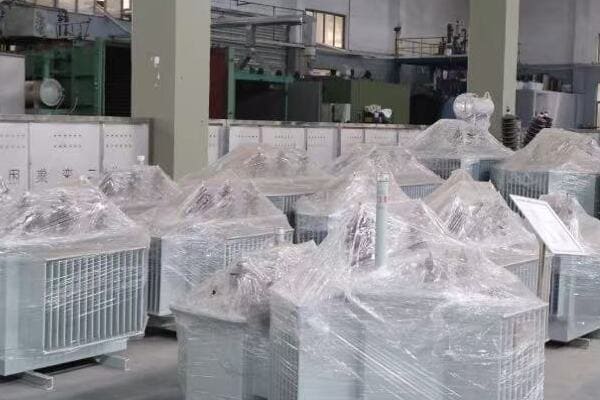
I remember the first time I had to troubleshoot a misbehaving transformer. It was intimidating, but with the right approach, I managed to tame the beast. Let me share some secrets of the transformer whisperer’s trade.
Speaking the Transformer’s Language
To tame your electrical beast, you first need to understand its language:
-
Voltage and Current:
- Monitor input and output voltages regularly.
- Check phase balance and loading on each winding.
-
Temperature:
- Keep an eye on oil and winding temperatures.
- Understand normal operating temperatures for your specific transformer.
-
Dissolved Gas Analysis (DGA):
- Regular oil tests can reveal internal issues before they become critical.
- Learn to interpret DGA results – they’re like the transformer’s health check.
Here’s a basic guide to interpreting some common gases in DGA:
| Gas | Possible Issue |
|---|---|
| Hydrogen (H2) | Partial discharge or overheating |
| Methane (CH4) | Low temperature overheating |
| Acetylene (C2H2) | Arcing |
| Ethylene (C2H4) | High temperature overheating |
| Carbon Monoxide (CO) | Overheated cellulose insulation |
The Daily Check-Up: Routine Monitoring
Just like a good horse trainer checks their horses daily, a transformer whisperer needs a routine:
-
Visual Inspection:
- Look for oil leaks, unusual noises, or signs of overheating.
- Check bushings and insulators for cracks or contamination.
-
Gauge Readings:
- Record oil levels, temperatures, and pressures.
- Note any significant changes from previous readings.
-
Cooling System Check:
- Ensure fans and pumps are operating correctly.
- Listen for unusual noises in the cooling system.
I once caught a developing issue just by noticing a slight change in the hum of a transformer during my daily rounds. Trust your senses – they’re valuable tools.
Handling the Unexpected: Emergency Responses
Even the best-behaved transformer can sometimes act up. Here’s how to handle emergencies:
-
Overheating:
- If temperatures exceed safe limits, reduce load if possible.
- Check cooling systems for malfunctions.
- Be prepared to shut down if temperatures continue to rise.
-
Unusual Noises:
- Buzzing or humming louder than usual could indicate core problems.
- Crackling sounds might suggest internal arcing.
- If in doubt, shut down and investigate.
-
Sudden Pressure Rise:
- This could indicate an internal fault.
- Some transformers have pressure relief devices – know how they work.
- Be prepared for emergency shutdown procedures.
The Annual Check-Up: Comprehensive Testing
Just like you’d have a vet do a thorough check of your prize horse, transformers need annual examinations:
-
Insulation Resistance Testing:
- Measures the integrity of the insulation.
- Helps detect moisture ingress or insulation breakdown.
-
Power Factor Testing:
- Indicates the overall condition of the insulation system.
- Can help detect contamination or aging.
-
Turns Ratio Testing:
- Verifies the transformer’s turns ratio is correct.
- Can detect shorted turns or other winding issues.
Building Trust: Safety Protocols
A good horse trainer never forgets safety, and neither should a transformer whisperer:
-
Lockout/Tagout Procedures:
- Always follow proper procedures when working on the transformer.
- Never assume a transformer is de-energized without verifying.
-
Personal Protective Equipment (PPE):
- Wear appropriate PPE when working around transformers.
- This includes insulated gloves, safety glasses, and flame-resistant clothing.
-
Emergency Response Plan:
- Have a clear plan for various emergency scenarios.
- Ensure all team members know their roles in an emergency.
I once had to implement an emergency shutdown during a severe storm. Having a well-practiced plan made all the difference in safely managing the situation.
Remember, becoming a transformer whisperer isn’t about dominating the beast – it’s about understanding and respecting its power. With regular attention, careful monitoring, and a healthy respect for safety, you can keep your electrical giant purring contentedly for years to come. Just like a well-trained horse, a well-maintained transformer will serve you faithfully and safely.
Green and Clean: Keeping Mother Nature Happy with Your Oil Transformer?
Have you ever felt guilty about using plastic bags at the grocery store? Now imagine that feeling, but with a massive oil-filled electrical beast in your backyard. How do you keep your oil transformer from becoming an environmental villain?
Maintaining environmental safety with oil immersed transformers involves preventing oil leaks, proper waste oil management, using biodegradable oils, implementing containment systems, and following strict disposal procedures. These practices minimize the environmental impact of transformer operation and maintenance, ensuring compliance with environmental regulations.

I once worked on a project near a protected wetland. The environmental concerns kept me up at night until we implemented robust eco-friendly measures. Let me share some strategies to keep your transformer green and Mother Nature smiling.
Preventing the Spill: Leak Prevention and Detection
The first step in being eco-friendly is preventing oil from escaping your transformer:
-
Regular Inspections:
- Conduct visual checks for oil leaks daily.
- Pay special attention to valves, gaskets, and seals.
-
Maintenance of Seals and Gaskets:
- Replace worn seals and gaskets promptly.
- Use high-quality materials suitable for transformer oil.
-
Oil Level Monitoring:
- Install and maintain oil level sensors.
- Investigate any unexplained drops in oil level immediately.
-
Pressure Monitoring:
- Monitor internal pressure changes.
- Sudden pressure drops could indicate a leak.
I once caught a small leak during a routine inspection. It was barely noticeable, but fixing it promptly prevented a potential environmental incident.
Containing the Beast: Oil Containment Systems
Even with the best prevention, we need to be prepared for the worst:
-
Oil Containment Pits:
- Install a containment pit under the transformer.
- Ensure the pit can hold at least 110% of the transformer’s oil volume.
-
Impermeable Barriers:
- Line containment areas with impermeable materials.
- Regularly inspect these barriers for cracks or damage.
-
Drainage Systems:
- Install oil-water separators in drainage systems.
- Ensure proper maintenance of these separators.
-
Secondary Containment:
- Consider double-walled tanks for extra protection.
- Use containment bags for smaller transformers.
Here’s a quick guide to containment system sizing:
| Transformer Oil Volume | Minimum Containment Capacity |
|---|---|
| < 500 gallons | 110% of oil volume |
| 500 – 10,000 gallons | 100% of oil volume + 10 minutes of fire protection water |
| > 10,000 gallons | Consult local regulations |
The Green Oil Revolution: Eco-Friendly Transformer Fluids
Who says transformer oil has to be bad for the environment?
-
Biodegradable Oils:
- Consider using vegetable-based transformer oils.
- These oils break down naturally if spilled.
-
Synthetic Esters:
- Offer good biodegradability and high fire resistance.
- Can extend transformer life due to better heat properties.
-
Retrofilling:
- Consider replacing mineral oil with eco-friendly alternatives in existing transformers.
- This process can improve both environmental safety and fire resistance.
I recently worked on a project where we replaced mineral oil with a natural ester fluid in a substation near a river. The improved environmental profile gave everyone peace of mind.
Waste Not, Want Not: Proper Oil Disposal
When it’s time to say goodbye to old transformer oil, do it right:
-
Licensed Disposal:
- Always use licensed waste disposal companies.
- Ensure they provide proper documentation.
-
Recycling:
- Many oils can be recycled or regenerated.
- This reduces waste and can be more cost-effective.
-
On-Site Treatment:
- Consider on-site oil purification systems for large installations.
- This can extend oil life and reduce waste.
-
Record Keeping:
- Maintain detailed records of all oil disposal.
- This is crucial for regulatory compliance.
The Air We Breathe: Managing Emissions
It’s not just about the oil; we need to think about air quality too:
-
SF6 Gas Management:
- If your transformer uses SF6 gas, implement strict handling procedures.
- SF6 is a potent greenhouse gas and requires careful management.
-
VOC Emissions:
- Monitor and control Volatile Organic Compound emissions from oil.
- Use low-VOC oils when possible.
-
Noise Pollution:
- While not a chemical pollutant, noise can be an environmental issue.
- Implement noise reduction measures if needed.
Staying on the Right Side of the Law: Regulatory Compliance
Environmental regulations can be a maze, but compliance is crucial:
-
Know Your Regulations:
- Stay updated on local, state, and federal environmental regulations.
- Join industry associations for updates on regulatory changes.
-
Regular Audits:
- Conduct or commission regular environmental audits.
- Address any non-compliance issues promptly.
-
Training:
- Ensure all staff are trained on environmental procedures.
- Regular refresher courses keep everyone up to date.
-
Documentation:
- Maintain detailed records of all environmental measures.
- Good documentation is your best defense in case of regulatory inspections.
I once helped a company navigate a surprise environmental audit. Our thorough documentation and clear compliance procedures turned a potentially stressful situation into a showcase of good practices.
Remember, keeping your transformer green isn’t just good for the environment – it’s good for business too. Environmental incidents can be costly in terms of cleanup, fines, and reputation damage. By implementing these eco-friendly practices, you’re not just keeping Mother Nature happy; you’re protecting your bottom line and ensuring the longevity of your operations.
Transformer Spring Cleaning: Dealing with the Oily Aftermath?
Have you ever tried to clean up an oil spill in your garage? Now imagine that, but on a massive scale with a transformer involved. Intimidating, right? But don’t worry, with the right approach, even the oiliest aftermath can be managed safely and effectively.
Cleaning and maintaining oil immersed transformers involves careful handling of oil, proper disposal of waste, thorough cleaning of components, and safe work practices. Key steps include oil filtering or replacement, cleaning of tanks and radiators, proper handling of contaminated materials, and ensuring all safety protocols are followed throughout the process.
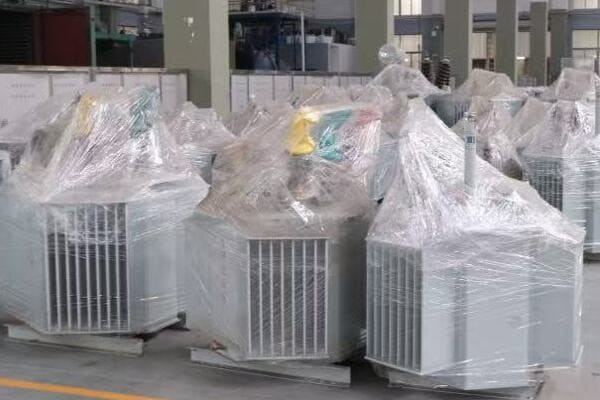
I remember my first major transformer cleaning job. It was messy and challenging, but incredibly satisfying when we finished. Let me walk you through the process of giving your transformer a proper spring cleaning.
Preparing for the Big Clean
Before you dive into the oily mess, preparation is key:
-
Safety First:
- Ensure the transformer is de-energized and properly grounded.
- Wear appropriate Personal Protective Equipment (PPE).
- Set up proper ventilation in the work area.
-
Gather Your Tools:
- Oil pumps and filtration equipment
- Cleaning solvents (environmentally friendly ones!)
- Absorbent materials for spills
- Proper containers for oil and waste
-
Plan Your Approach:
- Decide if you’re doing a partial drain or complete oil replacement.
- Identify all areas that need cleaning.
- Establish a clear workflow to minimize contamination.
The Oil Change: More Than Just a Drain and Fill
Changing transformer oil isn’t like changing oil in your car. It’s a complex process:
-
Oil Testing:
- Before draining, take oil samples for testing.
- This helps determine if filtering is sufficient or if full replacement is needed.
-
Draining the Oil:
- Use proper pumping equipment to drain the oil.
- Have containment measures in place to catch any spills.
-
Filtering vs. Replacement:
- If oil quality is still good, filtering might be sufficient.
- For heavily contaminated oil, full replacement is necessary.
-
Flushing the System:
- After draining, flush the transformer with clean oil to remove residual contaminants.
- This is especially important if you’re switching to a different type of oil.
Here’s a quick decision guide for oil maintenance:
| Oil Condition | Action |
|---|---|
| Slightly Degraded | Filter and reuse |
| Moderately Degraded | Recondition or regenerate |
| Heavily Degraded | Full replacement |
| Contaminated (water, particles) | Filter, dry, and test before deciding |
Cleaning the Transformer’s Components
With the oil drained, it’s time to get your hands dirty (figuratively, of course – always wear gloves!):
-
Tank Cleaning:
- Wipe down the interior of the tank.
- Use appropriate solvents for stubborn residues.
- Ensure all cleaning materials are properly disposed of.
-
Radiator Cleaning:
- Flush radiators to remove sludge and deposits.
- Check for any blockages or damage.
-
Bushing Maintenance:
- Clean and inspect bushings for cracks or contamination.
- Replace gaskets if necessary.
-
Core and Coil Assembly:
- If accessible, carefully clean the core and coil.
- Look for any signs of damage or overheating.
I once cleaned a transformer that hadn’t been maintained in years. The amount of sludge we removed from the radiators was shocking. It was like giving the transformer a new lease on life.
Dealing with Waste: The Eco-Friendly Way
Cleaning a transformer generates a lot of waste. Handle it responsibly:
-
Oil Disposal:
- Store waste oil in proper containers.
- Use licensed disposal companies for final disposal.
-
Contaminated Materials:
- Treat all cleaning materials as hazardous waste.
- Follow local regulations for disposal.
-
Recycling:
- Many components of waste oil can be recycled.
- Consider using oil recycling services.
-
Documentation:
- Keep detailed records of all waste disposal.
- This is crucial for regulatory compliance.
Refilling and Testing: Bringing Your Transformer Back to Life
Once everything is clean, it’s time to put it all back together:
-
Refilling with Oil:
- Use clean, dry oil that meets specifications.
- Fill slowly to avoid trapping air bubbles.
-
Oil Treatment:
- Degas and dehydrate the oil after filling.
- This ensures optimal insulating properties.
-
Electrical Testing:
- Perform insulation resistance tests.
- Conduct other electrical tests as per manufacturer recommendations.
-
Monitoring:
- Closely monitor the transformer for the first few days after recommissioning.
- Look for any unusual noises, temperatures, or oil levels.
The Final Touch: Documentation and Reporting
Your cleaning job isn’t complete until the paperwork is done:
-
Maintenance Records:
- Document all work performed in detail.
- Include oil test results, parts replaced, and any issues found.
-
Update Asset Management System:
- Ensure all maintenance activities are recorded in your asset management system.
- This helps in planning future maintenance.
-
Lessons Learned:
- Conduct a post-maintenance review.
- Identify any process improvements for future cleaning jobs.
Remember, a thorough spring cleaning of your transformer isn’t just about tidiness – it’s about ensuring reliability, extending equipment life, and maintaining safety. It might be messy and challenging, but the results are worth it. A well-maintained transformer is a happy transformer, and a happy transformer means a more reliable and efficient power system for everyone.
Conclusion
Safety in oil immersed transformer installation and operation is paramount. From careful installation and fire prevention to environmental protection and thorough maintenance, each aspect plays a crucial role. By following these precautions, you ensure the safety of personnel, equipment, and the environment while maximizing transformer efficiency and lifespan.
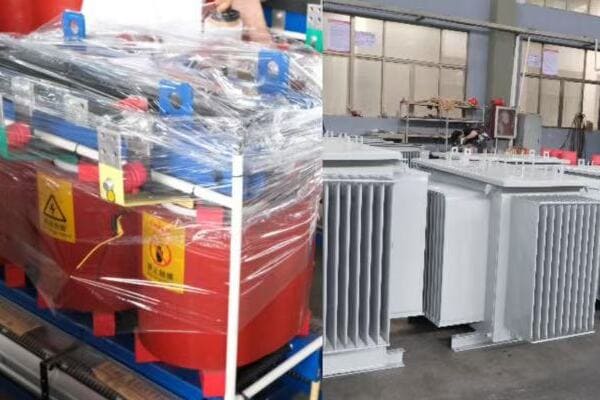
Are you struggling to choose between an oil immersed transformer and a dry type for your project? You’re not alone. Many engineers and project managers find this decision challenging. But don’t worry, I’m here to help you make the right choice.
The choice between oil immersed and dry type transformers depends on factors like installation location, maintenance requirements, fire safety, and cost. Oil immersed transformers are often more efficient and cost-effective for outdoor and high-capacity applications, while dry types excel in indoor and environmentally sensitive locations.
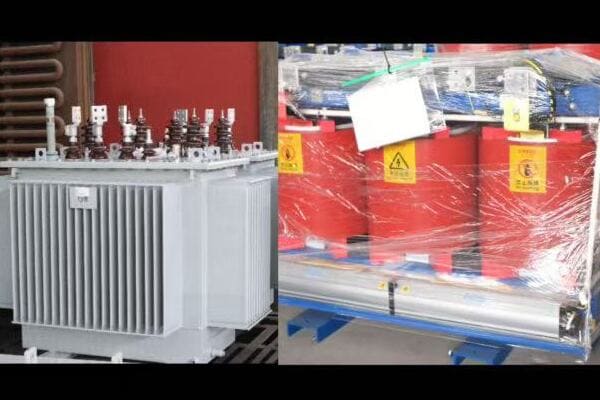
As someone who has worked with both types of transformers for years, I’ve seen the pros and cons of each in various applications. In this article, I’ll break down the key differences and help you determine which type is best for your specific needs. Let’s dive in and explore the world of transformers!
Transformer Showdown: The Oil Swimmer vs. The Air Breather – Which One Wins?
Have you ever wondered why some transformers are filled with oil while others aren’t? It’s not just a random choice. Each type has its own strengths and weaknesses. But which one comes out on top?
Oil immersed transformers excel in cooling efficiency and high-voltage applications, making them ideal for outdoor and high-capacity use. Dry type transformers, on the other hand, offer better fire safety and lower maintenance, making them perfect for indoor and environmentally sensitive locations. The winner depends on your specific project requirements.
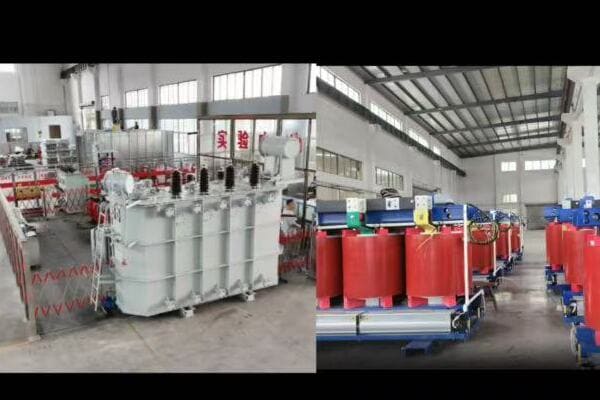
I remember a project where we had to replace an oil immersed transformer with a dry type due to new fire safety regulations. It was a complex process, but it taught me a lot about the differences between these two types. Let’s break down the key features of each.
The Oil Swimmer: Oil Immersed Transformers
Oil immersed transformers use mineral oil as both an insulator and a coolant. Here’s why they’re often chosen:
- Superior Cooling: The oil efficiently dissipates heat, allowing for higher capacities.
- Better Insulation: Oil provides excellent electrical insulation, enabling higher voltage ratings.
- Longer Lifespan: With proper maintenance, oil transformers can last 30-40 years or more.
- Cost-Effective: Generally cheaper for higher capacities (above 500 kVA).
However, they do have some drawbacks:
- Fire Risk: The oil can be flammable, requiring additional fire safety measures.
- Environmental Concerns: Oil leaks can cause environmental damage.
- Maintenance: Regular oil testing and potential oil changes are necessary.
The Air Breather: Dry Type Transformers
Dry type transformers use air and solid insulation materials instead of oil. Here’s why they’re gaining popularity:
- Fire Safety: With no flammable oil, they’re safer for indoor use.
- Environmentally Friendly: No risk of oil leaks or spills.
- Lower Maintenance: No oil to monitor or replace.
- Compact Size: Often smaller and lighter than equivalent oil immersed units.
But they’re not without disadvantages:
- Limited Capacity: Generally less efficient for very high capacities.
- Higher Initial Cost: Often more expensive for larger sizes.
- Noise: Can be noisier than oil immersed transformers.
- Sensitivity to Environment: Performance can be affected by humid or dirty conditions.
Comparing Performance
Let’s look at how these two types stack up in key areas:
| Feature | Oil Immersed | Dry Type |
|---|---|---|
| Cooling Efficiency | High | Moderate |
| Voltage Range | Up to 765 kV | Up to 35 kV (typically) |
| Fire Safety | Lower | Higher |
| Maintenance | Higher | Lower |
| Lifespan | 30-40+ years | 20-30 years |
| Environmental Impact | Higher risk | Lower risk |
| Noise Level | Lower | Higher |
| Initial Cost (>500 kVA) | Lower | Higher |
I once worked on a project where we needed to install a 2000 kVA transformer in a densely populated area. We initially considered a dry type for its fire safety advantages, but after a thorough analysis, we opted for an oil immersed unit with enhanced fire protection. The improved efficiency and lower cost outweighed the additional fire safety measures we had to implement.
In the end, the choice between oil immersed and dry type transformers isn’t about which one is universally better. It’s about which one is better for your specific application. Consider your project’s requirements carefully – location, capacity needs, safety regulations, and budget – to make the best choice.
Location, Location, Location: Picking the Perfect Home for Your Transformer?
Have you ever tried to fit a square peg in a round hole? Choosing the wrong type of transformer for your location can feel just as frustrating. But how do you know which transformer belongs where?
The location of your transformer installation is crucial in deciding between oil immersed and dry types. Oil immersed transformers are typically better for outdoor, industrial, or high-capacity settings, while dry types excel in indoor, urban, or environmentally sensitive areas. The right choice depends on factors like space, environment, and local regulations.
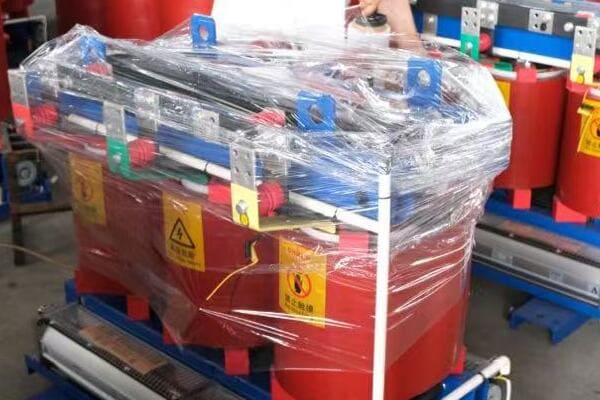
I once had a client who insisted on installing an oil immersed transformer in the basement of a high-rise building. After explaining the fire risks and local regulations, we switched to a dry type. Let’s explore how location impacts your transformer choice.
Outdoor Locations: The Domain of Oil Immersed Transformers
Oil immersed transformers often reign supreme in outdoor settings. Here’s why:
- Weather Resistance: The oil-filled tank provides excellent protection against the elements.
- Cooling Efficiency: Natural air circulation around the unit aids in cooling.
- High Capacity: Ideal for substations and industrial applications requiring large transformers.
- Cost-Effective: More economical for high-power applications in open areas.
However, outdoor oil transformers require:
- Oil Containment: Measures to prevent environmental contamination in case of leaks.
- Security: Fencing or enclosures to prevent unauthorized access.
- Fire Safety: Adequate spacing from buildings and fire suppression systems.
Indoor Locations: Where Dry Types Shine
Dry type transformers are often the go-to choice for indoor installations. Here’s why:
- Fire Safety: Reduced fire risk makes them suitable for buildings and populated areas.
- Compact Size: Often smaller footprint, ideal for space-constrained areas.
- Clean Operation: No oil means no risk of spills or leaks.
- Quiet Operation: Important for office buildings, hospitals, and residential areas.
But indoor installations of dry types need:
- Ventilation: Adequate airflow to dissipate heat.
- Environmental Control: Protection from excessive dust or humidity.
- Noise Consideration: Acoustic treatments may be necessary in quiet areas.
Location-Specific Considerations
Let’s break down some specific location types and their typical transformer choices:
| Location Type | Recommended Transformer | Key Reasons |
|---|---|---|
| Outdoor Substation | Oil Immersed | High capacity, cost-effective |
| Office Building | Dry Type | Fire safety, clean operation |
| Industrial Plant | Oil Immersed (outdoor) / Dry Type (indoor) | Depends on specific area and capacity |
| Hospital | Dry Type | Reliability, fire safety |
| Shopping Mall | Dry Type | Fire safety, public proximity |
| Wind Farm | Oil Immersed | High capacity, outdoor setting |
I remember a project at a data center where we initially planned to use oil immersed transformers for their efficiency. However, the fire marshal required dry types due to the critical nature of the facility and the high value of the equipment inside. It was a classic case of regulations trumping pure performance considerations.
Environmental Factors
Your location’s environment plays a big role in transformer selection:
- Temperature: Extreme heat or cold can affect both types differently. Oil immersed types generally handle temperature extremes better.
- Humidity: High humidity can be problematic for dry types, potentially requiring special enclosures or dehumidifiers.
- Altitude: High altitudes may require derating of transformers due to reduced cooling efficiency.
- Seismic Activity: Areas prone to earthquakes may require special mounting for both types, but oil types need extra precautions due to potential oil spills.
Regulatory Considerations
Local regulations can often be the deciding factor:
- Fire Codes: Many urban areas restrict or prohibit oil-filled transformers in buildings.
- Environmental Regulations: Some locations have strict rules about oil-containing equipment, favoring dry types.
- Noise Ordinances: In residential areas, the lower noise levels of oil types might be preferred.
Choosing the right location for your transformer – or the right transformer for your location – is crucial for safety, efficiency, and compliance. Always consider the specific needs of your site, consult local regulations, and don’t hesitate to seek expert advice. Remember, the perfect home for your transformer is one where it can operate safely, efficiently, and in harmony with its surroundings.
The Transformer Health Plan: Comparing Care and Safety for Oil and Dry Types?
Have you ever skipped a doctor’s appointment thinking you’re perfectly healthy, only to regret it later? Transformers, like our health, need regular check-ups and care. But do oil immersed and dry type transformers need the same kind of attention?
Oil immersed transformers typically require more frequent and complex maintenance, including regular oil testing and potential oil changes. Dry type transformers, while generally lower maintenance, still need periodic inspections and cleaning. Safety considerations also differ, with oil types posing fire risks and dry types excelling in fire-sensitive areas.
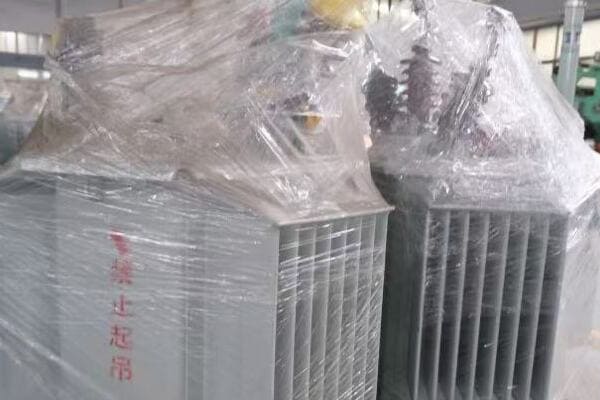
I once worked with a client who chose a dry type transformer thinking it was "maintenance-free." They learned the hard way that all transformers need care. Let’s dive into the health and safety plans for both types.
Oil Immersed Transformers: The High-Maintenance Performer
Oil immersed transformers are like high-performance athletes. They can do amazing things, but they need constant care. Here’s what their health plan looks like:
-
Regular Oil Testing:
- Frequency: Typically annually, but can be more frequent for critical applications.
- Purpose: Check for contaminants, moisture, and signs of degradation.
-
Oil Filtering or Replacement:
- Frequency: As needed, based on oil test results.
- Purpose: Maintain insulating and cooling properties of the oil.
-
Bushing Inspections:
- Frequency: Annually
- Purpose: Check for cracks, contamination, or other damage.
-
Cooling System Checks:
- Frequency: Quarterly to annually
- Purpose: Ensure fans, pumps, and radiators are functioning properly.
-
Leak Checks:
- Frequency: During every inspection
- Purpose: Prevent oil loss and environmental contamination.
Safety Considerations for Oil Types:
- Fire Risk: Oil can be flammable, requiring fire suppression systems.
- Environmental Hazard: Oil spills can cause significant environmental damage.
- Electrical Safety: High voltage requires strict safety protocols during maintenance.
I remember a case where routine oil testing revealed early signs of internal arcing in a large substation transformer. We were able to schedule a repair during a planned outage, potentially saving millions in unplanned downtime and equipment damage.
Dry Type Transformers: The Low-Maintenance Reliable
Dry type transformers are more like the steady jogger – they might not have the peak performance of the athlete, but they’re reliable and need less intensive care:
-
Visual Inspections:
- Frequency: Annually
- Purpose: Check for dust accumulation, signs of overheating, or physical damage.
-
Cleaning:
- Frequency: As needed, typically annually
- Purpose: Remove dust and debris that can impair cooling.
-
Insulation Resistance Tests:
- Frequency: Every 1-3 years
- Purpose: Ensure insulation integrity.
-
Ventilation System Checks:
- Frequency: Annually
- Purpose: Ensure proper airflow for cooling.
-
Tightness Checks on Connections:
- Frequency: Annually
- Purpose: Prevent loose connections that can cause overheating.
Safety Considerations for Dry Types:
- Fire Safety: Inherently safer due to the absence of flammable oil.
- Environmental Safety: No risk of oil spills or contamination.
- Enclosed Design: Less risk of accidental contact with live parts.
I once consulted on a hospital project where we used dry type transformers throughout the building. The reduced fire risk and lower maintenance needs were crucial for the 24/7 operation of the facility.
Comparing Maintenance and Safety
Let’s break down the key differences:
| Aspect | Oil Immersed | Dry Type |
|---|---|---|
| Maintenance Frequency | Higher | Lower |
| Complexity of Maintenance | Higher | Lower |
| Specialized Equipment Needed | Yes (for oil handling) | Minimal |
| Fire Safety Risk | Higher | Lower |
| Environmental Risk | Higher | Lower |
| Lifespan with Proper Maintenance | 30-40+ years | 20-30 years |
| Cost of Maintenance | Higher | Lower |
The Impact of Environment on Maintenance
The environment where your transformer is installed can significantly affect its maintenance needs:
-
Outdoor Installations:
- Oil Types: May need more frequent inspections for leaks and weathering.
- Dry Types: May require special enclosures to protect from moisture and contaminants.
-
Dusty Environments:
- Oil Types: Oil can trap dust, requiring more frequent oil changes.
- Dry Types: Need more frequent cleaning to prevent overheating.
-
Humid Areas:
- Oil Types: More frequent oil tests to check for moisture ingress.
- Dry Types: May require dehumidifiers or special coatings to protect insulation.
-
Coastal Regions:
- Both Types: Need corrosion-resistant materials and more frequent inspections for salt damage.
Choosing between oil immersed and dry type transformers isn’t just about performance – it’s about committing to a long-term health and safety plan. Consider your available resources for maintenance, your environment, and your safety requirements. Remember, a well-maintained transformer of either type will always outperform a neglected one. Invest in your transformer’s health, and it will reward you with years of reliable service.
Penny-Wise or Power-Smart? Weighing the Costs of Oily and Oil-Free Transformers?
Have you ever been tempted to buy the cheapest option, only to regret it when the bills start piling up? When it comes to transformers, the initial price tag doesn’t tell the whole story. But how do you know if you’re being penny-wise or pound-foolish?
The cost comparison between oil immersed and dry type transformers goes beyond initial purchase price. While oil types are often cheaper upfront for larger capacities, dry types can be more economical in the long run due to lower maintenance costs and longer lifespans in certain environments. The total cost of ownership depends on factors like capacity, location, and operational requirements.
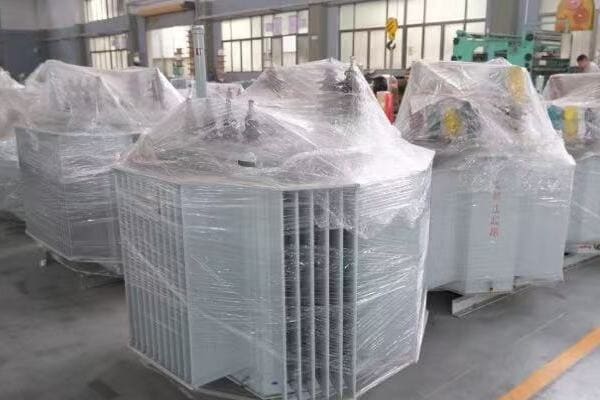
I once had a client who chose an oil immersed transformer solely based on its lower upfront cost. Two years later, they were spending more on maintenance than they saved initially. Let’s break down the real costs of both types.
Initial Costs: The Tip of the Iceberg
When it comes to upfront costs, here’s how oil and dry types generally compare:
-
Oil Immersed Transformers:
- Lower initial cost for high capacities (typically above 500 kVA)
- Cost includes the transformer unit, oil, and often a containment system
-
Dry Type Transformers:
- Lower initial cost for smaller capacities
- Higher cost for larger units due to more expensive insulation materials
But initial cost is just the beginning. Let’s look at a simplified cost breakdown:
| Capacity | Oil Immersed Cost | Dry Type Cost |
|---|---|---|
| 100 kVA | $$ | $$ |
| 500 kVA | $$ | $$$ |
| 2000 kVA | $$$ | $$$$ |
Note: ‘$’ symbols represent relative costs, not actual prices which can vary significantly based on specifications and market conditions.
Installation Costs: Setting the Stage
Installation costs can vary significantly between oil and dry types:
-
Oil Immersed Transformers:
- Higher installation costs due to:
- Need for oil containment systems
- Fire suppression equipment
- Larger footprint requiring more space
- Higher installation costs due to:
-
Dry Type Transformers:
- Generally lower installation costs due to:
- No need for oil containment
- Simpler fire safety requirements
- Often smaller and lighter, easier to transport and position
- Generally lower installation costs due to:
I remember a project where we installed a 1500 kVA transformer in a urban substation. The oil immersed option seemed cheaper initially, but once we factored in the cost of the containment system and additional fire safety measures, the dry type became more economical.
Operational Costs: The Long Game
This is where the real cost differences start to show:
-
Energy Efficiency:
- Oil Immersed: Generally more efficient, especially at higher capacities
- Dry Type: Can be less efficient, leading to higher energy costs over time
-
Cooling Costs:
- Oil Immersed: Natural cooling is often sufficient, lower cooling costs
- Dry Type: May require forced air cooling, increasing operational costs
-
Maintenance Costs:
- Oil Immersed: Higher due to regular oil testing, filtering, and potential replacement
- Dry Type: Lower, mainly requiring periodic cleaning and inspections
Let’s break down the annual operational costs for a 1000 kVA transformer:
| Cost Factor | Oil Immersed | Dry Type |
|---|---|---|
| Energy Losses | $2,000 | $2,500 |
| Cooling | $500 | $1,000 |
| Maintenance | $1,500 | $500 |
| Total Annual | $4,000 | $4,000 |
Note: These figures are illustrative and can vary based on specific circumstances and energy costs.
Lifespan and Replacement Costs
The longevity of your transformer affects its overall cost:
-
Oil Immersed Transformers:
- Typical lifespan: 30-40 years or more with proper maintenance
- Potential for life extension through oil regeneration
-
Dry Type Transformers:
- Typical lifespan: 20-30 years
- Less potential for life extension, often requiring full replacement
I once worked with a utility company that was still operating 50-year-old oil immersed transformers. The ongoing maintenance costs were high, but still less than replacing them with new units.
Environmental and Safety Costs
These are often overlooked but can be significant:
-
Oil Immersed Transformers:
- Potential environmental cleanup costs in case of oil leaks
- Higher insurance premiums due to fire risk
- Costs associated with meeting stringent environmental regulations
-
Dry Type Transformers:
- Lower environmental risk
- Potentially lower insurance costs
- Easier compliance with environmental regulations
Total Cost of Ownership: Putting It All Together
To truly compare costs, we need to look at the total cost of ownership (TCO) over the transformer’s lifetime. Here’s a simplified example for a 1000 kVA transformer over 30 years:
| Cost Factor | Oil Immersed | Dry Type |
|---|---|---|
| Initial Purchase | $50,000 | $60,000 |
| Installation | $15,000 | $10,000 |
| Energy Losses (30 years) | $60,000 | $75,000 |
| Maintenance (30 years) | $45,000 | $15,000 |
| End-of-Life Disposal | $5,000 | $2,000 |
| Total 30-Year Cost | $175,000 | $162,000 |
This example shows how a dry type transformer, despite higher initial costs, can be more economical over its lifetime in certain scenarios.
Factors Influencing Cost-Effectiveness
The most cost-effective choice depends on several factors:
- Capacity: Oil immersed tends to be more cost-effective at higher capacities
- Location: Indoor or environmentally sensitive areas may favor dry types despite higher costs
- Duty Cycle: Continuously loaded transformers may benefit from oil immersed efficiency
- Environmental Regulations: Stricter rules can make dry types more economical
- Maintenance Resources: Available expertise for oil maintenance can influence the choice
I once advised a data center on their transformer choice. Despite the higher upfront cost, we went with dry types. The reduced fire risk and lower maintenance needs in their 24/7 operation made it the more cost-effective choice in the long run.
Choosing between oil immersed and dry type transformers isn’t just about being penny-wise. It’s about being power-smart. Consider all aspects of cost – initial, operational, maintenance, and potential risks. Sometimes, spending more upfront can lead to significant savings over the transformer’s lifetime. Always consider your specific needs, location, and resources when making this important decision.
Green Giants: How Oil and Dry Transformers Stack Up in the Eco-Friendly Race?
Are you concerned about the environmental impact of your electrical systems? You’re not alone. As the world becomes more eco-conscious, the environmental footprint of transformers is under increasing scrutiny. But which type – oil immersed or dry – is the true green giant?
Both oil immersed and dry type transformers have environmental pros and cons. Oil types are often more energy-efficient but pose risks of oil leaks and spills. Dry types eliminate oil-related environmental hazards but may be less efficient. The most eco-friendly choice depends on factors like location, maintenance practices, and end-of-life considerations.
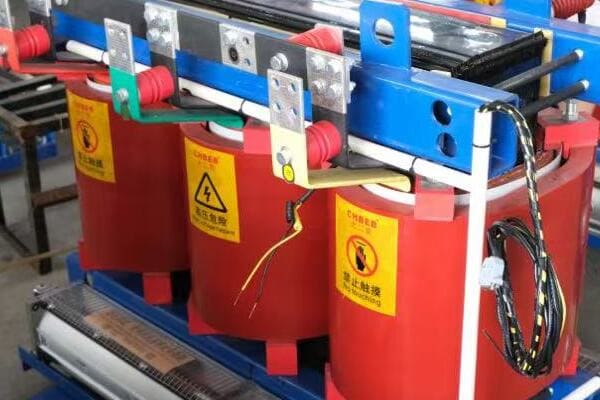
I once worked on a project near a protected wetland area. The choice between oil and dry type transformers became a heated debate about environmental responsibility. Let’s dive into how these two types stack up in the eco-friendly race.
The Environmental Profile of Oil Immersed Transformers
Oil immersed transformers have been the workhorses of the electrical grid for decades. But how do they fare in terms of environmental impact?
Pros:
- Energy Efficiency: Generally more efficient, especially at higher capacities, leading to lower energy losses and reduced carbon footprint.
- Longevity: Longer lifespan (30-40+ years) means less frequent replacement and less manufacturing impact.
- Recyclability: Many components, including the oil, can be recycled or regenerated.
Cons:
- Oil Spill Risk: Potential for environmental contamination if oil leaks occur.
- Fire Hazard: Oil can be flammable, posing risks to surrounding ecosystems in case of fire.
- Maintenance Impact: Regular oil testing and replacement can have environmental costs.
I remember a case where an old oil transformer leaked near a river. The cleanup operation was extensive and costly, serving as a stark reminder of the potential environmental risks.
The Green Credentials of Dry Type Transformers
Dry type transformers are often touted as the more environmentally friendly option. But are they really?
Pros:
- No Oil, No Spills: Eliminates the risk of oil leaks and associated environmental damage.
- Fire Safety: Lower fire risk means reduced potential for environmental damage from fires.
- Simpler Disposal: End-of-life disposal is generally simpler and more environmentally friendly.
Cons:
- Energy Efficiency: Often less efficient than oil types, especially in larger sizes, potentially leading to higher energy consumption and carbon footprint.
- Shorter Lifespan: Typically 20-30 years, meaning more frequent replacement and manufacturing impact.
- Material Intensity: May require more raw materials in manufacturing, especially for larger units.
During a project for a "green" office building, we chose dry type transformers despite their slightly lower efficiency. The reduced environmental risk was a key factor in achieving the building’s eco-certification.
Comparing Environmental Impacts
Let’s break down the environmental considerations:
| Factor | Oil Immersed | Dry Type |
|---|---|---|
| Energy Efficiency | Higher | Lower |
| Risk of Environmental Contamination | Higher | Lower |
| Fire Risk | Higher | Lower |
| Lifespan | Longer | Shorter |
| Recyclability | Good | Good |
| Raw Material Use in Manufacturing | Lower | Higher |
| End-of-Life Disposal Complexity | Higher | Lower |
The Role of Modern Technologies
Recent advancements are making both types of transformers more eco-friendly:
- Biodegradable Oils: New vegetable-based oils for oil immersed transformers reduce environmental risks.
- Advanced Insulation: Improvements in dry type insulation are increasing efficiency and lifespan.
- Smart Monitoring: Real-time monitoring helps prevent failures and environmental incidents in both types.
I recently worked on a project using oil immersed transformers with biodegradable oil. It offered the efficiency benefits of traditional oil types with significantly reduced environmental risks.
Location and Environmental Impact
The installation location plays a crucial role in environmental considerations:
- Environmentally Sensitive Areas: Dry types are often preferred near water bodies or protected ecosystems.
- Urban Environments: Dry types reduce fire risk and potential for oil contamination in densely populated areas.
- Industrial Zones: Oil types might be acceptable if proper containment measures are in place.
Lifecycle Assessment: A Holistic View
To truly compare the environmental impact, we need to consider the entire lifecycle:
-
Manufacturing:
- Oil Types: Lower material intensity but oil production has environmental costs.
- Dry Types: Higher material use but no oil production impact.
-
Transportation and Installation:
- Oil Types: Heavier, potentially higher transport emissions.
- Dry Types: Lighter, potentially lower transport emissions.
-
Operation:
- Oil Types: More efficient operation, lower energy-related emissions.
- Dry Types: Potentially higher operational emissions due to lower efficiency.
-
Maintenance:
- Oil Types: Regular oil maintenance has ongoing environmental impact.
- Dry Types: Lower maintenance-related environmental impact.
-
End-of-Life:
- Oil Types: Complexity in oil disposal, but many parts recyclable.
- Dry Types: Simpler disposal process, many parts recyclable.
Making the Eco-Friendly Choice
Choosing the most environmentally friendly transformer depends on your specific situation:
- Prioritize Efficiency: In areas where energy production is carbon-intensive, the higher efficiency of oil types might be the greener choice.
- Consider Location Risks: In environmentally sensitive areas, the reduced risk of contamination from dry types might outweigh efficiency concerns.
- Look at Longevity: A longer-lasting transformer means less frequent replacement and manufacturing impact.
- Evaluate Maintenance Capabilities: Proper maintenance of oil types can significantly reduce their environmental risks.
- Explore New Technologies: Consider biodegradable oils or high-efficiency dry types to get the best of both worlds.
In the race to be eco-friendly, there’s no clear winner between oil immersed and dry type transformers. Each has its strengths and weaknesses when it comes to environmental impact. The key is to carefully assess your specific needs, location, and priorities. By considering the full lifecycle impact and leveraging the latest technologies, you can make a choice that’s both environmentally responsible and suitable for your project.
Conclusion
Choosing between oil immersed and dry type transformers involves weighing various factors including location, maintenance needs, safety considerations, costs, and environmental impact. While oil types often excel in efficiency and cost-effectiveness for larger capacities, dry types offer advantages in safety and environmental protection. The best choice depends on your specific project requirements and priorities.
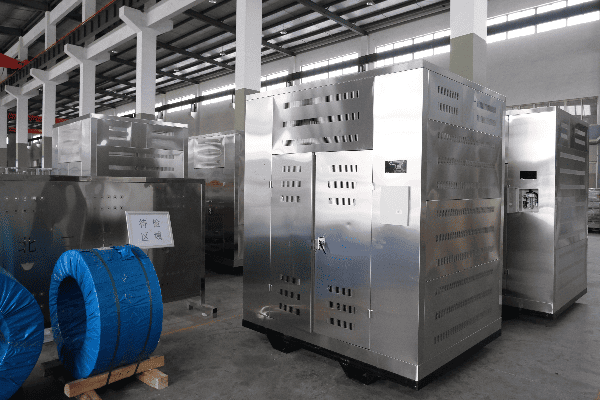
Are you curious about how we’re making renewable energy work with our existing power grids? The secret lies in a technology that’s been around for decades: power transformers. But how exactly do these devices help us harness the power of the sun and wind?
Power transformers play a crucial role in integrating renewable energy sources into existing power grids. They facilitate voltage transformation, improve power quality, mitigate intermittency issues, and enable long-distance transmission of renewable energy. This makes them essential for creating a sustainable and efficient energy infrastructure.
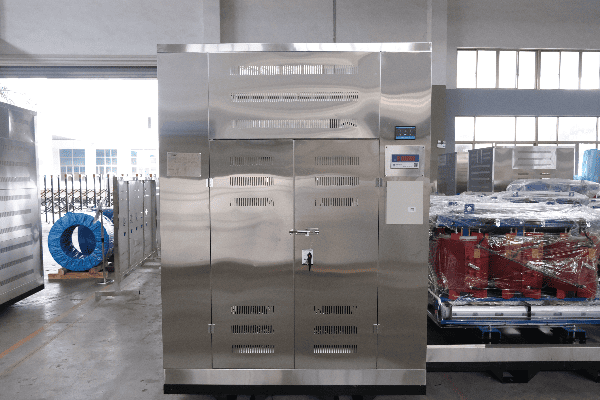
As someone who’s worked in the power industry for years, I’ve seen firsthand how transformers are adapting to the renewable energy revolution. Let’s dive into the fascinating world of power transformers and their role in our green energy future.
Voltage Transformation for Grid Compatibility: How Do Transformers Make Renewable Energy Play Nice with the Grid?
Have you ever tried to plug a European appliance into an American outlet? It doesn’t work without an adapter, right? Well, renewable energy sources face a similar challenge when connecting to the grid.
Power transformers act as the ‘adapters’ for renewable energy sources, converting the voltage from solar panels or wind turbines to match the grid’s requirements. This voltage transformation ensures that renewable energy can be seamlessly integrated into the existing power infrastructure without causing disruptions or damage.
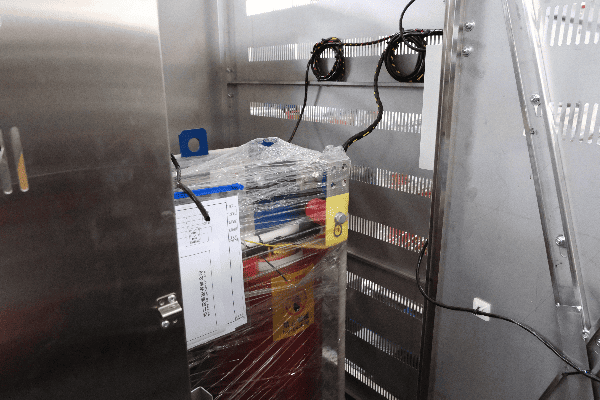
I remember working on a project to connect a large solar farm to the local grid. The mismatch in voltage levels was a significant challenge until we installed the right transformers. Let’s explore how these devices make renewable energy grid-compatible.
The Voltage Mismatch Challenge
Renewable energy sources often generate power at voltages that don’t match the grid:
- Solar Panels: Typically produce DC power at low voltages
- Wind Turbines: Generate AC power, but at variable frequencies and voltages
- Grid Requirements: Need stable AC power at specific voltage levels
How Transformers Bridge the Gap
Power transformers solve this mismatch in several ways:
- Step-Up Transformation: Increase voltage from renewable sources for efficient transmission
- Frequency Synchronization: Ensure the power frequency matches the grid (usually 50 or 60 Hz)
- Voltage Regulation: Maintain stable voltage levels despite fluctuations in renewable energy output
Here’s a simple comparison of voltage levels:
| Source | Typical Output | Grid Requirement | Transformer Action |
|---|---|---|---|
| Solar Farm | 1,000 V DC | 69,000 V AC | Step-up & Convert to AC |
| Wind Farm | 690 V AC | 138,000 V AC | Step-up |
| Grid Distribution | 138,000 V AC | 13,800 V AC | Step-down |
I once worked on integrating a wind farm where the transformers not only stepped up the voltage but also helped smooth out the power fluctuations caused by changing wind speeds. It was like watching a conductor harmonize an entire orchestra of renewable energy.
Power transformers are the unsung heroes making renewable energy speak the same language as our existing grid. They’re the key to unlocking the full potential of green energy sources and paving the way for a more sustainable future.
Power Quality Improvement: How Do Transformers Keep Our Renewable Energy Clean and Stable?
Have you ever experienced flickering lights or appliances suddenly shutting off? These are signs of poor power quality, and with renewable energy, maintaining good power quality can be quite a challenge. But fear not, power transformers are here to save the day!
Power transformers play a crucial role in improving and maintaining power quality from renewable sources. They help regulate voltage levels, reduce harmonics, and balance loads, ensuring that the electricity from solar panels and wind turbines is clean, stable, and compatible with our sensitive electronic devices.
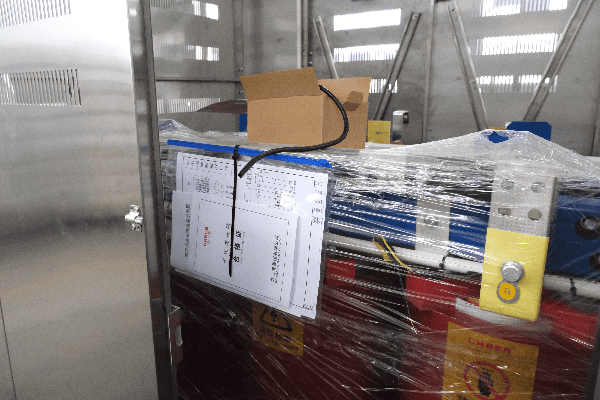
I once worked on a project where poor power quality from a solar farm was causing issues for a nearby factory. After installing advanced transformers with power quality improvement features, the problems disappeared. Let’s dive into how transformers keep our renewable energy clean and stable.
The Power Quality Challenge with Renewables
Renewable energy sources can introduce several power quality issues:
- Voltage Fluctuations: Due to varying sunlight or wind conditions
- Harmonics: Caused by inverters in solar systems
- Frequency Variations: Especially in small-scale wind turbines
- Reactive Power Imbalances: Can lead to inefficiencies and instability
How Transformers Improve Power Quality
Modern power transformers come equipped with various features to address these issues:
- On-Load Tap Changers (OLTC): Adjust voltage levels in real-time
- Harmonic Filters: Reduce distortions in the power waveform
- Phase Shifting: Balance loads across different phases
- Reactive Power Compensation: Improve power factor and stability
Here’s a comparison of power quality parameters before and after transformer intervention:
| Parameter | Before Transformer | After Transformer | Improvement |
|---|---|---|---|
| Voltage Fluctuation | ±10% | ±2% | 80% reduction |
| Total Harmonic Distortion | 8% | 3% | 62.5% reduction |
| Power Factor | 0.85 | 0.98 | 15.3% increase |
I remember a case where we installed a transformer with advanced harmonic mitigation at a large solar farm. The local utility was amazed at the clean power output, which was indistinguishable from conventional sources.
Power transformers are like the quality control managers of our electrical grid. They ensure that the renewable energy we produce is of the highest quality, ready to power our homes and businesses without a hitch. As we continue to increase our reliance on renewable sources, the role of these transformers in maintaining power quality will only become more critical.
Mitigation of Intermittency Issues: How Do Transformers Smooth Out the Ups and Downs of Renewable Energy?
Have you ever noticed how the sun doesn’t always shine and the wind doesn’t always blow? This variability is one of the biggest challenges in renewable energy. But guess what? Power transformers are stepping up to tackle this issue too!
Power transformers play a crucial role in mitigating the intermittency issues of renewable energy sources. They work in conjunction with energy storage systems, smart grid technologies, and advanced control systems to smooth out power fluctuations, ensuring a stable and reliable supply of electricity even when renewable sources are variable.
I once worked on a microgrid project that combined solar power with battery storage. The transformer we used was the key to managing the flow of power between the solar panels, batteries, and the local grid. Let’s explore how transformers help smooth out the renewable energy roller coaster.
The Intermittency Challenge
Renewable energy sources face several intermittency challenges:
- Daily Cycles: Solar power only available during daylight hours
- Weather Dependence: Cloud cover or low wind speeds can reduce output
- Seasonal Variations: Solar and wind output can vary significantly across seasons
- Rapid Fluctuations: Sudden changes in weather can cause quick drops or spikes in power
How Transformers Help Smooth the Ride
Modern transformers use several techniques to mitigate intermittency:
- Load Tap Changers: Adjust voltage levels to match varying input from renewables
- Integration with Energy Storage: Work with batteries to store excess power and release it when needed
- Smart Grid Communication: Coordinate with other grid components to balance supply and demand
- Reactive Power Management: Maintain grid stability during fluctuations
Here’s a look at how a transformer-managed system handles intermittency:
| Time | Solar Output | Battery State | Transformer Action |
|---|---|---|---|
| Noon | High | Charging | Step-down voltage, charge batteries |
| Evening | Low | Discharging | Step-up voltage from batteries |
| Cloudy Day | Variable | Balancing | Rapid adjustments to maintain stable output |
I remember a particularly cloudy week at a solar farm I was monitoring. The advanced transformer system, working in tandem with battery storage, managed to maintain a steady power output despite the challenging conditions. It was like watching a skilled juggler keeping multiple balls in the air.
Power transformers are the unsung heroes in the fight against renewable energy intermittency. They’re the steady hand that smooths out the natural ups and downs of solar and wind power, ensuring that our lights stay on and our devices keep running, regardless of what’s happening outside.
Enabling Long-Distance Power Transmission: How Do Transformers Help Renewable Energy Go the Distance?
Have you ever wondered how electricity from a wind farm in the middle of nowhere reaches bustling cities hundreds of miles away? The answer lies in the magic of power transformers and their ability to enable long-distance power transmission.
Power transformers are crucial in enabling long-distance transmission of renewable energy. They step up the voltage for efficient long-distance travel, reducing power losses along the way. This allows renewable energy sources, often located far from population centers, to effectively contribute to the grid and power our cities.
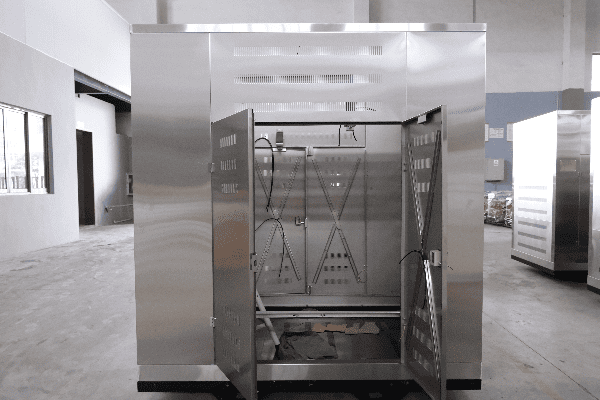
I once worked on a project connecting an offshore wind farm to a city 200 miles away. The massive transformers we used were the key to making this long-distance relationship work. Let’s dive into how transformers help renewable energy go the distance.
The Long-Distance Challenge
Renewable energy sources often face geographical challenges:
- Remote Locations: Best wind and solar sites are often far from cities
- Power Losses: Electricity loses energy as it travels along wires
- Voltage Drop: Voltage decreases over long distances
- Grid Stability: Maintaining stable power over long distances is complex
How Transformers Bridge the Gap
Transformers use several techniques to enable long-distance transmission:
- Step-Up Transformation: Increase voltage for efficient transmission
- HVDC Conversion: Some systems use High Voltage Direct Current for very long distances
- Reactive Power Compensation: Maintain voltage levels over long distances
- Intelligent Monitoring: Real-time adjustments to maintain efficiency
Here’s a simplified look at voltage levels in long-distance transmission:
| Stage | Location | Voltage Level | Transformer Action |
|---|---|---|---|
| Generation | Wind Farm | 690 V | Step-up to 400 kV |
| Transmission | Power Lines | 400 kV | Maintain high voltage |
| Distribution | Substation | 400 kV to 11 kV | Step-down for local use |
I remember standing next to a massive transformer at a coastal substation, watching it effortlessly handle the power from an offshore wind farm. It was stepping up the voltage from 33 kV to 400 kV, preparing the electricity for its long journey to the city.
Power transformers are like the long-distance runners of the electrical world. They take renewable energy from remote locations and carry it efficiently across vast distances to where it’s needed most. Without them, much of our renewable energy potential would remain untapped, too far from the urban centers that need it most.
Conclusion
Power transformers are the unsung heroes of renewable energy integration. From making solar and wind power compatible with our grids to ensuring its quality, smoothing out its variability, and carrying it across vast distances, transformers are essential at every step. As we continue to shift towards a greener energy future, the role of these remarkable devices will only grow in importance. The next time you switch on a light powered by renewable energy, remember the intricate dance of electrons made possible by power transformers.
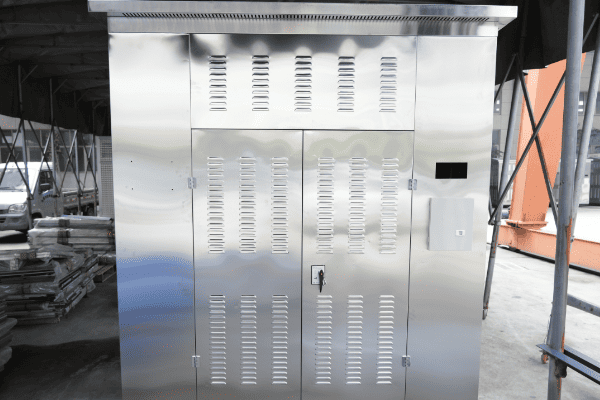
Are you puzzled about the role of power transformers in our electrical systems? You’re not alone. Many people don’t realize how crucial these devices are in keeping our lights on and our devices running.
Power transformers are essential components in electrical systems, enabling efficient transmission and distribution of electrical energy over long distances. They convert high voltage to low voltage, ensuring that electricity can be safely delivered from power plants to homes and businesses.
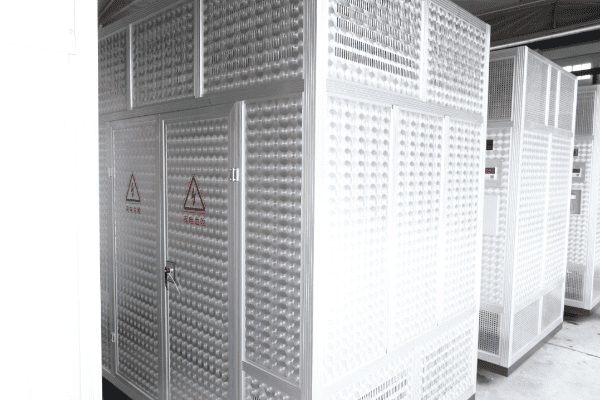
As someone who has worked with power systems for years, I’ve seen firsthand how vital these transformers are. They’re the unsung heroes of our electrical grid. Let’s dive into the world of power transformers and discover why they’re so important.
What Is a Power Transformer?
Have you ever wondered how electricity from a power plant miles away reaches your home safely? The answer lies in power transformers.
A power transformer is a critical component in electrical power distribution systems, designed to convert high voltage to low voltage for safe and efficient electricity distribution. By altering the voltage levels, power transformers ensure that electrical energy can be transmitted over long distances without significant losses and then distributed safely to homes, businesses, and industries.
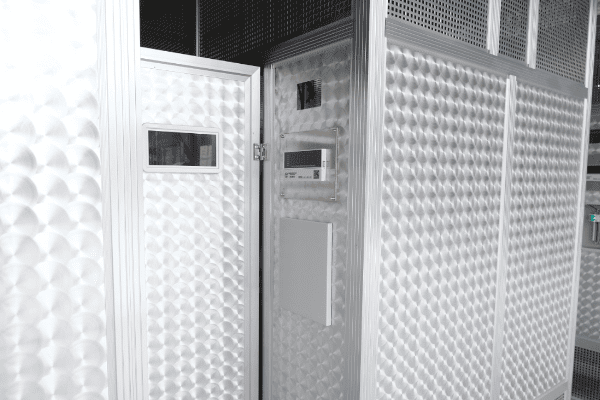
I remember the first time I saw a large power transformer up close. It was like looking at the heart of the electrical grid. Let’s break down how these amazing devices work.
How Power Transformers Work
Power transformers operate on a simple yet ingenious principle:
- Core Structure: Made of laminated silicon steel to minimize energy losses.
- Windings: Two main windings – primary and secondary.
- Electromagnetic Induction: The key to voltage transformation.
Here’s a simple equation that governs transformer operation:
[ \frac{V1}{V2} = \frac{N1}{N2} ]
Where:
- V1 and V2 are the primary and secondary voltages
- N1 and N2 are the number of turns in the primary and secondary windings
I once explained this to a group of students using a simple analogy: imagine the transformer as a gear system, where the number of teeth on each gear represents the number of windings. The ratio of these "teeth" determines how the "speed" (voltage) changes.
Applications of Power Transformers
Power transformers are used in various settings:
- Power Generation Plants: Step-up transformers increase voltage for transmission.
- Substations: Step-down transformers reduce voltage for local distribution.
- Industrial Equipment: Ensure machinery receives appropriate voltage.
I once worked on a project to upgrade a substation. The new transformers we installed were able to handle higher loads more efficiently, improving power delivery to an entire neighborhood.
Types of Transformers
Not all transformers are created equal. Each type has its own special role in the electrical system. Let’s explore the main types you’ll encounter.
Transformers come in various types, each designed for specific requirements. The main types include step-up transformers for increasing voltage, step-down transformers for decreasing voltage, and current transformers for measurement and protection.
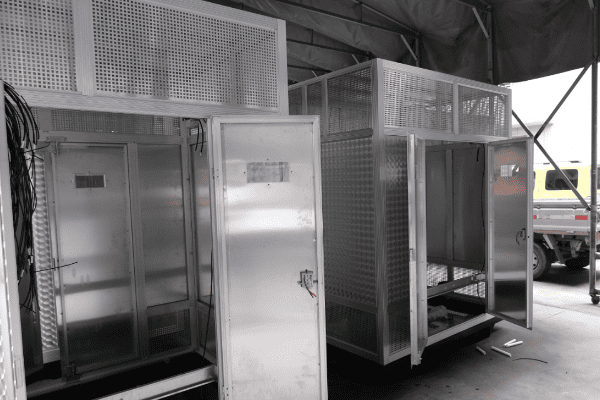
In my career, I’ve worked with all these types. Each has its own quirks and challenges. Let’s dive into the details.
Step-Up Transformers
These are the powerhouses of the transmission world:
- Purpose: Increase voltage for long-distance transmission
- Location: Typically found at power generation plants
- Example: Boosting 11 kV to 132 kV or higher
I once visited a power plant where the step-up transformers were as big as houses. The hum of electricity was almost palpable.
Step-Down Transformers
These bring power down to our level:
- Purpose: Decrease high transmission voltage to usable levels
- Location: Substations near residential and commercial areas
- Example: Reducing 132 kV to 11 kV or 230 V for household use
The step-down transformer in your neighborhood is what allows you to safely plug in your toaster without it exploding!
Current Transformers
These are the precision instruments of the transformer world:
- Purpose: Measure and monitor current in high-voltage systems
- Operation: Produce a proportional current for measurement devices
- Safety: Allow safe measurement of high currents
I once used a current transformer to diagnose a fault in a large industrial motor. It was like having a microscope for electricity.
Specialized Transformers
There are also more specialized types:
- Pad Mount Transformers: Often used in specific applications like bitcoin mining
- Single Phase vs. Three Phase: Designed for different power distribution systems
Each type of transformer plays a crucial role in our electrical infrastructure. They work together to ensure that power flows smoothly and safely from generation to consumption.
The Importance of Power Transformers in Electricity Distribution Systems
Have you ever thought about how electricity travels from a power plant to your home? It’s a journey made possible by power transformers.
Power transformers are critical for efficient and reliable electricity supply. They enable long-distance transmission by stepping up voltage at generation sites and stepping it down at distribution points. This process minimizes energy losses and ensures stable power delivery to consumers and businesses.
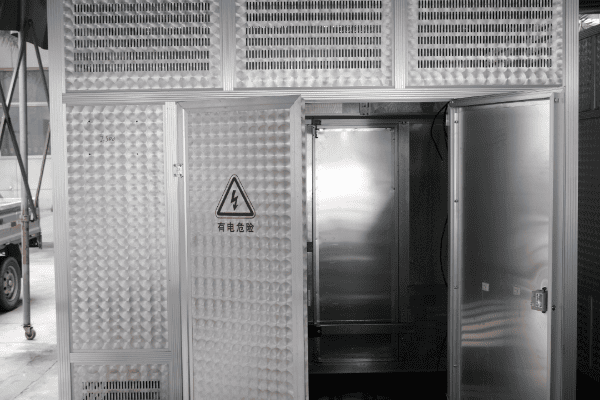
I once worked on a project to upgrade a city’s distribution system. The impact of new, more efficient transformers was remarkable. Let’s explore why these devices are so important.
Key Benefits of Power Transformers
-
Reduced Transmission Losses:
- High-voltage transmission significantly reduces power losses
- More efficient energy transport over long distances
-
Improved Voltage Stability:
- Maintain consistent voltage levels across the grid
- Prevent fluctuations that can damage equipment
-
Enhanced System Resilience:
- Isolate different sections of the grid
- Prevent localized issues from causing widespread outages
I remember a case where a faulty transformer was quickly isolated, preventing a small problem from becoming a citywide blackout. It was a testament to the importance of these devices in maintaining a stable grid.
Power transformers are more than just voltage converters. They’re the guardians of our electrical infrastructure, ensuring that power flows reliably and efficiently to where it’s needed most.
Power Transformers in the National Power Grid
Have you ever wondered how electricity from different power plants all works together in one big system? That’s where power transformers in the National Power Grid come in.
Power transformers play a crucial role in the National Power Grid by handling large-scale electrical power conversion. They ensure electricity can be efficiently and reliably transmitted over long distances, connecting different parts of the grid and maintaining system stability.
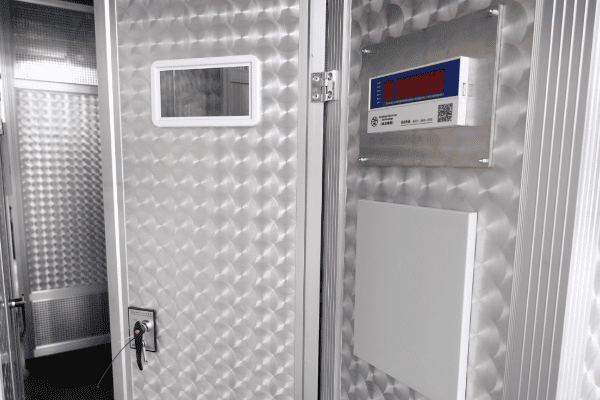
I once had the opportunity to visit a major grid control center. The complexity of managing power across an entire country was mind-boggling. Let’s break down the key functions of power transformers in this vast system.
Key Functions of Power Transformers in the Grid
-
Frequency Conversion:
- Allow different parts of the grid to connect smoothly
- Maintain stability and compatibility across regions
-
Voltage Regulation:
- Increase voltage for transmission, decrease for distribution
- Reduce energy losses and improve voltage stability
-
System Resilience:
- Strengthen the grid’s ability to withstand faults
- Help isolate problems and prevent widespread blackouts
I once worked on a project to interconnect two regional grids. The power transformers we used were crucial in harmonizing the different systems, ensuring a seamless flow of electricity across a vast area.
Power transformers are the backbone of our national electrical infrastructure. They handle the complexities of modern grids, ensuring that power flows smoothly and reliably across the entire country.
Innovations in Power Transformer Technology by Meta Power Solutions
Are you curious about the latest advancements in transformer technology? Meta Power Solutions is leading the way with some exciting innovations.
Meta Power Solutions has developed the Ester Oil-Immersed Power Transformer, a sustainable and high-performance solution for large-scale projects. This 750 kV transformer, showcased at CIGRE 2024, offers superior thermal performance, enhanced fire safety, and environmental compatibility, making it ideal for modern energy needs including renewable integration.
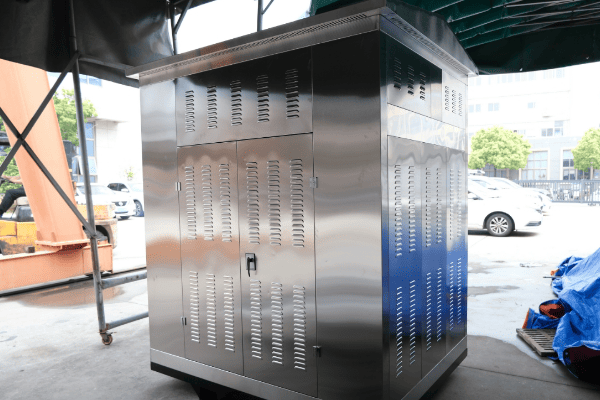
I recently had the chance to see this transformer in action, and I was impressed by its capabilities. Let’s explore what makes this technology so special.
Key Features and Benefits
-
Superior Thermal Performance:
- Uses ester oil with a higher flash point
- Operates efficiently under high load conditions
-
Fire Safety Properties:
- Less flammable than conventional insulating oils
- Enhances overall safety profile
-
Environmental Compatibility:
- Biodegradable and non-toxic ester oil
- Minimizes ecological impact
-
Renewable Energy Integration:
- Suited for solar and wind power systems
- Handles fluctuating inputs efficiently
I once worked on integrating a similar transformer into a large solar farm. The improved efficiency and environmental benefits were significant, showcasing the potential of this technology.
Meta Power Solutions is not just improving existing technology; they’re reimagining what’s possible in power transformation. Their innovations are setting new standards for efficiency, safety, and sustainability in the industry.
Conclusion
Power transformers are the unsung heroes of our electrical systems. From enabling long-distance transmission to ensuring safe voltage levels in our homes, they play a crucial role at every stage of electricity distribution. As technology advances, innovations like Meta Power Solutions’ Ester Oil-Immersed Transformer are making these essential devices even more efficient and environmentally friendly. The next time you flip a switch, remember the complex journey that electricity takes to reach you, all made possible by power transformers.
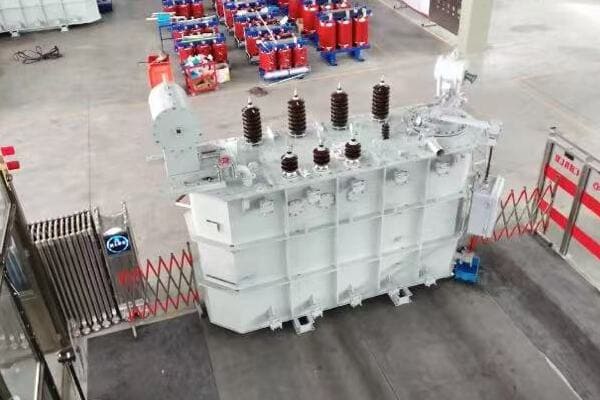
Are you puzzled about which oil immersed transformer to choose? You’re not alone. Many people find this decision overwhelming. But don’t worry, I’m here to guide you through the process.
Choosing the right oil immersed transformer involves considering several key factors. These include power capacity, voltage ratings, cooling efficiency, environmental impact, and longevity. The ideal transformer should meet your specific power needs while being efficient, environmentally friendly, and durable.
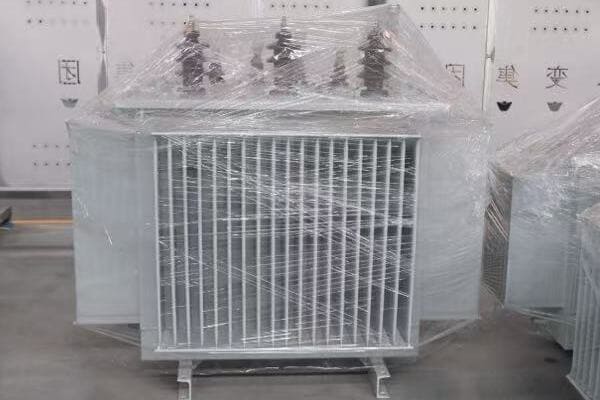
As someone who has worked with oil immersed transformers for years, I’ve seen how crucial this choice can be. The right transformer can save you money and headaches in the long run. Let’s dive into the key factors you need to consider when choosing your oil immersed transformer.
Transformer Spa Day: Why Do Some Transformers Love to Bathe in Oil?
Have you ever wondered why some transformers are always taking an oil bath? It’s not because they’re high-maintenance divas. There’s a good reason for their oil obsession.
Oil immersed transformers use oil for insulation and cooling. The oil helps dissipate heat, prevents arcing between components, and extends the transformer’s lifespan. This oil bath allows these transformers to handle higher voltages and larger loads more efficiently than their dry-type counterparts.
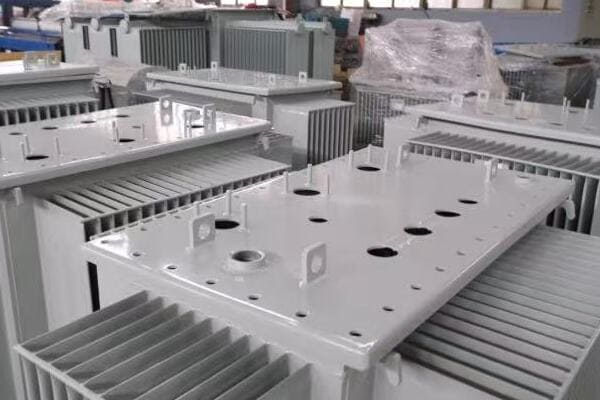
I remember the first time I saw the inside of an oil immersed transformer. It was like peeking into a high-tech aquarium. Let’s explore why these transformers love their oil so much.
The Magic of Transformer Oil
Transformer oil isn’t just any oil. It’s a special blend with unique properties:
- High Dielectric Strength: This means it’s great at insulating against electrical current.
- Excellent Heat Transfer: It helps move heat away from the transformer’s core and windings.
- Chemical Stability: It doesn’t break down easily under high temperatures and electrical stress.
Benefits of the Oil Bath
The oil in these transformers serves several crucial functions:
- Cooling: As the transformer heats up, the oil circulates, carrying heat away from vital components.
- Insulation: The oil prevents electrical arcing between parts at different voltages.
- Protection: It shields the internal components from moisture and oxygen, which can cause degradation.
Here’s a quick comparison of oil immersed vs. dry-type transformers:
| Feature | Oil Immersed | Dry-Type |
|---|---|---|
| Cooling Efficiency | High | Lower |
| Suitable for High Voltages | Yes | Limited |
| Size for Same Capacity | Smaller | Larger |
| Maintenance | Regular oil checks needed | Less maintenance |
| Indoor/Outdoor Use | Both (with proper housing) | Primarily indoor |
Types of Transformer Oils
Not all transformer oils are created equal:
- Mineral Oil: The most common type, derived from petroleum.
- Silicone Oil: Better fire resistance, but more expensive.
- Vegetable-based Oil: Biodegradable and environmentally friendly.
I once worked on a project where we switched from mineral oil to vegetable-based oil in a transformer near a sensitive ecological area. The improved environmental profile gave everyone peace of mind.
Maintenance of Oil Immersed Transformers
While oil immersed transformers have many benefits, they do require some special care:
- Regular Oil Testing: Checking for moisture, acidity, and dissolved gases.
- Oil Filtering: Removing contaminants to maintain oil quality.
- Oil Replacement: Sometimes necessary after many years of service.
Safety Considerations
Oil immersed transformers come with some unique safety considerations:
- Fire Risk: While rare, oil fires can be intense. Modern transformers use less flammable oils.
- Environmental Concerns: Proper containment is necessary to prevent oil leaks.
- Disposal: Used transformer oil must be disposed of properly.
I once dealt with a transformer oil leak at a substation. The cleanup was extensive, but it taught us valuable lessons about proper containment and maintenance.
Oil immersed transformers might seem like they’re just taking a perpetual bath, but that oil is working hard. It’s keeping the transformer cool, insulated, and protected. When choosing an oil immersed transformer, consider the type of oil, maintenance requirements, and safety factors. With proper care, these oil-loving transformers can provide reliable service for decades.
Size Matters: Finding the Goldilocks Zone for Your Oil-Loving Transformer?
Have you ever tried to squeeze into clothes that are too small? Or felt lost in an oversized jacket? Choosing the right size transformer is a bit like that. Too small, and it’ll be overworked and inefficient. Too big, and you’re wasting money and space.
Choosing the right size oil immersed transformer involves matching the kVA rating to your power needs. You need to consider current load requirements, potential future growth, peak demand, and efficiency at different load levels. The ideal size ensures optimal performance and cost-effectiveness.
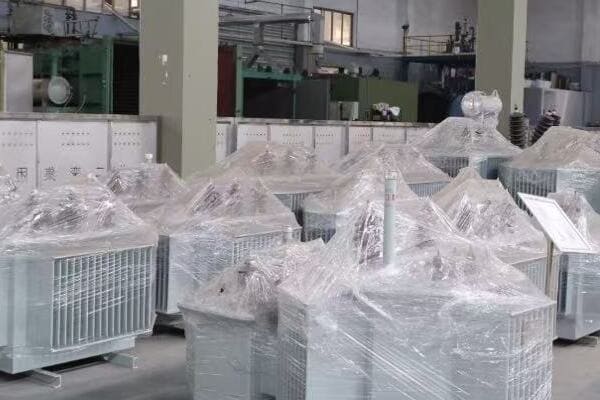
I once helped a small factory that was constantly tripping their undersized transformer. After upgrading to the right size, their operations ran smoothly, and their energy bills even went down. Let’s dive into how you can find the perfect fit for your power needs.
Understanding Transformer Ratings
Transformer size is typically expressed in kVA (kilovolt-amperes). Here’s what you need to know:
- kVA vs. kW: kVA is apparent power, while kW is real power. For most applications, you can assume they’re roughly equal.
- Common Sizes: Oil immersed transformers can range from small 5 kVA units to massive 100,000 kVA behemoths.
- Voltage Ratings: Each transformer has primary and secondary voltage ratings. Make sure these match your needs.
Calculating Your Power Requirements
To find the right size, you need to know your power needs:
- List All Loads: Write down all equipment that will be powered.
- Find Wattage: Note the power consumption of each device.
- Calculate Total: Add up all the wattages.
- Consider Power Factor: Divide by your system’s power factor (typically 0.8 to 0.9).
- Add Safety Margin: Add 15-20% for future growth and peak demands.
Here’s a simple example:
| Equipment | Wattage |
|---|---|
| Machine 1 | 5000W |
| Machine 2 | 7500W |
| Lighting | 2000W |
| HVAC | 10000W |
| Total | 24500W |
Assuming a power factor of 0.85 and adding a 20% margin:
(24500 / 0.85) * 1.2 ≈ 34,600 VA or 35 kVA
Factors to Consider
Choosing the right size isn’t just about current needs:
- Future Expansion: Plan for potential growth.
- Peak Demand: Account for times when all equipment might be running simultaneously.
- Duty Cycle: Consider if loads are continuous or intermittent.
- Efficiency: Transformers are most efficient when loaded to 50-70% of their capacity.
I once worked with a tech startup that was rapidly expanding. We chose a transformer with extra capacity, which saved them from having to upgrade again just a year later.
The Dangers of Incorrect Sizing
Choosing the wrong size transformer can lead to problems:
- Undersized: Can lead to overheating, reduced lifespan, and frequent outages.
- Oversized: Results in higher initial costs, lower efficiency, and wasted space.
Sizing Guidelines
Here’s a general guide to help you choose:
| Load (kVA) | Recommended Transformer Size (kVA) |
|---|---|
| 0-25 | 25 |
| 25-50 | 50 |
| 50-100 | 100 |
| 100-167 | 167 |
| 167-250 | 250 |
Remember, it’s usually better to go slightly larger than your calculated need to allow for future growth and peak demands.
When to Seek Professional Help
While these guidelines can help, some situations call for professional assistance:
- Complex Loads: If you have a mix of motors, electronics, and other diverse loads.
- Critical Applications: Where power interruption could be dangerous or costly.
- Large Systems: For loads above 1000 kVA, it’s best to consult an expert.
I once helped a hospital choose transformers for their new wing. The mix of sensitive medical equipment and critical power needs required careful calculation and selection.
Choosing the right size oil immersed transformer is crucial for efficient and reliable power. It’s not just about meeting your current needs, but also planning for the future. By considering all factors and using these guidelines, you can ensure you find the Goldilocks zone for your transformer – not too big, not too small, but just right.
Keeping It Cool: How Oil Helps Your Transformer Beat the Heat?
Have you ever wondered why transformers don’t melt down under the immense heat they generate? The secret lies in their cooling system, and for oil immersed transformers, that cooling superhero is the oil itself.
Oil in transformers serves as an excellent cooling medium. It circulates through the transformer, absorbing heat from the core and windings, and then releases it through radiators. This efficient cooling system allows oil immersed transformers to handle higher loads and maintain better efficiency than their air-cooled counterparts.

I once witnessed a transformer overheat due to a cooling system failure. The repair was costly and time-consuming. Let’s dive into how oil keeps your transformer cool and why it’s so important.
The Heat Challenge in Transformers
Transformers generate heat due to two main factors:
- Core Losses: Heat generated in the iron core due to changing magnetic fields.
- Copper Losses: Heat produced in the windings due to electrical resistance.
Without proper cooling, this heat can:
- Degrade insulation
- Reduce efficiency
- Shorten the transformer’s lifespan
- In extreme cases, cause catastrophic failure
How Oil Beats the Heat
Oil is an excellent cooling medium for several reasons:
- High Specific Heat Capacity: It can absorb a lot of heat without a significant temperature rise.
- Good Thermal Conductivity: It efficiently transfers heat from hot spots to cooler areas.
- Natural Circulation: As oil heats, it rises, creating a natural circulation that aids cooling.
Types of Oil Cooling Systems
There are several types of oil cooling systems, each suited for different transformer sizes and applications:
-
ONAN (Oil Natural Air Natural):
- Oil circulates naturally
- Cooling fins or radiators dissipate heat to the air
- Suitable for smaller transformers
-
ONAF (Oil Natural Air Forced):
- Similar to ONAN, but with added fans to boost air cooling
- Used for medium-sized transformers
-
OFAF (Oil Forced Air Forced):
- Oil is pumped through the system
- Fans force air over the radiators
- Used for larger transformers
-
ODAF (Oil Directed Air Forced):
- Oil is directed to flow through specific hot spots
- Fans force air over the radiators
- Used for very large or heavily loaded transformers
Here’s a comparison of these cooling methods:
| Cooling Method | Oil Circulation | Air Cooling | Typical Use |
|---|---|---|---|
| ONAN | Natural | Natural | Small transformers |
| ONAF | Natural | Forced | Medium transformers |
| OFAF | Forced | Forced | Large transformers |
| ODAF | Forced & Directed | Forced | Very large transformers |
I once worked on upgrading a transformer from ONAN to ONAF cooling. The addition of fans significantly increased its load capacity, saving the client from having to replace the entire transformer.
Monitoring and Maintaining Cooling Efficiency
To ensure your transformer stays cool:
- Temperature Monitoring: Regular checks of oil and winding temperatures.
- Oil Quality Tests: Checking for contaminants that could reduce cooling efficiency.
- Radiator Maintenance: Ensuring radiators are clean and unobstructed.
- Fan Maintenance: For ONAF, OFAF, and ODAF systems, regular fan checks are crucial.
Innovations in Transformer Cooling
The world of transformer cooling is constantly evolving:
- Vegetable-based Oils: Better heat absorption and environmental friendliness.
- Nanofluid-enhanced Oils: Improved thermal conductivity.
- Smart Cooling Systems: Adjusting cooling based on real-time load and temperature data.
I recently worked with a utility company testing nanofluid-enhanced transformer oil. The improved cooling efficiency was impressive, allowing for higher load capacity without upgrading the transformer size.
The Impact of Proper Cooling
Effective cooling doesn’t just prevent overheating. It also:
- Improves efficiency
- Extends transformer lifespan
- Allows for higher load capacity
- Reduces maintenance needs and downtime
Keeping your transformer cool is crucial for its performance and longevity. The oil in oil immersed transformers isn’t just there for insulation – it’s a hardworking cooling hero. By understanding and maintaining your transformer’s cooling system, you can ensure it runs efficiently and reliably for years to come. Remember, a cool transformer is a happy transformer!
Green and Clean: Choosing an Oil Transformer That Mother Nature Would Approve?
Are you concerned about the environmental impact of your power equipment? You’re not alone. With growing awareness of environmental issues, choosing an eco-friendly oil transformer has become more important than ever.
Environmentally friendly oil transformers use biodegradable oils, have better energy efficiency, and are designed for easier recycling at end-of-life. They reduce the risk of soil and water contamination, have a lower carbon footprint, and often comply with stricter environmental regulations.
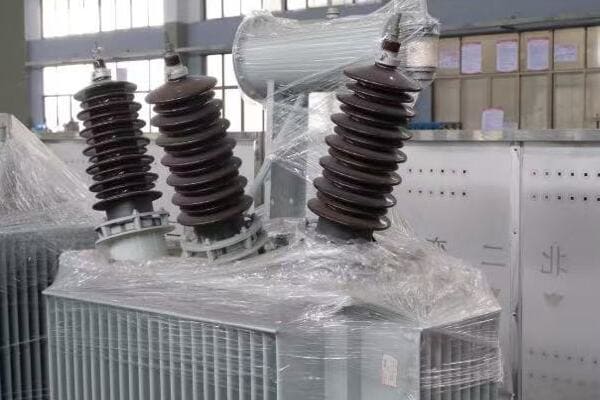
I once helped a company switch to eco-friendly transformers. Not only did it improve their environmental profile, but it also led to energy savings and positive PR. Let’s explore how you can choose an oil transformer that Mother Nature would approve.
The Environmental Challenges of Traditional Oil Transformers
Traditional oil transformers pose several environmental risks:
- Oil Spills: Can contaminate soil and water
- Non-biodegradable Oils: Persist in the environment if leaked
- Energy Inefficiency: Higher losses mean more power generation and higher emissions
- End-of-life Disposal: Can be challenging due to hazardous materials
Eco-Friendly Alternatives
Modern, environmentally friendly transformers address these issues:
-
Biodegradable Oils:
- Vegetable-based oils
- Synthetic esters
-
High-Efficiency Designs:
- Amorphous metal cores
- Better winding designs
-
Recyclable Materials:
- Use of materials that are easier to recycle at end-of-life
-
Compact Designs:
- Reduce material use and transportation emissions
Here’s a comparison of traditional and eco-friendly transformers:
| Feature | Traditional Transformer | Eco-Friendly Transformer |
|---|---|---|
| Oil Type | Mineral Oil | Vegetable Oil or Synthetic Ester |
| Biodegradability | Low | High |
| Fire Safety | Lower Flash Point | Higher Flash Point |
| Efficiency | Standard | High Efficiency |
| Lifespan | Standard | Often Longer |
| Recyclability | Challenging | Easier |
Benefits of Eco-Friendly Transformers
Choosing a green transformer offers several advantages:
- Reduced Environmental Risk: Biodegradable oils minimize the impact of potential leaks.
- Improved Safety: Many eco-friendly oils have higher flash points, reducing fire risk.
- Energy Savings: Higher efficiency means lower operating costs and reduced carbon footprint.
- Regulatory Compliance: Often meet stricter environmental regulations.
- Positive Corporate Image: Demonstrates commitment to sustainability.
I once worked with a utility company that switched to vegetable oil transformers in an environmentally sensitive area. The move not only protected the local ecosystem but also improved relations with the community.
Key Factors in Choosing an Eco-Friendly Transformer
When selecting an environmentally friendly transformer, consider:
- Oil Type: Look for biodegradable options like vegetable oils or synthetic esters.
2.2. Efficiency Ratings: Choose transformers with high-efficiency ratings to reduce energy losses. - Material Composition: Opt for designs that use recyclable materials.
- Size and Weight: Compact designs often mean less material use and easier transportation.
- Lifespan: Longer-lasting transformers reduce the need for replacements and associated waste.
- Manufacturer’s Environmental Commitment: Look for companies with strong environmental policies.
Innovations in Eco-Friendly Transformer Technology
The field of green transformer technology is constantly evolving:
- Nanotechnology: Enhancing oil properties for better performance and longevity.
- Smart Monitoring: Allowing for optimal operation and early problem detection.
- Hybrid Insulation Systems: Combining eco-friendly liquids with solid insulation for better performance.
- Carbon-Neutral Manufacturing: Some companies are moving towards carbon-neutral production processes.
I recently visited a transformer manufacturing plant that had implemented carbon-neutral processes. It was inspiring to see how they had reimagined their entire production line with sustainability in mind.
Overcoming Challenges in Adopting Green Transformers
While eco-friendly transformers offer many benefits, there are challenges to consider:
- Higher Initial Costs: Green technologies often come with a higher price tag.
- Performance in Extreme Conditions: Some bio-based oils may have limitations in very cold climates.
- Retrofitting Existing Systems: Switching to eco-friendly oils in existing transformers can be complex.
To address these challenges:
- Consider the long-term savings from improved efficiency and longer lifespan.
- Work with manufacturers to find solutions suitable for your specific environmental conditions.
- Plan a phased approach to upgrading your transformer fleet.
The Future of Green Transformer Technology
As we look to the future, we can expect:
- Improved Bio-based Oils: Better performance across a wider range of conditions.
- Advanced Recycling Techniques: Making end-of-life disposal even more eco-friendly.
- Integration with Renewable Energy: Transformers specifically designed for wind and solar farms.
- Zero-Waste Manufacturing: Pushing towards completely sustainable production processes.
Choosing an environmentally friendly oil transformer is not just good for the planet; it’s often good for your bottom line too. With improved efficiency, longer lifespans, and better safety profiles, these green transformers are paving the way for a more sustainable energy future. As you consider your next transformer purchase, remember that the most powerful choice might just be the one that Mother Nature would approve.
Transformer Life Coach: Picking a Long-Lasting Oil Companion for Your Power Needs?
Have you ever had a appliance break down just after the warranty expired? Frustrating, isn’t it? When it comes to transformers, longevity is key. After all, these aren’t just any appliances – they’re the lifeblood of your power system.
Choosing a long-lasting oil transformer involves considering factors like build quality, materials used, cooling efficiency, and maintenance requirements. A durable transformer should have high-quality insulation, efficient cooling systems, robust mechanical design, and be able to withstand electrical and environmental stresses over time.
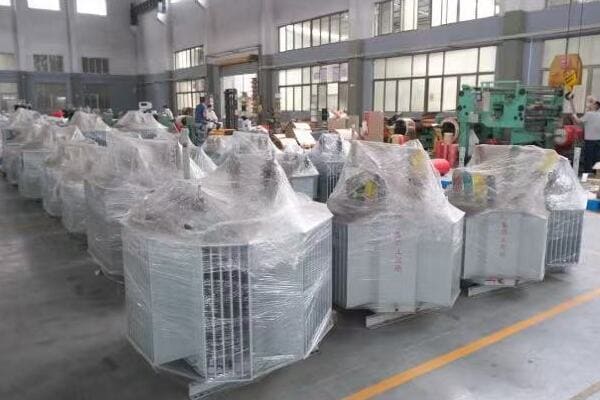
I once worked with a company that had to replace their transformer every 10 years. After switching to a more durable model, they haven’t had to replace it in over 20 years. Let’s explore how you can choose a transformer that will be your reliable power companion for decades to come.
Key Factors in Transformer Longevity
Several factors contribute to a transformer’s lifespan:
- Insulation Quality: The insulation system is often the limiting factor in a transformer’s life.
- Cooling Efficiency: Better cooling means less stress on components.
- Load Management: How well the transformer handles varying loads.
- Environmental Protection: Resistance to moisture, contaminants, and temperature extremes.
- Mechanical Strength: Ability to withstand physical stresses, including short-circuit forces.
Insulation Systems: The Heart of Longevity
The insulation system is crucial for transformer life:
- Oil Quality: High-grade insulating oil resists breakdown over time.
- Solid Insulation: Usually cellulose-based, it needs to resist degradation.
- Sealed Systems: Prevent moisture and oxygen ingress, which can degrade insulation.
Here’s a comparison of insulation life expectancies:
| Insulation System | Expected Lifespan |
|---|---|
| Standard Mineral Oil | 30-40 years |
| High-Grade Mineral Oil | 40-50 years |
| Synthetic Ester | 50-60 years |
| Natural Ester (Vegetable Oil) | 50-60 years |
I once worked on upgrading a transformer’s insulation system from standard mineral oil to a high-grade synthetic ester. The improved insulation properties significantly extended the transformer’s expected lifespan.
Cooling Systems: Keeping Your Transformer Young
Efficient cooling is key to longevity:
- ONAN (Oil Natural Air Natural): Simple and reliable, but limited cooling capacity.
- ONAF (Oil Natural Air Forced): Added fans improve cooling efficiency.
- OFAF (Oil Forced Air Forced): Pumps and fans provide even better cooling.
- ODAF (Oil Directed Air Forced): Most efficient, directs oil flow to hotspots.
The right cooling system can significantly extend a transformer’s life by reducing thermal stress on insulation and other components.
Load Management and Monitoring
How a transformer is used affects its lifespan:
- Load Cycling: Frequent large load changes can stress the transformer.
- Overloading: Even short periods of overload can degrade insulation.
- Smart Monitoring: Modern systems can optimize loading and predict maintenance needs.
I helped implement a smart monitoring system for a utility company. It allowed them to better manage transformer loads, extending the life of their entire transformer fleet.
Environmental Protection
Protecting against environmental factors is crucial:
- Sealed Tank Design: Prevents moisture ingress.
- Corrosion-Resistant Materials: Especially important in coastal or industrial areas.
- Temperature Extremes: Design should account for your local climate.
Mechanical Strength
A transformer needs to withstand various mechanical stresses:
- Short-Circuit Forces: Can cause winding deformation.
- Transportation Stresses: Especially important for large transformers.
- Seismic Activity: In earthquake-prone areas, special designs may be needed.
Maintenance: The Key to Longevity
Even the best-designed transformer needs proper care:
- Regular Oil Testing: Checks for contaminants and degradation.
- Dissolved Gas Analysis: Can detect developing faults early.
- Periodic Inspections: Check for physical issues like leaks or loose connections.
- Proactive Repairs: Addressing small issues before they become big problems.
I once worked with a client who implemented a rigorous maintenance program. Their transformers consistently outlasted industry averages, saving them significant replacement costs.
The Cost-Benefit Analysis of Longevity
While long-lasting transformers often have higher upfront costs, they can be more economical in the long run:
- Reduced Replacement Frequency: Fewer disruptions and lower long-term capital costs.
- Lower Maintenance Costs: High-quality transformers often require less frequent maintenance.
- Improved Reliability: Fewer unexpected failures mean less downtime and associated costs.
Choosing a long-lasting oil transformer is an investment in your power system’s future. By considering factors like insulation quality, cooling efficiency, load management, and environmental protection, you can select a transformer that will be a reliable companion for decades. Remember, in the world of transformers, longevity isn’t just about age – it’s about consistent, reliable performance year after year.
Conclusion
Choosing the right oil immersed transformer involves balancing factors like cooling efficiency, environmental impact, and longevity. By considering these key aspects, you can select a transformer that not only meets your power needs but also offers long-term reliability, efficiency, and environmental responsibility.