Send us a message if you have any questions or request a quote. Our experts will give you a reply within 24 hours and help you select the right valve you want.
What is an Autotransformer: The Efficient Power Converter You Need to Know About?
Are you tired of bulky transformers eating up space and energy? There’s a smarter solution you might be overlooking.
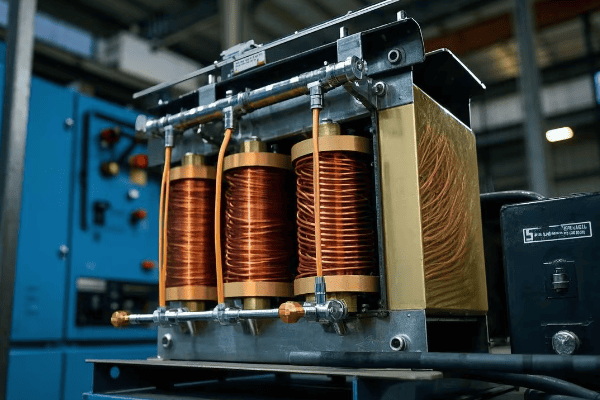
An autotransformer is a special type of transformer that uses a single winding for both primary and secondary circuits. It offers higher efficiency, smaller size, and lower cost compared to traditional transformers, making it ideal for various voltage conversion applications.
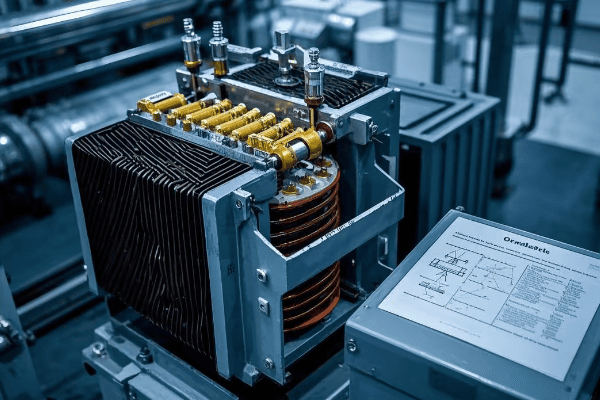
Basic structure of an autotransformer
As an electrical engineer with years of experience in power systems, I’ve seen firsthand how autotransformers can revolutionize energy conversion. Let’s dive into the world of autotransformers and discover why they might be the solution you’ve been searching for.
How Does an Autotransformer Work: Unveiling the Basics of This Unique Transformer?
Have you ever wondered how a transformer can be more efficient? The secret lies in its unique design.
An autotransformer works by using a single winding as both the primary and secondary coils. It has a common portion shared by both circuits, allowing for direct electrical connection and more efficient power transfer.
Diagram showing current flow in an autotransformer
I remember the first time I saw an autotransformer in action. Its simplicity and efficiency amazed me. Let’s break down how these clever devices work:
The Basics of Autotransformer Operation
Single Winding: Unlike traditional transformers with separate primary and secondary windings, an autotransformer uses a single winding.
Tapped Winding: The winding has taps at different points, creating sections for input and output.
Common Section: Part of the winding is shared between the input and output circuits.
Electrical Connection: There’s a direct electrical connection between the input and output, not just magnetic coupling.
How Voltage Conversion Happens
The voltage conversion in an autotransformer depends on the ratio of turns between the common section and the whole winding. Here’s a simple way to understand it:
Section
Turns
Voltage
Whole Winding
N
V
Common Section
n
v
The voltage ratio is proportional to the turns ratio:
V / v = N / n
For example, if you have 1000 turns total and tap at 900 turns, you can convert 1000V to 900V.
Types of Autotransformers
Step-Up Autotransformer: Increases voltage
Step-Down Autotransformer: Decreases voltage
Variable Autotransformer (Variac): Allows for adjustable output voltage
I once worked on a project where we replaced a traditional transformer with an autotransformer in a power distribution system. The energy savings and reduced space requirements were impressive. The client was thrilled with the results.
Advantages of Autotransformer Design
Higher Efficiency: Less power loss due to the shared winding
Smaller Size: Requires less copper and iron core material
Lower Cost: Fewer materials mean lower production costs
Better Voltage Regulation: Often provides tighter voltage control
Limitations to Consider
No Electrical Isolation: Input and output are not electrically isolated
Limited Voltage Change: Most effective for voltage changes less than 2:1
Higher Short-Circuit Current: Can be a safety concern in some applications
Understanding how autotransformers work is key to appreciating their benefits and limitations. In my experience, they’re often the best choice for applications requiring small voltage adjustments or where space and efficiency are prime concerns. However, it’s crucial to consider the lack of isolation in safety-critical applications.
Autotransformer vs. Traditional Transformer: Key Differences and Advantages?
Wondering why you should choose an autotransformer over a traditional one? The differences might surprise you.
Autotransformers offer higher efficiency, smaller size, and lower cost compared to traditional transformers. However, they lack electrical isolation, making traditional transformers better for applications where safety isolation is crucial.
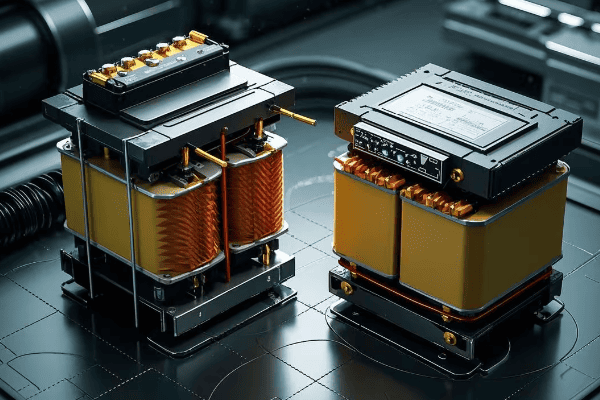
Side-by-side diagram of autotransformer and traditional transformer
In my years of working with both types, I’ve seen how choosing the right transformer can make or break a project. Let’s compare these two transformer types:
Key Differences
Feature
Autotransformer
Traditional Transformer
Windings
Single, tapped
Two separate
Electrical Isolation
No
Yes
Size
Smaller
Larger
Efficiency
Higher
Lower
Cost
Lower
Higher
Voltage Ratio
Limited range
Wide range
Advantages of Autotransformers
Higher Efficiency
Less copper loss due to shared winding
Typically 98-99% efficient vs. 95-98% for traditional transformers
Smaller Size and Weight
Up to 50% reduction in size for similar ratings
Ideal for space-constrained applications
Lower Cost
Less material used in construction
Can be 20-30% cheaper than equivalent traditional transformers
Better Voltage Regulation
Often provides more precise voltage control
Useful in applications requiring tight voltage tolerances
Advantages of Traditional Transformers
Electrical Isolation
Provides safety barrier between primary and secondary
Essential in many industrial and medical applications
Wide Voltage Range
Can handle large step-up or step-down ratios
Suitable for a broader range of applications
Fault Isolation
Prevents fault propagation between primary and secondary
Separate Grounding
Allows for different grounding schemes on primary and secondary sides
I once worked on a project where we initially specified a traditional transformer for a voltage adjustment in a factory. After analyzing the requirements, we realized an autotransformer could do the job more efficiently and at a lower cost. The change saved the client significant money and reduced energy losses.
When to Choose Each Type
Choose an Autotransformer When:
You need small voltage adjustments (less than 2:1 ratio)
Space and weight are at a premium
Efficiency is a top priority
Electrical isolation is not required
Choose a Traditional Transformer When:
Electrical isolation is necessary for safety
You need large voltage step-up or step-down
Separate grounding schemes are required
Fault isolation between circuits is crucial
Safety Considerations
It’s important to note that the lack of isolation in autotransformers can be a significant safety concern in some applications. In my experience, this is particularly crucial in:
Medical equipment
Sensitive electronic devices
Applications with potential ground faults
Always consult safety standards and regulations when deciding between autotransformers and traditional transformers.
Understanding these differences is crucial for making the right choice in your power system design. While autotransformers offer significant advantages in efficiency and size, traditional transformers still have their place, especially where safety isolation is paramount. In my career, I’ve found that carefully weighing these factors leads to the most successful and cost-effective solutions.
Applications of Autotransformers: From Home Appliances to Industrial Power Systems?
Ever wondered where those efficient autotransformers are hiding? They’re more common than you might think!
Autotransformers are used in a wide range of applications, from household voltage converters to large-scale power distribution systems. Their efficiency and compact size make them ideal for voltage regulation, motor starting, and power transmission.
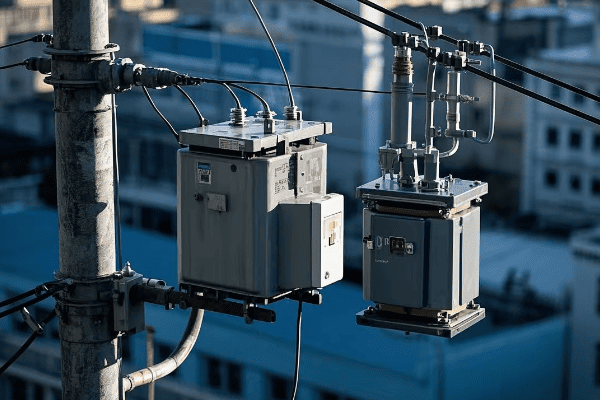
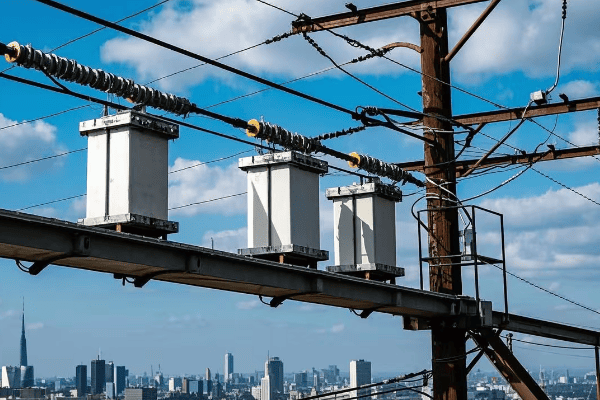
Collage showing autotransformers in different settings
Throughout my career, I’ve encountered autotransformers in surprisingly diverse settings. Let’s explore some of the most common and interesting applications:
Home and Office Applications
Voltage Converters
For international travelers to use 110V appliances in 220V countries (and vice versa)
I once used a small autotransformer to power my laptop during an overseas work trip
Dimmer Switches
Variable autotransformers used in lighting control
Provide smooth dimming for incandescent and some LED lights
Home Theater Systems
Used in some audio equipment for impedance matching
Can improve sound quality in high-end systems
Industrial Applications
Motor Starting
Reduce inrush current when starting large motors
I’ve implemented these in factories to prevent voltage dips during motor start-up
Voltage Regulation
Maintain stable voltage in industrial processes
Crucial in sensitive manufacturing operations
Welding Equipment
Provide variable voltage control in welding machines
Allow welders to adjust power output for different materials
Power Distribution Applications
Transmission Line Interconnection
Connect power grids with slightly different voltages
I’ve worked on projects linking regional grids using large autotransformers
Substation Voltage Control
Fine-tune voltage levels in power distribution networks
Help maintain consistent voltage for end-users
Renewable Energy Integration
Adjust voltage levels from wind or solar farms to match grid requirements
Becoming increasingly important in the green energy transition
Application
Voltage Range
Key Benefit
Home Voltage Converters
110V – 220V
Compact size
Motor Starting
Up to 11kV
Reduced inrush current
Grid Interconnection
Up to 765kV
Efficient power transfer
Specialized Applications
Railway Systems
Convert grid power to appropriate voltage for electric trains
I’ve consulted on projects upgrading railway power systems
Testing Equipment
Provide variable voltage in laboratory and testing environments
Essential in quality control and product development
HVDC Converter Stations
Used in the conversion process between AC and DC in high-voltage transmission
Play a crucial role in long-distance power transmission
Considerations in Choosing Autotransformers
When selecting autotransformers for specific applications, consider:
Voltage Range: Ensure it covers the required input and output voltages
Power Rating: Must handle the maximum expected load
Efficiency: Important for energy-intensive applications
Size and Weight: Critical in space-constrained installations
Cooling Method: Air-cooled or oil-cooled depending on the environment
Control Features: Manual or automatic voltage adjustment
In my experience, the versatility of autotransformers makes them a go-to solution for many voltage conversion needs. However, it’s crucial to remember their limitations, particularly the lack of electrical isolation. In applications where safety isolation is paramount, traditional transformers remain the better choice.
The wide range of applications for autotransformers demonstrates their importance in our electrical systems. From the small converter in your travel bag to the massive units in power substations, these efficient devices play a vital role in ensuring our electrical systems run smoothly and efficiently.
The Efficiency Factor: Why Autotransformers Are Gaining Popularity?
Wondering why autotransformers are becoming the go-to choice for many engineers? The answer lies in their impressive efficiency.
Autotransformers are gaining popularity due to their high efficiency, often reaching 98-99%. This efficiency comes from their unique design, which reduces copper losses and core losses compared to traditional transformers.
Graph showing efficiency of autotransformers vs traditional transformers
In my years of designing and implementing power systems, I’ve seen a clear trend towards autotransformers in many applications. Let’s dive into why they’re so efficient:
Sources of Efficiency in Autotransformers
Reduced Copper Losses
Single winding design means less copper used
Lower resistance in the windings
Smaller Core
Less iron needed in the core
Reduces core losses from hysteresis and eddy currents
Direct Electrical Connection
Part of the power is transferred conductively, not just inductively
Results in less overall power loss
Efficiency Comparison
Transformer Type
Typical Efficiency
Losses
Autotransformer
98-99%
1-2%
Traditional Transformer
95-98%
2-5%
I once worked on a project upgrading a factory’s power distribution system. By replacing several traditional transformers with autotransformers, we achieved a 2% increase in overall system efficiency. This translated to significant energy savings for the client.
Factors Affecting Autotransformer Efficiency
Voltage Ratio
Most efficient for small voltage changes (less than 2:1)
Efficiency decreases for larger voltage differences
Load Factor
Operate most efficiently near rated load
Efficiency can drop at very low or very high loads
Core Material
High-quality silicon steel or amorphous metals improve efficiency
I’ve seen modern core materials push efficiencies even higher
Winding Design
Optimized winding layouts reduce losses
Advanced winding techniques can further improve efficiency
Real-World Benefits of High Efficiency
Energy Savings
Lower losses mean less wasted energy
Can result in significant cost savings over time
Reduced Heat Generation
Less energy lost as heat
Can simplify cooling requirements
Environmental Impact
Lower energy consumption reduces carbon footprint
Aligns with green energy initiatives
Improved System Performance
Higher efficiency can mean better voltage regulation
Reduces stress on other system components
Calculating Efficiency Gains
To understand the impact, let’s look at a simple calculation:
Assume a 1000 kVA transformer operating 24/7:
Traditional Transformer (97% efficient): 30 kW losses
Autotransformer (99% efficient): 10 kW losses
Annual Energy Savings: (30 kW – 10 kW) 24 hours 365 days = 175,200 kWh
This can translate to substantial cost savings and reduced environmental impact.
Limitations and Considerations
While efficiency is a major advantage, it’s important to consider other factors:
Safety: Lack of electrical isolation can be a concern in some applications
Voltage Range: Less suitable for large voltage transformations
Initial Cost: While often cheaper, high-efficiency models can have higher upfront costs
In my experience, the efficiency benefits of autotransformers make them an excellent choice for many applications, especially where small voltage adjustments are needed. However, it’s crucial to balance efficiency with other requirements like safety and voltage range when making a selection.
The growing popularity of autotransformers is a testament to the industry’s focus on energy efficiency. As we continue to seek ways to reduce energy consumption and improve system performance, autotransformers will likely play an increasingly important role in our power systems.
Safety Considerations: Understanding the Risks and Precautions of Autotransformers?
Concerned about the safety of autotransformers? You’re right to be cautious – these efficient devices come with unique safety considerations.
Autotransformers lack electrical isolation between input and output, which can lead to higher fault currents and potential shock hazards. Proper installation, grounding, and protective measures are crucial to ensure safe operation.
Illustration of safety features and precautions for autotransformers
In my years working with power systems, I’ve learned that understanding and respecting the safety aspects of autotransformers is crucial. Let’s explore the key safety considerations:
Primary Safety Concerns
Lack of Electrical Isolation
Input and output circuits are electrically connected
Can lead to propagation of faults between circuits
Higher Fault Currents
Short circuits can result in extremely high currents
Requires robust protection systems
Potential for Electric Shock
Ground faults can energize the entire system
Increases risk to personnel and equipment
Voltage Surge Transmission
Surges on input side can directly affect output side
May damage connected equipment
Safety Measures and Precautions
Safety Measure
Purpose
Implementation
Proper Grounding
Prevent shock hazards
Connect to earth ground
Safety Measure
Purpose
Implementation
—————-
———
—————–
Proper Grounding
Prevent shock hazards
Connect to earth ground
Overcurrent Protection
Prevent damage from faults
Install circuit breakers or fuses
Insulation
Prevent direct contact
Use appropriate insulation materials
Enclosure
Restrict access to live parts
Install in locked cabinets
Warning Labels
Inform about hazards
Apply clear, visible warning signs
I once worked on a project where an improperly grounded autotransformer led to a near-miss incident. It was a stark reminder of the importance of following safety protocols meticulously.
Best Practices for Safe Operation
Proper Installation
Follow manufacturer guidelines and local electrical codes
Ensure adequate ventilation to prevent overheating
Regular Maintenance
Conduct periodic inspections for signs of wear or damage
Test insulation resistance regularly
Operator Training
Educate personnel on specific risks associated with autotransformers
Provide training on emergency procedures
Protective Equipment
Use appropriate personal protective equipment (PPE) when working with autotransformers
Install protective barriers around high-voltage areas
Fault Protection
Implement fast-acting fault detection and isolation systems
Use differential protection schemes for larger units
Special Considerations for Different Applications
Industrial Settings
Implement lockout/tagout procedures during maintenance
Consider the impact of harmonics and power quality
Residential Use
Ensure autotransformers for home use are certified by recognized safety organizations
Educate users on proper usage and potential risks
Power Distribution
Implement redundant protection schemes
Consider the impact on system stability during faults
Regulatory Compliance
Adhering to safety standards is crucial. Key regulations include:
IEEE C57.12.00 for general requirements
NEMA ST 1 for specialty transformers
IEC 61558 for safety of transformers and power supplies
In my experience, staying up-to-date with these standards is essential for ensuring the safe design and operation of autotransformer systems.
Emerging Safety Technologies
The field of transformer safety is constantly evolving. Some recent innovations include:
Smart Monitoring Systems
Real-time monitoring of temperature, current, and voltage
Early detection of potential issues
Advanced Protection Relays
Faster and more accurate fault detection
Improved discrimination between normal and fault conditions
Arc Flash Mitigation
Techniques to reduce the risk and severity of arc flash incidents
Critical in high-power applications
While autotransformers offer significant benefits in terms of efficiency and size, their unique design requires a thoughtful approach to safety. By understanding the risks and implementing proper precautions, we can harness the advantages of autotransformers while ensuring the safety of personnel and equipment.
Sizing and Selection: Choosing the Right Autotransformer for Your Needs?
Struggling to find the perfect autotransformer for your application? You’re not alone in this complex decision-making process.
Selecting the right autotransformer involves considering factors like voltage ratio, power rating, efficiency, physical size, and specific application requirements. Proper sizing ensures optimal performance, energy efficiency, and longevity of the system.
Decision flowchart for autotransformer selection
Throughout my career, I’ve guided many clients through the autotransformer selection process. Let me share some key insights to help you make an informed decision:
Key Factors in Autotransformer Selection
Voltage Ratio
Determine input and output voltage requirements
Autotransformers are most efficient for ratios less than 2:1
Power Rating
Calculate the maximum load the autotransformer will handle
Include a safety margin for potential future load increases
Efficiency Requirements
Consider energy costs over the autotransformer’s lifetime
Higher efficiency models may have higher upfront costs but lower operating costs
Physical Size and Weight
Ensure the autotransformer fits in the available space
Consider installation and transportation requirements
Environmental Conditions
Assess temperature, humidity, and altitude at the installation site
Choose appropriate cooling methods (air-cooled or oil-cooled)
Sizing Calculations
Here’s a simple approach to sizing:
Determine load power: P (Watts)
Calculate input current: I = P / V_in
Determine voltage ratio: K = V_out / V_in
Calculate autotransformer rating: S = P * (1 – K)
For example, for a 10 kW load, 240V input, 208V output:
K = 208/240 = 0.867
S = 10,000 * (1 – 0.867) = 1,330 VA
Selection Table
Application
Typical Voltage Ratio
Power Range
Key Considerations
Home Voltage Conversion
2:1 or 1.5:1
100VA – 5kVA
Portability, safety
Industrial Motor Starting
1.1:1 to 1.5:1
10kVA – 1MVA
Inrush current handling
Grid Voltage Regulation
1.1:1 to 1.2:1
1MVA – 100MVA
Efficiency, tap changing
I once worked on a project where a client initially undersized their autotransformer for a motor starting application. The result was frequent tripping and potential motor damage. We rectified the issue by properly sizing the autotransformer to handle the inrush current, which solved the problem and improved overall system reliability.
Application-Specific Considerations
Motor Starting
Size for inrush current (typically 5-7 times full load current)
Consider duty cycle and starting frequency
Voltage Regulation
Evaluate required voltage adjustment range
Consider tap changing mechanisms for variable output
Power Distribution
Assess load growth projections
Consider redundancy requirements
Renewable Energy Integration
Evaluate variability of input voltage from renewable sources
Consider harmonics and power quality issues
Advanced Selection Criteria
Harmonic Handling
For non-linear loads, consider K-factor rated autotransformers
Evaluate total harmonic distortion (THD) in the system
Short Circuit Impedance
Important for fault current limitation
Typically ranges from 2% to 5% for autotransformers
Noise Level
Critical for installations near occupied areas
Measured in decibels (dB), lower is better for noise-sensitive environments
Overload Capacity
Determine if short-term overloads are expected
Some autotransformers can handle 20-30% overloads for short periods
Tools and Resources for Selection
Manufacturer Selection Guides
Most reputable manufacturers provide detailed selection tools
Often include software for precise sizing calculations
Industry Standards
Refer to IEEE, IEC, and NEMA standards for guidance
Ensure compliance with relevant local codes
Simulation Software
Use power system simulation tools for complex applications
Helps in analyzing system-wide impacts of autotransformer selection
Choosing the right autotransformer is crucial for the success of your project. It’s not just about meeting current needs but also anticipating future requirements. In my experience, taking the time to thoroughly analyze your needs and consult with experts can save significant costs and headaches down the line.
Remember, the cheapest option is not always the most cost-effective in the long run. Consider the total cost of ownership, including energy costs and maintenance, when making your selection. With careful consideration of these factors, you can select an autotransformer that will serve your needs efficiently and reliably for years to come.
Conclusion
Autotransformers offer efficient, compact, and cost-effective solutions for voltage conversion in various applications. Understanding their operation, advantages, and safety considerations is crucial for optimal selection and use. As technology advances, autotransformers will continue to play a vital role in power systems.
🚀Next steps, you can:
A. Assess your specific voltage conversion needs
B. Consult with an electrical engineer for personalized advice
C. Explore energy efficiency improvements in your power systems
D. Learn about safety protocols for working with autotransformers
E. Stay updated on the latest developments in transformer technology
F. Consider the role of autotransformers in renewable energy integration
Hello! 👋 Welcome to CHBEB.
We are a transformer manufacturer with 60+ years of experience.
✅ Distribution & Power Transformers (Oil & Dry Type)
✅ Customized EPC & OEM Solutions
✅ Fast Delivery & International Certifications