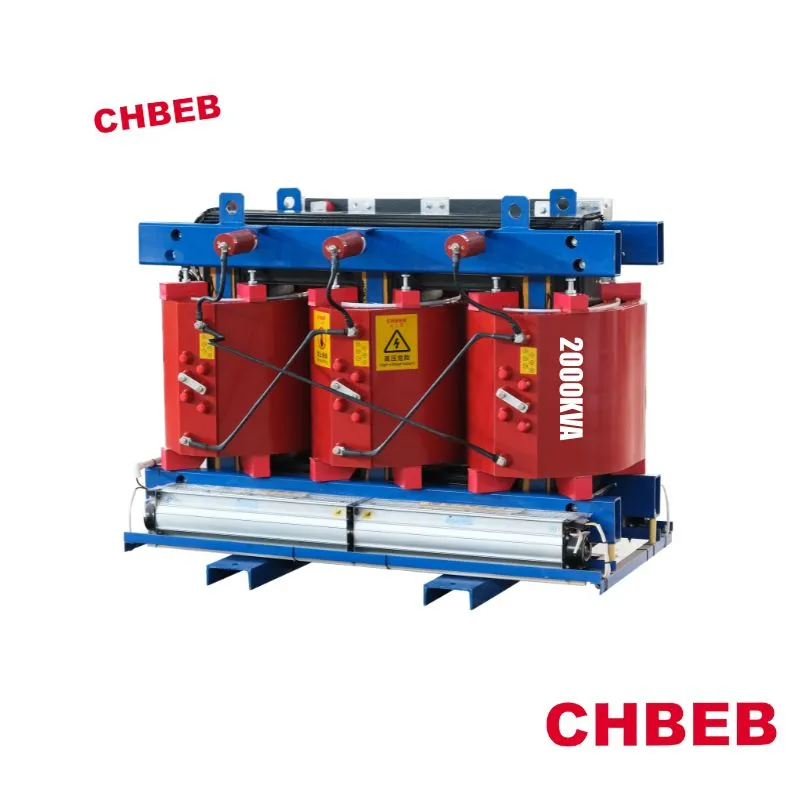
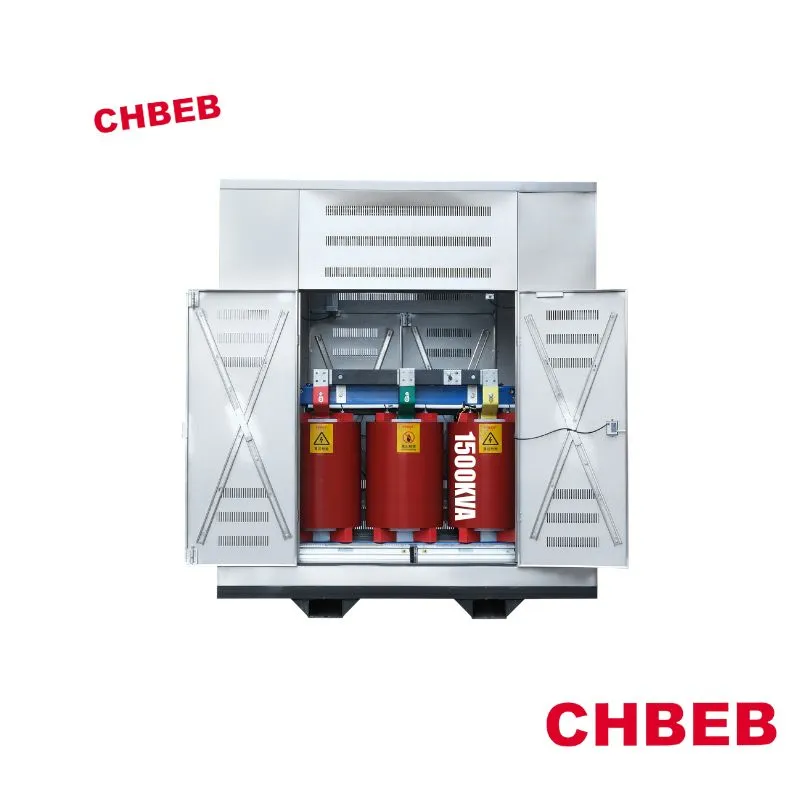
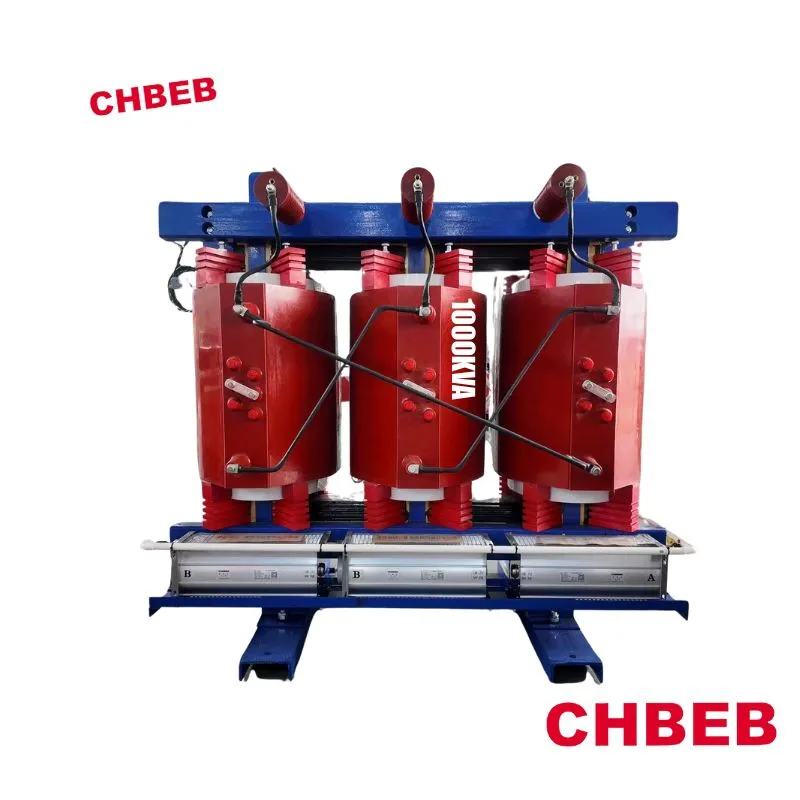
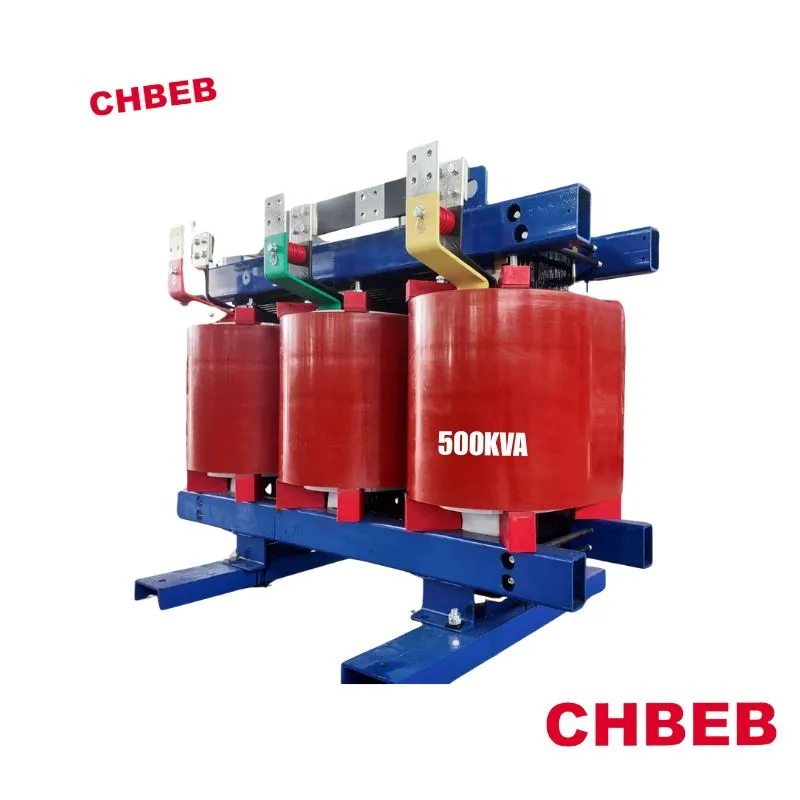
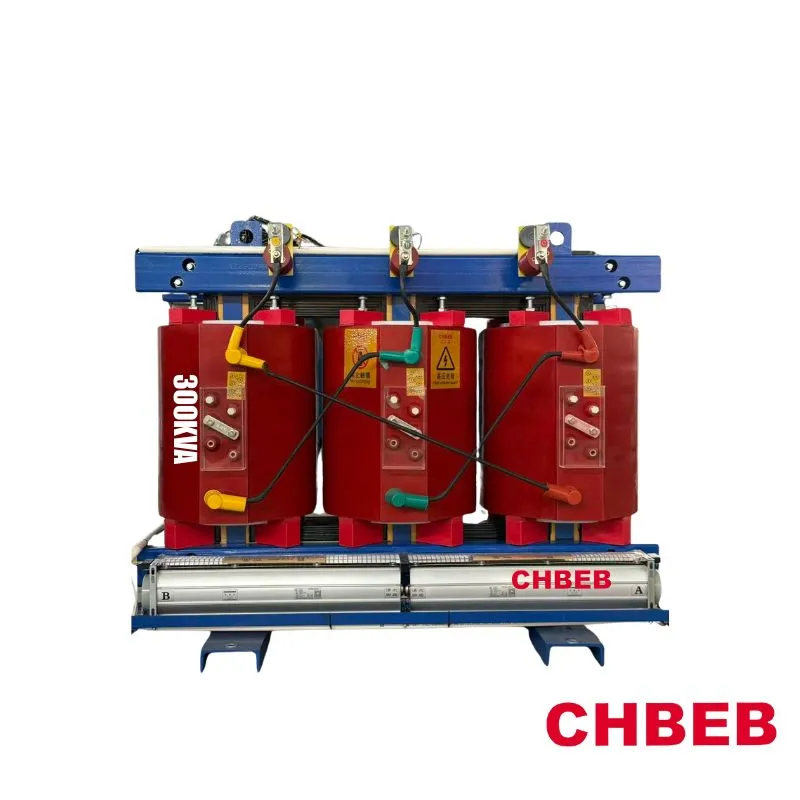
2000 kVA Three Phase Dry Type Transformer

Primary Voltage: 34.5KV

Secondary Voltage: 0.8KV

Power Rating: 2000 KVA

Connection Type: Dyn11/Yyno or others

Transformer Type: Dry Type Transformer

Standards: ANSI/IEEE, CSA/CAN, DOE

Certificate: UL, cUL, CSA, SGS, CE

Meaning of the 2000 kVA dry-type transformer model

SCB: S means three-phase, referring to the three red column-like parts of the dry-type transformer. Many people search for three-phase transformers.

C represents epoxy resin insulation, which is the insulation property of the transformer; B indicates that the low-voltage winding of the transformer is foil winding. Due to different application requirements, the winding methods may vary.

2000 indicates the rated capacity of this transformer, expressed in kVA.

In the manufacturing of photovoltaic power generation box-type substations, the 2000 kVA dry-type transformer is one of the commonly used products and is also frequently used in many European-style box-type substations. It plays an extremely important role in power supply and distribution in residential distribution, commercial supporting facilities, hospitals and other places.

Advantages of SCB11-2000kVA-10/0.4 dry-type transformer

Low Loss

Because the 2000 dry-type transformer has no oil, its no-load loss is more than 10% lower than that of ordinary oil-immersed transformers, and full-load loss can be reduced by about 15%.

Strong Overload Capacity

When the power grid fails or suddenly loses power, it can quickly disconnect the circuit and restore normal power supply.

Strong Adaptability

Whether in high-altitude areas or places with large temperature changes, it can operate normally.

Low Maintenance Workload

Because no oil is required, no liquid needs to be added during operation, thereby reducing environmental pollution.

Long Service Life

Compared with ordinary oil tank transformers, its service life can be extended by 2–3 times.

2000 kVA Three Phase Dry Type Transformer price

Even for the same model, quotations given by different transformer manufacturers may vary, some higher and some lower. Its price is generally around USD 20,000. The supplier will determine the specific price according to the customer’s required quantity, the raw material prices at that time, and other conditions.

Nowadays, whether customers are purchasing or manufacturers are producing, full-copper core transformers have become mainstream, and aluminum-core transformers are rarely used. Although full-copper transformers are certainly more expensive than full-aluminum ones, they have better performance, longer service life, more stable operation, and better safety.

So how to distinguish whether a dry-type transformer is “copper core” or “aluminum core”? You can refer to the following methods:

Check the Size

Transformers wound with aluminum coils are usually “taller and slimmer”, while copper coils, due to their material characteristics, make the finished transformer look “shorter, wider, and stronger”, with a relatively larger volume.

Check the Nameplate

The transformer nameplate indicates various parameters of the transformer. If it is marked with L or LB, it means it is an aluminum-core transformer; otherwise, it is a copper-core transformer.

Check the Temperature Rise

Under full-load operation, the temperature rise of aluminum wire is higher than that of copper wire.

Check the Cross-Section

Because if copper-clad aluminum is used for thicker wires, it can be easily seen. Therefore, copper-clad aluminum is generally flexible wire, composed of many small strands. But as long as the cross-section is cut open, the material can be identified by seeing whether it appears whitish, which is the color of aluminum.

Installation site and environmental requirements for 2000 kVA Three Phase Dry Type Transformer

  1. The indoor area should be clean, with no other non-building structural penetrating facilities, and the roof slab should have no leakage.
  2. The infrastructure should meet the requirements for load-bearing, vibration prevention, bottom ventilation, etc.
  3. Indoor ventilation and fire protection facilities should comply with relevant regulations. Ventilation ducts should be well sealed, and ventilation openings should not be connected with other ventilation systems.
  4. Temperature control and humidity display devices should be installed in visible positions for easy observation.
  5. Indoor lighting arrangement should comply with relevant regulations.
  6. Non-combustible or flame-retardant materials should be used indoors. The door should open outward, and the equipment name and safety warning signs should be marked on the door.
  7. Protective mesh doors, railings and other safety facilities should be complete.