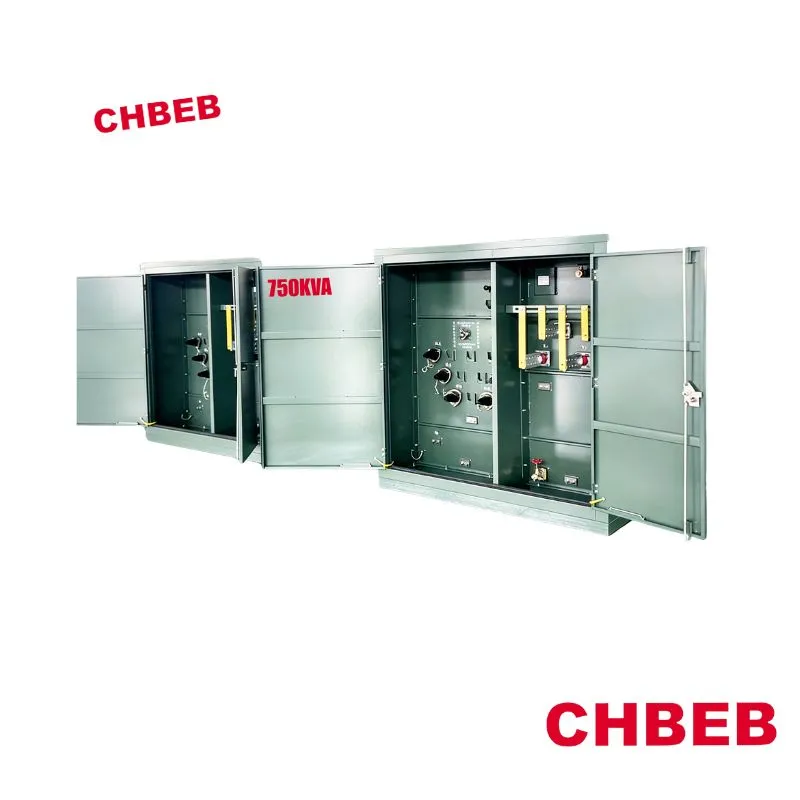
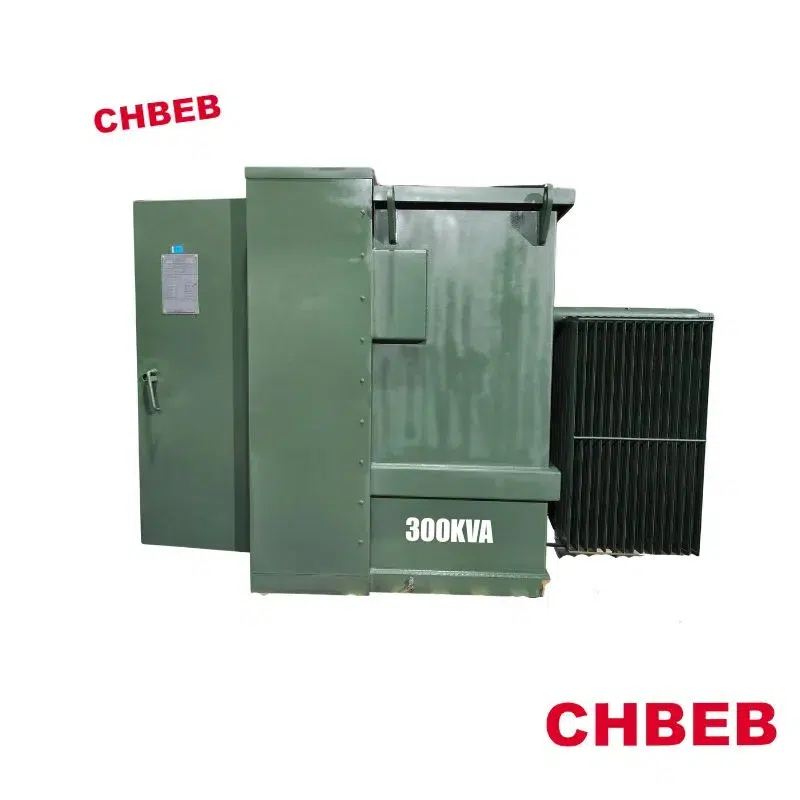
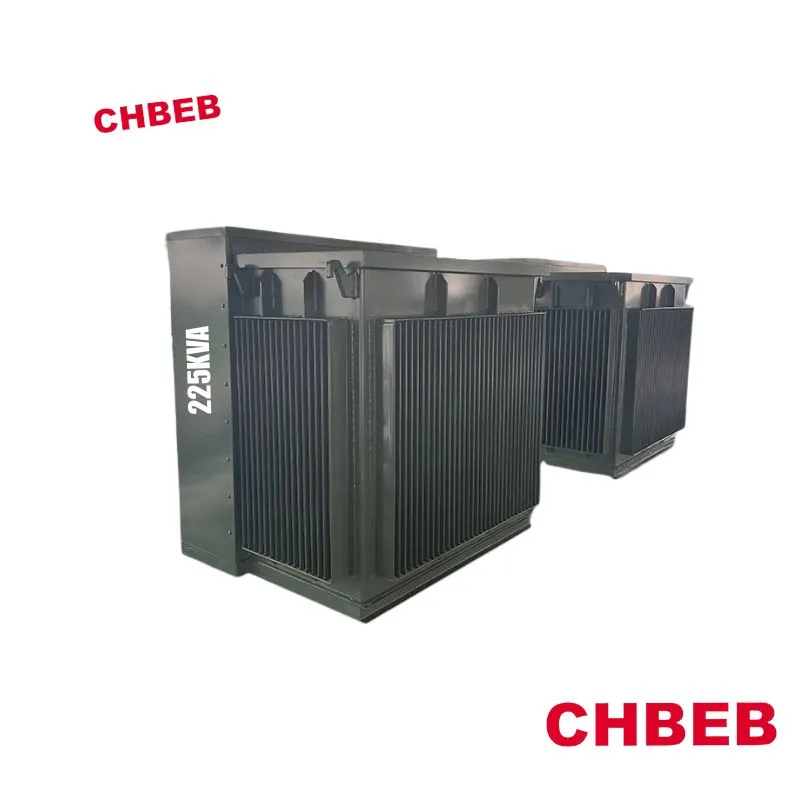
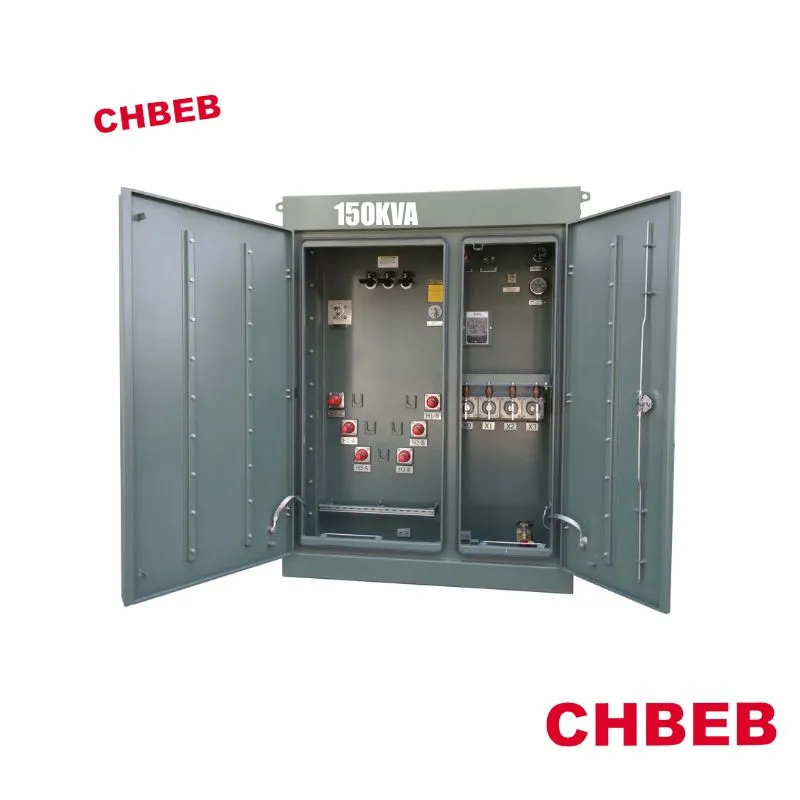
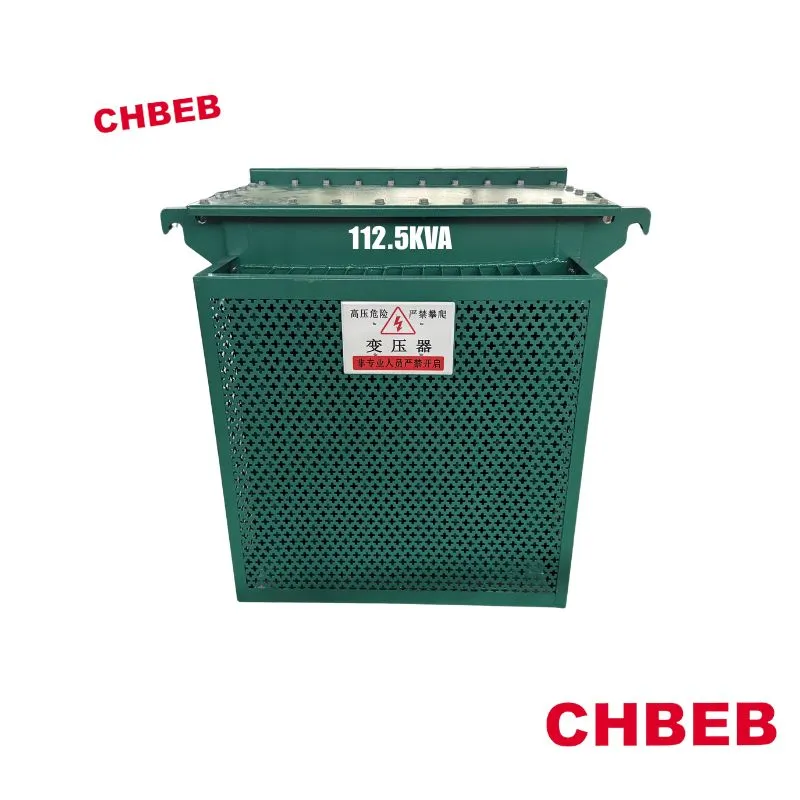
About the 750 kVA Pad Mounted Transformer
A pad-mounted transformer is an advanced power transformer that, based on the traditional oil-immersed transformer, integrates auxiliary equipment such as plug-in fuses, spare fuses, tap switches, circuit load switches (2/4 circuits), and low-voltage distribution equipment. It is suitable for 50Hz/60Hz AC frequency, with a maximum operating voltage of 35kV and a capacity range of 75kVA to 3000kVA.
This 750kVA pad-mounted transformer offers the following advantages over traditional oil-immersed transformers:
Efficiency greater than 99%, compliant with DOE 2016 energy efficiency regulations, extending service life while significantly reducing energy consumption and total cost of ownership.
IP54 (NEMA 3R) protection rating, dust-proof and moisture-proof, maintenance-free, with a design life of >25 years.
Eco-Friendly & Sustainable
Compatible with FR3 vegetable oil, biodegradability greater than 95%, with significant energy-saving benefits.
Standards & Certifications
Compliant with ANSI 57, IEEE C57, and IEC60076 standards, certified by ISO, CE, IEC, CSA, and UL.
Overall, this transformer provides users with a reliable and cost-effective power solution by integrating necessary auxiliary equipment and delivering higher efficiency, making it a superior alternative to traditional oil-immersed transformers.
Application and Global Coverage of the 750 kVA Pad-Mounted Transformer
The 750kVA pad-mounted transformer is renowned for its exceptional stability and reliability, and is widely used across various industries and regions. These transformers play a key role in power transmission and distribution, industrial applications, transportation, aerospace, telecommunications, and other fields. Their applications cover general purposes including power distribution for medium-sized factories and logistics parks, backup power for commercial complexes, hospitals or data centers, centralized power supply for communities along urban arterial roads, grid connection of photovoltaic power plants or energy storage systems, and public areas.
Pad-mounted transformers have been widely adopted in countries and regions around the world, including North America, South America, Oceania, East Asia, and Southeast Asia. Major countries utilizing these transformers include the United States, Canada, Honduras, Dominican Republic, Venezuela, Chile, Australia, Philippines, Japan, and China.
By integrating necessary auxiliary equipment and demonstrating outstanding efficiency, this 750kVA pad-mounted transformer effectively addresses power installation challenges with its compact structure and strong adaptability, providing reliable power solutions for different environments and users.
Technical Specifications and Types
This is the standard capacity, weight, and dimensions of the 750KVA transformer. Each pad-mounted transformer can be customized according to your requirements.
The 750KVA transformer can also be a photovoltaic step-up transformer, ring network transformer, terminal transformer, etc. These types of transformers share the same principle, but their structures are different, and different types of transformers have different applications. CHBEB provides you with the most ideal solution.
| Rated Capacity (KVA) |
High Voltage (KV) |
Low Voltage (V) |
Losses (W) |
Dimensions (MM) |
Weight (KG) |
| No-Load Loss |
Load Loss |
W |
D |
H |
Oil Weight |
Total Weight |
| 75 KVA |
34.5KV / 19.92KV / 13.8KV / 13.2KV / 7.62KV / 12.47KV / 7.2KV |
240V / 480V / 480Y/277V / 600Y/347V |
180 |
1,250 |
1390 |
910 |
1430 |
120 |
645 |
| 112.5 KVA |
200 |
1,500 |
1420 |
920 |
1430 |
138 |
729 |
| 150 KVA |
280 |
2,200 |
1510 |
980 |
1530 |
201 |
989 |
| 225 KVA |
400 |
3,050 |
1600 |
1000 |
1660 |
230 |
1,195 |
| 300 KVA |
480 |
3,650 |
1660 |
1080 |
1680 |
260 |
1,415 |
| 500 KVA |
680 |
5,100 |
1810 |
1160 |
1790 |
325 |
1,905 |
| 750 KVA |
980 |
7,500 |
2030 |
1300 |
2030 |
535 |
2,755 |
| 1000 KVA |
1,150 |
10,300 |
1651 |
1549 |
1854 |
650 |
3,235 |
| 1500 KVA |
1,640 |
14,500 |
2210 |
1470 |
2150 |
748 |
5,835 |
| 2000 KVA |
2,160 |
20,645 |
2380 |
1600 |
2220 |
950 |
6,430 |
| 2500 KVA |
2,680 |
27,786 |
2480 |
1650 |
2330 |
1020 |
8,865 |
Frequently Asked Questions
What are the common configurations for rated input/output voltage?
High-voltage side: 15kV or 25kV (North American standard);
Low-voltage side: 480V (three-phase four-wire, line voltage 480V/phase voltage 277V);
Customizable for special scenarios (e.g., 208V/120V).
How to calculate the rated current on the high and low voltage sides?
High-voltage side: I = 750kVA / 13.2kV / √3 = 32.80A
Low-voltage side: I = 750kVA / 0.4kV / √3 = 1082.53A
What are the foundation and environmental requirements during installation?
Basic load-bearing capacity: ≥ total weight of the enclosure (including oil, approximately 2000kg);
Ventilation and heat dissipation: reserve ≥1 meter of space around the enclosure, avoid direct sunlight or obstruction;
Grounding resistance: ≤4Ω, multiple grounding points recommended;
Protective measures: outdoor installations should have anti-collision barriers and warning signs.
Can a 750kVA transformer be directly connected to a photovoltaic system?
Feasible solution: connection must be made through the low-voltage side, equipped with an anti-backflow device (to prevent power from flowing back to the high-voltage side);
Note: it is necessary to confirm transformer compatibility with the manufacturer and adjust the protection logic.
What are the key points to pay attention to in routine maintenance?
Oil level and oil temperature: check the oil conservator level monthly, normal oil temperature should be ≤55℃;
Sealing: check the enclosure door gaps and bushing seals for aging and oil leakage;
Insulating oil test: test breakdown voltage (≥30kV) and acid value (≤0.1mg KOH/g) every 2 years;
High-voltage connectors: clean T-type cable terminals annually and apply insulating silicone grease.