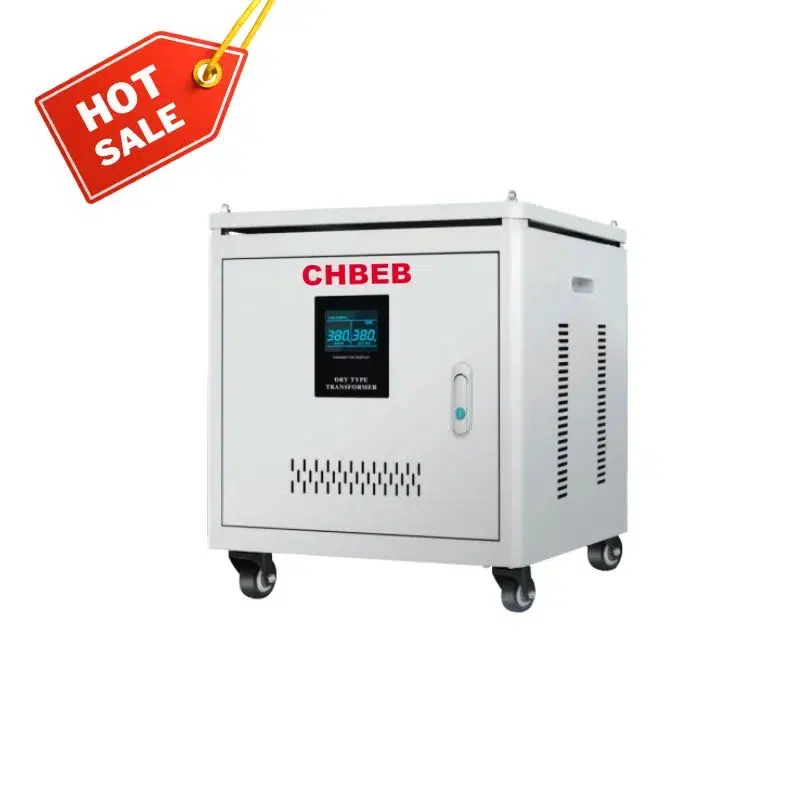
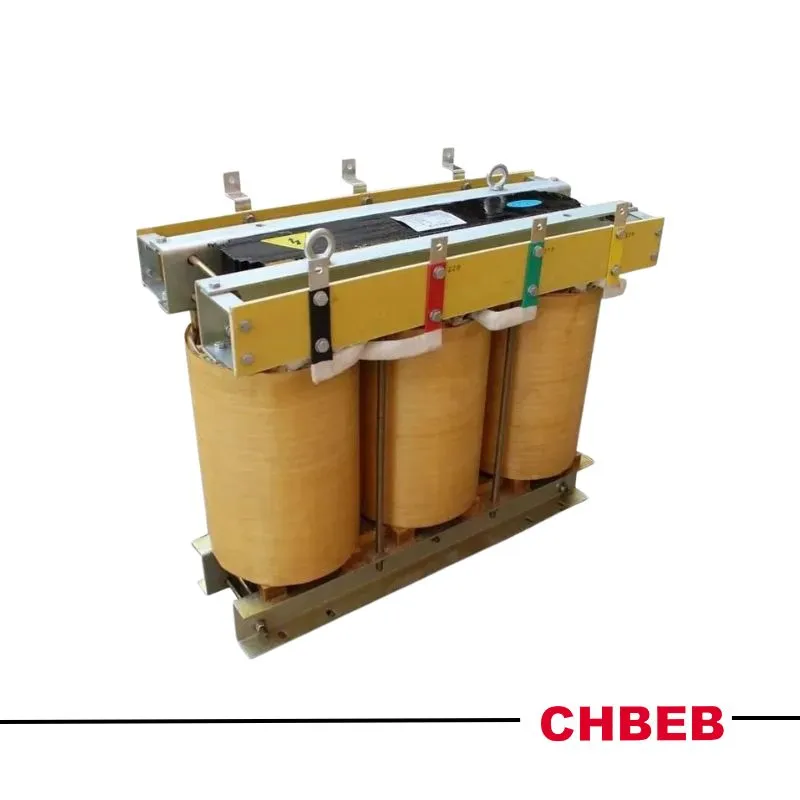
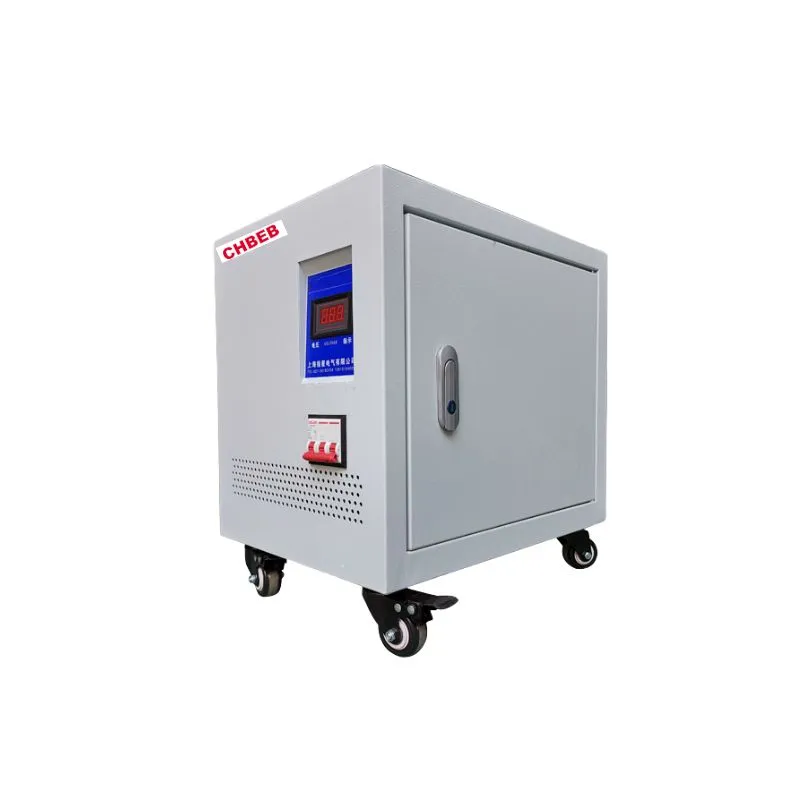
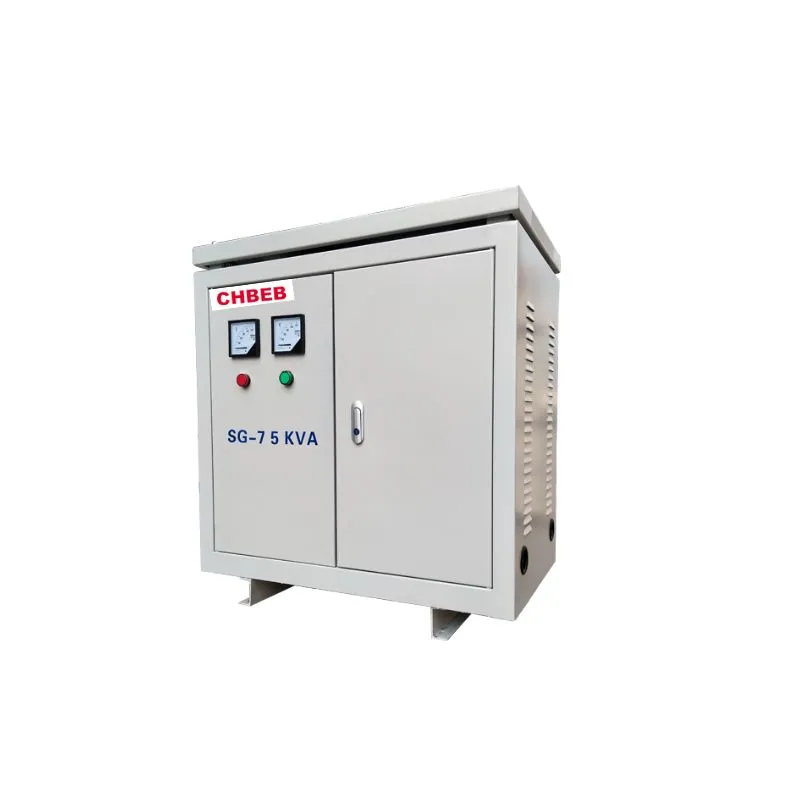
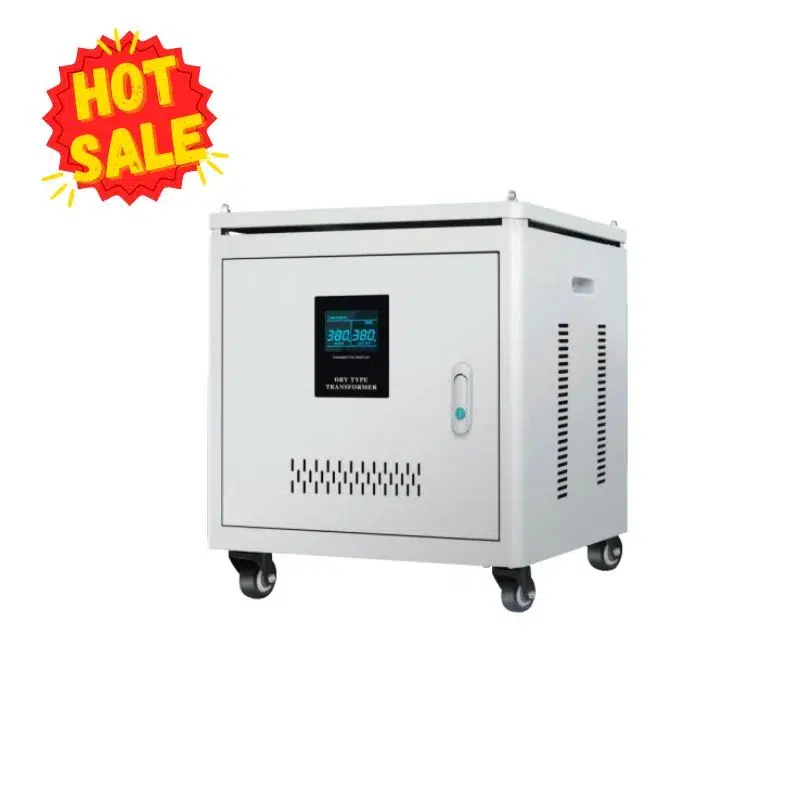
480V to 480V 3 Phase Isolation Transformer

Primary Voltage: 480V

Secondary Voltage: 480V

Power Rating: 7 KVA or customize

Connection Type: Dyn11 (Delta-Primary, Wye-Secondary with neutral), or other configurations

Transformer Type: Dry Type Transformer

Standards: ANSI/IEEE, CSA/CAN, DOE

Certificates: UL, cUL, CSA, SGS, CE

Product Introduction

The working principle of the 480V to 480V three-phase isolation transformer is based on electromagnetic induction. It converts the 480V voltage on the primary side into 480V voltage on the secondary side. During this process, the transformer achieves voltage conversion through electromagnetic coupling between the primary and secondary sides, enabling voltage step-up or step-down.

The function of the three-phase isolation transformer is to independently isolate each phase in the three-phase circuit, ensuring electrical safety and stability between the phases.

CHBEB has mainly exported this product to the Middle East, Europe, and America markets in the past. The product has complete CE and UL certifications and supports customer customization options.

Product Features

Electrical Isolation

CHBEB isolation transformers adopt a complete isolation structure between the primary and secondary windings, preventing direct current flow, reducing leakage risks, and improving the safety of system operation.

Noise Suppression

Through electrical isolation between the primary and secondary sides, it can effectively eliminate noise interference caused by ground loops, improve the power supply environment, and enhance equipment operating stability.

Voltage Stability

With a 1:1 voltage ratio design, although the voltage level is not changed, the isolation transformer can provide stable output voltage and reduce the impact of voltage fluctuations on equipment.

Robust and Durable Design

CHBEB has many years of experience in manufacturing dry-type transformers. It adopts mature dry-type insulation structures, ensuring simple operation and maintenance, excellent mechanical strength, and long-term operating reliability.

Comparison of the Advantages of Conventional Transformers and Isolation Transformers

1. Anti-Interference Requirements

Conventional Transformer

  • Mainly responsible for voltage conversion and power transmission functions.
  • Suitable for supplying power to conventional industrial machinery.
  • Generally used for the power supply needs of standard industrial equipment, lighting systems, and power systems.

Isolation Transformer

  • CHBEB isolation transformers adopt a complete electrical isolation structure.
  • Suitable as power supplies for precision laboratory instruments.
  • Suitable for power supply of high-sensitivity detection equipment.

2. Insulation System

Conventional Transformer

  • No special requirements for insulation strength between windings.
  • Uses standard insulation materials to meet basic withstand voltage requirements.

Isolation Transformer

  • CHBEB isolation transformers adopt reinforced insulation design between primary and secondary windings.
  • Use high-performance insulation materials such as polyester film and aramid paper.
  • Some products can be equipped with functions such as temperature monitoring and over-temperature protection according to customer requirements, enabling real-time monitoring of insulation status.

Application Scenarios

The 480V-480V three-phase isolation transformer produced by CHBEB adopts a 1:1 isolation design. While ensuring the input and output voltages remain the same, it achieves electrical isolation between the power supply side and the load side, reducing interference transmission while improving system stability and safety. The product is widely used in applications with high requirements for power supply reliability, such as smart manufacturing, automated industrial production lines, and data centers.

Industrial Automation Systems

Provides isolated power supply for sensitive equipment such as PLCs, sensors, and controllers, reducing power interference transmission and improving the operating stability of automation control systems.

Laboratory and Testing Environments

Provides reliable and stable isolated power supply for precision instruments and testing equipment, ensuring the accuracy and reliability of measurement results.

Special Safety Power Applications

Through electrical isolation between the primary and secondary sides, it improves power supply safety and is especially suitable for environments with high requirements for personnel safety and equipment protection.

Temporary Power Supply Applications

Used in temporary power supply scenarios such as equipment commissioning and construction sites, providing isolation protection and preventing unexpected accidents.

Regardless of the application scenario, CHBEB can provide suitable isolation transformer solutions according to your requirements. Contact us, and we will recommend the appropriate isolation transformer based on your specific needs to help improve system reliability and reduce operational risks.

480V to 480V Three-Phase Isolation Transformer Electrical Parameters

Parameter Item Recommended Value
Product Type Three-Phase Dry-Type Isolation Transformer
Input Voltage 480V AC
Output Voltage 480V AC
Voltage Ratio 1:1
Phase Three Phase
Rated Frequency 50/60 Hz dual-frequency design
Winding Structure Independent primary and secondary windings with galvanic isolation
Input Connection Δ (Delta) or Y (Star), per customer requirements
Output Connection Δ (Delta) or Y (Star), per customer requirements
Recommended Vector Group Dd0, Dyn11 or Yyn0
Output Neutral Line Optional; 480Y/277V for single-phase 277V output
Input Voltage Tap ±2×2.5%; ±5% recommended to accommodate grid fluctuations
Impedance Voltage 4%–6%; 4% recommended
No-load Current ≤3%
Voltage Regulation Rate ≤3%–5%
Efficiency ≥97% recommended; subject to capacity
Insulation Class Class H
Temperature Rise Limit 115K or 125K; 115K recommended for high-temperature regions
Cooling Method AN, Natural Air Cooling
Electrostatic Shield Electrostatic shielding layer between primary and secondary windings
Insulation Resistance ≥100MΩ between windings and winding-to-ground
Power Frequency Withstand Voltage Primary to secondary and ground: 3kV/1min, or per applicable standards
Grounding Independent protective grounding terminal; shielding layer separately grounded
Duty Cycle Continuous duty
Waveform Distortion Output voltage THD ≤3% recommended
Noise ≤55–60 dB recommended; subject to capacity
Protection Rating Indoor IP23/NEMA 1; Outdoor IP54/NEMA 3R
Ambient Temperature Standard -20°C to +40°C; Middle East version up to +50°C
Altitude ≤1000m; derating or special design required above 1000m
Winding Material Copper winding preferred; aluminum winding optional
Cable Entry/Exit Bottom or top entry, customizable
Installation Method Floor-standing or cabinet-mounted
Frequency Compatibility 50Hz design is compatible with 60Hz; 60Hz-only design cannot be used directly at 50Hz

Ask For A Quick Quote

We will reply to you within 1–2 business days.Please pay attention to the email with the suffix”@chbebpower.com”.