Send us a message if you have any questions or request a quote. Our experts will give you a reply within 24 hours and help you select the right valve you want.
It’s hard to know which transformer to choose. If you choose the wrong one, you risk safety, downtime, and higher costs. Dry-type transformers1 fix this by using safer insulation and being easier to maintain. They are perfect for projects in Southeast Asia, Africa, the Middle East, Russia, and Belt & Road countries.
What is a Dry Transformer?
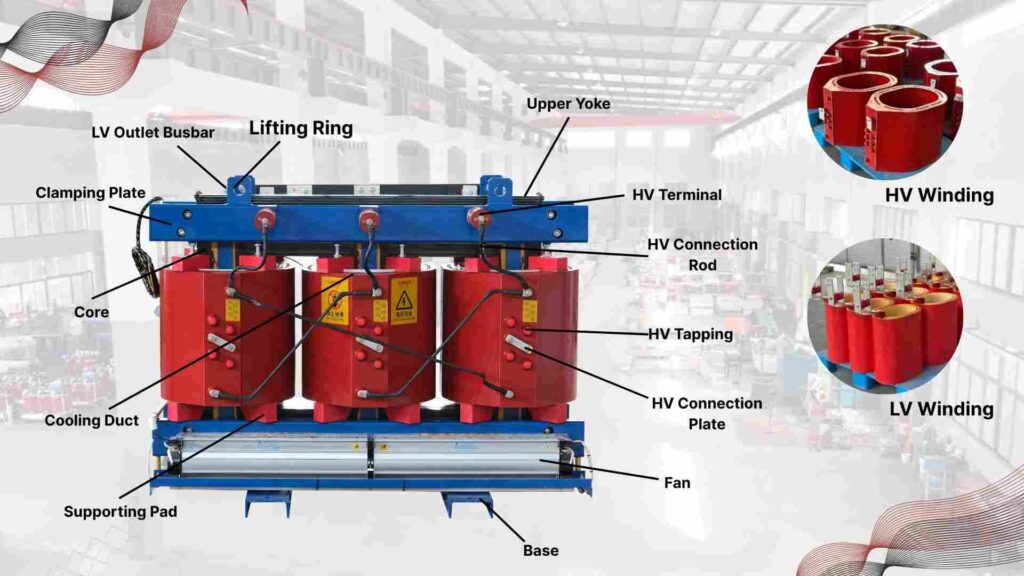
dry type transformer cutaway diagram
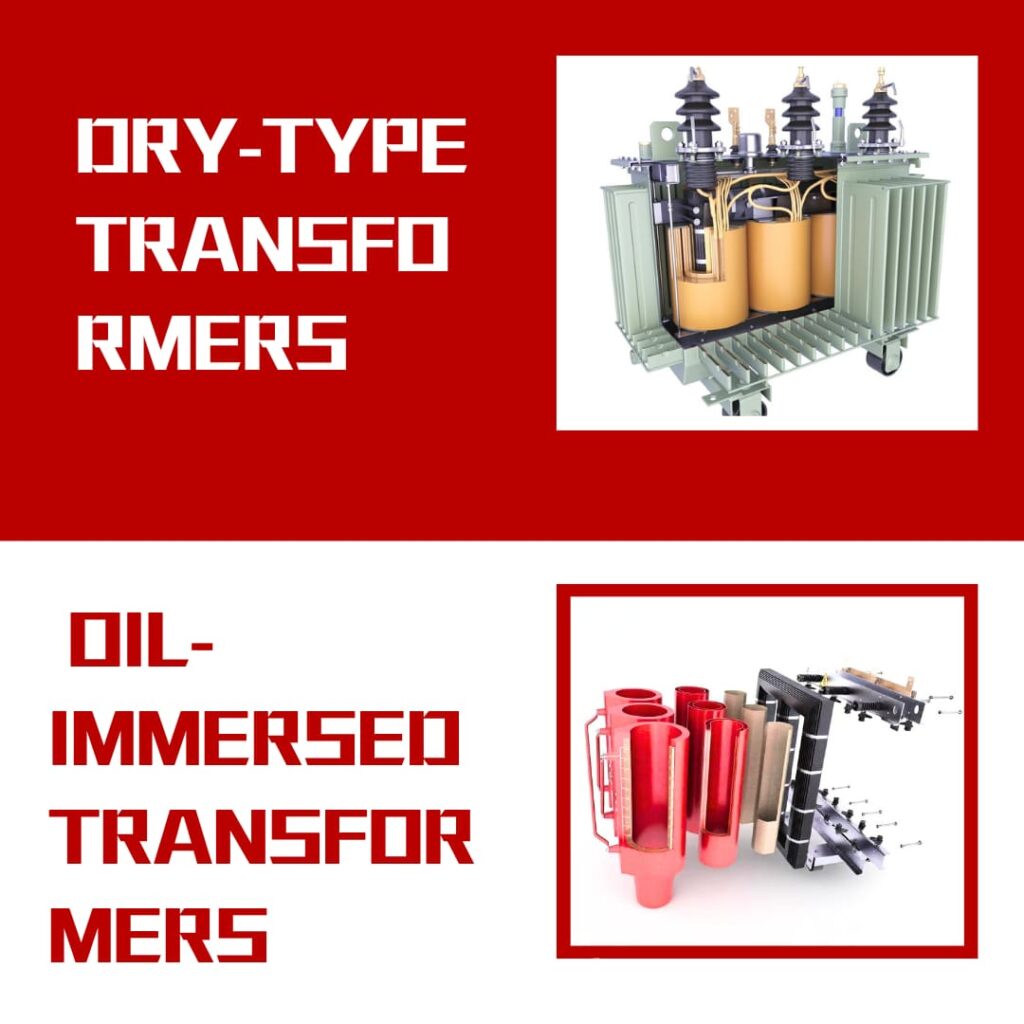
A dry-type transformer is an electrical transformer that uses air or gas as the insulating medium instead of liquid. Unlike oil-immersed transformers, it does not rely on insulating oil for cooling or insulation.
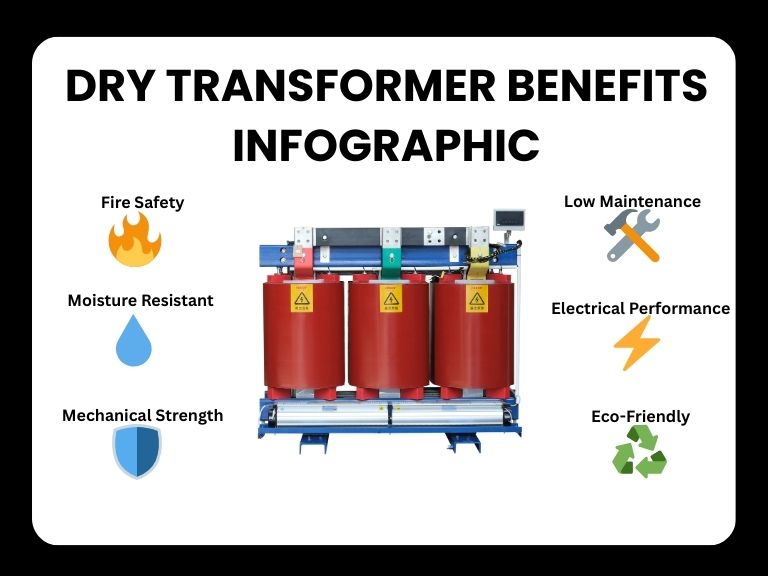
Dry transformers offer several advantages:
Safety & Reliability – With no liquid to leak or ignite, they significantly reduce fire and environmental risks.
Low Maintenance – Since there is no oil, there is no need for periodic oil testing, replacement, or leak checks, lowering long-term maintenance costs.
Compact & Lightweight – For the same power rating, dry-type transformers are usually smaller and lighter because they use efficient coil designs that save space.
Durability – Their robust insulation structure makes them suitable for indoor use and harsh environments without risk of oil degradation.
dry transformer benefits infographic
These benefits make dry-type transformers a preferred choice in applications such as commercial buildings, hospitals, data centers, and other locations where safety and reliability are critical.
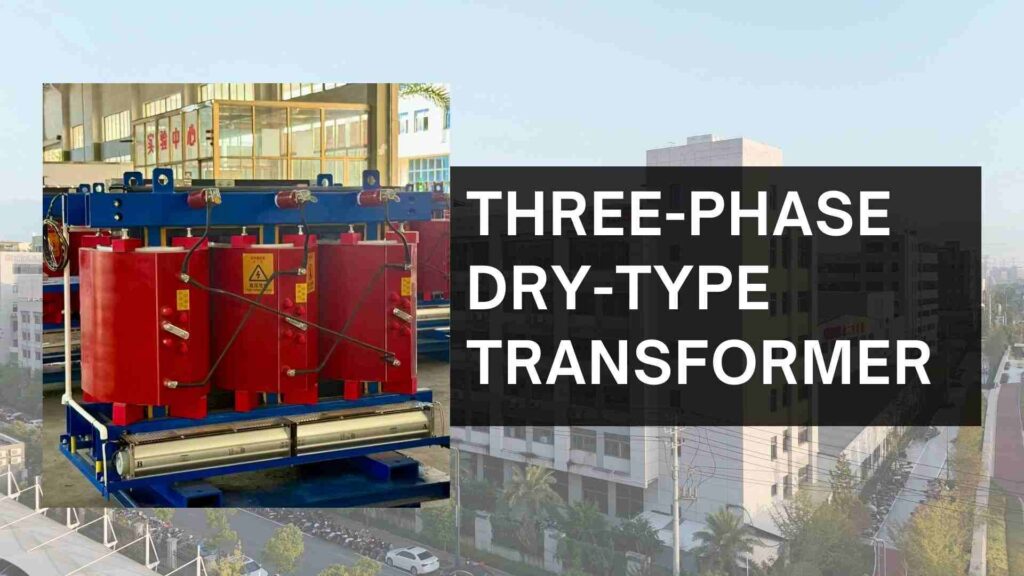
A three-phase dry-type transformer is a self-cooled transformer designed with two windings and available in a wide range of primary and secondary voltage combinations. It is widely used in industrial and commercial applications where large power capacity is required.
Operating on a three-phase power supply, the transformer is built with three sets of windings on both the primary and secondary sides. This design ensures efficient power distribution, reduced conductor material requirements, and stable performance under heavy loads.
What is the Use of a Dry Transformer?
Dry-type transformers are static electrical devices that rely on air circulation and high-temperature insulation materials (such as DuPont Nomex) for cooling. During voltage conversion, heat generated in the windings is effectively dissipated through this air-insulation system, ensuring safe and reliable operation.
These transformers are commonly installed in indoor environments where exposure to water or liquid is minimal. Thanks to their non-flammable insulation system, they are also the preferred choice in fire-sensitive locations such as chemical plants, oil refineries, and high-occupancy buildings.
Dry Type Transformer Standards
Unclear standards create hidden risks. Certified ratings ensure efficiency and compliance. Typical 1.2 kV class benchmarks:
Single-Phase:
15 kVA at 97.70
50 kVA at 98.30
100 kVA at 98.60
250 kVA at 98.80
Three-Phase:
30 kVA at 98.23
112.5 kVA at 98.70
300 kVA at 99.02
1000 kVA at 99.28
📌 For buyers: higher efficiency = lower long-term energy costs, critical for African utilities and Southeast Asian commercial centers.
A dry-type distribution transformer is the final stage of an electrical distribution system, stepping down voltage from the secondary side of the main power transformer to the level required by end-user loads.
Unlike oil-filled transformers, it uses air or gas insulation instead of liquid. In some designs, the unit is pressurized with nitrogen gas, which helps prevent moisture absorption, mold growth, and insulation degradation.
Dry-type distribution transformers are suitable for both indoor and outdoor installations. They can be placed in vaults, mounted on poles, or installed underground, providing protection against weather conditions and unauthorized access.
Prices vary by copper/aluminum windings, loss levels (0.6 vs 1.1), and IEC/UL certification.
What are the Advantages of a Dry Transformer?
Key Advantages of Dry-Type Transformers
1. Better Overload Capacity
Dry-type transformers can handle overloads more effectively than oil-filled transformers. Their windings are naturally cooled by surrounding air, reducing the risk of overheating during peak loads.
Partial discharge is a common cause of insulation failure in transformers, typically occurring in tiny voids within the insulation. Dry-type transformers minimize this risk because their windings are embedded in solid insulation material, free from air gaps or voids.
3. Outdoor Installation Ready
Thanks to their oil-free design, dry transformers eliminate the risk of leakage. They can be safely installed outdoors within IP45-rated enclosures, ensuring reliable operation in diverse environments.
4. Zero Fire Hazard
With non-flammable air or resin insulation, dry-type transformers pose virtually no fire risk. This makes them safer than oil-immersed transformers, where flammable insulating oil increases fire hazards.
5. Non-Hygroscopic Design
Dry-type transformers do not absorb moisture from the atmosphere. This resistance to humidity and corrosion makes them highly reliable for outdoor and high-moisture environments.
Can Dry Transformers Be Used Outside?
Yes—if properly enclosed. Use IP-23, IP-45, or IP-54 protection to resist dust, humidity, and water jets.
How Are Dry Transformers Cooled?
Self-cooling (AN): Air circulation, typical for schools/offices
Forced cooling (AF): Fans or blowers, needed in data centers and heavy industry
Buyers should compare transformer price quotes from different dry transformer suppliers in China to balance quality vs. cost.
CHBEB — Reliable Partner for Distribution Transformers
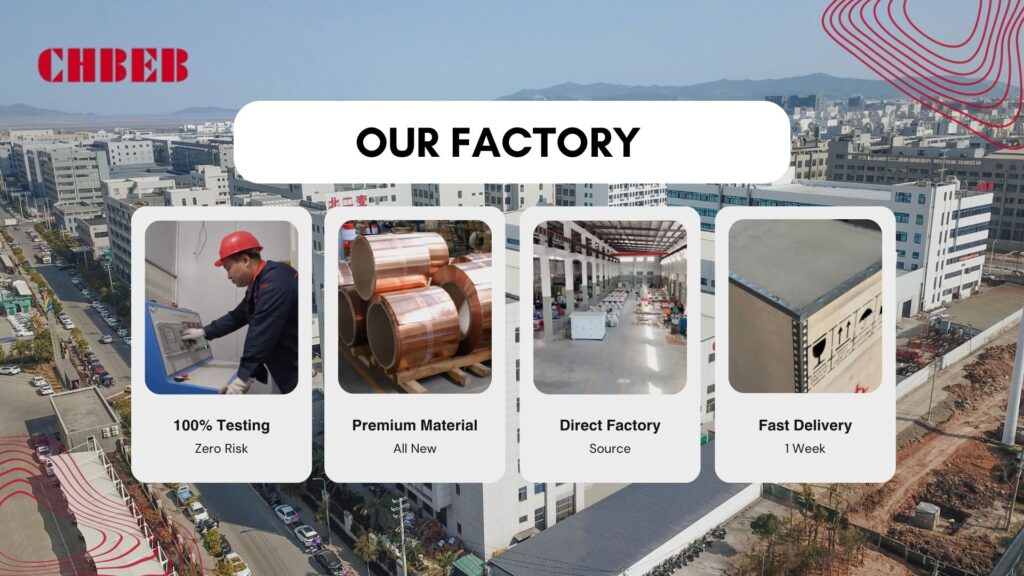
CHBEB transformer factory
With over 60 years of transformer manufacturing expertise, CHBEB has become one of China’s most trusted distribution transformer suppliers. The company operates two factories in Wenzhou, one in Nanjing, and an office in Beijing, ensuring both strong production capacity and responsive customer support.
What makes CHBEB stand out:
Strict Quality Commitment: All raw materials are 100% new and high-grade — no recycled or downgraded components.
Proven Reliability: A qualified supplier for the State Grid Corporation of China, with a spotless record of zero major accidents.
100% Product Testing: Every unit is fully tested before delivery to guarantee safety, efficiency, and long service life.
Fast-Track Orders: Ability to fulfill urgent orders in as little as one week, helping customers meet tight project deadlines.
Custom Inventory Planning: Flexible stocking and supply strategies designed to align with customer procurement schedules.
Global Outlook: Rooted in China and expanding worldwide, CHBEB actively supports local agents and partners, including assistance with market-specific certifications.
Flexible Customization: Tailored transformer designs for utilities, contractors, and industrial clients, with reliable quality and fast delivery.
Bulk/custom orders: up to 12 months depending on supplier capacity
How to Choose a Reliable Dry Transformer Supplier in China?
Check IEC/ISO certifications
Verify project references in your region
Request factory test reports before placing an order
Compare 2–3 dry transformer suppliers China for fair price & quality assurance
Conclusion
In 2025, dry transformers remain the safer and more sustainable choice for critical projects. But the key is not only what you buy, but how you buy it.
Hello! 👋 Welcome to CHBEB.
We are a transformer manufacturer with 60+ years of experience.
✅ Distribution & Power Transformers (Oil & Dry Type)
✅ Customized EPC & OEM Solutions
✅ Fast Delivery & International Certifications