Send us a message if you have any questions or request a quote. Our experts will give you a reply within 24 hours and help you select the right valve you want.
Are you struggling to choose the right dry type transformer for your project? With so many options available, it’s easy to feel overwhelmed. But making the wrong choice could lead to inefficiency, increased costs, or even safety risks.
Dry type transformers come in three main types: cast resin, VPI (Vacuum Pressure Impregnated), and epoxy encapsulated. Cast resin transformers offer excellent moisture resistance and are ideal for indoor use. VPI transformers are cost-effective and suitable for industrial applications. Epoxy encapsulated transformers excel in harsh environments. Each type has unique characteristics, advantages, and ideal use cases, which we’ll explore in detail to help you make an informed decision.
Dry Type Transformer Types
In this comprehensive guide, I’ll break down the key differences between cast resin, VPI, and epoxy encapsulated transformers. We’ll explore their structures, benefits, and ideal applications, helping you make the best choice for your specific needs. Whether you’re an engineer, project manager, or procurement specialist, this information will be invaluable in your decision-making process.
What Are Dry Type Transformers? Basic Definition and Benefits?
Have you ever wondered why some transformers don’t use oil for cooling? Or perhaps you’ve heard about dry type transformers but aren’t sure how they differ from traditional oil-filled units? Let’s dive into the world of dry type transformers and uncover their unique advantages.
Dry type transformers are electrical transformers that use air or solid insulation instead of oil for cooling and insulation. They offer enhanced safety, reduced fire risk, and minimal maintenance compared to oil-filled transformers. Dry type transformers are ideal for indoor installations, environmentally sensitive areas, and applications where oil leakage could be hazardous. They come in various types, including cast resin, VPI, and epoxy encapsulated, each suited for different environments and requirements.
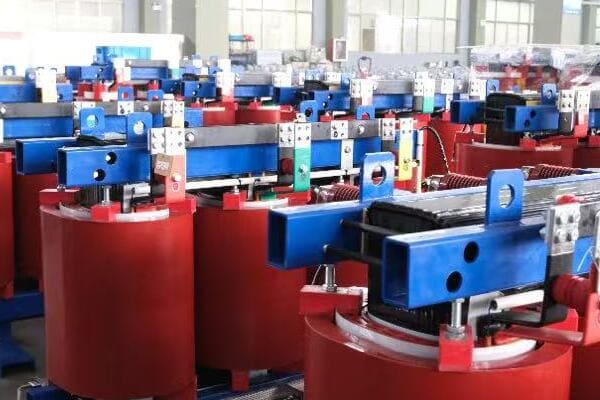
Dry Type Transformer Structure
Key Aspects of Dry Type Transformers
Let’s explore the fundamental characteristics and benefits of dry type transformers:
Basic Structure and Components
Cooling Methods
Safety and Environmental Benefits
Maintenance Requirements
Common Applications
Basic Structure and Components
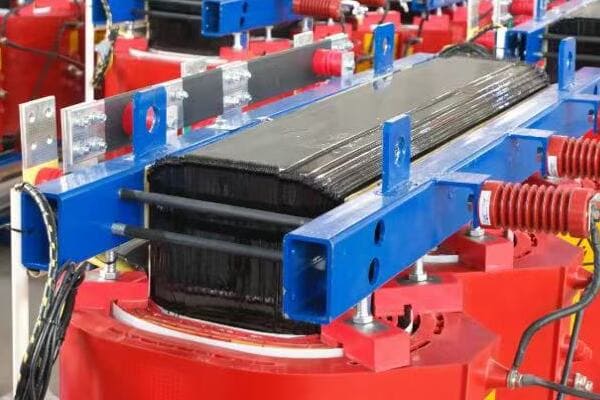
The anatomy of a dry type transformer:
Core (typically made of silicon steel)
Primary and secondary windings
Insulation material (air, epoxy resin, or other solid materials)
Enclosure or housing
I remember the first time I opened a dry type transformer during my early days as an engineer. The absence of oil and the clean, compact design immediately struck me. It was a stark contrast to the oil-filled units I was used to, and it sparked my interest in these innovative designs.
Cooling Methods
How dry type transformers manage heat:
Natural air cooling (AN)
Forced air cooling (AF)
Combination of natural and forced air cooling (ANAF)
During a recent project for a high-rise building, we opted for a dry type transformer with forced air cooling. This choice allowed us to install the transformer in a smaller space while still meeting the building’s power requirements, showcasing the flexibility of dry type cooling methods.
Safety and Environmental Benefits
Advantages over oil-filled transformers:
Reduced fire risk due to absence of flammable oil
No risk of oil leaks or spills
Environmentally friendly, especially in sensitive areas
Renewable energy projects (wind farms, solar installations)
Key points about dry type transformers:
They use air or solid materials for insulation instead of oil
Dry type transformers offer enhanced safety and reduced fire risk
They are ideal for indoor and environmentally sensitive installations
Maintenance requirements are generally lower than oil-filled units
Various types exist, each suited for specific applications
In my experience, the versatility of dry type transformers has made them increasingly popular across various industries. I recall a project for a data center where the client was initially skeptical about using dry type transformers due to concerns about cooling efficiency. After implementing a forced air cooling system and demonstrating the safety benefits, the client was not only satisfied but also decided to standardize dry type transformers across their facilities.
For example, in a recent renewable energy project involving offshore wind turbines, we faced the challenge of installing transformers in a corrosive, space-constrained environment. By selecting epoxy encapsulated dry type transformers, we were able to ensure reliable operation in the harsh marine conditions while minimizing maintenance requirements – a crucial factor for offshore installations.
As we move on to discuss specific types of dry transformers, remember that each type has its unique strengths and ideal applications. Understanding these differences is key to selecting the right transformer for your specific needs.
Cast Resin Transformers: Structure, Use Cases, and Pros & Cons?
Have you ever wondered why some transformers look like they’re encased in solid blocks? Or perhaps you’ve heard about cast resin transformers but aren’t sure how they differ from other dry types? Let’s unravel the mystery of cast resin transformers and discover why they’re a popular choice in many applications.
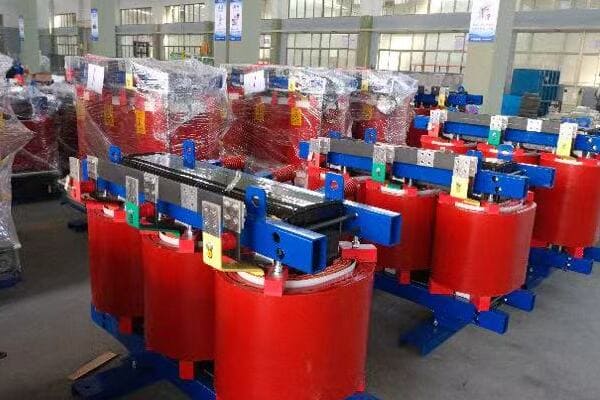
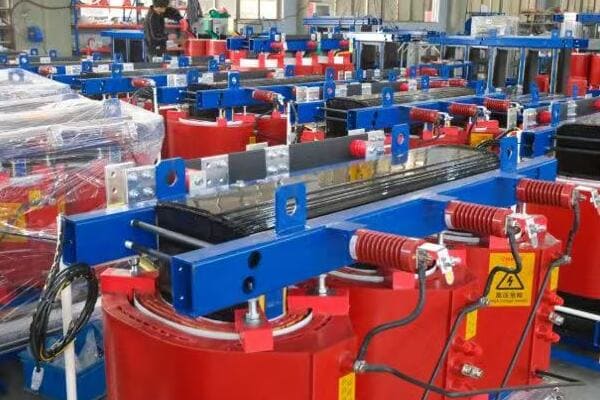
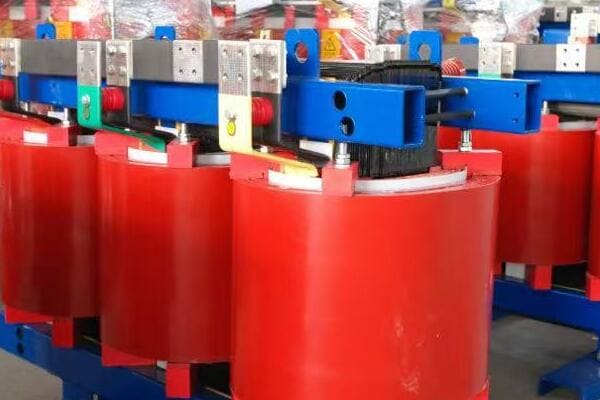
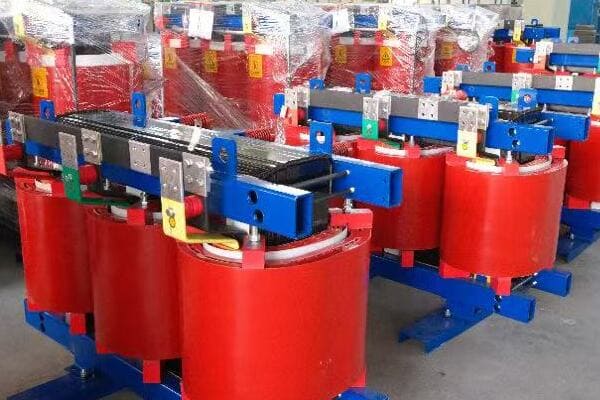
Cast resin transformers are dry type transformers where the windings are encapsulated in epoxy resin. This design offers excellent protection against moisture, dust, and chemical contaminants. They’re ideal for indoor installations, especially in humid or polluted environments. Cast resin transformers provide high short-circuit strength, good overload capacity, and minimal maintenance requirements. They’re commonly used in commercial buildings, industrial facilities, and areas where fire safety is a primary concern.
Cast Resin Transformer Structure
Key Aspects of Cast Resin Transformers
Let’s dive deeper into the characteristics and applications of cast resin transformers:
Structure and Manufacturing Process
Cooling and Insulation Properties
Advantages and Limitations
Typical Applications
Maintenance Considerations
Structure and Manufacturing Process
How cast resin transformers are made:
Windings are wound with insulated conductors
Coils are placed in molds and filled with epoxy resin under vacuum
Resin is cured to form a solid, void-free insulation
I once visited a manufacturing facility specializing in cast resin transformers. Watching the vacuum casting process was fascinating – seeing how the liquid resin transformed into a solid, protective shell around the windings gave me a new appreciation for the engineering behind these transformers.
Cooling and Insulation Properties
Managing heat and ensuring proper insulation:
Natural air cooling is most common (AN)
Forced air cooling can be added for higher capacities (AF)
Excellent thermal properties of epoxy resin aid in heat dissipation
During a recent project for a chemical plant, we chose cast resin transformers specifically for their superior insulation properties. The epoxy encapsulation provided excellent protection against the corrosive atmosphere, ensuring long-term reliability in a challenging environment.
Advantages and Limitations
Pros and cons of cast resin transformers:
Advantages
Limitations
Excellent moisture resistance
Higher initial cost compared to VPI
High short-circuit strength
Heavier than other dry types
Fire-resistant (self-extinguishing)
Limited to indoor or protected installations
Low maintenance requirements
Potential for cracking under extreme thermal cycling
Environmentally friendly
Typical Applications
Where cast resin transformers shine:
Commercial buildings (offices, shopping centers)
Hospitals and healthcare facilities
Educational institutions
Industrial plants with humid or polluted environments
Underground or subway installations
Maintenance Considerations
Keeping cast resin transformers in top shape:
Regular visual inspections for cracks or damage
Cleaning of ventilation openings
Checking of electrical connections
Monitoring of ambient conditions (temperature, humidity)
Key points about cast resin transformers:
Windings are fully encapsulated in epoxy resin
They offer excellent protection against environmental factors
Cast resin transformers have high short-circuit strength
They’re ideal for indoor installations in challenging environments
Maintenance requirements are minimal but regular inspections are crucial
In my experience, cast resin transformers have proven invaluable in projects where reliability and safety are paramount. I recall a hospital expansion project where we needed to install transformers close to sensitive medical equipment. The cast resin units were perfect – their low electromagnetic emissions and fire-resistant properties provided the necessary safety assurances, while their compact design fit well within the space constraints.
For example, in a recent project involving a data center in a coastal area, we faced the challenge of high humidity and salt-laden air. By implementing cast resin transformers, we were able to ensure reliable power distribution without the risk of moisture ingress or corrosion that could have plagued other transformer types. The client was particularly impressed by the low maintenance requirements, which translated to reduced operational costs over time.
As we move on to discuss VPI transformers, keep in mind that while cast resin transformers excel in many applications, each type of dry transformer has its unique strengths. Understanding these differences is key to selecting the right transformer for your specific needs.
VPI (Vacuum Pressure Impregnated) Transformers: How They Work and When to Use Them?
Have you ever wondered how some transformers achieve excellent insulation without the bulk of cast resin? Or perhaps you’re curious about a more cost-effective alternative to cast resin transformers? VPI transformers might be the answer you’re looking for. But what exactly are they, and when should you consider using them?
VPI (Vacuum Pressure Impregnated) transformers are dry type transformers where the windings are impregnated with varnish under vacuum and pressure. This process fills voids and creates a uniform insulation layer. VPI transformers offer good moisture resistance, excellent heat dissipation, and are generally more cost-effective than cast resin types. They’re ideal for industrial applications, indoor substations, and projects where budget constraints are a factor. VPI transformers provide a balance of performance and economy.
VPI Transformer Manufacturing Process
Key Aspects of VPI Transformers
Let’s explore the main features and applications of VPI transformers:
Manufacturing Process
Insulation and Cooling Characteristics
Advantages and Limitations
Typical Use Cases
Maintenance Requirements
Manufacturing Process
How VPI transformers are made:
Windings are wound with insulated conductors
Coils are placed in a vacuum chamber
Air is removed, and varnish is introduced under pressure
Varnish is cured to create a solid insulation layer
I remember visiting a factory that produced both cast resin and VPI transformers. The VPI process was particularly intriguing – watching the varnish penetrate every nook and cranny of the windings under vacuum was like seeing the transformer come to life. This experience gave me a deep appreciation for the engineering precision involved in creating these efficient machines.
Insulation and Cooling Characteristics
Managing heat and ensuring proper insulation:
Natural air cooling is common (AN)
Forced air cooling can be added for higher capacities (AF)
Varnish provides good heat dissipation and moisture resistance
During a recent industrial project, we opted for VPI transformers with forced air cooling. This choice allowed us to meet the high power demands of the facility while maintaining a compact footprint. The excellent heat dissipation properties of the VPI insulation system proved crucial in maintaining efficiency under heavy loads.
Advantages and Limitations
Pros and cons of VPI transformers:
Advantages
Limitations
Cost-effective compared to cast resin
Less moisture resistant than cast resin
Good heat dissipation
May require more frequent maintenance
Lighter weight than cast resin
Not suitable for extremely harsh environments
Suitable for most indoor applications
Limited outdoor use without additional protection
Can be rewound if damaged
Typical Use Cases
Where VPI transformers excel:
Industrial facilities and factories
Indoor substations
Commercial buildings with controlled environments
Renewable energy projects (wind and solar farms)
Educational institutions
Maintenance Requirements
Keeping VPI transformers in top condition:
Regular visual inspections for signs of varnish degradation
Cleaning of ventilation systems
Checking of electrical connections
Monitoring of ambient conditions (temperature, humidity)
Possible re-varnishing after long periods of use
Key points about VPI transformers:
Windings are impregnated with varnish under vacuum and pressure
They offer a good balance of performance and cost-effectiveness
VPI transformers have excellent heat dissipation properties
They’re ideal for most indoor industrial and commercial applications
Maintenance is more involved than cast resin but less than oil-filled types
In my experience, VPI transformers have often been the go-to choice for projects where budget constraints are a significant factor, but performance can’t be compromised. I recall a large-scale factory upgrade where the client needed to replace multiple transformers across various production lines. By choosing VPI transformers, we were able to provide reliable power distribution at a cost that fit within the project’s budget constraints. The client was particularly pleased with the balance of performance and economy.
For example, in a recent solar farm project, we faced the challenge of installing multiple transformers in a relatively controlled environment, but with strict budget limitations. VPI transformers proved to be the perfect solution. Their good performance in moderate indoor conditions, combined with their cost-effectiveness, allowed us to optimize the power distribution system without exceeding the project’s financial constraints. The ability to easily maintain and potentially rewind these transformers also appealed to the client’s long-term operational planning.
As we move on to discuss epoxy encapsulated transformers, remember that while VPI transformers offer an excellent balance of performance and cost, each type of dry transformer has its specific strengths and ideal applications. Understanding these nuances is key to making the best choice for your particular needs.
Epoxy Encapsulated Transformers: Best for Harsh Environments?
Have you ever wondered what type of transformer could withstand the most challenging conditions? Or perhaps you’re facing a project where standard dry type transformers just won’t cut it? Epoxy encapsulated transformers might be the solution you’re looking for. But what makes them so special, and are they really the best choice for harsh environments?
Epoxy encapsulated transformers are dry type transformers where the entire core and coil assembly is fully encased in epoxy resin. This design provides superior protection against moisture, dust, and chemical contaminants, making them ideal for harsh environments. They offer excellent resistance to thermal shock, high mechanical strength, and can withstand extreme temperatures. Epoxy encapsulated transformers are commonly used in offshore installations, chemical plants, and other challenging industrial settings where reliability under severe conditions is crucial.
Epoxy Encapsulated Transformer Structure
Key Aspects of Epoxy Encapsulated Transformers
Let’s delve into the main features and applications of epoxy encapsulated transformers:
Design and Manufacturing Process
Environmental Resistance Properties
Advantages and Limitations
Ideal Applications
Maintenance and Longevity
Design and Manufacturing Process
How epoxy encapsulated transformers are created:
Core and coil assembly is prepared
Entire assembly is placed in a mold
Epoxy resin is injected under vacuum
Resin is cured to form a solid, void-free encapsulation
I once had the opportunity to witness the manufacturing process of an epoxy encapsulated transformer. The precision required to ensure complete and uniform encapsulation was impressive. Seeing the finished product – a solid, monolithic unit – gave me a new appreciation for the robustness of these transformers.
Environmental Resistance Properties
Withstanding harsh conditions:
Excellent resistance to moisture and humidity
High tolerance to chemical exposure
Ability to withstand extreme temperatures
Resistance to vibration and mechanical stress
During a recent offshore wind farm project, we specified epoxy encapsulated transformers for the turbine platforms. Their ability to withstand the corrosive sea air, constant vibrations, and temperature fluctuations proved crucial in ensuring reliable power transmission from the turbines to the grid.
Advantages and Limitations
Pros and cons of epoxy encapsulated transformers:
Advantages
Limitations
Superior environmental protection
Higher cost compared to other dry types
Excellent mechanical strength
Heavier weight
Resistant to thermal shock
Limited ability to dissipate heat in very high ambient temperatures
Can be used in outdoor installations
Difficult to repair if damaged
Long lifespan in harsh conditions
Ideal Applications
Where epoxy encapsulated transformers excel:
Offshore oil and gas platforms
Chemical and petrochemical plants
Mining operations
Coastal and marine environments
Outdoor installations in extreme climates
Areas with high pollution or dust levels
Maintenance and Longevity
Ensuring long-term performance:
Minimal maintenance requirements due to full encapsulation
Regular visual inspections for any external damage
Monitoring of electrical parameters
Cleaning of external surfaces to maintain heat dissipation
Key points about epoxy encapsulated transformers:
Entire core and coil assembly is fully encased in epoxy resin
They offer superior protection against harsh environmental factors
Epoxy encapsulated transformers have excellent mechanical strength
They’re ideal for extreme environments and outdoor installations
Maintenance is minimal, but regular monitoring is still important
In my experience, epoxy encapsulated transformers have been lifesavers in some of the most challenging projects I’ve worked on. I recall a project for a chemical plant located in a tropical, coastal area. The combination of high humidity, salt air, and corrosive chemical vapors would have quickly degraded most other transformer types. The epoxy encapsulated units we installed have been running flawlessly for years, with minimal maintenance required.
For example, in a recent mining project in a remote, arid region, we faced the challenge of extreme temperature fluctuations and high dust levels. Epoxy encapsulated transformers were the clear choice. Their robust construction withstood the harsh conditions, and the sealed design prevented dust ingress. The client was particularly impressed by the transformers’ reliability, which significantly reduced downtime and maintenance costs compared to their previous installations.
As we move on to compare these different types of dry transformers, it’s important to remember that while epoxy encapsulated transformers excel in harsh environments, each type has its own strengths and ideal applications. The key is to match the transformer type to your specific environmental and operational requirements.
Comparison Table: Cast Resin vs VPI vs Epoxy Encapsulated
When it comes to choosing the right dry type transformer for your project, understanding the key differences between cast resin, VPI, and epoxy encapsulated transformers is crucial. But with so many factors to consider, how can you easily compare these types side by side? Let’s break it down in a comprehensive comparison table.
Cast resin, VPI, and epoxy encapsulated transformers each have unique characteristics that make them suitable for different applications. Cast resin offers excellent moisture resistance and is ideal for indoor use. VPI transformers are cost-effective and suitable for most industrial applications. Epoxy encapsulated transformers excel in harsh environments. The choice depends on factors like environmental conditions, maintenance requirements, and budget constraints. This comparison will help you identify the best option for your specific needs.
Dry Type Transformer Comparison Chart
Detailed Comparison of Dry Type Transformers
Let’s dive into a comprehensive comparison of these three transformer types:
Feature
Cast Resin
VPI
Epoxy Encapsulated
Structure
Windings encapsulated in epoxy
Windings impregnated with varnish
Entire assembly encased in epoxy
Moisture Resistance
Excellent
Good
Superior
Chemical Resistance
Very Good
Good
Excellent
Mechanical Strength
High
Moderate
Very High
Heat Dissipation
Good
Very Good
Good
Weight
Heavy
Lighter
Heaviest
Cost
High
Moderate
Highest
Maintenance
Low
Moderate
Very Low
Typical Applications
Indoor, moisture-sensitive areas
Industrial, cost-sensitive projects
Harsh, corrosive environments
Outdoor Suitability
Limited
Limited
Suitable with proper enclosure
Overload Capacity
Good
Good
Excellent
Noise Level
Low
Low to Moderate
Low
Repairability
Difficult
Possible
Very Difficult
Lifespan
Long
Moderate to Long
Very Long
Key Insights from the Comparison
Environmental Protection:
Epoxy encapsulated transformers offer the highest level of protection against environmental factors, making them ideal for the harshest conditions. Cast resin follows closely, while VPI provides good protection for most indoor industrial applications.
Cost Considerations:
VPI transformers are generally the most cost-effective option, making them attractive for large-scale industrial projects. Cast resin offers a balance of performance and cost, while epoxy encapsulated transformers come at a premium but offer unparalleled durability in extreme conditions.
Maintenance Requirements:
Epoxy encapsulated transformers require the least maintenance, followed by cast resin. VPI transformers may need more frequent inspections and potential re-varnishing over time.
Application Flexibility:
Cast resin transformers are versatile for various indoor applications. VPI transformers excel in industrial settings, while epoxy encapsulated units are the go-to choice for harsh environments and outdoor installations.
Long-term Reliability:
All three types offer good reliability, but epoxy encapsulated transformers typically have the longest lifespan in challenging conditions. Cast resin follows closely, with VPI offering good longevity in appropriate environments.
In my experience, this comparison has been invaluable when consulting with clients on transformer selection. I remember a project where we were upgrading the electrical infrastructure of a large manufacturing complex. Different areas of the facility had varying environmental conditions and budget constraints. By referring to a comparison like this, we were able to strategically deploy a mix of VPI transformers in general industrial areas and cast resin units in more moisture-sensitive locations. This approach optimized both performance and cost-effectiveness across the entire project.
For example, in a recent multi-site renewable energy project, we used this type of comparison to tailor our transformer selections. We chose VPI transformers for the main indoor substations where cost was a significant factor, cast resin units for areas with moderate environmental challenges, and epoxy encapsulated transformers for offshore wind turbine platforms exposed to extreme marine conditions. This strategic mix ensured optimal performance and reliability across all sites while managing the overall project budget effectively.
As we move on to discuss how to choose the right dry type transformer for your application, keep this comparison in mind. It serves as a valuable reference point, but remember that each project has unique requirements that may influence your final decision.
How to Choose the Right Dry Type Transformer for Your Application?
Are you feeling overwhelmed by the options available in dry type transformers? With cast resin, VPI, and epoxy encapsulated transformers each offering unique benefits, how do you determine which one is best suited for your specific application? Let’s break down the decision-making process to help you make an informed choice.
Choosing the right dry type transformer involves considering several key factors: environmental conditions, load requirements, budget constraints, and maintenance capabilities. For indoor applications with moderate environmental challenges, cast resin transformers often provide an excellent balance. VPI transformers are ideal for cost-sensitive industrial projects with controlled environments. Epoxy encapsulated transformers are best for harsh outdoor or highly corrosive conditions. Always consider future expansion needs and long-term operational costs in your decision.
Transformer Selection Flowchart
Key Considerations for Selecting the Right Transformer
Let’s explore the main factors to consider when choosing a dry type transformer:
Environmental Conditions
Load Requirements and Capacity
Installation Location and Space Constraints
Budget Considerations
Maintenance Capabilities and Long-term Costs
Environmental Conditions
Assessing the operating environment:
Indoor vs. outdoor installation
Humidity and moisture levels
Presence of corrosive chemicals or salt air
Temperature extremes and fluctuations
Dust and pollution levels
I once consulted on a project for a coastal industrial facility where the client initially considered VPI transformers to save on costs. After a thorough environmental assessment revealing high humidity and salt content in the air, we recommended cast resin transformers instead. This decision, while more expensive upfront, prevented premature failure and costly replacements down the line.
Load Requirements and Capacity
Matching transformer capacity to your needs:
Current and future power requirements
Peak load considerations
Overload capacity needs
Voltage regulation requirements
During a recent data center expansion project, we had to carefully consider both current needs and future growth. By selecting cast resin transformers with slightly higher capacity than immediately required, we provided room for the planned expansion without needing to replace the units in the near future.
Installation Location and Space Constraints
Considering physical limitations:
Available floor space
Height restrictions
Ventilation and cooling requirements
Accessibility for maintenance and replacement
Here’s a quick guide for space considerations:
Transformer Type
Space Efficiency
Cooling Needs
Installation Flexibility
Cast Resin
Moderate
Good
Indoor, some outdoor with enclosure
VPI
Good
Very Good
Primarily indoor
Epoxy Encapsulated
Low
Moderate
Indoor and outdoor
Budget Considerations
Balancing cost and performance:
Initial purchase cost
Installation expenses
Long-term operational costs
Expected lifespan and replacement costs
Maintenance Capabilities and Long-term Costs
Assessing ongoing care requirements:
Frequency of required inspections
Complexity of maintenance procedures
Availability of skilled maintenance personnel
Potential for repairs or rewinding
Key points for selecting the right transformer:
Carefully assess your environmental conditions
Consider both current and future load requirements
Evaluate installation location and space constraints
Balance initial costs with long-term operational expenses
Assess your maintenance capabilities and resources
In my experience, the most successful transformer selections come from a holistic evaluation of all these factors. I recall a project for a pharmaceutical manufacturing facility where we initially leaned towards VPI transformers due to budget constraints. However, after a comprehensive analysis of the clean room environments, potential for chemical exposure, and the critical nature of the processes, we opted for cast resin transformers. This decision, while more expensive initially, provided the necessary reliability and reduced the risk of contamination, aligning perfectly with the facility’s stringent requirements.
For example, in a recent renewable energy project involving both solar and wind installations, we faced diverse environmental conditions across multiple sites. We implemented a mixed approach: VPI transformers for the main substation where conditions were controlled and cost was a factor, cast resin units for the solar inverter stations exposed to varying weather, and epoxy encapsulated transformers for the offshore wind turbines. This tailored selection ensured optimal performance and reliability across all aspects of the project while managing costs effectively.
As you make your decision, remember that choosing the right dry type transformer is not just about meeting immediate needs—it’s about ensuring long-term reliability, efficiency, and cost-effectiveness for your specific application.
Conclusion
Selecting the right dry type transformer—whether cast resin, VPI, or epoxy encapsulated—depends on a careful assessment of environmental conditions, load requirements, installation constraints, budget, and maintenance capabilities. Each type offers unique advantages for specific applications. By understanding these differences and considering your long-term needs, you can make an informed decision that ensures optimal performance, reliability, and cost-effectiveness for your electrical system.
Thank you for joining me in this exploration of dry type transformers. Stay curious, stay informed, and let’s keep pushing the boundaries of what’s possible in power distribution and electrical engineering.
Hello! 👋 Welcome to CHBEB.
We are a transformer manufacturer with 60+ years of experience.
✅ Distribution & Power Transformers (Oil & Dry Type)
✅ Customized EPC & OEM Solutions
✅ Fast Delivery & International Certifications