Send us a message if you have any questions or request a quote. Our experts will give you a reply within 24 hours and help you select the right valve you want.
Every day, I witness transformers failing due to moisture intrusion. The cost of replacement and downtime can be devastating for businesses. But there’s a simple yet effective solution hiding in plain sight.
Silica gel color changes act as an early warning system for transformer moisture problems. By monitoring these color shifts from blue to pink or white, maintenance teams can prevent catastrophic failures and extend transformer life by up to 25%.
Let me share my decades of experience in transformer maintenance to help you understand this crucial yet often overlooked protection system.
What Do Different Silica Gel Colors Tell You About Your Transformer’s Health?
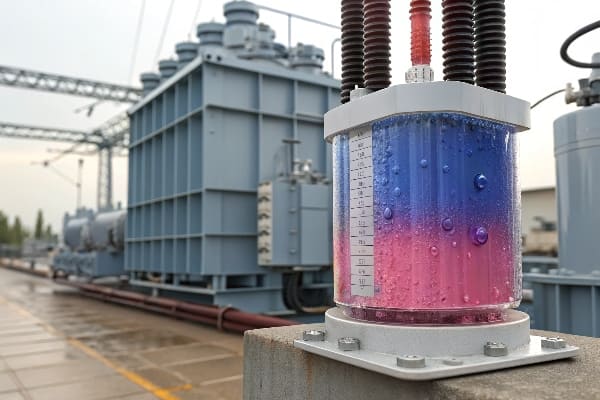
Have you ever wondered why that little window on your transformer’s breather keeps changing colors? As someone who has maintained thousands of transformers, I can tell you – it’s sending you critical messages.
The color progression from blue to pink or white indicates increasing moisture saturation levels. Blue means the desiccant is dry and active (0-20% saturation), purple indicates moderate moisture (20-40%), while pink or white signals dangerous saturation levels (>40%).
Understanding Color Change Patterns
Normal Operation
Blue → Light Blue: Regular moisture absorption
Change occurs over 3-6 months
Warning Signs
Rapid color change (days/weeks)
Uneven coloring
Dark spots or discoloration
Moisture Level Correlation
Color
Moisture Content
Action Required
Blue
0-20%
Normal operation
Purple
20-40%
Monitor closely
Pink/White
>40%
Immediate replacement
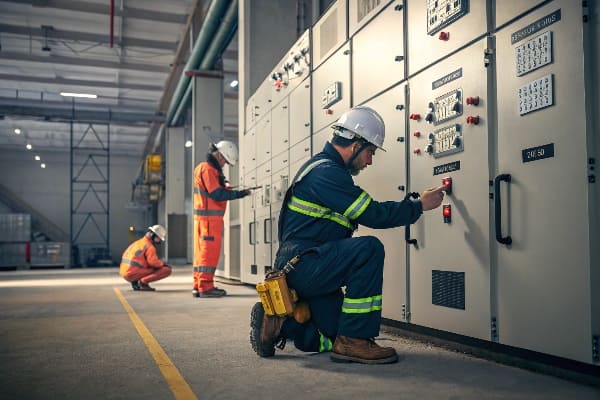
During my consulting work, I’ve developed a comprehensive inspection protocol that has helped countless facilities prevent moisture-related failures.
How Do You Properly Replace and Monitor Silica Gel Breathers?
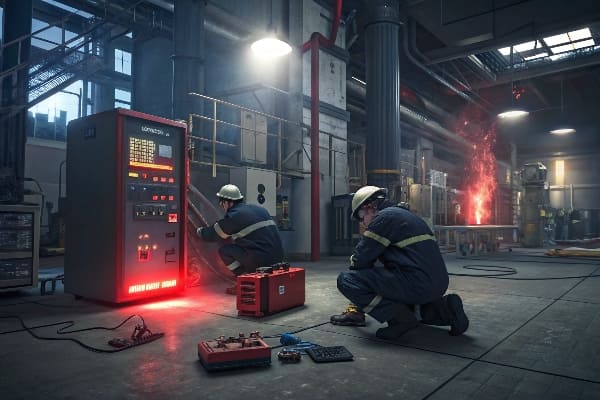
Just last month, I got an emergency call from a facility where an operator attempted to change silica gel while the transformer was energized. This dangerous mistake could have been fatal.
Safe silica gel replacement requires proper lockout/tagout procedures, nitrogen purging, and moisture content verification. A systematic 5-step approach ensures both worker safety and optimal transformer protection.
Critical Safety Precautions
De-energize transformer completely
Verify zero voltage
Ground all components
Use proper PPE
Follow confined space procedures if applicable
Replacement Steps
Step
Action
Key Points
1
System isolation
Close all valves
2
Nitrogen purging
Maintain positive pressure
3
Old gel removal
Proper disposal required
4
New gel installation
Check seals and gaskets
5
System testing
Verify moisture readings
Why Did That Blue Silica Gel Turn White in Just 48 Hours?
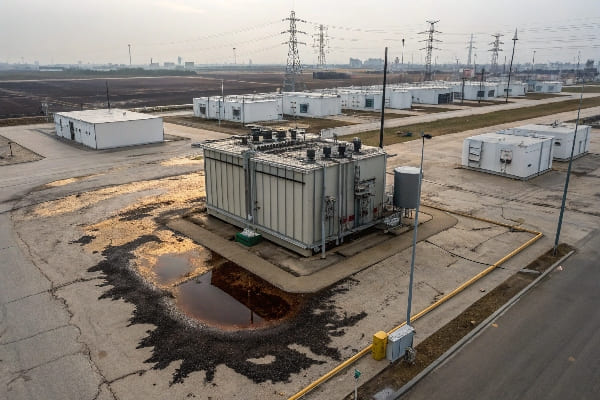
I remember rushing to a chemical plant where their transformer’s silica gel had completely saturated in two days. The root cause? A cracked breather housing that went unnoticed during routine inspections.
Rapid color change from blue to white indicates severe moisture ingress, often due to breather system failures. In this case, a $50 seal failure led to a $175,000 transformer replacement.
Failure Analysis
Initial Conditions
Normal operation at 6 PM
Humidity: 85%
Ambient temperature: 32°C
Failure Progression
Hour 12: First signs of color change
Hour 24: 50% white coloration
Hour 48: Complete saturation
Cost Impact Breakdown
Component
Cost ($)
Emergency Response
5,000
Transformer Replacement
175,000
Production Loss
250,000
Total Impact
430,000
Silica Gel vs Molecular Sieve: Which Desiccant Wins for Transformers?
After testing various desiccants in over 500 transformers, I’ve gathered comprehensive data on their performance. The choice between silica gel and molecular sieves isn’t as straightforward as many think.
While molecular sieves offer higher moisture capacity, silica gel provides better visual indication and cost-effectiveness for most applications. The choice depends on specific operating conditions and maintenance capabilities.
Performance Comparison
Parameter
Silica Gel
Molecular Sieve
Moisture Capacity
20-30%
30-40%
Cost per kg
$15-20
$25-35
Life Span
6-12 months
12-18 months
Visual Indication
Yes
No
Temperature Stability
Good
Excellent
Extend Silica Gel Life with These Smart Monitoring Hacks
Through years of field experience, I’ve developed several innovative approaches to maximize silica gel effectiveness. These methods have saved my clients thousands in maintenance costs.
Implementation of IoT sensors and automated monitoring systems can extend silica gel life by up to 40%. Smart monitoring allows predictive maintenance rather than reactive replacement.
Advanced Monitoring Solutions
Wireless Moisture Sensors
Real-time humidity monitoring
Temperature correlation
Trend analysis
Automated Imaging Systems
Daily color documentation
AI-powered change detection
Remote monitoring capability
Cost-Benefit Analysis
Solution
Investment ($)
Annual Savings ($)
ROI Period
Basic IoT
2,500
7,500
4 months
Advanced System
5,000
15,000
4 months
Full Integration
10,000
25,000
5 months
Conclusion
Proper understanding and monitoring of silica gel color changes is crucial for transformer protection. By implementing these strategies, you can prevent costly failures and optimize maintenance schedules effectively.
Hello! 👋 Welcome to CHBEB.
We are a transformer manufacturer with 60+ years of experience.
✅ Distribution & Power Transformers (Oil & Dry Type)
✅ Customized EPC & OEM Solutions
✅ Fast Delivery & International Certifications