Send us a message if you have any questions or request a quote. Our experts will give you a reply within 24 hours and help you select the right valve you want.
Are you struggling with power limitations in your facility? Maybe you’re wondering how to upgrade from single-phase to three-phase power without breaking the bank. You’re not alone in this challenge.
Converting single-phase transformers into a three-phase system is a cost-effective solution for many businesses. This guide will walk you through the entire process, from understanding basic concepts to implementing the conversion, helping you make an informed decision for your power needs.
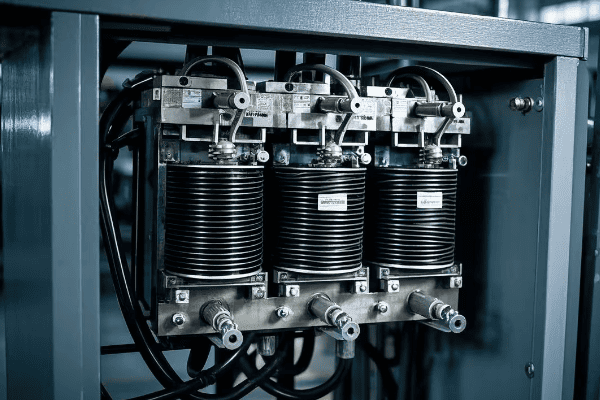
Three-phase transformer conversion
As an electrical engineer with over 20 years of experience, I’ve helped countless clients tackle this exact problem. In this comprehensive guide, I’ll share practical insights to help you understand and implement this conversion safely and efficiently. Whether you’re a seasoned pro or new to electrical systems, you’ll find valuable information here to power up your knowledge and your facility.
Power Basics: Unraveling Single-Phase and Three-Phase Systems?
Have you ever wondered why your home uses a different electrical system than a factory? The answer lies in the fundamental difference between single-phase and three-phase power. But what exactly sets these two systems apart?
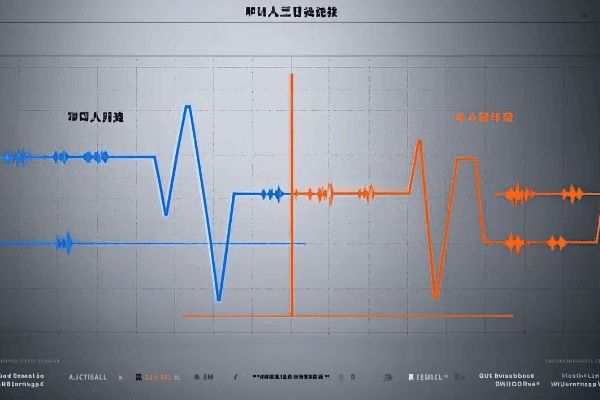
Single-phase power uses one alternating current, while three-phase uses three currents offset by 120 degrees. Three-phase is more efficient for large loads, delivering about 1.73 times more power with the same current and providing smoother operation for motors.
Single-phase vs Three-phase waveform comparison
Let’s dive deeper into the world of power systems and explore the key differences between single-phase and three-phase:
Understanding the Power Flow: Single-Phase vs Three-Phase
Power Delivery:
Single-Phase: One alternating current, two wires
Three-Phase: Three alternating currents, three or four wires
Efficiency:
Single-Phase: Less efficient for large loads (typically 70-80% efficient)
Three-Phase: More efficient, especially for industrial applications (up to 95% efficient)
Applications:
Single-Phase: Residential, small commercial (common in homes and small offices)
Three-Phase: Industrial, large commercial, data centers (standard in factories and large buildings)
I remember a project where we were upgrading a small manufacturing plant’s power system. The owner was amazed to learn that switching to three-phase could reduce their energy costs by 15% and improve equipment performance. It was a lightbulb moment for both of us, highlighting the real-world impact of understanding these power systems.
Here’s a simple comparison table to illustrate the key differences:
Characteristic
Single-Phase
Three-Phase
Number of wires
2 (1 hot, 1 neutral)
3 or 4 (3 hot, optional neutral)
Voltage waveform
One sine wave
Three sine waves, 120° apart
Power consistency
Pulsating
Constant
Typical voltage (US)
120/240V
208/240V or 480V
Load capacity
Lower
Higher (1.732 times more)
Motor starting
Less efficient
More efficient (30% better starting torque)
Typical applications
Homes, small offices
Factories, large buildings
Energy efficiency
Lower
Higher (up to 15% more efficient)
Understanding these differences is crucial when planning your conversion from single-phase to three-phase power. It helps you appreciate the benefits you’ll gain and sets the foundation for the transformation process.
The Transformer Trio: Selecting Compatible Single-Phase Units?
Now that we understand the basics of single-phase and three-phase power, let’s focus on the heart of our conversion project: the transformers. But how do you choose the right single-phase transformers for a successful three-phase conversion?
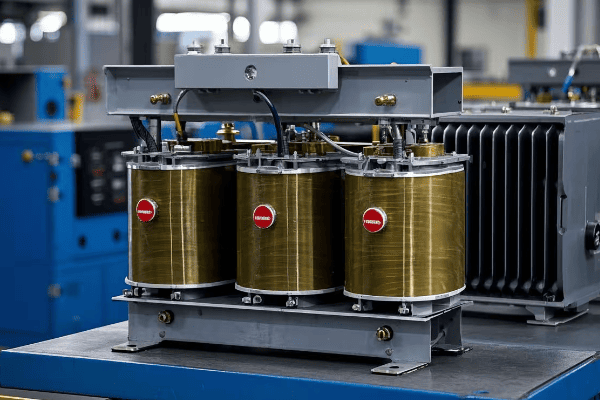
Selecting compatible single-phase transformers is crucial for a successful three-phase conversion. Key factors include matching voltage ratings, power capacity, impedance, and efficiency. All three units must have identical specifications to ensure balanced operation and optimal performance of the converted system.
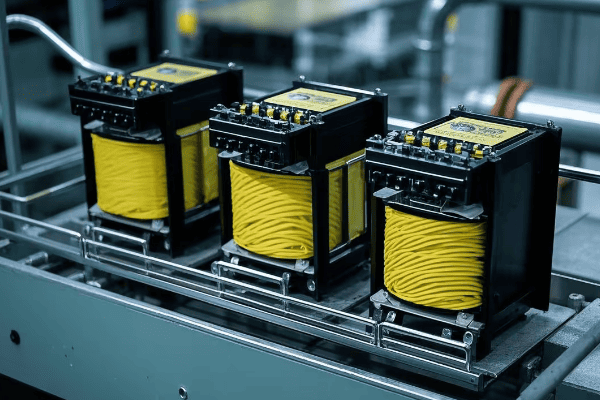
Compatible single-phase transformers
Let’s explore the critical aspects of transformer selection for your conversion project:
The Perfect Match: Choosing Your Transformer Trio
Voltage Ratings:
Primary voltage: Must match your input supply (e.g., 480V in US, 400V in EU)
Secondary voltage: Determine based on load requirements
Tap settings: Consider transformers with multiple taps for flexibility
Power Capacity:
Calculate total load requirements
Each transformer should handle 1/3 of the total load
Allow for future expansion (typically 20-30% extra capacity)
Impedance Matching:
All three transformers should have the same impedance (within 0.3% tolerance)
Typical range: 2-5% for distribution transformers
Matching impedance ensures balanced current flow and minimizes circulating currents
Efficiency Considerations:
Look for high-efficiency models to reduce losses
Consider total cost of ownership, not just initial price
Check for compliance with energy efficiency standards (e.g., DOE 2016 in US, IE3 in EU)
I once consulted on a project for a multinational corporation setting up a factory in Mexico. They initially planned to use transformers from their US supplier, but we quickly realized these wouldn’t meet local voltage standards or efficiency requirements. By selecting locally manufactured transformers that met both IEC and NOM (Mexican) standards, we ensured compliance and optimal performance.
Here’s a detailed comparison table to guide your transformer selection:
Specification
Why It’s Important
What to Look For
Potential Issues if Mismatched
Voltage Rating
Ensures compatibility with system
Exact match to system voltage
Overvoltage or undervoltage conditions
kVA Rating
Determines power handling capacity
Sum of three should exceed total load
Overloading, reduced efficiency
Impedance
Affects fault currents and voltage regulation
Must be identical for all three (±0.3%)
Unbalanced currents, overheating
Efficiency
Impacts operating costs
Look for high efficiency models (>98%)
Higher energy costs, increased heat generation
Temperature Rise
Indicates cooling effectiveness
65°C rise common (80°C in hot climates)
Reduced lifespan, potential failure
BIL (Basic Impulse Level)
Protects against voltage surges
Should match or exceed system requirements
Vulnerability to transient overvoltages
Taps
Allows for voltage adjustment
5-position taps offer good flexibility
Inability to fine-tune voltage
Vector Group
Affects phase relationships
Typically Dyn11 for distribution transformers
Phase shift issues, potential system instability
Cooling Method
Determines installation requirements
ONAN is most common for smaller sizes
Inadequate cooling, reduced capacity
Remember, the cheapest option isn’t always the most cost-effective in the long run. Consider the total cost of ownership, including energy costs and maintenance, when making your selection. It’s often worth investing in higher quality, more efficient transformers to ensure the longevity and reliability of your three-phase system.
Wiring Wizardry: Mastering Delta and Wye Connections?
Now that we’ve selected our transformer trio, it’s time to connect them. But how exactly do we wire these single-phase units to create a three-phase system? This is where Delta and Wye connections come into play.
Delta and Wye are two fundamental ways to connect three-phase transformers. Delta forms a triangle, while Wye forms a star with a neutral point. The choice between them affects voltage relationships, current flow, and system grounding. Most three-phase conversions use a Delta-Wye configuration for optimal performance.
Delta and Wye transformer connections
Let’s dive into the details of these connections and understand their roles in our three-phase system:
Decoding Delta and Wye: The Heart of Three-Phase Power
Delta Connection:
Shape: Triangular configuration
Voltage: Line voltage = Phase voltage
Current: Line current = √3 × Phase current
Uses: Often used on the primary (high voltage) side
Advantages: Good for balancing loads, no neutral needed
Wye (Star) Connection:
Shape: Star configuration with a neutral point
Voltage: Line voltage = √3 × Phase voltage
Current: Line current = Phase current
Uses: Common on the secondary (low voltage) side
Advantages: Provides a neutral for single-phase loads, good for unbalanced loads
In a recent project for a manufacturing plant, we used a Delta-Wye configuration. We connected the primary side in Delta to handle load balancing efficiently, and the secondary side in Wye to provide a neutral for office equipment. This combination offered the best of both worlds, showcasing how understanding these connections can lead to optimal system design.
Here’s a detailed comparison of Delta and Wye connections:
Characteristic
Delta Connection
Wye Connection
Symbol
Δ
Y
Neutral point
No
Yes
Voltage relationship
VLine = VPhase
VLine = √3 × VPhase
Current relationship
ILine = √3 × IPhase
ILine = IPhase
Harmonic handling
Blocks 3rd harmonics
Allows 3rd harmonics
Ground fault detection
More challenging
Easier
Typical use
Primary side
Secondary side
Balanced load handling
Excellent
Good
Unbalanced load handling
Good
Excellent
When converting single-phase transformers to a three-phase system, we typically connect the primary windings in Delta and the secondary windings in Wye. This Delta-Wye configuration offers several advantages:
It provides a neutral point on the secondary side, which is useful for powering single-phase loads.
It helps in suppressing harmonics, improving power quality.
It allows for easier ground fault detection on the secondary side.
Remember, the choice between Delta and Wye can significantly impact your system’s performance, efficiency, and safety. As you plan your conversion, consider your specific needs and consult with an expert if you’re unsure about the best configuration for your application.
Blueprint for Success: Planning Your Three-Phase Conversion Project?
With our transformers selected and our connection strategy in place, it’s time to plan the conversion project. But where do you start, and what factors should you consider to ensure a smooth transition?
Planning a three-phase conversion involves assessing power needs, evaluating existing infrastructure, understanding local regulations, and preparing for potential challenges. A well-planned project can save time, money, and prevent safety issues during the conversion process.
Conversion planning flowchart
Let’s break down the key steps in planning your conversion project:
Crafting Your Conversion Roadmap: From Concept to Completion
Assess Your Power Needs:
Calculate your total power requirements
Consider future expansion plans
Identify any specific voltage or current needs
Evaluate Existing Infrastructure:
Check the capacity of your electrical service
Assess the condition of your electrical panels and wiring
Determine if any equipment upgrades are necessary
Understand Regulations:
Research local electrical codes and standards
Determine if permits are required for the conversion
Consider hiring a licensed electrician if required by law
Create a Detailed Project Plan:
Outline each step of the conversion process
Assign responsibilities to team members or contractors
Set realistic timelines for each phase of the project
Budget and Financial Planning:
Estimate costs for equipment, labor, and potential downtime
Consider energy savings and ROI in your financial analysis
Explore financing options if needed
I once worked with a client who skipped the planning phase and jumped straight into conversion. Halfway through, we discovered their existing wiring couldn’t handle the new load, leading to costly delays and rewiring. This experience taught me the invaluable lesson of thorough planning.
Here’s a checklist to guide your planning process:
Planning Step
Key Considerations
Potential Pitfalls
Power Assessment
Total load, future growth
Underestimating power needs
Infrastructure Evaluation
Service capacity, wiring condition
Inadequate infrastructure
Regulatory Compliance
Local codes, permits
Legal issues, failed inspections
Project Planning
Step-by-step process, timelines
Overlooked tasks, delays
Budgeting
Equipment costs, labor, downtime
Unexpected expenses
ROI Analysis
Energy savings, productivity gains
Overestimating benefits
Team Assembly
Skills needed, roles assignment
Lack of expertise
Risk Assessment
Potential challenges, mitigation strategies
Unforeseen problems
Remember, proper planning is the foundation of a successful conversion project. Take the time to thoroughly assess your needs, understand the requirements, and prepare for potential challenges. This upfront investment will pay off in smoother execution, fewer surprises, and a more efficient three-phase system in the end.
Safety First: Essential Precautions for High-Voltage Transformations?
As we gear up for the actual conversion process, it’s crucial to address the elephant in the room: safety. Working with high-voltage systems is inherently dangerous, but how can we minimize risks and ensure a safe conversion process?
High-voltage transformer conversions pose serious risks including electric shock, arc flash, and fire. Essential safety measures include proper personal protective equipment (PPE), lockout/tagout procedures, grounding, and adherence to electrical codes. Prioritizing safety can prevent accidents and save lives.
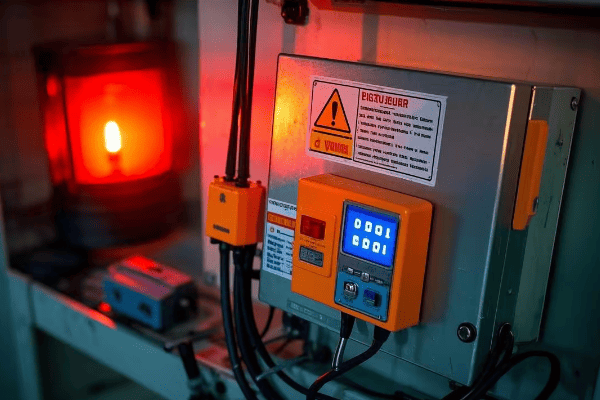
Electrical safety gear and warnings
Let’s explore the critical safety precautions you should take during your conversion project:
Safeguarding Your Project: A Comprehensive Safety Approach
Personal Protective Equipment (PPE):
Insulated gloves rated for the voltage level
Arc-flash rated face shield and clothing
Safety glasses and steel-toed boots
Lockout/Tagout Procedures:
Identify all power sources
Disconnect and lock out all electrical supplies
Use "Do Not Operate" tags to prevent accidental energization
Grounding and Bonding:
Properly ground all transformer cases
Use temporary grounding cables during work
Verify integrity of grounding connections
Workspace Safety:
Ensure adequate lighting and ventilation
Keep work area clean and free of obstacles
Have a fire extinguisher rated for electrical fires nearby
Training and Certification:
Ensure all workers are properly trained in electrical safety
Verify certifications for high-voltage work
Conduct regular safety briefings throughout the project
I once witnessed a near-miss incident where a technician, accustomed to different color codes, misidentified a live wire. This experience reinforced the importance of understanding and adhering to local standards, even for experienced professionals.
Here’s a comprehensive safety checklist for your conversion project:
Safety Aspect
Key Actions
Why It’s Critical
Risk Assessment
Identify potential hazards
Prevents unforeseen dangers
PPE
Wear appropriate gear
Protects against shock and arc flash
Lockout/Tagout
Secure all power sources
Prevents accidental energization
Grounding
Properly ground all equipment
Protects against stray voltages
Insulation Testing
Check insulation integrity
Prevents insulation failures
Voltage Testing
Verify de-energized state
Ensures safe working conditions
Workspace
Keep area clean and organized
Reduces accidents and improves focus
Communication
Inform all team members of procedures
Ensures everyone is on the same page
Emergency Procedures
Know what to do in case of accident
Speeds up response in critical situations
Documentation
Record all safety steps taken
Provides accountability and learning opportunities
Remember, no project is worth risking safety. Always prioritize safety measures and create a culture of safety awareness among all team members. It’s better to take extra time to ensure safety than to rush and risk an accident.
The Conversion Process: Step-by-Step Guide to Three-Phase Integration?
Now that we’ve covered the essentials of planning and safety, it’s time to roll up our sleeves and dive into the actual conversion process. But how exactly do we transform our single-phase transformers into a functioning three-phase system?
Converting single-phase transformers to a three-phase system involves carefully connecting the primary and secondary windings in specific configurations, typically Delta for the primary and Wye for the secondary. This process requires precise measurements, proper insulation, and attention to phase relationships to ensure a balanced and efficient three-phase output.
Single-phase to three-phase conversion steps
Let’s break down the conversion process into manageable steps:
From Single to Three: A Step-by-Step Transformation Guide
Preparation:
Gather three identical single-phase transformers
Ensure all transformers have the same voltage ratings and capacity
Collect necessary tools: multimeter, insulation tester, phase rotation meter
Primary Winding Connection (Delta):
Identify the primary terminals of each transformer
Connect the end of the first transformer to the start of the second
Connect the end of the second to the start of the third
Connect the end of the third to the start of the first
Secondary Winding Connection (Wye):
Identify the secondary terminals of each transformer
Connect one end of each transformer’s secondary to a common point (neutral)
The other ends become the three phases of your output
Insulation and Protection:
Apply appropriate insulation to all connections
Install overcurrent protection devices for each phase
Testing and Verification:
Check all connections for tightness and proper insulation
Measure voltages between phases and phase-to-neutral
Verify phase rotation (clockwise in most countries, counter-clockwise in some)
Load Connection:
Connect your three-phase load to the three output phases
Ensure balanced loading across all phases
I remember a challenging conversion project for a small factory in a remote area. We had limited resources, so precision was key. By meticulously following these steps and double-checking each connection, we successfully created a stable three-phase system that significantly improved their production efficiency.
Here’s a detailed checklist for the conversion process:
Step
Action
Key Considerations
Potential Issues
1. Preparation
Gather materials and tools
Matching transformer specs
Mismatched transformers
2. Primary Connection
Create Delta configuration
Correct polarity, tight connections
Reversed polarity, loose connections
3. Secondary Connection
Create Wye configuration
Proper neutral point, balanced phases
Unbalanced voltages
4. Insulation
Apply insulation to all connections
Appropriate materials for voltage
Inadequate insulation, short circuits
5. Protection
Install overcurrent devices
Proper sizing of protection
Overloading, equipment damage
6. Testing
Measure voltages, check rotation
Use calibrated instruments
Incorrect measurements, wrong rotation
7. Load Connection
Connect three-phase load
Balanced loading
Overloading single phase
Remember, this process involves working with high voltages and currents. If you’re not comfortable or experienced with electrical work, it’s crucial to consult or hire a professional electrician. Safety should always be your top priority throughout the conversion process.
Testing and Troubleshooting: Ensuring Your New System Performs Flawlessly?
With our three-phase system now assembled, it’s time to put it to the test. But what checks should we perform, and how do we troubleshoot any issues that arise?
Testing a newly converted three-phase system involves checking voltage levels, phase balance, rotation, and load performance. Key tests include no-load tests, load tests, and insulation resistance tests. Proper testing and troubleshooting ensure system safety, efficiency, and longevity.
Three-phase testing and troubleshooting flowchart
Let’s dive into the essential testing procedures and troubleshooting tips:
From Theory to Practice: Testing and Fine-Tuning Your Three-Phase System
No-Load Testing:
Measure voltages between phases and phase-to-neutral
Check for balanced voltages (should be within 1% of each other)
Verify correct phase rotation
Load Testing:
Gradually apply balanced load to the system
Monitor voltage regulation under load
Check for any unusual heating or noise
Insulation Resistance Testing:
Use a megohmmeter to test insulation integrity
Perform tests between windings and from windings to ground
Compare results to manufacturer’s specifications
Power Quality Analysis:
Use a power quality analyzer to check for harmonics
Measure power factor under various load conditions
Identify any voltage or current imbalances
Thermal Imaging:
Use an infrared camera to check for hot spots
Inspect connections and windings for abnormal heating
Compare temperatures across all three phases
I once worked on a project where initial testing revealed a significant voltage imbalance. After careful troubleshooting, we discovered a loose connection in one of the transformer’s primary windings. Fixing this issue before putting the system into full operation prevented potential equipment damage and downtime.
Here’s a troubleshooting guide for common issues:
Issue
Possible Causes
Troubleshooting Steps
Voltage Imbalance
Loose connections, uneven loads
Check all connections, redistribute loads
Incorrect Phase Rotation
Wiring errors
Swap any two phase connections
Overheating
Overloading, poor ventilation
Reduce load, improve cooling
Low Insulation Resistance
Moisture, contamination
Dry out transformers, clean windings
Harmonics
Non-linear loads
Install harmonic filters, redistribute loads
Power Factor Issues
Inductive loads
Add power factor correction capacitors
Noise or Vibration
Loose components, resonance
Tighten connections, check for mechanical issues
Remember, thorough testing and prompt troubleshooting are key to ensuring the reliability and efficiency of your newly converted three-phase system. If you encounter issues you can’t resolve or if you’re unsure about any test results, don’t hesitate to consult with a professional. It’s always better to address potential problems early rather than risk system failure down the line.
Future-Proofing Your Setup: Adapting to Emerging Power Technologies?
As we wrap up our three-phase conversion project, it’s important to look ahead. How can we ensure our newly converted system remains relevant and efficient in the face of rapidly evolving power technologies?
Future-proofing your three-phase system involves considering smart grid integration, renewable energy compatibility, and evolving efficiency standards. Implementing flexible designs, incorporating digital monitoring systems, and staying informed about global trends can help your system remain efficient and compliant for years to come.
Smart grid and renewable energy integration
Let’s explore key strategies for keeping your system ahead of the curve:
Embracing the Future: Keeping Your Three-Phase System Cutting-Edge
Smart Grid Integration:
Implement digital monitoring and control systems
Consider compatibility with demand response programs
Prepare for bi-directional power flow capabilities
Renewable Energy Compatibility:
Design for integration with solar and wind power systems
Consider energy storage integration for load balancing
Implement inverter-friendly protection schemes
Efficiency Standards Evolution:
Stay informed about upcoming efficiency regulations
Plan for potential retrofits or replacements to meet future standards
Consider ultra-high efficiency transformers for long-term savings
Advanced Materials and Designs:
Explore amorphous core transformers for reduced losses
Consider solid-state transformers for improved control and efficiency
Investigate high-temperature superconducting transformers for specialized applications
Cybersecurity Considerations:
Implement robust security measures for digital control systems
Plan for regular security audits and updates
Consider physical security measures for critical infrastructure
I recently worked on a project upgrading a manufacturing plant’s power system. We incorporated a flexible design that allowed for easy integration of planned solar installations and future energy storage systems. By thinking ahead, we created a system that not only met current needs but was also ready for the company’s future sustainability goals.
Here’s a table summarizing key future-proofing strategies and their implications:
Strategy
Description
Benefits
Global Trends
Smart Grid Readiness
Implementing digital monitoring and control
Improved efficiency and grid stability
Rapid adoption in developed countries
Renewable Integration
Designing for solar and wind power compatibility
Reduced carbon footprint, potential cost savings
Growing worldwide, led by EU and China
Efficiency Standard Compliance
Planning for future efficiency requirements
Long-term cost savings, regulatory compliance
Increasingly stringent globally
Advanced Materials Adoption
Using new core materials and designs
Reduced losses, improved performance
Growing interest, especially in high-cost energy markets
Cybersecurity Implementation
Securing digital systems against threats
Protected operations, compliance with security standards
Critical focus in all regions
Modular Design
Creating systems that can be easily upgraded
Flexibility for future needs, reduced replacement costs
Gaining popularity in fast-evolving industries
Energy Storage Readiness
Preparing for battery or other storage integration
Improved reliability, peak shaving capabilities
Rapid growth, especially in areas with unstable grids
Power Quality Enhancement
Implementing harmonic mitigation and voltage stabilization
Improved equipment life, reduced downtime
Critical in sensitive industrial and data center applications
Remember, the power industry is constantly evolving. By staying informed about emerging technologies and trends, and designing your system with flexibility in mind, you can ensure that your three-phase conversion investment continues to pay dividends well into the future.
Conclusion
Transforming single-phase transformers into a three-phase system is a complex but rewarding process. By understanding the basics, carefully planning, prioritizing safety, and implementing best practices in conversion and testing, you can successfully unlock the power of three-phase electricity for your facility. Remember to consider future trends and technologies to ensure your system remains efficient and relevant for years to come.
Hello! 👋 Welcome to CHBEB.
We are a transformer manufacturer with 60+ years of experience.
✅ Distribution & Power Transformers (Oil & Dry Type)
✅ Customized EPC & OEM Solutions
✅ Fast Delivery & International Certifications