Send us a message if you have any questions or request a quote. Our experts will give you a reply within 24 hours and help you select the right valve you want.
Are you struggling to choose the right transformer for your power distribution project? You’re not alone. Many engineers and project managers find selecting the correct size and capacity for telephone pole transformers challenging. But what if you had a comprehensive guide to make this process easier?
Telephone pole transformers come in standard kVA ratings ranging from 10 kVA to 167 kVA, with common sizes including 25 kVA, 50 kVA, and 100 kVA. Physical dimensions vary by capacity, typically from 650x600x850mm for a 25 kVA unit to 1050x800x1100mm for a 167 kVA transformer. Weights range from about 250 kg to 850 kg. Proper sizing depends on load profile, number of homes served, and environmental factors. Understanding these specifications is crucial for efficient power distribution and proper installation.
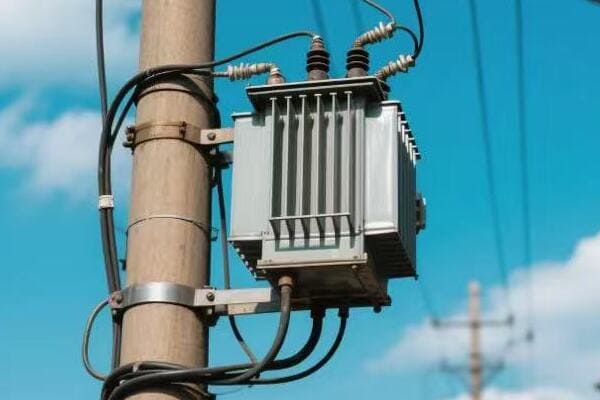
Telephone Pole Transformer Installation
In this comprehensive guide, I’ll walk you through the essential specifications for telephone pole transformers, from kVA ratings to physical dimensions. Whether you’re planning a rural electrification project or upgrading an urban distribution network, this article will provide you with the knowledge to make informed decisions and avoid costly mistakes in transformer selection.
What Is a Telephone Pole Transformer?
Have you ever looked up at those cylindrical devices mounted on utility poles and wondered about their purpose? These are telephone pole transformers, but what exactly do they do, and why are they so important for our power distribution system?
A telephone pole transformer is a type of distribution transformer mounted on utility poles to step down medium voltage electricity (typically 11kV or 22kV) to lower voltages (usually 230V/400V) suitable for residential and small commercial use. These transformers are crucial in the final stage of power distribution, bringing electricity from the grid directly to end-users. They are commonly single-phase or three-phase, oil-immersed units designed for outdoor use, capable of withstanding various environmental conditions while efficiently delivering power to homes and businesses.
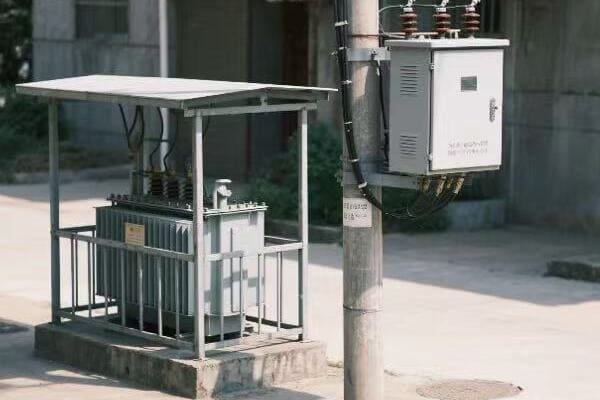
Telephone Pole Transformer in Distribution Network
Key Aspects of Telephone Pole Transformers
Let’s break down the main features:
Purpose and Function
Physical Characteristics
Voltage Transformation
Applications
Installation Considerations
Purpose and Function
The final link in power distribution:
Step down medium voltage to usable low voltage
Provide electrical isolation between distribution lines and consumers
Enable efficient power delivery over the "last mile"
I recently visited a rural electrification project where telephone pole transformers were being installed. It was fascinating to see how these compact devices could bring power from high-voltage lines directly to small clusters of homes and farms.
Physical Characteristics
Designed for outdoor pole mounting:
Cylindrical or rectangular tank filled with insulating oil
Cooling fins for heat dissipation
Mounting brackets for secure pole attachment
Typically weighing between 250 to 850 kg, depending on capacity
During a recent factory tour, I observed the manufacturing process of these transformers. The robust construction and weather-resistant design impressed me, showcasing their ability to withstand harsh outdoor conditions.
Voltage Transformation
Adapting power for end-user consumption:
Primary (input) voltages: Commonly 11kV or 22kV
Secondary (output) voltages: Typically 230V (single-phase) or 400V (three-phase)
Capacity ranges from 10 kVA to 167 kVA for most pole-mounted units
Here’s a quick overview of common voltage transformations:
Primary Voltage
Secondary Voltage
Typical Capacities
11kV
230V/400V
25, 50, 100 kVA
22kV
230V/400V
50, 100, 167 kVA
Applications
Versatile use in various settings:
Residential areas in suburban and rural locations
Small commercial zones and light industrial areas
Agricultural settings for farm equipment and irrigation
Street lighting and public infrastructure
Installation Considerations
Ensuring safe and efficient operation:
Proper pole strength and height requirements
Clearance from buildings and vegetation
Protection devices like fuses and surge arresters
Accessibility for maintenance and repairs
Key points about telephone pole transformers:
They are crucial for stepping down voltage in the final distribution stage
Designed specifically for outdoor, pole-top installation
Come in various capacities to suit different load requirements
Widely used in residential and light commercial power distribution
Require careful installation planning for safety and efficiency
In my experience, understanding these basic aspects of telephone pole transformers is crucial for effective power distribution planning. I recall a project in a developing rural area where the strategic placement of these transformers significantly reduced installation costs and simplified maintenance, making electrification feasible for a community that had long been without reliable power.
For example, in a recent suburban development project, we used a series of pole-mounted transformers to create a flexible, easily expandable power distribution network. This approach allowed us to add capacity incrementally as new homes were built, demonstrating the versatility of these transformers in adapting to growing power needs.
As we move on to discuss standard kVA ratings for telephone pole transformers, keep these basic characteristics in mind. Understanding how capacity relates to physical size and application requirements will help you make more informed decisions in your power distribution projects.
Standard kVA Ratings for Telephone Pole Transformers?
Have you ever wondered how to determine the right size transformer for a specific area or number of homes? Understanding standard kVA ratings is crucial for efficient power distribution. But what are these ratings, and how do they correspond to real-world applications?
Standard kVA ratings for telephone pole transformers typically range from 10 kVA to 167 kVA. Common sizes include 25 kVA, 50 kVA, 75 kVA, and 100 kVA. These ratings correspond to the transformer’s capacity to supply power. For example, a 25 kVA transformer can typically serve 2-4 homes, while a 100 kVA unit might power 10-20 residences or a small commercial area. The choice depends on factors like average household consumption, peak demand, and future growth projections. Proper sizing is crucial for ensuring reliable power supply and preventing overloading or underutilization.
Telephone Pole Transformer kVA Ratings Chart
Understanding kVA Ratings and Their Applications
Let’s explore the standard ratings in detail:
Small Capacity Transformers (10-25 kVA)
Medium Capacity Transformers (50-75 kVA)
Large Capacity Transformers (100-167 kVA)
Factors Influencing kVA Selection
Regional Variations in Standard Ratings
Small Capacity Transformers (10-25 kVA)
Ideal for light residential loads:
10-15 kVA: Suitable for single rural homes or very small clusters
25 kVA: Common for small residential groups or light commercial use
I recently worked on a rural electrification project where 25 kVA transformers were perfect for small clusters of 3-4 homes. Their compact size and sufficient capacity made them ideal for scattered rural settlements.
Medium Capacity Transformers (50-75 kVA)
Meeting diverse residential and light commercial needs:
50 kVA: Suitable for medium-sized residential areas or small businesses
75 kVA: Ideal for larger residential clusters or mixed-use areas
During a recent suburban development project, we found 75 kVA units to be the sweet spot for neighborhoods with a mix of homes and small shops, providing ample capacity for growth.
Large Capacity Transformers (100-167 kVA)
Powering substantial loads:
100 kVA: Common for dense residential areas or larger commercial establishments
167 kVA: Suitable for heavy commercial use or small industrial applications
Here’s a comprehensive table of standard ratings and their typical applications:
kVA Rating
Common Use Case
Typical Output Voltage
Number of Homes Served
10-15 kVA
Rural single house / light load
240/120 V
1-2
25 kVA
Small residential clusters
240/120 V
2-4
50 kVA
Medium-size homes / light shops
240/120 V
4-6
75 kVA
Heavy domestic + small business
240/120 V
6-10
100-167 kVA
Farm / School / Public Facility
240/480 V or 400V
10-20+
Factors Influencing kVA Selection
Considerations for proper sizing:
Average household consumption in the area
Peak demand periods and load factors
Future growth projections
Climate considerations (e.g., heavy air conditioning use)
Regional Variations in Standard Ratings
Adapting to local needs and standards:
North American vs. European standard sizes
Developing countries’ focus on smaller, more distributed units
Urban vs. rural area preferences
Key points about standard kVA ratings:
Ratings typically range from 10 kVA to 167 kVA for pole-mounted transformers
Smaller ratings (25-50 kVA) are common in residential areas
Larger ratings (100-167 kVA) suit commercial and light industrial applications
Proper sizing depends on both current needs and future growth
Regional standards and practices influence available ratings
In my experience, selecting the right kVA rating is crucial for both immediate needs and future scalability. I recall a project where we initially installed 50 kVA transformers in a new residential area. As the community grew and energy consumption patterns changed, we found ourselves quickly approaching capacity limits. This taught us the importance of factoring in generous growth projections when selecting transformer sizes.
For example, in a recent project for a small commercial district, we opted for 100 kVA units instead of multiple smaller transformers. This decision provided headroom for future expansion and proved cost-effective in the long run, as it reduced the need for frequent upgrades as businesses grew.
As we move on to discuss transformer size and weight specifications, keep these standard kVA ratings in mind. Understanding the relationship between capacity and physical dimensions is crucial for proper installation planning and long-term system efficiency.
Transformer Size and Weight by kVA: Installation Reference?
Have you ever faced challenges in planning the installation of a pole-mounted transformer due to uncertainty about its physical dimensions? Understanding the size and weight of these transformers is crucial for proper pole selection, transportation logistics, and installation planning. But how do these specifications vary across different kVA ratings?
Transformer size and weight increase with kVA rating. A 25 kVA unit typically measures around 650x600x850mm and weighs about 250 kg, while a 167 kVA transformer might be 1050x800x1100mm and weigh up to 850 kg. These dimensions affect pole strength requirements, mounting hardware, and installation equipment needs. For instance, a 50 kVA transformer (approx. 750x650x950mm, 380 kg) requires different handling and mounting considerations compared to a 100 kVA unit (900x750x1050mm, 600 kg). Accurate size and weight information is essential for safe and efficient installation planning.
Transformer Size and Weight Chart
Key Aspects of Transformer Size and Weight
Let’s explore the main considerations:
Dimensional Variations Across kVA Ratings
Weight Considerations and Handling Requirements
Impact on Pole Selection and Mounting
Transportation and Logistics Implications
Installation Equipment and Safety Considerations
Dimensional Variations Across kVA Ratings
Understanding size differences:
Smaller units (25-50 kVA) have compact dimensions
Larger units (100-167 kVA) require more space and stronger support
I recently managed a project involving various transformer sizes. The difference in dimensions between a 25 kVA and a 100 kVA unit was significant, affecting everything from transportation to installation methods.
Weight Considerations and Handling Requirements
Managing the load:
Weight increases substantially with kVA rating
Heavier units require specialized lifting equipment
Importance of proper rigging and safety protocols
During a recent installation, we had to use a larger crane than initially planned for a 167 kVA transformer. This experience highlighted the importance of accurate weight information in installation planning.
Impact on Pole Selection and Mounting
Ensuring adequate support:
Pole strength and height requirements vary with transformer size
Mounting brackets and hardware must match transformer dimensions
Consideration of additional equipment (fuses, arresters) on the pole
Here’s a detailed table of transformer sizes and weights:
kVA Rating
Tank Size (mm)
Approx. Weight (kg)
Pole Class Recommendation
25 kVA
650 × 600 × 850
~250
Class 4 or stronger
50 kVA
750 × 650 × 950
~380
Class 3 or stronger
100 kVA
900 × 750 × 1050
~600
Class 2 or stronger
167 kVA
1050 × 800 × 1100
~850
Class 1 or stronger
Transportation and Logistics Implications
Planning for movement:
Larger transformers may require special transportation permits
Consideration of road conditions and access to installation sites
Packaging and protection during transit
Installation Equipment and Safety Considerations
Ensuring safe and efficient installation:
Crane capacity requirements based on transformer weight
Clearance needs for installation equipment
Safety protocols for handling different sizes and weights
Key points about transformer size and weight:
Dimensions and weight increase significantly with kVA rating
Accurate size information is crucial for pole selection and mounting
Weight affects handling, transportation, and installation equipment needs
Larger transformers require more careful logistical planning
Safety considerations change with transformer size and weight
In my experience, having detailed size and weight information is invaluable for smooth project execution. I recall a case where we had to replace an old 50 kVA transformer with a new 100 kVA unit due to increased load demands. The significant difference in size and weight required us to reinforce the existing pole and use a larger crane, highlighting the importance of thorough planning based on accurate specifications.
For example, in a recent rural electrification project, we used this size and weight data to optimize our installation process. By matching transformer sizes to appropriate poles and planning our equipment needs in advance, we significantly reduced installation time and costs across multiple sites.
As we move on to discuss selection tips based on load profile and location, keep these size and weight considerations in mind. Understanding how physical specifications relate to installation requirements is crucial for selecting the right transformer for your specific project needs.
Selection Tips Based on Load Profile and Location?
Are you finding it challenging to choose the right transformer size for your specific project? Selecting the appropriate telephone pole transformer involves more than just matching kVA ratings to the number of homes. But what factors should you consider to ensure you’re making the best choice for your unique situation?
Selecting the right telephone pole transformer requires careful consideration of load profile and location-specific factors. Key considerations include peak power demand, load growth projections, and environmental conditions. For residential areas, a general rule is 5-7 kVA per household, but this can vary based on local energy use patterns. Environmental factors like temperature extremes, humidity, or coastal conditions may necessitate special designs or ratings. Urban locations might require quieter operation, while rural areas might need better protection against wildlife. Understanding these factors ensures proper sizing, prevents overloading or underutilization, and extends transformer lifespan.
Transformer Selection Factors
Key Considerations for Transformer Selection
Let’s explore the main factors:
Load Profile Analysis
Environmental and Location-Specific Factors
Future Growth and Expansion Considerations
Voltage Standards and Regulatory Requirements
Economic and Efficiency Considerations
Load Profile Analysis
Understanding power needs:
Peak demand calculation
Load factor and diversity factor considerations
Types of loads (residential, commercial, industrial mix)
I recently worked on a project where detailed load profile analysis revealed significant evening peak demands due to electric vehicle charging. This insight led us to select a higher capacity transformer than initially planned, ensuring reliable performance during peak hours.
Environmental and Location-Specific Factors
Adapting to local conditions:
Temperature extremes and their impact on cooling
Humidity and corrosion concerns in coastal areas
Altitude considerations for high-elevation installations
Wildlife protection needs in rural areas
During a recent coastal project, we opted for transformers with enhanced corrosion resistance and hermetically sealed tanks. This decision, based on the location’s environmental factors, significantly extended the expected lifespan of the units.
Future Growth and Expansion Considerations
Planning for the long term:
Population growth projections in residential areas
Potential for commercial or industrial development
Energy efficiency trends and their impact on future loads
Here’s a quick guide for estimating future capacity needs:
Scenario
Growth Factor
Recommended Action
Stable residential area
1.2-1.5x current load
Choose next standard size up
Rapidly developing area
2-3x current load
Consider parallel transformer setup
Mixed-use development
1.5-2x current load + specific commercial needs
Custom sizing based on detailed projections
Voltage Standards and Regulatory Requirements
Ensuring compliance and compatibility:
Local grid voltage standards (e.g., 120/240V in North America, 230/400V in Europe)
Regulatory requirements for efficiency and environmental impact
Safety standards and clearance requirements
Economic and Efficiency Considerations
Balancing cost and performance:
Initial cost vs. long-term efficiency savings
Consideration of no-load and load losses
Maintenance requirements and accessibility
Key points for transformer selection:
Accurate load profile analysis is crucial for proper sizing
Environmental factors can significantly influence transformer design needs
Future growth must be factored into capacity planning
Compliance with local standards and regulations is essential
Long-term economic and efficiency factors should guide selection
In my experience, thorough consideration of these factors is crucial for successful transformer deployment. I recall a case where we initially undersized transformers for a new residential development based solely on the number of homes. We didn’t account for the high adoption rate of electric vehicles and home automation systems. This oversight led to frequent overloading issues. We learned the importance of considering not just current needs but also emerging trends in energy consumption.
For example, in a recent project for a remote eco-resort, we had to carefully balance capacity needs with environmental considerations. We chose a slightly oversized transformer with high efficiency ratings. While this increased the initial cost, it provided the necessary capacity for future expansion and aligned with the resort’s sustainability goals by minimizing energy losses.
As we move on to discuss recommended suppliers for telephone pole transformers in China, keep these selection tips in mind. Understanding how different manufacturers cater to various needs and specifications will help you make a more informed decision in choosing the right supplier for your specific requirements.
Recommended Suppliers for Telephone Pole Transformers in China?
Are you looking for reliable suppliers of telephone pole transformers in China? With the country being a major player in the global electrical equipment market, it’s worth exploring the top manufacturers from this region. But which Chinese companies stand out in producing high-quality, export-ready pole-mounted transformers?
Leading Chinese manufacturers of telephone pole transformers include CHBEB, CHINT, TBEA, and Sieyuan Electric. These companies offer transformers with kVA ratings typically ranging from 10 to 315 kVA, suitable for various international standards. CHBEB specializes in customizable designs for harsh environments, CHINT offers cost-effective solutions with strong OEM capabilities, TBEA is known for high reliability standards, and Sieyuan focuses on smart grid integration. These manufacturers provide certifications like ISO 9001, CE, and IEC, catering to export markets in Africa, Southeast Asia, and along the Belt and Road initiative countries.
Top Chinese Pole-Mounted Transformer Manufacturers
Overview of Top Chinese Telephone Pole Transformer Manufacturers
Let’s examine the key players and their offerings:
CHBEB (China Bei Er Bian)
CHINT
TBEA
Sieyuan Electric
CHBEB (China Bei Er Bian)
Specializing in customized solutions:
kVA Range: 10-250 kVA
Key Features: Supports copper/aluminum windings, adaptable for high-temperature/IP55/IP65 environments
Certifications: ISO 9001, CE, IEC
Export Markets: Middle East, Africa
I recently visited CHBEB’s manufacturing facility and was impressed by their rigorous testing procedures for export-grade transformers. Their ability to customize units for specific environmental conditions, like high-temperature or high-humidity areas, sets them apart in the international market.
During a recent project in Southeast Asia, we sourced transformers from CHINT. Their ability to deliver a large quantity of standardized units quickly was crucial for meeting our tight project timeline.
TBEA
High-reliability transformer solutions:
kVA Range: 50-315 kVA
Key Features: Meets national grid standards, high stability
Certifications: CNAS, KEMA
Export Markets: Central Asia
Here’s a comparison of these top manufacturers:
Brand
kVA Range
Certifications
Export Focus
Key Advantages
CHBEB
10-250 kVA
ISO 9001, CE, IEC
Middle East, Africa
Customizable for harsh environments, flexible delivery
CHINT
25-200 kVA
CE, ISO
Southeast Asia
Cost-effective, strong OEM support
TBEA
50-315 kVA
CNAS, KEMA
Central Asia
High reliability, national grid standards
Sieyuan
25-167 kVA
IEC
Africa, LATAM
Smart grid integration, suitable for advanced distribution needs
Sieyuan Electric
Focusing on smart grid solutions:
kVA Range: 25-167 kVA
Key Features: Supports GIS integration, suitable for smart distribution needs
Certifications: IEC
Export Markets: Africa, Latin America
Key points about Chinese telephone pole transformer manufacturers:
They offer a wide range of kVA ratings suitable for various applications
Many provide customization capabilities for specific project needs
Strong focus on international standards compliance for export markets
Competitive pricing combined with reliable quality
Extensive experience in various global markets
In my experience, these Chinese manufacturers have consistently demonstrated their ability to meet diverse project requirements. I recall a large-scale rural electrification project in Africa where we sourced transformers from multiple Chinese manufacturers on this list. By leveraging the specific strengths of each company – such as CHBEB’s customization capabilities for harsh environments and CHINT’s cost-effective standard units for widespread deployment – we were able to optimize the overall power distribution system while managing costs effectively.
For example, in a recent project in a remote area with unstable grid voltage, we utilized Sieyuan’s transformers known for their compatibility with smart grid systems. This choice significantly improved our ability to monitor and manage the transformers in a challenging environment.
When considering Chinese manufacturers for your telephone pole transformer needs, it’s crucial to evaluate not just the technical specifications and pricing, but also factors like after-sales support, documentation quality, and the manufacturer’s experience in your specific application area. This comprehensive approach will help ensure you select the right partner for your power distribution projects.
Final Sizing Checklist Before Ordering?
Are you about to place an order for telephone pole transformers but want to ensure you haven’t overlooked any crucial factors? Making the right choice is critical for the success of your power distribution project. But what final checks should you perform to guarantee you’re selecting the optimal transformer for your needs?
Before ordering telephone pole transformers, conduct a final review of key factors: Verify the total load demand and peak power requirements. Confirm the primary and secondary voltage ratings match your grid specifications. Ensure the selected kVA rating accommodates future growth. Check that the transformer’s physical dimensions and weight are suitable for your pole infrastructure. Verify compliance with local regulations and environmental requirements. Consider efficiency ratings and long-term operational costs. Confirm compatibility with existing protection and monitoring systems. This comprehensive check helps prevent costly mistakes and ensures optimal performance of your power distribution system.
Transformer Selection Final Checklist
Essential Final Checks Before Ordering
Let’s go through the crucial final considerations:
Load Demand and Capacity Verification
Voltage and Electrical Specifications
Physical and Installation Requirements
Regulatory Compliance and Safety Standards
Economic and Operational Considerations
Load Demand and Capacity Verification
Ensuring adequate power supply:
Reconfirm total connected load and diversity factor
Verify peak demand calculations
Factor in anticipated load growth over 5-10 years
I recently avoided a potential undersizing issue by conducting a final load analysis just before ordering. We discovered a planned electric vehicle charging station that hadn’t been included in the initial calculations, leading us to upgrade to a higher capacity transformer.
Voltage and Electrical Specifications
Matching grid and consumer needs:
Confirm primary and secondary voltage ratings
Verify impedance and efficiency ratings
Check compatibility with existing protection schemes
During a recent project review, we caught a mismatch between the ordered transformer’s secondary voltage and the local distribution standard. This final check prevented a costly mistake and potential project delays.
Physical and Installation Requirements
Ensuring proper fit and installation:
Reconfirm transformer dimensions against pole specifications
Verify weight compatibility with pole strength and installation equipment
Check clearance requirements for maintenance and safety
Here’s a quick reference table for final physical checks:
Aspect
What to Verify
Why It’s Important
Dimensions
Match with pole mount specifications
Ensures proper fit and stability
Weight
Within pole and installation equipment capacity
Prevents safety hazards and installation issues
Clearances
Meets local safety standards
Ensures safe operation and maintenance access
Mounting
Compatibility with existing or planned hardware
Facilitates smooth installation
Regulatory Compliance and Safety Standards
Meeting legal and safety requirements:
Verify compliance with local electrical codes
Confirm adherence to environmental regulations (e.g., oil containment)
Check for required safety certifications
Economic and Operational Considerations
Optimizing long-term value:
Review efficiency ratings and expected losses
Consider maintenance requirements and accessibility
Evaluate warranty terms and after-sales support
Key points for the final sizing checklist:
Double-check load calculations and future growth estimates
Ensure all electrical specifications match system requirements
Verify physical compatibility with installation site
Confirm compliance with all relevant regulations and standards
Consider long-term economic and operational factors
In my experience, this final checklist has often caught overlooked details that could have led to significant issues. I recall a project where, during the final review, we realized the transformer’s noise level exceeded local residential area limits. This last-minute check allowed us to switch to a low-noise model, avoiding potential conflicts with local authorities and residents.
For example, in a recent rural electrification project, our final checklist revealed that the initially selected transformers lacked sufficient surge protection for an area prone to lightning strikes. This realization led us to specify additional surge arresters, significantly enhancing the long-term reliability of the installation.
As we conclude this guide on telephone pole transformer specifications, remember that thorough planning and careful consideration of all factors are key to successful power distribution projects. This final checklist serves as your safeguard against oversights and ensures that your transformer selection aligns perfectly with your project’s needs and constraints.
Conclusion
Understanding telephone pole transformer specifications is crucial for effective power distribution. From kVA ratings to physical dimensions, each aspect plays a vital role in selection and installation. By carefully considering load profiles, environmental factors, and future growth, and using the provided checklists, you can make informed decisions that ensure reliable and efficient power delivery for years to come.
Thank you for joining me in this exploration of telephone pole transformer specifications. Stay curious, stay informed, and let’s keep pushing the boundaries of what’s possible in power distribution and electrical engineering.
Hello! 👋 Welcome to CHBEB.
We are a transformer manufacturer with 60+ years of experience.
✅ Distribution & Power Transformers (Oil & Dry Type)
✅ Customized EPC & OEM Solutions
✅ Fast Delivery & International Certifications