Send us a message if you have any questions or request a quote. Our experts will give you a reply within 24 hours and help you select the right valve you want.
The global power grid has essentially been doing two things in the past two years: replacing old equipment and connecting new loads.
According to MarketsandMarkets, the global distribution transformer market will grow from $21.4 billion in 2025 to $29.57 billion in 2030, a CAGR of 6.7%.
Distribution transformers are divided into two main categories: oil-immersed and dry-type.
Oil-immersed transformers have their core and windings completely submerged in insulating oil. They offer excellent heat dissipation, a wide capacity range, and are commonly used in outdoor applications.
Dry-type transformers rely on natural air cooling (AN) and forced air cooling (AF) for heat dissipation, do not require insulating oil, and are relatively simple to maintain, commonly used in indoor applications.
However, looking at the entire distribution transformer industry, oil-immersed transformers remain the mainstream. This is because their structure is more mature, their lifespan is longer, their overload capacity is stronger, their initial investment is lower, and they are more resilient in high-load and outdoor applications. Another market study using the same methodology confirms this: in the overall distribution transformer market, oil-immersed transformers hold the largest share in terms of insulation type, and this segment is projected to reach $23.5 billion by 2030.
The following ten articles break down the major manufacturers in the global oil-immersed distribution transformer market. After reading these ten articles, you should be able to compile your own comparison table.
Note: The ranking in this article is not in any specific order and is based solely on product technology and market recognition.
1.Hitachi Energy-Oil-Immersed Distribution Transformer
The transformer is just a price line on the purchase order. Once installed in the distribution network, it’s a year-round energized device: online 24 hours a day, 8,760 hours a year, enduring thunderstorms, overloads, salt spray, and several rounds of emergency repairs. Whether this investment is worthwhile often depends not on the price quote, but on how much maintenance it adds over twenty years.
Hitachi Energy’s oil-immersed distribution transformer offers a wide range of specifications: a maximum capacity of 25 MVA, voltage levels up to 72.5 kV, covering both indoor and outdoor installations, and the tank can be either corrugated or open-face. It can be installed on poles, platforms, buried, in substations, and underground, plus a dedicated line voltage regulator. By comparing these dimensions during selection, most distribution network scenarios can fall within this product line.
Key Features
Pole-mounted transformers are installed on top of poles. With limited space available, tools, spare parts, and personnel must be crammed together. The simpler the structure, the more resilient it is during emergency repairs.
Rack-mounted units stand on the ground in front of residential areas and shops, exposed to constant pedestrian and vehicular traffic, and subjected to sun and rain. The corrosion resistance and damage resistance of the outer shell directly determine whether it can reliably complete its design lifespan.
The insulating oil can be replaced with high-ignition-point natural or synthetic esters. Higher fire resistance, higher water saturation, and lower aging rate extend its lifespan. In locations like underground substations, densely populated urban areas, forested areas, and near water sources, an accident can have far greater consequences than just one piece of equipment.
Low-noise solutions are needed for noise-sensitive locations; special overload capacity is required for applications with significant load impacts; and containerized or outdoor integrated solutions are suitable for projects with tight deadlines and challenging site conditions. These features are added on-site and do not need to be included at the factory.
Whether to use corrugated sheet or discrete sheet type depends on balancing heat dissipation requirements and installation space. This should be finalized during the site layout phase; delays will require changes to the civil engineering work.
TXpert’s intelligent digital solution installs sensors at the factory, allowing for real-time reading of operational status. Maintenance shifts from periodic on-site visits to only requiring on-site inspections when an anomaly occurs. TVP transient voltage protection suppresses the peak value of system overvoltages, protecting the winding insulation; insulation damage is cumulative, and each overvoltage event is recorded.
Technical Specifications
Specification
General Specifications (Full Range)
Product Type
Liquid-immersed (oil-immersed) distribution transformers,
primarily three-phase, with single-phase options.
The same technical platform covers pole-mounted,
platform-mounted, ground-mounted, pad-mounted,
substation and underground configurations for indoor
and outdoor applications.
Primary: ≤36 kV under IEC standards; up to 46 kV
for ANSI pad-mounted models and up to 34.5 kV
for single-phase pad-mounted models.
Secondary: from ≤480 V for pole-mounted models
to ≤25 kV for three-phase pad-mounted models.
Standards
IEC and ANSI standards; manufactured under an
ISO 9001 quality management system.
Cooling Method
ONAN natural cooling as standard, with options for
ONAF forced-air cooling and forced-oil/air cooling (OF).
Radiators can be fitted with fans.
Insulating Liquid
Mineral oil (standard), natural ester, synthetic ester,
dimethyl silicone oil or synthetic hydrocarbons.
Natural ester is the primary choice for applications
with high fire-safety requirements.
Core
Grain-oriented electrical steel laminations.
Windings
Copper or aluminium conductors with foil or
multilayer cylindrical windings.
Tank and Heat Dissipation
Corrugated tanks, conservator-type tanks,
or rigid tanks with panel radiators.
Tap Changing
Off-circuit tap changer as standard;
on-load tap changer available as an option
(commonly fitted to higher-capacity models
and requiring a separate regulating winding).
Digitalisation
Optional TXpert™ for ratings ≤10 MVA and primary
voltages ≤36 kV. Built-in sensors and a TXpert Hub
support local or remote monitoring and
predictive analytics.
Applications
Utility distribution networks, wind and solar
step-up applications, oil and gas, industry,
data centres and transportation.
Market Evaluation
In the distribution transformer sector, there has been no shortage of orders in recent years. Hitachi Energy has been active in this product line for over four decades, offering units with capacities ranging from 315 kVA (single-phase) up to 25 MVA, and primary voltages up to 36 kV—fully compliant with both IEC and ANSI standards. Customers can choose from various insulating fluids, such as mineral oil or natural esters, depending on the specific application, and can even opt for the TXpert ecosystem for advanced condition monitoring. Delivering the equipment is merely the beginning; what truly matters to clients who choose Hitachi Energy is the assurance that, twenty years down the line, the unit will still be operating reliably.
2.Schneider Electric-Minera EcoDesign Oil Distribution Transformer
There is an old saying in the distribution network industry: Whether the transformer is selected correctly can only be seen after three years. Schneider’s oil-immersed product line is called Minera, and is available in three installation methods: pole, ground, and underground. I don’t think any of its parameters are particularly outstanding. It excels at another thing: being less present. The sealing is perfect, the maintenance is economical, and the energy efficiency is stuck above the standard line. Anyone who has managed distribution networks knows that these inconspicuous places consume the most time.
Key Features
Overhead power lines in rural and suburban areas are mostly Minera pole-mounted transformers. Capacities range from 50 to 500 kVA, three-phase, simply hung on a pole, eliminating the need for a distribution frame and substation. Insulation levels are up to 36 kV, and it can connect to 50 Hz and 60 Hz networks.
In urban areas, with the widespread adoption of cable systems, ground-mounted GMX transformers have taken over. Capacities range from 315 kVA to 3.15 MVA, with 11 kV and 22 kV voltage levels. The conduit is flush with the wall, allowing cables to enter and exit freely. They are a favorite for redevelopment projects in old urban areas, where substations are often cramped. They meet MEPS energy efficiency standards, eliminating concerns about design approval.
As for apartments, schools, hospitals, and shopping malls, padmount transformers are used. The primary side ranges from 2.4 kV to 69 kV, with capacities from 75 to 5000 kVA, and a maximum capacity of 20 MVA. It can be placed directly in high-traffic areas. No fence needed. No dedicated electrical room needed either.
Technical Specifications
Specification
Value
Pole-Mounted Minera
50–500 kVA; insulation level up to 36 kV;
50/60 Hz; mineral oil; hermetically sealed tank.
Ground-Mounted GMX
315 kVA–3.15 MVA; 11 kV / 22 kV, up to 36 kV;
wall-mounted bushings with top or bottom
cable entry and exit.
Pad-Mounted Transformers
Primary voltage: 2.4–69 kV;
rated power: 75–5,000 kVA (up to 20 MVA);
secondary voltage: 600 V–25 kV.
Materials and Options
Mineral oil or less-flammable seed oil;
copper or aluminium windings;
optional primary fuses, surge arresters
and secondary bus ducts.
Certification and Compliance
IEEE standards; UL Listed; optional FM Approval;
DOE 2016 / MEPS energy-efficiency requirements.
Market Evaluation
Future Development Urban power distribution networks are still moving towards cable-based systems, and the demand for underground transformer substations and compact above-ground substations will only increase. Energy efficiency regulations are also tightening, with EU eco-design and various national MEPS standards becoming increasingly stringent each year. Products designed for high efficiency in advance will gain an increasing advantage later. Minera, under the SeT series, is moving in two directions: digitalization and environmentally friendly insulating fluids, which is the right direction. Purchasers who pay more attention to energy efficiency ratings and insulating fluid types now will save on retrofitting costs in three to five years.
TBEA’s oil-immersed distribution transformers have evolved in tandem with China’s energy-efficiency standards. From the S13 series to models featuring amorphous alloy three-dimensional wound cores, while the specific designations have changed, the objective has remained constant: to minimize no-load losses. For a county-level power grid managing hundreds of distribution transformers, no-load losses represent a persistent electricity cost—one that must be paid regardless of how low the actual load may be. TBEA’s technical approach to addressing this issue has been the decisive factor in securing its position within China’s domestic distribution network tenders.
Key Features
The highlights of TBEA basically revolve around loss and workmanship, each of which is more real than the other.
The precision of the rolled iron core process is controlled at ±0.15 mm. The joint air gap is small, the excitation current is small, the no-load current is less than 0.5%, and the closing inrush current has a small impact on the power grid.
After vacuum oil filling and three hot oil circulation degassing, the gas content of the insulating oil is less than 0.5%. If there are no bubbles in the oil, the partial discharge level will be low and the insulation will age slowly. The actual life span is closer to the design value.
Fully sealed corrugated oil tank with vacuum dry oil filling. The small-capacity distribution transformer is maintenance-free and the noise is controlled within 50 dB. The winding uses oxygen-free copper wire and a new insulation structure, which provides sufficient mechanical strength, and the export project can pass the short circuit test without difficulty.
SH15/SBH25 amorphous-core transformers have
60–70% lower no-load losses than S13 models
(approximately 75 W versus 170 W at 500 kVA).
Load losses are comparable to those of S13 models.
Ambient temperature: −25°C to +40°C;
altitude: <1,000 m;
standards: GB 20052 and IEC 60076.
Market Evaluation
The direction for China’s power distribution network is toward greater energy efficiency and digitalization. The market share of amorphous alloy distribution transformers is set to grow further under new energy-efficiency standards. Meanwhile, the upgrading of rural power grids and the integration of distributed photovoltaics both demand more flexible voltage regulation capabilities—a need perfectly met by TBEA’s wide-range, on-load voltage-regulating amorphous distribution transformers. Internationally, as power grid infrastructure in emerging markets continues to ramp up, Chinese-made distribution transformers remain highly competitive, with few rivals currently able to match their price-to-performance ratio. By opting for equipment that meets “Level 1” energy-efficiency standards today, purchasers can ensure their assets remain in service even as energy-efficiency standards are tightened in future rounds.
Website:https://www.tbea.com/product_list/37.html
4.Siemens-FITformer Oil-Immersed Transformers
FITformer oil-immersed transformers are segmented according to their intended use, rather than trying to cover all scenarios with a single unit:
General-Purpose Oil-Immersed Distribution Transformer: Primarily serves urban and industrial distribution networks, and is the most common type used in distribution network upgrades.
REN Photovoltaic Dedicated Oil-Immersed Transformer: Developed specifically for photovoltaic scenarios, its corrosion resistance is designed for outdoor wind and temperature variations.
Structurally, two options are provided: pole-mounted or ground-mounted. Different line routes, site specifications, and shading conditions allow for different installation methods; the installation method should be determined during the selection process to minimize future problems.
Basic Product Parameters: Voltage level up to 36 kV; Photovoltaic REN series capacity up to 5 MVA.
Key Features
A pile of technical jargon is essentially meaningless to the client.
In other words, these five points all point to concrete project benefits.
A streamlined structure results in a stable delivery cycle and simpler maintenance. Universal spare parts and the ability to disassemble large components significantly shorten repair timelines—a direct benefit during peak summer demand or power rationing emergencies.
The low-loss design meets both EU eco-design and US Department of Energy requirements. For export projects or foreign owners, this means effective compliance with regulations, eliminating the need for repeated checks; for long-term asset holdings, it translates to lower overseas electricity costs.
The coating system has passed salt spray testing. Coastal high-salt-spray areas and wind-blown deserts near photovoltaic sites are where coatings are most prone to premature failure. Passing this test ensures stable maintenance costs.
The use of an encroaching safety structure allows for direct outdoor installation without the need for additional enclosures. This saves on civil engineering costs, land use quotas, and the hassle of obtaining approvals for landscape-sensitive locations—especially crucial for small-scale relocations in urban areas, often a major bottleneck in the master plan phase.
It supports both on-load and off-load voltage regulation to address voltage fluctuations caused by renewable energy grid integration. On-load tap changers stabilize voltage during load changes, reducing equipment overload and curtailment; off-load tap changers are suitable for lines with relatively stable loads and infrequent adjustments.
Mineral oil or biodegradable environmentally friendly
insulating liquid optional
Market Evaluation
The competition in distribution network equipment ultimately boils down to two things: whether it’s worry-free at the moment of deployment and whether it saves money over the next ten years of operation.
FITformer oil-immersed traction transformers incorporate both of these factors into their product design: the certainty of delivery and maintenance brought by aggregation, the long-term electricity cost performance resulting from low loss, the environmental awareness brought by the purification system, and the grid connection awareness brought by on-load voltage adjustment. These factors collectively constitute the competition in the three main battlegrounds: urban distribution networks, industrial reliance, and photovoltaics.
For projects undergoing distribution network upgrades or renewable energy grid connection, three things truly need to be clarified during selection: Does the energy efficiency meet the regulatory requirements of the project site? Is it necessary to incorporate equipment status into digital operation and maintenance? And do the space and fire safety conditions at the installation site permit it?
Product parameters are fundamental.
The real significance of choosing the right type lies in translating these parameters into benefits.
A distribution transformer will remain on the power grid for twenty or thirty years. The decisions made during the selection process take over 20,000 days and nights to materialize, or atone for. ABB has been making these products for over half a century, and oil-immersed distribution transformers are one of its largest product categories: manufactured in 23 factories worldwide, ranging from 1 kVA MicroPole single-phase transformers to 10 MVA large-scale distribution transformers, from 34.5 kV underground ring networks in North America to 50 Hz rural power grid lines — the product catalog reveals a complete product line. ABB was formed in 1988 through the merger of ASEA and BBC, headquartered in Zurich. While its power grid business is now integrated into Hitachi Energy, ABB-branded oil-immersed distribution transformers continue to be supplied globally, manufactured according to ANSI, IEEE, and IEC standards.
Key Features
Fully sealed structure is standard. The fuel tank is fully welded and evacuated before filling with oil. A 100% oil pressure test is performed before leaving the factory. Oil leakage is stopped on the production line. Coastal projects that are afraid of corrosion include a complete set of stainless steel shells made in accordance with ANSI C57.12.29 coastal environment requirements, and hot-dip galvanized oil tanks for inland outdoor use. If you want to save worry, you can choose the CSP self-protection version. The high-voltage fuse, secondary circuit breaker, and lightning arrester are installed on the main body. Overload and internal faults are cut off on the spot without waiting for the substation exit switch to operate.
In terms of loss, a rolled iron core is used with step overlap. The iron core is made of oriented silicon steel and has low no-load current. ABB talks about the habit of calculating losses over the entire life cycle: The cost of buying a transformer is only part of it, and the loss in the electricity bill over twenty years is the bulk. When designing, the initial cost and operating losses are balanced in a table. The tap is also flexible, with both non-excitation tap and on-load tap available, and dual-voltage solutions are common.
Primary: up to 36 kV; benchtop and submersible
product lines: 34.5 kV.
High voltage: 4160GrdY/2400 to 34500GrdY/19920 V
(grounded star), or 2400 to 34500 V (delta).
Secondary: 208Y/120 to 480Y/277 V;
240Δ and 480Δ also available.
Frequency
60 Hz standard; 50 Hz optional.
Insulation Level
Insulation class: 35 kV; BIL: up to 150 kV.
Single-phase benchtop: 60/75/95/125 kV BIL.
UCT: up to 125 kV BIL on the high-voltage side;
30 kV BIL on the low-voltage side.
Temperature Rise
Benchtop type: 65°C average winding
temperature rise.
UCT: 55°C average coil temperature rise.
Cooling
ONAN self-cooling; ONAF and ODAF optional
at substation level.
Standards
IEEE C57.12.00, IEEE C57.12.80, IEEE C57.12.90,
IEEE C57.12.70, IEEE C57.91, ANSI C57.12.22,
ANSI C57.12.25, ANSI C57.12.26, ANSI C57.12.28,
ANSI C57.12.29, NEMA TR1, IEC 60076.
North American procurement specifications are based
on DOE 2016 energy efficiency standards, and ABB
is on the list of qualified suppliers.
Insulating Oil
Primarily mineral oil, with optional dimethyl
silicone oil, natural or synthetic esters,
and synthetic hydrocarbons.
Others
Optional off-load or on-load tap changers;
fully sealed or with oil conservator;
hot-dip galvanized or stainless steel housing.
Market Evaluation
Development Prospects Changes on the distribution side are visible. In the North American market, the DOE 2016 energy efficiency threshold has been incorporated into procurement specifications; products failing to meet loss standards will be directly rejected, and ABB’s product catalog ships according to this standard. As urban power grids move underground, the demand for water-immersable structures like UCTs grows alongside underground utility tunnels. The capacity race in manufacturing has already begun. After ABB’s power grid business was merged into Hitachi Energy, the latter announced a $1.5 billion investment to expand global transformer production capacity by 2027. Since 2020, it has invested approximately $3 billion in manufacturing and R&D, and ABB-branded oil-immersed distribution transformers continue to be supplied along this production line.
Website:https://www.abb.com/global/en
6.CG Power-Oil-immersed Distribution Transformer
CG Power and Industrial Solutions in India, commonly referred to as CG in the industry. Its origins can be traced back to REB Crompton & Co. in England in 1878. It settled in India in 1937 and was merged into the Murugappa Group in 2020. Today, it is one of the top ten manufacturers of three-phase transformers in the world. Oil-immersed distribution transformers are CG’s specialty: conventional models start at 315 kVA, with fully sealed corrugated oil tanks, and go up to 4,000 kVA. Large-scale oil-immersed distribution transformers cover all the way to 31.5 MVA and 132 kV levels. If you want to go further, there are ester oil-filled Bio series and SLIM® compact models that are inserted into the wind turbine nacelle. 88 years of experience in transformer manufacturing rests on this piece of oil-immersed power distribution equipment.
Key Features
CNC foil winding is CG’s signature technology for distribution transformers. The foil structure generates almost no axial force under short-circuit conditions, and the large winding heat dissipation area significantly enhances short-circuit withstand capability, resulting in a substantial lifespan extension for distribution transformers frequently exposed to downstream short-circuit faults. The corrugated tank’s fully sealed structure eliminates the need for an oil conservator, isolating the oil from air and greatly reducing the chance of moisture and oxidation. For customers seeking to reduce losses, CG offers amorphous alloy core models, mass-produced since the early 1990s. Units in operation for over 12 years still show no-load losses consistent with initial commissioning. For applications with high environmental requirements, the Bio series ester oil has a high flash point, is biodegradable, and has a low leakage risk. For wind power and space-constrained applications, SLIM® uses Nomex insulation and silicone liquid, offering strong overload capacity and a compact size. Regarding compliance, products are designed and manufactured according to IS:1180, IS:2026, and IEC series standards; export models can be supplied according to ANSI standards.
Technical Specifications
Specification
Value
Capacity
315–2,500 kVA (sealed corrugated tank).
315–4,000 kVA (conventional distribution).
Up to 10 MVA / 36 kV (liquid-immersed distribution).
4–31.5 MVA (large oil-immersed distribution).
Voltage
3.3–33 kV (distribution level).
6.6–132 kV (large oil-immersed power distribution).
Frequency
50 Hz
Standards
IS 1180, IS 2026, IEC 60076, ANSI
Energy Efficiency
Supplied in accordance with the loss limits of
IS 1180 (Part 1):2014 and benchmarked against
the BEE star energy efficiency rating system.
Amorphous alloy core models have lower no-load losses.
Cooling
ONAN (natural oil circulation and natural air cooling).
SLIM® offers KFAF/KFWF forced-cooling configurations,
up to 6,500 kVA (50 Hz).
Insulating Oil
Mineral oil; ester oil (Bio series);
silicone fluid (SLIM® with Nomex insulation).
Voltage Regulation
Optional off-circuit or on-load tap changer.
Impulse Withstand Voltage
75 kV at the 11 kV voltage level (1.2/50 μs).
Winding
CNC foil winding; copper winding.
Certification
ISO 9001 factory quality management system.
SLIM®/Bio-SLIM®: GL Renewables offshore wind
power certification.
2 MVA ester-oil model: ERDA certification.
Market Evaluation
Development Prospects The growth of India’s distribution sector is evident, with nearly 182 million distribution transformers in operation nationwide, boasting a substation capacity exceeding 944,000 MVA. Distribution network expansion and replacement of aging transformers are proceeding simultaneously. Regulations are also tightening. In May 2026, the Central Electricity Authority of India (CEA) will release standard technical specifications for distribution transformers, requiring no positive deviation in losses, and requiring Class 1 energy efficiency for transformers below 100 kVA and Class 2 energy efficiency for transformers 100 kVA and above. CG’s capacity planning has kept pace with the times. The new transformer plant in Sehore, Madhya Pradesh, represents an investment of 712 million rupees, covering voltage levels from 220 to 765 kV. Once operational, the group’s total transformer capacity will exceed 89,000 MVA. The established business of oil-immersed distribution transformers will continue to stabilize both cost and delivery aspects.
7.GE Vernova / Prolec GE Oil-Immersed Distribution Transformers
GE Vernova’s distribution transformer business is under the Prolec GE brand. Products are manufactured according to ANSI/IEEE standards. The main products are three-phase rack-mounted transformers for underground power distribution in North America. These are liquid-immersed products of 34.5 kV and below, and up to 5000 kVA, with a focus on two key aspects: safety interlocking structure and flexibility in energy efficiency settings. This type of equipment is most commonly found in tender documents for commercial power distribution and public institution projects in North America.
Key Features
Prolec GE’s highlights lean towards structural safety and standards compliance, a strategy employed in the ANSI market.
High and low voltage door interlocking with a three-point door lock. The high-voltage door must be opened before the low-voltage door can be moved. This effectively blocks the most common accident path—accidental entry into a live compartment. Steel partitions further separate the cable compartment from the transformer body, further reducing the risk of arc flash.
Energy efficiency levels are selectable by project. Multiple design options are available, ranging from meeting basic requirements to complying with the new DOE efficiency standards. Owners can choose according to their energy efficiency goals, avoiding paying extra for unnecessary efficiency improvements. This feature may seem mundane, but it’s invaluable during tendering.
Multiple insulating fluid options: Type II mineral oil, high flash point liquids (silicone oil, hydrocarbons). For rooftop and indoor projects with high fire safety requirements, fluid replacement is cheaper than adding a fire suppression system.
Tap switches provide two 2.5% full-capacity taps above and below the rated value. At terminals with large voltage fluctuations, the voltage can be brought back to the acceptable range without replacing the equipment.
Technical Specifications
Specification
Value
Product Type
Three-Phase Bench Mount
High Voltage
Up to 34.5 kV
Capacity and Cooling
Up to 5,000 kVA (ONAN)
Frequency
60 Hz standard; 50 Hz optional
Average Winding Temperature Rise
65°C
High-Voltage BIL
45–150 kV (dead front); 200 kV (live front)
Low-Voltage BIL
30–60 kV
Tap
±2 × 2.5% full-capacity tap
Network Feed
Radial and ring network
High-Voltage Terminals
Dead front or live front
Insulating Fluid
Type II mineral oil or high flash point fluid
Coating Color
Olive green (Munsell 7GY 3.29/1.5)
Standard
ANSI/IEEE standard
Market Evaluation
Two major trends in North American distribution networks work in Prolec GE’s favor. First, undergrounding and urban appearance requirements allow floor-mounted transformers to continue to replace pole-mounted transformers; second, U.S. Department of Energy energy efficiency regulations raise standards every few years, so suppliers with a full range of energy efficiency ratings do not need to start from scratch. Looking ahead, data center loads are flooding into urban distribution grids, with growing demand for 5,000 kVA capacity. However, liquid-immersed transformers are still superior to dry-type transformers in terms of overload capability and surge tolerance. The market space for this product line is still expanding.
8.Hammond HPS Oil-immersed Distribution Transformer
Hammond Power Solutions (HPS) is well known in North American power equipment circles. Headquartered in Guelph, Ontario, with manufacturing bases in Canada, the United States, Mexico, Italy, and India, it has been making transformers for more than a hundred years and is the largest dry-type transformer manufacturer in North America. Many people are familiar with its Millennium series, which are VPI dry-type medium-voltage distribution transformers from 1.2 kV to 5 kV (the E/C series covers up to 44 kV), which take the energy-saving route and do not touch oil immersion. But HPS ’ s portfolio goes beyond dry type: its liquid-immersed product line ranges from 50 kVA to 50 MVA, up to 132 kV, covering power distribution, electric power, and special applications. After acquiring 70% of India’s PETE shares in February 2012, the design and manufacturing capabilities of customized liquid-immersed power distribution and power transformers also came to the door. It is good at dry type, but can also be used in oil immersion.
Key Features
Changing the parameters into operation and maintenance accounts, the selling point of the HPS liquid immersion line is not mysterious. The insulating fluid determines the boundary between fire protection and environmental protection, the fuel tank determines the heat dissipation and maintenance methods, and the loss level determines the long-term electricity bill; the options are all clearly determined before leaving the factory, so there is less rework on site.
There are two options for insulating fluid: mineral oil or ester insulating fluid. Ester has a high flash point and is biodegradable. Underground stations and environmentally sensitive projects with tight fire protection distances are willing to pay for it.
The fuel tank structure is determined on site. Choose one of the four types: oil conservator type, fully sealed type, free breathing type, and corrugated plate heat dissipation type. Lines with large voltage fluctuations can be equipped with on-load voltage regulating tap-changers. These details determine whether the transformer can stay safely on site.
In terms of energy efficiency, HPS aligns with the liquid immersion limits of the US DOE 2016 (10 CFR Part 431): at the 50% load test point, three-phase 2500 kVA to 99.53%, single-phase 833 kVA to 99.55%. At the older TP-1 level, DOE estimates that liquid-immersed transformer losses have dropped by about 8% on average.
Technical Specifications
Specification
Value
Capacity
50 kVA to 50 MVA
Voltage Rating
Up to 132 kV
Distribution Rating
Up to 5 MVA, 33/.0433 kV, 33 kV down to 415 V
Supply from India
250 to 2500 kVA, 33 kV, BIS approved, IS 1180 standard, star-rated loss
Insulating Fluid
Mineral oil/ester-based insulating fluid
Tank
Conservator type, fully sealed type, breathable type, corrugated type
Voltage Regulation
On-load tap changer optional
Interface and Protection
LV epoxy or porcelain bushing; overcurrent and overvoltage protection optional
Energy Efficiency
DOE 2016 (10 CFR Part 431) immersion limit;
at the 50% load point, three-phase 2500 kVA is 99.53%,
and single-phase 833 kVA is 99.55%.
Standards
IEEE, IEC (Asian product line), IS 1180 / BIS (India)
Market Evaluation
Energy efficiency regulations will only become stricter. DOE 2016 reduced losses in liquid-immersed distribution transformers by approximately 8%, and Canada’s NRCan 2019 followed suit, with Mexico’s NMX-J-351-1-ANCE-2021 also in effect. Efficiency clauses in procurement contracts are becoming increasingly stringent each year. DOE has calculated over a 30-year period that the new standards could save users $12.9 billion. This money will ultimately be used to replace distribution transformers.
Increased supply will come from two areas. One is wind and solar power booster stations, which HPS has explicitly included in its product development direction, with 50 MVA, 132 kV liquid-immersed power transformers directly targeting the boosting stage. The other area is distribution network upgrades; North American power grid equipment is aging, and the main replacement is for distribution transformers that step down from 33 kV to 415 V. HPS’s oil-immersed line can handle this.
WEG is a Brazilian-based electrical group with over twenty years of experience manufacturing transformers. Its oil-immersed distribution transformers have a large market share in Latin America, the Middle East, and Africa, thanks to a structure designed for harsh environments: stepped-lap cores, Class E insulation paper, a fully sealed tank, and a heavy-duty anti-corrosion coating. In high-temperature, high-humidity, and salt-spray environments, these four factors determine whether a transformer can last five or twenty years.
Key Features
The highlights of WEG are at the material and process levels, both of which point to extending service life and reducing the need for on-site visits.
Step-lap core. The magnetic circuit at the joint is smooth, the noise is low, the excitation current is small, the core is self-anchored as a whole, and short-circuit stress persists. The iron core is the skeleton of the transformer. This step is solid and will benefit for decades to come.
Class E (120℃) thermally stable insulating paper wrapped winding. It is more heat-resistant than conventional insulation, has slower aging speed, and has longer insulation life under the same load rate. The upper limit of the transformer’s life is often stuck on the insulating paper.
Fully sealed oil tank, oil and air are isolated. The paths for oxidation and moisture are cut off, and the physical and chemical properties of the oil decay slowly. Oil level, temperature and pressure integrated protection accessories, the status is monitored.
The magnetic flux density is optimized according to CRGO silicon steel, and the no-load loss reaches the C0/Cc level of IEC 60076-20. For distribution network transformers with light loads all year round, the loss level is the electricity bill.
Compact design. The narrowed appearance saves installation and transportation space. The time difference in the renovation of old distribution rooms is often just a few dozen centimeters.
Technical Specifications
Specification
Value
Capacity
50–2,500 kVA (commonly used 500/750/1000/1500/2000/2500/3000 kVA)
Voltage
Primary 11 kV (6.6/13.8/33 kV optional), secondary 400 V;
also 15/24.2/36.2 kV mid-range series (301–3,000 kVA)
Wiring
50 Hz, Dyn11, ONAN, off-excitation tap ±2×2.5%
Insulation
24 kV insulation level (LI 125 kV); Class E (120°C)
thermally stable insulating paper; fully sealed oil tank
Standard
IEC 60076-1/2/3; factory test one by one
(impedance, no-load loss, load loss, withstand voltage)
Market Evaluation
Development Prospects Power infrastructure construction in emerging markets is still in its early stages, with no signs of slowing down in distribution network investment in Latin America, Africa, and the Middle East. Wind and solar power continue to see significant growth, driving up the price of step-up transformers. The development path for WEG remains clear, and the foundation for industrial and new energy sectors continues to be strengthened. Heavy corrosion protection and compact design are further solidifying its market share in harsh environments. In high-temperature and high-humidity regions, the money currently spent on transformer coatings and insulation is mostly recouped before the third major overhaul cycle.
CHBEB has been making transformers for more than sixty years. Its R&D and engineering support center is located in Beijing, and its manufacturing bases are in Nanjing and Yueqing, Zhejiang. Its oil-immersed distribution transformers have a consistent approach: the parameter table is not hard-coded, and the selection is based on site conditions. The rated capacity and voltage level, whether the frequency and short-circuit impedance are connected to the grid, how to choose the vector group and wiring method, what kind of lead layout and protection level match the site, as well as the oil and coating scheme, casing type, cooling method (ONAN / ONAF), accessory list and certification requirements, can all be adjusted one by one according to the actual conditions of the project.
Key Features
Fully sealed corrugated sheet fuel tank, the oil conservator is directly omitted. The corrugated steel plate assumes the function of compensating for changes in oil volume. The transformer oil is completely separated from the outside air. Oil and moisture cannot enter, so the oxidation and aging rate of the oil is slowed down, and the cycle of oil change and oil filtering is relaxed. Eliminating the oil conservator also brings a direct benefit: the overall height of the equipment is reduced, transportation and on-site hoisting are easier, and there is more room for choice in station layout.
The winding structure is the first line of defense against short circuits. The high-voltage winding adopts multi-layer cylindrical winding. The low-voltage side, except for small-capacity copper wire products, is also made of cylindrical copper foil. Models of 630 kVA and above use spiral low-voltage winding, which has significantly better mechanical stability during short circuit. Reliable fastening structures are added to the core and windings respectively. The lead fasteners use self-locking lock nuts, and the whole machine adopts a non-suspended fixed structure to ensure safety during transportation. The coils and iron core are vacuum dried, and the transformer oil uses vacuum filtration and vacuum oiling processes to reduce the water content in the insulation parts to the lowest possible level. Whether a short circuit will cause the equipment to stop running often opens the gap between these few details.
Oil, coating and noise are selected according to site conditions. The insulating medium can be mineral oil that complies with IEC 60296, PCB-free mineral oil, or biodegradable environmentally friendly insulating oil or natural ester oil. Natural ester oil has a higher ignition point than conventional mineral oil and is a more reliable option in places with high fire protection requirements. The surface treatment adopts sandblasting, primer and topcoat process, and optional reinforced anti-corrosion coating is available. Protection levels include IP00, IP20, IP23 and other options. 3500 kVA The standard limit for 35 kV products is ≤55 dB at 1 meter in accordance with IEC 60076 and NEMA TR1, which can be further reduced by acoustic enclosures and shock absorbers.
Technical Specifications
Specification
Value
Voltage Rating
Maximum 35 kV (Primary 10/11/13.2/13.8/24.94/34.5/35 kV;
Low Voltage 0.4 kV, 480Y/277 V)
Capacity Range
100 kVA to 20,000 kVA; Pad-mounted 150 kVA to 2500 kVA
Product Form
Three-phase oil-immersed distribution transformer, Pad-mounted, Pole-mounted
Core Technology
Stepped lamination core, high-purity oriented silicon steel sheets,
no-load current reduced by approximately 15% compared to traditional products
Winding
High-voltage multi-layer cylindrical type, low-voltage cylindrical copper foil type,
630 kVA and above converted to spiral type; self-locking anti-loosening nut,
vacuum drying and vacuum oil injection
Insulation Medium
Mineral oil conforming to IEC 60296, PCB-free Mineral oil,
biodegradable environmentally friendly insulating oil, or natural ester oil
Tap and Protection
No-load or on-load tap changer (vacuum arc extinguishing type,
maintenance interval extended from 50,000 to over 300,000 times);
pressure relief valve, oil level gauge, thermometer, grounding terminal,
IoT sensor optional
Noise and Protection
≤55 dB at 1 meter (3500 kVA 35 kV model, IEC 60076, NEMA TR1);
IP00 / IP20 / IP23
Operating Conditions and Environment
-40℃ to +50℃, continuous operation below 1000 m altitude,
short-time withstand capability designed for 2 seconds
Standards and Certifications
ISO 9001, ISO 14001, ISO 45001, CE certification and GOST declaration,
CCC certificate; can be compliant with IEC, IEEE, GOST-R, ANSI Manufacturing,
UL, CSA, UKCA, SASO, SABER, SONCAP, matched to destination
Market Evaluation
The competition of distribution network equipment often falls on two things: whether it saves worry at the moment of investment, and whether it saves money during the ten years of operation.
CHBEB factors both of these things into product design. The corrugated fuel tank provides a longer maintenance-free period, the stepping iron core reduces no-load loss, and 100% factory inspection allows the equipment to be put into operation immediately upon arrival. The chain is also complete: Beijing R&D connects specifications and drawings, Nanjing and Yueqing’s own production lines complete the manufacturing of windings, body and fuel tanks, and more than 20 dealers take over local technology docking. Routine, type and special tests are completed before the finished product leaves the factory, and 100% of the products are tested; the packaging is handled according to moisture-proof and shock-proof requirements, and the equipment for long-distance shipping remains in the delivery state when it arrives at the port.
CHBEB’s customers include State Grid, China Southern Power Grid and Sinopec. Its R&D investment accounts for 5%-7% of annual revenue. It has 5 invention patents, more than 120 patent authorizations, and its products are marketed in 17 countries.
If you prioritize technological expertise and intelligent operation and maintenance, Hitachi Energy, Siemens, and Schneider Electric are worth considering first.
If your project focuses on specific technologies and scenarios, such as grid connection and voltage regulation for new energy sources or offshore wind power boosting, TBEA and CG Power are more suitable.
If you require products for high voltage, large capacity, or special operating conditions, ABB, Hammond HPS, and GE Vernova offer more comprehensive product portfolios.
If your project is in South America or emerging markets, requiring stronger local support under harsh conditions, WEG is a more suitable choice.
Finally, if you prioritize price advantage and customization flexibility, CHBEB is your best option. Covering a full range from 100 kVA to 20,000 kVA, with primary side voltage up to 35 kV, their parameters are flexible and adaptable to site conditions. With R&D in Beijing and production lines in Nanjing and Yueqing, and 100% full inspection before shipment, they offer greater assurance and peace of mind.
Transformer Knowledge Center
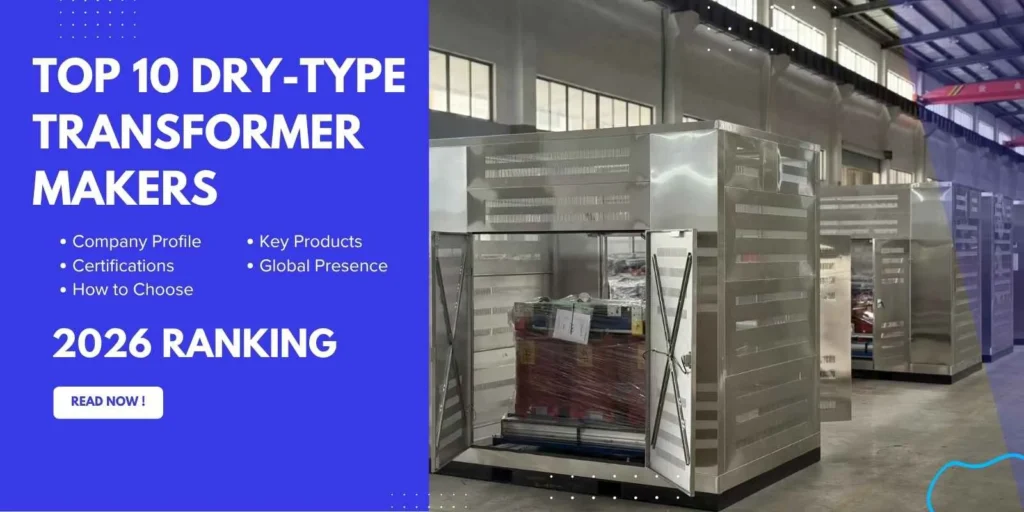
Top 10 Dry-Type Transformer Manufacturers Worldwide in 2026
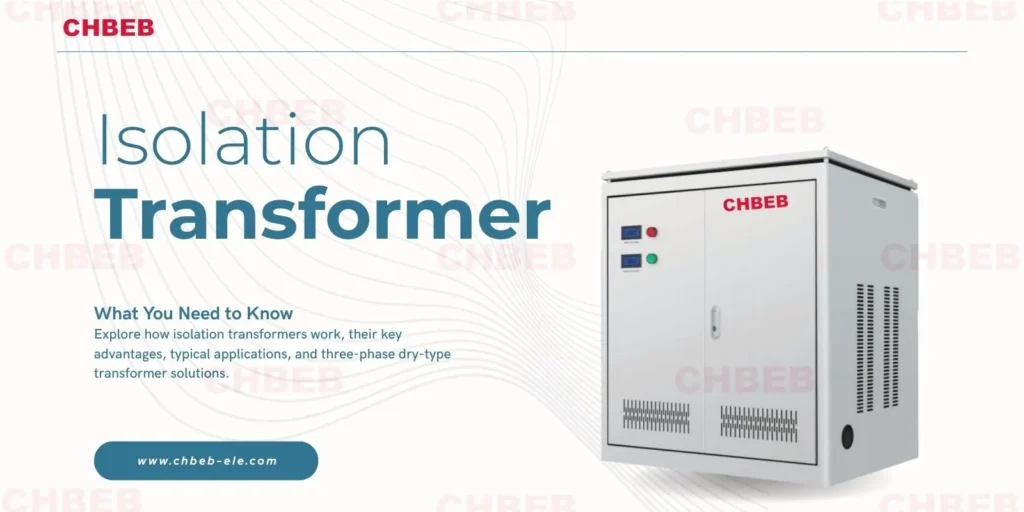
What You Need to Know About Isolation Transformers
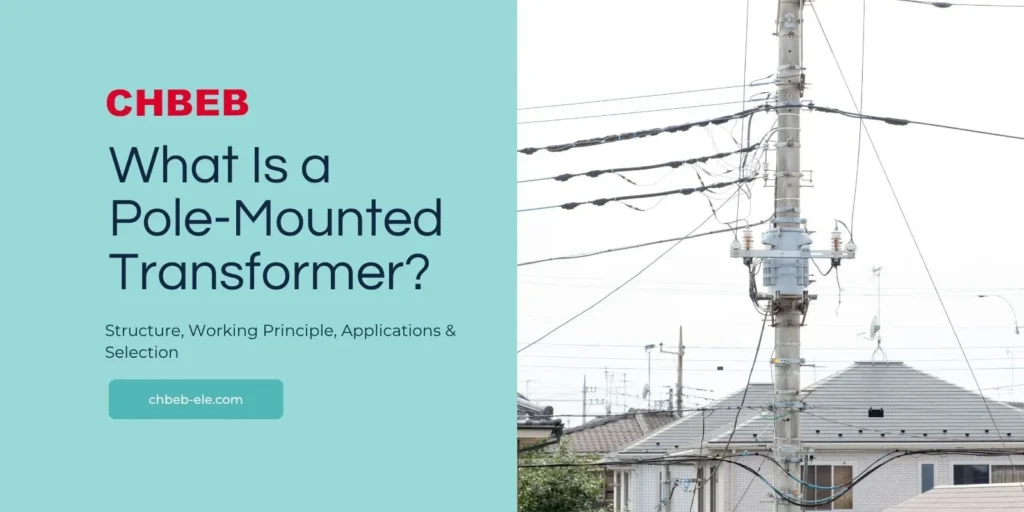
What You Need to Know About Pole-Mounted Transformers
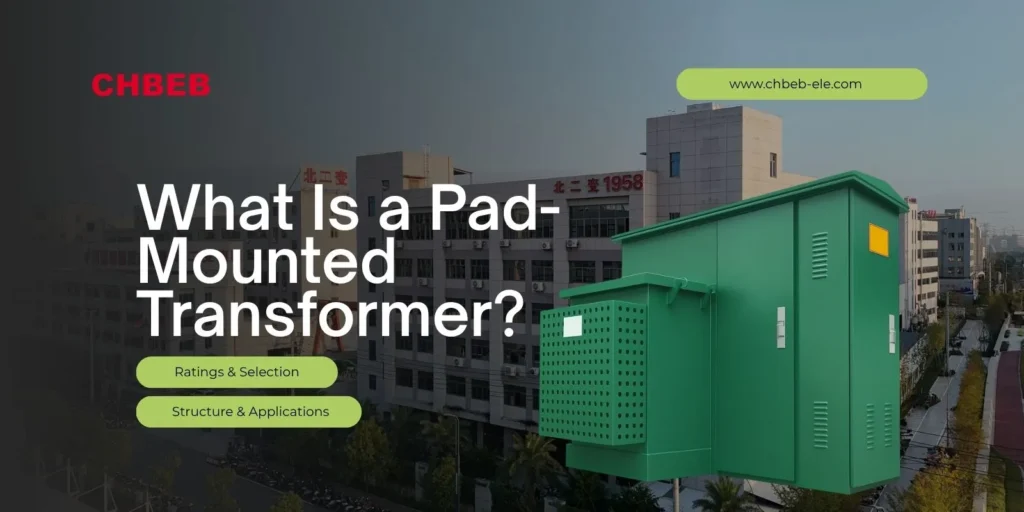
What Is a Pad-Mounted Transformer?
What Is a Dry-Type Transformer?
What is a substation transformers
What is a Distribution Transformer?
What is the difference between an oil-immersed transformer and a dry-type transformer?
How to Select a Reliable HV Transformer Supplier in China | CHBEB
How to Safely Load Oil-Immersed Transformers According to IEEE C57.91 | CHBEB
Transformer Silicon Steel Shearing Explained | Step-Lap, Burr Control & Core Loss | CHBEB
Quick Message
click to chats
I am Online Now!
Hello! 👋 Welcome to CHBEB.
We are a transformer manufacturer with 60+ years of experience.
✅ Distribution & Power Transformers (Oil & Dry Type)
✅ Customized EPC & OEM Solutions
✅ Fast Delivery & International Certifications