
Are you struggling to choose the right oil tank for your transformer? You’re not alone in this complex decision-making process.
Transformer oil tanks are crucial components that house and protect the transformer’s core and windings. They come in various types, including sealed, non-sealed, and conservator designs, each serving specific purposes in maintaining oil quality and transformer performance.

As an electrical engineer with years of experience in transformer design and maintenance, I’ve seen firsthand how the right oil tank can make or break a transformer’s performance. Let’s dive into the world of transformer oil tanks and uncover the secrets to selecting the perfect one for your needs.
Understanding the Basics: What is a Transformer Oil Tank and Its Function?
Ever wondered why transformers need oil tanks in the first place? The answer lies in the critical role these tanks play in transformer operation.
A transformer oil tank is a container that houses the transformer’s core, windings, and insulating oil. It serves multiple functions, including electrical insulation, cooling, and protection against environmental factors. The tank design is crucial for maintaining oil quality and extending transformer life.
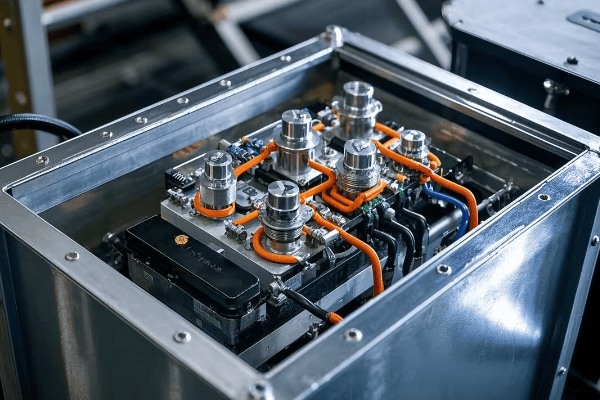
Internal components of a transformer oil tank
I remember the first time I opened a transformer oil tank during my early days as an engineer. The complexity of the internal components and the importance of the oil’s role fascinated me. Let’s break down the key functions of a transformer oil tank:
Primary Functions of Transformer Oil Tanks
Insulation
- Contains insulating oil that prevents electrical breakdown
- Maintains dielectric strength between transformer components
Cooling
- Facilitates heat dissipation from the core and windings
- Allows for circulation of oil for efficient cooling
Protection
- Shields internal components from environmental factors
- Prevents contamination of the insulating oil
Oil Preservation
- Maintains oil quality over time
- Prevents oxidation and moisture ingress
| Function | Importance | Related Components |
|---|---|---|
| Insulation | Critical | Oil, bushings |
| Cooling | Essential | Radiators, fans |
| Protection | Vital | Tank body, gaskets |
| Oil Preservation | Important | Conservator, breather |
In my career, I’ve seen how neglecting any of these functions can lead to premature transformer failure. I once worked on a project where a poorly designed tank led to rapid oil degradation, resulting in a costly transformer replacement just a few years into its expected lifespan.
Types of Transformer Oil Tanks
Sealed Tanks
- Completely sealed from the atmosphere
- Use an inert gas or flexible membrane to accommodate oil expansion
Non-Sealed (Free Breathing) Tanks
- Allow direct contact between oil and atmosphere
- Require more frequent oil maintenance
Conservator Tanks
- Include a separate oil reservoir (conservator)
- Maintain constant oil level in the main tank
Each type has its advantages and is suited for different applications. The choice depends on factors like transformer size, location, and maintenance capabilities.
Oil Tank Components
Main Tank Body
- Houses the core and windings
- Made of steel with corrosion-resistant coating
Radiators
- Increase surface area for heat dissipation
- Can be detachable for transportation
Bushings
- Provide insulated passage for conductors
- Critical for maintaining tank seal
Valves and Fittings
- Allow for oil sampling and filtration
- Used for vacuum processing during maintenance
Understanding these basics is crucial for anyone working with transformers. The oil tank is not just a simple container; it’s a complex system that plays a vital role in the transformer’s performance and longevity. As we delve deeper into specific tank types and designs, keep in mind how each feature contributes to these essential functions.
Sealed vs. Non-Sealed Oil Tanks: Key Differences and Applications?
Confused about whether to choose a sealed or non-sealed oil tank for your transformer? You’re not alone in this common dilemma.
Sealed oil tanks are completely isolated from the atmosphere, using inert gas or flexible membranes to accommodate oil expansion. Non-sealed tanks, also known as free-breathing tanks, allow direct contact between oil and air. Each type has distinct advantages and is suited for different applications.
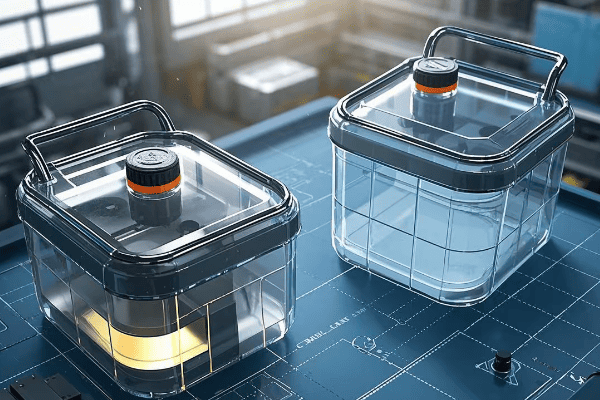
Side-by-side diagram of sealed and non-sealed transformer oil tanks
In my years of working with transformers, I’ve seen the pros and cons of both sealed and non-sealed tanks in action. Let’s dive into the key differences and applications of these two types:
Sealed Oil Tanks
Design Features
- Completely sealed from the atmosphere
- Use nitrogen gas cushion or rubber diaphragm for oil expansion
- Pressure-vacuum gauge for monitoring internal pressure
Advantages
- Minimal oil oxidation and moisture ingress
- Reduced oil maintenance requirements
- Suitable for harsh environments
Disadvantages
- Higher initial cost
- More complex design
- Potential for pressure buildup
Applications
- Large power transformers
- Transformers in polluted or humid environments
- Applications requiring minimal maintenance
Non-Sealed (Free Breathing) Oil Tanks
Design Features
- Open to the atmosphere through a breather
- Use silica gel breather to remove moisture from incoming air
- Oil level indicator to monitor oil volume
Advantages
- Simpler design
- Lower initial cost
- Easy to inspect and maintain
Disadvantages
- Higher risk of oil contamination and oxidation
- Requires more frequent oil maintenance
- Not suitable for highly polluted environments
Applications
- Small to medium-sized distribution transformers
- Areas with clean air and moderate humidity
- Applications where regular maintenance is feasible
| Feature | Sealed Tank | Non-Sealed Tank |
|---|---|---|
| Atmospheric Contact | No | Yes |
| Oil Preservation | Better | Moderate |
| Maintenance Needs | Lower | Higher |
| Cost | Higher | Lower |
| Environmental Suitability | Versatile | Limited |
I remember a project where we replaced several non-sealed transformers with sealed units in a coastal area. The reduction in oil degradation and maintenance frequency was significant, leading to improved reliability and reduced long-term costs.
Factors Influencing Choice
Environmental Conditions
- Humidity levels
- Air pollution
- Ambient temperature variations
Transformer Size and Rating
- Larger transformers often benefit from sealed designs
- Smaller units may be more cost-effective with non-sealed tanks
Maintenance Capabilities
- Frequency of possible maintenance
- Availability of skilled personnel
Regulatory Requirements
- Some regions may have specific requirements for oil containment
Lifecycle Cost Considerations
- Initial cost vs. long-term maintenance expenses
- Expected lifespan of the transformer
In my experience, the choice between sealed and non-sealed tanks often comes down to a balance between initial cost and long-term reliability. For critical applications or harsh environments, I usually recommend sealed tanks despite the higher upfront cost. However, for smaller distribution transformers in clean environments, non-sealed tanks can be a cost-effective choice.
Hybrid Solutions
It’s worth noting that some modern designs offer hybrid solutions:
Semi-Sealed Tanks
- Combine features of both sealed and non-sealed designs
- Use a conservator with a rubber bag to limit air contact
Hermetically Sealed Tanks
- Completely sealed without even a conservator
- Use corrugated tank walls to accommodate oil expansion
These hybrid designs aim to offer the best of both worlds, providing improved oil preservation with simpler maintenance requirements.
Understanding the differences between sealed and non-sealed oil tanks is crucial for making informed decisions in transformer selection and maintenance. Each type has its place in the power industry, and the right choice depends on a careful consideration of the specific application, environment, and maintenance capabilities. As we continue to innovate in transformer design, the distinctions between these types may evolve, but the fundamental principles of oil preservation and transformer protection will remain crucial.
Conservation Types: Exploring Free Breathing and Sealed Conservator Designs?
Ever wondered how transformers maintain their oil quality over time? The secret lies in their conservation systems.
Transformer oil conservation systems come in two main types: free breathing and sealed conservator designs. Free breathing systems allow direct air contact with the oil, while sealed conservators use a rubber diaphragm to separate oil from air. Both aim to accommodate oil volume changes and preserve oil quality.

Diagram comparing free breathing and sealed conservator systems
Throughout my career, I’ve worked with both types of conservation systems, and each has its unique advantages. Let’s dive into the details of these designs:
Free Breathing Conservator Design
Basic Principle
- Oil expands and contracts freely with temperature changes
- Air enters and exits the system through a breather
Key Components
- Conservator tank (expansion tank)
- Silica gel breather
- Oil level indicator
Advantages
- Simple design
- Lower initial cost
- Easy to inspect and maintain
Disadvantages
- Higher risk of oil contamination
- Requires more frequent maintenance
- Not suitable for highly polluted environments
Sealed Conservator Design
Basic Principle
- Oil is separated from the atmosphere by a flexible membrane
- Air volume above the membrane changes with oil expansion/contraction
Key Components
- Conservator tank with rubber diaphragm
- Pressure-vacuum valve
- Oil level indicator
Advantages
- Minimal oil oxidation and moisture ingress
- Reduced maintenance requirements
- Suitable for harsh environments
Disadvantages
- Higher initial cost
- More complex design
- Potential for diaphragm failure
| Feature | Free Breathing | Sealed Conservator |
|---|---|---|
| Air Contact | Direct | Indirect |
| Oil Preservation | Moderate | Better |
| Maintenance Needs | Higher | Lower |
| Cost | Lower | Higher |
| Environmental Suitability | Limited | Versatile |
I recall a project where we upgraded a substation’s transformers from free breathing to sealed conservator systems. The improvement in oil quality and reduction in maintenance frequency was remarkable, especially for units located in areas with high humidity.
Detailed Comparison of Conservation Systems
Oil Oxidation
- Free Breathing: Higher risk due to direct air contact
- Sealed Conservator: Minimal oxidation due to air separation
Moisture Ingress
- Free Breathing: Requires effective silica gel breather
- Sealed Conservator: Significantly reduced moisture ingress
Maintenance Requirements
- Free Breathing: Regular silica gel replacement and oil testing
- Sealed Conservator: Less frequent oil testing, periodic diaphragm inspection
Suitability for Different Environments
- Free Breathing: Best for clean, dry environments
- Sealed Conservator: Suitable for various environments, including polluted and humid areas
Impact on Oil Life
- Free Breathing: May require more frequent oil changes or treatments
- Sealed Conservator: Generally extends oil life
In my experience, the choice between free breathing and sealed conservator designs often depends on the specific application and environment. For critical installations or areas with challenging environmental conditions, I typically recommend sealed conservator systems despite the higher initial cost. The long-term benefits in oil preservation and reduced maintenance often outweigh the upfront investment.
Innovations in Conservation Systems
The field of transformer oil conservation is continually evolving:
Smart Monitoring Systems
- Real-time monitoring of oil level and quality
- Early detection of potential issues
Advanced Breather Designs
- Self-regenerating silica gel breathers
- Extended maintenance intervals for free breathing systems
Hybrid Conservation Systems
- Combine features of both free breathing and sealed designs
- Aim to offer flexibility and improved performance
Understanding the differences between free breathing and sealed conservator designs is crucial for making informed decisions in transformer selection and maintenance. Each system has its strengths, and the right choice depends on a careful consideration of the operating environment, maintenance capabilities, and long-term performance requirements. As we continue to innovate in transformer technology, these conservation systems will likely see further improvements, enhancing the reliability and efficiency of our power distribution networks.
Nitrogen Cushion Oil Preservation System: How It Works and Benefits?
Ever heard of using nitrogen to protect transformer oil? This innovative system is changing the game in oil preservation.
The nitrogen cushion oil preservation system uses an inert nitrogen gas layer above the oil to prevent oxidation and moisture ingress. It maintains a slight positive pressure in the tank, eliminating air contact with the oil. This system offers superior oil preservation, especially for large power transformers.
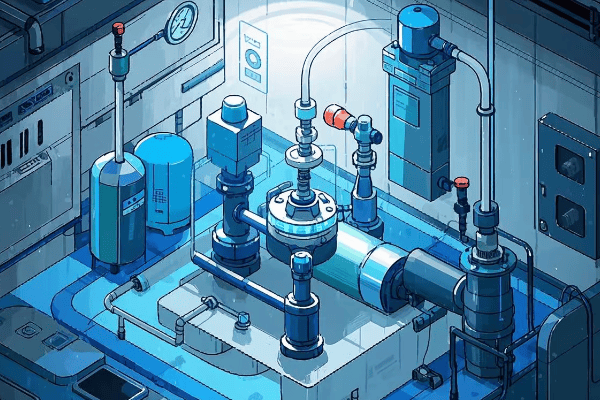
Schematic of a nitrogen cushion oil preservation system
In my years working with transformers, I’ve seen the nitrogen cushion system emerge as a game-changer for oil preservation. Let’s explore how this system works and its numerous benefits:
How the Nitrogen Cushion System Works
Basic Principle
- A layer of nitrogen gas sits above the oil surface
- The system maintains a slight positive pressure (typically 0.2 to 0.3 bar)
Key Components
- Nitrogen supply (bottles or generator)
- Pressure regulator
- Pressure relief valve
- Oil level indicator
Operation Process
- As oil expands, it compresses the nitrogen cushion
- When oil contracts, nitrogen is added to maintain pressure
- Excess pressure is relieved through a valve
Benefits of the Nitrogen Cushion System
Superior Oil Preservation
- Eliminates oxygen contact, preventing oxidation
- Significantly reduces moisture ingress
Extended Oil Life
- Slows down oil degradation processes
- Reduces need for oil treatment or replacement
Improved Transformer Reliability
- Maintains consistent dielectric strength of oil
- Reduces risk of internal faults due to oil degradation
Reduced Maintenance
- Less frequent oil testing required
- No need for silica gel replacement (as in breather systems)
Environmental Benefits
- Reduces oil waste from frequent changes
- Minimizes risk of oil leaks or spills
| Feature | Traditional Systems | Nitrogen Cushion System |
|---|---|---|
| Oil Oxidation | Moderate to High | Minimal |
| Moisture Ingress | Possible | Very Low |
| Maintenance Frequency | Higher | Lower |
| Initial Cost | Lower | Higher |
| Long-term Cost | Variable | Generally Lower |
I remember implementing a nitrogen cushion system for a critical power transformer at a major substation. The improvement in oil quality and the reduction in maintenance interventions were remarkable. Even after five years, the oil parameters remained almost as good as new.
Considerations for Implementation
Initial Cost
- Higher upfront investment for equipment
- Need for nitrogen supply infrastructure
Expertise Required
- Specialized knowledge for installation and operation
- Training needed for maintenance personnel
Monitoring and Control
- Regular checks of nitrogen pressure and purity
- Automated systems available for pressure regulation
Safety Considerations
- Proper handling of pressurized nitrogen
- Ensuring adequate ventilation in enclosed spaces
Applications Best Suited for Nitrogen Cushion Systems
Large Power Transformers
- Where oil volume and value justify the investment
Critical Infrastructure
- Substations serving essential facilities
- Power plants and grid interconnections
Harsh Environments
- Areas with high humidity or pollution
- Coastal or industrial locations
Long-Life Expectancy Transformers
- Where extended service life is a priority
In my experience, the decision to implement a nitrogen cushion system often comes down to a cost-benefit analysis. For large, critical transformers, the long-term savings in maintenance and improved reliability usually justify the initial investment. However, for smaller distribution transformers, traditional conservation methods may still be more cost-effective.
Future Trends in Nitrogen Cushion Systems
The technology continues to evolve:
Integration with Smart Grid Systems
- Real-time monitoring and remote control capabilities
- Predictive maintenance based on oil condition data
Improved Nitrogen Generation
- On-site nitrogen generation for large installations
- More efficient an2. Improved Nitrogen Generation
- On-site nitrogen generation for large installations
- More efficient and cost-effective nitrogen supply systems
Hybrid Systems
- Combining nitrogen cushion with other preservation methods
- Optimizing performance for different transformer sizes and applications
The nitrogen cushion oil preservation system represents a significant advancement in transformer technology. Its ability to extend oil life, reduce maintenance, and improve reliability makes it an attractive option for many high-value and critical applications. As we continue to push the boundaries of power system efficiency and reliability, innovations like the nitrogen cushion system will play an increasingly important role in ensuring the longevity and performance of our transformer fleets.
Choosing the Right Oil Tank: Factors to Consider for Optimal Transformer Performance?
Struggling to decide which oil tank is best for your transformer? You’re not alone in this complex decision-making process.
Selecting the right oil tank involves considering factors such as transformer size, environmental conditions, maintenance capabilities, and regulatory requirements. The choice impacts oil preservation, cooling efficiency, and overall transformer performance and lifespan.
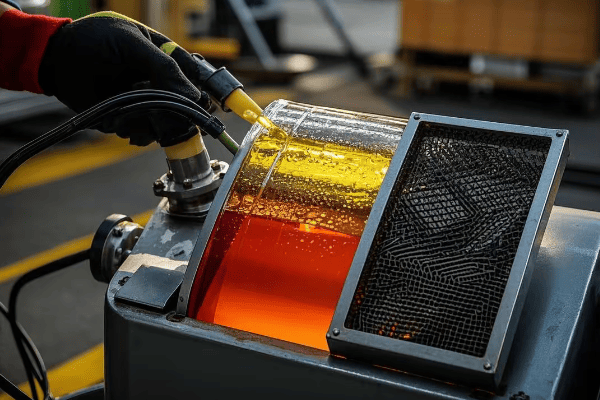
Diagram illustrating key considerations in choosing a transformer oil tank
In my years of designing and maintaining transformer systems, I’ve learned that choosing the right oil tank is crucial for long-term success. Let’s explore the key factors you need to consider:
Key Factors in Oil Tank Selection
Transformer Size and Rating
- Larger transformers often require more sophisticated oil preservation systems
- Higher voltage ratings may necessitate better insulation and cooling
Environmental Conditions
- Temperature extremes affect oil expansion and cooling needs
- Humidity levels influence the choice of oil preservation system
- Pollution levels may require more robust sealing
Maintenance Capabilities
- Frequency of possible maintenance interventions
- Availability of skilled personnel for complex systems
Regulatory Requirements
- Environmental regulations on oil containment
- Safety standards for specific industries or locations
Cost Considerations
- Initial investment vs. long-term operational costs
- Life-cycle cost analysis including maintenance and potential failures
| Factor | Impact on Tank Choice | Considerations |
|---|---|---|
| Size | Larger size → More complex system | Cooling capacity, oil volume |
| Environment | Harsh conditions → Better sealing | Temperature, humidity, pollution |
| Maintenance | Limited access → Low-maintenance design | Ease of inspection, oil sampling |
| Regulations | Strict rules → Enhanced safety features | Oil containment, fire resistance |
| Cost | Budget constraints → Balance performance and cost | Initial vs. long-term costs |
I recall a project where we initially chose a simple free-breathing tank for a medium-sized transformer in what we thought was a clean environment. Within a year, we had to upgrade to a sealed system due to unexpected air pollution from a nearby industrial development. This experience taught me the importance of considering not just current conditions, but potential future changes in the environment.
Detailed Analysis of Selection Criteria
Oil Preservation Method
- Free breathing for clean, dry environments and smaller transformers
- Sealed or nitrogen cushion for larger units or challenging environments
Cooling System Design
- ONAN (Oil Natural Air Natural) for smaller units
- ONAF (Oil Natural Air Forced) or OFAF (Oil Forced Air Forced) for larger transformers
- Consider future load growth and potential for retrofitting
Material Selection
- Corrosion-resistant materials for coastal or industrial areas
- Special coatings for extreme temperatures or chemical exposure
Safety Features
- Pressure relief devices
- Oil level indicators
- Temperature monitoring systems
Ease of Maintenance
- Accessibility of valves and fittings
- Provision for oil sampling and filtration
- Compatibility with oil processing equipment
In my experience, one often overlooked factor is the potential for future upgrades or relocations. I always advise clients to consider future scenarios. For instance, choosing a tank design that allows for easy addition of forced cooling can be a wise long-term decision.
Special Considerations for Different Applications
Power Generation Plants
- High reliability requirements
- Often justify more advanced (and costly) oil preservation systems
Distribution Transformers
- Balance between cost and performance
- Often use simpler designs but may need adaptation for urban environments
Industrial Applications
- May face unique environmental challenges (e.g., chemical exposure)
- Often require customized solutions
Renewable Energy Integration
- May experience more frequent load fluctuations
- Might benefit from more robust cooling systems
Mobile or Temporary Installations
- Need for compact and robust designs
- Consideration for transportation and frequent relocation
Choosing the right oil tank is not just about meeting current needs but anticipating future challenges. I always emphasize to my clients the importance of a holistic approach, considering not just the transformer in isolation, but its role in the broader power system and its operating environment.
Emerging Trends Influencing Tank Selection
Smart Monitoring Systems
- Integration of sensors for real-time monitoring
- Predictive maintenance capabilities
Eco-friendly Materials
- Biodegradable oils requiring different preservation approaches
- Recycled or sustainable materials in tank construction
Modular Designs
- Allowing for easier transportation and installation
- Facilitating future upgrades or modifications
Enhanced Fire Safety
- Ester-filled transformers with different tank requirements
- Advanced fire suppression systems integrated into tank design
The selection of the right transformer oil tank is a critical decision that impacts long-term performance, maintenance requirements, and overall system reliability. By carefully considering all these factors and staying informed about the latest technologies and trends, you can make an informed choice that ensures optimal transformer performance for years to come. Remember, the cheapest option upfront may not always be the most cost-effective in the long run. Investing in the right oil tank can pay dividends in terms of reduced maintenance, improved reliability, and extended transformer life.
Maintenance and Monitoring of Transformer Oil Tanks: Best Practices for Longevity?
Worried about keeping your transformer oil tanks in top shape? You’re right to be concerned – proper maintenance is key to transformer longevity.
Effective maintenance of transformer oil tanks involves regular inspections, oil testing, and proactive interventions. Best practices include routine oil analysis, monitoring of key parameters like temperature and pressure, and timely addressing of issues like leaks or contamination.
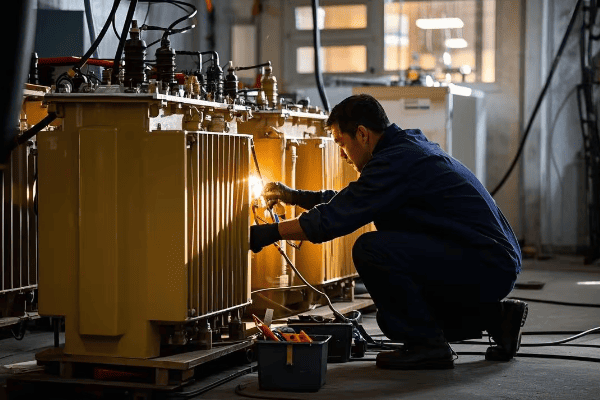
Technician performing maintenance on a transformer oil tank
Throughout my career, I’ve seen how good maintenance practices can significantly extend the life of transformer oil tanks. Let’s dive into the best practices for keeping these crucial components in optimal condition:
Key Maintenance Activities
Regular Oil Testing
- Dielectric strength test
- Acidity test
- Moisture content analysis
- Dissolved gas analysis (DGA)
Visual Inspections
- Check for oil leaks
- Inspect tank coating for damage
- Examine gaskets and seals
Monitoring Key Parameters
- Oil temperature
- Tank pressure (for sealed systems)
- Oil level
Breather Maintenance (for free-breathing systems)
- Regular silica gel replacement or regeneration
- Inspection of breather operation
Oil Preservation System Checks
- Nitrogen pressure checks (for nitrogen cushion systems)
- Conservator diaphragm inspection (for sealed conservator systems)
| Maintenance Activity | Frequency | Purpose |
|---|---|---|
| Oil Testing | Annually or bi-annually | Assess oil quality and transformer health |
| Visual Inspection | Monthly | Detect early signs of issues |
| Parameter Monitoring | Continuous | Real-time health assessment |
| Breather Maintenance | Quarterly | Ensure effective moisture removal |
| Preservation System Checks | Annually | Verify system integrity |
I remember a case where routine oil testing revealed early signs of paper insulation degradation in a critical transformer. By catching this early, we were able to implement corrective measures and avoid a potentially catastrophic failure.
Best Practices for Effective Maintenance
Establish a Regular Maintenance Schedule
- Tailor frequency to transformer criticality and operating conditions
- Align with manufacturer recommendations and industry standards
Implement Condition-Based Maintenance
- Use data from monitoring systems to inform maintenance decisions
- Prioritize interventions based on actual equipment condition
Proper Documentation
- Maintain detailed records of all maintenance activities
- Track trends in oil quality and other parameters over time
Staff Training
- Ensure maintenance personnel are trained in latest techniques
- Provide regular refresher courses on safety procedures
Use of Advanced Diagnostic Tools
- Employ thermal imaging for hotspot detection
- Utilize acoustic emission testing for partial discharge detection
In my experience, one of the most effective practices is trend analysis. By tracking oil quality parameters over time, you can often predict and prevent issues before they become serious problems.
Addressing Common Issues
Oil Leaks
- Promptly repair any detected leaks
- Investigate root causes (e.g., gasket failure, tank damage)
Moisture Ingress
- Identify and address sources of moisture
- Consider upgrading to a more effective oil preservation system if recurring
Oil Contamination
- Implement oil filtration or regeneration as needed
- Investigate sources of contamination (e.g., deteriorating internal components)
Cooling System Issues
- Regular cleaning of radiators and fans
- Ensure proper operation of cooling controls
Pressure-Related Problems (for sealed systems)
- Check and calibrate pressure relief devices
- Investigate causes of abnormal pressure changes
I once worked on a transformer where recurring oil contamination issues were traced back to a degrading rubber seal. Replacing this small component significantly improved oil quality and reduced maintenance frequency.
Emerging Technologies in Maintenance and Monitoring
Online Monitoring Systems
- Real-time tracking of key parameters
- Integration with SCADA systems for remote monitoring
Artificial Intelligence and Machine Learning
- Predictive maintenance algorithms
- Anomaly detection in oil quality trends
IoT Sensors
- Wireless monitoring of various parameters
- Easier retrofitting of older transformers
Drone Inspections
- Use of drones for visual inspections of hard-to-reach areas
- Thermal imaging from multiple angles
Advanced Oil Analysis Techniques
- On-site oil testing capabilities
- More comprehensive and faster laboratory analysis
Implementing these technologies can significantly enhance maintenance effectiveness. I’ve seen cases where online monitoring systems detected developing faults weeks before they would have been caught by routine testing.
The Role of Risk Assessment in Maintenance Planning
Criticality Analysis
- Prioritize maintenance based on transformer importance
- Consider impact of failure on overall system
Environmental Risk Factors
- Tailor maintenance strategies to specific environmental challenges
- Consider seasonal variations in maintenance needs
Age and Condition Assessment
- Adjust maintenance intensity based on transformer life stage
- Balance between extending life and planning for replacement
Effective maintenance and monitoring of transformer oil tanks is not just about following a checklist – it’s about understanding the unique needs of each transformer and its operating environment. By implementing these best practices and staying abreast of technological advancements, you can significantly extend the life of your transformers, improve reliability, and optimize maintenance costs. Remember, in the world of transformer maintenance, an ounce of prevention is truly worth a pound of cure.
Conclusion
Choosing and maintaining the right transformer oil tank is crucial for optimal performance and longevity. From understanding basic types to implementing advanced maintenance strategies, each aspect plays a vital role. By considering environmental factors, regulatory requirements, and emerging technologies, engineers can ensure reliable and efficient transformer operation.