Send us a message if you have any questions or request a quote. Our experts will give you a reply within 24 hours and help you select the right valve you want.
Are you struggling to design safe, efficient power distribution in compact spaces? Many engineers face delays, high costs, and safety risks. A box type transformer solves these issues by combining transformer, HV/LV switchgear, and protection in one compact unit—cutting footprint, simplifying installation, and ensuring reliable power for residential, commercial, and temporary grids.
A box type transformer is a compact outdoor power distribution unit that combines transformer, HV/LV switchgear, and protection systems in one enclosure. It’s widely used in residential, commercial, and temporary grid installations for easy deployment and safe, efficient power conversion. This all-in-one solution simplifies installation, reduces footprint, and enhances safety in various power distribution scenarios.
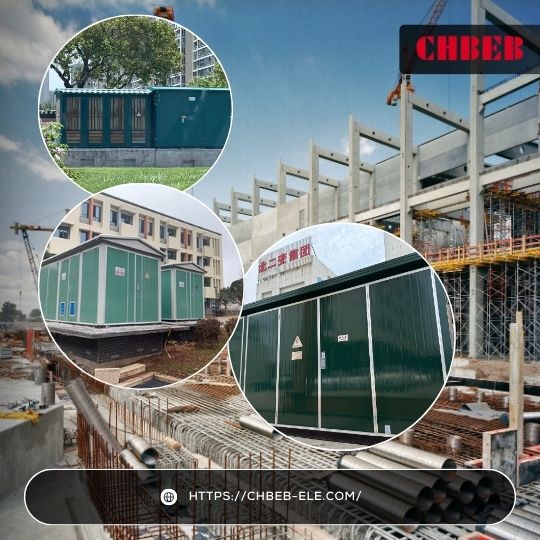
box type transformer in urban setting
In this comprehensive guide, I’ll walk you through everything you need to know about box type transformers. We’ll explore their structure, function, and working principles, giving you a clear understanding of this innovative power distribution solution. Whether you’re an experienced engineer or new to the field, this article will provide valuable insights into the world of compact substations1.
What Is a Box Type Transformer? Definition & Buyer Guide
Have you ever wondered how modern urban developments manage to distribute power efficiently without large, unsightly substations? The answer often lies in box type transformers. But what exactly is a box type transformer, and why is it gaining popularity in the power distribution sector?
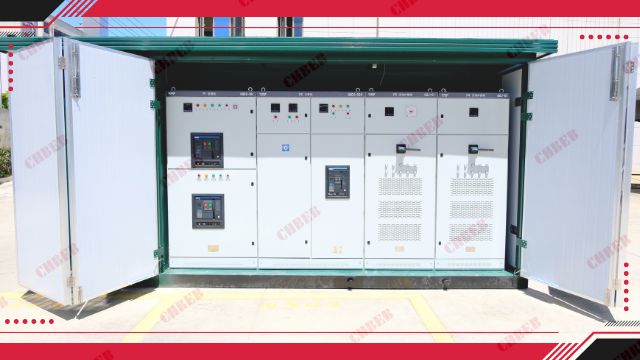
A box type transformer, also known as a compact substation or 箱式变电站 in Chinese, is an all-in-one power distribution unit. It integrates a transformer, high and low voltage switchgear, and protection systems into a single, weatherproof enclosure. This compact design allows for efficient power transformation and distribution in limited spaces, making it ideal for urban and temporary power needs.
compact substation layout diagram
Understanding Box Type Transformers
Let’s break down the key aspects:
Definition and Basic Concept
Key Features
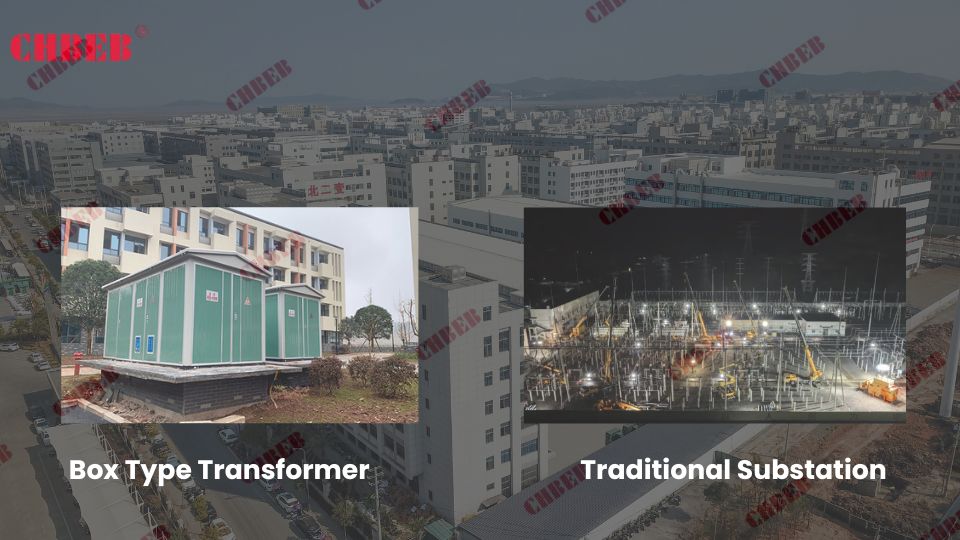
Advantages Over Traditional Substations
Common Industry Terms
Evolution of Box Type Transformers
Definition and Basic Concept
A box type transformer is:
A self-contained power distribution unit
Housed in a compact, typically metal enclosure
Combines transformer, switchgear, and protection systems
I recently visited a new residential complex where a box type transformer was neatly tucked away in a corner, efficiently powering the entire development without taking up valuable real estate.
Key Features
These transformers offer several unique features:
Compact design for space-saving installation
Weatherproof enclosure for outdoor use
Integrated safety and protection systems
Easy to transport and install
During a recent project, I was impressed by how quickly we could deploy a box type transformer, significantly reducing installation time compared to traditional substations.
Advantages Over Traditional Substations
Box type transformers offer several benefits:
Reduced footprint
Lower installation costs
Improved safety due to enclosed design
Easier maintenance and replacement
Here’s a quick comparison:
Aspect
Box Type Transformer
Traditional Substation
Size
Compact
Large
Installation Time
Days
Weeks to Months
Safety
Fully enclosed
Open components
Mobility
Easily relocatable
Fixed installation
Common Industry Terms
It’s important to understand various names used:
Compact substation
Packaged substation
Unitized substation
箱式变电站 (Chinese term)
Evolution of Box Type Transformers
The concept has evolved over time:
Originally developed for temporary power needs
Now widely used in permanent installations
Continuous improvements in design and efficiency
Key points to remember about box type transformers:
All-in-one solution for power distribution
Compact and space-saving design
Integrates transformer, switchgear, and protection systems
Ideal for urban and temporary power needs
Offers advantages in safety, installation, and maintenance
In my experience, the versatility of box type transformers makes them invaluable in various projects. I’ve seen them used in everything from urban renewal projects to remote construction sites, showcasing their adaptability to different environments and requirements.
For instance, in a recent urban redevelopment project, we used a box type transformer to power a mixed-use complex. Its compact design allowed us to maximize the usable space for commercial and residential purposes while ensuring reliable power distribution.
As we move on to discuss the internal structure and main components, keep in mind how this compact, integrated design influences the arrangement and functionality of its parts. Understanding this structure is key to appreciating the efficiency and versatility of box type transformers in modern power distribution systems.
Box Type Transformer Structure: Inside Layout & Core Components
Are you curious about what’s inside a box type transformer? Understanding its internal structure is crucial for anyone involved in power distribution projects. But what are the key components that make up this compact powerhouse, and how are they arranged to ensure efficient and safe operation?
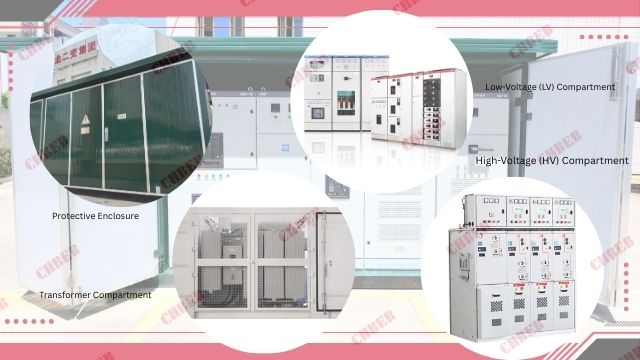
A box type transformer typically consists of three main compartments: the high-voltage section, the transformer section, and the low-voltage section. These are housed within a protective enclosure designed for outdoor use. Key components include the transformer itself, HV and LV switchgear, protection relays, and cooling systems. The layout is optimized for safety, efficiency, and ease of maintenance.
Often uses SF6 gas or vacuum technology for insulation
I recently inspected the HV compartment of a box type transformer and was impressed by the compact arrangement of the switchgear, which efficiently managed the incoming 11kV supply.
Transformer Compartment
The heart of the unit:
Houses the main transformer (typically oil-immersed)
Includes cooling systems (radiators, fans)
May have on-load tap changers for voltage regulation
During a factory tour, I observed how the transformer compartment was designed for easy access during maintenance, a crucial feature for long-term reliability.
Low-Voltage (LV) Compartment
Manages the transformed power output:
Contains LV switchgear and distribution panels
Includes metering and power quality monitoring equipment
Often incorporates smart grid technologies
Here’s a quick overview of the main compartments:
Compartment
Key Components
Function
HV
Switchgear, Protection Relays
Manages incoming high voltage
Transformer
Transformer, Cooling System
Converts voltage
LV
Switchgear, Distribution Panels
Distributes transformed power
Protective Enclosure
The outer shell that houses all components:
Typically made of galvanized steel or stainless steel
Designed to meet specific IP (Ingress Protection) ratings
Includes ventilation systems and access doors
Auxiliary Systems
Supporting equipment for optimal operation:
Temperature monitoring devices
Pressure relief systems
Fire suppression equipment in some models
Key points about the internal structure:
Compartmentalized design enhances safety and maintenance ease
HV and LV sections are separated for safety and operational efficiency
Transformer compartment is central, often with dedicated cooling systems
Protective enclosure ensures weather resistance and security
Auxiliary systems support safe and efficient operation
In my experience, the internal layout of box type transformers is a marvel of engineering efficiency. I’ve seen how this compact arrangement allows for quick installation and easy maintenance, crucial factors in both urban and remote settings.
For example, during a recent project in a densely populated urban area, the compartmentalized design of our box type transformer allowed us to perform routine maintenance on the LV section without powering down the entire unit, minimizing disruption to the local power supply.
As we move on to discuss how box type transformers work, keep in mind how this internal structure facilitates the flow of power and the various safety and control mechanisms in place. Understanding this structure is key to appreciating the sophisticated yet efficient operation of these compact substations.
How Does a Box Type Transformer Work? Step-by-Step Operation
Have you ever wondered about the inner workings of a box type transformer? Understanding its operation is crucial for anyone involved in power distribution. But how exactly does this compact unit transform and distribute electricity efficiently and safely?
A box type transformer works by receiving high-voltage power, transforming it to a lower voltage, and distributing it safely. The process involves the HV compartment receiving power, the transformer stepping down the voltage, and the LV compartment distributing it. Throughout this process, various protection and control systems ensure safe and efficient operation, all within a compact, integrated unit.
Box Type Transformer Operation Flow
Box Type Transformer Operation Flow
Step-by-Step Operation Flow
Let’s break down the operation into key stages:
High-Voltage Power Reception
Voltage Transformation
Low-Voltage Power Distribution
Protection and Control Mechanisms
Monitoring and Maintenance
High-Voltage Power Reception
The process begins at the HV compartment:
Incoming high-voltage power enters through HV bushings
HV switchgear manages the input
Protection relays monitor for any abnormalities
I recently observed the operation of a box type transformer during commissioning. The smooth transition of power from the HV line to the transformer was impressive, showcasing the efficiency of the HV compartment design.
Voltage Transformation
The core function occurs in the transformer compartment:
Power is transferred to the transformer’s primary winding
The transformer steps down the voltage to the required level
Cooling systems manage the heat generated during this process
During a recent project, we used a transformer with on-load tap changing capability, allowing for real-time voltage adjustment to maintain stable output despite fluctuating input voltages.
Low-Voltage Power Distribution
The transformed power is managed in the LV compartment:
Stepped-down voltage is received by the LV switchgear
Power is distributed through various feeders
Metering equipment monitors the output
Here’s a simplified flow of the operation:
Stage
Component
Action
1
HV Compartment
Receives and manages high-voltage input
2
Transformer
Steps down voltage
3
LV Compartment
Distributes transformed power
4
Protection Systems
Monitor and protect at each stage
Protection and Control Mechanisms
Throughout the process, various systems ensure safe operation:
Circuit breakers in both HV and LV sections for fault protection
Temperature and pressure monitoring in the transformer compartment
Automated systems for load management and voltage regulation
Monitoring and Maintenance
Ongoing monitoring ensures efficient operation:
SCADA systems for real-time monitoring and control
Regular maintenance checks on oil levels, connections, and insulation
Periodic testing of protection systems and switchgear
Key points about the operation flow:
Power flows seamlessly from HV to LV through the transformer
Multiple protection layers ensure safe operation at each stage
Cooling systems manage heat generation during transformation
Automated controls maintain voltage stability and load balance
Continuous monitoring allows for proactive maintenance
In my experience, the efficiency of this operation flow is what makes box type transformers so valuable in modern power distribution. I’ve seen how their integrated design allows for rapid response to load changes and fault conditions, crucial in maintaining stable power supply.
For instance, during a recent installation at a data center, the box type transformer’s ability to quickly respond to sudden load fluctuations was crucial in maintaining the consistent power supply needed for sensitive equipment. The integrated protection systems also provided an additional layer of security, essential for such critical infrastructure.
As we move on to discuss where box type transformers are used, keep in mind how this efficient operation flow makes them suitable for a wide range of applications. The combination of compact design and sophisticated operation makes these transformers adaptable to various environments and power distribution needs.
Where Are Box Type Transformers Used? Top Application Scenarios
Are you wondering about the practical applications of box type transformers? Their versatility makes them suitable for a wide range of scenarios, but where exactly do they shine? Understanding their key applications can help you determine if a box type transformer is the right solution for your power distribution needs.
Box type transformers find wide application in urban residential areas, commercial complexes, industrial sites, and temporary power setups. They’re particularly useful in space-constrained environments, rapid deployment scenarios, and situations requiring easy relocation. Common uses include powering residential communities, shopping centers, construction sites, and providing temporary grid support for events or emergency situations.
Box Type Transformer Applications
Key Application Scenarios
Let’s explore the main areas where box type transformers are commonly used:
Urban Residential Developments
Commercial and Retail Complexes
Industrial Sites and Factories
Temporary and Mobile Power Solutions
Renewable Energy Integration
Urban Residential Developments
Box type transformers are ideal for urban settings:
Compact design fits well in limited spaces
Aesthetic appearance blends with urban landscapes
Suitable for both high-rise apartments and suburban communities
I recently worked on a project where we installed a box type transformer in a new residential complex. Its compact size allowed us to place it discreetly while efficiently powering over 200 apartments.
Commercial and Retail Complexes
These transformers excel in commercial applications:
Can handle varying load profiles of shopping centers
Easy to scale for expanding business districts
Provide reliable power for critical systems like elevators and air conditioning
During a recent mall renovation project, we replaced an old substation with a box type transformer, significantly reducing the space required and improving overall power reliability.
Industrial Sites and Factories
In industrial settings, box type transformers offer several advantages:
Can be placed close to load centers, reducing power losses
Modular design allows for easy capacity expansion
Robust construction suitable for harsh industrial environments
Here’s a quick overview of applications in different sectors:
Sector
Application
Key Benefit
Residential
Urban housing complexes
Space-saving, aesthetic
Commercial
Shopping malls, office buildings
Reliable, scalable power
Industrial
Factories, warehouses
Robust, close to load centers
Temporary
Construction sites, events
Easy deployment and relocation
Renewable
Solar/wind farms
Efficient integration with grid
Temporary and Mobile Power Solutions
Box type transformers are excellent for temporary needs:
Construction sites requiring temporary power
Outdoor events and festivals
Emergency power restoration after natural disasters
I recall a project where we used a box type transformer to provide power for a large outdoor music festival. Its easy installation and removal made it perfect for this temporary, high-demand application.
Renewable Energy Integration
These transformers play a crucial role in renewable energy projects:
Solar farms for efficient power conversion and distribution
Wind energy projects, often in remote locations
Small-scale hydroelectric installations
Key points about application scenarios:
Versatile use across residential, commercial, and industrial sectors
Ideal for space-constrained urban environments
Excellent for temporary and mobile power needs
Suitable for harsh industrial settings
Facilitates integration of renewable energy sources
In my experience, the adaptability of box type transformers makes them invaluable across a wide range of projects. I’ve seen them successfully deployed in everything from bustling city centers to remote construction sites, showcasing their versatility.
For example, in a recent project for a rapidly expanding industrial park, we used multiple box type transformers to create a scalable power distribution network. This approach allowed for easy expansion as new businesses moved in, without requiring major infrastructure overhauls.
As we move on to compare box type transformers with traditional outdoor substations, keep in mind the diverse applications we’ve explored. This versatility is a key factor in understanding why box type transformers are increasingly preferred over conventional solutions in many scenarios.
Box Type Transformer vs Outdoor Substation: Cost, Efficiency & Maintenance
Are you weighing the pros and cons of box type transformers against traditional outdoor substations? This decision can significantly impact your project’s efficiency, cost, and long-term performance. But how do these two options really compare, and what factors should you consider when choosing between them?
Box type transformers offer several advantages over traditional outdoor substations, including a smaller footprint, faster installation, lower maintenance requirements, and enhanced safety. They’re more cost-effective for smaller to medium-sized applications and offer greater flexibility in placement. However, traditional substations may still be preferred for very high capacity needs or in areas with specific regulatory requirements.
Box Type vs Traditional Substation Comparison
Comparing Box Type and Traditional Substations
Let’s break down the comparison into key areas:
Size and Space Requirements
Installation Time and Complexity
Cost Considerations
Maintenance and Accessibility
Safety and Environmental Impact
Size and Space Requirements
Box type transformers excel in space efficiency:
Compact, integrated design
Typically 30-50% smaller footprint than traditional substations
Ideal for urban or space-constrained environments
I recently worked on a project where replacing a traditional substation with a box type transformer freed up valuable real estate for additional parking spaces in a crowded urban area.
Installation Time and Complexity
Box type transformers offer significant advantages in installation:
Pre-assembled and factory-tested, reducing on-site work
Can be installed in days rather than weeks or months
Minimal civil works required
During a recent industrial expansion project, we installed a box type transformer in just three days, compared to the several weeks it would have taken for a traditional substation.
Cost Considerations
The cost comparison varies based on capacity and location:
Initial costs often lower for box type transformers
Reduced installation and civil works costs
Potential long-term savings in maintenance and land use
Here’s a simplified cost comparison:
Aspect
Box Type Transformer
Traditional Substation
Initial Equipment Cost
Moderate to High
High
Installation Cost
Low
High
Land Use Cost
Low
High
Maintenance Cost
Low to Moderate
Moderate to High
Long-term Operating Cost
Generally Lower
Generally Higher
Maintenance and Accessibility
Box type transformers often have advantages in maintenance:
All components easily accessible in one unit
Modular design allows for easier replacements
Often equipped with advanced monitoring systems
I recall a case where a faulty component in a box type transformer was replaced in hours, a task that would have taken days in a traditional substation setup.
Safety and Environmental Impact
Safety considerations differ between the two:
Box type transformers offer enhanced safety with fully enclosed design
Traditional substations may have exposed components
Box type units often have better containment for potential oil leaks
Key points in comparing box type transformers and traditional substations:
Box type transformers offer significant space savings
Installation is typically faster and simpler for box type units
Cost-effectiveness depends on capacity and specific project needs
Maintenance is often easier and less frequent with box type transformers
Safety and environmental protection can be superior in box type designs
In my experience, the choice between a box type transformer and a traditional substation often comes down to specific project requirements and constraints. I’ve seen cases where the compact, integrated nature of box type transformers made them the clear choice for urban renewal projects, while traditional substations remained preferable for very high capacity needs in less constrained areas.
For instance, in a recent project revitalizing a historic district, we opted for box type transformers due to their minimal visual impact and space efficiency. This choice allowed us to upgrade the power infrastructure without compromising the area’s aesthetic character, a crucial factor in heritage zones.
As we move on to discuss popular brands and export models, keep in mind how these comparative advantages of box type transformers have influenced their growing popularity in various applications. Understanding these benefits will help you appreciate why certain brands and models have gained prominence in the global market.
Box Type Transformer Suppliers & Export Brands to Know
Box Type Transformer Suppliers & Export Brands to Know
Are you curious about which brands lead the box type transformer market and what makes their export models stand out? In the global power distribution landscape, certain manufacturers have established themselves as leaders in box type transformer technology. But which brands should you consider for your project, and what unique features do their export models offer?
Leading brands in the box type transformer market include ABB, Siemens, Schneider Electric, Eaton, and TBEA. ABB is known for its robust designs suitable for harsh environments, Siemens for smart grid integration, Schneider for eco-friendly solutions, Eaton for modular substations, and TBEA for cost-effective customization in large-scale projects. These brands offer various export models tailored to different regional requirements and applications.
Analyzing Top Brands and Their Export Models
Let’s examine some of the leading manufacturers:
ABB
Siemens
Schneider Electric
Eaton
TBEA
ABB
Known for robust designs suitable for extreme conditions
Offers models with advanced monitoring and control systems
Popular in Middle Eastern markets due to sand and dust-resistant designs
I recently inspected an ABB box type transformer installed in a coastal industrial zone. Its corrosion-resistant 304 stainless steel enclosure was particularly impressive, showcasing ABB’s focus on durability in harsh environments.
Siemens
Emphasizes integration with smart grid technologies
Offers models with high energy efficiency ratings
Popular in European markets for compliance with stringent efficiency standards
During a recent project, we chose a Siemens model for its advanced IEC 61850 communication interface, which seamlessly integrated with the client’s smart grid infrastructure.
Schneider Electric
Offers eco-friendly designs with biodegradable transformer oils2
Focuses on compact models for urban applications
Strong presence in retrofitting projects in developed markets
I worked on a retrofitting project in a dense urban area where Schneider’s compact, eco-friendly box type transformer proved ideal. It met both space restrictions and environmental regulations, while ensuring reliable power delivery.
Eaton
Known for compact, easy-to-install modular/prefabricated substations
Strong presence in North American and Middle Eastern markets
Models designed for rapid deployment in utility and industrial projects
For example, in a utility upgrade project, an Eaton prefabricated unit was deployed in record time, allowing the grid to resume stable operations with minimal disruption.
TBEA
Offers cost-effective large-scale customization
Widely used in EPC projects across Asia, Africa, and Latin America
Provides strong technical support and flexible configurations for regional standards
In one large-scale renewable project in Africa, TBEA supplied multiple box type substations customized for local grid codes, proving both cost-efficient and reliable.
Brand Comparison Table
Brand
Key Strength
Notable Export Feature
Popular Markets
ABB
Durability
Sand and dust-resistant models
Middle East, Africa
Siemens
Smart Technology
IEC 61850 compatibility
Europe, North America
Schneider
Sustainability
Eco-friendly, compact urban models
Global urban centers
Eaton
Modular Design
Prefabricated compact substations
North America, Middle East
TBEA
Customization
Large-scale EPC and grid projects
Asia, Africa, Latin America
Key Takeaways
ABB excels in durable designs for challenging environments.
Siemens leads in smart grid integration and efficiency.
Schneider Electric focuses on sustainable and urban-friendly solutions.
Eaton provides modular, prefabricated substations for rapid deployment.
TBEA delivers cost-effective, customizable solutions for large-scale projects.
As we conclude our exploration of box type transformers, remember that brand selection should be based on a careful analysis of your specific needs, local regulations, and long-term maintenance considerations.iency of your power distribution project.
Why Choose CHBEB for Your Box-Type Substation Projects?
CHBEB transformer factory
In today’s box-type substation market, buyers face three persistent challenges: unclear pricing, high operating costs from inefficient cooling, and complex on-site installation & maintenance. CHBEB addresses these head-on with solutions backed by 60+ years of transformer manufacturing expertise.
Transparent Value — Qualified supplier to the State Grid of China. We offer standardized designs and factory-direct pricing to eliminate middleman markups and keep cost–quality consistent.
Energy-Efficient Technology — Advanced cooling designs and strict new-material selection help reduce energy losses and extend service life, lowering your total cost of ownership (TCO).
Modular & Fast Deployment — With three plants (two in Wenzhou, one in Nanjing), our modular substations shorten installation time, improving project speed and on-site safety.
Global Reliability — 100% factory testing before shipment plus international certifications (IEC, ISO, CE, etc.) to meet local compliance requirements worldwide.
With CHBEB, you don’t just purchase equipment—you gain a partner that combines factory-direct transparency, energy-saving innovation, and long-term reliability to protect your power-infrastructure investment.
Conclusion: Why Choose a Box Type Transformer for Your Project?
Box type transformers represent a significant advancement in power distribution technology, offering compact, efficient, and versatile solutions for various applications. From their internal structure to their operational principles and diverse use cases, these units provide numerous advantages over traditional substations. As the energy landscape evolves, box type transformers continue to play a crucial role in meeting modern power distribution challenges across urban, industrial, and temporary power needs. Remember, at chbeb-ele, we’re not just sharing information – we’re empowering you to be part of the solution in creating a secure, clean, and efficient energy future. Let’s continue this journey together.
Hello! 👋 Welcome to CHBEB.
We are a transformer manufacturer with 60+ years of experience.
✅ Distribution & Power Transformers (Oil & Dry Type)
✅ Customized EPC & OEM Solutions
✅ Fast Delivery & International Certifications